
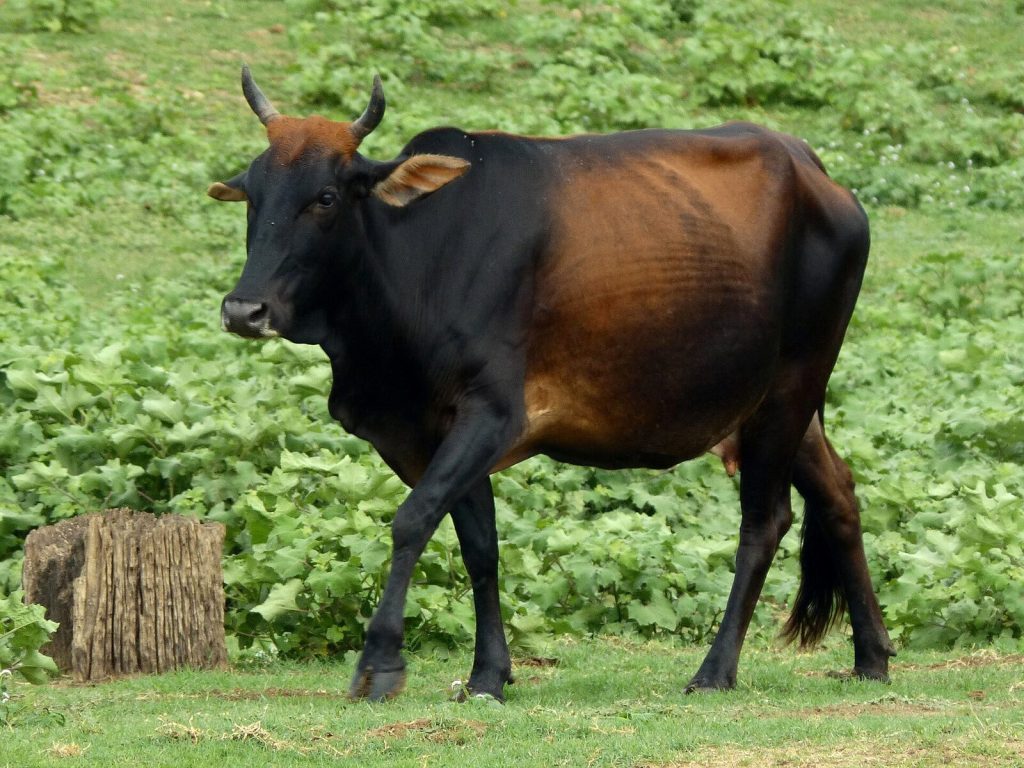
Two opposite mistakes are driving cattle tick control failure on Ugandan farms, and they push the same way. Farms are mixing acaricide stronger than the label says while putting roughly half the volume of liquid onto each animal that the recommended method calls for. Strong mix, thin coverage. Ticks survive, the survivors breed, and the next drum works less well than the last.
The Four Tick Borne Diseases That Matter in Ugandan Cattle
Four diseases carry the cost in this country: East Coast fever, babesiosis, anaplasmosis and heartwater. East Coast fever is the one farmers name first, and Ugandan research agrees with them. A systematic review pooling more than four decades of Ugandan studies found Theileria parva, the parasite behind East Coast fever, in more than half of all the studies retrieved, with national cattle prevalence of 29.2 percent by DNA detection and 62.6 percent by serology. The diagnostic method used and the region the cattle came from explained most of the variation between studies, which is why two published figures for the same country can differ so widely.
The same review puts Anaplasma marginale second, at 36.7 percent by DNA detection and 65.2 percent by serology, and Babesia bigemina lower, at about 9 percent by DNA detection and around 10 percent by serology. The review prints the Babesia serology figure as 10.6 percent in one place and 10.5 in another, so read it as about ten.
One number from that review is worth knowing for what it says about the evidence rather than about the disease. Tick borne pathogens have been reported in only 24 of Uganda's 146 districts, and about 71 percent of those districts sit inside the cattle corridor. So most of the country has never been sampled. If your district is not one of the 24, the national figures are the best guide you have and they are not a description of your farm.
Which Ticks Are on Ugandan Cattle, and Which Disease Each Carries
Three tick species do most of the damage, and each one hands you a different disease.
| Tick | Disease it transmits | Note for Uganda |
|---|---|---|
| Rhipicephalus appendiculatus | East Coast fever | The costliest tick here |
| Rhipicephalus decoloratus | Babesiosis, anaplasmosis | Most resistant to acaricide |
| Amblyomma variegatum | Heartwater | Often still susceptible |
| Rhipicephalus microplus | Babesiosis, anaplasmosis | An invader, spreading |
Field observation in Uganda puts the average burden on grazed cattle at around 21 R. appendiculatus, 7 R. decoloratus and 3 A. variegatum ticks per animal, though that figure was reported as unpublished work and should be treated as an order of magnitude rather than a measurement. Across the published Ugandan literature, tick borne pathogens have been detected in fourteen different tick species, so the three above are the economic core rather than the whole list.
The split in that table matters more than it looks. When acaricide resistance was tested across Uganda, it turned up in Rhipicephalus ticks only: Amblyomma variegatum sampled in the north and a Hyalomma species in the south west were fully susceptible at the label strength. So a farm losing the fight against one tick species can still be controlling another with the same product, and "my acaricide has stopped working" is usually a statement about Rhipicephalus.
Why Acaricides Are Failing on Ugandan Farms
Testing of 31 tick populations from farms across Uganda found resistance to at least one class of acaricide in 93.5 percent of them. At the label strength, 90 percent of the populations tested were resistant to both of the synthetic pyrethroids used, and doubling the concentration left 86.7 percent still resistant. Worse, at double strength, around 60 to 63 percent of those populations showed no mortality at all against the two pyrethroids. Resistance to a combined formulation ran at 43.3 percent, to the organophosphate at 13.3 percent, and to amitraz at 12.9 percent, which made amitraz the best remaining option against ticks already resistant to the other two.
Resistance to two or more classes at once was found in 55.2 percent of the resistant populations, and three quarters of those multi class resistant populations were R. decoloratus. Farms that had used both a pyrethroid and a combined formulation in the previous two years had multi class resistant ticks in every single case. Complaints of acaricide failure came from 94.4 percent of the farms in that study.
None of this is new. Acaricide resistance was first diagnosed in Ugandan ticks in 1970, against an organochlorine, and there has been no national resistance monitoring system since the early 1990s. So the performance of the products on the Ugandan market is largely unmeasured, and the farmer is the one finding out.
One structural problem sits underneath all of this and no farmer can fix it. Of 25 acaricide brands on the Ugandan market in one survey, 15 were synthetic pyrethroids and their active strengths ranged from 2 to 15 percent by weight, a spread of more than sevenfold, while nearly all of them prescribed the same dilution ratio. Two brands that look interchangeable on a shelf and carry near identical mixing instructions can put very different amounts of chemical on your cattle. Read the strength on the bottle, not just the mixing instruction, and if you change brand, treat it as a new product even within the same class.
Coverage: Spraying Every Part of the Animal Where Ticks Attach
Coverage is the half of tick control nobody sells you. A resistant tick and a tick the spray never reached both survive, and from the farm's point of view they look the same.
The procedure NARO researchers trained farm workers on in south western Uganda has a fixed order, and the order exists so that nothing gets missed when the operator tires: backline first, then both sides of the belly, then the brisket, neck and forelegs with attention to the spaces between the toes, then the rear including the hind legs and the toes again, the udder, under the base of the tail, the whole length of the tail and the tail switch, and the head last with particular attention to the ears. Nozzle pressure was set at around 550 kilopascals.
Two things defeat that sequence in practice. The first is fatigue. Observation of 51 workers using a bucket pump found that a worker sprayed an average of 14 cattle before showing fatigue, at about 64 seconds per animal, against 42 seconds with a motorised pump and 24 seconds through a spray race. On a herd of forty, the last animals are being done by a tired arm at falling pressure. Rotate operators, or accept that the animals at the back of the crush are getting a worse job.
The second is the crush. Researchers photographing Ugandan handling facilities recorded crushes abandoned because they were unusable, crushes built from weak materials, and one crush so wide that cattle stood three abreast inside it, making proper spraying impossible. A crush is tick control equipment. If you cannot reach every side of an animal in yours, no product will save you, and that belongs in the farm structures plan rather than in the chemical budget.
Hand Spraying, Dips and Spray Races Compared for Ugandan Herds
Hand spraying dominates Uganda. In the surveys, 91 percent of farms sprayed, with a cattle crush as the restraint on 81 percent of them; dipping accounted for 7 percent and scrubbing with a cloth for 2 percent. Plunge dipping was the standard method from the 1960s to the 1990s and has largely gone.
A NARO study in three south western districts compared the three methods that remain, on 15 farms holding 70 to 300 cattle each, five farms per method. The differences it found in tick borne disease are large.
| Method | Annual disease illness | Annual disease deaths |
|---|---|---|
| Bucket pump | 42.6 percent | 30.0 percent |
| Motorised pump | 9.3 percent | 4.2 percent |
| Spray race | 3.0 percent | 1.0 percent |
Read that table with its limits in view, because they are real. Five farms per method, chosen rather than randomised, and the farms that can build a spray race differ from the farms using a bucket pump in herd size, cash, labour and management long before the equipment is considered. So the table is not proof that a spray race causes a thirty fold drop in deaths. What it does show is that the method a Ugandan farm uses tracks very strongly with how much tick borne disease it carries, and the mechanism is coverage: 97 percent of the farms reporting acaricide failure in one study were using the spray method.
The same NARO study also worked out which method pays at which herd size, and the answer is not "the biggest equipment you can afford". A bucket pump was found to be economical only for herds of roughly 40 to 112 cattle, a motorised pump for 35 to 170, and a spray race for 100 to 600. Over a twenty year horizon on a herd of 80, the bucket pump came out the most expensive of the three and the motorised pump the cheapest, at roughly two and a half times less than the bucket pump, because the labour and the repeat losses outweigh the low purchase price. A motorised pump costs around four times a bucket pump to buy and has the same working life of about five years, with nozzles replaced twice a year on the hand equipment.
The practical reading for a smallholder with six cows: none of those windows fits you, and that is honest information rather than bad news. Below about 35 head the equipment economics do not favour anything except a well maintained hand pump used properly, so your gains come from coverage, interval and rotation rather than from a purchase. See the knapsack sprayer guide and the motorised sprayer guide for what the equipment actually does, with one caution in the next section about which of them belongs near cattle.
Equipment, Mixing Water and Who Does the Spraying
Ugandan survey data on the sprayer itself is uncomfortable reading. A bucket pump is the recommended equipment for cattle and was used on 68 percent of south western farms but only 14 percent in the north west. Across all farms, 39 percent were using inappropriate equipment: knapsack sprayers on 20 percent, hand sprayers on 16 percent, and a scrubbing cloth on 2 percent. In one northern district, small hand held one and two litre sprayers were the main equipment on 55 percent of farms. A crop knapsack cannot deliver the volume or the pressure that a bovine coat needs, so a farm using one is underdosing by design, whatever is in the tank.
Measurement is the next weak point. Calibrated bottle tops were the commonest measuring tool at 58 percent of farms and syringes at 31 percent, but 5 percent of farms measured acaricide with an uncalibrated bottle top. Combine that with brand strengths spanning sevenfold and you have a farm with no idea what concentration is going onto its animals.
Then the water. 86 percent of farms mixed acaricide with water taken straight from rivers, streams, valley dams and swamps, and 15 percent of farms had swamp water that the researchers described as dirty and unsuitable for diluting acaricide. Dirty water can bind and degrade the active ingredient before it ever reaches a tick. Where a farm has a tank, using stored clean water for the sprayer is a free improvement; rainwater harvesting and farm water storage both pay back here and at the drinking trough.
Who does the work decides whether any of it happens properly. Mixing was done by farm workers on 69 percent of farms, herdsmen on 46 percent and children on 4 percent. Spraying itself was done by herdsmen on 57 percent of farms, with supervision by the owner on 46 percent. Advice came from a veterinarian for 72 percent of farms, while 28 percent relied on their own judgement, on a veterinary drug shop attendant or on another farmer. Acaricide came from local veterinary drug shops on 69 percent of farms, from pharmacies or distributors on 14 percent, and from illicit open markets on 9 percent.
Spray Interval, Wet Season and Dry Season on a Ugandan Farm
Uganda's climate lets ticks breed all year, so control is continuous rather than seasonal, and the interval is the main dial. The general Ugandan practice recorded in the literature is twice a week in the wet season and once a week in the dry season, and the recommended pattern behind it is a weekly application through the rains and a fortnightly or monthly application in the dry season, when tick activity falls.
The gap between those two is where resistance is being made. In south western Uganda, 81 percent of farms were following the recommended weekly rainy season interval, and only 5 percent were stretching the interval in the dry season as recommended. A farm that sprays weekly or twice weekly through the whole year is applying chemical pressure to every generation of ticks, all year, which is precisely the condition that selects for survivors.
Stretching the dry season interval is not a saving measure, it is a resistance measure that happens to save money. It has to be done with your own eyes on the animals rather than on a calendar, and the specific interval, the product and any withdrawal period belong to the product label and your district veterinary officer, not to a page. What this page can tell you is the direction: in the dry season, longer, and check the animals.
Acaricide Rotation Done Properly
Rotation is the most misunderstood instruction in tick control, because farmers do it by brand and resistance happens by chemical class. The Ugandan study that measured this counted a rotation as incorrect where the change was within the same class, where a farm moved from a combined formulation to one of that formulation's own single ingredients, or where the farmer could not say which product they had used before the current one. On that definition, 55.6 percent of the farms assessed rotated wrongly.
Three classes are in use on Ugandan cattle and it is worth knowing them by class rather than by brand. Amidines, where amitraz is the active ingredient and the one that was still working best against ticks resistant to the others. Synthetic pyrethroids, including cypermethrin, alpha cypermethrin and deltamethrin, which is the class with the worst resistance picture in Uganda and the one where doubling the strength changed almost nothing. And organophosphates, such as chlorfenvinphos, which appear in Uganda mostly inside combined formulations alongside a pyrethroid rather than on their own.
Amitraz brands on the Ugandan market were all found at a single active strength, which makes that class the easiest one not to get wrong. Usage in the surveys ran roughly to amitraz on 37 to 48 percent of farms, combined formulations on 30 to 38 percent, pyrethroids on 28 percent and single ingredient organophosphates on around 5 percent.
Two rules follow and they are free. Write down which class you are using and the date, not the brand name, because a shelf full of different names may be one class. And treat cross resistance as real: pyrethroids and organophosphates can share resistance mechanisms, so moving from one to the other after a failure is not the clean break it looks like. Which class to move to, and when, is a question for your veterinary officer with your own district's resistance picture in mind.
Acaricide and Human Safety on the Farm
This section exists because the Ugandan data makes it impossible to leave out. In the survey of 85 farms, 13 percent reported toxic effects of acaricide on their cattle and 32 percent reported toxic effects on the people applying it. All 27 of the reported human cases came from the south western region, the high acaricide pressure zone where over half the farms were mixing above label strength.
So a third of farms in a Ugandan dairy district had somebody affected by the chemical they were spraying. Combine that with children mixing acaricide on 4 percent of farms, uncalibrated bottle tops on 5 percent, and product bought in open markets on 9 percent, and the public health picture is as much of a problem as the tick one.
What follows is not a list of doses. It is the handling behaviour the evidence points at: nobody under working age mixes or sprays; the person spraying is downwind and covered; the measuring device is calibrated; the strength on the label is the strength used, neither more nor less; containers are not reused for anything else; and the wash down water does not run into a drinking point or a water source. A separate Ugandan and regional literature on the environmental side of acaricide use exists and it points the same way.
Milk and Meat Withdrawal After Any Cattle Treatment
That residue finding is the strongest argument on this page for doing tick control properly, because it connects the spraying decision to the milk a family drinks. Cost lines for treatment and withheld milk are worked through on the cost of dairy farming page.
The Blue Tick, Rhipicephalus microplus, and Why It Changes the Plan
A new tick is establishing itself in Uganda and it matters because of what it does to the control methods that work on the others. Rhipicephalus microplus, the Asian blue tick, is among the most resistance prone ticks in the world and it spreads with cattle movement.
A Ugandan survey collecting ticks from 1,461 cattle across seven cattle dense districts found it infesting cattle at 18 sites in Amudat, Kaabong and Napak in Karamoja and in Arua in West Nile, with none found in Lyantonde or Nakaseke in the central region. Arua accounted for 82.1 percent of the R. microplus collected. Of 618 ticks of the relevant subgenus collected overall, the counts were R. decoloratus 334, R. microplus 257, R. geigyi 17 and R. annulatus 10. Worth noting: those counts make R. decoloratus about 54 percent of the total, while the paper's text prints 50.04 percent and its four stated shares add to 96 rather than 100, so trust the counts over the percentages.
The finding that should change behaviour is this: in 6 of 13 sites in Arua, the indigenous R. decoloratus was not found at all alongside R. microplus, which suggests replacement rather than coexistence. And a Ugandan field trial of restricted spraying, where only the legs, belly and ears are treated, worked well against R. appendiculatus, R. evertsi and Amblyomma variegatum and did not work against R. decoloratus or R. microplus. So a shortcut method that saves chemical on most of your ticks fails on the two that carry babesiosis and anaplasmosis, and fails worst on the invader. Full coverage is not optional on a farm where blue ticks are present.
Beyond Chemicals: Grazing, Breed and the Anti Tick Vaccine Trial
Every Ugandan farm surveyed in the studies behind this page used acaricide as its only method of tick control. That is the weakness in the national position, because a single tool under continuous pressure is exactly how the tool gets worn out.
Three other levers exist. Breed is the first: resistance to acaricide sits in the tick, but tolerance of tick borne disease sits in the animal, and Uganda's indigenous cattle carry more of it than a bought in crossbred. Farms in the resistance heavy south west are overwhelmingly keeping exotic dairy crosses, which is part of why the problem concentrates there. Second, grazing management and the wildlife interface: livestock and wildlife contact was reported on 39 percent of farms, and neighbouring herds interacting without synchronised spraying was named as a specific gap, because a farm that sprays properly next to a farm that does not is reinfesting itself weekly. Synchronising with your neighbours is free and almost nobody does it.
Third, a vaccine. A collaboration between NARO and a Spanish research institute identified a protective tick antigen from Rhipicephalus appendiculatus in controlled pen trials, and a controlled field trial has been approved by the Uganda National Council for Science and Technology and the National Drug Authority to test it under farm conditions. That trial may lead to approval of a vaccine in Uganda. It is not something you can buy today, and anyone offering you an anti tick vaccine should be asked which product and under whose registration. Ask your district veterinary office about the current position rather than taking it from a page.
An integrated control trial around Queen Elizabeth National Park gives a sense of what combining methods is worth. Weekly restricted spraying against both ticks and tsetse flies cut farmer reported East Coast fever from 12.3 to 4.3 percent and cattle deaths attributed to it from 3.2 to 0.6 percent, while trypanosomiasis in blood samples went from 7.3 percent to none detectable. Annual losses from deaths fell by 88.3 percent and the total annual cost of the whole problem fell to roughly a sixth of what it had been, on a reported return of 23 to 1. Those are single project figures from one place, and the same trial is the one that failed against R. decoloratus and R. microplus, so read it as evidence that integration pays rather than as a protocol to copy.
Testing Whether Your Acaricide Still Works on the Farm
You do not have to guess. The Ugandan researchers who documented acaricide failure used a simple field definition to separate farms that had a problem from farms that did not: inspect at least half the cattle in the herd and hand pick every visible tick. Fewer than ten ticks off half the animals inspected counted as no failure; ten or more counted as failure.
Do that check monthly and you will know more about your own farm than the national monitoring system knows about the country, which has been absent since the early 1990s. Related pages: common cattle diseases in Uganda, the cattle vaccination guide, dairy calf management for why calves come first, and when to call a veterinarian.
Cattle Tick Control Questions Ugandan Farmers Ask
How often should I spray my cattle? The Ugandan pattern in the literature is weekly through the rains and fortnightly to monthly in the dry season, and the single biggest gap between recommendation and practice is that farms keep spraying weekly in the dry season. Stretch the dry season interval and watch the animals. Your exact interval belongs to the product label and your district veterinary officer, because it depends on the product, the season and your local tick pressure.
My acaricide has stopped working. Should I mix it stronger? No, and this is the most costly instinct in Ugandan tick control. Doubling the concentration of the two commonest pyrethroids left 86.7 percent of tested Ugandan tick populations still resistant, and around 60 percent showed no mortality at all at double strength. Mixing stronger kills the susceptible ticks and hands the field to the resistant ones, and it is what put toxic effects on the people doing the spraying on a third of farms in one district. Check your volume, your equipment, your measuring device and your water first, then talk to a vet about a class change.
Can I use a crop sprayer on cattle? It is common and it is a mistake. Knapsack and small hand sprayers were being used on over a third of Ugandan farms surveyed, and they cannot put the volume or the pressure onto an animal that the recommended procedure calls for. Underapplying volume is one of the two mistakes that breeds resistance. A bucket pump is the recommended hand equipment for cattle.
What does tick control cost per animal in Uganda? There is no honest single figure, because it depends on the class of product, the brand strength, the volume you actually apply and how often. What the Ugandan comparison does give you is the shape: over a twenty year horizon on a herd of 80 cattle, the bucket pump was the most expensive of the three methods and the motorised pump the cheapest, at roughly two and a half times less, because labour and repeat disease losses swamp the purchase price. A motorised pump costs around four times a bucket pump to buy, with a similar five year life and nozzles replaced twice a year. Price the product and the equipment with a local veterinary supplier on the day, and count the labour, because that is the line the arithmetic turns on.
Is a spray race or a dip worth building? Only at a certain herd size. The Ugandan cost comparison found a spray race economical for herds of roughly 100 to 600 cattle, a motorised pump for 35 to 170 and a bucket pump for 40 to 112. Below about 35 head none of the equipment cases stand up, and your gains come from coverage, interval, rotation and clean water instead.
Do I still need to spray if my cattle are in a zero grazing unit? Yes. Stall feeding cuts pasture exposure and does not remove tick pressure, and the Ugandan farms with the worst acaricide resistance are the ones keeping exotic dairy crosses, which are also the animals least able to tolerate tick borne disease. Housing and tick control are separate jobs; see the dairy cow housing guide for a crush sited so you can do the second one.
How long after treating can I sell the milk? That interval is the withdrawal period and it is printed on the product label. It varies by product and by whether the cow is lactating, so it cannot be given here, and your veterinary officer will confirm it for the bottle you hold. Residues found in a fifth of raw milk samples on farms in one Ugandan district show this is being got wrong in practice, so treat it as a real rule rather than a formality.
Where do I start if I am buying acaricide for the first time? With a licensed veterinary supplier rather than an open market stall, with the active ingredient and its strength read off the bottle, and with a conversation at your district veterinary office about what is already failing in your area. Then buy a bucket pump and a calibrated measure before you buy a second product. If you need to find local input suppliers or a veterinary service, start with the suppliers directory and your district veterinary office, and check current prices with two shops rather than one.