Poultry, goats and cattle at household scale: housing, feeding, and knowing when an animal is sick.
Chickens
Local chickens cost almost nothing to keep and survive on scavenging, but they grow slowly and lay few eggs. Improved layers and broilers produce far more, and they will only do so if you feed and house them properly, which costs money every week whether or not the birds are earning. Deciding which system you are actually running, and not drifting between them, is the first decision.
Whichever you keep, the basics are the same: dry bedding, protection from rain and predators, ventilation without draught, and clean water available at all times. Crowding is the fastest route to disease.
Vaccination against Newcastle disease is the single most valuable thing most poultry keepers can do, and it is worth arranging through your veterinary officer rather than skipping.
Goats
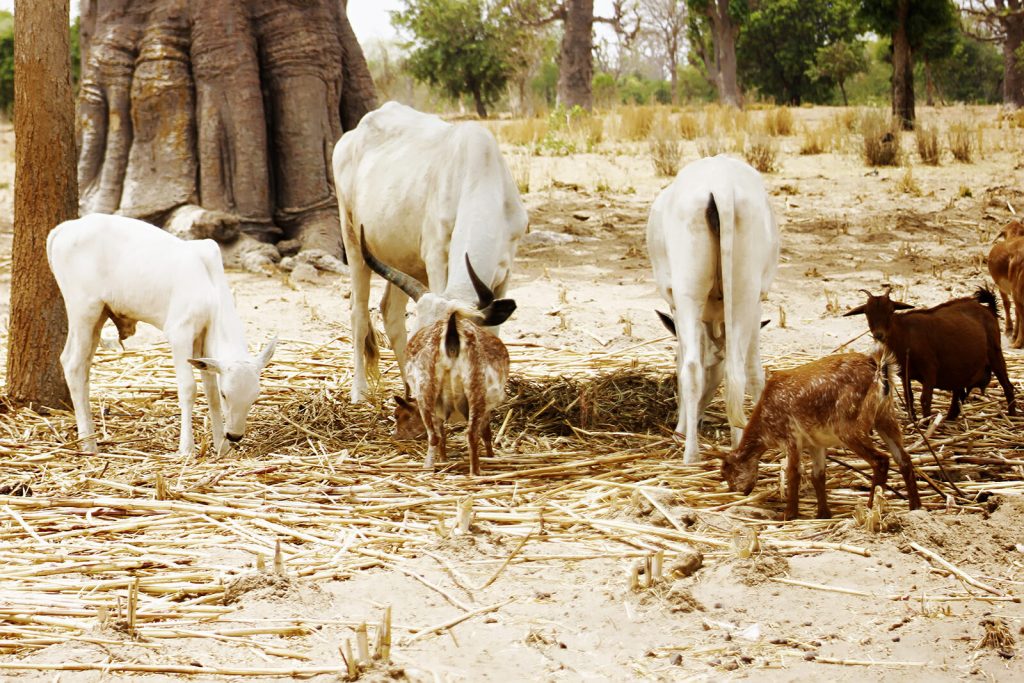
Goats suit small farms because they browse material that other animals will not touch and they reproduce quickly. The two things that limit them are feed in the dry season and internal parasites.
Cut and store fodder while the grass is still green rather than waiting until the pasture fails. Dried grass, banana leaves, and tree fodder cut before it hardens will carry animals through a gap that would otherwise cost you condition and kids.
Keep goats off wet, heavily grazed ground where worm burdens build, and house them on a raised slatted floor if you can, so droppings fall away from where they sleep.
Cattle
A few head of cattle represent both savings and risk. Feed and water in the dry months are the binding constraints for most households, and tick-borne disease is the most common cause of sudden loss. Regular tick control, clean water and a plan for dry-season feed matter more than breed for most small keepers.
Manure
Animals on a small farm are also a fertility engine. Collected, composted and applied properly, manure is worth real money in avoided fertiliser. Applied fresh and heavily it can scorch a crop and spread weed seed, so treat it as something to be managed rather than dumped.
Important
This site is not a veterinary service. For disease, dosing, withdrawal periods and anything involving medicines, consult your district veterinary officer or a qualified animal health worker. Wrong drugs and wrong doses harm animals, harm people who eat the produce, and build resistance.