
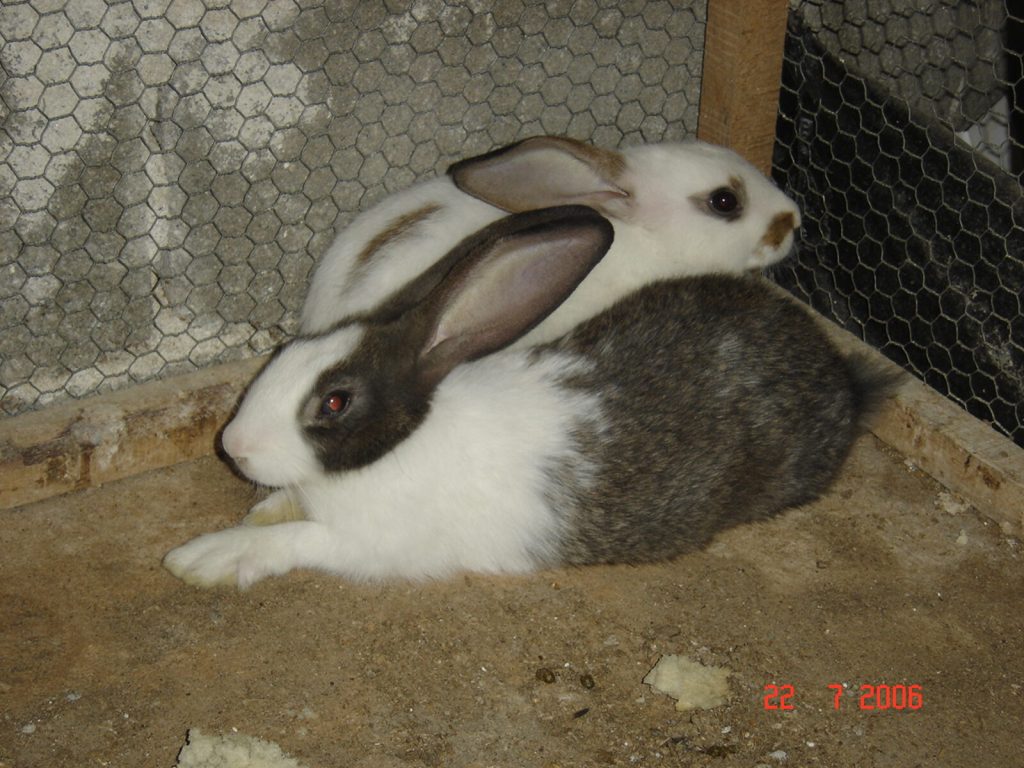
Commercial rabbit farming costs are decided by two numbers in Uganda, and only one of them can be worked out before you spend anything. Feed per rabbit sold is calculable. What a rabbit fetches in your own district is not, because Uganda counts no rabbits and publishes no rabbit price. So the budget below is honest about which half is arithmetic and which half is field work you have to do first.
What Commercial Rabbit Farming Costs Actually Turn On
Almost every Ugandan page on this subject prices the same three things: the hutch, the breeding pair and a monthly feed bill. Those are the easy numbers and they are the wrong ones to lead with. The cost of a rabbit enterprise is set by how much feed goes into each rabbit you eventually sell, and that figure is governed by the doe rather than by the growing rabbit's appetite. A doe who raises and sells twenty rabbits a year spreads her own year of eating over twenty animals. A doe selling forty five spreads it over forty five.
The second thing it turns on is the sale price, and this is where a rabbit budget stops resembling the pig budget or the goat budget on this site. Pork and goat meat have a measured national price. Rabbit meat does not. That single absence changes what a cost page can responsibly do, so it is worth starting there.
Why Uganda Has No Rabbit Production or Price Figure
This matters before any number, and no ranking page mentions it. Walking the FAO Africa production file row by row, Uganda has no rows at all for rabbits and hares, and none for rabbit meat. Sixteen African countries report rabbit numbers in that same file and fourteen report rabbit meat, including all three neighbours: Kenya at about 780,000 head with roughly 546,000 slaughtered, both carried as official figures, Rwanda at about 839,000 and Burundi at about 1,049,000. The same file holds Uganda's goats at over 17.4 million, pigs at over 7 million and chickens at about 69.5 million. So the file has Uganda, the file has rabbits, and it has no Ugandan rabbits.
The agriculture ministry's own livestock figures say the same thing twice. Its livestock population series runs cattle, sheep, goats, pigs and chicken. Its meat price series runs beef, pork, local chicken and goat meat. Rabbits appear in exactly one place, inside a combined live animal export basket that also holds camels and poultry and cannot be separated out. Uganda's national animal genetics agency does run a National Rabbit Breeding Program, and it has trained farmers, handed weighing scales to regional coordinators and bought laboratory equipment for rabbit disease testing. It has also published two goat breeding manuals and no rabbit document of any kind.
None of that means rabbit farming does not happen here. It means every rabbit cost figure circulating in Uganda is somebody's estimate, usually a seller's, and that you cannot check it against a national series the way you can check a pig price. Treat anything you read, including the arithmetic below, as a structure to fill with your own local measurements.
Rabbit Feed Cost Per Rabbit Sold, and Why the Doe Decides It
The usable technical figures come from the FAO rabbit manual, which is international and mostly European work, and they are labelled that way every time they appear here. A fattening rabbit eats 110 to 130 grammes of dry feed a day. A lactating doe with a litter eats 350 to 380 grammes a day, against 120 for an adult at maintenance. A doe on a commercial breeding calendar is nursing for most of the year, so taking an average of 200 to 350 grammes a day as a working assumption puts her own consumption at 73 to 128 kilogrammes of feed in a year.
Now divide that year over the rabbits she sells. In the European system she weans at one month and the young are fattened for seven weeks, eating 5.4 to 6.4 kilogrammes each. FAO states plainly that some African breeding units wean at two months and then need a four month fattening period, because balanced feeds are not available. Four months of eating is 13.2 to 15.6 kilogrammes per rabbit.
| Feed item | Well run unit | African conditions |
|---|---|---|
| Doe share | 1.6 to 2.8 kg | 3.7 to 6.4 kg |
| Grower feed | 5.4 to 6.4 kg | 13.2 to 15.6 kg |
| Per rabbit sold | 7 to 9 kg | 17 to 22 kg |
That build can be checked, and it passes. The same manual separately gives 3.4 to 3.8 kilogrammes of feed per kilogramme of liveweight marketed, counting the breeding stock, at a sale weight of 2.30 to 2.36 kilogrammes. Multiply it out and you get 7.8 to 8.7 kilogrammes per rabbit sold, sitting inside the 7 to 9 the components give. Two independent statements in one publication reconcile, which is the only real test that a lifted figure is a figure rather than a typing error.
Read that carefully, because it is the whole argument. The multiplier is not a guess about Ugandan farmers being careless. It comes from two documented facts working together: the doe sells fewer rabbits to carry her year of eating, and each rabbit eats for twice as long before it is worth selling.
How Many Rabbits a Doe Sells in a Year, and What That Costs
Doe output is the one figure on this page that separates a plausible budget from a fantasy, and the published range is enormous. The French commercial series in the FAO manual covers more than 1,100 monitored units, on pelleted feed with weaning at one month.
| Source | Sold per doe | What set it |
|---|---|---|
| French units | 41 to 46 | pellets, early weaning |
| Weakest third | 37 | same region and prices |
| Strongest third | 54 | same region and prices |
| Malawi college unit | 20 | concentrate plus forage |
| Ugandan claim | 38 | a breeder seeking suppliers |
Two things fall out of that table. First, the only measured African figure available is twenty rabbits sold per doe per year, from a college rabbitry in Malawi feeding a mixed concentrate of maize, maize bran and groundnut cake alongside a high protein leaf forage, with growth running about 15 grammes a day from four to sixteen weeks. Second, the Ugandan figure of thirty eight sits just below the French commercial band, in a country whose own conditions FAO describes as needing a four month fattening period for want of balanced feed. A planning figure of thirty eight is a bet on European performance.
The French series also shows where the losses sit, and they are not where beginners expect. Kindlings run 7.2 to 7.5 per doe per year and litters hold 8.3 to 9.1 newborn, so roughly sixty to sixty eight are born. Birth to weaning mortality takes 19.1 to 24.3 percent. A further 12.4 to 14.9 percent go between weaning and sale. Forty one to forty six come out the far end. Those are the figures from temperate units that do this professionally, with veterinary support and balanced feed. Any Ugandan budget assuming better than that is assuming better than France, so treat the whole set as a ceiling rather than as an expectation. Heat and humidity work against every line in it, which is the next section but one.
Feeding Rabbits on Napier Grass and the Protein Ceiling It Sets
The cheap route is obvious and it is what most Ugandan keepers do: cut grass, add kitchen greens, buy a little bran. It works, for a value of works, and its cost shows up as time rather than money. A fattening rabbit needs 15 to 16 percent crude protein in its feed and a breeding doe 17 to 18. Napier or elephant grass runs 6 to 8 percent. Guinea grass runs 5 to 10. Brachiaria ruziziensis runs 8 to 13. None of those clears the fattening bar, let alone the doe bar.
Sweet potato tops are the exception worth knowing about, at 16 to 20 percent protein, and amaranth leaf reaches about 20. A Malawi comparison fed elephant grass against a high protein legume leaf and the grass fed group grew at roughly a quarter of the rate. The absolute numbers in that comparison do not survive a units check, so only the ratio is quoted here, and the ratio is the useful part anyway.
Two further cautions come out of the same chapter and both cost money. A rabbit offered a bulky forage and a high energy pellet together, both without limit, cannot regulate its own intake for best growth, so the concentrate has to be rationed rather than left in front of it. And rabbits are exceptionally sensitive to mould, aflatoxin in particular, which puts a specific edge on the cheapest energy source in Uganda. If you are buying maize bran for rabbits, smell it and look at it, and read the note on storing animal feed safely before you buy a month's supply at once. There is also no compulsory Ugandan standard for compounded rabbit feed of the kind that exists for poultry, pig, cattle and goat feeds, so ask a seller what a bag was actually compounded for. Ration building itself belongs on the rabbit feeding guide.
What a Breeding Doe Costs and What She Has to Return
Ugandan pages treat the breeding stock as the headline expense. Run the arithmetic and it is not. Take the figure in circulation of about 120,000 shillings for a doe, and the French finding that annual doe replacement runs 131 to 157 percent, which puts a productive life at a little over nine months at the best of those rates. Spread her purchase price across the rabbits she sells and she costs roughly 2,600 shillings per rabbit sold at forty six a year, or about 6,000 at twenty. Real, and small beside a feed bill of seventeen to twenty two kilogrammes.
The doe price matters for a different reason. It is what a seedstock market charges someone entering the business, and Uganda has been here before. An assessment of the Kampala rabbit industry published in World Rabbit Science nearly three decades ago described a promotional cycle it called the Rabbit Craze, sold as a quick money opportunity with unlimited markets. What it actually found was a semi intensive commercial system carrying high investment in breeding stock, shelter and wire hutches, high operating costs in pelleted feed and labour, and profitability that did not arrive. Purebred seedstock was being sold to entrants at prices the author called exorbitant. Producers sold light, around two kilogrammes liveweight, to recover costs. Many lost money and abandonment was moderate to high.
Breed choice belongs on the rabbit breeds page, but the government's own list is short and worth knowing before you pay a premium: local rabbits, crosses of local rabbits, and exotic hybrids including New Zealand White, California white, Chinchilla, Flemish giants, a local Kabale type and a Kenyan white. Paying an exotic price only pays back if a buyer pays you more for it, which brings us to the part of the budget nobody can verify.
Rabbit Cage and Hutch Costs Are a Two Year Asset
No Ugandan cage or hutch price could be verified for this page, so instead of inventing one, here are the dimensions to take to a carpenter or a hardware counter. These are the French mesh floor breeding cage sizes from the FAO manual, in centimetres. Cages bedded on litter instead need more floor, at least 60 to 70 by 80 to 100 and 50 to 60 high, because droppings stay in with the animal.
| Rabbit class | Front | Depth | Height |
|---|---|---|---|
| Doe, inner box | 65 to 70 | 50 | 30 |
| Doe, outer box | 50 to 60 | 50 | 30 |
| Buck | 40 | 50 | 30 |
| Young breeding stock | 30 | 50 | 30 |
Here is the line every competitor misses. A wooden cage lasts no more than about two years, where a concrete one lasts fifteen to thirty. So a timber hutch is not a one off capital item to be forgotten after the first year. It is an asset to be written off over roughly two years of production, which means its cost has to appear in your cost per rabbit sold twice as heavily as most budgets show it. Cheap timber and a two year life can still be the right call, and often is, but only if the write off is in the numbers.
The mesh against litter decision is a cost decision rather than a taste one. Mesh floors let droppings fall away, which is why they allow tighter stocking and less parasite pressure, and FAO specifies wire of 2.4 millimetres diameter with a 2 millimetre minimum and a mesh opening of 1 to 1.3 centimetres so feet neither catch nor get sore. The catch is that FAO itself says the wire mesh cage will remain a theoretical solution in many developing countries until suitable mesh is available at reasonable prices, and Ugandan keepers report exactly that. Litter is the alternative and it costs labour: it has to be replaced at least weekly to hold parasites down. Bare earth or plain plank floors without litter are not recommended at all outside genuinely dry regions, because the hygiene stays poor no matter how often you sweep.
Cage Stocking Density and the Growth It Costs You
Cramming more rabbits into each square metre of cage is the obvious way to cut capital per animal, and there is a published price for it. On mesh, 16 to 18 rabbits per square metre is the workable band against about 10 on litter, and above sixteen the growth starts to go. A trial in the same manual put the cost in grammes.
Ventilation is part of the same line. Ammonia at 20 to 30 parts per million weakens the upper respiratory tract and the ceiling for air rabbits breathe is 5 parts per million, which is a stricter standard than most Ugandan sheds meet. Sore feet and respiratory trouble both climb above about 31 to 32 degrees and above 85 percent humidity. Water deserves one sentence of its own: on dry feed with no drinking water, feed intake falls to nothing within a day, and a lactating doe drinks 200 to 250 grammes a day for every kilogramme she weighs. Green forage above about 70 percent moisture covers much of that below 20 degrees, which is one genuine advantage of the cut grass route.
Rabbit Health Costs Start With Coccidiosis
The health line on a rabbit budget is not a vaccine. It is coccidiosis, and it is a standing cost whether or not you spend anything on it. Every rabbit unit carries these parasites, naturally acquired immunity against them is always weak, and stress of any kind sets an outbreak off at any age. FAO puts it bluntly: where conditions are poor there is a chronic mortality rate of 10 to 15 percent, and it calls that the usual situation. Feed the dead rabbits' share back through the arithmetic above and it lands on every survivor.
The manual does name treatment compounds for these conditions. They are deliberately absent from this page, and so is every dose, interval and withdrawal period, because a drug named without a verified Ugandan registration is advice a farmer cannot safely act on. What can be said, and what actually holds the cost down, is that the cheap controls are structural rather than pharmaceutical: raising animals off their own droppings, replacing litter weekly if you use it, keeping weaning batches of an even age, and refusing casual visitors. The farm biosecurity guide covers the last of those and it costs nothing. For anything clinical, the note on when to call a veterinarian applies with more force to rabbits than to most stock, because few Ugandan practices see them often.
Buying Imported Breeding Stock and the Disease It Can Carry
Commercial Ugandan rabbit units buy their foundation does from outside, often from Kenya. That is a cost line, and it is also a risk line. Rabbit haemorrhagic disease kills quickly and the first genomically confirmed case anywhere in sub-Saharan Africa came from a farm outbreak in Ibadan, Nigeria, across two farms, where the sequences recovered were 98.6 percent similar to a Netherlands strain and 99.1 to 100 percent identical to German ones. The authors read that as probable importation and called for surveillance across the region.
Whether the disease is present in Uganda is something this page will not assert in either direction, because no evidence either way could be found and guessing would be worse than silence. What follows from the Nigerian finding is narrower and still useful: animals moving between countries is how this virus reached the region, so ask what health checks came with any imported stock, quarantine new arrivals away from the rest, and put the question of rabbit vaccine availability to a vet rather than to a website. Several Ugandan pages publish a rabbit vaccination schedule with no product named, no country named and internally contradictory intervals. That is not a schedule you can use.
Rabbit Meat Prices in Uganda Against the Meats That Are Measured
Here is the revenue side, and it is where the enterprise is decided. The only Ugandan rabbit meat price in circulation, 28,000 to 35,000 shillings a kilogramme, comes from one commercial breeder speaking to a newspaper while appealing for out grower suppliers. It cannot be checked directly. What can be checked is its ratio to the meats the ministry does price.
Now the interesting part. That Kampala assessment from nearly three decades ago measured rabbit meat reaching consumers at 4,000 to 5,000 shillings a kilogramme when beef was about 1,700 and chicken about 2,200, so rabbit was running roughly two and a half times beef. The claimed figure today runs roughly twice beef. Two independent readings, nearly thirty years apart, put Ugandan rabbit meat at about double the price of beef. So the price claim is credible in shape, and that is exactly the problem, because the same assessment recorded what a price at double beef does to demand: rabbit meat was not traditionally eaten in Uganda, and the whole Kampala trade it could find was two meat markets, two restaurants and one university, moving an estimated 100 to 200 rabbits a month, with mostly expatriate customers.
Something has changed since, and the government's own account says the old view of rabbits as pets or as vermin is fading. Something has also not changed: nobody counts the market. If you intend to supply hotels or restaurants, read how to supply hotels and restaurants first, because consistency of supply is the condition those buyers impose and it is the one a small rabbit unit fails. And understand the gap between what a butcher charges and what you are paid, which is what farm gate price against retail price covers. The nearest measured comparison for a small ruminant sale is the goat price page.
Auditing the Rabbit Farming Profit Claims in Circulation
Four claims do most of the work in Ugandan rabbit content and all four trace to fewer sources than they appear to.
One more worth naming, because it is the pattern rather than a single number. Several Ugandan rabbit pages quote a return on investment figure with no source and a growth projection to a date already in the past. A projection that has expired is not a forecast, it is a clue about where the copy came from.
A Break Even Feed Price Ladder for a Rabbit Enterprise
No current Ugandan price for compounded rabbit feed could be verified, so this page refuses to publish one and inverts the sum instead. The question becomes: what is the most you can pay per kilogramme of feed before feed alone consumes the entire sale price of the rabbit? Run it at four sale prices across both performance levels from the feed table.
| Price per rabbit | Well run unit | African conditions |
|---|---|---|
| 20,000 | 2,200 to 2,900 | 900 to 1,200 |
| 35,000 | 3,900 to 5,000 | 1,600 to 2,100 |
| 50,000 | 5,600 to 7,100 | 2,300 to 2,900 |
| 60,000 | 6,700 to 8,600 | 2,700 to 3,500 |
Those are ceilings at which you break even on feed and nothing else, so halve them to leave room for stock, housing, water, labour and deaths. Feed runs a little over half of all production cost including labour in well run units, which is where the halving comes from. Do that and the picture sharpens: at African levels of doe output and a rabbit selling for 35,000 shillings, the enterprise only works if compounded feed lands under about 800 to 1,050 shillings a kilogramme. That is below what commodity livestock feeds cost in Uganda, let alone a specialty pelleted product with no compulsory national standard behind it.
Push the sale price up to 60,000 and the ceiling moves to roughly 1,400 to 1,800 shillings, which is arguable. So the enterprise is not impossible. It is narrow, and it depends on a price that only a minority of buyers pay. Take the ladder to your own district, find out what a rabbit really sells for and what a sack of pellets really costs, and the row you land on tells you whether to continue. The break even calculation page shows the working if you want to redo it with your own figures, and farm cash flow matters here because the feed goes in for months before anything comes out.
The Smaller Rabbit Unit That Survives Being Wrong About the Market
Both pieces of serious analysis on Ugandan rabbits reach the same place from different directions, and it is not the commercial rabbitry. The Kampala assessment recommended a five doe household unit built on local feeds, local building materials and family labour, with home consumption of the meat as the first purpose and sales as the second. FAO's own development chapter takes the same line for the same reason.
That is not a smaller version of the commercial plan. It is a different bet. The commercial plan needs a buyer paying roughly twice the price of beef, every week, for years. The household unit needs nothing from the market at all, because the downside of being wrong about demand is that your family eats the rabbits. Its cost structure changes accordingly: cut forage instead of bought pellets, timber instead of imported mesh, family time instead of wages, and a slower fattening period that stops mattering when the animal is not waiting on a sale. Read the rabbit farming overview for how that unit is actually run, and browse the rest of the livestock guides if you are still choosing between enterprises. Whichever size you pick, start a livestock record on day one: with no national figures to check yourself against, your own numbers are the only ones you will ever have.
Commercial Rabbit Farming Costs: Questions Ugandan Farmers Ask
How many does should a commercial rabbit unit start with? Fewer than the marketing suggests. The published recommendation for Ugandan and similar conditions is a five doe unit, scaled up only once you have sold rabbits at a known price to a repeat buyer. One person working a full day can manage several hundred does, so labour is not what caps you early. Demand is.
Can rabbits be raised on Napier grass alone? They will live and they will grow slowly. Napier grass carries 6 to 8 percent crude protein against the 15 to 16 a fattening rabbit needs and the 17 to 18 a breeding doe needs, so grass alone sets a growth ceiling you cannot buy your way past later. Sweet potato tops at 16 to 20 percent and amaranth leaf at about 20 are the two locally grown forages that clear the fattening bar.
What does the feed for one rabbit sold actually cost? Work in kilogrammes first and shillings second. Expect 7 to 9 kilogrammes per rabbit sold in a well run unit on balanced pellets with a doe selling forty odd rabbits a year, and 17 to 22 kilogrammes where the doe sells twenty and the fattening period runs four months. Multiply by your own local feed price. That single multiplication is more useful than any published total.
How long before the first rabbits are ready to sell? A doe is first mated at about four and a half months and carries for about a month, so the first litter arrives around six months in. Add seven weeks of fattening on a balanced pellet, or four months on forage, and your first sale is somewhere between eight and eleven months from buying the does. Budget for feed across that whole period with nothing coming back.
Do rabbits need vaccination in Uganda? Ask a vet what is registered and available locally, and do not take an interval off a website. This page publishes no vaccination schedule because the schedules in circulation name no product and no country, and several are internally contradictory. The everyday killer in rabbit units is coccidiosis, which runs a chronic 10 to 15 percent mortality where housing and hygiene are poor, and that is answered by management rather than by a vaccine.
Where does a rabbit farmer in Uganda actually sell? Restaurants, hotels and individual households, plus other farmers buying breeding stock, which is a warning sign as often as an opportunity. The only market study available found a very small number of urban outlets and a customer base that was mostly expatriate. That may have widened since, and the national genetics agency says the old perception of rabbits is fading, but nobody has measured it. Find your buyer before you build the cages.
Are wooden hutches worth building, or wire cages worth importing? Timber is cheaper to put up and lasts about two years, so its cost has to be written off fast. Wire mesh cages last far longer and allow tighter stocking with less parasite pressure, but suitable mesh is hard to get at a sensible price in Uganda, which FAO names as a standing constraint in developing countries. The honest answer is that timber usually wins on a small unit provided the two year life is in your numbers, and mesh only pays once the unit is big enough for parasite control to be the binding problem.
Prices for breeding stock, cages, mesh and pelleted feed move by district and by season, and none of them is published in a national series you can check. Before committing money, get current quotes from more than one local supplier, and then find out what a live rabbit and a kilogramme of rabbit meat are genuinely selling for where you are. Those two figures decide whether any of the arithmetic above works for you, and they are the only ones nobody can look up on your behalf.