
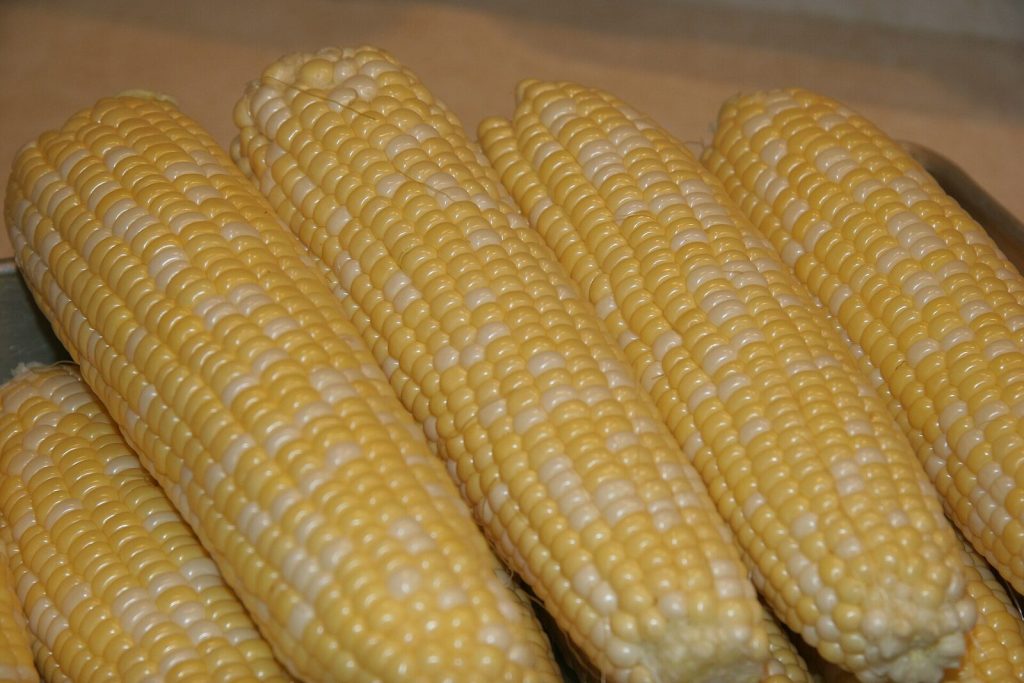
Maize bran is the most widely used energy feed in Ugandan livestock rations and the most variable. It is a milling by product made of grain coatings, germ fragments and broken kernel, so its protein, fibre and starch all move widely from sack to sack. That variability, plus a documented mould toxin problem in the Ugandan trade, is why bran is bought on inspection rather than on the name printed on the bag.
Maize Bran Is an Energy Feed, Not a Protein Feed
Start here, because half the trouble on Ugandan farms comes from treating maize bran as though it were a protein supplement. It is not. Feedipedia, the animal feed database published by FAO with French agricultural research institutes, pools 509 analyses of maize bran and puts crude protein at an average of about 12 percent of dry matter. Maize grain itself sits below that, so bran is a little richer than the grain it came from, and a long way below any oilseed cake.
What bran actually sells is starch and a modest amount of oil, diluted by fibre. The same database gives starch an average near 35 percent of dry matter and crude fibre near 12 percent. ILRI's training manual for Uganda's smallholder pig value chain describes it the same way, as a by product of maize flour processing carrying less starch but more protein, fibre and fat than the whole grain.
So bran replaces part of the energy a ration would otherwise get from maize grain. It does not replace mukene, soya cake or cotton seed cake. A ration built on bran and greens, with nothing else, is a low protein ration no matter how much of it an animal eats, and the animal cannot make up the deficit later. If you are building a ration rather than topping one up, the poultry feed formulation guide is the page that belongs next to this one.
Why Two Sacks of Maize Bran Feed Differently
Feedipedia's own description of the commodity is unusually blunt: the maize bran sold for livestock feeding is usually a mixture of the bran fraction and other milling by products, and is a loosely defined product of highly variable composition. The numbers behind that statement are worth reading as a range rather than as an average.
| Measure | Average | Recorded range | Samples |
|---|---|---|---|
| Crude protein | 11.9 pc DM | 8.6 to 17.6 | 509 |
| Crude fibre | 12.3 pc DM | 4.8 to 20.7 | 481 |
| Starch | 35.0 pc DM | 16.6 to 54.8 | 402 |
| Ash | 5.8 pc DM | 2.3 to 10.7 | 461 |
| Ether extract | 4.6 pc DM | 2.4 to 9.7 | 339 |
Read the starch row and the fibre row together. A sack at the top of the fibre range and the bottom of the starch range carries roughly a third of the starch of a sack at the other end. Two bags with the same label can differ in feeding value by more than the gap between two different cereals.
The energy estimates follow that spread and they disagree across sources in a way farmers should know about. For pigs, two United States comparisons put maize bran's metabolisable energy at about 78 to 80 percent of maize grain, while the French INRA and AFZ feed tables put the same ingredient at about 51 percent of maize. Both figures are from reputable tables. They are describing different products that carry the same name. Nobody can tell you which one your miller sold you without an analysis.
What the East African Standard for Maize Bran as Livestock Feed Requires
Uganda is not short of a specification. The East African Community publishes a standard covering maize bran as livestock feed, and it sets seven limits plus three absolute requirements. Reading it is the fastest way to learn what a buyer is entitled to ask for.
Two of those limits do not survive contact with the commodity, and it is worth saying so rather than reprinting the table as though it were usable.
The ash ceiling is the serious one. The standard caps total ash at 1.0 percent. Feedipedia's 461 analyses of maize bran give an average of 5.8 percent and a minimum of 2.3 percent, so not one sample in that international dataset would pass. Ash is the test that would catch sand, soil and ground cob swept into a sack, which makes it the single most useful line in the standard for a Ugandan buyer, and as printed it cannot be used. Either the figure is a misprint or it was never meant to apply to real bran. Three separate text extractions of the standard return the same number, so the reading itself is not in doubt.
The fibre ceiling is a milder version of the same problem. At 12.0 percent maximum it sits fractionally below Feedipedia's average of 12.3 percent, which means roughly half of genuine maize bran fails it. A limit that half the honest product cannot meet does not separate good bran from bad bran.
The labelling clause, by contrast, is entirely practical and almost never honoured in the Ugandan retail trade. A miller who can give you a production date and a batch number is a miller you can hold to a standard. One who sells from an open heap cannot be.
Aflatoxin in Ugandan Maize Bran and What It Does to a Flock
This is the part that changes how bran should be bought. A survey led from Makerere University sampled poultry feeds and feed ingredients across Ugandan districts and tested them for total aflatoxins. Maize bran came out worst of the five materials that dominate Ugandan poultry rations.
Set that against the ceilings. The East African Standard allows maize bran 10 parts per billion. The Ugandan survey measured its samples against a 20 part per billion guidance figure attributed to FAO and to the United States federal agriculture department. MAAIF's own poultry training manual names aflatoxin as a cause of poor quality feed and, separately, as a cause of vaccine failure, but sets no numeric limit anywhere. So the ceiling a Ugandan buyer is held to depends on which document you read, and the three documents do not agree. Both published ceilings are named here rather than one, because picking one silently would be inventing a national standard that does not exist.
Against either ceiling the picture is the same. Bran held by small scale processors averaged roughly ten times the standard's limit and about five times the figure the survey itself worked to. Bran from large scale processors still sat above both. In the same study, all 27 compounded feed samples taken from farmers exceeded the 20 part per billion figure, and of 40 samples from feed processing plants only 12 fell inside it.
What that does to a flock is documented and it is not mainly about growth. A review of mycotoxins in poultry feed across sub Saharan Africa compiled trial evidence showing aflatoxin B1 in broiler diets cutting weight gain and feed intake, worsening feed conversion and raising mortality as the level climbed. The part worth carrying is subtler: the same review reports aflatoxin B1 reducing antibody response to Newcastle disease virus at levels below those needed to visibly slow growth, and at levels it says are reached in ordinary poultry feed. A flock on contaminated bran can look fine and vaccinate badly. That connection matters because Ugandan post mortem work puts Newcastle disease at the top of smallholder poultry mortality, well above what farmers themselves believe, so a quiet failure of the Newcastle response is expensive in a way that shows up weeks later as deaths rather than as slow growth.
Milk Is the Carryover Route, and Feeding Is the Only Control Point
Where bran goes into a dairy ration, a second consideration arrives. Aflatoxin eaten by a lactating animal reappears in milk in a converted form, and a peer reviewed review of mycotoxin contamination across the region states the control point plainly: for milk, the critical point lies upstream, where contaminated feed determines the level in the milk irrespective of dairy processing. That review names western Uganda among the humid highland areas where high feed contamination has been reported.
Read what that rules out. Boiling, souring, cooling and pasteurising are all downstream of the problem. None of them is a remedy. The only lever is what went into the trough, which puts the bran sack on the critical path between a maize heap and a child's cup.
The same logic applies to meat and eggs, and it is why a withdrawal point belongs on this page although bran is not a medicine. Plain maize bran carries no withdrawal period, because there is no drug in it. Anything applied to it does. Where a store has been fumigated, where a mould binder has been used, or where the bran is going into a medicated ration, the withdrawal period before milk, eggs or meat can be sold belongs to that product's label and to the veterinary officer who supplied it. No period should be assumed, and none is stated here.
Checking a Sack of Maize Bran Before You Mix Feed
Ugandan buyers already do some of this. A cross sectional survey of chicken feed handling across 10 Ugandan districts, currently circulating as a preprint, found that quality was judged mainly by organoleptic tests and by asking other farmers, that unstable prices and low ingredient quality were the biggest reported problems, and that both producers and millers were aware of adulteration in the feed ingredient trade. Peer information is not worthless, but it does not detect a toxin.
Feeding Maize Bran to Poultry, Pigs and Dairy Cattle
The ceiling on maize bran in a ration is set by fibre, by the dilution of energy and by what the fat does to the carcass. It is not set by a toxin, which is what separates bran from cotton seed cake.
For pigs, the Ugandan pig feeding manual gives the mechanism clearly: feeding too much bran lays down soft fat in pork, which buyers discount. Bran also carries no useful place in a starter diet, because a young pig has neither the gut capacity nor the tolerance for that much fibre. The trouble is that the same manual states two different ceilings for pigs in its own pages, one in the ingredient text and a much higher one in its maximum inclusion table, and the two differ by a factor of about three. It does the same for wheat bran, where the table forbids an inclusion the prose recommends. Because a Ugandan Tier 1 document contradicts itself here, no percentage is printed on this page. The direction is sound and the number is not settled: bran is a cheap bulk filler that can carry a large share of a grower or gestation ration and almost none of a starter ration, and a nutritionist or veterinary officer is the person to put a figure on it for your herd.
For poultry, the fibre constraint bites harder because birds regulate intake by energy and a bulky ration lowers total intake. MAAIF's manual makes that point directly, noting that high fibre feed sits partially digested, lowers intake and reduces nutrient supply. Published broiler trials give the spread rather than a rule: an Indian trial improved body weight with a small share of maize bran and no enzyme, a Nigerian trial found a very high share harmful to gain and conversion, and an Iranian trial ran a similarly high share with an enzyme supplement and saw no harm. In layers, a Nigerian trial included a large share of maize bran in a maize and groundnut meal diet without changing lay rate or feed per kilogramme of egg, while egg size improved. The honest reading is that the limit moves with the bran's own fibre level and with whether an enzyme is used, and there is no Ugandan trial to anchor it.
For dairy cattle the story is more favourable. Maize bran provides energy without the negative digestive interactions that cereal grain causes in the rumen. A Kenyan trial supplementing elephant grass with maize bran found no meaningful reduction in forage degradation and a shift in rumen fermentation towards propionate, which is the useful direction for milk. A Tanzanian trial combining sunflower meal with maize bran raised milk yield in crossbred cows during the dry season. Bran cannot be the only supplement, because milk needs protein, but it pairs well with an oilseed cake and with poor quality forage. That pairing is set out further on the dairy feed requirements page.
Maize Bran Storage on the Farm
Bran spoils faster than grain, and the Ugandan survey data explains why so much of it is contaminated by the time it is fed. Among the farmers and processors surveyed, 72.7 percent stored feed and ingredients directly on the floor rather than on a raised platform, 72.7 percent did not practise first in first out stock rotation, and 81.8 percent stored individual ingredients rather than mixed feed, with maize bran named as the ingredient most often held that way. Stockpiling was deliberate: most respondents were holding stock against a season of scarcity, and about two in five held it longer than a month.
Each of those choices raises risk. Floor storage draws damp. Stacking presses the bran, breaks particles down further and creates the conditions mould likes. Skipping rotation means old stock gets blended into new, which spreads a contaminated batch instead of ending it. And the single most common response to a storage problem among those surveyed was fumigation, at 70.5 percent, against 20.5 percent who dried the feed properly. Fumigation kills insects. It does nothing to a toxin already made, and a fumigant used on feed is a chemical whose label and whose holding requirement before milk, eggs or meat are sold must be checked with a veterinary officer rather than guessed.
MAAIF's own storage guidance is short and usable. Pack feed in water proof sacks, do not compact it in the sack because that creates the airless damp conditions mould prefers, store in a dry and rodent free place, and mark the mixing date. The ministry puts the shelf life of mixed feed at two weeks, beyond which it turns mouldy and becomes unfit. Bran bought as a straight ingredient and kept dry lasts longer than that, but the discipline is the same: buy what you will use, raise it off the floor, and use the oldest sack first. The feed storage guide goes through the store itself.
Where Maize Bran Sits in Uganda's Feed Market
Bran is a by product, so its supply follows milling, and milling follows the maize harvest. That is why availability and price both move between seasons rather than steadily, and why the survey respondents who stockpiled gave scarcity as their main reason. A ration that depends on bran is a ration exposed to the maize market twice over, once through the grain and once through the by product.
The competition for it is wider than most farmers realise. The same bran feeds poultry, pigs, dairy cattle and fish: reviews of the East African aquafeed sector list maize bran among the most commonly used ingredients alongside rice and wheat bran. Human consumption competes for it too in parts of the region. None of that is a reason to avoid bran. It is a reason to expect the quality to fall when supply tightens, because that is when cob, husk and sweepings get added, and when old stock gets moved. The maize price page and the poultry feed price page are the places to watch that pressure, and the wider animal feeds and health hub gathers the neighbouring ingredient pages, among them the soybean meal page and the cotton seed cake page that pair with bran in most Ugandan rations.
Frequently Asked Questions About Maize Bran in Animal Feeding
Can chickens live on maize bran alone? No. At an average of about 12 percent crude protein, bran cannot meet the protein requirement of any growing or laying bird, and fibre limits how much a bird will eat before the energy requirement is met either. Bran is an energy ingredient that needs a protein source beside it.
Is maize bran the same as maize germ or hominy feed? Not quite, and the difference is worth money. Bran proper is the seed coat fraction. What mills often sell under the same name includes germ residue and broken kernel, which raises protein and starch and cuts fibre by about half. That mixture is worth more in a ration. You cannot tell which you have bought from the label, only from the feel and the colour.
How do I know if my maize bran has aflatoxin? You do not, without a laboratory test. Smell, colour and grit tell you about mould growth, moisture and adulteration, all of which raise the risk, but aflatoxin itself is invisible and tasteless. The practical response is to buy dry, buy from a miller who can name a batch, keep stock off the floor, use it fast and rotate it, and treat any musty sack as unfit rather than discounted.
Does drying or cooking bran remove aflatoxin? No. Aflatoxin survives the temperatures reached in normal drying and milling. Drying prevents more toxin being made, which is why it is the right thing to do, but it does not undo what is already there. MAAIF lists clay binders among feed additives used against aflatoxin, and those reduce absorption rather than removing the toxin; a binder is a product with a label and its use on a lactating or laying animal should be checked with a veterinary officer.
Why does bran make pork fat soft? Because the oil in bran is unsaturated, and a pig lays down fat that reflects what it ate. The Ugandan pig feeding manual names this as the reason to cap bran in a finishing ration. It is a carcass quality problem rather than an animal health problem, and it shows up at sale.
Is buying from a large mill worth it? On the aflatoxin evidence, and for bran in particular, yes. In the Ugandan survey, bran from large scale processors averaged roughly a fifth of the contamination found in bran from small scale processors, and that difference was statistically reliable. The study attributes it to better processing and storage buildings and shorter holding times. It is not a guarantee, since even the large scale samples sat above both published ceilings.
What does maize bran cost, and is it cheaper than buying compound feed? Bran is priced by the kilogramme or by the sack and the figure moves with the maize harvest, the milling season and the district, so any single number goes stale quickly. Check the current maize price and the current poultry feed price together, because the gap between them is the real question. The cheaper ration is not automatically the bran ration: a bulky, low energy mix means more kilogrammes eaten for the same weight gain, and that extra feed can cost more than the bag you avoided.
Prices, availability and quality for maize bran all move with the district and the season, so the useful next step is local. Check current bran and feed prices before you commit to a ration built around it, ask millers near you for a production date and a batch number, and take any question about a mould binder, a fumigant or a medicated ration to your district veterinary officer or extension officer, who can also tell you where feed can be tested. Millers, feed stockists and veterinary practices by district are reachable through the poultry feed buying page and the wider supplier directory.