
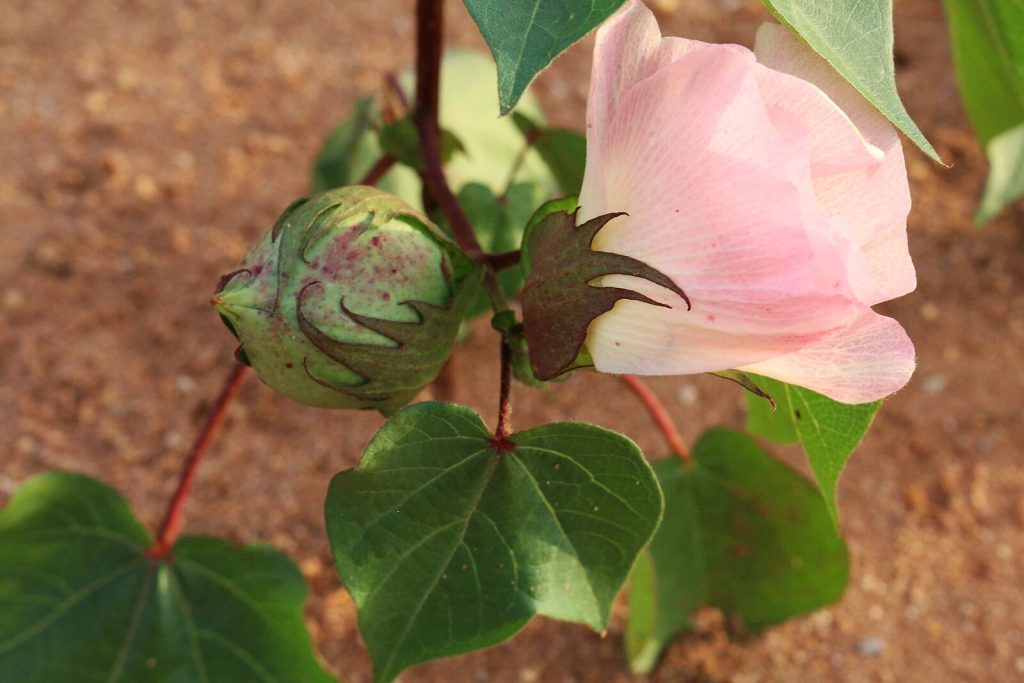
Cotton seed cake is a useful protein source for mature cattle and a documented poisoning risk for pigs, poultry and young stock, and the thing that decides which it is cannot be seen, smelt or weighed. It is a natural toxin called gossypol, and its level in a sack varies by more than tenfold depending on which press made the cake. A Ugandan sack carries no figure for it.
Gossypol Is What Sets Every Cotton Seed Cake Feeding Decision
Cotton seeds carry gossypol in pigment glands through the seed. Pressing or extracting the oil breaks those glands and releases the gossypol into the cake, which is why the cake carries it and the oil largely does not. There is a gossypol free cotton, grown from glandless varieties, and cake made from it does not cause the problem at all. Uganda's cotton is not that cotton.
The toxin exists in two forms and only one of them matters. Free gossypol is the toxic form. Bound gossypol, where the molecule has attached itself to protein, is not toxic, but the binding costs something: gossypol binds preferentially to lysine, and that lysine then becomes unavailable to the animal. So cotton seed cake loses feeding value in the very process that makes it safer, which is the tension running through everything below.
Two groups of animals sit on opposite sides of this. Mature ruminants break gossypol down in the rumen and tolerate it reasonably well. Pigs, poultry, fish and young ruminants whose rumens have not developed are described in the published literature as highly susceptible. That split is not a matter of degree, it is the central fact about the ingredient, and MAAIF's poultry training manual states the operative half of it in five words: gossypol must be treated before use.
Why the Press That Made the Cake Decides the Feed Risk
This is the mechanism that makes a percentage on a page useless, so it is worth following properly.
Heat and shear convert free gossypol into the bound form. A screw press, which is what an expeller is, generates both, so screw pressed cake comes out at the low end of the free gossypol range. Direct solvent extraction uses no mechanical step and no high temperature, so far less gossypol gets bound, and The FAO backed feed resource database Feedipedia puts the residual free gossypol of directly solvent extracted meal at up to about ten times that of screw pressed meal. Pre press solvent extraction, which puts a press step before the solvent, lands back near the screw press level.
Hold that multiple in mind, because it is the whole argument. Two sacks of cotton seed cake with identical protein, identical fibre, identical colour and identical smell can differ in their content of the toxic form by a factor of ten, purely because of which machine made them. Nothing a farmer can do at the counter distinguishes them.
No absolute figure for free gossypol appears on this page, and that is deliberate. The multiples above are what a farmer can act on, because they tell you which questions to ask a seller. An absolute figure would invite the one calculation nobody should make on a Ugandan sack, which is working out an inclusion percentage from a gossypol level nobody has measured.
Which Animals Tolerate Cotton Seed Cake in Feed and Which Do Not
What Gossypol Does to a Pig Herd or a Poultry Flock
Knowing the signs matters more than knowing a number, because the signs are what a farmer will actually meet.
In pigs, published trials record laboured breathing and purple colouration of the nose and ears at higher dietary gossypol concentrations, with some deaths. At lower concentrations that killed nothing, liver and heart weights rose, and the increase tracked the gossypol level. In reproducing stock, mortality rose and reproductive performance fell, with boars affected particularly. Sows showed delayed oestrus. The no observed adverse effect level in growing pigs is a measured dietary concentration, and it cannot be applied to a Ugandan sack, because nobody has measured what is in it.
In cattle, the clearest documented case is instructive for a different reason. A study of cotton seed cake samples associated with cattle and buffalo health problems in Pakistan investigated a set of batches blamed for illness and deaths. Two samples were associated with mortality affecting 16 percent of the milking animals on the farms concerned, and pale livers were noted at post mortem in one case. Three other samples produced reduced milk production, respiratory distress, diarrhoea and then feed refusal. The detail worth carrying is what happened next: those signs reversed after the cake was withdrawn.
That is the practical instruction this page can give with confidence. Where animals on cotton seed cake go off feed, scour, breathe badly or drop in milk, stop the cake and call a veterinary officer. Do not reduce it and wait. Withdrawal is both the diagnostic step and the first treatment, and it costs nothing.
The same Pakistani study carries a second lesson about blame. Genetically modified cotton varieties were widely accused of causing the problem without investigation. The analysis found the samples were all from early maturing transgenic varieties but showed no differences in nutrient composition between batches, and concluded that inappropriate processing and storage in that region's conditions were the main contributory factors. All the samples carried heavy bacterial counts, more than a dozen fungal genera and a mixture of mycotoxins. The suspected cause was the seed. The measured cause was the store.
The Egg and Milk Problem in Cotton Seed Cake Feeding
Two effects show up in the product rather than in the animal, and both cost money without making anything ill.
In laying hens, gossypol discolours the yolk, turning it greenish and mottled, and the discolouration appears mainly after the egg has been stored for a while. So a farm can pass its own inspection and have the complaint arrive from a trader a week later. Separately, cyclopropenoid fatty acids from cotton seed can turn the albumen pinkish. Iron supplementation reduces the gossypol effect. Published guidance treats higher inclusions as acceptable only where yolk colour has no marketing consequence, which for a Ugandan farmer selling into a tray market it usually does.
The laying performance evidence is unusually scattered and that is itself the finding. Published trials report egg production falling at very small cotton seed meal inclusions in some studies and holding up at much larger ones in others. The explanation is the same as for broilers: the free gossypol content of the cake differs between studies, so the inclusion percentage is not the variable that actually governs the outcome. Anyone planning to put cotton seed cake into a layer ration should read that scatter as a warning rather than as permission to pick the favourable study. The layer feed requirements page and the egg price page are the places to weigh what a discounted tray costs against a cheaper sack.
In dairy cattle, the product effect is different. Cotton seed cake does not discolour milk, but it sits on the main aflatoxin carryover route: what a lactating cow eats determines the toxin level in her milk, and no amount of boiling, souring or processing at the dairy end removes it. That makes the cake's mould condition a milk safety question as much as a cattle health question. The cake is a feed ingredient, not a medicine, so it has no withdrawal period of its own. Every manufactured thing added around it does have one. That covers store fumigants, clay binders against mould toxins, the iron supplements sometimes used to offset gossypol, and any medicated ration the cake goes into. For each, the holding time before milk, eggs or meat may be sold is printed by the maker and confirmed by the veterinary officer who supplied it. None is guessed at on this page.
Uganda's Two Training Manuals Disagree About Cotton Seed Cake in Feed
A Ugandan farmer looking for a straight answer will find two government and research backed documents that do not give the same one, and what they say is far enough apart to change an outcome.
MAAIF's poultry training manual gives cotton cake one row among its protein sources, puts protein at 40 to 45 percent, notes it is poor in lysine and the sulphur amino acids, says gossypol must be treated before use, and then gives two inclusion figures in the same cell that differ by a factor of four. The higher figure is conditional on the cake being detoxified and husked. The lower one is given for decorticated cotton seed cake. Husked and decorticated describe the same operation, so the two figures are conditioned on what reads as the same product. Three separate text extractions of the manual return that cell identically, so this is what the manual says rather than an extraction artefact.
Uganda's smallholder pig value chain manual, written by the International Livestock Research Institute, gives a much lower ceiling for pigs in its ingredient text, and then a higher figure for grower and finisher pigs in its own maximum inclusion table, with lower figures again for breeding stock. Its prose and its table do not agree, and the same manual contradicts itself more severely still on maize bran and wheat bran.
No inclusion percentage is printed on this page, and the reason is now visible. Uganda's ministry manual disagrees with itself by fourfold, Uganda's livestock research manual disagrees with itself, the two disagree with each other, and the higher of the ministry's two figures sits well above anything in the international poultry literature. Choosing one would mean inventing a Ugandan recommendation that does not exist, on the one ingredient where being wrong kills birds.
The ILRI manual does supply the fact that settles the practical question, and it is the most important sentence about this ingredient in any Ugandan document. It states that gossypol can be reduced by heating the cake, and that heat treated cotton seed cake is not yet available on the Ugandan market. So the condition MAAIF attaches to its higher figure, that the cake be detoxified, is a condition the Ugandan market does not meet. Read together, the two manuals say that the high inclusion is permitted only for a product you cannot buy here.
Aflatoxin Sits on Top of the Gossypol Problem
The Makerere led ingredient survey measured total aflatoxin across the five materials that dominate Ugandan poultry rations. Cotton seed cake came out second worst, behind maize bran, averaging about 20.25 parts per billion from large scale processors and about 67.25 from small scale ones.
One detail separates cotton seed cake from the other ingredients in that survey and it is not good news. For maize bran, soya and sunflower, buying from a large scale processor made a statistically reliable difference to contamination. For cotton seed cake it did not, and neither did it for mukene. The spread within each group was too wide. So the one purchasing rule that demonstrably lowers risk for the other ingredients has no proven effect for this one.
Storage time is where the risk concentrates, and the Pakistani case study puts a shape on it that Ugandan farmers can use. Oil pressers and retailers interviewed there reported that freshly produced cake was not implicated in poisoning, and that complaints arose after four to five months in storage under hot humid conditions. The aflatoxin levels eventually measured in those stored samples ran between roughly eight and eighty times what the Ugandan survey found in cotton seed cake. Fresh cake, used quickly, is a different product from the same cake after a wet season in a leaky store.
Where Cotton Seed Cake Fits in Ugandan Livestock Feeding
The honest summary is narrow and useful. Cotton seed cake is a real protein source, cheaper per unit of protein than soya in most seasons, and well suited to one job: supplementing mature cattle on poor forage, where the rumen handles the toxin and the protein does useful work. Its published record in dairy rations replacing other oilseed meals is good. It has a constipating effect on cattle that is helpful in rations carrying a lot of molasses.
Outside that job it is the hardest ingredient on the Ugandan feed shelf to use safely, for a reason that has nothing to do with it being a bad feed. The variable that governs the risk is not disclosed, cannot be tested on a farm, differs tenfold with the processing route, and the treatment that would fix it is not available locally. For pigs and poultry, sunflower cake carries no toxin and soya cake carries more lysine, and both are the safer default for a smallholder who cannot get a gossypol figure. The sunflower cake page and the soybean meal page set out what each of those costs instead, and the animal feeds and health hub collects the rest, including the guide on when to call a veterinarian that applies squarely to this ingredient.
Frequently Asked Questions About Cotton Seed Cake in Animal Feed
Can I feed cotton seed cake to chickens? With more caution than any other cake, and the evidence does not support a confident yes for a smallholder. Poultry are among the species most susceptible to gossypol, published trials disagree with each other because the gossypol content of the cake differs between them, and the cake is also poor in lysine so it cannot replace soya weight for weight. Uganda's own research guidance says heat treated cake, which is the lower risk product, is not yet on the market here. For a farmer who cannot obtain a gossypol figure, sunflower cake or soya cake is the safer protein.
Is it safe for dairy cows? For mature non breeding cattle it is the one class where the published record is solidly positive, with multiple trials replacing other oilseed meals in dairy rations without loss of milk yield or composition. For breeding cattle, gossypol affects reproduction even without illness, and published guidance restricts the cake accordingly. Calves under about five months are treated as susceptible because the rumen has not developed. Your own herd's ration should be set with a nutritionist or your district veterinary officer.
What are the signs of gossypol poisoning? In pigs, laboured breathing and purple colouration of the nose and ears at higher exposures, with feed refusal and reduced gain earlier. In cattle, the documented case set showed reduced milk, respiratory distress, diarrhoea and then feed refusal. In layers, greenish mottled yolks appearing after storage. In all cases the action is the same: withdraw the cake and call a veterinary officer. In the documented cattle cases the signs reversed once the cake was withdrawn.
Can I remove gossypol by heating or soaking the cake at home? Heating does reduce free gossypol, which is why commercial screw pressing produces a lower risk cake, but the conditions that achieve it are process conditions rather than something a farm can verify, and over heating binds lysine and costs feeding value. Ugandan research guidance records that heat treated cake is not yet available on the market here, which is a statement about how hard the treatment is to do properly rather than an invitation to try it in a pan. No home treatment is described on this page because none can be verified.
Does cotton seed cake affect eggs I am selling? It can, and after the egg has left your farm. Gossypol causes greenish yolk discolouration and mottling that shows up mainly after a period of storage, and cyclopropenoid fatty acids can turn the albumen pinkish. Nothing about that is visible on the day you collect. For anyone selling into a tray market it is a real commercial risk.
Does buying from a big mill make cotton seed cake safer? For mould contamination, the Ugandan survey found no statistically reliable difference between large and small scale processors for this ingredient, unlike for maize bran, soya and sunflower where the difference was clear. For gossypol, the processing route matters rather than the size of the firm. So the usual rule of thumb does not transfer here, and buying fresh and using it quickly is better evidence based advice than buying big.
Is it worth using because it is cheap? Compare per kilogramme of protein rather than per sack, and then add what the risk costs. On mature cattle the arithmetic often favours it. On pigs and poultry the saving has to cover a lysine shortfall you will need to make up, a documented production risk you cannot measure, and for layers a possible discount on stored eggs. Prices for all the oilseed cakes move with the crushing season and the district, so check locally rather than working from any figure on a page.
Cotton seed cake prices and grades vary with the ginning and crushing season and by district, and the figure that actually governs safety is not printed on the sack. Ask sellers near you which press made the cake and how long ago, buy in quantities you will use quickly, and take any decision about feeding it to pigs, poultry, calves or breeding stock to your district veterinary officer or extension officer first. For stockists and for veterinary contacts by district, start with the pig feed buying page and the supplier directory.