
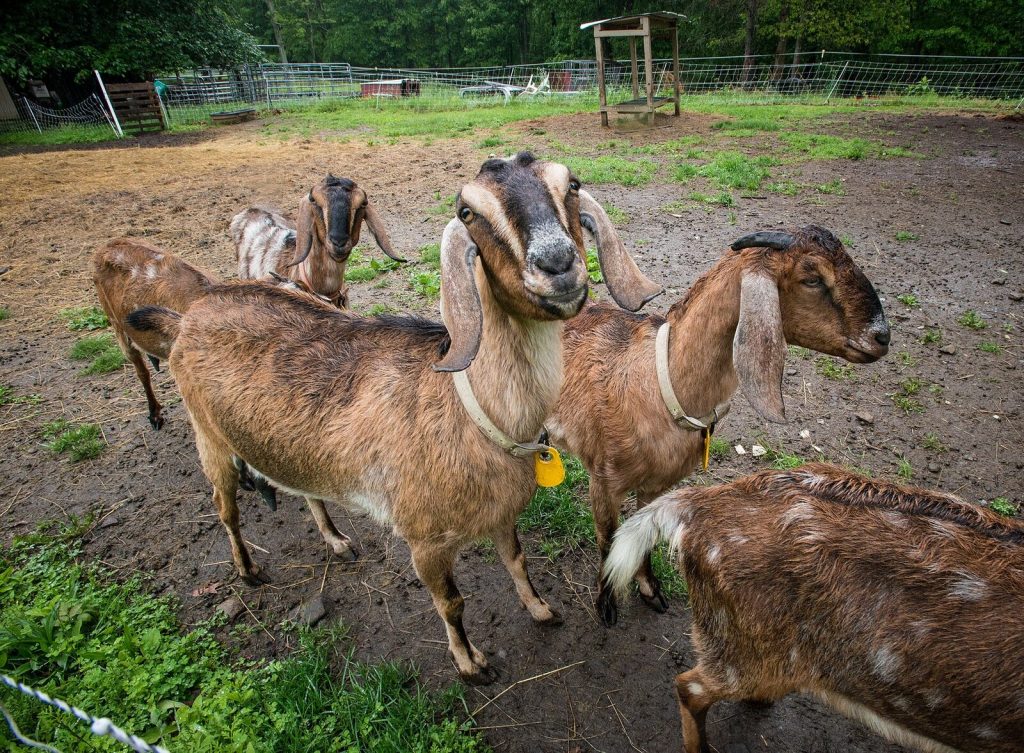
Deworming goats only works while the drug you buy still kills the worms living on your own farm, and Ugandan field trials keep finding that it no longer does. A nationwide study by Makerere University's veterinary college detected resistance to at least one anthelmintic group on most of the goat farms it tested. Ugandan goats carry mainly Haemonchus contortus, a blood feeding stomach worm, so the first damage you see is pale gums rather than worms in the droppings.
Why Worm Control Fails on Many Ugandan Goat Farms
Most worm advice a Ugandan goat keeper meets is a calendar. Dose everything, this month and again in three months, and move on. The Ugandan evidence says the calendar is the part that stopped working. Two separate studies, one national and one in the south western highlands, both found that the drug names on the shop shelf no longer map onto what those drugs do in the field. A product can clear a herd in Kanungu and barely dent the same worms in Kisoro.
That matters more than it sounds. When a treatment removes only half the worm population, the survivors breed and the farm's worm population tilts towards the ones the drug cannot touch. Each round of blanket dosing selects harder. The goats look treated. Nothing improves. And the farmer, reasonably, buys the same bottle again because it worked the first two times.
So the useful question is not which dewormer to buy. It is whether the one you already use still works where you keep goats, and how to stop pushing the whole herd towards the day when nothing does. This page sits under the wider animal feeds and health guides, and it deliberately carries no doses, because a dose belongs on the product label and in the hands of the veterinary officer who weighs your animals.
The Worms That Matter in a Ugandan Goat Herd
Across the five districts in the national study, larval cultures showed Haemonchus making up more than three quarters of the worms present. That single fact shapes everything else on this page. Haemonchus contortus lives in the stomach and feeds on blood, so a heavy burden shows up as anaemia: pale inner eyelids and gums, weakness, poor growth in kids, sometimes swelling under the jaw. It does not usually show as scouring, which is why goat keepers waiting for diarrhoea before they act are waiting for the wrong sign.
The same study picked up Trichuris eggs in a small share of pre treatment samples and noted that these eggs are heavier than the strongyle eggs the flotation method is tuned for, so some were probably missed. Worth knowing when a laboratory result comes back lower than the animal in front of you looks.
Neither Ugandan study found that local or crossbred goats start out reliably cleaner than each other. In the highlands trial breed had no measurable effect on egg counts before treatment at all. Choosing a breed is not a worm control strategy on its own, whatever else it does for you. If you are weighing types, the goat breed comparison is the place for that decision.
What Ugandan Deworming Trials Found, District by District
The clearest Ugandan picture comes from a NARO trial run out of the Kachwekano institute in Kabale, which tested four anthelmintic classes on goats grazing natural pasture across four highland districts. Every animal was treated according to the manufacturer's instructions for its own weighed body weight, and egg counts were compared two weeks later. Below 95% reduction counts as resistance under the international method the study used.
| District | Active | Egg count cut | Verdict |
|---|---|---|---|
| Kabale | Levamisole | 96% | Working |
| Kabale | Ivermectin | 97% | Working |
| Kabale | Closantel | 91% | Resistant |
| Kabale | Albendazole | 87% | Resistant |
| Kisoro | Closantel | 99% | Working |
| Kisoro | Ivermectin | 97% | Working |
| Kisoro | Levamisole | 85% | Resistant |
| Kisoro | Albendazole | 49% | Resistant |
| Rukungiri | Closantel | 100% | Working |
| Rukungiri | Ivermectin | 95% | Working |
| Rukungiri | Levamisole | 91% | Resistant |
| Rukungiri | Albendazole | 81% | Resistant |
| Kanungu | Albendazole | 99% | Working |
| Kanungu | Ivermectin | 99% | Working |
| Kanungu | Closantel | 98% | Working |
| Kanungu | Levamisole | 72% | Resistant |
Read down the albendazole rows. In Kisoro it removed under half the eggs. One district away in Kanungu it removed nearly all of them. Levamisole does the reverse. The two districts are neighbours. No national recommendation can be right in both places at once, and that is the whole argument for testing rather than asking.
The national study reached a compatible conclusion by a different route, and it put the classes in a different order. Across 33 farms and roughly five hundred goats in Soroti, Gulu, Mpigi, Mbarara and Ssembabule, resistance turned up to every group tested. It was commonest to ivermectin, next to levamisole, and least common to albendazole, which is the drug most of those farmers actually used. That is the opposite of what heavy use alone would predict, and it is also the opposite ranking to the highlands trial. Two Ugandan studies, two different worst offenders. Treat any list that tells you which dewormer is best in Uganda as a list about somebody else's farm.
Spotting a Worm Burden Before It Costs You a Goat
Because the main worm is a blood feeder, the cheapest check on a Ugandan goat farm is the colour of the membrane inside the lower eyelid. That is the principle behind the FAMACHA eye colour card, a five step chart developed for sheep in southern Africa and evaluated in Ugandan goats by the Makerere team. Pale means anaemic, and anaemic in a wormy goat usually means Haemonchus.
Two honest caveats, both from the Ugandan evaluation itself. First, when the researchers compared card scores read in the field against laboratory blood readings from the same animals, agreement was poor enough that they called for further development before the card is relied on alone. Second, a card is only as good as the person trained to read it, which is why extension officers hand them out with a demonstration rather than by post. Use the eyelid check to decide which animals need attention and which do not. Do not use it to decide that a sick goat is fine.
Grazing, Tethering and Where Goats Pick Worms Up on the Farm
Worm larvae are on the grass, not in the shed. A goat swallows them with the bottom few centimetres of pasture, which is exactly where the larvae sit, and the wetter the ground the longer they survive. This is why worm pressure in Uganda rises through the rains and why grazing pattern predicts infection better than any bottle does.
The national study put numbers on it. Goats on open paddock grazing were about five times more likely to be carrying resistant worms than tethered goats, and herds of forty animals or more about four times more likely than smaller ones. In the large paddock flocks more than eight farms in ten showed resistance, against roughly a quarter of the small tethered ones. The mechanism is not that paddocks are dirty and ropes are clean. It is that bigger, better organised farms dose more often, and dosing more often is what selects the survivors.
Tethering is not automatically the answer either, because a goat moved to a fresh post every day is being deliberately kept off yesterday's contamination, and a goat left on the same worn circle for a week is eating its own larvae. The practice inside the system is what counts. Housing helps too, mostly by keeping animals off wet ground overnight: the goat housing guide covers raised slatted floors, which is the arrangement most of the studied Ugandan farms used.
Testing Your Own Herd Before and After Deworming
The test both Ugandan studies used is available through district veterinary services and university laboratories, and it is the single most useful thing a serious goat keeper can pay for. A faecal egg count is run on a sample of animals, the herd is treated, and a second count on the same animals about a fortnight later shows how much of the worm population the product actually removed. If the drop is small, you have your answer about that product on your farm, and you have it before losing kids.
Practical notes that make the result mean something. Collect from several animals rather than one, because burdens vary widely within a herd. Sample animals that have not been treated for some months, since a recent dose flattens the count and hides the problem. And record it. A single test tells you about today; two tests a year apart tell you which way your farm is moving. The livestock record template is enough structure for that.
Why Dosing Goes Wrong on Small Farms
Here is the part almost nothing written for goat keepers explains. A goat is not a small sheep. Goats clear several of these drug groups from the bloodstream faster than sheep do, so a rate worked out for sheep leaves a goat underexposed, and underexposure is precisely the condition that breeds resistance. The Ugandan national study handled this by giving one and a half times the sheep rate the manufacturer stated, and by calculating every group's dose from the weight of the heaviest goat in it rather than the average. Both adjustments follow published international method.
Read what happened next, because it is the most important sentence in this whole body of work. Even at one and a half times the sheep rate, and even dosing to the heaviest animal, roughly half the tests still showed resistance. The failures were not underdosing artefacts. They were real.
Which is why this page names no number. The multiple above is a research method, published so that other researchers can repeat it, and it is not an instruction to increase a dose at home. Guessing upward poisons goats, and guessing downward breeds resistant worms.
Deworming Kids, Pregnant Does and Bought In Breeding Stock
Three situations change the calculation, and all three are about exposure rather than about the calendar.
Kids are the vulnerable group. Immunity to these worms is built by meeting them, so a young goat has little of it, and the highlands trial measured heavier egg counts in kids than in adults. A young animal also has less blood to lose. Kids are where close watching pays, and where the eyelid check is worth doing regularly rather than occasionally.
Around kidding, a doe's resistance to worms dips and her egg output rises, which seeds the pasture her own kids will graze. This is well established across small ruminants and it is the reason veterinary programmes treat the doe rather than waiting for the kid. What to give and when is a decision for the vet who knows both the animal and the district.
Bought in stock is the third. A goat arriving from another district arrives with that district's worms, including whatever survived that district's dewormers, and dropping it straight onto your pasture is how resistance travels. Hold new animals separately for a period, get them treated and checked before they join the herd, and take advice on which product to use for exactly this job. Anyone buying improved stock should read the Boer goat guide and goat farming in Uganda alongside this page, because quarantine is cheaper than a resistant worm population.
Milk, Meat and the Withdrawal Period on a Goat Farm
Goat milk goes into a household bucket daily and goat meat goes to a butcher at short notice, which makes this the section people skip and should not. Anthelmintics leave residues. Every product carries a period after treatment during which the milk must not be consumed or sold and the animal must not be slaughtered, and that period is different for each product and each route.
The period is on the label. Read it before you dose, not after, because the decision you may have to make is whether to treat the animal at all this week or wait until it is not about to be sold. Ask the seller to show you the withdrawal statement on the pack, and if the pack has no legible label, do not buy it. Loose product decanted into an unlabelled bottle is not a bargain; it is a product whose withdrawal period you cannot know.
One Ugandan pattern makes this worse and it is worth naming. Where livestock is dosed shortly before sale, treatment and slaughter land close together by design. That is a residue risk in the meat chain rather than a benefit to the animal. The same behaviour is documented in Ugandan pig keeping and it is covered on the pig deworming guide; the principle is identical for goats.
Manure, Pasture Rest and What Lowers Worm Pressure Without a Drug
Because resistance is driven by treatment frequency, the way to protect the drugs you have is to need them less. Nothing here is exotic and none of it costs money.
Rest the grazing. Larvae die off on pasture that carries no goats, faster in dry hot weather and slower in the rains, so rotating tether posts and resting paddocks breaks the cycle at the point where most of the worm population actually lives. Keep goats off the very short regrowth where larvae concentrate. Clear droppings out of night housing and compost the manure rather than spreading it fresh on grazing ground; the compost guide covers the heap that does that properly. Feed adequately, because a goat meeting its protein needs tolerates a worm burden far better than a hungry one, which is the quiet argument in the goat feeding guide. And cull the repeat offenders: in most herds a minority of animals shed most of the eggs, and a doe that needs treating every time is a doe seeding your pasture between treatments.
Treat selectively rather than by the whole herd where your vet agrees the herd can carry it. That is the entire logic of the eye colour card, and it is what the Ugandan researchers recommended: restrict treatment to the animals that need it, lower the selection pressure, buy yourself years.
Questions Ugandan Goat Farmers Ask About Deworming
How often should goats be dewormed in Uganda? Published Ugandan planning guidance, including the enterprise parameters used by the national animal genetics agency, puts routine goat deworming at roughly quarterly alongside weekly tick control and vaccination at least twice a year. Use that to budget, not to decide. The field evidence above says dosing frequency is what created the resistance problem, so the real programme is the one a veterinary officer sets for your district, your grazing system and your test results.
Can I tell from the droppings whether my goats have worms? Not reliably, and this is the commonest mistake. The dominant Ugandan goat worm feeds on blood in the stomach and does not usually cause scouring, so a firm pellet tells you very little. Egg counts need a microscope. What you can read without one is the colour of the eyelid membrane.
Does rotating between dewormers stop resistance? Not on its own, and the Ugandan data is uncomfortable on this point. In the national survey almost no farm rotated products, and the two large institutional farms that did rotate were among those with very high resistance. Rotation without knowing which classes still work on your farm is just a slower way of exhausting all of them. Find out what still works first.
Are herbal or home remedies a substitute for a dewormer? Plant preparations are widely used and widely written up, and the research literature on them is explicit that popular belief has run ahead of anything measured. No Ugandan trial in this evidence set tested a plant preparation against a laboratory egg count reduction, so this page makes no claim either way. What it will say is that treating a badly anaemic goat with something untested is a way to lose the goat, and that the management measures in the section above have evidence behind them and cost nothing.
What does deworming goats cost in Uganda? Small enough per animal that it is never the reason a goat enterprise fails, and it varies by active ingredient, pack size, district and season, so a single figure would mislead. The line that matters in a budget is the whole animal health block rather than the bottle: dosing, tick control, vaccination and the vet call you will eventually make. Cost of starting goat farming sets it out against the other startup lines, and goat prices show what the animal you are protecting is worth.
Is the milk safe after treating a doe? Only after that product's withdrawal period has passed. It is printed on the pack, it differs between products, and it is not a general rule anyone can give you in advance. If the pack is unlabelled you have no way to know, which is reason enough to refuse it.
Should I deworm a goat I have just bought? Handle it as a quarantine question rather than a routine one. The animal carries its former farm's worms, resistance included, and the point of treating and checking before it joins the herd is to keep those worms off your pasture. Ask your vet which product to use for that specific job, because the aim is a clean animal rather than a treated one. Sick goats and goats that do not respond belong in common goat diseases, since not everything that wastes a goat is a worm.
When you are ready to buy, look for an agro veterinary outlet that stocks labelled product with a legible withdrawal statement and that can tell you what is registered in Uganda for goats, and get your district veterinary office to weigh the animals and set the programme before you dose anything. Our suppliers directory is the place to start looking, and it is worth asking two outlets the same question before you spend.