
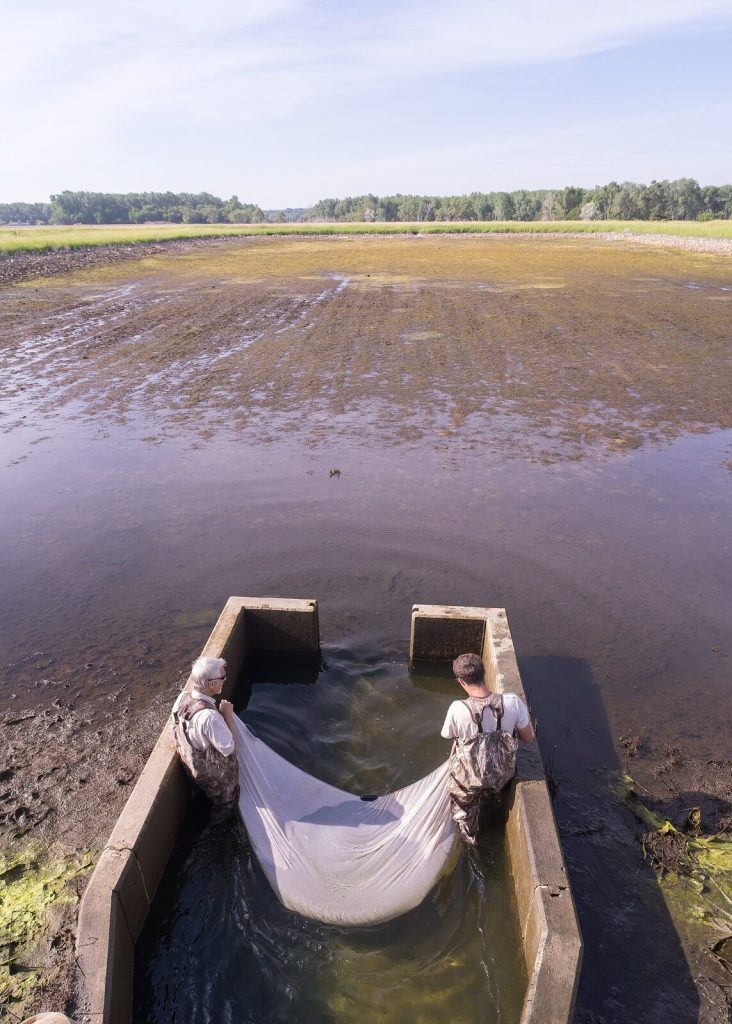
Two numbers decide whether a fish feed meets requirement: the crude protein percentage and the particle size. Ugandan extension guidance puts tilapia at 28 to 30 percent crude protein and African catfish at 32 percent, in a pellet the fish can actually swallow. The harder question on a Ugandan farm is whether the bag in front of you contains what its label claims, because sampling in the Lake Victoria basin says often enough it does not.
Fish Feed Requirements in Uganda: Protein, Particle and Water Stability
A fish feed requirement is the minimum energy, protein, fat, mineral and vitamin content the fish needs for maintenance, growth, reproduction and health. It moves with species, age, size and reproductive state, and what the fish can extract from a feed depends on how digestible that feed is, so two feeds with the same label figure are not interchangeable.
The physical side of the requirement gets less attention and fails more often. A feed has to be the right particle size to be ingested, hold together in water until it is eaten rather than dissolving into the pond, and carry no mould or contaminant. Ugandan guidance sets the physical standard for a manufactured particle as uniform texture and size, no fines, and water stability of at least thirty minutes. Fines are the dust at the bottom of the bag. They are feed you paid for that the fish cannot eat and that goes straight into the water quality problem.
Feed is also the largest thing on the farm financially. MAAIF's manual puts it at 60 to 70 percent of operational cost, and the manual's own pond budget elsewhere puts it at 91 percent of variable cost, while a survey of 200 central Ugandan farms measured it at 24.8 percent. That last figure looks wrong until you see what those farms were feeding: 47 percent were on maize bran and only 24 percent on manufactured feed. A cost structure where feed is a quarter of the total is not a cheaper farm, it is a farm that is not meeting the requirement.
Crude Protein Requirements for Tilapia, Catfish and Carp
MAAIF's requirement table is reproduced below with the species column checked against the caption, because a figure lifted from the wrong row of a nutrition table looks perfectly well formed.
| Nutrient in diet | Tilapia | African catfish | Mirror carp |
|---|---|---|---|
| Crude protein | 28 to 30 percent | 32 percent | 28 to 35 percent |
| Energy per gramme protein | 8.5 to 10 kcal | 8.5 to 9.5 kcal | 8.9 kcal |
| Carbohydrate | 25 to 35 percent | 20 to 35 percent | 30 to 40 percent |
| Fibre | Under 2 percent | Under 4 percent | Under 3 to 7 percent |
The tilapia protein figure carries a condition that is easy to miss and matters a great deal: 28 to 30 percent depending on pond fertility. A tilapia in a well managed green water pond is grazing phytoplankton all day, and plankton alone can carry a young tilapia a surprising distance. So the protein you have to buy depends on how productive your water is, which makes pond fertility part of the feed requirement rather than a separate subject.
Wider literature brackets the catfish figure rather than contradicting it. Reviews put juvenile catfish around 40 to 50 percent crude protein and adults around 30 to 40, across a whole stage range of roughly 25 to 50 percent, and note that about 28 percent can be adequate for growout when fish are fed to satiation. A least cost catfish diet worked out for Ugandan conditions came in near 34.6 percent. MAAIF's single figure of 32 percent sits inside all of that, which is reassuring, and the spread tells you the requirement is a band and not a constant.
Fry need more protein than adults, and they need it in a smaller particle. Those two move together, which is why a starter powder and a finisher pellet are different products rather than the same feed in different bags.
Energy, Fat and Fibre in a Fish Diet
Energy is not a nutrient. It is what drives the chemical reactions behind maintenance, growth and activity, and it is expressed here per gramme of protein rather than per kilogramme of feed, which is a way of saying that protein and energy have to arrive in proportion. Feed protein without enough energy alongside it and the fish burns the protein for fuel, which is the most expensive way to heat a pond.
Fat is the major energy source for fish and the route by which fat soluble vitamins such as A and D get absorbed. It also carries flesh texture and flavour, and it makes the feed attractive. The catfish requirement in MAAIF's table is 4 to 6 percent, rising as the protein level rises. The tilapia cell in the same row reads 0.5 percent, which is not credible next to 4 to 6 percent for another warm water species in the same table, and looks like a truncated range. This page publishes the catfish band and does not publish a tilapia fat figure.
Carbohydrate is a minor energy source for fish, which digest it poorly. Its main job in a fish feed is as a binder or filler holding the pellet together. Cereals and grains carry it, and the manual notes they have to be cooked to be palatable and digestible, because plant cell walls and complex carbohydrate molecules defeat a fish gut that never evolved for them.
Fibre is not really a requirement at all. Fish barely use it, and excess fibre leaves the pond dirtier, which is why the ceilings in the table are ceilings rather than targets. This is also the clearest technical reason maize bran on its own is a poor fish feed rather than a cheap one.
Minerals and vitamins do a long list of jobs, from hard and soft tissue structure to enzyme activation and acid base balance. This page prints no inclusion figure for them, and the reason is specific: the mineral and vitamin row of that table came out of the document with its cells merged, giving readings that cannot all belong to one coherent specification. The premix is where they come from, and the inclusion is on the label. What is worth knowing instead is the consequence of getting it wrong: signs of vitamin C deficiency are common on Ugandan farms using on farm made feeds and feeds used more than two or three months past manufacture.
Natural Food, Supplementary Feed and Complete Feed
Ugandan guidance recognises three classes, and mixing them up is the most common way a feeding plan goes wrong.
How Much to Feed: Why the Ration Comes From Sampled Weight
Here is where this page parts company with almost every other fish feeding page, on the instruction of the Ugandan manual itself.
A ration is how much feed each fish gets per day and at each meal. Feeding charts exist and the manual includes one. It then tells the reader to determine the new ration from the average size of fish at sampling and NOT from the weeks in production the chart indicates, and to re sample and re adjust every 7 to 14 days for small fish, which have a higher metabolic rate and grow faster. That is a direct instruction not to feed off the chart, and it is correct: two ponds stocked the same week can hold fish of very different size, and feeding the slower pond as though it held the faster one wastes feed into the water.
This article publishes no growth stage feeding percentage at all. Two reasons. The manual disqualifies them, and its own chart extracted from the document with half its columns missing, so the pairing between a fish size and a feeding rate could not be established. Figures of that shape circulate widely, often with no source at all, and a mis paired feeding rate is either a starved pond or a ruined one.
What is sourced and safe to state is the other end of the curve. Once a production unit is at its carrying capacity, the manual's instruction is to reduce feeding and feed only for body maintenance to prevent weight loss, because additional feed will not produce additional growth no matter how much goes in. Maintenance rations for grow out fish run 0.5 to 1 percent of body weight. And if at least 30 percent of the fish in a unit are due for harvest within a couple of days, stop feeding until after harvesting.
Between those points the method is response feeding, and it needs no chart. Administer feed at the same place and the same time each day until the fish learn where to come, which can take a week. Then broadcast a handful, and add another scoop while the fish are still taking it fast, stopping when the response falls off. Weigh what is left and keep it for the next meal. The manual grades the response for you, in four steps rather than three. An excellent response is feeding finished within 5 to 10 minutes, a good one is 15 to 20 minutes, a fair one is about three quarters of the feed taken over more than 30 minutes, and a poor one is more than three quarters left uneaten. It also notes that these criteria are subjective, that the same person should feed every day, and that the person who feeds should be the one who keeps the records.
Do not trickle feed in small bits. The competition created by feeding all the fish at once is what makes growth uniform and conversion efficient. And feed when the water is working for you: in outdoor units, from about ten in the morning once temperature and dissolved oxygen have begun to rise, with the last feed around four in the afternoon.
Appetite is not constant either. Fish eat less when water temperature drops in the rains, when dissolved oxygen and pH are low or ammonia is high, for two or three days after grading or sampling, when a predator has been at them, and when larger fish are bullying smaller ones. None of that shows on a chart.
Feed Conversion and What a Kilogramme of Farmed Fish Costs to Feed
The feed conversion ratio is the amount of feed it takes to produce a unit weight of fish, and it is the test that decides whether a feed is worth buying. The manual's worked case: 200 kg of feed fed, half a kilogramme of fish stocked, 140 kg harvested, so the biomass gained is 139.5 kg and the ratio is about 1.4.
Then the manual compares three options, and the comparison is the most useful table in Ugandan aquaculture extension material.
| Feed option | Feed per kg of fish | What that means |
|---|---|---|
| Maize bran alone | About 9 kg | Five times the weight of pellet |
| Farm mixed feed | About 5 kg | Under three times pellet |
| Complete pellet | About 1.8 kg | The reference point |
The farm mix in that table was 60 percent maize bran, 15 percent fish meal, 15 percent sunflower cake and 10 percent cassava flour, which is stated here only so the 5 kg figure is readable. Formulation belongs on the feed formulation page.
Read the multiples rather than the shillings. A complete pellet does the same job on about one fifth the feed weight that maize bran needs, and about one third of what the farm mix needs. Whether that makes it the cheapest feed depends entirely on the price ratio between the options on the day you buy, and this is where the manual contradicts itself: its prose states that the feed with the lowest conversion ratio "is often the one with the lowest production cost", while its own table, at the prices printed in it, shows the complete pellet as the most expensive way to grow a kilogramme of fish and the farm mix as the cheapest. Both statements are in the same document a few lines apart.
The resolution is not to pick one. It is to do the multiplication yourself with today's prices, because the answer flips on the price ratio. The arithmetic is one line: feed needed per kilogramme of fish, times the price per kilogramme of feed, equals what you spent to grow a kilogramme. Run it for every option available locally and the cheapest feed is whichever comes out lowest, which is not reliably the cheapest bag or the best pellet.
One caution about lifting numbers out of worked examples, including from Tier 1 documents. The manual's own FCR box asks what a kilogramme of fish costs "if each kilogram of feed cost USh.500", then multiplies by 2,000 and reports a result that reconciles with 2,000 and not with 500. The method is right and the stated price is a slip. Check the arithmetic in any worked example before you trust its inputs.
Fish Feed Quality in Uganda: What the Label Says Against What Is Inside
Everything above assumes the bag contains its label. On the record, a senior Ugandan fisheries officer has described feed sold as 30 percent protein testing nearer 10 percent. That is not a rounding problem. A tilapia diet at 10 percent crude protein is roughly a third of requirement, and a farmer feeding it is paying pellet prices for something closer to bran.
Several things behind that are structural rather than dishonest. Fishmeal, the region's main protein concentrate, is made mainly from sun dried small sardine, mukene in Uganda, and its protein content varies from about 40 to 60 percent with season, fishing ground and handling. A miller buying that variable input without testing each batch cannot hold a constant label figure. The same small fish is also a human food, so it is expensive and getting more so.
Storage does the rest. Feed used within four weeks of manufacture usually meets the nutritional and physical standards on its label, and quality falls steadily from there. So the label figure and the delivered figure diverge with every week the bag sits in a store.
Which gives a practical rule. Buy the freshest bag in the shop and check the label date, buy only what will be used inside four to six weeks, and treat the label as a claim about a fresh product rather than a guarantee about the sack in front of you. Uganda's Animal Feeds Act now makes packaging and labelling a statutory matter and prohibits the sale of feed that does not comply with established standards, with feeds inspectors, feeds analysts and a quality control laboratory behind it. Keep the bag and the batch number, because that is what an inspector or an analyst would need.
Mould and Aflatoxin in Ugandan Fish Feed
The most thorough Ugandan work on this sampled 147 fish feeds from nine farms and seven feed factories in the Lake Victoria basin. What it found reorders where a farmer should look for the problem.
Now the part a farmer most wants and cannot have. Uganda specifies no permissible limit for aflatoxin or fumonisin in fish feed. The regulator has adopted limits set elsewhere in East Africa for maize and groundnuts, and Uganda's own aflatoxin limit applies to human food rather than to feed. Among the authorities that do set an animal feed limit, the strictest and the most permissive differ by a factor of four, and the concentrations measured in those Ugandan samples spanned more than tenfold. This page prints none of those values, because a figure you cannot compare against a legal limit is a number to anchor on rather than a number to act on, and because MAAIF's own aflatoxin material has been found stating one figure in prose against different ones in its own table.
What is actionable does not need a limit. Buy fresh and buy small. Store dry, cool and ventilated. Keep the pellet you make or buy off the floor. Discard what smells, looks or feels wrong. And if you mix on farm, understand that the evidence puts your product at higher risk than the factory's, not lower.
Storing Fish Feed So It Still Meets Requirement
A feed that met requirement at the mill gate and does not at the pond edge has failed just as completely as a badly formulated one. The manual's storage guidance is short and every line of it has a mechanism.
Protect the feed from moisture, heat and direct sunlight in transport and in store, because heat and sunlight destroy vitamins outright. Store it in a cool, shaded, dry, well ventilated room, since warm, moist, stagnant air grows mould and attracts insects. Do not stack bags against a wall or straight onto a concrete floor; put them on pallets, off the walls, so moisture cannot wick into the sacks. Keep rodents, bats, poultry and other animals out, because they eat the feed and contaminate what they leave with urine and droppings. Use stock first in, first out. Do not use pesticides or other toxic materials near feed. And do not keep feed that is mouldy or spoilt, the signs being changes in colour, smell, taste, appearance or texture.
Two specifics worth singling out. If you are feeding during rain and the feed gets wet, feed all of that wet feed the same day. Do not store it and do not feed it tomorrow. And moist or live feeds are refrigerated, not shelved.
When Not to Feed, and the Withdrawal Point on Farmed Fish
Feeding on the wrong day costs money and sometimes costs fish. The manual's list of when to hold back is worth more than most feeding advice.
The Ugandan Fish Feed Supply Gap and What It Means for a Small Farm
Requirement is one thing and availability is another. Ugandan feed factories produce something like 75,000 tonnes of fish feed a year against national aquaculture output of about 111,023 tonnes a year.
Two papers state that 75,000 tonnes is a small fraction of "120 million tonnes required". That cannot be right, and the correction is worth having because the wrong figure makes the shortage look hopeless rather than solvable. A country growing about 111,000 tonnes of fish needs feed measured against that: at a feed conversion ratio of 1.5 to 1.8, which is the range the Ugandan modelling in the same literature uses, the requirement is roughly 167,000 to 200,000 tonnes. So local production covers something like 37 to 45 percent of it, on those stated assumptions. That is a real and serious gap, and it is a gap of a bit over half rather than of three orders of magnitude. Both papers share a citation for the claim, so they are one source and not two.
The consequence for a small farm is that the good feed goes to whoever can buy it in volume and import it. Larger farms import, mainly from Zambia, Egypt and Brazil, and several partner directly with overseas manufacturers. Taxes on animal feeds and on the premixed raw materials used to make them have been progressively removed across Uganda and its neighbours, which helps, and the plant and machinery to mill feed comes in duty free. None of that reaches a farmer with one pond.
Which is why so many Ugandan fish farmers make their own feed, and why that is harder than it looks. Most rural fish farms lack the technology, the electricity and the machinery to prepare feed properly, and hand operated mincers cap the scale of the whole operation. Combine that with the contamination evidence above, where farm feed was the more contaminated of the two, and the honest position is that on farm feed making is a legitimate response to a supply gap and a route to a worse product unless the storage and drying are right. Uganda's aquaculture target of a million tonnes rests on solving this, and it has not been solved yet.
The other route is the one the manual keeps pointing at and that costs nothing: make the pond do more of the feeding. Phytoplankton can supply a good part of a young tilapia's nutrition, which is why the requirement table's tilapia protein figure is conditioned on pond fertility in the first place.
Where to Confirm a Fish Feed Requirement for Your Own Pond
The label on the bag is the operative document for the product in your hand, and it is now a regulated one. For the requirement itself and for anything touching a treatment, the authorities are your district fisheries officer or extension officer and a veterinary practitioner licensed by the Uganda Veterinary Board. If you want the crude protein of a feed or of your own mix measured rather than assumed, a feed analysis laboratory is what settles it, and the Act provides for a quality control laboratory.
Work outward from the animal feeds and health hub. The fish feeding guide covers the daily routine this page leaves alone, and fish feed formulation covers building your own. Since the ration has to come from sampled weight, the fish feed calculator does that arithmetic. Species detail sits on the tilapia farming guide and the catfish farming guide, and the wider enterprise on fish farming in Uganda. Because carrying capacity sets the point where feeding for growth stops working, read fish pond stocking density alongside this. For the treatment side, fish diseases and treatment, and for the contamination side, storing animal feed safely and maize bran in animal feeding. The money is worked through on the cost of fish farming, and stocking material on fish fingerling prices.
Fish Feeding Questions Ugandan Farmers Ask
How much does fish feed cost in Uganda? Sinking pellet has been reported at roughly 3,500 to 3,800 shillings a kilogramme and imported floating feed at around 5,000, and the gap between those two is often the difference between a pond that clears its costs and one that does not. Prices move with the maize and cotton seed harvests, with the exchange rate on imported feed, and with how far you are from a mill. What decides your bill is not the price per kilogramme but the price multiplied by the feed needed per kilogramme of fish, so get current quotes and run that sum for each option.
Can I just feed maize bran? You can, and it will take roughly five times the weight of feed to grow the same kilogramme of fish as a complete pellet does. Whether that is cheaper depends on the price ratio on the day. What it will not do is meet requirement in a system with no natural food, because bran is high in fibre that fish barely use and low in the protein they need, so in a tank or a crowded cage it produces poor growth rather than cheap fish. In a fertilised pond, where plankton is carrying part of the load, bran as a supplement behaves very differently from bran as a diet.
What percentage of body weight should I feed per day? This page deliberately does not give one for growing fish, and the reason is that MAAIF's own manual tells you to set the ration from the average size of fish at your last sampling rather than from a chart, and to re sample every 7 to 14 days while they are small. Percentage figures circulate widely with no stated source, and pairing the wrong rate to the wrong size either starves the pond or fouls it. Use response feeding, which is sourced: feed until the response falls off, and treat feeding finished in 5 to 10 minutes as excellent, 15 to 20 as good, and three quarters left as poor. At carrying capacity, drop to the 0.5 to 1 percent maintenance range.
Is the protein on the label real? Not reliably. A senior Ugandan fisheries officer has described feed sold as 30 percent protein testing nearer 10. The honest defences are practical rather than analytical: buy the freshest bag, buy only what you will use in four to six weeks, keep the bag and the batch number, and watch the fish. If a feed that should convert at under 2 is taking four or five kilogrammes to make a kilogramme of fish, the bag is telling you something the label did not.
Should I be worried about aflatoxin in my fish feed? The Ugandan sampling is uncomfortable reading: aflatoxin B1 was detected in 63 percent of farm feed samples and 48 percent of factory samples in the Lake Victoria basin, and it was the finished crumbles, pellets and powders that carried it rather than the raw bran and meal. There is no Ugandan permissible limit for aflatoxin in fish feed to test against, and among the authorities that do set an animal feed limit the strictest and most permissive differ fourfold, which is why no figure appears here. The practical answer is fresh stock, dry ventilated storage off the floor, and discarding anything that smells or looks off, remembering that clean looking feed is not proof of anything.
Do I need different feed for fingerlings and for grown fish? Yes, on two counts at once. Fry and fingerlings need a higher protein level and a smaller particle, and the two go together, so a starter is a powder or a fine crumble and a finisher is a larger pellet. A correct formulation in the wrong pellet size is refused by the fish even when the nutrition is right, which is one of the named causes of a poor conversion ratio.
Can I stop feeding to save money before harvest? Briefly, and for the right reason. Ugandan guidance is to stop two days before harvest and transport, and to hold the afternoon feed before sampling, because a fish with a full gut handles handling badly. If at least 30 percent of a unit is due for harvest within a couple of days, stop feeding until it is done. That is a handling decision rather than an economy, but it happens to save the feed as well.
Feed availability, quality and price all vary a great deal between districts and between one delivery and the next, so the useful next step is local: ask your district fisheries or extension officer who is supplying feed that performs in your area, get current quotes from more than one seller, and compare the labels and the batch dates rather than the sacks.