
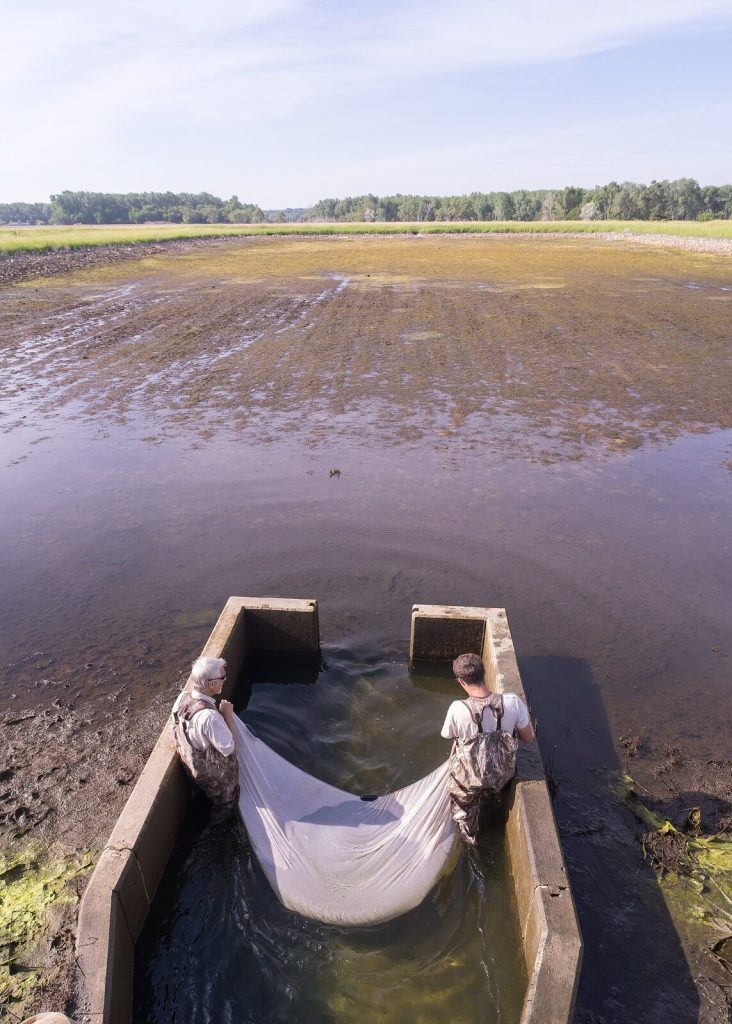
A Ugandan pond of Nile tilapia takes most of a year to reach table size, so tilapia farming here is a one cycle enterprise rather than the two cycle business the species runs elsewhere. Work back from that. Pond depth, liming, stocking against carrying capacity, monosex seed and harvest weight are the levers you actually hold, and each one is set before the fish go in.
Nile Tilapia Farming in Uganda and the Length of a Pond Cycle
Nile tilapia farming in Uganda is built on one species, Oreochromis niloticus, which the ministry's extension manual names as the most widely farmed fish in the country. It carries a deep body and more flesh than its relatives, runs from about 11 to 40 cm, takes a wide range of diets, and grows in ponds, tanks and cages alike. The trade off is temperature: of the species recommended for Ugandan aquaculture, this is the one least tolerant of cold water.
The number that reorders everything else is cycle length. A review written by scientists at four of NARO's zonal institutes and Makerere University puts Ugandan farmers at one production cycle a year, against two on the genetically improved strains farmed in Egypt, Ghana and much of Asia. Poor seed is named as the cause, and the knock on effects are a longer feeding period, a worse feed conversion ratio, slower turnover and a longer wait for payback.
Growth rate work in Uganda gives some sense of the room available. In a selection trial at a government research station, a Lake Victoria strain reached 2.47 g a day against 0.52 g a day reported earlier for the species in Uganda. Read that as what a research station can do with selected fish, not as what a farm pond will give you, because the same review says no study has followed the gain from controlled conditions out to field farms.
Scale, for context. Ugandan aquaculture output rose from 820 tonnes in 2000 to 138,558 tonnes in 2021, tilapia is up to 70 percent of that, over 3,000 cages now operate on the lakes, and the national fisheries and aquaculture policy targets a million tonnes a year by 2030. Fish feeds and supports at least 30 percent of the population.
Choosing a Site and Water Source for Tilapia Farming
Site decides what you can never fix later. Soil first: pond walls need clay or clay loam with a minimum of 30 percent clay, and gravel, rock or sand will not hold water without an impervious liner. Then water, and the source matters more than the volume. Underground water commonly arrives low in oxygen, sometimes cold, often slightly acidic and occasionally high in dissolved gas, all of which are dealt with by standing it in an open reservoir and letting it aerate before it reaches the fish.
Surface water brings different problems. Swampy inflows run low in oxygen and acidic, runoff from animal enterprises carries ammonia, eutrophic inflows carry turbidity, and any open channel carries wild fish and aquatic plants that compete with or eat your stock. Screen the inlet, keep the channel clear, and settle the water before it enters where you can. A site downstream of an industrial area or a road is a site with a pollution history you cannot test away.
Slope decides the rest. A gentle gradient lets you build a longer pond and drain it by gravity, which is what makes harvesting cheap. Method for the earthworks sits on the pond construction guide, and how big to build is worked through on the pond size guide.
Pond Standards That Decide How a Tilapia Farm Works
Most published pond standards read as a list of numbers with no reason attached. Almost every one of them exists because of something a tilapia does, or something that eats tilapia.
| Pond standard | Ministry figure | Why it is that number |
|---|---|---|
| Average water depth | About 1 m | Wading birds cannot stand in it |
| Depth at inlet | 80 cm maximum | Keeps the floor seinable |
| Depth at outlet | 120 cm maximum | Deeper is unsafe to seine |
| Floor slope | About 2 percent | Drains fully to the outlet |
| Freeboard | 20 to 30 cm | Air movement mixes the surface |
| Dyke top width | 1 m or more | Feeding and seining from the bank |
| Outlet above water | 60 cm | Fish cannot swim out |
| Shape | Rectangular | One seine net fits every pond |
Pipe sizing follows pond area: a 6 inch outlet above 1,000 square metres and a 4 inch below it, with a 2 inch inlet on small ponds or where water supply is limited. Inflow should fill the pond within ten days. Build the ponds on a farm to matching widths, because the width sets the length of seine you buy and a farm of mismatched ponds needs several nets.
One caution on wall slopes. The manual lists four, and three of them are for the same size band of 1,500 to 5,000 square metres at three different values, two of those rows carrying a literal question mark in the published document. The only row that reads cleanly is 4:1 to 7:1 for ponds of 5,000 to 20,000 square metres, with the general rule that the larger the pond, the flatter the wall. For anything smaller, get the slope from a district fisheries officer rather than from that list.
Liming and Fertiliser Before You Stock a Tilapia Pond
A green water tilapia pond is a crop you grow on purpose. Phytoplankton feeds the fish, shades the water and holds oxygen through the day, and it will not appear on demand in acid water. That is what liming is for, and it is conditional: lime where total alkalinity is below 20 mg per litre or pH is below 6. Where the pond is not acidic, liming buys nothing.
Use agricultural lime, which is calcium carbonate, for pH work. It buffers, so pH settles between 7 and 8 instead of swinging. Quick lime and hydrated lime, the builders' lime sold everywhere, push pH above 10 within hours, and above 10 the water is toxic to fish and to everything else living in it. Ugandan guidance treats both as pond disinfectants, used on an empty pond, not as a way to manage pH in a stocked one. Lime goes on before fertiliser, never after.
Fertiliser then builds the bloom. The ministry's inorganic rates are internally consistent and usable: 3 g of urea per square metre per week, which the manual itself converts to 300 g per 100 square metres, or urea at 3.5 g plus DAP at 2.0 g per square metre per week, or DAP alone at 2 g per square metre per week. Apply mid morning as oxygen is climbing, dissolve or dilute first so the fertiliser does not sink, and keep bags and platforms off the pond bottom, since the soil will lock up phosphate that touches it.
The organic rows in that same table do not survive arithmetic and are not repeated here. Poultry litter is printed at 3 kg per square metre per week and cow dung at 10, which come to 30 and 100 tonnes per hectare per week. Two rows below, in the same table, a plant meal is given per hectare rather than per square metre. Loading organic matter at that rate into a pond would strip its night time oxygen, which is the one thing a tilapia pond cannot spare, so take a manure rate from a fisheries officer and read the pond water management guide before you spread anything.
While a pond is fertilised, run it as static water. No continuous flow through, top up only what evaporates or seeps, and flush only when quality has gone. Water that runs through carries out the plankton and the fertiliser you paid for. Target a Secchi reading of 30 to 45 cm, and stop fertilising when the reading falls under 25 cm, when the pond is very muddy, when macrophytes are growing in it, when the water smells, on a cloudy rainy day, before a harvest or a sampling, or when fish are piping at the surface late into the morning for several days running. That last one means oxygen is hitting near zero overnight, and more fertiliser makes it worse.
Carrying Capacity and Stocking Numbers for a Tilapia Production Pond
Stocking density is the wrong starting question. The pond has a ceiling on total live weight, and your job is to arrive at that ceiling with fish of a size somebody will buy. For a tilapia pond of about one metre average depth fed commercial pellets, the ministry's carrying capacity is 8 to 10 tonnes per hectare, which is 0.8 to 1.0 kg per square metre. The same pond can absorb a maximum feed input of 100 kg per hectare per day, or 10 g per square metre per day, with no aeration.
Divide the ceiling by your target weight and the number falls out. A 1,000 square metre pond at 1.0 kg per square metre carries about 1,000 kg. Aim at 450 g fish and that is roughly 2,200 fish at harvest, so you stock above that number by whatever you expect to lose, and the honest answer is that Ugandan growout survival is barely published. The 90 percent figure in the ministry's own worked pond budget is a planning target from a template, not a measurement from a Ugandan pond. Treat it as optimistic, and see the stocking density guide for how the arithmetic changes across pond sizes.
Stock uniform sized fish from a registered hatchery, within a week of filling the pond, once the water is green. Mixed sizes at stocking become mixed sizes at harvest, and a pond you cannot grade is a pond you cannot price.
Why Monosex Tilapia Stocking Decides the Harvest
Tilapia reach sexual maturity in a pond at five to six months. In a cycle that runs eleven or twelve months, that means a mixed sex pond spends half its life breeding. The fry eat the feed you bought, the pond fills with small fish that never reach a sellable size, and the total live weight you were growing towards gets divided across hundreds of unsellable bodies. This is the single largest avoidable loss in Ugandan tilapia production.
Two ways out, and both start at the hatchery rather than at your pond. Stock all male seed, either sex reversed or hand sexed, which is why seed source is a production decision and not a shopping decision. Details of how that seed is made sit on the tilapia breeding guide.
Second, stock a few African catfish as population control. Ugandan guidance puts them at 10 percent of numbers where the tilapia are monosex and 20 to 30 percent where they are mixed sex, added about two months after the tilapia so the catfish are not large enough to eat the stock you paid for. The catfish crop the fry. Two species in one pond changes the feed question and the harvest question, and the comparison of the two species works through when polyculture pays.
Feeding Farmed Tilapia From Sampled Weight
Feed is where the money goes. The ministry puts it at 60 to 70 percent of operational cost in one place and about 70 percent in another, and in its own worked pond budget it is over 90 percent of variable cost. So the ration is not a detail.
The method matters more than any chart. Ugandan guidance sets the ration from the average size of fish at sampling and expressly not from weeks in production, re sampling and re adjusting every 7 to 14 days while the fish are small. Every feeding chart circulating online is built on weeks or age, which is the thing the primary source tells you not to use. The pond limit above, 10 g per square metre per day, is a ceiling on what the water can absorb rather than a ration, and hitting it early just means you are ahead of your carrying capacity.
What a good pellet looks like, and what Ugandan feed actually contains, are both handled on the fish feed requirements page, and the daily routine sits on the fish feeding guide. One point belongs here: a pond where the fish are fed maize bran alone is not a cheap pond, it is an underfed one, and the cycle stretches until the fish are still too small at the end of the year.
Managing Water Quality on a Tilapia Farm
Three readings carry most of the risk. Early morning dissolved oxygen is the first, because oxygen bottoms out just before dawn after a night of plankton respiration. Keep it above 3 mg per litre; ovarian development suffers below that, and near zero the fish pipe at the surface. Temperature is the second: 26 to 28 degrees is the optimum for tilapia and catfish alike, and cold water does not just slow growth, it makes handling dangerous. Turbidity is the third, read off a Secchi disc, and it tells you whether you are looking at a plankton bloom or at suspended clay.
Two handling rules follow from the temperature figure, and they are cheap to obey. Never handle tilapia in water at 21 degrees or below, because cold handled fish get sick afterwards. And stock preferably above 25 degrees, with no temperature jump above 3 degrees between the transport water and the pond unless you acclimate first.
Trust what you see alongside what you measure. Water colour, smell, turbidity and fish behaviour tell you things a test kit will not, and the manual says so plainly: if the fish are behaving oddly, the pond smells bad, or turbidity has run away, the answer is never to add more fertiliser.
Predator Control on a Ugandan Fish Farm
Predators were the leading constraint named by fish farmers in a survey of 200 small farms in central Uganda, ahead of credit and feed. A predator does more than eat stock. It eats your feed, scares the fish off feeding, wounds fish that then cannot compete at the feeding point, can carry parasites in, and lowers what the pond can carry.
Wading birds such as herons and the marabou stork walk in, which is the reason for the one metre average depth. Kingfishers and ducks come from above, and string tied across the pond at close intervals stops them leaving once they are down. Do not site ponds under wires, poles or perching trees, because a bird of prey needs somewhere to sit and watch. Scarecrows and noise work for about a fortnight, then the birds learn, so change the tactic. Birds hunt soon after you feed, early morning and late evening, which is when a person on the bank is worth more than any device. Bury dead stock and waste away from the ponds. Keep bush and channels clear to hold down frogs and snakes, and screen the channels, since frogs come in that way.
One rule that is easy to break by accident. Aside from people, the animals eating your fish are wildlife and they are protected by Ugandan law. Control has to be non lethal. Where birds, otters, monitor lizards or snakes become uncontrollable, the case is reported to the Uganda Wildlife Authority, which captures and moves them. Killing them is not an option a fish farmer has.
Tilapia Disease and Health Management on Small Farms
Healthy fish are a management outcome. Most pathogens in a pond live there anyway and cause disease when the fish are stressed, which is why oxygen, temperature, stocking and handling come before any medicine. The manual is blunt about it: medications support fish through an infection and do not substitute for poor management.
Two facts decide what an outbreak costs. Fish cannot be sold while they are under treatment, and a full outbreak is often not economical to treat at smallholder scale, so the loss lands as a lost harvest rather than as a drug bill. That makes prevention the only affordable strategy on a small farm.
On viral risk, the wording has to be exact. Tilapia Lake Virus has been identified in Uganda and no clinical outbreak has been reported, and it is notifiable, alongside epizootic ulcerative syndrome and koi herpes virus. Identification is not the same claim as an endemic disease, and the same manual states separately that endemic viral conditions in Ugandan fish are not yet confirmed. What it means in practice is simple: discoloured fish losing scales, with skin lesions or swollen abdomens, go to the local fisheries or veterinary officer, not to a shop counter. No dose, dilution or treatment interval appears on this page; those come from the product label and the officer who reads it with you. Signs and reporting are covered on the fish disease page.
Sampling, Harvest Weight and What the Ugandan Market Buys
Sample to decide, not to reassure yourself. Sampling tells you the growth rate, the new ration, whether the pond has reached carrying capacity, whether the fish are healthy, and whether they are ready to sell. Broodstock ponds go monthly, early juveniles every 7 to 10 days, older fry to fingerling every fortnight. Do not sample sick or badly stressed fish, do not sample during lightning in a rainstorm while you are standing in water, and skip it after heavy runoff, in smelly water, below 22 degrees or below 4 ppm oxygen. Withhold the meal before sampling, weigh fast, keep the fish in water, and weigh fry inside a measured volume of water rather than out of it.
Harvest by seining two or three times with a bagged seine first. Once the catch drops to about a quarter of the estimated stock, lower the water, then drain and lift the rest from the harvest basin. Fry stranded in the mud at the end are already finished; picking them out to restock somewhere else wastes the trip.
Two things follow. Farmed tilapia competes on things wild fish cannot offer, being uniform in size, available all year and harvestable to order rather than to a fishing season, and the pricing you can defend rests on those. And the size question is a market question before it is a feeding question, which is why the marketing guide and the harvesting guide belong in the plan before the first fingerling goes in.
Permits and Certificates for Commercial Tilapia Farming in Uganda
This is the part almost no guide mentions. A commercial fish farm in Uganda operates under permits, and the list depends on what you build.
The legal ground has moved since that table was printed. It cites the Fish (Aquaculture) Rules, 2003, while the NARO authored review names the Fisheries and Aquaculture Act 2022 and the Fish (Aquaculture) Rules 2022, statutory instrument number 97, under which anyone breeding fish needs a fish breeding permit and every seed producer must be certified. The same review records that most hatcheries are not licensed and that quality checks on seed are thin, which is the honest context for the sentence above about buying from a registered hatchery. No fee is quoted here, and no chapter number is asserted for the environment statute, because the consolidation has moved several of these and a stale citation is worse than none.
Where to Check Tilapia Fingerling and Feed Supply
Before committing to a pond, price the three inputs that set the cycle and check they can actually be delivered when you need them: monosex fingerlings in the quantity and size you want, feed of a consistent pellet size through the whole cycle, and the nets, screens and pipes the pond standards above call for. Seed and feed availability in Uganda is erratic rather than merely expensive, and a pond stocked two months late is a pond harvesting into the wrong price. Current bands are kept on the fingerling price page, supply options on the fingerling supplier page, and the full budget on the cost of fish farming page. For the rest of the cluster, including cages and tanks, start from the fish farming hub or the cage farming guide, and confirm anything site specific with your district fisheries officer.
Tilapia Farming Questions Ugandan Farmers Ask
How long does tilapia take to reach market size in Uganda? Plan on a year in a pond. The NARO authored review puts a Ugandan pond cycle at eleven to twelve months and a cage cycle at eight to nine, giving one harvest a year, and blames the seed rather than the farmer. Guides quoting four to six months are describing improved strains farmed somewhere else.
How many tilapia can I put in my pond? Work from carrying capacity, not from a density rule. A pond of about one metre average depth on commercial pellets carries 8 to 10 tonnes per hectare, or 0.8 to 1.0 kg per square metre. Divide that by the weight you want at harvest, then add for losses you cannot yet quantify, because Ugandan growout survival is not well published.
What do tilapia fingerlings cost, and what does feed cost? Tilapia fingerlings run roughly 150 to 300 UGX each, the top of that band being delivered rather than collected at the hatchery. Manufactured fish feed runs roughly 3,500 to 5,000 UGX a kilogramme, the top end being imported floating feed. Both move with supply, so treat them as bands to check rather than prices to budget once.
Is tilapia farming profitable in Uganda, and what price does the fish fetch? Sometimes profitable, and less often than the marketing suggests. Farm gate sits around 8,000 to 8,200 UGX a kilogramme while wild landings are heavy and about 9,000 in months of poor supply, against growers telling a government commissioned assessment they need at least 9,000 just to cover what the fish cost them. Put the two together and the margin problem is visible without any further arithmetic. The measured outcome matches it: across 200 small farms in three central districts, 45 percent reported a profit on their last completed harvest, at an average net return on investment of 0.05 over a six to nine month cycle. That is the baseline to beat, and the levers sit in this guide rather than in the price.
Do I have to stock all male tilapia? Not legally, but a mixed sex pond starts breeding at five to six months and fills with fish too small to sell. If monosex seed is genuinely unavailable, stock 20 to 30 percent African catfish to crop the fry instead of accepting the loss.
Can I farm tilapia in a swamp or a dammed stream? Not without permits. Impoundments need a construction permit, surface water extraction above 270 litres a minute needs a water permit, and a commercial farm needs an aquaculture establishment certificate after an environmental assessment. Ask the district fisheries officer first, because rebuilding after a refusal costs more than asking.
Why do my fish die in the first few days after stocking? Usually handling and acclimation rather than disease. Fish have five to ten minutes of oxygen once a transport bag is opened, the bag water needs pond water added over 10 to 20 minutes until the volume has doubled or tripled, and a jump of more than 3 degrees without acclimation is enough on its own. Fish that sink to the bottom and stay there will probably be dead within two days, and ones swimming erratically within four, so watch them swim out and record what you saw.