
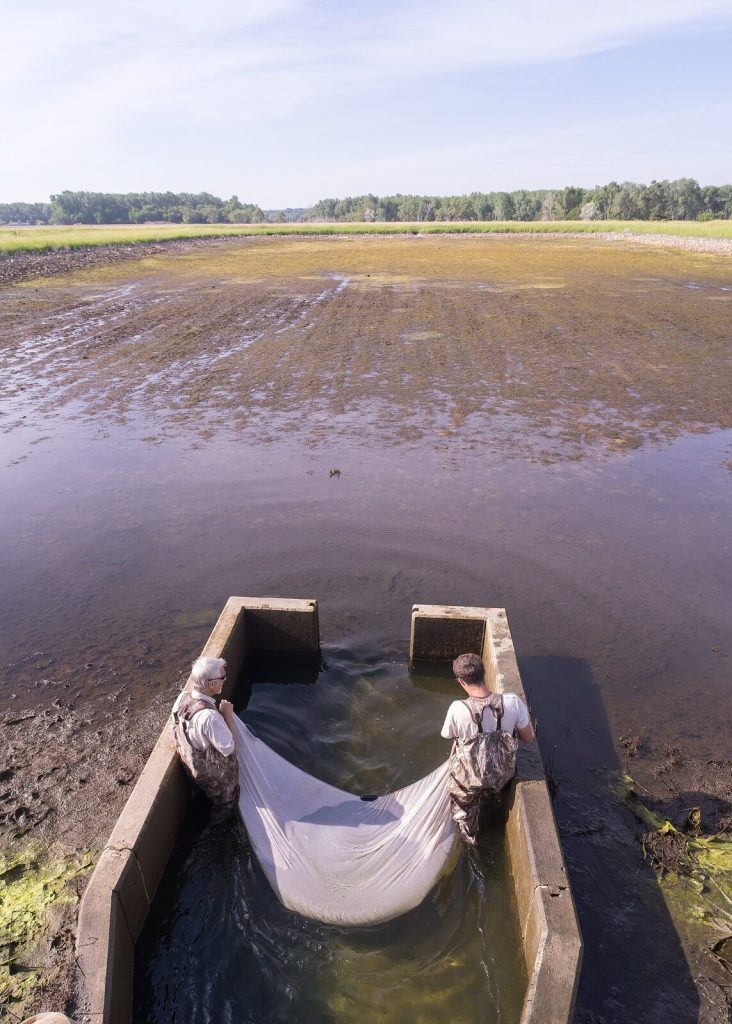
Harvesting means taking fish out of the pond and not putting them back, and most of what you get paid was settled weeks before the net went in. Any useful fish harvesting guide for a Ugandan farm has to cover sampling, feed withdrawal, seining, grading and holding, because each step moves either the weight on the scale or the price per kilogramme. Ugandan extension guidance treats the whole run as one operation.
What Harvesting Means on a Ugandan Fish Farm
The ministry's aquaculture training manual defines it narrowly. Fish have been harvested when they are removed from the pond and not returned, and it lists three reasons this happens: sale, transfer to another pond, and death. That third one is the sentence worth rereading. Mortalities are counted as harvest, at negative income. A fish that dies in the collection basin has been harvested just as surely as one that goes onto a trader's scale, and it has taken its share of feed with it.
Read that way, harvest day stops being a celebration and becomes the day your pond's arithmetic is finally audited. Every guess you made about stocking, feeding and how many fish the pond could carry is resolved into one number. Farmers who have sampled through the cycle already know roughly what that number will be. Those who have not are about to find out in front of a buyer.
Sampling Before Harvest: Knowing What Is in the Pond
Sampling is the temporary removal of fish to weigh them before returning them to the same pond. MAAIF gives five reasons to do it, and two of them are about harvest: to work out when fish are ready for market, and to see whether the pond has reached its carrying capacity. The other three are growth monitoring, recalculating the feed ration, and checking health.
The intervals are set by fish size. Broodstock ponds are sampled once a month. Early juveniles go every 7 to 10 days, because they are growing fast enough that their feed requirement changes inside a fortnight. Older fry through to fingerling size are sampled once every two weeks. Grow out ponds sit at the slow end of that scale, and the point of the last sample before a sale is to tell a buyer a number you can stand behind.
Two rules decide whether a sample means anything. The catch must be random and truly representative of the rest of the pond, and every fish caught in the net gets weighed, not a hand picked selection of the good ones. Larvae and fry are weighed in water by displacement: weigh a measured volume of water, add the fish, weigh again, and the difference is the fish. Nobody lifts a fry out of water onto a scale.
Harvest Size and What Ugandan Buyers Pay For
Farm gate prices for farmed tilapia are set by weight, not by the piece. That single fact governs harvest planning, because it means total kilogrammes and average size are two separate questions and the market answers them differently.
The ministry's market assessment sorted farmed tilapia into three size bands and described how each was selling. Fish of 225 to 300 g were uncommon but held potential. Fish of 450 to 600 g were more common but not doing well. Fish up to 800 g and larger reached specific targeted markets and were uncommon. Set that beside the harvest weight a Ugandan pond actually reaches by about eight months, which is 400 to 600 g for tilapia and 600 to 800 g for catfish, and the awkward conclusion is that the ordinary pond lands in the band the report called weakest, while the traders who pay best want 500 g and up.
Wild tilapia from the lake comes in a spread of sizes reaching 1.5 kg or more, and the traditional preference is for a larger fillet of roughly 200 to 350 g and above. Farmed fish cannot win on size against a big wild fish. What it can win on is control: a pond can be harvested all year round, at weekends, and at any hour of the day, at a size you chose. Wild supply cannot promise any of that. If you are choosing a target size, choose it from a buyer's order rather than from the pond's convenience, and read how farmed fish reaches Ugandan buyers before you stock.
The Size Rule That Does Not Apply to Farmed Fish
This is the most expensive misunderstanding in the Ugandan farmed tilapia trade, and it sits on the buyer's side of the transaction.
Enforcement against trading immature wild fish has been strict, including enforcement of minimum harvest sizes to stop poaching of immature fish. The market assessment found that many traders and processors, aware of the punishment and wary of it, said they were not allowed to handle farmed fish because it was often too small to count as mature. They knew the restrictions existed. They did not know the restrictions apply only to wild fish.
The Fish (Aquaculture) Rules, 2003 say it plainly. Restrictions on the size of fish for marketing that are prescribed by the relevant law do not apply to the marketing of fish reared through aquaculture. The same rule then names the mechanism that tells the two apart: a fish transfer permit, the document issued for moving live farmed fish off the farm to anywhere in Uganda, alongside the fish movement permit used for fish and fish products travelling between parts of the country. Both come through the ministry's Directorate of Fisheries Resources.
So the permit is not a formality you collect to satisfy an inspector. It is the evidence that a modest sized fish in your basin was grown, not poached, and it is what lets a nervous trader take it. These Rules are old, and a later ministry review has described them as due for replacement. Check the current requirement, and any fee, with your district fisheries office.
Withdrawing Feed Before You Harvest
Stop feeding before you handle fish. The manual's handling section is blunt about it: only handle fish that have not been fed for at least 24 hours, and for broodstock, do not feed the day before. The same instruction repeats in the sampling section, where the last meal before sampling is skipped.
There are two reasons, and both show up on harvest day. A fish with a full gut uses more oxygen at exactly the moment you are about to crowd it into a net, and a fed fish fouls holding water faster. Feed left in the pond on the morning of a harvest is money you will not see again either, since the fish will not convert it. Your feeding routine ends a full day before the buyer arrives, not on the morning.
When Not to Harvest or Sample a Fish Pond
MAAIF lists conditions under which the job is postponed rather than pushed through. Several of them look like inconvenience and are actually the difference between a live harvest and a dead one.
One more figure governs every move after the fish leave the water. Keep them in water carrying dissolved oxygen of about 5 mg/l, take them out only when there is no alternative such as weighing, and then for no more than a few seconds at a time. Where fish move between two bodies of water, a difference greater than 3 degrees needs acclimation rather than a straight transfer. Temperature shock does not kill on the day. Deaths start several days later, which is how a farmer comes to blame a disease for a handling mistake.
Seining and Draining a Fish Pond at Harvest
A complete harvest is not a matter of pulling the plug. The manual's sequence reduces the number of fish in the water before the water goes anywhere.
Pass a seine, preferably one with a bag, two or three times through the full pond. Keep going until the catch in successive seines drops to about a quarter of the stock you estimated, which is the point at which most of the fish are already out. Only then lower the water level. Drain completely and gather what remains with scoop nets from the harvest basin. Through all of it, the inlet and outlet screens stay fixed in place so fish do not leave with the water, and someone clears debris off them as it collects, because a clogged screen backs the pond up and a torn one empties it into the stream.
In a nursery unit, fry will be left in the mud once the water has gone. Do not pick them up. Fry stuck in mud have had air and silt on their gills and will not survive restocking, so putting them into a grow out pond moves a mortality rather than saving a fish.
If a pond cannot be cleared in a day, partially refill it and hold overnight. Leaving a part harvested pond sitting at a low level is the worst option available: predators find it, disease follows crowding, and fish that are crowded and unfed lose the ability to take any further handling. While fish sit in the collection basin, keep fresh water running into it. Ponds also need to be reachable, because a transfer that takes twenty minutes to walk is a transfer that costs fish.
Partial Harvest or Complete Harvest, and What Each Does to Cash Flow
The manual asks the question directly in its business planning section: how often do you need to harvest for the market, completely or partially? It then draws the two cash flow shapes that follow. One farm runs a few large ponds, sells when a pond is ready, and keeps that pond going until every fish has been bought. Another runs several small ponds sized to what the market actually takes, and moves each one through as a single batch, all in and all out.
The second shape suits Ugandan conditions better than it looks, for a reason that has nothing to do with biology. Traders told the market assessment that they prefer to carry smaller consignments, because a large one tells buyers the market is flooded and there is nowhere to hold fish. In the same district, two small ice plants could not make enough ice for the traders and farmers who wanted it. Drain a whole pond into one day's market and you are bidding against yourself. Live catfish, with no cold chain behind it, moves through the chain in under about ten hours.
Partial harvesting also has a cost, and it is the one you do not see. Every seine through a pond handles fish you are not selling. The fish that go back have been crowded, lifted and returned, and they carry that into the next fortnight.
Grading Farmed Fish by Size at Harvest
Grading means sorting by size, and the reasons stack up quickly. It cuts size variation inside a production unit, which lets you match feed type and pellet size to the fish you actually have, something like a 2 mm pellet for a 5 g fish. It reduces the cannibalism and territorial fighting that follow when small and large fish share water. It makes counting and stock estimates accurate. And it lets you supply a buyer with a uniform size, which is the whole basis of the size bands above.
A grader can be built from any material, provided the spacing between the bars is uniform. Where the spread inside one batch is wide, a series of graders in several sizes does the job that one cannot. The handling rules matter more than the equipment:
Do not overload it. Fish at the bottom carry the weight of everything above them when the grader is lifted, and skin abrades. The manual sets the limit at 7.5 kg of fish per cubic metre of grader capacity. Do not touch fish with your hands. If small fish stay stuck against the grader, drive them through with water poured gently, not fingers. Keep containers full so the water sloshes rather than bashes, and use a net sized for the fish, since a wide mesh takes scales off. Then write down what passed through which grader, so nobody reweighs the same batch twice next season.
Holding Fish After Harvest Without Losing Them
A fish that survives the net can still be lost in the ten minutes that follow. Batches coming out of the net go straight into a fish basket sitting inside a tub of water, and that water needs to match what the fish just left on temperature and oxygen. The simplest way to match it is to fill the tub from the pond being harvested. Aeration in the tub is better than no aeration.
Weigh as you go. If fish are batch weighed on the way out of the water and into the container, they come out of water once rather than twice. Where a whole nursery unit has been cleared, weigh and count a random sample properly and do the rest by volume. And do not hold fish in tight confinement any longer than the job needs, because a tub is a holding pen, not a pond. If they must wait, they need aeration or flowing water.
From the tub onwards, the job becomes a transport job, and the water chemistry, oxygen and loading rules change. That is covered in moving live fish off the farm.
Predators and Screens on Harvest Day
Predation peaks at exactly the moment a pond is at its most vulnerable: shallow water, crowded fish, nowhere to hide. MAAIF's predator section notes that predators do more than eat fish. They eat the feed, they injure fish they fail to catch, they can carry parasites in, and they reduce the pond's carrying capacity by keeping fish stressed. A wounded fish left behind cannot compete for feed and its growth and survival both drop.
On harvest day this turns practical. Screens on the inlet and outlet stop fish leaving with the water and stop wild fish arriving with it. Someone stays at the basin while fish are held there. Birds take fish during and immediately after any pond operation, which is also true at stocking. Uganda's wild predators are protected by law, so control is non lethal, and an animal that cannot be managed is a matter for the wildlife authority rather than for a trap.
Reading Freshness After Harvest
Once fish are out of the water they are a product, and the only thing that matters is slowing spoilage and keeping the product clean. The best quality comes from the freshest raw material, which is why the manual's preference is to keep fish alive until the market needs them. Where that is not possible, a farmer needs to read a fish the way a buyer will.
| Sign | Fresh fish | Past its best |
|---|---|---|
| Skin and scales | Bright, shining | Dull, dry, gritty |
| Outer slime | Clear | Yellowish, clotted |
| Eyes | Convex, clear cornea | Sunken, grey pupil |
| Gills | Bright red, clear mucus | Brownish, clotted |
| Belly lining | Glossy, hard to tear | Gritty, tears easily |
| Smell | Of pond water | Fruity or sulphide |
The ministry's own scheme runs four grades, from extra down to unfit, and the two middle grades cannot honestly be told apart in words without the photographs that go with them. The two ends are what a farmer needs. If the gills have gone from bright red to grey and the eyes have flattened, the fish is no longer being sold at the price you planned. Smoked and dried fish spoil differently, showing crumbling flesh, colour change, mould, an ammonia or rancid smell, and insect or maggot infestation, and the fix is upstream: dry from fresh, keep blowflies off during processing, dry and store off the floor in a screened and ventilated room, and keep rodents out. Nothing prohibited goes on fish to keep insects away.
If you are selling to a local market or a restaurant, the local fisheries officer and public health officer are the people to talk to about what your operation needs, and anyone processing fish works under public health certification for food handlers.
Harvest Records the Ministry Can Ask For
Records close the loop between one harvest and the next stocking. The basic aquaculture records MAAIF names are production records covering feeding, management, stock, growth, disease and survival, marketing records covering requirements and prices, and financial records. Fish are underwater for the whole cycle, so the record is the only continuous view you have of them.
There is also a compliance edge most farmers never hear about. The Fish (Aquaculture) Rules make production records a condition of the farm's own approval, with the data going to the Chief Fisheries Officer on a prescribed form once a year, and an establishment that cannot produce accurate records can have that approval withdrawn. The same Rules bar aquaculture harvesting gear from open water and from the wild fishery, with a fine and possible imprisonment attached.
The three numbers worth writing on harvest day are the count, the total weight and the deaths. Divide the second by the first and you have your real average size. Compare the count to what you stocked and you have your own survival figure, which matters because no measured grow out survival rate for Ugandan ponds is published anywhere. Modelled figures of 90 percent and above circulate, and catfish nursery survival of 60 to 80 percent is documented, but the number for a grow out pond in Uganda does not exist in the literature. Your own record is the only version of it you will ever get. A simple farm record is enough, and what you do with those numbers is worked through in the fish farming profit calculation.
Fish Harvesting Questions Ugandan Farmers Ask
How do I know my fish are ready to harvest? By sampling, not by the calendar. Weigh a random net full, work out the average, and compare it to the size your buyer wants. Sampling also tells you whether the pond has hit its carrying capacity, which is the other signal to sell: once a pond is full in weight terms, extra feed stops turning into extra fish.
What do farmed fish sell for at the farm gate in Uganda? Verified reporting puts farmed tilapia at roughly 8,000 to 8,200 shillings a kilogramme when wild landings are heavy, and around 9,000 shillings in months of poor supply. Growers have told a ministry study they need at least 9,000 to cover their costs, which tells you how thin the margin is at the lower figure. Prices move with the lake, not with your pond, so treat any single figure as a starting point and check current prices before you agree a harvest date. The full picture sits in the cost of fish farming and in the gap between farm gate and retail prices.
Is there a best month to harvest? There is a worst one. Wild landings run high from September to December and prices sag with them. Landings are lowest and prices highest around June and July. A pond stocked with that in mind is worth more than the same pond harvested whenever it happens to be ready.
Can I sell small farmed tilapia legally? Yes. The size restrictions that apply to trading immature fish are written for wild fish, and the aquaculture rules say they do not apply to fish reared on a farm. The practical problem is that many traders believe otherwise, so carry the transfer permit that identifies your fish as farmed and be ready to explain it. Confirm current permit requirements with your district fisheries office.
Should I harvest the whole pond at once? It depends on what your buyers can absorb in a day. One big harvest into a market with little ice invites a low price, because volume signals a glut. Several smaller ponds sized to a regular order give steadier cash flow. Against that, every partial harvest handles fish you are not selling, and handling costs you.
My fish died a few days after I moved them. Why? Most often handling, not infection. Fish moved between waters more than 3 degrees apart, handled in cold water, kept out of water too long, or crowded in a grader take damage that shows up days later. Fish that lie on the bottom after release usually die within a day or two, and erratic swimmers within two to four days. If losses continue, treat it as a health problem and read fish diseases and treatment, remembering that fish under treatment cannot be sold.
Do I need ice at the pond? Only if the fish will not be alive when they reach the buyer. Most Ugandan farm sales are live or same day fresh, which is why the tub of pond water matters more than a cool box. Where you do chill, chill fish that were fresh to begin with.
Why do my harvest weights never match my estimate? Because the estimate was built on numbers you did not measure: survival you assumed, a feed conversion you did not check, and an average weight from the biggest fish in the net. Sampling every fish caught, writing down the deaths, and dividing weight by count at harvest fixes it within one cycle. Only 45 percent of 200 surveyed small scale farms in central Uganda reported a profit on their last harvest, at a net return on investment of about 0.05 over a six to nine month cycle, and the farms that know their own numbers are the ones that can tell which half they are in.
Harvest day rewards preparation and punishes improvisation, so the last thing to sort out before it arrives is supply. Current prices for fingerlings, feed and the equipment a harvest needs move with season and with supplier, so check what is available near you before you commit to a date. Start with where to find fingerling suppliers and current fingerling prices, compare systems in cage farming and tilapia against catfish, and read the rest of the cluster from the fish farming hub, including pond water management, which is where most harvest problems actually begin.