
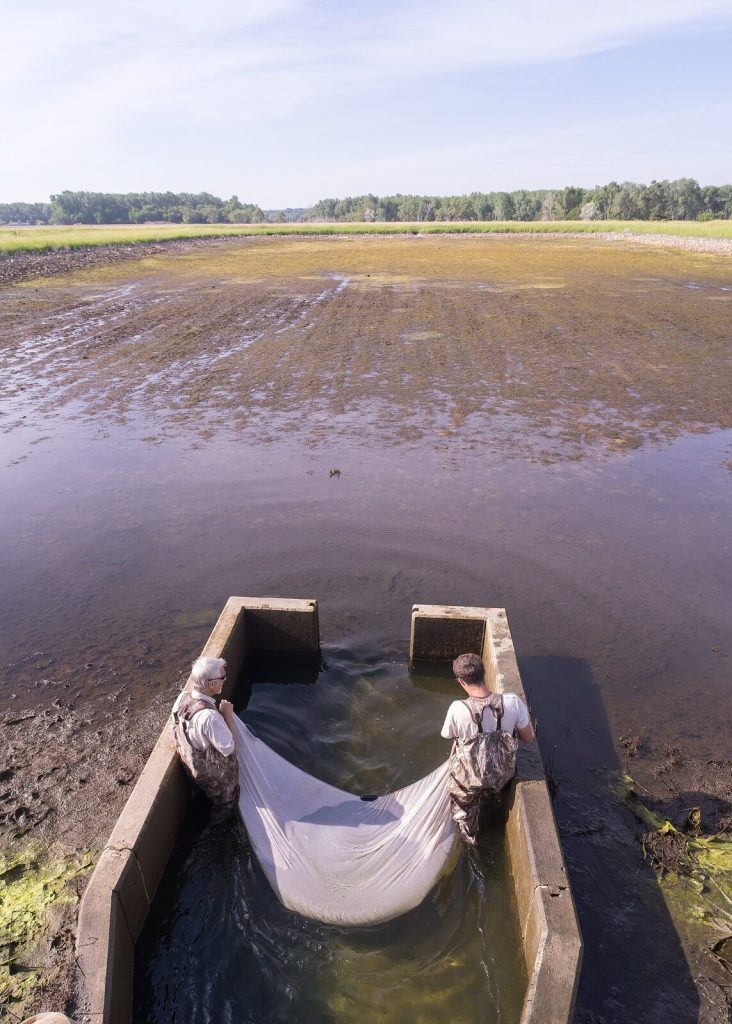
In cage fish farming you cannot correct the water. Ugandan extension guidance states it flatly: water quality inside a cage cannot be fixed during production, and the only remedy is to move the cage somewhere else. Cages sit on Lake Victoria, Lake Kyoga, valley dams and reservoirs, and the ministry classes them as an open system in which the farmer holds almost no control over oxygen, temperature or waste. Almost every decision that matters is made before stocking.
Why Cage Fish Farming Is a Siting Decision Before It Is a Feeding Decision
An earthen pond gives you levers. You can lime it, fertilise it, flush it, drain it and start again. A cage gives you a net in somebody else's water, and the lake decides the oxygen, the temperature, the plankton and what floats past. That single difference reorders the whole enterprise: site selection, siting law and security become the first order questions, and feeding becomes a routine you carry out rather than a variable you tune.
It also changes the fish. Ugandan researchers report that a farmer using local tilapia seed gets one production cycle of about nine months in cages against about eleven months in ponds, where farms in countries using improved strains fit two cycles into the same year. Nile tilapia now makes up around 70 percent of Uganda's farmed fish, and the growth of commercial cage farming is much of the reason. The faster cage cycle is real, and it is still only one harvest a year.
Cage Types Used on Ugandan Water Bodies
Four types appear in Ugandan guidance and they suit different water. Fixed cages hang a net bag from posts driven into the bottom, which is cheap and simple to build but restricts you to sheltered water with slow currents and a firm bottom that is not rocky; a hapa is the common example. Floating cages hold the bag with a buoyant collar or frame and are the most widely used, since they suit a wider range of sites. Submersible cages keep their shape from a frame or rigging and can be raised in good weather and lowered during a toxic algal bloom or a storm. Submerged cages are boxes or bags anchored to the bottom with stones or posts, used in flowing water or lakes.
Frames follow the same logic. A rigid frame does not move with the waves and belongs in a sheltered bay, a dam or a pond. A jointed frame gives a little. A flexible frame, usually plastic, follows wave movement and suits more open water. Sinkers hold the bag's shape and should never outweigh the frame; iron bar sinkers are enclosed in plastic pipe so they do not rust, and on any cage bigger than two metres square they hang outside the bag, because getting a sinker out of a large cage is difficult. One Ugandan detail worth knowing: large wild catfish in man made reservoirs will push a cage upward to knock the feed out, so those sites want a rigid cage, heavier sinkers or a reinforced second frame.
Water Quality Standards a Ugandan Cage Site Must Meet
The recommended criteria for choosing cage sites in Uganda are published, which makes this the one part of fish farming where a farmer can test a site against a written standard instead of guessing.
| Parameter | Criterion |
|---|---|
| Dissolved oxygen | Above 4 mg per litre |
| pH | 7.0 to 8.5 |
| Ammonia nitrogen | Below 0.5 ppm |
| Nitrite | Below 4 mg per litre |
| Water temperature | 27 to 31 degrees |
| Suspended solids | Below 10 mg per litre |
| Secchi depth | Above 0.5 m |
| Current speed | 10 to 100 cm per second |
Electrical conductivity in Lake Victoria is expected in the range of 90 to 110 microsiemens per centimetre, the stated exception being heavily polluted Murchison Bay. Coliform counts matter as a food safety question rather than a fish health one, and the same table caps E. coli at 3,000 cells per millilitre, because a site downstream of human or animal waste produces fish that fail a sanitary check.
One row in that table belongs to a different kind of water. It gives salinity at 15 to 30 parts per thousand, which is brackish to marine, while the same manual's own opening module states that Uganda's aquaculture is warm fresh water production where the water has little or no dissolved salt. No Ugandan lake or dam will meet a 15 ppt salinity floor and none should. Read that cell as imported from a marine standard and ignore it; every other row in the table is usable.
Depth, Current and Distance Above the Lake Bottom
Waste sinks, and the depth under the cage is what carries it away. Ugandan guidance sets a minimum clearance of at least 3 metres above the sediment for small low volume high density cages and 4 to 5 metres for the large low density type, with fixed cages held in water under 8 metres deep. Floating cages want a minimum of more than 5 metres of water and a maximum of 20. Uneaten pellets are denser than faeces, so they fall closer to the cage, and the deeper the site the wider both spread at a given current.
Waves and wind set the cage type rather than the site's suitability. A stationary cage wants wave height under 0.5 metres and wind under 5 knots; a floating cage tolerates waves to 1.0 metre and wind to 10 knots. Get meteorological and topographic data and the site history before building, because a bay that is calm in one season is not calm in all of them.
Plankton is the other moving part. Heavy blooms swing oxygen, pH and ammonia hard enough to stress fish and start disease, some bloom species are toxic, some put an off flavour into the harvested fish, and all of them clog the mesh and cut the exchange the cage depends on. Sites to avoid are those with raised nitrogen and phosphorus, those close to pollution, and those with too little current to wash a bloom away. Fouling, the build up of growth on the net itself, does the same thing slowly and is a management problem wherever currents are weak.
Where Cage Farming Is Not Allowed in Uganda
Cage culture is barred outright in gazetted restricted areas, and it is barred within a set distance of a long list of other things. The full list runs to more than twenty entries and it is stated to be subject to change, so treat these as the shape of the rule and confirm the current position with your district authorities and the local community before spending anything.
| Establishment nearby | Keep out within |
|---|---|
| Shore line | 200 m |
| Landing sites | 200 m |
| Fish breeding and nursery grounds | 200 to 300 m |
| Water intake points | 100 m |
| Fish migration routes | 500 m |
| Effluent discharge points | 500 m |
| Known fishing grounds | 1 km |
| Hydro plants | 1 km |
| Existing cage culture areas | 2 km |
| Fish sanctuaries | 2 km |
The no go list itself covers navigation channels, anchorages and harbour approaches, marinas and piers, cables and pipelines, parks and heritage or tourist sites, gazetted breeding and spawning grounds, existing water extraction points, migration routes, hydro plants, Ramsar core zones, areas gazetted under the lacustrine instrument, water where depth and quality swing widely such as seasonal rivers, important fishing grounds, industrial and urban discharge gates, and river and stream mouths. Two of those bite hardest in practice. The 200 metre shoreline setback rules out the convenient spot at the bottom of the garden, and the 2 kilometre separation from existing cage areas rules out joining a cluster that is already there.
Permits a Cage Fish Farm Needs Before It Stocks Fish
Cage farming carries more paperwork than any other Ugandan fish production system. A Cage Culture Permit comes from the ministry's Directorate of Fisheries Resources under Uganda's aquaculture rules, made as Statutory Instrument No. 81 of 2003, and it follows an environmental impact assessment certificate rather than replacing it. A waste discharge permit comes from the water ministry, and Ugandan guidance states that as a rule every cage culture operation needs one. Moving live farmed fish off the farm to anywhere in Uganda needs a fish transfer permit. Sites carrying pollutants above the permitted levels will not be licensed at all.
Two rules in that instrument apply to cages in particular. One requires adequate measures to keep the fish confined so they cannot escape the establishment, which on a lake is a mesh and mooring specification rather than a form to sign. Another covers an establishment placed in a transboundary water body, where the Chief Fisheries Officer follows international codes recognised by the riparian countries, with an impact assessment for untested practices and regular monitoring afterwards. Lake Victoria is shared, so a cage farm on it sits inside that clause. The Rules also bar production that degrades the environment without mitigation, introduces species not approved for the area, or compromises the safety of food fish, and they bar the use of farm harvesting gear for fishing in open water. The general penalty in the 2003 text is a fine not exceeding three thousand shillings or up to three months, which tells you that enforcement now runs through permit withdrawal and closure orders rather than through the fine. A court may withdraw any approval or order an establishment closed. The permit picture for farms on land is set out in the fish farming hub.
Cage Size, Shape and Materials for the Site You Have
Shape is a trade between exchange and strength. Rectangular cages are easier to build, can be joined into modular blocks, and have more surface for a given volume, so water moves through faster and they can hold a higher density; they suit sheltered bays, shallow water and fairly enriched water. Their corners take the brunt of wave force and that is where they break. Circular cages use less material per unit of volume, weigh less, need simpler mooring, and take wave force evenly so they hold up further offshore; they exchange water more slowly, so they cannot be stocked as heavily and do poorly in enriched water, and the collars are harder to build.
Size is a trade between unit cost and risk. A large cage is cheaper to build per cubic metre, and one hundred cubic metres in a single cage costs less than two fifty cubic metre cages. Managing a few large cages is easier than managing many small ones. Against that, a large cage is harder and dearer to work, exchanges water more slowly whatever its shape, and puts tens of tonnes of fish in one net. Small cages cost more per unit but let you see the fish, grade them and catch a problem early.
Mooring and Positioning Cages So the Waste Washes Out
Cages go in a single line across the current, with spacing between cages and between rows. Set in a chequerboard with no gaps, the cages in the middle and at the far end receive water that has already passed through the cages upstream of them, complete with their waste. That layout costs nothing to get right and cannot be fixed later without moving the farm.
The mooring is the anchors, ground chains, ropes, shackles and buoys, plus a grid of frame ropes and connector plates that holds a set of cages inside the farm area. It can be single point, where the cage swings to the position of least resistance, or multiple point, which uses more of the site. Ugandan guidance is blunt about why this deserves attention: the mooring sets the stress on the cage structure, how the cage behaves in rough weather, the level of production and profit, and the safety of the people working on it. Where currents run strong, cages are secured facing least resistance to the prevailing wind and current; in a sheltered spot with poor circulation, they are moored for the best exchange instead.
Netting is graded to the fish. Hatchery mesh, nursery mesh and growout mesh are different materials, sized small enough to hold the fish and open enough to pass water. After use nets are washed, dried at once, mended and stored hanging in a shed. A cage farm that skips net maintenance loses fish through holes and loses growth through fouling.
How Many Cages a Site Can Carry
The site sets the number, not your ambition or your budget. Ugandan guidance scores a candidate site, then reads a feed and standing crop ceiling off that score.
| Site rating | Daily feed ceiling | Standing crop ceiling |
|---|---|---|
| Poor | 2.5 kg per hectare | Under 250 kg per hectare |
| Fair | 5.0 kg per hectare | 250 to 500 kg per hectare |
| Good | 7.5 kg per hectare | Above 500 kg per hectare |
Sites that score low get fewer cages. The scoring card itself runs through temperature, oxygen, plankton, currents, fouling and obstructive plants, gazetted status, depth, bottom material, wind and waves, climate, predators, pollution and floating debris, which is a fair list of everything that has gone wrong on a cage farm somewhere.
Stocking Density Figures for Cages That Do Not Reconcile
Ugandan guidance sets out three cage scales with a density, a feed specification, a conversion ratio and an expected yield, drawn from farm trials in Uganda and the Philippines. The smallholder unit is a cage 2.5 metres on every side; the medium unit is 4 by 2 by 3 metres; the large unit is 12 metres across and 10 metres deep. Feed is high quality extruded pellet at a minimum of 30 percent crude protein in all three, and the expected feed conversion ratio is 1.7 in all three.
Stocking numbers follow from a target weight rather than from a density. Divide the yield you can carry by the size of fish your buyer takes, then subtract for the fish that will not make it. Ugandan growout survival is not published, so nobody can hand you that subtraction; the method sits in cost of fish farming.
Feeding Fish in Cages, and Why Farm Made Feed Is Ruled Out
A cage has no natural food in it. Fish in a pond graze plankton the farmer paid for with lime and fertiliser, and fish in a cage eat what you throw in and nothing else. Farm mixed and supplementary rations are excluded from cages, tanks and intensive systems in Ugandan guidance altogether, on the grounds that they foul water and convert badly, and extruded pellet is what the cage management table specifies.
That is the economic centre of cage farming and it is not a detail. It means a cage farm's feed bill is a bought bill from the first week to the last, with no cheap ration to fall back on in a bad month, and it means feed quality problems land on you undiluted. Feeding method, ration setting and response grading are covered in the fish feeding guide.
Fish Kills, Low Oxygen and What a Cage Farm Loses in a Night
The characteristic cage loss is not slow attrition. It is a mass mortality event, and the best documented evidence from Lake Victoria comes from the Kenyan side, where researchers surveying cage farmers recorded 82 fish kills across four years with total mortalities above 1.8 million tilapia. Only 39 percent of those farmers reported the event to national institutions and only 17 percent attempted any treatment. Low dissolved oxygen was implicated in the mortality the team investigated, alongside three bacteria isolated from the fish. That is Kenya, not Uganda, and the lake is the same lake.
Ugandan monitoring around cages is thinner but points the same way. A study at Tende Bay, available as a preprint rather than a peer reviewed paper, measured water beside cages and at an offshore control and found ammonia up to 0.57 mg per litre and total phosphorus up to 0.30 mg per litre near the cages. Read those against the siting standard above and two things stand out: the reported dissolved oxygen of 3.62 to 4.81 mg per litre straddles the 4 mg per litre floor the same ministry sets for a cage site, and the pH range reaching 9.15 sits above the 8.5 ceiling. The measured ammonia is also above the 0.5 ppm site criterion. A site that met the standard when it was chosen does not necessarily meet it once the cages are working.
What Cage Farming Does to the Water Around It
Peer reviewed Ugandan work followed the bottom life at a cage farm in Napoleon Gulf on Lake Victoria over about six years. Animal density at the farm area declined while the upstream control and the downstream site held steady, molluscs that had been abundant at the farm thinned out, and worms that tolerate organic enrichment increased. The authors concluded that molluscs predict cage impact better than insects do, and that in water already dominated by pollution tolerant animals the effect of moderate organic loading is not immediate. Work on the Tanzanian side of the same lake reached comparable conclusions.
Two practical readings follow. First, a site does deteriorate under cages, which is why Ugandan guidance tells cage farms to set cages across the current, keep spacing, and move the farm site after some years. Second, the damage is slow and the water looks fine while it is happening, so the monitoring built into the permit is doing work a farmer's eye cannot.
Disease and Parasites in Cages Against Ponds
Cages are exposed to whatever lives in the lake, including wild fish and their parasites, and Ugandan guidance says to avoid sites with poor water, heavy bottom sediment or sick and parasitised wild fish. The measured comparison is more interesting than that suggests. A Ugandan study across the Lake Victoria Crescent, again a preprint, screened 640 farmed tilapia and found 65 percent carrying parasites with Trichodina the most common. Pond growout and hatchery systems each carried 11 or more parasite genera while cage growout in the lake and in a reservoir carried five or fewer. In pond growout the heavier infestation was associated with every farm management practice the study tested, while in lake cages the association held for only some.
Take it as a preprint and as one study, and it still cuts against the usual assumption. A cage in flowing lake water is not obviously a dirtier place to keep fish than a static pond. What the cage removes is your ability to do anything once the fish are sick, since you cannot drain a lake, and fish under treatment cannot be sold. Treatment, diagnosis and the limits on what a farmer may use are covered in fish diseases and treatment.
Theft, Safety and Labour on a Cage Fish Farm
The stock is in public water and cannot be locked. Ugandan guidance lists security against theft and vandalism as a requirement of the farm rather than an afterthought, and it lists what a cage farm needs simply to reach its own fish: a canoe or boat, an outboard engine, fuel, and life jackets. Land along the shore is needed for stores, a workshop, a pier and housing.
Predators matter less than they do in ponds, which is one of the few places cages come out ahead. In a survey of 169 Ugandan fish farmers in Mpigi, Wakiso and Buikwe, predators were named a major constraint by about a tenth of cage operators, and predator presence still showed a measurable negative association with margin. Nets, guards and cage covers are cheaper than the fish behind them.
What the Ugandan Cage Evidence Does and Does Not Establish
Cage culture is the one Ugandan system that has been measured with a positive gross margin, and that finding comes from a single study which is worth reading carefully before you build anything on it. The survey covered 169 farmers across three districts, with about 23 percent of them in cages against about 70 percent in ponds, and it is available as a preprint rather than as a peer reviewed paper. Its cage farms averaged a cage of about 100 square metres, a stocking density of about 4.5 fish per square metre, a production cycle of about six months and a harvest of about 450 kilogrammes.
None of that makes the direction wrong, and the cost structure it reports is credible on its face: feed is the largest single variable line, feed and seed together take around three fifths of variable spending, and the cage structure itself is roughly a third of total outlay. It does mean the honest sentence is that cages look better than ponds in the only Ugandan comparison published, measured once, in a preprint whose cage arithmetic does not close. The recosted budget and the break even question sit in cost of fish farming.
Who Cage Fish Farming Suits in Uganda
Cage farming suits an operator who has legal access to deep open water at the right distance from everything on the setback list, cash for bought pellet from stocking to harvest, a boat and someone on the water daily, and the tolerance to lose a whole cage overnight without the farm failing. It suits a group or a company better than a household, because the fixed costs of a boat, shore facilities and security divide badly across one small cage.
Where the reason for picking cages is that a pond looks like hard work, this is the wrong system. The lake is less forgiving, not more. If land and water you control is what you actually have, start with the tilapia farming guide and then fish pond water management. If what you want is control over every variable rather than none, the land based alternatives are tank fish farming and biofloc fish farming, and both trade the lake's risks for a different set. Selling what comes out of a cage, which arrives in one large batch of live fish, is covered in how to market farmed fish and fish harvesting.
Cage Fish Farming Questions Ugandan Farmers Ask
How much does it cost to set up a cage in Uganda? Ugandan reporting puts a small cage setup at up to about 1,000,000 shillings, and the one Ugandan cage budget published works with a cage setup of about 750 United States dollars against total outlay of about 2,225 and revenue of about 2,500 for a cycle. Treat both as the shape of the spend rather than a quotation, since a boat, an engine, nets, mooring and security are site specific. The cost lines are broken out in cost of fish farming.
What price will my cage fish fetch? Verified farm gate prices for farmed tilapia run 8,000 to 8,200 shillings a kilogramme when wild landings are heavy and about 9,000 in months of poor supply, and growers told a government commissioned market study they need at least 9,000 to cover their costs. A cage harvest lands in one batch, which is the worst possible position from which to negotiate, so the buyer arrangement matters as much as the price.
Is cage farming more profitable than a pond? In the only Ugandan comparison published, yes: cages reached a positive gross margin where ponds and aquaponics did not. That study is a preprint and its cage arithmetic does not reconcile, so read the finding as a direction rather than a promise, and note that break even on bought pellet runs 6,880 to 7,950 shillings a kilogramme on sinking feed and about 10,130 on imported floating feed against the farm gate band above. A cage that has to use imported floating pellet does not break even at the ordinary Ugandan price.
Do I need a permit for one small cage? The Rules do not carve out a size exemption. A cage culture permit, an environmental impact assessment certificate and a waste discharge permit are the stated requirements, and moving live fish needs a transfer permit. Ask your district fisheries office what applies to your site before you build.
How deep does the water need to be? Clearance above the bottom is what matters more than total depth: at least 3 metres under a small high density cage and 4 to 5 metres under a large low density one, with floating cages in water between 5 and 20 metres deep.
Can I feed maize bran in a cage to save money? No. Ugandan guidance rules farm made and supplementary feeds out of cages, tanks and intensive systems, because they foul the water and convert poorly, and a cage holds no natural food to make up the difference.
How many cages can I put on one site? As many as the site's score allows, working from the daily feed ceiling and standing crop ceiling for a poor, fair or good site, with wider spacing and fewer cages on a weak site. Adding cages beyond that ceiling degrades the water for every cage you already have.
Can I move the cages if the site turns out wrong? Relocation is the only remedy Ugandan guidance offers for bad water in a cage, so the answer has to be yes in principle. In practice it means a new mooring, a new set of setback distances to clear and a permit position to confirm again, and it means moving fish mid cycle, which is the most stressful thing you can do to them. Ugandan guidance also tells cage farms to move the farm site after some years because the bottom under the cages deteriorates, so plan the second site while you are choosing the first.
What single thing loses cage farmers the most fish? On the documented Lake Victoria evidence, a mass mortality event tied to low dissolved oxygen, which arrives overnight and cannot be treated. Everything in the siting standard exists to lower that risk, since a cage farm cannot fix its water.
Before committing to a site, walk it with your district fisheries officer against the setback distances and the water quality criteria above, and get the depth and current measured rather than estimated. For what the stock and the inputs will cost, current fingerling quotes sit on the fish fingerling price page and supplier listings on the fingerling supplier page, and both are worth checking against two or three sources in the same week rather than taken from one.