
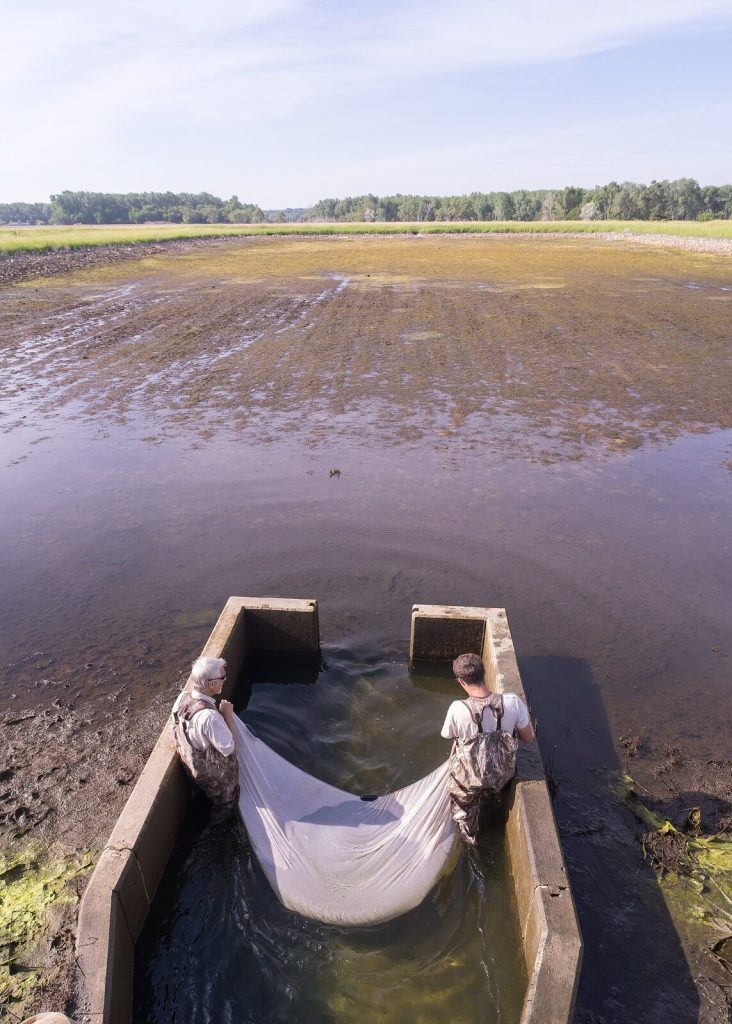
Tank fish farming raises fish in a built container rather than in a dug pond, and in Uganda it is where almost all hatchery and nursery work happens. Tanks can be plastic, fibreglass, concrete or a lined frame, and ministry guidance says a tank can go almost anywhere so long as the water supply is constant. What you gain is control. What you take on is a water bill, an electricity habit and a system that punishes small mistakes.
What Tank Fish Farming Means on a Ugandan Farm
Ugandan guidance sorts tanks four ways and each cut matters when you are buying one. By shape they are circular, rectangular or conical. By function they are hatchery, growout, holding or display tanks. By size they run from troughs up to large units. By material they are plastic, fibreglass, concrete, or wood or metal lined. They are either fixed in place or portable, and the illustrated examples in that guidance include fixed concrete hatchery tanks, a wooden lined tank, plastic tanks, a collapsible tarpaulin tank, a semi permanent improvised tank for emergency use, and ordinary household basins and buckets pressed into service as hatchery tanks.
That last example is the honest picture of how tanks are used in this country. The system sits between a pond and a recirculating unit in the way the ministry classes production: a tank is a semi closed system, where you add and remove water and control a good deal without controlling everything. The wider comparison across pond, cage and tank sits on the fish farming hub.
Where Tanks Beat a Pond on a Fish Farm, and Where They Do Not
A semi closed system carries a specific list of gains in Ugandan guidance: little thermal layering, aeration if you want it, better use of bought feed, control over water depth and replacement, the chance to spot and fix bad water before the fish die, better disease control, clear ownership with less conflict over a shared resource, some temperature control, and the removal of competitors and predators. Read that list again and notice how much of it is about seeing trouble early.
The same guidance sets the price of those gains just as plainly: higher construction and equipment cost, higher energy use, higher feed cost, more management time, and a greater likelihood of poor water quality and disease incidents. The last one surprises people. A tank is cleaner than a pond and more dangerous, because the fish are held at a density the water cannot support by itself.
Tank Materials: What Holds Water and What Harms Fish
Two material warnings in Ugandan guidance are worth more than the rest of the chapter. Concrete tanks with no sealant, meaning no tiles and no waterproof paint, are likely to run a high pH, which is a slow problem that shows up as poor growth rather than as dead fish. And galvanised iron sheet is named as a toxic material not to build fish tanks from, above all in a hatchery, where the fish are smallest and least able to tolerate it.
Beyond that, use waterproof cement to avoid seepage, and add reinforcement in the base of a fixed tank so it carries the weight of water when full. Walls should be smooth and free of protrusions, because a protrusion injures fish and cuts the person working in the tank. A tank needs to fill and drain quickly, with separate valves for inflow and outflow so you can control the two independently.
On depth, the guidance names worker safety and ease of handling fish inside the tank as the considerations, then prints a depth instruction that points the other way from its own reason. Take the reason as governing: a tank you have to work in should not be deeper than you can safely reach and stand in, and a tank deeper than chest height on the person who will use it daily is a tank that will be worked badly.
Circular Against Rectangular Tanks for Fish Production
This is the design choice that follows you for the life of the unit, and Ugandan guidance gives both sides rather than a winner.
| Feature | Circular tank | Rectangular tank |
|---|---|---|
| Water quality | Uniform throughout | Declines toward outlet |
| Solids removal | Self cleaning to centre drain | Needs higher exchange |
| Grading fish | Harder, needs crowders | Easier to sort |
| Space use | Less efficient | More efficient |
| Fish behaviour | No choice of good water | Fish crowd the inlet |
In a circular tank water is injected tangentially from the side, so it rotates and mixes, and the outlet sits centrally so settling solids flush down to the middle. A dual drain is preferred because it removes solids on very little water. An outside standpipe with a flat centre bottom screen sets the water depth, and an emergency overflow screen matters for the day the bottom screen clogs. Carrying capacity in a circular tank is better than in a trough or a rectangular tank, since there is enough water movement for aeration and re aeration.
A rectangular tank is easier to build, uses space better, and is easier to grade and handle fish in, which is why it is the more popular shape. Its water quality falls gradually from inlet to outlet, so fish collect near the inlet and young fish pile up there, and that gradient favours hierarchy and aggression in the tank. It needs a higher exchange rate to self clean, which means more energy, and solids settle wherever the water slows down. Ugandan guidance notes it suits fish from fingerling stage onward better than it suits fry.
Sizing Tanks, Ratios and the Drain
Proportions are specified rather than left to taste. A circular tank runs a diameter to depth ratio between 5 to 1 and 10 to 1. A rectangular tank runs length to width to depth at 6 to under 2 to 1. A raceway, which is a running water channel with brick or concrete sides and bottom for faster flow, runs 30 to 3 to 1. Screen area at the outflow is sized to the flow, at 0.09 square metres of screen for every 94 litres a minute, and a rectangular tank or raceway wants no variation in its width, since a change in width makes eddies and dead spots where waste collects.
Tank number and tank size pull against each other in a way that decides your labour bill. Ugandan guidance states that the daily labour to manage a tank is about the same whether it holds one cubic metre or one hundred, and that capital cost per unit of volume falls as the tank gets bigger. So a few large tanks cost less to build and less to run than many small ones. The counterweight is risk: a technical or biological failure in one large tank loses more fish than the same failure in one small tank, which is the identical argument that governs cage size in cage fish farming.
Water Supply, Exchange and Screens on a Tank Farm
The binding requirement for siting a tank is not land. It is an adequate and constant water supply able to hold the volumes, flows and exchange rates you need through production, plus water for draining and cleaning. Add a firm foundation, and the cost of building and running the thing, and that is the whole siting test in Ugandan guidance.
Work out the water before buying the tank, not after. Exchange rate is what carries ammonia and solids away, and every management response in the ministry's water quality table for tanks comes back to it: adjust the exchange rate, siphon out uneaten feed and waste daily, clean the tank after feeding, adjust the feeding routine, and reduce stocking if the numbers will not come right. A tank on a supply that fails for two days is a tank with no answer.
Where water is hard to get or costly to pump, the guidance points at a recirculating unit instead, and where alkalinity in the inlet water is low it says to dose the incoming water with agricultural lime rather than treating the tank. Liming rates and the two stages they belong to are set out in fish pond water management.
Aeration and the Electricity a Tank Farm Runs On
Aeration is the first thing on the tank column of the ministry's water quality table, and it appears again under high pH, low pH and ammonia. Above a modest density a tank needs air put into it mechanically, which means a blower or a pump, which means electricity or fuel, every day, without a gap. Ugandan guidance says of intensive production in general that it needs more capital, a constant source of energy, high technology and skilled labour.
Temperature is the one variable a Ugandan tank rarely needs help with, since the optimum for tilapia and catfish is 26 to 28 degrees and most of the country sits in range. The guidance mentions covering units in high altitude districts where the water runs cold, and leaves it as a question of whether the expense earns its keep.
Recirculating Systems and the Biofilter
A recirculating unit is a tank farm that reuses its water, and Ugandan guidance sets out three components: a biofilter that removes soluble waste, mainly ammonia; the production tanks themselves; and a filtration unit with a sedimentation tank and filter for the solids. The illustrated Ugandan example is a backyard system with four production tanks, and the illustrated biofilter substrate is plastic shavings or bottle tops, with a submersible pump sitting in the filtered water. None of that needs imported equipment.
What it does need is discipline, because a recirculating unit is a closed system in which every water variable is under human control. The ministry's own summary of a closed system is worth quoting in substance: water is reused, pathogen entry can be controlled, predators and thieves are gone, feeding and conversion can be watched closely, and the operator carries complete responsibility for the animals' environment, with higher running costs and more sensitivity to system errors. A biofilter also takes weeks to mature before it processes ammonia reliably, which is why a new unit should be stocked lightly and fed lightly at first.
Daily Water Quality Work in a Fish Tank
The work is short, repetitive and non negotiable. Siphon out uneaten feed and waste every day. Clean the tank after feeding. Monitor dissolved oxygen daily in each production unit, after feeding rather than before, since that is when demand peaks. Watch the exchange rate and the water volume. Do not overfeed, which in a tank is the single most common cause of an ammonia problem.
Ammonia in a tank is managed through feed rather than through chemistry. The guidance names highly digestible feeds with good water stability, with floating pellets preferred, alongside cleaning and exchange, and it lists reducing stocking as a legitimate answer rather than a defeat. Where turbidity rises from suspended feed and waste, the response is the same set of levers. Predators are handled by keeping them out of the farm rather than by any treatment.
Feeding Fish in Tanks: Complete Pellets and Nothing Else
Ugandan guidance rules supplementary and farm mixed feeds out of tanks, cages and intensive systems outright, on the grounds that they foul water and convert badly, and it says complete diets suit intensive systems while natural food and supplementary feeds belong in ponds and semi intensive systems. It adds one exception worth knowing: larvae can be fed live feeds in tanks, which is exactly what a hatchery does.
So tank growout commits you to bought pellet from stocking to harvest. That is the decisive economic fact about this system in Uganda, because complete feed is the largest running cost in Ugandan fish farming and there is no cheap ration to retreat to when the margin tightens. Ration setting and response feeding are covered in the fish feeding guide, and what a farm mix can and cannot do sits in fish feed formulation.
What Uganda's Extension Guidance Does Not Give Tank Growers
The ministry's aquaculture manual describes how to choose, build, plumb and maintain a fish tank in detail. Its grow out module then gives a table fish production protocol for fertilised static water ponds only, covering pond preparation, stocking against carrying capacity, monosex stocking and the catfish added for population control. There is no matching protocol for growing table fish in tanks, no tank carrying capacity figure, and no tank stocking density for growout.
That absence is not an extraction problem. The same document carries tank material specifications, tank ratios, a tank water quality column, a three stage recirculating nursery table and a hatchery tank chapter, so tanks are covered thoroughly everywhere except at growout. The reasonable reading is that Ugandan extension guidance expects tanks to be used for seed and for holding fish, and expects table fish to come out of ponds and cages.
The survey evidence points the same way without proving it. The one Ugandan study that costed small scale systems side by side stratified its 169 farmers into three groups: pond, cage and aquaponics. Tank growout was not one of its strata. That tells you what those researchers expected to find in three Lake Victoria basin districts rather than what exists nationally, and it is still the closest thing to a count.
Hatchery and Nursery Tanks: Where Tanks Earn Their Keep in Uganda
Every stage of seed production in Ugandan guidance happens in a tank. Induced females are held in a covered tank with water flowing at about six litres a minute. Eggs are incubated on screens in a well aerated tank on water low in iron. Fry are nursed in flow through tanks at four to six litres a minute, with the walls cleaned and the dead fry siphoned out every morning. Fish are conditioned in tanks before transport, and held in tanks with aeration when they must be kept confined.
Where a hatchery runs a recirculating nursery, the stages are given by weight rather than by week: fry of 0.05 to 0.1 grammes at 600 grammes per cubic metre for a fortnight in tanks of 100 to 1,000 litres; advanced fry of 0.1 to 1.0 grammes at 10,000 per cubic metre for 26 days; juveniles of 1 to 8 grammes at 400 per cubic metre for 20 days, with the water held at 28 degrees and pH 7 and every component disinfected between cycles. That is a tank specification a Ugandan hatchery can build to, and it is more detail than exists anywhere for tank growout. The full sequence sits in catfish hatchery management and tilapia breeding.
One handling figure belongs on any tank farm: when fish are held in a grader, the weight inside should not exceed 7.5 kilogrammes per cubic metre of grader capacity, because the fish at the bottom carry the rest when it is lifted. And for a holding or transport tank the general rule is 2 kilogrammes of fish for every 20 litres of water, with the aeration kept running until the last fish is out.
Certificates for an Intensive Fish Farm in Uganda
A tank farm is likely to be classed as semi intensive or intensive, and under the Fish (Aquaculture) Rules the management of an intensive or semi intensive establishment must submit a plan of the establishment and a list of its activities to the Chief Fisheries Officer for approval before constructing, reconstructing or adapting it. The certificate issued names the class of activity it covers and whether the farm may practise semi intensive or intensive culture, so a farm that moves from nursing seed to growing table fish, or the other way round, is outside its approval until the certificate follows.
Two other clauses catch tank farms in particular. Extracting 270 litres a minute or more from a waterway over a 24 hour period, or using a motorised pump to take water from a river, lake, swamp or dam at all, needs a surface water permit from the water ministry, and drilling or pumping a borehole needs its own permits. Producing fish seed for sale needs a Fish Seed Production Certificate whatever the system. The current fees and the institutional arrangements change, so confirm both with your district fisheries office.
Who Tank Fish Farming Suits in Uganda
Tanks suit a hatchery or a nursery operator, a farm with little land and reliable water, a grower who wants to hold or condition fish before sale, and anyone whose site will not hold a pond because the soil leaks or the slope is wrong. They suit someone who will be at the tank every day, since the daily siphon and the oxygen check are the system.
Tanks are a harder proposition for table fish in Uganda. You take on a bought feed bill with no natural food behind it, an electricity dependency the national supply does not reward, and a system on which no Ugandan growout protocol, carrying capacity or survival figure has been published. If the attraction is control rather than scale, start with a nursery tank next to an existing pond and learn the water before committing to growout. If the attraction is high density on a small footprint, compare it against biofloc fish farming and aquaponics, both of which ask for the same aeration and more skill. If what you actually have is land and gravity, fish pond construction is the cheaper route to the same kilogrammes.
Tank Fish Farming Questions Ugandan Farmers Ask
What does a fish tank cost in Uganda? No Ugandan price for tank construction could be sourced for this page, and inventing one would be worse than leaving the gap, since a tarpaulin tank, a plastic one and a concrete one differ by an order of magnitude and the plumbing depends on how far the water has to travel. What is verified is the running side: complete feed at roughly 3,500 to 5,000 shillings a kilogramme depending on whether it is a sinking pellet or an imported floating one, and fingerlings at roughly 150 to 300 shillings for tilapia and 200 to 400 for catfish. Price both against current quotes rather than planning on one figure.
How many fish can I put in a tank? For growout, no Ugandan carrying capacity figure exists for tanks, which is the honest answer. For a nursery the weight based stages above are published and usable. Work growout from what the water and the aeration will carry at the worst hour of the day, which is before dawn, and stock at a level the tank survives through an outage.
Is tank farming more profitable than a pond in Uganda? Unknown, because nobody has measured tank growout here. The comparison that has been measured put cages ahead of ponds and aquaponics in a single preprint study, with tanks absent from it. What is verified is that break even on bought pellet runs 6,880 to 7,950 shillings a kilogramme on sinking feed and about 10,130 on imported floating feed, against a farm gate of 8,000 to 8,200 shillings when wild landings are heavy and about 9,000 in poor supply months. A tank farm that needs floating pellet has to clear the higher figure. The full method sits in cost of fish farming.
Can I raise fish in a tank without a blower? At low density, in a flow through tank with gravity fed water, yes, and that is how many Ugandan hatchery tanks run. At the densities that make tank growout attractive, no. Decide which of those you are building before you buy the tank.
Concrete, plastic or tarpaulin? Ugandan guidance uses all three and warns about two things: unsealed concrete tends to push pH up, and galvanised iron sheet is toxic to fish, above all in a hatchery. Beyond that the choice is cost, portability and how long you want it to last.
Do I need permission to build fish tanks? An intensive or semi intensive establishment is required to submit its plan and activity list for approval before building, and pumping water from a waterway or a borehole carries its own permits. Ask your district fisheries office which apply to your scale.
Can I feed maize bran in tanks to cut the feed bill? No. Farm made and supplementary feeds are ruled out for tanks in Ugandan guidance because they foul the water and convert poorly, and a tank holds no plankton to compensate.
Why do my tank fish stop eating? Check dissolved oxygen after feeding, then ammonia, then the exchange rate, in that order, and stop adding feed until the water is right. Feed left uneaten makes the problem it is a symptom of, which is why the daily siphon exists.
Before building, measure your water supply over a dry week rather than a wet one, and price the aeration and the standby arrangement into the build instead of leaving them for later. Current fingerling quotes sit on the fish fingerling price page, supplier listings on the fingerling supplier page, and your district fisheries officer can tell you which nearby units are approved for the class of tank work you have in mind.