
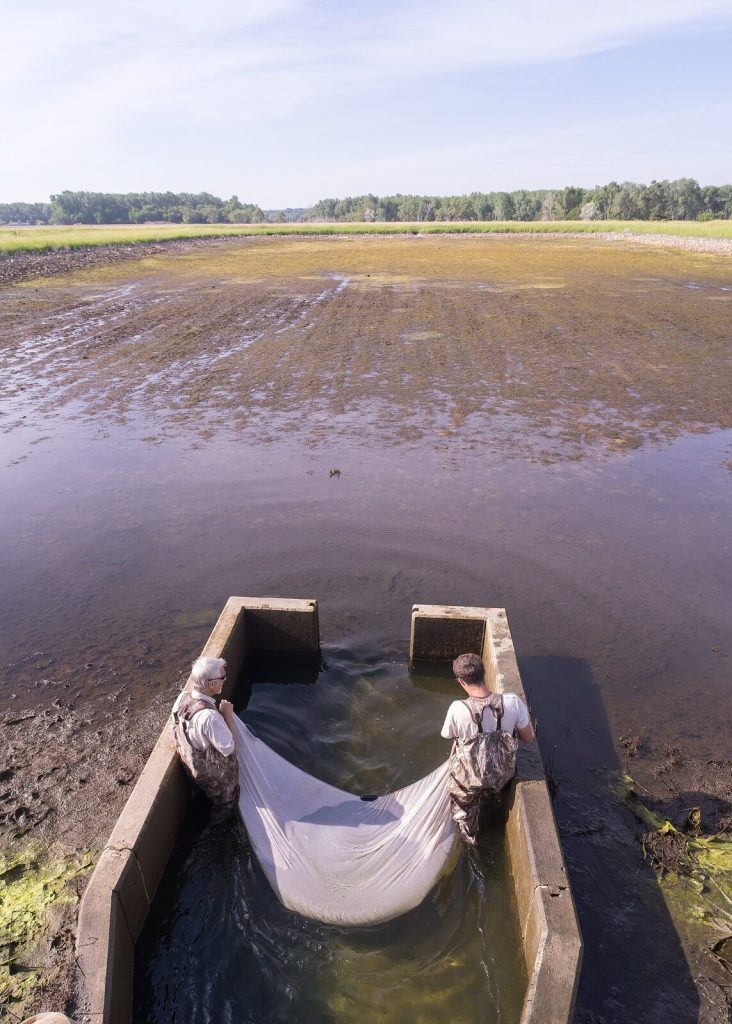
Getting tilapia to breed is easy, which is why so much Ugandan seed is poor. Put males and females in a fertilised pond and you will have fry within weeks. Getting fry that grow fast, arrive all male and are not the fifth inbred generation of the same pond takes broodstock records, separate ponds and grading, and that is what breeding work really consists of.
Tilapia Breeding in Uganda: Why Seed Quality Beats Fry Numbers
Ugandan hatcheries are not short of fry. A review written by scientists at four NARO zonal institutes and Makerere University describes the opposite failure: most hatcheries breed from mismanaged broodstock and put out inferior seed, sometimes deformed, with low growth rates, and most hatcheries are not licensed. Seed supply is called erratic and unreliable, and farmers who cannot get it formally buy from the wild or from smallholder multipliers whose stock is of mixed species and unknown genetics.
That is why the slow growth a pond farmer complains about usually starts in a hatchery rather than in a feed bag. A Ugandan pond takes eleven to twelve months to reach table size where improved strains elsewhere manage two cycles a year, and the seed is named as the reason. So read what follows as quality control work. Every step below exists to stop something specific going wrong with the fish a farmer eventually stocks, and the growout end of that story is on the tilapia farming guide.
Three propagation routes exist. Natural propagation puts both sexes together and lets them spawn, which is what tilapia does without help. Semi natural propagation induces the female with an injected hormone or pituitary extract and then lets the pair spawn normally. Artificial propagation uses hormones to trigger both maturation and release, the eggs are stripped by hand, and milt is expressed over them. Tilapia is worked naturally or artificially; the injected routes exist mainly for species that will not spawn on cue, which is a different job covered on the catfish hatchery page. Any injected hormone is dosed by body weight by someone qualified to do it, and no dose appears on this page.
Selecting Tilapia Broodstock for a Ugandan Hatchery
Broodstock selection is the only point in the process where you can still fix genetics, so the rules are strict and most of them are about where the fish came from.
Stock genetically pure fish. Under Ugandan field conditions that means fish carrying the typical physical characteristics of Oreochromis niloticus, because appearance is all most operators can judge, and it matters more than it sounds: blue spotted tilapia hybridises easily with other native Oreochromis species and the hybrids grow poorly. Take fish from a known source, either the wild or a known breeding station, and if you collect from the wild, grow your own replacements on the farm afterwards instead of going back for ripe fish every season. Never take broodstock from a farm that holds mixed sizes in one unit, does no screening, and keeps no record of where its fish came from. That single rule would remove most of the genetic damage the review describes.
Then the physical criteria. Males and females go in separate ponds. Fish should be uniform in size, free of deformity, injury and disease signs. Retire fish that have spawned several times, because fecundity falls with maternal age and with successive spawning, and replace males regularly with year old fish.
Managing Broodstock Ponds and Feeding for Egg Production
A broodstock pond is built to the standards of a commercial earthen pond and then screened harder than any other unit on the farm. No wild fish and no eggs get in at any point in the cycle, the screens on inlet and outlet stay clear and intact, and inflowing water runs continuously through a fine mesh. Before stocking, clear the pond of every other fish and aquatic organism using builders' lime, then lime and fertilise to green water and fill.
Run it as static green water at a Secchi reading of 30 to 45 cm and keep it below carrying capacity. Early morning dissolved oxygen should not fall under 3 mg per litre, because ovarian development suffers below that, and repeated dips do lasting damage to a season's egg production. The stocking rate is given as 5,000 to 10,000 kg per hectare. The manual also brackets that as 5 to 10 fish per square metre, which only converts if the fish weigh 100 g each, so with 300 g broodstock the two statements disagree and the weight figure is the one to work from.
Feeding is where the interesting mechanism sits. Broodstock get a diet of 35 to 45 percent protein, twice a day at 1 percent of body weight, and the protein level matters because it feeds the egg yolk, which in turn feeds the embryo and the newly hatched larva. Then comes the part that reads backwards at first.
Restricting feed in a spawning pond increases egg production. Fed to satiation, a female puts energy into her own body. Held below it, she puts energy into eggs, and spawning frequency and total eggs over a period both rise. Growth slows, which is the price. In green water the manual's preference is not to feed a spawning pond at all and to feed the fish after spawning instead. If you do feed, a 45 percent diet at 20 to 50 percent of satiation, or a 35 percent diet at 2 percent of body weight a day. Females do not feed while they are brooding, so what you throw in during that window feeds something else.
Spawning Tilapia in Breeding Ponds and Hapas
Line the harvest basin with 2 cm mesh nylon netting before you fill, which is what lets you lift the broodstock out cleanly at drainage rather than chasing them through mud. Stock both sexes together at 2 fish per square metre, at a ratio between one male to one female and one male to three females, always with more females than males. Hold water temperature around 25 to 30 degrees, which is one of the reasons static water management is recommended in the first place. Control predators, and lift out frog egg masses when you see them.
Oxygen has a second effect here beyond growth. As dissolved oxygen falls towards 0.5 mg per litre, ovarian growth, courtship, seed production and seed quality all suffer, and the female's ability to mouth brood eggs and fry goes with them. A spawning pond that crashes overnight does not simply lose growth; it loses the batch.
When to harvest fry depends on what you plan to do with them, and this is a decision made before the spawning pond is stocked rather than after.
For fry that will be sex reversed, harvest within three weeks of stocking the spawning pond, grade out anything over 14 mm, and keep only fry under 14 mm. Larger fish are discarded, because past that size the treatment no longer works reliably. For mixed sex fry, harvest after four weeks and stock uniform sizes into nursery ponds. Either way, run the first seine with a 2 cm mesh net to take the broodstock out before you go looking for fry, so the small fish are not crowded in a net full of adults.
Egg Incubation, Hatching and Rearing Fry in the Hatchery
Artificial propagation in tilapia starts in the female's mouth. Ripe eggs are greenish with a black dot, and they come out of the mouth into a dry basin. Gentle pressure on the male's abdomen expresses milt over them, the mixture is stirred for about a minute, rinsed with water, and poured into McDonald jars. Incubation needs an upwelling flow, water that is well aerated, and a temperature held steady, preferably between 25 and 28 degrees. Hatched larvae float and drift out into basins at the side, and from there they go into larval tanks or hapas.
Where females are held in hapas for egg collection, line the side you harvest them from with finer netting, or the eggs they are carrying in their mouths are lost on the way out.
Larval rearing runs at 5 to 10 fry per litre, and the reason it needs constant attention is cannibalism. Fry that get ahead eat the ones behind, so fry units are graded continuously rather than occasionally. A small practical note from the manual that is easy to miss: a red or blue feed reads better against the tank than a pale one, and visibility is what gets feed eaten instead of settling.
The manual's own larval feeding rate line is unusable, printing two or three merged values in a single row, so no larval percentage of body weight appears here. Take that figure from your district fisheries officer, and see the fish feed requirements page for why feeding rate charts in general should be treated with suspicion.
Producing Monosex Tilapia Seed: Treated Feed and Hand Sexing
Hatcheries produce all male seed because growers want it, and growers want it for two reasons rather than one. Male fish put on weight faster. And a pond holding both sexes turns into a nursery halfway through the cycle, which spends the grower's feed on fry nobody can sell. Two routes get you there.
Hormonal sex reversal feeds swim up fry a hormone treated feed for about 28 days, in hapas or tanks that keep other fish out and make certain every fish in the unit can reach only the treated feed. The husbandry is specific. Hapas sit at least 15 cm off the pond floor in water at least 80 cm deep, in a pond that holds no other fish, and the hapa must be intact and set without tipping. Stock graded fry under 14 mm, average weight around 0.01 g, uniform in size, at 3,000 to 5,000 fry per square metre. The feed is a 45 percent protein crumble, given four times a day through a feeding ring, at 20 percent of body weight until the fish reach about 15 mm and then 10 percent to the end of the treatment. Brush the outside of the hapa weekly so it does not clog, sample weekly to reset the ration, and expect fish of about 0.25 g at harvest.
The substance itself is not named here and no inclusion rate appears. Hormone use in animal feed is regulated in Uganda under the animal feeds legislation, treated feed belongs to a certified hatchery operation rather than a farm shed, and a farmer buying monosex fingerlings is buying the result of that process rather than running it. If you intend to run it, that conversation starts with the fisheries office, not with a website.
Hand sexing is the other route and needs no treatment at all. Fish are sexed at 30 to 50 g, using the genital papillae, plus body size and colour, since breeding males show a reddish tint on the tail and abdomen. It is slower, it needs a trained eye and it is imperfect, but it produces all male stockers from ordinary mixed sex fry, and at 30 to 50 g the fish are a size a grower wants anyway.
From Fry to Fingerling: The Nursery Phases of Tilapia Production
The ministry splits seed production into numbered phases, and knowing which phase you are selling out of tells you what equipment you need and what you can charge for.
| Phase | Weight range | Where it happens |
|---|---|---|
| Hatching to fry | Swim up fry | Hatchery |
| Sex reversal | To about 0.1 g | Hapas, 28 days |
| First nursery | To about 1 g | Hatchery |
| Second nursery | 1 g to 10 g | Hatchery or nursery |
| Stocker | 7 to 10 g up to 30 to 100 g | Growout farm |
| Table size | 100 g to 500 g | Growout farm |
Two details in that table carry money. Fish of 30 to 50 g are the size for stocking cages, while larger stockers suit growout ponds, so the stocker phase is where a hatchery either matches a customer's system or misses it. And the stocker phase is optional for a hatchery, which means it is a choice about how long you carry the fish and who carries the risk, not a step everyone must take. The buyer's side of the same decision is on the fingerling management page.
Grading holds the whole thing together. A grader is any frame with uniform bar spacing: the small fish pass through and the large ones are held. Expect roughly 95 percent to pass and about 5 percent to be held back to a reservoir pond. Do not load a grader past 7.5 kg per cubic metre of its capacity, because the fish at the bottom carry the weight of the ones above when you lift it. Never push fish with your hands; pour water in and let them swim through. Keep grading records, and you stop re weighing size classes you have already measured.
Sampling intervals tighten as the fish get smaller. Broodstock ponds once a month, early juveniles every 7 to 10 days, older fry to fingerling every fortnight, because a fry's feed requirement moves faster than an adult's and a ration set a fortnight ago is already wrong.
Inbreeding and What the Single Pond Fingerling System Does to Seed
This is the specific Ugandan practice that produces poor seed, and it is worth naming exactly because it is fixable.
Small seed producers commonly run a single pond fingerling system: broodstock and the fingerlings they produce share one pond. Production cycles then overlap. Fingerlings reach sexual maturity in the pond they were born in and breed with their own relatives, generation after generation. Genetic variability falls, and the result is seed with low growth and low survival, which is exactly what the pond farmer downstream ends up feeding for eleven months.
The countermeasures are the ones already in this guide: separate broodstock ponds from nursery ponds, keep at least 50 pairs contributing to a generation, retire and replace brood fish on a schedule rather than when they die, and write down where every fish came from. None of that needs new equipment.
Uganda Has No Systematic Tilapia Breeding Programme
Said plainly, because the absence explains everything above. From a literature search the NARO authored review found no systematic Nile tilapia selective breeding programme traceable in Uganda, only scanty information with little evidence of selection for improved performance, against a national capacity for fish breeding and strain improvement it describes as weak and poorly funded.
There was a real attempt. Under a World Bank funded project, NARO assembled farmed stock from a government hatchery together with wild fish from lakes Albert, Edward, Kyoga and Victoria, and of those the stock out of Lake Victoria performed best, putting on 2.47 g a day where the figure previously on record for this species in Uganda was 0.52 g. Then read the caveat the review attaches, because it is the half that matters: nothing has tested that gain outside the station, so how much of it would reach a farmer's pond is unknown. Hold both facts together. A real gain was measured, and no Ugandan farmer can go and buy it.
Part of the reason is institutional rather than scientific. The Animal Breeding Act of 2001 established the national animal genetic resources centre to run national breeding programmes including fish, while NARO is mandated to do the research, and the review states the two mandates overlap so that scarce government breeding money is split between them.
What a programme would be worth is measurable from elsewhere. The Genetically Improved Farmed Tilapia strain grows 30 to 65 percent faster than unimproved stock, and its sixth generation showed 77 percent faster growth and 60 percent higher survival than locally farmed strains in the Philippines, with average gains of 12 to 17 percent per generation. Egypt's improved strain grew 28 percent faster with a feed conversion ratio 15.7 percent lower. Egypt produced 1,081,202 tonnes of farmed Nile tilapia against Uganda's 71,287 in the same comparison. The review does not recommend importing any of those strains, on the grounds of risk to native genetics and unknown interactions with local conditions, and argues for building a programme on Uganda's own strains instead.
Where Ugandan Tilapia Broodstock Actually Comes From
Wild stock is still the main source of broodstock for Ugandan seed producers, and the genetics are not uniform across the country. Nile tilapia is native to lakes Edward, George and Albert and was introduced to the Lake Victoria basin, including Victoria, Kyoga, Nabugabo and the Victoria Nile.
Genetic work under several donor funded projects found three discrete population structures: lakes George and Edward with the Kazinga channel; Lake Albert with the river Nile and Kyoga; and the Lake Victoria systems. Fish from Kyoga and Albert are closely related, while Lake Victoria fish are genetically distinct from both other groups and were found to be predominantly pure stock, where the Kyoga stock is admixed and shares much of its composition with Albert. Overall diversity in the wild is high, with genetically healthy breeding populations, which is the raw material any future programme would draw on.
There is a countervailing pressure worth knowing if you keep broodstock near a lake. Escapes from cage farms interbreed with wild populations, intentional or accidental releases have been linked with hybridisation and stock mixing, and the result is that a farmer collecting wild broodstock may not be collecting pure stock at all. Combine that with the manual's warning about hybrids of native Oreochromis growing poorly, and the case for screening what you catch, or for buying from an operation that screens, becomes concrete rather than theoretical.
Permits for Fish Breeding and Seed Production in Uganda
Breeding fish for sale is a licensed activity, and almost no guide says so. Under the Fish (Aquaculture) Rules 2022, statutory instrument number 97, anyone intending to engage in fish breeding needs a fish breeding permit, which can be withheld against the fish breeding code and practices set by the ministry's Directorate of Fisheries Resources, and every person or establishment producing fish seed must be certified to show it follows the code of aquaculture practices. The ministry's older manual lists the same ground as a Fish Seed Production Certificate for hatcheries and breeders, issued after an environmental impact assessment certificate, under the 2003 rules. Both years are cited together in the current literature, so confirm which instrument applies to you at the fisheries office rather than from a document.
The compliance picture is the other half of that. The same review records that because of limited resources most hatcheries are not licensed, many lack knowledge of the rules on hatchery establishment and management, and there is a large unregistered supply of seed with thin quality checks on the registered part. Uganda's fisheries and aquaculture policy names poor quality and counterfeit seed on the market as a problem it intends to deal with. So when a growing guide tells a farmer to buy from a registered hatchery, that instruction is harder to follow than it sounds, and asking to see the certificate is a reasonable thing to do.
Handling and Moving Tilapia Seed Without Losing It
A hatchery is judged on fingerlings that are still alive and growing a fortnight after delivery, which makes the last two days the ones that decide the reputation.
Condition the fish for 48 hours before collection. Two days ahead they are seined, sorted, graded, counted and held in tanks or hapas with good water and aeration, without feed, for no more than three days. That empties the gut, which is what keeps ammonia down in transport, and it gives the weak and deformed fish time to show themselves so they can be taken out before somebody pays for them. Only handle fish that have not been fed for at least 24 hours.
Water in the container needs oxygen at saturation, above 5 mg per litre, a temperature of 25 to 30 degrees, ammonia at zero and negligible suspended solids, and it must not come from a pond carrying a heavy plankton bloom. Add salt, preferably magadi salt because it carries bicarbonate, which stops the fish shedding salts and helps hold nitrite and pH. General loading rule: about 2 kg of fish for every 20 litres of water. Keep containers out of direct sun.
For bag packing, use a 300 to 400 gauge tube thick enough to resist a fin puncture, cut about three metres and knot it halfway so the bag is double layered against a leak. Fill it a third full, roughly 10 to 15 litres, with water within 2 degrees of the holding water, and dissolve salt at 0.05 percent of the water volume before any fish go in. Then label every bag or tank, including whether the fish are all male sex reversed or all male hand sexed, because that label is the only thing distinguishing two bags of identical looking fingerlings. Full method, including tank transport, is on the live fish transport guide, and the water quality side sits on the pond water management guide.
Where to Check Broodstock and Fingerling Supply for a Hatchery
If you are buying seed, ask three questions before price: where the broodstock came from, whether broodstock and nursery are in separate ponds, and whether the hatchery holds a seed production certificate. Any operation that can answer all three is already better than the average the review describes. If you are thinking of producing seed yourself, the physical scale of a typical Ugandan operation is modest, small ponds of 100 to 500 square metres turning out 200,000 to 300,000 fingerlings a year, so the barrier is discipline and paperwork rather than land. For what seed changes hands at, see the fingerling price page. Who supplies it is on the fingerling supplier page, the enterprise case for running a hatchery on the fish hatchery business page, and what every other input costs on the cost of fish farming page. Whether catfish seed would suit your market better is argued on the species comparison, with the wider cluster at the fish farming hub. Your district fisheries officer can confirm the current permit position, which no website should be your source for.
Tilapia Breeding Questions Ugandan Fish Farmers Ask
How many eggs does one tilapia female produce? A Ugandan review puts 500 to 1,000 eggs per spawning for a female of 150 to 250 g, and egg numbers fall as she ages and grows, which is why brood fish are replaced after about two years. Figures giving fry per square metre per month are mostly Asian and carry no Ugandan condition, so treat them as somebody else's hatchery.
Why is my tilapia seed growing slowly? Most likely the genetics rather than your feeding. Slow growth in Ugandan tilapia is attributed to inbred and mixed seed from hatcheries breeding out of mismanaged broodstock, and a fingerling from a fifth generation single pond system looks exactly like a good one. Ask the hatchery where its parents came from before you change feed.
Can I produce my own fingerlings? Yes, for the mixed sex kind, and the equipment is modest. What it takes is separate broodstock and nursery ponds, at least 50 pairs contributing to each generation, retirement of fish that have spawned repeatedly, screening so nothing wild gets in, and written records of origin. Selling that seed needs a fish breeding permit and certification, so talk to the fisheries office first.
How do I get all male tilapia? Two ways. Fry under 14 mm can be fed a hormone treated feed for about 28 days in a hapa or tank that no untreated feed reaches, which is regulated work for a certified hatchery. Or fish can be hand sexed at 30 to 50 g on the genital papillae and on the reddish colour breeding males carry on the tail and abdomen. Hand sexing needs no treatment and no permit for the treatment, just a trained eye and time.
Should I feed my spawning pond heavily to get more eggs? No, and this is the most counterintuitive rule in tilapia breeding. Fed to satiation the female grows her own body; held below it she puts energy into eggs, and both spawning frequency and total eggs rise. In a green water pond the guidance is not to feed the spawning pond at all and to feed after spawning instead. Brooding females do not eat anyway.
What do fingerlings sell for, and what does it cost to feed broodstock? Tilapia fingerlings run roughly 150 to 300 UGX each, the upper end being delivered rather than collected. Broodstock feed is a 35 to 45 percent protein diet, which sits at the top of the feed market, and manufactured fish feed runs roughly 3,500 to 5,000 UGX a kilogramme. At 1 percent of body weight twice a day, a broodstock pond eats a good deal less than a growout pond of the same biomass, which is one of the few economies in this business.
Is it worth importing an improved strain like GIFT? The Ugandan review argues against it, on the risk of contaminating native genetics and on the unknown interaction between an imported strain and local conditions, and recommends building a programme on Uganda's own strains instead. It is also not a decision an individual farm gets to make on its own: moving live fish and breeding them are both permitted activities.