
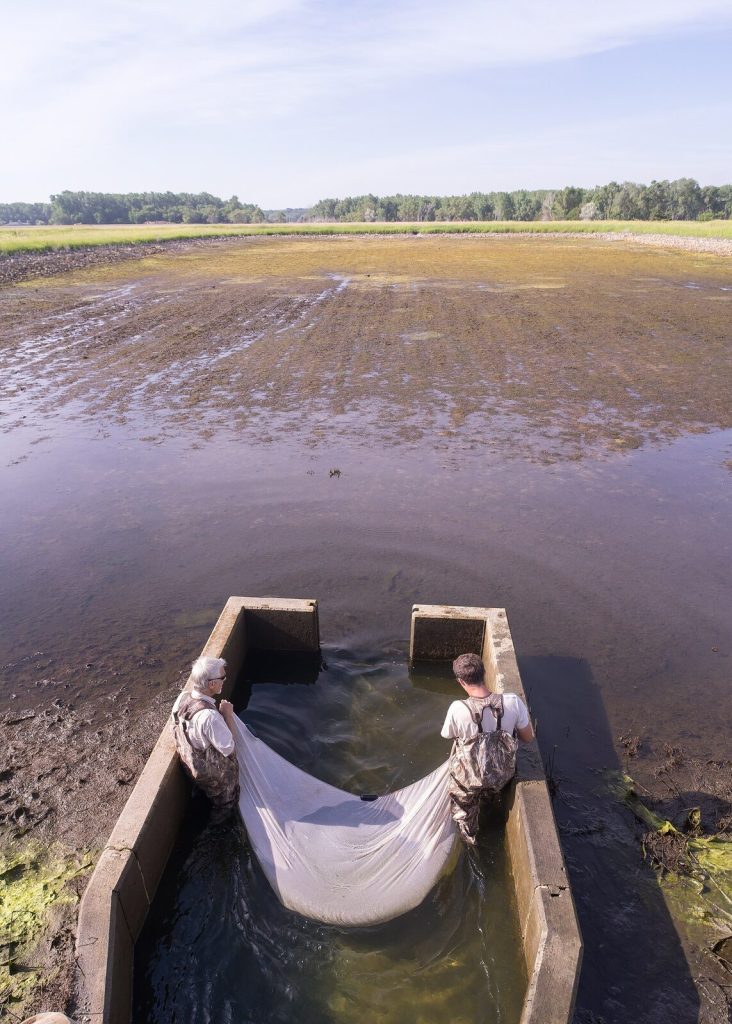
Moving live fish starts two days before the vehicle does. Ugandan guidance is to hold the fish off feed in clean aerated water for 48 hours before collection, then move them in oxygenated water at 0.5 to 1 kg of fish for every 10 litres, kept between 25 and 30 degrees and out of the sun. Most transport losses are decided before anything is loaded.
Why Transported Fish Die After Reaching the Farm
MAAIF's aquaculture manual is blunt about the mechanism. Live fish transportation is stressful because large numbers of fish are confined in a small volume, and deaths follow from osmoregulatory failure brought on by poor water quality, overcrowding and rough handling, or from latent disease organisms the stress has woken up. Then comes the sentence that changes how a farmer should think about a delivery: fish exposed to those conditions, even the ones that survive the trip, are unlikely to be healthy enough to survive stocking.
So the count on arrival is not the result. A consignment can reach the pond with every fish alive and still be a write off, because the damage shows up over the following days. The manual gives the timing of that delayed loss at the stocking end, and it is worth knowing before you pay for a load: fish that sink straight to the pond bottom will probably be dead within a day or two, and fish that swim erratically or carry discolouration on the body or fins may die within two to four days.
Two things follow. A hatchery has an obligation the manual states directly, which is to supply healthy fingerlings that survive after stocking rather than fingerlings that survive the trip. And the survival of the fish between hatchery and farm is named as the transporter's responsibility, so whoever is driving owns the outcome, not the person who packed the bags.
Conditioning Fish Off Feed for 48 Hours Before Collection
Conditioning is the single highest value step in the whole operation and the one most often skipped. Ugandan guidance defines it precisely: hold the fish without feed for a minimum of 48 hours in good quality water at the hatchery or nursery before collection, so they empty their guts and arrive producing less waste. Two days before collection the fish are seined, sorted, graded, counted and moved into temporary holding, either tanks or hapas, with good water quality and aeration, and held there unfed until collection day but for no more than three days.
Conditioning does two jobs at once. It controls the ammonia that would otherwise build up in the transport water from gut contents, which is the main reason water quality collapses in a sealed bag. And it gives someone a chance to spot the weak and deformed fish and take them out, which is far cheaper than discovering them in your pond a fortnight later.
The same logic governs the rest of the farm calendar. Ugandan feeding guidance lists two days before harvest and transportation among the times not to feed at all, and handling guidance says to work only with fish that have not been fed for at least 24 hours. A fish with a full gut handles badly, weighs misleadingly and fouls its own water.
Checking Fish Condition Before a Hatchery Order Leaves
Only healthy fish in good condition should be handled, packed or moved, and the manual sets out what good condition looks like so a buyer can check it at the hatchery rather than take a word for it. The fish should not be thin or emaciated. They should be alert and active, bright rather than dull, free of physical deformities, free of disease signs, of the right size, of uniform size, and showing no signs of stress.
Uniform size does more work on that list than it looks. Grading matters because mixed sizes in one container mean the bigger fish crowd the smaller ones and cannibalism becomes possible in the nursery stages, and because a graded batch lets you count accurately and price by weight. Ugandan guidance caps the fish in a grader at 7.5 kg per cubic metre of grader capacity, tells you not to touch fish with your hands but to drive them through by pouring water gently, and warns against large meshed nets where scales are involved.
Read the fish and the paperwork. MAAIF sets out four identifiable stages of stress, and they are visible from the side of a tank without any equipment at all.
Transport Water Quality for Farmed Fish
The water that travels with the fish has a specification. Ugandan guidance sets dissolved oxygen at saturation and never below 5 mg per litre, water temperature between 25 and 30 degrees, ammonia at zero, suspended solids negligible, and enough volume to hold the fish and dilute what they excrete. One instruction is easy to get wrong: do not fill transport containers from a pond with a heavy plankton bloom. A green pond is a productive pond, and the same bloom that feeds tilapia will strip oxygen out of a sealed bag overnight.
Salt goes in. The manual specifies adding salt at 0.05 percent of the water volume, preferably magadi salt because it carries bicarbonate, to stop the fish losing body salts through stressed gills and to help hold nitrite and pH in check. Stir it in and check it has dissolved completely before any fish go into the container, because undissolved salt sitting on the bottom is doing nothing for the fish and may irritate them.
Ammonia is the variable that rises during the trip even in conditioned fish. Where it climbs above 0.1 mg per litre in a transport tank, zeolite can be added to adsorb it, and for any trip likely to run beyond eight hours the manual recommends putting zeolite packs into both bags and tanks as a matter of course.
Packing Live Fish in Oxygen Bags on the Farm
Sealed polythene bags with a column of pure oxygen above the water are the common method in Uganda, and they are versatile and easy to store. Clear bags are preferred for the simple reason that you can see the fish through them. The procedure is specific enough that guessing at it costs fish.
Note what the oxygen column is for. It is not a cushion. Oxygen use by fish in a sealed container is extremely high, so that gas volume is the entire oxygen budget of the trip, and a bag two thirds full of water has roughly a third of the reserve of one filled correctly.
How Much Fish Per Litre of Transport Water
Ugandan guidance gives one loading rule twice, in two forms that agree. The general rule is 2 kg of fish for every 20 litres of water, and the bag and tank instructions give 0.5 to 1 kg for every 10 litres. Where you sit inside that band is decided by fish size, and the reason is metabolic rather than arithmetic.
| What is moving | Water | Fish load |
|---|---|---|
| Fish of 5 g or less | 10 litres | 0.5 kg |
| Larger fingerlings | 10 litres | Up to 1 kg |
| General rule | 20 litres | 2 kg |
| Fingerling ceiling | 10 litres | Never above 1 kg |
Small fish run a higher metabolic rate per gram of body weight, so a kilogramme of 4 g fry burns oxygen and produces ammonia faster than a kilogramme of 30 g fingerlings. Loading by weight without looking at size is how a bag of fry arrives dead while an identically loaded bag of larger fingerlings arrives fine.
One more piece of arithmetic that catches people using tanks: the fish displace a volume of water equal to their own weight. A tank filled to its calculated water volume and then loaded with fish is overfull, so the displacement has to come off the water figure before you start.
Moving Live Fish in Tanks and Drums
Tanks suit bigger consignments and any trip where you want to watch the fish on the way. Any shape with a wide opening works and rectangular is preferred, because loading is easier, the fish are visible, and a wide surface gives more contact with the air. A large tank that was not built to carry water needs reinforcing at the sides or it will bulge.
Fill to about two thirds, add salt at 0.05 percent of the total water volume and dissolve it, set the aeration unit in and switch it on, then load at the same 0.5 to 1 kg per 10 litres. Cover the tank with a solid lid once the fish are in and keep it covered for the trip: the lid stops water slopping out and stops the oxygen or air escaping into the atmosphere. Where there is no mechanical aeration, netting over the top at least stops fish jumping out, though a tank without aeration is for short runs only.
Check water temperature and oxygen before you move off. If oxygen is stable above 5 mg per litre the flow rate into the tank can be turned down, which saves gas. Monitor oxygen and fish behaviour often on the way, and if dissolved oxygen keeps falling towards 4 mg per litre, raise the flow. That is a real number to act on rather than a vague instruction to keep an eye on things.
Labelling the Consignment and What to Ask the Buyer
The manual puts a short interview before the packing, because the commonest cause of fish coming back is packing the wrong thing. The hatchery is told to harvest, grade, condition and pack only what the client actually needs, and to get six things out of the buyer first: the number and sizes of the tanks, ponds or cages being stocked; how many fish go into each unit; the size of fish wanted; the distance to the destination; the day and time of collection; and how the fish will travel.
That last question matters more in Uganda than the list makes it sound. If the farmer is going home by bus, the hatchery may need to arrange packing boxes so the bags stay upright and unpunctured among other passengers' luggage, and the manual notes that farmers rely heavily on hatchery operators for exactly this kind of advice.
On size, Ugandan guidance gives a minimum stocking size that doubles as an order specification. For tilapia growout ponds the minimum recommended size is 10 cm or 7 g, and for cages it is 30 g. A cheaper, smaller fingerling is not a saving if it is below the size the system can hold.
Then label each container separately, not the load as a whole. Species, the number or weight of fish in that bag, average weight in grams, the lot or batch number traceable back to the unit the fish came from and the date of harvest, an estimated date of birth with a batch kept inside a month of age spread, and anything the buyer needs to know, such as whether the tilapia are sex reversed or hand sexed and which pond the bag is destined for. The manual gives three reasons for labelling each container: it assures quality, it cuts the physical handling needed at stocking, and it keeps the fish in good water right up to the moment they go in. More on choosing and receiving stock is on our fish fingerling management page, with current prices on fish fingerlings price and sourcing on where to buy fish fingerlings.
On the Road: Heat, Time and Stopping to Run Errands
Three instructions cover the road itself, and they are all about the things a driver does rather than the equipment. Minimise transit time. Do not stop to run errands after collecting fish from the hatchery. Do not leave bags or tanks standing in direct sun.
Shade is not optional on an open truck. The manual says to keep containers out of direct sun and to cover bags on the back of an open vehicle with papyrus mats or gunny bags where the run is long. Warm water holds less oxygen than cool water, and a clear bag sitting in the sun heats fast, so a bag correctly packed at 27 degrees can climb out of the safe band inside an hour of standing still at a trading centre.
How long is too long is partly answered for you by the market. Ugandan market work on farmed catfish found that because there is no cold chain, live fish transactions are done in the shortest possible time, recorded as under ten hours, and that one farmers' marketing group moved members' fish to its head office in tanks with oxygen. Beyond about eight hours the manual wants zeolite in the water. Treat a day of travel as the practical ceiling for live fish and plan the route before the harvest, not after.
Stocking Live Fish Into the Pond on Arrival at the Farm
Arrival is where a good run is commonly undone, and one figure governs everything that happens next: once a bag is opened, the fish have about 5 to 10 minutes before they run out of oxygen. Everything is carried to the water's edge sealed.
Take all the bags to the edge of the pond they are destined for and open none of them on the way. Check the pond's oxygen and temperature if you have the equipment. Open one bag at a time. Where you have no instruments, put your fingers in both waters and feel for an obvious temperature difference, which is the manual's own fallback and better than assuming. Then add pond water into the bag gradually over 10 to 20 minutes until you have added two or three times the water already in it. Keep the unopened bags floating and shaded while you work, and note the manual's warning that floating unopened bags on the pond is not on its own enough to acclimatise the fish, which is the shortcut most people take. Finally lower the bag and tip it so the fish swim out themselves rather than being poured.
From a transport tank the sequence differs. Drive as close to the pond as the vehicle will go. Check water quality in both the pond and the tank. Bucket out about a third of the tank water and replace it with pond water, then repeat that twice or more so the chemistry moves gradually. Scoop a few fish at a time into a bucket with plenty of water using a scoop net, lower the bucket into the pond and let them swim out. Keep the aeration running in the tank until the last fish has left it.
Stock when the water is warm. Ugandan guidance puts the preferred stocking temperature above 25 degrees and caps the difference the fish may meet at 3 degrees without proper acclimatisation.
Reading the Fish as They Swim Out
Stand and watch. The manual is explicit that it matters to stay and observe how the fish leave the bag or bucket, and it tells you what each behaviour means, which turns five minutes of watching into a usable prediction and a basis for a conversation with the hatchery.
Water Temperatures Ugandan Fish Farming Guidance Rules Out
Temperature governs handling more strictly than most farmers realise, and the limits are published rather than a matter of judgement.
| Situation | Temperature | Why |
|---|---|---|
| Optimum for tilapia and catfish | 26 to 28 C | The band the two species are suited to |
| Transport water | 25 to 30 C | Warm enough to function, cool enough to hold oxygen |
| Handling | Above 24 C | Cold water handling predisposes fish to disease |
| Never handle | 21 C or below | Stated as a hard limit for both species |
The gap between the bag and its destination is capped separately: no more than a 2 degree difference between bag water and holding water when packing, and no exposure to a difference greater than 3 degrees without proper acclimatisation. In practice that means early morning in a cold month is the wrong time to move fish in the highlands, and the middle of a hot afternoon is the wrong time everywhere.
Transporting Harvested Fish to Market
Table fish going to market is a different problem from fingerlings going to a pond, because the fish no longer has to survive. Ugandan guidance for moving harvested product is short: use a clean container, preferably insulated, and it can be carried by bicycle, by boda boda or in any vehicle so long as the vehicle is clean. Refrigerated tanks are named where they exist. Live fish transport units are named for anything still swimming.
Most Ugandan farmed fish still travels alive, and that is a market fact rather than a preference. With no cold chain to rely on, buyers take delivery of live fish and middlemen pool live fish from several farms when one farmer cannot fill an order. So for most smallholders the live fish method above is the marketing method, which is why the two subjects cannot be separated. What changes once the fish are dead is the clock: freshness grading in Ugandan guidance turns on the eyes, gills, slime and smell, and every hour without ice moves a consignment down that scale.
Handling at harvest sets the quality the trip can preserve rather than improve. Fish coming out of the net should go straight into a fish basket held inside a tub of water of similar temperature and oxygen, ideally aerated and ideally filled from the pond being harvested, and then straight to their destination. Weigh them in batches as they come out of the water rather than weighing them twice, because each removal from water costs condition. Our fish harvesting guide covers the harvest itself and how to market farmed fish covers who is at the other end.
Permits for Moving Live Fish in Uganda
Moving live fish in Uganda is a permitted activity, which surprises most new farmers and appears on almost no guide. The ministry's manual lists the instruments alongside the farm establishment certificates.
Two honest caveats. Several of the statutes the manual cites have since been revised, so the paperwork's name may have moved even where the requirement has not; per the ministry's own advice, contact the district fisheries office for local sales and the fisheries directorate for larger markets and plants. And the same biosecurity review found the enforcement side thin, recording no quarantine facilities, no set guidelines on live fish import and export, and border inspectors not equipped to detect fish pathogens.
That last point is the reason the permit matters to you rather than to the government. Disease risk in aquaculture rises with the ease with which live fish move between farms, catchments and borders, and movements of hatchery produced stock are singled out as the concern. Buying live fingerlings is buying whatever came with them, so a batch number you can trace is a disease record as much as a receipt. Our fish diseases and treatment page covers what arrives with a bad batch.
Live Fish Transport Questions Ugandan Farmers Ask
How do you transport fish? This is one of the questions MAAIF records farmers asking most often, so here is the short version. Hold them off feed for 48 hours in clean aerated water. Move them in water of 25 to 30 degrees with salt at 0.05 percent, loaded at 0.5 to 1 kg for every 10 litres, in a double polythene bag with an oxygen column at least twice the depth of the water, boxed for support and shaded. Keep the trip short and do not stop. At the pond, open one bag at a time at the water's edge and add pond water over 10 to 20 minutes before tipping the fish out.
Do you just pour the fingerlings into the pond? Also a question the ministry records, and the answer is no, for a reason with a number attached. A bag opened at the pond gives the fish about 5 to 10 minutes of oxygen, and a fish dropped straight from bag water into pond water meets a temperature and chemistry change it has no time to adjust to. Ugandan guidance caps that change at 3 degrees without acclimatisation. Add pond water gradually until you have two or three times what was in the bag, then let the fish swim out by themselves. Floating the sealed bags on the pond first is commonly believed to be enough and the manual says plainly that it is not.
How long can live fish survive in transport? No single figure exists, because it depends on loading, temperature, oxygen and fish size together. What is published: beyond about eight hours the manual wants zeolite packs in the water to hold ammonia down, and Ugandan market work found live catfish transactions being completed in under ten hours because there is no cold chain to fall back on. Plan for the shortest trip you can arrange and treat anything beyond a day as a different problem needing a tank, aeration and someone watching the fish.
What does it cost to transport fish in Uganda? No Ugandan transport charge could be sourced for this page, and the honest reason is that it depends entirely on distance, vehicle and whether you or the hatchery arranges it. Two anchors from Ugandan cost research: transport was a small line in surveyed pond budgets and a slightly larger one in cage budgets, and the delivered cost of fingerlings can run well above the hatchery price, with tilapia fingerlings reported at 150 to 200 shillings at the hatchery against a farmer's delivered cost implying nearer 300. That gap is the transport, and it is worth pricing against collecting the fish yourself. The full input picture is on the cost of fish farming page.
Can I move live fish on a boda boda or a bus? Yes, and many Ugandan farmers do. The requirement is that the bags are boxed or basketed so they cannot be crushed or punctured, and shaded so they do not heat up. The manual tells hatchery operators to ask how the farmer is travelling and to arrange packing boxes where the answer is public transport. Tell the hatchery you are going by bus rather than letting them assume a vehicle.
Should I add anything to the water? Salt, at 0.05 percent of the water volume, with magadi salt preferred because of its bicarbonate, fully dissolved before the fish go in. Zeolite where ammonia climbs above 0.1 mg per litre, and as standard on trips beyond eight hours. Nothing else. Ugandan guidance says to avoid exposing fish to chemicals and pollutants, and any treatment for injury or disease is a matter for the product label and a veterinary practitioner rather than something to improvise in a transport bag.
Why did fish die three days after I stocked them? Because the loss was probably caused in transit and only became visible in your pond. Erratic swimming or discolouration at stocking predicts death within two to four days, and fish that survive bad transport water are described in Ugandan guidance as unlikely to be healthy enough to survive stocking at all. Keep the delivery labels, write down what you saw in the first ten minutes, and raise it with the hatchery with that record in hand. Where the pond water was the problem instead, the signs show up across all sizes of fish rather than only in the new stock, which is what our fish pond water management page helps you separate.
Do I need a permit to carry my own fish to market? The ministry's table lists a movement permit for fish and fish products travelling from one part of Uganda to another and a sanitary certificate for consignments sold for human consumption in Ugandan markets, so assume something is required and ask. The district fisheries office issues inland movement permits and is also the office the ministry points you to for local market and restaurant sales.
Fingerling, feed and transport charges all move with season, supplier and distance, so ask two or three hatcheries and your district fisheries office for current terms before you commit to a delivery, and agree in advance who carries the loss if the fish arrive in poor condition. The rest of the cluster sits under our fish farming guides.