
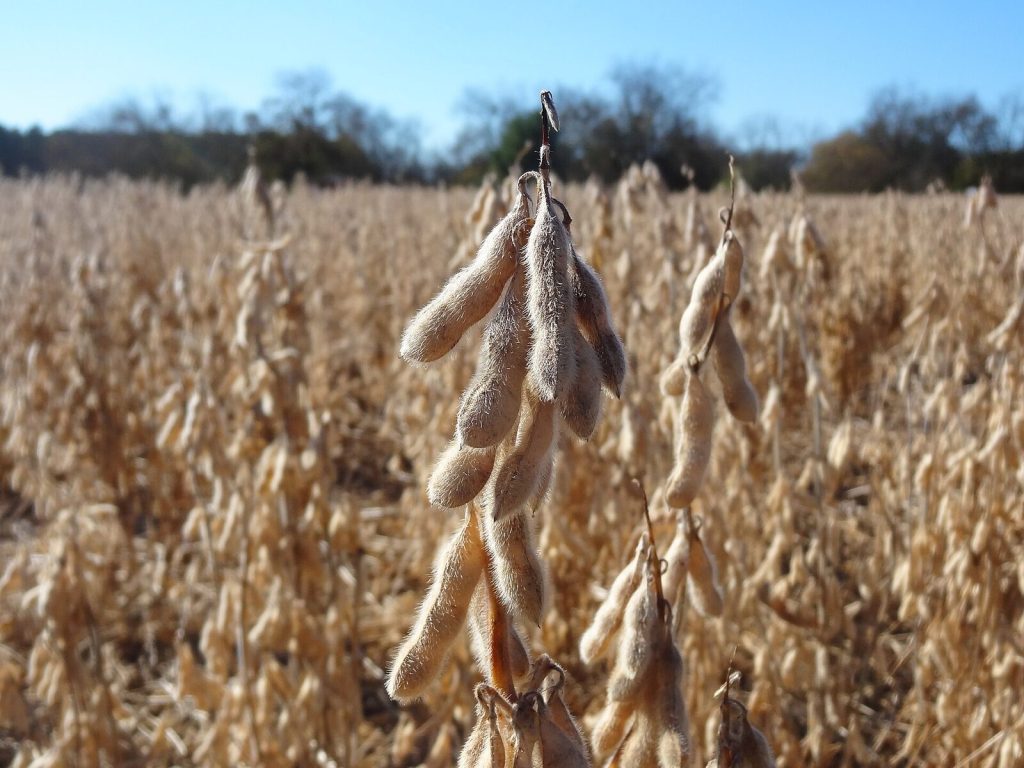
Soybean meal is the protein ingredient every other plant protein is measured against, and the only one whose value depends almost entirely on how much heat it was given. Too little heat and an anti nutritional factor survives that blocks protein digestion. Too much and the lysine that makes soya worth buying is destroyed. Neither error is visible in the sack.
Raw Soya Beans Cannot Go Into Feed, and Heat Is Why
A raw soya bean contains trypsin inhibitors and lectins. Trypsin is the enzyme an animal uses to break protein down, so a diet carrying live inhibitor gives the animal protein it cannot reach. The effect is not subtle and it is not species specific: broiler trials comparing soybean meal at low against high trypsin inhibitor activity show better digestibility of dry matter, nitrogen, energy and amino acids in the low inhibitor diet, and pig performance is depressed where the meal was not processed enough to inactivate those factors.
Both factors are heat labile, which is the whole reason soya gets cooked, toasted, extruded or steamed before it ever reaches a feed mixer. Uganda's Ministry of Agriculture states the same thing in its poultry training manual, in a section about why intake falls on some rations: anti nutritional factors in some feedstuffs, soya named as the example, affect digestibility and bioavailability, so such feedstuffs should be well processed, with heat treatment of soya to remove trypsin inhibitor given as the illustration. The ministry's manual also carries a photograph of a fabricated roaster being used for soya in Uganda, which tells you the ministry expects the roasting to happen on farms and at small mills rather than only in factories.
That is the first thing a Ugandan buyer should hold onto. In a large solvent extraction plant, the heat comes free with the process: the extracted flakes are dried to drive off solvent and then toasted, and the toasting is what removes urease and trypsin inhibitors. Where oil is pressed mechanically without high temperatures, that does not happen. FAO's feed resource database Feedipedia states the position exactly: conventional oil extraction is effective at removing anti nutritional factors, and this is not true of mechanical treatments that do not use high temperatures. Extruding before pressing closes the gap. Pressing alone does not.
Two Opposite Toasting Errors Both Cut Feeding Value
Here is the part almost no feed page carries, and it is the reason to be careful with home roasted soya. Under processing and over processing both depress growth, and they do it for unrelated reasons.
The practical consequence is uncomfortable but honest. Home roasting soya solves a real problem and creates a new one, and the new one is invisible. Where a farmer roasts their own beans, the safer discipline is a consistent routine, kept identical batch to batch, with the growth of the animals watched as the only available feedback, and the batch changed if performance drops. Where a mill sells toasted soya cake, its consistency is worth more than the price difference, and the reason is that the mill can afford to be tested.
Testing a Soybean Meal Before It Goes Into a Feed Ration
Proper processing is measurable, and it is worth knowing what the measurements are even where they are out of reach, because it tells you what a laboratory can be asked for.
Three indices are used on soybean meal, and that same FAO database gives the bands for an adequately heat processed product: a protein dispersibility index between 15 and 30 percent, a potassium hydroxide protein solubility between 70 and 85 percent, and a urease index at or below a 0.3 unit change in pH. Residual anti trypsin activity can be measured directly, but the reference method is less suited to routine quality control. Notice the shape of those bands. Each one has a floor and a ceiling, because each is catching both errors at once.
MAAIF's manual makes the same recommendation without naming an index. It tells farmers who mix their own feed to collect samples of the mixed feed and send them to a nutrition laboratory to test the nutrient content, then adjust. That is the right instruction, and it is the one most commonly skipped. A 10 district Ugandan survey of chicken feed handling, still circulating as a preprint, reports that producers and millers fall back on smell, sight and the opinions of other farmers, and that price instability and poor ingredient quality top their list of complaints. Smell and colour cannot separate a well toasted soya cake from a scorched one.
How Ugandan Soya Reaches the Feed Trade
Uganda grows soya, and what reaches livestock is the tail end of a crop grown mainly for something else. Uganda's smallholder pig value chain training manual, published by the International Livestock Research Institute, describes soya as cultivated for home food consumption and to supply processing industries, with the products of that processing, mostly the meal left after oil extraction, then available as a protein supplement. The same manual names the Maksoy varieties released by Makerere University as commonly grown in Uganda because they resist soybean rust.
Two things follow from being a residual supply. The first is that the oil market, not the feed market, decides how much cake exists and what it costs. The second is that the extraction route varies: the manual notes that oil extraction from soya in Uganda can be mechanical or chemical, and those two routes leave different products. A mechanically pressed cake keeps more oil and, unless it was cooked or extruded beforehand, may keep more of the anti nutritional factor too. The manual's own instruction is to toast the whole grain before milling and extracting the oil, which puts the heat step before the press rather than after it.
There is a third Ugandan route that skips the press entirely: whole roasted soya beans, ground and used as both a protein and an energy ingredient. MAAIF's manual treats roasted whole beans and soya cake as one line in its protein table, and gives them the same protein figure of about 42 to 43 percent. Whole roasted beans carry the oil that the press would have removed, which raises the energy of the ration and shortens how long the ground material keeps before the oil turns. For anyone mixing their own, the poultry feed formulation guide is where the two routes get compared against a formula.
Reading a Soybean Meal Grade Before Mixing Feed
Soybean meal is one of the least variable protein ingredients in animal nutrition, which is precisely why the grade printed on a bag means something. It is classified and traded by protein content, and the protein number carries fibre and oil along with it.
| Product | Crude protein | Crude fibre | Residual oil |
|---|---|---|---|
| Dehulled, high protein | 47 to 49 pc | About 3 pc | Under 1.5 pc |
| Hulls retained | Under 47 pc | Over 6 pc | Under 2 pc |
| Mechanically pressed | Lower | Higher | Over 3 to 5 pc |
Two independent tables agree closely on where the grades sit. The FAO database puts soybean meal at 43 to 53 percent protein as fed, with dehulled meals at 47 to 49 percent and under 3 percent crude fibre. The United States National Research Council's swine figures, reproduced in the Ugandan pig manual, give solvent extracted soybean meal at 44.0 percent protein with 7.3 percent crude fibre, and dehulled meal at 48.5 percent protein with 3.4 percent crude fibre. The fibre column is doing the real work: hulls are what separate a 44 from a 48, and a low protein grade is a high fibre grade.
MAAIF's protein table gives a lower figure than either, about 42 to 43 percent, for soya cake and roasted whole beans together. That is consistent rather than contradictory, because a mechanically pressed cake with hulls and residual oil sits at the bottom of the range, and that is the product most Ugandan smallholders actually meet. Where a bag carries no grade at all, assume the bottom of the range rather than the middle.
Feeding Around What Soybean Meal Lacks
Soya's amino acid balance is the best of any plant protein, and it still has holes. Naming them is what stops a ration failing quietly.
Methionine and cystine are the gap. Soybean meal is rich in lysine, tryptophan, threonine and isoleucine, the amino acids cereal grains are short of, and its lysine digestibility in pigs and poultry runs above 90 percent. The sulphur amino acids sit below what a monogastric needs, so methionine supplementation goes with soya rather than being optional. MAAIF's manual confirms the practical form: synthetic methionine is supplied in premixes and is 98 percent active, and lysine as a hydrochloride is about 76 percent. The Ugandan pig manual puts it in one sentence, that good quality soybean meal is high in protein, energy and lysine but poor in methionine.
Phosphorus is the second gap and it is a trap rather than a shortage. Soybean meal contains a reasonable amount of phosphorus, but about 60 to 70 percent of it is locked in phytic acid, which monogastric animals cannot break down. So a ration can show adequate phosphorus on paper and leave the animal short. The same phytate binds zinc, to the point where published requirements put a pig on a soya based diet at nearly three times the zinc level of a pig fed an animal protein. Phytase enzymes release some of it, and phytase is a feed additive whose inclusion belongs on the product label rather than in an article.
Two smaller items belong on the record. Soybean meal carries raffinose and stachyose, sugars monogastric animals cannot digest, which can cause flatulence and loose dung and speed digesta through the gut. And soybean meal is goitrogenic for monogastrics, with published cases of goitrous calves born to cows fed soybean meal as the main supplementary protein, plus about a gramme per kilogramme of genistein, which has oestrogenic activity. None of that argues against using soya. It argues against using it as the only supplement in a breeding ration without advice.
Aflatoxin in Ugandan Soybean Feed Samples, and Why a Low Reading Is Not Reassurance
A survey led from Makerere University tested the five ingredients that dominate Ugandan poultry rations. Soybean came out second cleanest, behind mukene. Samples from large scale processors averaged about 16.75 parts per billion of total aflatoxin and samples from small scale processors about 52.75, and the difference between the two scales was statistically reliable. For comparison, maize bran from small scale processors in the same survey averaged about 103.25.
The survey offers an explanation for soya's better showing, and it comes with a caveat that deserves to be read carefully. Its authors note that thermal treatment is applied to soybean and to none of the other ingredients, which are only crushed, and that the treatment probably influenced the low aflatoxin content. Then they add that the detection method targeted the primary aflatoxins rather than the degradation products, which may be equally toxic.
Read that plainly. Heat does not make aflatoxin disappear. It can change it into something the test was not looking for. So soya's lower reading may reflect a genuinely cleaner ingredient, or a partly transformed one, and the survey itself declines to say which. The safe conclusion is the modest one: soya is not exempt from the Ugandan mould problem, a roasted cake is not a clean cake, and the same buying and storage discipline applies as to any other ingredient. It also means the clay binders sometimes added against mould toxins are as relevant to a soya cake as to a bran sack. Each of those is a manufactured product carrying its own instructions, among them how long a laying, milking or finishing animal must be held before its eggs, milk or meat are sold. That instruction comes off the packet, and a veterinary officer confirms it for the animals in front of you.
Soybean Meal in Poultry, Pig and Dairy Feeding
How much soya belongs in a ration is a cost question, not a safety question, once the meal has been properly processed. That is what separates soybean meal from cotton seed cake, where the ceiling is set by a toxin.
Soya is one of the few ingredients where Uganda's guidance is internally consistent enough to quote. MAAIF's protein table puts soya cake and roasted beans at an inclusion rate of 25 percent in poultry feed, and the ministry's manual has no second figure disagreeing with it, which is more than can be said for its cotton cake row. The Ugandan pig manual gives a wider band for sows and fatteners and names the constraint as economic feasibility rather than tolerance. Notice what is absent from both: no toxin threshold, no restriction on breeding stock, no class of animal that has to be kept off it. Those figures are ceilings from a national training document, not a formula for your farm, and the formula still comes from someone who can see the whole ration, which means a nutritionist or a district veterinary or extension officer.
What is worth stating is the substitution logic, because that is where money is lost. Soya is the reference protein, so replacing it with a cheaper cake is never a weight for weight swap. Sunflower cake carries roughly half soya's lysine as a share of protein, and cotton seed cake about two thirds, so a straight substitution produces a lysine deficient diet even where the crude protein figure on paper is unchanged. Birds and pigs then eat more to chase the missing amino acid, which raises feed cost per kilogramme of gain and eats the saving. The sunflower cake page and the cotton seed cake page work through what each of those substitutions actually costs.
For dairy cattle, the rumen changes the arithmetic. Rumen microbes deal with trypsin inhibitors far better than a pig or a bird does, so processing matters less for a cow, and treatments that raise the share of protein escaping rumen breakdown matter more. Mechanically pressed soya meals, with their higher residual oil, are noted as having greater rumen bypass value and better palatability than other oilseed meals, which makes the expeller product that is least suited to poultry among the better options for a milking cow.
Storing Soya Cake and Roasted Beans on the Farm
Residual oil is what sets soya's storage life, and it works against the products a Ugandan smallholder is most likely to buy. A solvent extracted meal with under 2 percent oil keeps well. A pressed cake with 5 percent or more, and ground whole roasted beans with all of the oil still in them, both go rancid, and rancid fat depresses intake before anything else shows.
The handling rules are the same ones MAAIF sets for any feed and they are worth repeating because they are cheap. Pack in water proof sacks. Do not compact the sack, because pressing the material creates the airless damp conditions mould prefers. Keep the store dry and rodent free. Mark the date. The ministry puts mixed feed at a two week shelf life beyond which it turns mouldy and becomes unfit, and a ground oily ingredient deserves the same caution even when bought as a straight. Buy soya in quantities you will use rather than stockpiling it, and buy the cake whole and grind it as you go where that option exists, because an intact cake keeps much better than a ground one. How to build the store is covered on the feed storage guide, and the animal feeds and health hub lists the neighbouring ingredient pages.
Frequently Asked Questions About Soybean Meal in Animal Feeding
Can I feed raw soya beans to chickens or pigs? No. Raw beans carry trypsin inhibitors and lectins that block protein digestion, and the animal will grow poorly on a ration that looks adequate on paper. The beans need heat first, by roasting, cooking or extrusion. This is one of the few places in feeding where the answer is a flat no rather than a matter of degree.
How do I know my roasted soya was roasted enough? By laboratory test, or not at all. The tests exist and have both a floor and a ceiling, because too much heat is as damaging as too little. On farm, the best available substitute is a routine kept identical between batches, with animal performance watched as the feedback and the batch treated as suspect if gain drops. A burnt smell or badly scorched material is a reason to reject a bag; the absence of one proves nothing.
Is soya cake the same as soybean meal? In Ugandan usage the words get swapped freely, and the products are not identical. Cake is what a press leaves and carries more oil, more fibre and less protein. Meal usually means the solvent extracted, ground, toasted product with more protein and almost no oil. Assume you are buying the lower protein product unless the bag carries a grade.
Does soybean meal need methionine added? Yes, for poultry and pigs. Soya is rich in lysine and short of the sulphur amino acids, so a soya based monogastric ration needs a methionine source, which normally arrives inside a premix rather than as a separate purchase. The premix label states its own inclusion and that is the figure to follow.
Why do my pigs have loose dung on a soya ration? Soya carries sugars that monogastric animals cannot digest, which ferment in the hind gut and can cause flatulence and loose dung and speed material through the gut. That is a known property of the ingredient rather than a sign of spoilage. Persistent scouring, blood, or pigs going off feed are different matters and belong with a veterinary officer, not with a ration change.
Can soybean meal replace mukene in a poultry ration? Partly, and not on protein alone. Mukene brings minerals and a different amino acid profile along with its protein, and it tested as the least aflatoxin contaminated of the five main Ugandan ingredients. Soya is the better lysine source. Most Ugandan rations use both, and the balance between them is a formulation question for someone who can see your whole ration.
Is soya cake cheaper per unit of protein than other cakes? Sometimes, and the comparison has to be made per kilogramme of protein rather than per sack, because soya carries more protein per kilogramme than sunflower or cotton cake. Divide the sack price by the kilogrammes of protein in the sack, using the grade on the bag, and compare that figure. Prices for all of these move with the oil market and the season, so check the current soybean price rather than working from a figure on a page.
Soya cake and roasted bean prices move with the oil crushing season and the district, and the quality question is settled by the processor rather than the price. Ask sellers near you whether the soya was heat treated and where in the process, ask for a protein grade, and take any question about premixes, mould binders or a ration for laying or milking stock to your district veterinary officer or extension officer, who can also point to a feed testing laboratory. Mills and stockists by district can be found through the pig feed buying page, with wider listings in the supplier directory.