
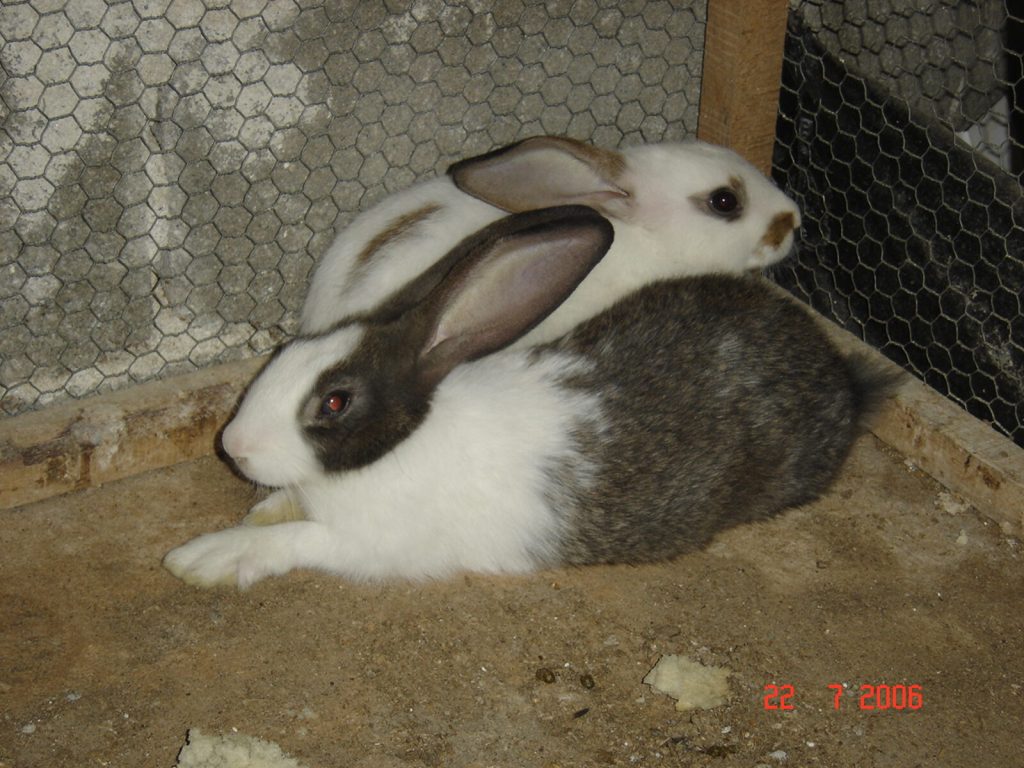
Rabbit farming in Uganda is a real and officially supported livestock enterprise, run through a national rabbit breeding programme and a registered farmers' association, but almost every performance figure circulating about it was measured in Europe. The animals, the hutches and the buyers exist. What does not exist is a Ugandan production statistic to plan against, which is why the money so often disappoints.
What Rabbit Farming in Uganda Looks Like Now
The National Animal Genetic Resources Centre and Data Bank, a statutory body under the agriculture ministry established by the Animal Breeding Act of 2001, runs a National Rabbit Breeding Program as one of its specialised units. That programme supplies breeding males and females, works alongside the ministry on farmer training, and publishes a short list of what is available in the country: indigenous stock, crosses of it, and half a dozen imported types. Which of those to buy is a separate decision and it has its own page.
By the centre's own account, rabbits arrived in Uganda in the early 1900s under colonial rule and were kept as pets. Commercial keeping began in the 2000s and ran into a perception problem: rabbits were read as pets or dismissed as rodents. That perception is fading but has not gone.
A national association for rabbit keepers was formed through meetings in April 2021 and registered with the national registration bureau. The same centre has distributed weighing scales to its regional coordinators for the single purpose of helping rabbit farmers monitor weight, and has bought laboratory equipment for rabbit disease testing. Both of those tell you something about the starting point: the intervention needed was a scale, which means rabbits were being traded without one.
Why Uganda Has No National Rabbit Production Figure
This matters more than it sounds. The United Nations food agency's production database carries two rabbit entries, one for live rabbits and hares and one for rabbit meat. Sixteen African countries report against them. Uganda reports against neither, for any year in the series.
Its neighbours do. Kenya's rabbit stock is recorded as an official national figure of roughly 780,000 head with around 650 tonnes of meat. Rwanda's series, flagged as estimated rather than official, runs near 942,000 head. Burundi's stock figure is official at about 1,097,000 head. Egypt dwarfs all of them at over five million head.
The absence is specific to Uganda rather than a hole in the database, because the same file carries 104 Ugandan entries including cattle, goat, sheep, pig and chicken meat. So the country reports its other livestock and not this one. For a farmer that has a plain consequence: nobody can honestly tell you how many rabbits Uganda keeps, how much rabbit meat it produces, or whether the sector is growing. Any page that gives you a national rabbit figure invented it or inherited it from something that did.
Uganda Has Already Had a Rabbit Boom, and It Lost Farmers Money
Peer reviewed work in a rabbit science journal documented what happened in Kampala when meat rabbit keeping was promoted as a quick business opportunity with unlimited markets. The description is worth reading closely, because the promotional pattern has not changed.
Breeding stock producers sold animals at prices the author described as exorbitant. Feed companies sold pelleted rabbit feed at high prices. Commercial producers, carrying both of those costs, were pushed into selling fryers at light market weights of around two kilogrammes liveweight and asking high prices to recover what they had spent. Sellers then doubled those prices again down the chain. The result was a retail rabbit price running roughly two and a half to three times the beef price and roughly two times the chicken price in the same market at the same time.
That price gap capped demand, and the underlying demand was thin to begin with, because rabbit meat is not a traditional Ugandan food. In the whole of Kampala the study counted two meat markets, two restaurants and one university selling rabbit meat, with an estimated throughput of only one to two hundred fryers a month, and customers who were mostly expatriates. Many commercial producers lost money. Abandonment ran moderate to high.
The paper's conclusion was not that rabbits do not work in Uganda. It was that the commercial model being sold did not, and that the opportunity was a village based one: a small unit of a few does, local feeds, local building materials, family labour, and meat eaten at home rather than only sold. Nearly three decades on, the promotional arithmetic circulating online still describes the model that failed.
How Many Rabbits a Doe Actually Weans in a Farming Year
This is the number that decides the enterprise, and it is where inherited figures do the most damage. Rabbit biology genuinely allows a very high theoretical output. The United Nations food agency's rabbit reference work puts potential production per doe per year at 150 young, then says plainly that reaching it would need many more years of research and mastery of environmental factors, and that breeding in developing countries should instead aim at local populations and longer reproductive intervals.
What well run European units actually achieve is published in the same work, as three reproduction rates compared side by side. Weaning at 28, 35 and 42 days, with the doe presented to the buck 3, 10 and 17 days after kindling, produced an estimated 7.9, 7.5 and 6.6 litters per mother cage per year, with 5.7, 5.9 and 5.8 young weaned per litter. Multiply those out and the range is roughly 38 to 45 weaned kits per doe per year. That is the ceiling of a temperate system on pelleted feed with controlled remating.
So when a page tells a Ugandan farmer that a doe produces 38 kits a year, it has handed over the top of the European range as though it were a local planning figure. Two separate bodies of measurement say what happens to that number in the tropics.
In a Nigerian humid tropical system, 524 rabbits were followed from birth to 56 days across four parities. Overall survival was 66.41 per cent, so about one kit in three did not reach eight weeks. Survival was worst in first litters at 54.69 per cent and best in third and fourth litters at 73.53 and 71.55 per cent. Early neonatal loss accounted for 37.5 per cent of all deaths inside the first five days. Mortality risk ran 40.5 per cent higher in large litters than in small ones, fell by about 26 per cent for each extra 100 g of doe weight at conception, and fell by about 15 per cent for each step up in the doe's nest building score.
In a wet tropical rabbitry recorded across 2,528 does, total mortality from birth to weaning ran 31 to 38 per cent depending on genetic type, with most of it falling between birth and weaning rather than at birth.
One more finding cuts against a common instinct. Weaning viability across more than twenty thousand litters does not hold up as litters get bigger. Below is that pattern.
| Live births in litter | Weaned per litter | Viability |
|---|---|---|
| 1 | 0.35 | 35 per cent |
| 2 | 1.37 | 68 per cent |
| 5 | 4.06 | 81 per cent |
| 8 | 6.68 | 83 per cent |
| 10 | 7.82 | 78 per cent |
| 12 | 8.57 | 71 per cent |
| 14 | 8.60 | 61 per cent |
| Average | 6.41 | 80 per cent |
Read the middle column rather than the last one. Weaned output flattens at about 8.6 kits and then stops climbing, so a litter of fourteen weans no more rabbits than a litter of twelve and loses far more of them doing it. A doe advertised for enormous litters is not selling you more weaned rabbits. Fostering surplus kits onto another doe is the standard answer, and it needs enough does in the unit and enough familiarity with how each one mothers.
Heat and Housing: the Constraint Nobody Prices
Rabbit farming in Uganda runs into a physiological ceiling that European budgets never meet. Feed intake falls by roughly a third across the range between a cool shed and a hot hutch, from about 180 grammes of pellets a day down to about 120, with thirst moving the other way. The measurements behind that, and what to do about the timing of feeding, sit on the feeding page.
An animal eating a third less than the tables assume will not grow at the rate the tables promise. So shade, ventilation and roof height are not comfort items on a Ugandan rabbit unit; they are the difference between the feed being eaten and the feed being wasted. Hutches raised off the ground with mesh floors keep animals out of their own droppings, which is a disease decision as much as a hygiene one, and they let you see and handle each animal without a fight.
Letting rabbits graze loose is a tempting answer to the feed bill and the evidence does not support it. Growth on pasture alone runs about a third below what a hutch on concentrate delivers, and the reference literature refuses to recommend loose grazing at all once fencing and predator losses are counted. A Ugandan unit has more predators to count than a temperate one. Cut and carry into a hutch is the system that works here.
Feeding Rabbits on What Grows on a Ugandan Farm
A survey of rabbit keepers across ten urban and peri urban parts of Mukono district found that what Ugandan rabbits actually eat is largely annual weeds and crop residues rather than planted fodder. Around four fifths of the forage species recorded were annuals. Black jack and sweet potato vines were among the most used, along with several plants known locally by name.
Two constraints came out of that survey and neither is surprising: green material runs short once the rains stop, and bought feed costs more than the enterprise can carry. So the Ugandan rabbit feed problem is seasonal rather than absolute, which makes it a storage and planting problem. The detail of what to feed and how much of it sits on its own page, including the finding that several of the plants Ugandan keepers rely on have no published nutritional analysis at all.
The Diseases That Decide Whether the Enterprise Works
Coccidiosis is the first thing that will find your rabbits. In a survey of 61 rabbit keeping farms across six Kenyan counties, 85 per cent of faecal samples carried coccidian oocysts, and the two risk factors identified were housing rabbits of different ages together in groups and failing to control other infections at the same time. Both are management choices, not bad luck.
The clinical course is fast and it has a shape worth memorising. Depending on the species involved, diarrhoea appears four to six days after infection, peaks between the eighth and tenth day, then subsides over three or four days. Weight loss can reach a fifth of liveweight in two or three days. Deaths come in a short burst of three or four days beginning abruptly around the ninth day. Two of the intestinal species are classed as very pathogenic and can kill at very low infection levels. Survivors may return to their previous growth rate within a fortnight, which is why a keeper who loses animals in one week and sees the rest recover in the next often concludes nothing much happened.
Mange is the second, and it carries a risk to people. Body mange and ear mange in rabbits are caused by several mite species, they spread by direct contact and by shared equipment, they produce itching, hair loss and severe wasting, and they can kill. Mites from rabbits can infest humans. There is no commercially available mange vaccine for rabbits. Diagnosis is a skin scraping read under a microscope, which is a thing a veterinary practice can do and a thing a farmer cannot.
Treatment is where this page stops. There are licensed products for both conditions and there are also long lists of home remedies. This page names no product, no active ingredient dose, no dilution and no interval, because rabbits are food animals and a medicine given to a food animal carries a withholding period before slaughter. Ask the vet who supplies the product what that period is and honour it. That is the single most commonly skipped step on a smallholding, and it is the one that puts residues into meat.
One thing worth knowing about the medicines themselves. A controlled trial published recently tested two in feed coccidiosis preventives that had been used in rabbit production for decades, plus a herbal alternative, against an experimental infection. None of the three reduced parasite reproduction or improved growth compared with untreated controls, and the authors attributed the failure of the two established products to multiple resistance in the parasite. So a bag labelled as preventing coccidiosis may be doing nothing. Clean, dry, single age housing is not the cheap version of coccidiosis control. On that evidence it is the version that still works.
Find the Market Before You Build the Hutches
Rabbit farming in Uganda fails at the selling end more often than at the breeding end. The historic Kampala study counted a handful of outlets in the whole capital. The Mukono survey found that for about three in five of the keepers interviewed, rabbits contributed very little to household income. A separate survey of 577 rabbit keeping households across three Wakiso sub counties concluded that what separated commercial keepers from the rest was technical knowledge, record keeping and access to a working market channel, and it described Ugandan rabbit production as erratic.
Erratic is the right word and it cuts both ways. Buyers who cannot get a steady weekly supply stop asking, and a keeper who has no standing buyer sells into whatever offer appears. That is the same trap that catches pig keepers who sell on a trader's visual estimate rather than on a weight.
Records and a Weighing Scale Are the Cheapest Inputs on the Farm
The national genetics centre's decision to put weighing scales in the hands of its regional coordinators for rabbit weight monitoring tells you what was missing. A rabbit farm without a scale cannot know its growth rate, cannot price by the kilogramme, cannot tell a good doe from a lucky one and cannot tell whether a feed change helped.
Four records carry almost all the value: kindling dates with live births and number weaned per doe, deaths with the age at death, weights at a fixed age, and every shilling spent on feed. The first two build the herd growth model this whole enterprise rests on. A simple livestock record sheet is enough, and the discipline matters more than the format.
Cull on the record rather than on affection. A doe whose first litter went badly deserves a second chance, because measured survival improves markedly from the third litter onwards. A doe whose third and fourth litters also go badly is eating for nothing.
What a Realistic First Year on a Rabbit Farm Involves
Start small enough that a mistake is survivable. The village scale model proposed in the Ugandan literature was a handful of does with local feeds, local materials and family labour, and the reason was not modesty. It was that the costs which sank the commercial units were bought breeding stock and bought pelleted feed, and a small unit can avoid most of both.
Expect the first year to teach you your own mortality rate rather than to pay you. Buy fewer does than you can afford and spend the difference on the hutch, because the hutch decides heat load, hygiene and predator losses, and all three outrank genetics in a first year. Keep age groups separate from the day the first litter is weaned. Weigh, write it down, and compare your own numbers against the published tropical figures on this page rather than against the promotional ones.
Rabbits sit alongside other small stock on the livestock section for a reason worth saying out loud. They are a herd growth enterprise, like goats, rather than a feed conversion enterprise like pigs. Your income is decided by how many young animals reach sale age, not by how efficiently each one turns feed into weight. That is why this page spends its length on survival rather than on rations, and why keeping disease off the unit earns more than any ration change.
Frequently Asked Questions About Rabbit Farming in Uganda
How much does it cost to start rabbit farming in Uganda? No verified current Ugandan price set exists for breeding stock, hutch materials or rabbit pellets, and this page will not invent one. What is documented is the shape of the cost problem rather than its size: the two lines that sank Uganda's earlier commercial rabbit units were bought breeding stock and bought pelleted feed, both sold at prices the enterprise could not carry. Price both locally before committing, get more than one quote for stock, and treat any figure you are quoted for rabbit pellets as a reason to cost a forage based system alongside it. The commercial rabbit costs page works through the structure, and current livestock and input prices move too fast for a guide to fix. On the selling side the one documented Ugandan market study found rabbit meat retailing at roughly two and a half to three times the beef price and about twice the chicken price in the same market, which is why demand was thin, so check what beef and chicken fetch near you. Whether a buyer pays per animal or per kilogramme matters more than the headline rate, because a per animal price gives you nothing for the extra weeks of feeding.
How long before a rabbit is ready to sell? Longer than most guides claim, and it depends on the breed's adult size rather than on the calendar. The published rule is to slaughter at 50 to 60 per cent of the normal adult weight for that breed or population, because that is when carcass composition and feed efficiency are both best. A rabbit reaching that weight in a cool European shed on pelleted feed gets there far faster than the same rabbit eating a third less because of heat. Weigh yours and find out.
Is rabbit farming profitable in Uganda? The honest answer is that it depends on whether you buy feed and stock or produce them, and that the one peer reviewed Ugandan assessment of the commercial model found non realised profitability and moderate to high abandonment. A Ugandan student dissertation has reported a large average gross margin per four month cycle for smallholders in Wakiso, but a figure of that size cannot be reconciled with the mortality and market evidence on this page and is not published here as a planning number. Build the margin from your own weaning rate, your own mortality and your own buyer's price.
How many does should I start with? Fewer than you can afford, and enough that surplus kits from a big litter have somewhere to go. The village scale unit proposed in the Ugandan literature was about five does with local feeds, local materials and family labour, and that number is sensible for a second reason: weaned output stops climbing above about nine live births per litter, so surplus kits need another doe to go to. One doe teaches you nothing about your own mortality rate. Five lets you compare them and cull on the record.
Do rabbits need vaccination in Uganda? No rabbit vaccination schedule is published by the Ugandan authorities, and the two biggest killers of Ugandan and regional rabbits, coccidiosis and mange, are controlled by housing and hygiene rather than by a vaccine. There is no commercially available mange vaccine for rabbits. Ask a veterinary practice what is registered and available locally rather than assuming a schedule exists, and do not accept a vaccination claim from a stock seller without asking what the product was.
Can I keep rabbits and other livestock on the same small plot? Yes, and rabbit manure is a genuine reason to. What you cannot do is share housing, share feeding equipment between age groups, or let other animals walk through the rabbit unit, because the risk factors identified for coccidiosis in regional rabbits were mixed age grouping and uncontrolled concurrent infection.
Why do my rabbits die suddenly at about two months old? That timing points at coccidiosis, which kills in a short burst starting around nine days after infection and hits young stock hardest, and the survivors recovering quickly is part of the picture rather than evidence against it. It can also be heat, water failure or a mite burden that went unnoticed under fur. Get a diagnosis from a veterinary practice rather than treating on a guess, because the in feed preventives have been shown to fail against resistant parasites and a wasted treatment costs you the week in which the rest of the litter is still exposed.
Prices for breeding stock, hutch materials and rabbit feed move with season, district and supplier, so check current rates and talk to more than one seller before you commit. The national genetics centre's rabbit breeding programme and the registered national keepers' association are both worth contacting directly for what is actually available near you, and you can compare current livestock prices and input suppliers before you spend anything.