
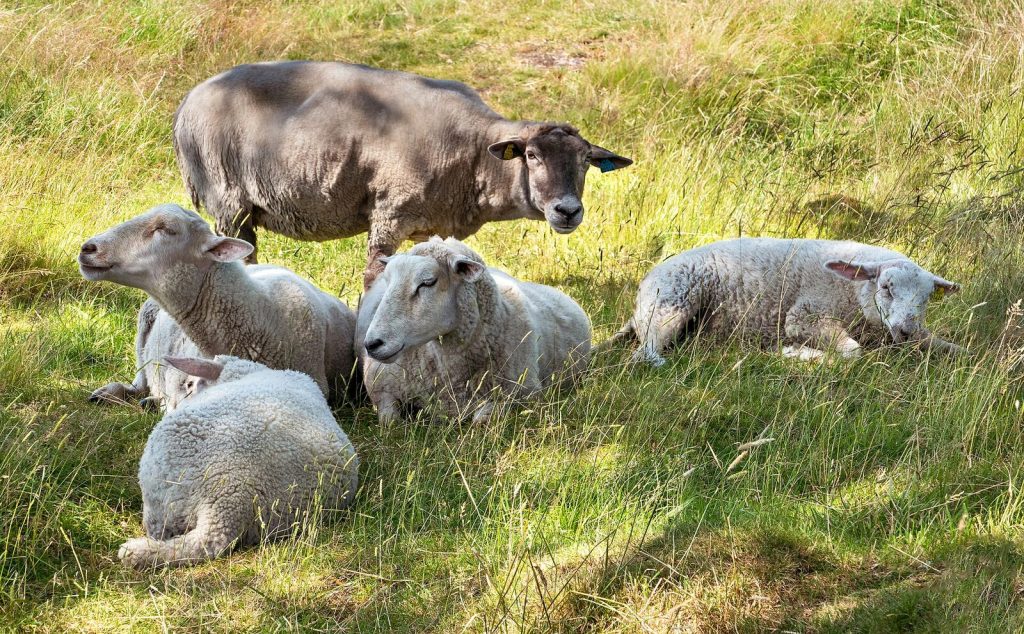
For a Ugandan buyer the best sheep breeds question is mostly already answered: 99.2 percent of the national flock is indigenous hair sheep and 0.8 percent is exotic. There is no national sheep breeding programme supplying anything else, so the live decision is which ram goes over the ewes you already have, and whether the animal in front of you is sound.
That is not an argument for settling. It is an argument about where the money should go. Buying a named breed and buying better genetics are different purchases, and in Uganda only one of them is reliably available.
Why the Best Sheep Breed Question Is Nearly Closed in Uganda
Start with the share. Uganda's sheep flock is 99.2 percent indigenous against 0.8 percent exotic, a split reported in a peer reviewed Ugandan serosurvey drawing on national figures. Compare it to goats, where indigenous stock is about 95 percent. Sheep are the less crossbred of the two species by a wide margin, and that is not an accident of farmer preference.
Look at what Uganda's own institutions supply. The national animal genetic resources centre runs a unit titled for goats and sheep. Its published programme breeds pure South African Boer, pure Black Mubende, pure Mubende spotted, the Kasolwe brown and the Kigezi goat. It crossbreeds indigenous goats with Boer and distributes the offspring at 50 and 75 percent. It lists goat artificial insemination, goat breeders' associations, a goat resource centre and buck stud, goat production for export and conservation of two goat breeds. It partners with dairy goat breeder networks on Mount Elgon and in the Rwenzori. Not one sheep intervention appears anywhere on it.
That could be an oversight on one web page, so it is worth a second check. The community based breeding programme training report produced for small ruminants in Uganda by a partnership of regional research organisations mentions sheep three times in the entire document, and all three are inside a single web address. It mentions goats 59 times. Two independent institutional sources, titled for both species, delivering goat work.
So a Ugandan reader shopping for a named sheep breed is shopping in a market that barely exists. What follows is the choice set that does.
The Two Sheep Types Ugandan Flocks Are Built From
Uganda's sheep are hair sheep, they are fat tailed or fat rumped, and they belong to two ecotypes that a peer reviewed continental review of African sheep maps across the region. Neither carries a fleece.
| Type | Tail form | Where it sits |
|---|---|---|
| Hairy short fat tail | Short fat tail | Great Rift Valley through Kenya, Uganda, Tanzania |
| Hairy long fat tail | Long fat tail | Mid to high altitude Uganda, Rwanda, Burundi, eastern DR Congo |
| Fat rumped | Fat rump, short tail | Horn of Africa stock, recorded in Karamoja |
The fat tail and the fat rump are not defects and they are not ornaments. They are fat stores, laid down when grazing is good and drawn on when it is not, in a region where the dry season is the constraint. A sheep that carries its reserve where you can see it is telling you something a scale would otherwise have to.
The same review records that African sheep have been kept primarily for meat and have mattered much less for milk and wool than sheep in Eurasia and Australasia, and that flock size has often carried social standing in ways that put selection pressure on survival rather than on production. Read against 99.2 percent indigenous, that is the whole history of the Ugandan flock in one sentence: these are animals bred to live, not animals bred to grow.
Blackhead Persian and Blackhead Somali Sheep: What the Breed Name Hides
Ugandan sheep in Karamoja were recorded in a disease study as the Blackhead Persian type, 115 animals sampled alongside 569 indigenous goats. Kenya classifies its own flock the same way, splitting fat tailed breeds such as Red Maasai and the East African fat tailed from fat rumped ones such as the Blackhead Somali.
Now the part the name gets wrong twice over. The Blackhead Persian is not Persian. It is a fat rumped sheep of Horn of Africa origin, and the South African population that carries the name descends from a handful of founder animals imported in 1869. Crossing that African sheep with the English Dorset Horn in the 1930s produced the Dorper.
Red Maasai Sheep: The Breed Pastoralists Choose for Worm Resistance
The Red Maasai is the most widespread sheep in Kenya and the one pastoralists prefer, and the reasons they give are not about growth. It is valued for resistance to internal parasites, particularly Haemonchus contortus, for drought tolerance, and for the ability to walk long distances in search of pasture and water.
Take worm resistance seriously as a breed trait, because the alternative is failing. Across the African literature, the main dewormer groups now clear the international bar in only about half the trials that test them, the trend is downward, and Haemonchus is the genus that most often survives a dose. An animal that carries its burden without collapsing is worth real money in a system where the drench is unreliable. What that evidence looks like district by district, and why rotating products is not the fix people assume, is on deworming.
Drought tolerance and walking ability are the other two, and they belong together. Ugandan sheep in Karamoja are walked as far as 72 km when seasonal water sources dry. A sheep that loses condition on that walk arrives at the next water as a cheaper animal.
The Red Maasai's reputation among researchers has been the reverse of its reputation among pastoralists: it has been treated as the breed that grows poorly, which is why it has been crossed with Dorper for decades. Continuous indiscriminate crossing has since put the pure population at risk in Kenya. That is the same pattern Ugandan work reports for goats, where productivity is held back by injudicious breeding and where improvement efforts run into objective mismatch, high running costs, high mortality and inbreeding.
Dorper Sheep and What the Growth Advantage Is Worth at Market
This is the section that should change a purchase decision, and it rests on a record set rather than a sales sheet. A Kenyan government sheep station at Naivasha kept birth, weaning and yearling weights on 903 lambs from 395 ewes and 13 sires across fourteen years, running Dorper and Red Maasai flocks separately in the same semi arid paddocks at 680 mm of annual rainfall, grazing about eight hours a day at nine sheep to the hectare, with mineral licks, free choice water, supplementation seldom given even to nursing dams, and neither breed given preferential treatment.
| Stage | Dorper | Red Maasai |
|---|---|---|
| Birth weight | 2.90 kg | 2.32 kg |
| Weaning, 90 days | 24.2 kg | 15.9 kg |
| Yearling, 365 days | no measurable difference | no measurable difference |
Read it twice. Dorper lambs were reliably heavier at birth, by 0.58 kg, and reliably heavier at weaning, by more than eight kilogrammes. Then breed stopped mattering. It was dropped from the final model for yearling weight altogether, because it explained nothing. What did explain yearling weight was the season the lamb was born in, its sex and the age of its dam. Across those effects, yearling weights ran 29.8 to 31.1 kg for both breeds together.
And on post weaning growth rate, the Red Maasai was the better animal. The study's own authors call that unexpected and read it as adaptation showing up once maternal care is withdrawn.
So what does a Dorper actually buy a Ugandan smallholder? A better lamb to weaning, driven substantially by a bigger dam and better mothering, on a station with prophylactic disease control. What it does not buy, on natural pasture without supplement, is a bigger yearling. If your market sells animals around a year old, the breed premium has expired before the sale.
One more caution the same records supply. Each of a pair weaned lighter than a single lamb in that record set, so a prolific ewe hands you more animals and smaller ones. A breed sold on twinning is selling you a management job.
Wool and Dairy Sheep Breeds Have No Ugandan Market
Most breed lists a Ugandan reader will find sort sheep into wool, dairy, mutton and dual purpose categories, and then name Merino, Suffolk, Dorset and Texel. Two of those four categories describe nothing sellable here, and the check is straightforward.
Uganda files no wool figure at all with FAO. Sixteen African countries do. It files no sheep milk where 25 do, and no goat milk where 31 do, and cattle milk is the only milk item on its rows. Before treating those blanks as real, check that the table works: it carries Ugandan sheep meat, Ugandan goat meat and Ugandan cattle milk without trouble, and it carries wool and sheep milk for Uganda's immediate neighbours. So the gap is Ugandan and not a reporting artefact.
Ugandan sheep are hair sheep. There is no fleece to shear, no shearer to hire and no buyer to sell to. A wool breed brought into that has a heavy coat in a hot country and a product with no market. The dairy sheep case is the same argument with a different product, and it is worth noting that Uganda does not even report goat milk, which is the easier sell of the two.
Keep the mutton and dual purpose part of the framing, because meat is what Ugandan sheep are for. Who actually buys mutton in Uganda, and the compulsory standard that grades it, are covered on sheep farming in Uganda.
Choosing a Ram Instead of a Breed: Terminal Sires in a Smallholder Flock
The Kenyan station's conclusion is worth quoting in substance because it is the practical answer to the whole page. Crossbred lambs from indigenous ewes and Dorper rams do outgrow both parent breeds, through heterosis. The station's recommendation is to use Dorper only as a terminal sire, meaning every crossbred lamb is slaughtered rather than bred from, so the flock takes the growth benefit in the generation that is sold and keeps its indigenous ewe base intact.
That structure solves the problem that wrecks most smallholder crossing programmes. If crossbred ewe lambs are kept and bred on, each generation carries more exotic genetics and less of the drought and parasite tolerance the flock was built on, and nobody notices until a bad year. Kenya's pure Red Maasai population is at risk for exactly this reason after decades of continuous indiscriminate crossing.
The same logic already runs in Uganda for goats, where the national genetics agency distributes Boer crosses at 50 and 75 percent rather than pure exotics. The goat version of this decision, with the Ugandan evidence attached, is on best goat breeds and Boer goat farming, and where to buy Boer goats covers sourcing improved small ruminant genetics.
What to Look At When Buying Breeding Sheep
Since the breed name tells you little, the animal has to. Four things are checkable at a trading centre without equipment, and one needs a tape.
Weight before anything else, for a ewe. The Kenyan station did not put ewes below 25 kg to the ram at all, on the reasoning that a small ewe produces a poor lamb and struggles doing it. First joining there happened at twelve to eighteen months. That threshold travels: a ewe lamb sold to you as ready to breed and visibly under that weight is not ready, whatever the seller says.
Then the tape. Heart girth, measured around the chest just behind the front legs, predicts bodyweight in East African sheep and goats. An ILRI dataset of 767 sheep and 1,346 goats from Uganda, Kenya and Ethiopia puts the error at about 12 to 14 percent for indigenous animals and around 9 percent for crosses. That is good enough to tell a 22 kg ewe from a 30 kg ewe and not good enough to argue a price to the kilogramme. Use it on yourself, not on the seller.
Then condition and soundness. Pale gums and eyelids point at blood feeding worms, which in this region means Haemonchus, and an anaemic animal is a cheap animal for a reason. Feet, teeth, udder on a ewe, and both testicles on a ram. An animal running at the nose and eyes, with sores in its mouth and loose dung at the same time, matches what Ugandan farmers describe for ruminant plague, and it should not come home with you at any price.
Then provenance, as far as it goes. Where an animal has been matters more than what it is called, because animal movement is what Ugandan surveys keep finding behind disease exposure. Separate everything you buy on arrival regardless, and ask a veterinary officer how long. When to call a veterinarian covers the threshold.
And then records, from the moment it arrives. Write down the dam, the sire if anyone knows it, the birth date, a girth reading taken at one set age, anything that went wrong, and what the animal fetched. Without them you cannot tell whether the ram you paid extra for produced heavier lambs or just bigger promises. The livestock record keeping template is a starting point.
Sheep Breed Claims That Do Not Survive Checking
Four claims circulate widely enough to be worth naming, and each fails on evidence already on this page.
Frequently Asked Questions
Which is the best sheep breed to keep in Uganda? In practice, the indigenous hair sheep already in your district, improved by culling your worst ewes and using a better ram. That is not a compromise answer; it is what the evidence supports. The national flock is 99.2 percent indigenous, there is no Ugandan sheep breeding programme producing alternatives, and where an exotic has been measured against an indigenous breed on natural pasture the difference had gone by a year of age. Where you want to add growth, add it through a ram used as a terminal sire and keep your ewe base local.
What does breeding stock cost? No current Ugandan price for sheep breeding stock by breed could be sourced, and nothing on this page is attributed to a seller. One Karamoja study of 50 keepers is the only Ugandan farm level source I could verify, it makes no breed distinction, and it puts an adult at 80,000 to 130,000 UGX with an animal under six months at 20,000 to 45,000. One district, one survey, and dated. Widely circulated bands of 150,000 to 250,000 attached to sheep breeds carry no age, sex or condition and sit above everything I could source. Check the small ruminant price page and ask locally.
Is a Dorper worth the extra money? It depends entirely on when you sell. The measured advantage is in birth weight and weaning weight, and it is largely maternal. By 365 days, in a Kenyan station's records, breed explained nothing about weight. So a Dorper or a Dorper cross pays where you sell lambs young and where your buyer pays for size. It pays less, or not at all, where you sell yearlings off pasture, and Ugandan community breeding work states that informal markets undervalue genetic improvement in the first place.
Are Red Maasai sheep available in Uganda? The Red Maasai is a Kenyan population and I found no Ugandan source for its availability here. What is relevant to a Ugandan buyer is the trait, not the name: pastoralists value that breed for resistance to internal parasites and drought tolerance, and those are traits found across indigenous East African hair sheep. In a region where roughly half of anthelmintic tests fail, an animal that carries a worm burden without collapsing is worth selecting for in whatever flock you have.
Can I keep wool sheep in Uganda? You can keep them alive. You cannot sell the wool, because Uganda reports no wool production at all while 16 African countries do, which means no shearing service and no buyer. A heavy fleeced temperate breed in a hot country also carries a welfare and parasite cost for a product nobody is collecting.
How do I tell a good ram from a big ram? Big is easy to see and worth less than it looks, and the authors of the record set used here say directly that large body size is not a good indicator of dressing percentage. Look for soundness first, then evidence rather than size: lambs he has already sired if you can see them, and his own dam's record if the seller keeps one. Then measure his girth so you have a number to compare against the next ram.
Should I crossbreed my flock? Only with a rule written down first. Crossing indigenous ewes to an exotic ram produces heavier lambs, and the recommendation attached to that finding is that those lambs are all slaughtered rather than bred from. Kenya's pure Red Maasai population is at risk after decades of continuous crossing without that discipline, and Ugandan reports name inbreeding and objective mismatch among the reasons local genetic improvement efforts fail. Keep part of the flock breeding pure.
Do sheep and goats need different feeding if I keep both? Yes, and one of the differences can kill. Copper is the one: a goat tolerates it and needs more of it than a sheep can safely take, so a mineral or compounded feed bought with the goats in mind is not automatically safe for the sheep. The sheep feeding guide covers that, along with why a grazer and a browser respond differently to the same dry season.
Before paying a premium for any named breed, do two things. Ask your local buyers whether they pay differently for a bigger or better finished sheep, because if they do not, the premium has nowhere to come back from. And put a tape on the animals you already own, so that the next ram you buy can be judged on the lambs he leaves rather than on what you were told. Prices for breeding stock and for improved small ruminant genetics move with season and supplier, so check current levels locally rather than working from a figure on a page.