
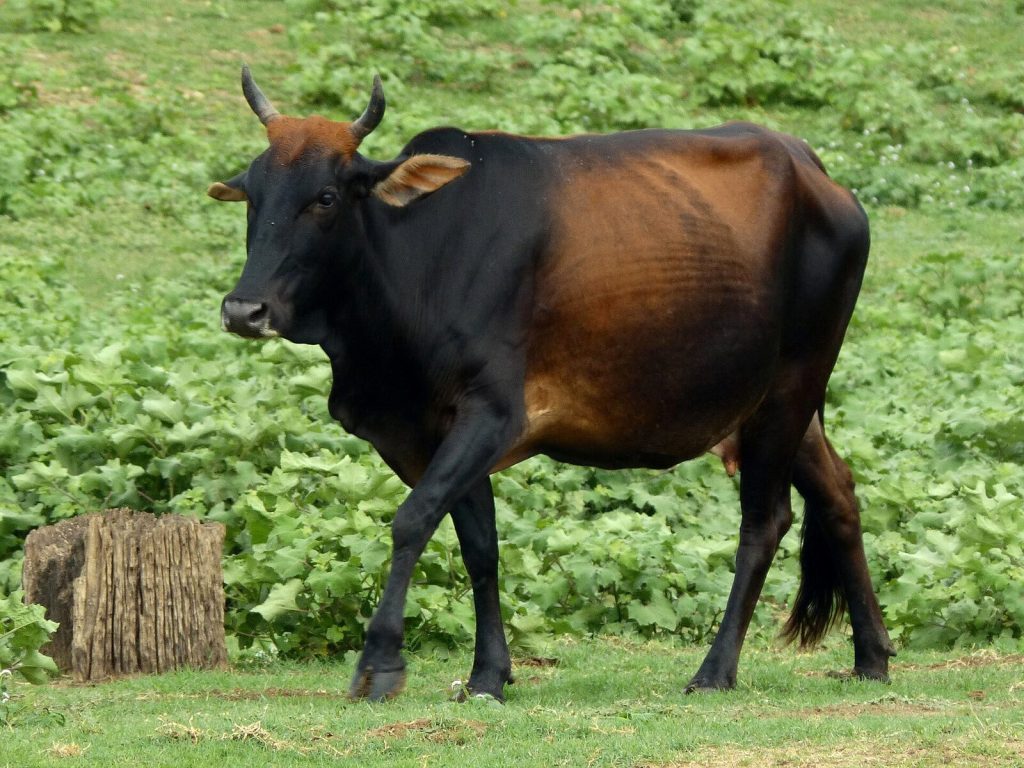
Cattle vaccination in Uganda covers a short list of diseases, and that list is set by the district veterinary office and the national campaign rather than by a calendar a farmer can download. This cattle vaccination guide sets out which diseases are vaccinated against here, which ones actually kill cattle, and why those two groups overlap far less than most advice suggests. The Ministry of Agriculture, Animal Industry and Fisheries publishes the surveillance that settles it.
One thing this page will not do is give you an interval. No age at first injection, no booster gap, no revaccination month. Those come from the vial in front of you and from the veterinary officer holding it, and a number copied off a website is how a farmer pays for a vaccine that was never going to work.
Which Cattle Diseases Actually Kill Animals in Uganda
Start with the deaths, not the vaccine list. MAAIF's Quarterly Animal Health Bulletin publishes what district veterinary officers reported, disease by disease, with cases and deaths side by side. For one full quarter of passive monthly surveillance in cattle, the ranking looks like this.
| Cattle disease | Cases | Deaths |
|---|---|---|
| East Coast fever | 2,581 | 171 |
| Lumpy skin disease | 2,379 | 35 |
| Anaplasmosis | 2,104 | 99 |
| Trypanosomiasis | 1,651 | 36 |
| Brucellosis | 589 | 0 |
| Babesiosis | 507 | 8 |
| Footrot | 219 | 0 |
| Pleuropneumonia | 68 | 11 |
| Heartwater | 62 | 0 |
| Blackquarter | 55 | 8 |
| Foot and mouth | 29 | 0 |
Read the two columns against each other and the picture changes twice. By case count, the tick borne group runs away with it. By lethality, the small outbreaks are the frightening ones: contagious bovine pleuropneumonia killed 11 of 68 reported cases and blackquarter killed 8 of 55, which works out at roughly 162 and 145 deaths per thousand cases. East Coast fever killed 66 per thousand. Lumpy skin disease killed 15. Those last two ratios are ours, divided straight out of MAAIF's own two columns.
The bulletin disagrees with itself on one of those figures, and the disagreement is worth seeing. Its written summary says East Coast fever "accounted for the highest case fatality rates of 10%" in cattle that quarter, while its own annex gives 6.6 percent for East Coast fever and puts blackquarter and contagious bovine pleuropneumonia well above it. So treat the East Coast fever case fatality as somewhere in the range of about 6.6 to 10 percent for that quarter, and do not treat it as the highest in cattle, because the table it came from says otherwise.
Two caveats belong here rather than in a footnote. First, only about 12 percent of the diseases reported in that quarter were confirmed in a laboratory, so most of these rows are a clinical judgement made at a kraal. Second, reporting itself is thin: 49 of 136 districts sent in at least one monthly report, 20 sent all three, and overall completeness ran at 31.2 percent. The real case counts are higher than the table. The ranking is still the best national picture there is.
The Vaccination List the Law Names, and What It Leaves Out
Ugandan disease control runs on the Animal Diseases Act, which commenced on 1 January 1918 and has never been rewritten around the modern disease picture. Its opening section defines what counts as a "disease" for the purposes of the whole Act, and that definition is the reason the routine campaign covers what it covers.
The list names cattle plague, anthrax, pleuropneumonia, trypanosomiasis, tuberculosis, foot and mouth disease, rabies and blackquarter, along with a set of small stock and equine conditions. Cattle plague is rinderpest, which no longer circulates anywhere in the world. Read the list against the mortality table above and three absences jump out: East Coast fever, lumpy skin disease and brucellosis are not in it, and between them they accounted for over 5,500 of the reported cases.
The Act does give a veterinary officer real power. A veterinary officer may require any animal to be examined, inoculated, sprayed, dipped, washed, disinfected or held in quarantine where that officer judges it necessary to stop a disease spreading. A keeper has a matching duty to separate a sick animal and report it. So the legal machinery for compulsory vaccination exists, and it is pointed at a list assembled before most of Uganda's current cattle diseases were named.
Foot and Mouth Disease Vaccination and the Serotype Problem
Foot and mouth disease vaccination is the one most Ugandan cattle keepers have met, because it is the one that arrives as a campaign after an outbreak. Uganda records somewhere between 17 and 37 outbreaks a year across the published record, clustered near the Kenyan and Tanzanian borders and around Queen Elizabeth National Park, and concentrated in the cattle corridor that covers roughly 35 percent of the country's land area.
Here is the part that decides whether the injection helps. Foot and mouth virus comes in serotypes, and a vaccine against one gives little or no protection against another. Protection can even fail between variant strains inside a single serotype. Uganda has recorded serotypes O, A, SAT 1, SAT 2 and SAT 3 in cattle, with O the most frequently isolated. Serotype C was last documented here in 1971.
Uganda has used a trivalent vaccine covering O, SAT 1 and SAT 2, and has moved toward a quadrivalent covering O, A, SAT 1 and SAT 2. One Ugandan study reported the complete absence of serotype A from the vaccine then in use while serotype A was one of the circulating serotypes. Import records back that up from a different direction: the valency brought in from 2003 onward dropped serotype A for roughly a decade. Vaccine doses have come mainly from KEVEVAPI in Kenya and BVI in Botswana.
A Makerere University presentation that acknowledges MAAIF's national diagnostic staff states the position plainly: Uganda does not test how well the imported vaccine works and relies on the manufacturer's word. The same presentation lists why doses do not reach animals, and none of the five reasons is farmer ignorance. Government funds are released late. The cold chain is poorly maintained. Terrain is impassable. Transport and staffing are inadequate. And some farmers refuse.
What Vaccination Coverage in the National Herd Really Is
Ugandan national vaccination data over a four year run put foot and mouth coverage below 5 percent of a national herd of about 14.5 million head, and MAAIF's own later reporting put vaccination at 1.1 percent of eligible livestock. Those are two different measures over two different periods and they should not be averaged, but they point the same way.
Measured behaviour on Ugandan agropastoral farms fits. Among agropastoralists studied in Uganda, 36 percent had vaccinated against foot and mouth and 21 percent against contagious bovine pleuropneumonia. A quarter had a spray pump, 9 percent had a crush and 2 percent had a drench gun. So the reader of this page is not behind a well vaccinated national herd. They are deciding whether to be one of the few.
There is a finding in the Ugandan modelling work that reads backwards until you see why. A Bayesian analysis of district level outbreak data found that mean vaccination coverage was associated with a higher risk of outbreaks, which the authors read as the signature of a programme that vaccinates mainly in reaction to cases. Doses follow outbreaks. That is not evidence the vaccine fails. It is evidence that a district's coverage figure is a record of where trouble has already been.
East Coast Fever: The Biggest Killer Without a Routine Vaccination
East Coast fever leads the death column, and it is not on the statutory list, and it does not have a vaccine in the sense a farmer expects. It is caused by Theileria parva, carried by ticks, and it is the most studied tick borne pathogen in the country. Pooled Ugandan prevalence in cattle comes out at 29.2 percent by DNA detection, with a confidence interval of 18.3 to 41.4 percent, against 62.6 percent by antibody testing and 15.4 percent by looking for the parasite directly. Those three figures are not a disagreement. The test method explains most of the spread, and a farmer should read any single prevalence claim by asking which test produced it.
Two other tick borne pathogens sit behind it. Anaplasma marginale came out at 36.7 percent by DNA and 65.2 percent by serology, and Babesia bigemina at 8.9 and 10.6 percent. Pathogens were reported from only 24 of Uganda's 146 districts, and 17 of those 24 sit inside the cattle corridor, so the map is incomplete in exactly the places that carry the most cattle.
Breed changes the stakes more than anything else on this page. In exotic cattle, East Coast fever mortality runs around 90 percent, with death usually inside a week of the first signs. Indigenous cattle get infected at high rates and die at much lower ones. That single asymmetry is why a farmer who buys a Friesian or a Friesian cross has bought a tick problem along with the milk.
The immunisation that exists is the infection and treatment method, and it is a procedure rather than a jab. The animal receives a live preparation of the parasite together with a long acting tetracycline, which holds the infection down while immunity builds. Done properly, it blocks severe illness for up to about three years without further tick exposure, and can last longer where the immunised animal keeps meeting infected ticks. The widely used product combines three parasite stocks, Muguga, Kiambu 5 and Serengeti, to widen what it protects against. Over 1.5 million doses had been delivered across the region by 2016 and supply has been on and off. A systematic review of 61 studies found most reported in favour of its safety and how well it works.
Whether it is currently available to a Ugandan smallholder is the question this page cannot answer. Registration and routine supply status here could not be established from any source reachable during this research, and the regional literature describes availability as inconsistent. Ask the district veterinary office whether it is being offered locally before you plan a herd around it. Meanwhile tick control is doing the work, and that is a separate decision with its own trap, covered on the cattle tick control page.
An Inflated Calf Mortality Figure, and What the Ugandan Study Says
You will meet a claim that East Coast fever kills about 30 percent of Ugandan calves. It appears in a recent peer reviewed review, cited to Ugandan work. Follow the citation and the Ugandan longitudinal study it points to reports something else: East Coast fever was the main cause of calf mortality in ranch and pastoral herds around Lake Mburo, at up to 8.5 percent in ranch herds and 8.2 percent in pastoral ones.
So the 30 percent does not trace to that measurement. The roughly 90 percent figure is real and belongs to exotic cattle, not to calves in general, and mixing the two produces a number that frightens without informing. Keep them apart: a naive exotic animal that gets East Coast fever very probably dies, and Ugandan calf losses to the disease in measured herds ran under one in ten.
Contagious Bovine Pleuropneumonia Vaccination in the Cattle Corridor
Contagious bovine pleuropneumonia is on the statutory list, it kills a high share of the cattle it reaches, and it is a lung disease of crowding rather than of ticks. A study that sampled 2,300 cattle across Karamoja found 25.4 percent carrying antibodies, with a confidence interval of 23.7 to 27.3 percent, ranging from 12.3 percent in Amudat to 30.7 percent in Kaabong.
The risk factors are the useful part. Exposure rose with age, with overnight kraaling and with location, and all three work through the same mechanism: animals standing close to animals they did not grow up with. That is what a shared kraal, a watering point and a livestock market all have in common. The study's own conclusion is that vaccination should target high risk herds along international borders and the hotspot parishes and subcounties, rather than spreading doses evenly.
Uganda's national reference laboratory tested 339 samples for it in one quarter and confirmed 2.1 percent, from Sheema, Yumbe, Moyo and Adjumani. Set that against the 68 clinically reported cases in the same period and you can see how much of the disease picture is being read off symptoms. Campaign vaccination in Karamoja has run at scale before, targeting about 1,350,000 cattle and about 1,900,000 goats and sheep against this disease and peste des petits ruminants in a jointly funded FAO and government exercise, with animals branded or ear notched and herd records taken at the same visit.
Lumpy Skin Disease, Blackquarter, Anthrax and Rabies on a Ugandan Herd
Lumpy skin disease produced 2,379 reported cattle cases and 35 deaths in the quarter examined, second only to East Coast fever on case count. It is spread by biting insects, it leaves lumps and damaged hides, and it drops milk and condition. The striking detail is diagnostic: Uganda's national laboratory tested exactly two lumpy skin disease samples that quarter against those 2,379 clinical reports. Nobody is confirming it. It is also absent from the Act's disease list, so it is a private problem to manage.
Blackquarter is a soil borne clostridial disease of young growing cattle, it is on the statutory list, and it kills roughly one in seven of the animals reported with it. Vaccination is the standard control worldwide and the timing question belongs to a vet who knows whether your ground has a history.
Anthrax deserves plain language. Uganda's national laboratory confirmed 6 of 10 anthrax samples tested in one quarter, and repeated Ugandan outbreak investigations have traced human cases to handling carcasses, skinning hides and eating meat from animals that died suddenly. The practical rule that comes out of every one of those investigations is the same. An animal that dies suddenly and unexplained is not opened, not skinned and not eaten, and the death is reported. That is a reporting duty under the Act, not a suggestion.
Rabies is on the statutory list and shows up in Ugandan cattle records only occasionally, with one reported case and one death in the quarter examined. The control effort runs through dogs, and government has committed to ending human rabies deaths. A cattle keeper's part in that is the farm dogs.
Brucellosis: Why Vaccination Is Not the First Answer on a Ugandan Farm
Brucellosis produced 589 reported cattle cases and no deaths, and it was the commonest thing Ugandan districts sent to the national laboratory: 756 samples with 7.2 percent positive, spread across nine districts. It is not in the Act's disease list.
It works by taking calves rather than cows. Abortion, retained afterbirth, weak calves, a longer gap to the next calving. On a dairy farm it shows up as a reproductive problem long before anyone calls it a disease, which is why it sits in the background of so many Ugandan herds. It also passes to people, and raw milk is one route, which is a reason to boil milk and to handle an aborted calf and its membranes with gloves.
Whether a brucellosis vaccine is permitted or used in Ugandan cattle could not be established from anything reachable during this research, and the honest reason matters: a live brucellosis vaccine interferes with the blood test used to detect the disease, which is why countries make that call nationally rather than farm by farm. So the sequence on a Ugandan farm is testing, culling positives, keeping bought in animals separate until tested, and asking a vet where vaccination fits. Do not buy a vaccine for this one off a shelf.
Cold Chain, Handling and the Records a Vaccination Visit Should Leave
A vaccine is a living or delicate product and it fails quietly. Poor cold chain maintenance is one of the five named reasons Ugandan doses do not protect animals, and a vial that has been warm looks exactly like one that has not. There is no test you can do at the crush. What you can do is keep the chain short: know where the vaccine came from, how it travelled, and how long it sat.
The other half is the record, and this is where most Ugandan herds lose the value of a visit they paid for. A vaccination day is also a data day. Uganda's own campaigns understand this, which is why the Karamoja exercise recorded herd numbers, age and sex at the same time as it vaccinated and marked the animals.
A treatment and vaccination log pairs naturally with the production records covered in the livestock record keeping template, and it is the record most Ugandan herds are missing.
Building a Vaccination Plan With Your District Veterinary Officer
Every credible path on this page ends at the same door. The district veterinary officer holds the outbreak record for your area, knows which campaign is funded and when, and can tell you what the local disease picture actually is rather than what a national average says. That office is also the only source of a defensible interval.
Two cautions about schedule tools before you go looking for one online. The top ranking "Uganda livestock vaccination schedule" generator states in its own body text that its data is Nigeria specific, with only the heading changed. And a schedule written for a temperate cow calf operation will hand you intervals for diseases Uganda does not have and leave out the ones it does. Check which country and which disease list a schedule was built on before you trust a single date in it.
The rest of the herd health picture, from housing to feeding to breeding, sits across the cattle and dairy guides, and a vaccination plan only makes sense inside it. What you can bring to that conversation is everything this page has put in your hands: whether your animals are indigenous, crossbred or exotic, because East Coast fever risk turns on that more than on anything else; whether your cattle mix with strangers at water, kraal or market, because that is what drives contagious bovine pleuropneumonia; how close you are to a border or a national park, because that drives foot and mouth; and whether you have had sudden unexplained deaths, which changes the conversation entirely. Pair the plan with the biosecurity measures on the farm biosecurity guide and the signs covered under common cattle diseases in Uganda, because a vaccine protects against one thing and a closed gate protects against several.
Frequently Asked Questions About Cattle Vaccination in Uganda
Why will this guide not give me a vaccination schedule with dates? Because no MAAIF publication giving ages and intervals for cattle could be reached during this research, and inventing one is the single most damaging thing a page like this could do. A wrong interval means a farmer pays for a dose that does nothing and believes the animal is covered. The vial label and the district veterinary officer are the authority, and the second one is free to ask.
How much does cattle vaccination cost in Uganda? No published Ugandan price per animal or per dose could be sourced, and government vaccine procurement is done through framework tenders that carry no unit price in the public document. What you pay depends on four things: whether a funded campaign is running in your district, how far the vaccinator travels, how many animals you present at once, and whether the vaccine is a campaign product or a private purchase. For scale, ILRI field data from Ugandan beef producers put the whole cost of production at 3,300 to 13,300 shillings per kilogramme of liveweight depending on system and location, and animal health has to fit inside that. Presenting the whole herd on one visit is the one lever a smallholder controls.
Is vaccination worth it if only about one Ugandan animal in twenty is vaccinated? The low national figure is an argument for vaccinating, not against it. Coverage under 5 percent means the virus keeps circulating, so an unvaccinated animal in a cattle corridor district is exposed repeatedly rather than once. The thing to weigh is which disease your herd is actually at risk from, which is a different question in Karamoja from Kabale.
My cattle are local breed. Do I still need to worry about East Coast fever? Yes, but differently. Indigenous cattle get infected at high rates and die at much lower ones, while exotic cattle that catch it die at around 90 percent, usually within a week. So a local herd carries the disease as a drag on growth and condition, and an exotic or crossbred animal carries it as a death risk. If you are moving from local to crossbred stock, your tick and disease spending has to move first.
Can I vaccinate my cattle myself? Some vaccines are given by trained community animal health workers rather than by a veterinarian, and the answer for any particular product depends on that product and on what your district allows. What is not negotiable is that the person holding the syringe knows the route, the site and the handling, because all three are on the label for a reason. The point at which to stop and call for help is covered under when to call a veterinarian.
One of my animals died suddenly overnight. What should I do? Do not open it, do not skin it and do not let anyone eat it. Ugandan anthrax outbreak investigations have repeatedly traced human cases to exactly those three actions, and the national laboratory confirmed anthrax in 6 of 10 samples tested in one quarter. Report the death, keep other animals and people away from the carcass, and let a veterinary officer decide what happens to it. Under the Animal Diseases Act, a veterinary or inspecting officer gives the directions on burial or disposal.
Does a vaccinated animal still need tick control? Yes, and on more than one count. No vaccine on the Ugandan campaign list touches anaplasmosis or babesiosis, and East Coast fever immunisation, where you can get it, does not stop ticks feeding or damaging hides and udders. Tick control and vaccination are two different jobs.
Why does a foot and mouth outbreak stop me selling when it kills so few animals? Because the loss from foot and mouth is commercial rather than clinical. Quarantine in Uganda typically bans livestock movement and trade within roughly a 20 kilometre radius, covering districts, subcounties or parishes, and it holds until there are no new cases, often for about six months. Recovered cattle can carry the virus for up to two years, which is why the restrictions outlast the visible illness. It bites hard enough that informal sales ran at 15.2 percent of all sales in one Ugandan district during a quarantine.
Finding Vaccines, Feed and Veterinary Suppliers Near You
Vaccine and veterinary product prices move with the exchange rate, with the season and with whether a funded campaign is running in your district, so the figure that matters is the one a local supplier quotes you this week. Start with the district veterinary office, which can tell you what is being offered locally and at what terms, then check current prices and stock with the input suppliers listed under farm input suppliers and, if you are also buying animals, the stockists on the where to buy dairy cows page. Ask what serotypes a foot and mouth vial covers, ask how the vaccine has been kept cold, and write down the answers.