
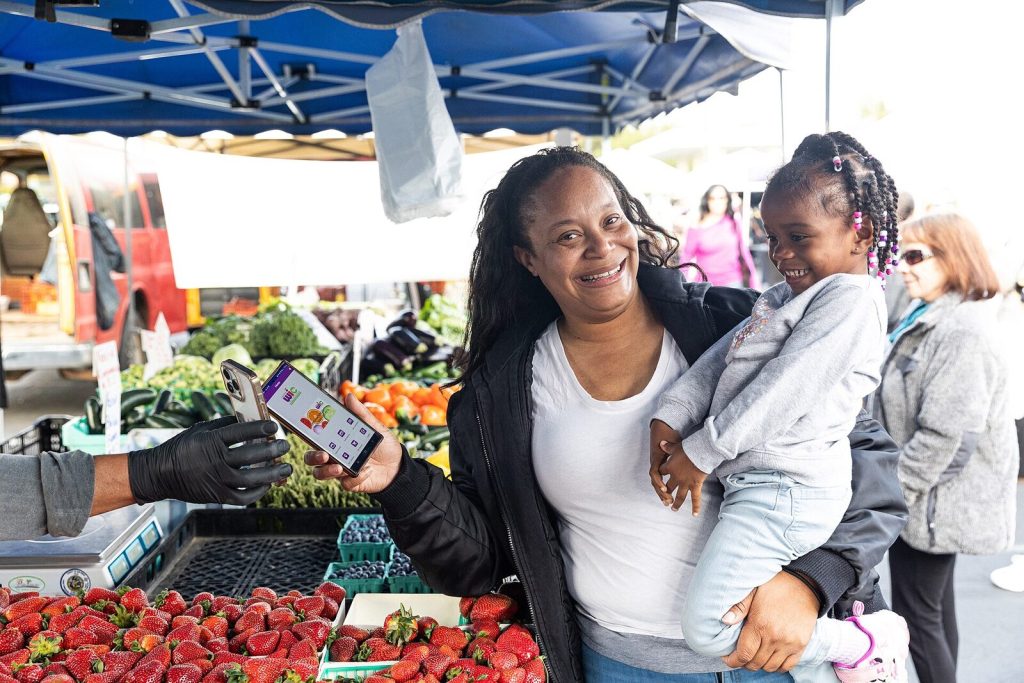
Farmer aggregation means combining produce from several farms into one lot large enough to interest a buyer who would never travel for a single sack. In Uganda its measurable benefit is time rather than price: growers selling alone usually move their crop within a fortnight of harvest, while growers who bulk through a group have been recorded holding stock for one to three months.
What Aggregation Means on a Ugandan Farm
Strip away the language and aggregation is one lorry instead of forty bicycle trips. Several farmers put their produce in one place, it is weighed and recorded against each person's name, and it leaves as a single consignment sold under one negotiation.
Ugandan farmer groups already do six distinguishable things, and a household survey instrument used in a national food loss study lists them plainly: buying inputs together, sharing skills and knowledge, pooling labour, saving and lending, storing collectively, and marketing collectively. Aggregation is the last two of those six. A group can be excellent at the first four and do no aggregation at all, which is why joining a group is not the same as bulking.
It is worth being blunt about the Ugandan baseline, because most writing on this subject assumes bulking is normal. In the maize chain in Lira and Apac, field researchers recorded that the absence of a central collection place and of adequate on farm storage meant maize marketing was conducted individually, with none or very little collective marketing, and that farmers did not usually have a large selection of buyers, who often set the prices. Aggregation in Uganda is the exception, not the rule. That is the gap, and it is also why the first hop from farm to market is where so much of the value goes, a pattern traced out in the breakdown of where the value goes between the shamba and the shop.
Why Bulking Buys You Time, Not Just a Better Market Price
Start with the number that frames everything else. In the same Ugandan study, most sunflower growers sold within one or two weeks of harvest. Maize was mostly sold within a month, to get ahead of storage pests. Growers who bulked and sold through a cooperative were recorded storing for one to three months.
| How the crop is sold | Time held after harvest |
|---|---|
| Sunflower sold alone | One to two weeks |
| Maize sold alone | Mostly within one month |
| Bulked through a group | One to three months |
Why does holding matter that much? Because harvest is when everyone sells, and the price at harvest is the year's floor. Ugandan chain research on maize has documented the same grain fetching roughly 60 percent more six months after harvest than it fetched in the week it was threshed. A farmer who must sell in the first fortnight cannot reach any part of that.
The second thing time buys is harder to see and worth more. A farmer with no holding capacity has no reservation price. He cannot say no. Every negotiation he enters, he enters as the party who must transact today, and any buyer who has met him twice knows it. Bulking with neighbours who have somewhere dry to keep grain changes that position before a single price is discussed.
Both of those gains are conditional on the store being good enough. Grain that rots or gets weevils in month two has not been held, it has been lost, which is why the maize storage guide matters more to a bulking group than any negotiation tactic.
What Volume Changes About the Price a Buyer Will Offer
Four separate mechanisms, and they are worth keeping apart because three of them can work while the fourth fails.
The first is the buyer's cost of collection. A lorry that stops once for ten tonnes is running a different business from a lorry making forty stops for a quarter tonne each. Fuel, driver time, loading labour and the risk of an overnight stay all divide by the tonnage at each stop. Every shilling the buyer saves there is a shilling he can afford to leave with you, and this is the mechanism that operates most reliably.
The second is access to a class of buyer you cannot reach alone. Institutional and regional grain buyers will only take assessed produce out of premises that meet warehouse hygiene rules, and assessment is a fixed cost per consignment rather than per kilogram. Nobody grades one sack. So that certification gate is not really a quality gate for a smallholder, it is a volume gate wearing a quality uniform, and without the volume the whole class of buyer behind it stays shut whatever is sitting in your store.
The third is information. Ugandan research measured farm gate prices about 15 percent higher where households had access to broadcast district market prices, in districts where those prices were actually being broadcast. A group that pools what its members know about this week's prices is running a small version of the same thing, and it costs nothing.
The fourth is bargaining power itself, and this is the one that fails most often. Uganda's maize price spread between the farm and the nearest market runs at about a third of the market price, against about 15 percent in Kenya, and it widens by roughly two percentage points for every extra hour of driving from that market. Volume gives a group standing to argue about that spread. What it cannot do is invent a premium the market does not pay. Two northern districts were studied closely and neither was paying anything extra for better maize, at any grade, to anybody outside the large institutional buyers. In a market like that, bulking earns a group a stronger negotiation over the spread and nothing whatsoever on quality, and a committee that promises its members otherwise gets caught out at the first sale.
How a Bulking Point Works, From the Farm Scale to the Lorry
The operation is not complicated and every step is a place where trust is either built or destroyed.
Scale, from what has actually been observed in northern Uganda: groups of twenty to thirty farmers with a lead farmer, and a processor's buying agent handling eight to ten such groups across a parish. That is the size at which a group is big enough to fill transport and small enough that members know each other's bags.
Where the handover happens turns out to reveal who is carrying the cost. In the same study area, the cooperative's own group bulking point was the transfer location for 56 percent of its purchases; the processor's agents mostly took delivery at their own store, 51 percent; and traders mostly collected at the farmer's home, 63 percent. In all three channels, larger farmers' produce was more often picked up at home. Read that carefully: the further the buyer travels, the more of the transport he is paying for, and the smaller you are the less likely he is to travel.
One small piece of equipment deserves its own sentence. Ugandan reviewers point out that bananas sold at the farm gate are priced by the size of the bunch rather than by weight, and that a collection centre with scales and storage lets the farmer sell by weight unit while giving the buyer something to assess. A set of scales is not a detail. It is the difference between a price somebody estimates by looking at your crop and a price calculated from a number you both read.
Grading and Moisture Control Where the Crop Is Pooled
Pooling creates a problem that individual selling does not have: one member's crop can price everybody else's.
The temptation is to tip everything together and split the proceeds evenly. Do that and you have built a machine for driving out your best farmers. Look at what the grades are worth. A Ugandan survey of bean traders found Grade 2 beans fetching up to 20 percent less than Grade 1 and Grade 3 up to 40 percent less, with produce above the acceptable maximum limits rejected outright and left with little or no market value. A grower who dries and sorts carefully, pooled at an average with a grower who does neither, is paying for his neighbour's shortcut out of his own margin. He will do it once.
So grade at intake, not at sale. Keep separate lots and pay by lot. It is more work at the shed and it is the difference between a group that improves every season and one that decays to its worst member's standard.
Moisture is where the biggest recorded gap sits. Ugandan sunflower growers commonly deliver at 14 to 15 percent moisture against an advised 12 percent, drying for one or two days instead of four, while most milling machines want around 7 percent to get a good oil yield. A group that tests at intake and sends wet deliveries home to finish drying is doing the single most valuable thing available to it, because moisture is the one specification a buyer can measure in front of you and argue with. The method sits in the grain moisture management guide.
Three questions a group should settle about the meter before the first intake: who owns it, who is allowed to read it, and whether the reading goes on the record next to the weight. A meter in one person's pocket with no written reading is not quality control, it is an opinion.
Aflatoxin: The Storage Risk That Pooling Grain Makes Worse
This is the risk that argues hardest for grading at intake, and it is not about price at all.
Begin with how contamination behaves in a pooled lot, because it behaves nothing like price. Prices average out across a mixed consignment. Mould toxins do not. They travel through a stack, and a buyer testing a composite sample refuses the load rather than discounting it. One member's ground dried, badly stored maize can wipe out twenty households' careful work in an afternoon, and afterwards nobody will be able to say which bags did it.
Ugandan food loss researchers sampled at exactly the place where that happens. Drawing samples from village level aggregation points and from farmers, they recorded aflatoxin at 30 parts per billion in 53.5 percent of them. Measured prevalence, not a regulatory ceiling, taken on the very floor where a group's crop gets combined.
The same researchers, setting out why losses occur at all, name a lack of concern about losses one farmer causes and somebody further down the chain pays for. In a bulking group that somebody is the household next to yours, which is the strongest case for intake standards anyone will ever put to you. Technique sits in the guide to hermetic grain storage bags.
Who Funds the Gap Between Harvest Collection and Payment
Here is the hole in the middle of every aggregation scheme. The group receives your crop today. The buyer pays the group in two weeks, or six. Somebody has to bridge that, and if nobody does then you are the one lending, without interest, to your own group.
Watch how one Ugandan processor handled the same problem with its own buying agents, because the sequence is instructive. At first it gave agents very short cash advances, one or two days, so they could pay farmers on the spot. After agents failed to repay, the advances stopped, and agents then had to take farmers' produce on the farmers' credit, carry it to the factory, get paid, and only then come back and pay the farmers. Later the company switched again and referred agents to a bank, where the agent put up his own land or buildings as security and carried the interest himself. Almost two thirds of the agents surveyed applied. Of those, 60 percent had their collateral refused or were given less than they asked for. A quarter borrowed from friends or relatives instead, about 16 percent used a village savings and loan association, and nearly 30 percent operated with no credit at all.
Cooperatives acting as buying intermediaries in the same market received no advances whatsoever. They funded their own working capital or they did not buy.
That is why the measured payment behaviour looks the way it does. Farmers reported being paid in cash 94 percent of the time at a trader, 78 percent at the cooperative, and 49 percent at the processor's agents, with the prices across all three within a few percent of each other. The channel differences on price were small. The differences on whether you walked home with money were about 45 percentage points wide.
| Channel | Paid in cash | Where the crop changed hands |
|---|---|---|
| Trader | 94 percent | Farmer's home, 63 percent |
| Cooperative | 78 percent | Group bulking point, 56 percent |
| Processor agent | 49 percent | Buyer's own store, 51 percent |
The internal answer that has been observed working is a savings and lending scheme sitting inside the same group. At the oilseed cooperative studied, one of the main reasons farmers joined a group at all was the savings arrangement: members saved together through the year, could borrow small amounts at modest interest for an emergency, and were repaid their savings at year end. A group with a small loan fund can hold a member through the gap between collection and payment. A group without one will lose that member to the first trader who arrives with cash. Borrowing from outside is covered in the guide to agricultural loans.
Warehouse Receipts: Turning Grain Storage Into Collateral
Uganda has a formal answer to the two problems above, and remarkably few farmers know it exists.
The Warehouse Receipt System operates under the Warehouse Receipt System Act of 2006 and its regulations, and it is now run as a department of the Ministry of Trade, Industry and Cooperatives, after the former Uganda Warehouse Receipt System Authority was merged into the Ministry under the government's rationalisation policy. Note that change, because the Ministry's own cooperatives page still lists overseeing the old Authority among its functions while its warehouse receipt page describes the merger. Confirm the current arrangement at a district commercial office rather than from a web page.
What the department does maps almost exactly onto a bulking group's weak points. It licenses storage facilities against warehousing standards. It licenses warehouse operators on their reputation and experience. And it licenses the handlers inside the warehouse, naming weighers, samplers and graders by name. It issues negotiable warehouse receipts to depositors. It promotes receipt backed inventory credit, where the stored commodity secures a bank facility in place of a land title or a vehicle logbook. And it runs dispute resolution, on volumes and standards in particular.
Read that list against the list of things groups fall out over. Who weighed it. Who graded it. What the volume was. Whether the store was fit. Whether anyone will lend against stock sitting in a shed. The system replaces trust in a neighbour with a licensed weigher, a licensed grader, a transferable document and a statutory route for a volume dispute.
Eligible depositors are listed broadly: an individual farmer, a cooperative or farmer group, an individual trader or a group of traders, a processor or exporter, or a corporate body. A group does not need to be registered as a society to deposit.
Three honest limits. The facility has to be licensed and near enough that moving stock there does not eat the gain. Your produce has to meet the standard to be accepted, so the grading discipline above comes first and the receipt comes second. And storage is a service somebody charges for, so it pays when the price you are waiting for is worth more than the fee and the delay together.
Apportioning Losses, Shortfalls and Grading Disputes Among Farmers
Write these rules down before the first intake. A group that settles them in a calm season survives the bad one; a group that argues them after a rejected load does not.
One structural fact to build around: in a survey of farmer groups in northern Uganda, 66 percent of the groups interviewed had one or more intermediary traders among their members. The researchers treated that as an asset, and they were right, because traders bring the one skill set the group is short of. But it means the person who best understands what the load is worth is often sitting inside your group, and your rules should be written on the assumption that this is true rather than on the hope that it is not.
The Trust Problem: Someone Is Holding Your Crop or Your Money
Everything above is logistics. This is the part that actually decides whether a bulking group lasts.
At some point between your farm and the buyer's payment, your crop is in a building you do not control, or your money is in an account you cannot see. There is no version of aggregation without that moment. It cannot be designed away, and any group that tells you it has is not paying attention.
What can be done is to make the moment observable. One person accountable for the key and a second person present at every count. An intake register with a line per delivery, carrying the member's name, the date, the weight, the moisture reading, the grade and the bag count, written at the time and not reconstructed later. The buyer's price and total payment posted where members can read it. Any member entitled to inspect the register. The storekeeper's role rotating between seasons.
Most group failures are not theft. They are a weight nobody wrote down, a payment that arrived and was used for something urgent before it was distributed, and a member who cannot prove what he brought. A tidy register beats good intentions, and every member should keep their own copy of their own lines.
Why Farmers Side Sell Out of a Bulking Group
Side selling means taking produce you had committed to the group and selling it to someone else. It is the most common way bulking collapses, and nearly everything said about it is wasted breath because it treats the farmer as disloyal.
Members of a northern Ugandan oilseed society were found selling out while that society was paying more than the buyers they sold to. Not a little more. More. What the traders and the buying agents had instead was money in hand on the day. School fees, a hospital bill, a burial: every one of those arrives on a date, and a group's payment run has no date.
The group is not more virtuous than its members, either. In the same study, 22 percent of the surveyed farmer groups reported side selling at group level, with roughly 45 percent of those sales going to the processor's agents, about 45 percent to traders and about 10 percent to another miller. Whole groups did exactly what individual members did, for the same reason.
And the buyer was working against the rule from the other side. The processor's agents in that market offered non contracted farmers better prices, faster payment and collection at the farm, while the farmers who had committed to it got none of those extras. A loyalty rule is very hard to hold when the buyer rewards the people who break it.
All of which points somewhere unsentimental: the remedy is liquidity, not a rule. Sanctions barely shifted the behaviour at that society, and its own committee knew why and said so. What worked was giving members a second crop on the society's seed credit, carrying no delivery obligation at all, so an emergency could be met out of beans instead of out of the oilseed the group was counting on. Paying part of the value at intake and the balance at sale reaches the same place by another route, and a group that can manage it loses far fewer people than one that settles up only at the end. What a registered society's byelaws can do about any of this is a separate question, handled in how agricultural cooperatives work.
Aggregation Models Used by Ugandan Farmers
Five arrangements, roughly in order of formality, and the trade offs move steadily as you go down the list.
Neighbours bulking informally. Four or five farms fill a pickup and one of them negotiates. No registration, no fees, no store. It works for one trip and falls apart the moment somebody has to hold produce overnight or advance money.
A farmer group with a bulking shed. Twenty to thirty members, a lead farmer, an intake register and somewhere dry. This is the size most of the Ugandan evidence describes and it is where the rules above start to be necessary.
A registered primary cooperative society. Adds legal personality, a statutory audit, a Registrar with powers over the committee, and byelaws that bind. Slower and costlier, and the only option that can be held to account by an outside authority.
An area cooperative enterprise. Primary societies combined at subcounty level for the express purpose of bulk marketing, which is how Uganda's cooperative apex body describes its own structure. The Ministry's register recorded 142 of these as at 30 June 2021, so it is a real but thin layer.
A trader's or a processor's collection round. Commission agents, one to a parish, each handling eight to ten farmer groups, buying and bulking on a company's behalf. Somebody else carries the store, the transport and the working capital, and takes the margin for doing so.
That last one deserves an honest word, because the literature on Ugandan grain markets has taken to describing traders as exploitative and the researchers closest to those markets argue that this framing gets in the way. Traders accept two bags when a factory wants ten tonnes. They come to the farm. They pay cash 94 times in a hundred. If a bulking group wants a farmer's loyalty, it has to beat that offer, not complain about it.
When Aggregation Is Not Worth It on a Small Farm
Six situations where the honest advice is to sell at the gate and keep your afternoon.
Finding a Bulking Point and Checking Market Prices
Two things to do before you commit a season's crop to anybody else's store. Ask at the district commercial or cooperative office which groups, societies and licensed warehouses are operating in your subcounty, and ask two farmers who used them last season how the payment actually went and whether the weights matched. Then find out what your crop is fetching this week, using the living price pages on this site such as the maize price page, so that the first number you hear is not the buyer's. The wider produce buyers hub sets out the other routes open to you, including selling direct to a processor once you have the volume to do it.
Frequently Asked Questions About Farmer Aggregation and Bulking
What does it cost to join a bulking group? It varies by group and no Ugandan source publishes a standard figure, so ask for the costs itemised rather than as a single deduction. The lines to ask about are transport, storage, weighing or grading, any membership or entrance payment, and whether bags are returned or charged for. Then compare that total against what holding the crop is worth to you, which is the calculation in the next answer.
How much more will I get by bulking rather than selling at the gate? Not a fixed amount, and the honest way to work it out is from the timing rather than the volume. Ugandan maize chain research recorded grain sold immediately after harvest at around UGX 500 per kilogram during the survey period, rising through roughly UGX 600 within a month, UGX 700 within three months and UGX 800 within six. Those levels have moved since, so use the shape rather than the numbers: work out your own likely gain by applying that kind of monthly rise to your tonnage, then subtract the group's costs and an allowance for storage loss. If what remains is small, bulking is not your answer this season.
How much produce do we need before a buyer is interested? Ask the buyer what fills a lorry on their route, because that is the real threshold and it changes with the vehicle and the road. Do not accept a tonnage figure from a website, including this one. What the Ugandan evidence does show is the scale groups tend to settle at, twenty to thirty farmers with one lead farmer, which is what a commission agent covering a parish can handle alongside eight or ten others.
Who should hold the key to the store? One person accountable, a second person present at every count, and the role rotating between seasons. Every bag movement goes on the register with two signatures. Most group failures in practice come from weights nobody recorded rather than from anyone stealing, so the counting discipline matters more than the choice of person.
What is a warehouse receipt and can I borrow against it? It is a document issued to you when you deposit produce in a warehouse licensed under Uganda's Warehouse Receipt System, which is now a department of the Ministry of Trade, Industry and Cooperatives. It is negotiable, and the system exists partly so the stored commodity can secure a bank facility in place of a land title or a logbook. Farmers, farmer groups, cooperatives, traders, processors and exporters can all deposit. The facility, its operator and its weighers, samplers and graders are all licensed, and disputes about volumes and standards go through the department.
How do we stop one member's bad grain ruining the whole load? Grade and test at intake, keep separate lots by grade, and pay each member on their own recorded grade. Send wet deliveries home to finish drying rather than accepting them and arguing later. This matters more than it sounds: contamination does not average out across a pooled lot, and Ugandan testing found aflatoxin at 30 parts per billion in over half of the samples taken at village aggregation points and from farmers.
Is bulking the same thing as joining a cooperative? No. Bulking is an activity and a cooperative is a legal body, and you can do either without the other. A registered society is one of five vehicles Ugandan farmers use for aggregation, alongside informal neighbour groups, farmer groups with a shed, area cooperative enterprises, and a trader's or processor's collection round. What a registered society adds is a statutory audit, a Registrar with powers over the committee, and byelaws that bind everybody.
What records must a bulking group keep? At minimum an intake register with a line per delivery carrying the member's name, the date, the weight, the moisture reading, the assessed grade, the bag count and two signatures. Then the buyer's weight and grade for the assembled load, the price received, the itemised group costs, and the payment out against each member's recorded weight. A group that keeps that can settle almost any dispute in an afternoon. A group that does not cannot settle any of them at all. Every member should keep their own copy of their own lines, in whatever book they already use.
If you are weighing up a bulking group this season, do the cheap checks first. Ask the district commercial office which groups and licensed stores are operating near you, ask a member what the last payment run looked like, and put the current price for your crop next to the group's last selling price. Bulking earns its keep when you can hold the crop and the records are honest, and not otherwise.