
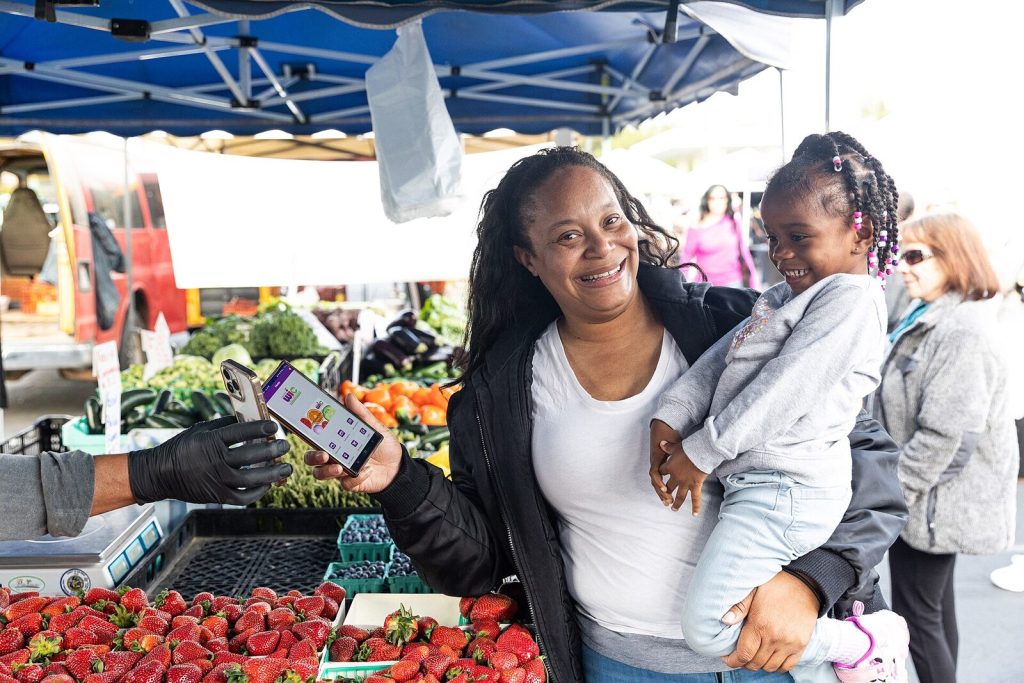
To sell produce to supermarkets you need the same volume every week of the year, produce graded to a written standard, a pack that looks right on a shelf, and enough working capital to wait weeks for payment. The last one stops more Ugandan farmers than the first three together. A supermarket is a good buyer for a farm that can already finance itself and a dangerous one for a farm that cannot.
What a Supermarket Buyer Checks Before Discussing Your Farm Produce
Supermarket buying is not a negotiation about price to begin with. It is a qualification test, and price only gets discussed once you pass it. When a Ugandan research team mapped the formal retail options in Kampala for a potato growers' association, the information they had to collect from each outlet was the same list every time: price, how often the outlet buys, the quality it requires, and the payment conditions. Three of those four are about reliability rather than money.
So the question a buyer is really answering is whether stocking you will cause them a problem. An empty shelf where your crate should be costs them a sale and costs the category manager an explanation. That fear is the thing you are selling against, and it is why a smaller grower with a perfect record often gets the slot ahead of a larger one who is occasionally brilliant.
Consistent Volume Every Week of the Year, Not Just at Harvest
The single hardest requirement is continuity, and it is the one most farmers underestimate because it contradicts how a farm naturally works. A crop arrives in a flood and then stops. A shelf needs the same quantity in the dry season as in the wet.
The documented Ugandan case of a group that held a demanding Kampala account for years shows what closing that gap actually took. To turn one harvest a year into year round supply, members planted in staggered blocks, used both highland and lowland fields, cropped swamp land in the dry months, and stored tubers in light diffusion stores. All of that was extra work and some of it backfired: the swamp grown crop carried too much moisture and the buyer rejected it in quantity, which pushed the group into looking at small scale irrigation instead.
Read that as a warning rather than a recipe. Continuity is an agronomic problem, not a marketing one, and it is solved on the farm months before anybody calls a buyer. If your land cannot produce in the off season and you cannot store, you cannot hold a weekly slot alone. That is not a reason to give up on the channel. It is a reason to enter it as part of a group.
Grading Produce to a Standard a Supermarket Can Put on a Shelf
Grading for retail means two different things at once, and conflating them costs money.
The first is the measurable standard. Uganda works to East African grading standards administered nationally by the Uganda National Bureau of Standards, whose role is to formulate and promote standards that protect the public on health and safety. These are numeric. Dry beans are graded on twelve characteristics, where Grade 1 allows at most 0.5 percent foreign matter, 1 percent pest damaged grains, 14 percent moisture and 10 parts per billion of total aflatoxin. Maize under the regional standard caps Grade 1 at 13 percent moisture, 0.5 percent foreign matter, 2 percent broken kernels and the same 10 parts per billion of total aflatoxin. A buyer who says "Grade 1" means those numbers, not an opinion.
The second is shelf presentation, and no standard covers it. Uniform size, no bruising, clean skin, a crate that stacks. A lot can be inside Grade 1 on every measured characteristic and still be refused because half the fruits are a different size from the other half.
Where farm produce actually fails is worth knowing crop by crop, because the failures are not the ones people expect. In the northern Ugandan bean studies, the average moisture of farmer output at harvest was around 16 percent against a Grade 1 ceiling of 14. For maize in the same districts the moisture was fine, averaging about 12 percent after three months on farm, and the failures were insect damage running at a mean of nearly 16 percent against a 1 percent standard, plus aflatoxin above 10 parts per billion in 40 percent of samples. So the beans problem is drying and the maize problem is the store. Fixing the wrong one is common. Grain moisture management and weevil control in stored grain cover the two.
Cosmetic Rejection, and Where Rejected Farm Produce Has to Go
Retail rejects on appearance, which is the part that feels unjust and is not going to change. The useful response is to plan the destination of the off grade fraction before you ever deliver.
The Ugandan potato group's experience puts a number on how bad this gets at the start. Over their first three months of supply, up to 80 percent of what they sent was rejected by the buyer and had to be sold into wholesale markets at a lower margin. Clear written guidance on the standard, and group level sorting, brought rejection to roughly 10 percent within about nine months, and below 10 percent consistently by the end of the following year. The lesson is not that rejection is normal. It is that the first quarter of any retail account is expensive and you should be capitalised for it.
Ugandan grain buying gives a parallel discount ladder that shows how steep quality penalties get. Under the scoring used in the northern food loss studies, maize with no live insects and under 5 percent foreign matter took no reduction in market value. Add visible breakage and a few live insects and the reduction was about 5 percent. Let live insects reach more than half the grain and the reduction was 30 percent. Mouldy and rotten grain with aflatoxin over 10 parts per billion lost its market value entirely. Live insects are the switch, and they are the cheapest thing on that list to prevent.
Payment Terms: Why Supermarket Supply Is a Farm Cash Flow Decision
This is the section most articles on this subject leave out, and it is the one that decides whether the account helps you or destroys you.
Formal retailers pay after delivery, not on it. The best regional measurement comes from interviews with food suppliers to Kenyan supermarkets, where the largest chains were reported paying 60 to 80 days after receiving goods, while second and third tier retailers paid within 30 to 45 days. Suppliers described the delay as longer than they had been led to expect and as a straight financing problem. Some of them had walked away from the biggest chains for exactly that reason.
Two honest caveats. That work covers Kenya and covers processed food suppliers rather than fresh produce growers, and no equivalent published Ugandan measurement was found for fresh produce payment terms, so treat the day counts as an indication of order rather than a Ugandan rule and ask each buyer directly. What is Ugandan and documented is the shape of the problem: in the potato supply arrangement described above, payment came by cheque on a fixed day in the month following delivery, the group had to open a bank account to receive it, and members borrowed from a local money lender to fund the first three months of supply before later setting up their own savings and credit society to bridge the wait.
Who Finances the Order, and What a Supermarket Charges to List Produce
Suppliers to formal retail finance their own orders. That was the blunt finding across the Kenyan interviews, and it held for small retailers and large ones alike. You buy the crates, you pay the transport, you carry the stock value until payment lands.
Listing charges, shelf payments and promotional deductions are common in formal retail worldwide, and Ugandan farmers should expect some version of them. What they are called and how much they come to differs between chains, and no published Ugandan schedule of them was found, so the only reliable method is to ask for every deduction in writing before the first delivery and to check the first remittance line by line against what you were told. A deduction you did not expect is the normal way a good looking price turns into a bad one.
One requirement from the Kenyan work is worth remembering because it shows how arbitrary a specification can get: one large retailer wanted a processor to guarantee a fixed number of pieces in every hundred gram pack, which is not something a weighing scale can deliver. If a specification is physically impossible, say so at the negotiation rather than agreeing and failing later.
Why a Smaller Shop Is a Better First Supermarket Buyer
The instinct is to aim at the biggest chain. The evidence points the other way for a first account.
Smaller and mid tier retailers in the Kenyan study paid faster, ran less bureaucracy, and were easier to deal with, and several suppliers had deliberately moved down market after the large chains stopped paying on time. A smaller shop also needs a smaller weekly quantity, which is the requirement most likely to break a Ugandan smallholder, and it will often accept a specification the large chain would refuse.
Start where your volume actually fits. Two small retailers taking modest quantities reliably is a better business than one large account you cannot supply in the off season, and it also means losing one buyer does not end your farm's year. Finding produce buyers maps the other routes worth holding alongside a retail account.
Supplying Supermarkets Through an Aggregator Instead of Your Own Account
For most Ugandan smallholders this is the honest answer, and it is not a consolation prize.
An aggregator or a cooperative holds the account, meets the weekly volume by combining members, absorbs the payment delay, and takes a margin for doing it. You get retail level demand without needing retail level working capital. What you give up is the margin and some control over the specification.
The group model that worked in the documented Ugandan case had one design feature worth copying. Members produced as individuals and sold collectively, and each sack went out marked with its grower's own code, which meant the money that came back was split by what each person had actually delivered and how good it was, not by who belonged to the group. If a group offers to sell your produce and cannot tell you how it attributes quality back to individual members, the good growers will subsidise the poor ones and eventually leave. Farmer aggregation and how agricultural cooperatives work go through the structures, and the arrangement where a buyer funds the inputs ahead of the season is treated in contract farming.
Farm Records and Registration a Formal Produce Buyer Will Ask For
Formal buyers need paperwork because their own accounting requires it. Expect to be asked for a bank account in the name of whoever is selling, a way to issue a delivery note and an invoice, and a traceable record of which farm a lot came from. A supplier who cannot produce a document is an accounting problem for the buyer no matter how good the produce is.
None of this needs a large business. It does need deciding, before the first delivery, whose name the account is in and who is legally selling, because sorting that out afterwards has broken more than one farmer group. Registering an agribusiness covers when formal registration becomes worth the trouble, and a farm sales record plus the record keeping guide cover the rest.
Packaging and labelling is where a real regulatory line sits. Loose produce sold by weight is a different thing from a sealed pack carrying your own name, and the second brings labelling requirements into play. Confirm what applies to your specific pack with the Uganda National Bureau of Standards before you print anything, and see packaging produce for sale for the practical side.
Which Crops Are Worth Taking to a Supermarket Buyer
Formal retail rewards crops where appearance and consistency carry a premium a consumer will pay, and it punishes crops traded purely by weight. Fresh vegetables, fruit, herbs, eggs and anything sold in a branded pack sit on the right side of that line. Bulk grain sits on the wrong side: a shelf pays no premium for maize that a miller would buy at the same price with less effort.
Check the current market range for your crop before assuming retail pays better. The price pages carry ranges for tomatoes, onions, Irish potatoes and eggs, and farm gate price against retail price explains why the shelf number and your number differ by as much as they do. The vegetable growing guides cover the production side for the crops that suit this channel.
Who Should Not Try to Sell Produce to Supermarkets
Being direct about this is more useful than encouragement, because the farmers who get hurt by retail accounts are the ones who were told to reach for one.
If your crop finishes in three months and you have no way to produce or store outside that window, you cannot hold a weekly slot and should not promise one. If you cannot fund two delivery cycles while unpaid, a delay of two months will force you to borrow at a rate that eats the premium, and money lender borrowing at monthly rates has sunk better funded ventures than yours. If your total weekly quantity is a few crates, the paperwork and delivery cost per crate will be worse than the wet market. If you grow bulk grain, a miller pays comparable money for less work.
In all four cases the productive move is the same: sell through a group or an aggregator that already holds retail accounts, or sell to a channel that pays on delivery, and revisit direct retail when the constraint that blocks you has actually changed. The other institutional buyers are structured differently and may suit you better, so it is worth reading supplying hotels and restaurants and supplying schools with farm produce before settling on retail. Everything else on selling is indexed from the buyers and marketing hub.
Supermarket Supply Questions Ugandan Farmers Ask
Do supermarkets pay more than the market for the same produce? Sometimes, and the premium is real where it exists. In the documented Ugandan potato arrangement the agreed price per 100 kg bag stood roughly 44 percent above the local district market price and roughly 12 to 25 percent above the Kampala market range at the time. Those were the levels of a particular survey period and they have moved since, so use the ratio and not the amount, and check the current range on the price pages. Set the premium against the cost of grading, packing, transport and waiting to be paid before calling it a better price.
How much working capital do I need to start? Enough to fund inputs plus two full delivery cycles with no money coming in, which for most growers is the largest single number in the plan and the one nobody calculates. Build the deductions into it too, since listing charges, promotional contributions and shrink allowances are normal in formal retail, they differ by chain, and no published Ugandan schedule of them was found. Ask for every deduction in writing before the first delivery, reconcile the first remittance against that list, then work the total out with the break even calculation using your own quantity.
Who at a supermarket actually decides whether to stock me? A category or fresh produce buyer at head office in the larger chains, and the branch manager or a purchasing officer in smaller ones. Branch staff can tell you who that person is and what they already stock, which is worth a visit before you ask for a meeting. Take a graded sample, a stated weekly quantity and a delivery day, because those are the three things the decision turns on.
What happens if I miss a delivery? With retail you will usually get a warning and a gap filled by somebody else, which is less brutal than the hospitality trade but more corrosive: the slot quietly shrinks. Repeated misses end the listing. If you know a delivery will fail, phone before the vehicle was due, not after.
Can I supply a supermarket with one acre? One acre can serve a small retailer with a high value crop grown in staggered blocks under irrigation. It cannot serve a national chain, and a farm of that size is usually better off in a group. The land question is treated fully in the agribusiness section.
Do I need a certificate or a mark to sell fresh produce to a supermarket? For loose produce sold by weight the buyer's own specification is the operative standard, along with the national grading standards for dry grain and pulses. For a sealed and labelled pack, packaging and labelling requirements apply and the Uganda National Bureau of Standards is the authority to confirm them with. Do not take a competitor's account of what is required, because it changes and getting it wrong means destroyed stock.
Should I sign an exclusive agreement with one retailer? Not for a first account. An exclusive deal means your entire output depends on one buyer's payment behaviour and one manager's opinion of you, and you lose the trader relationship that would have carried you through a bad month. Keep a second outlet alive even when it pays less.
Is it better to grade myself or let the buyer grade on arrival? Grade before you load, every time. Produce graded at the buyer's gate is graded by somebody with an interest in a lower number, and rejected produce sitting on a vehicle in Kampala has nowhere good to go. Negotiating with produce buyers covers agreeing the grading basis before you supply.
Before approaching any retailer, get the current price range for your crop from the price and market pages and work out what your own grading, packing, transport and waiting actually cost you. A retail price that looks better than the farm gate often is not, and the only way to know is to run your own numbers first.