
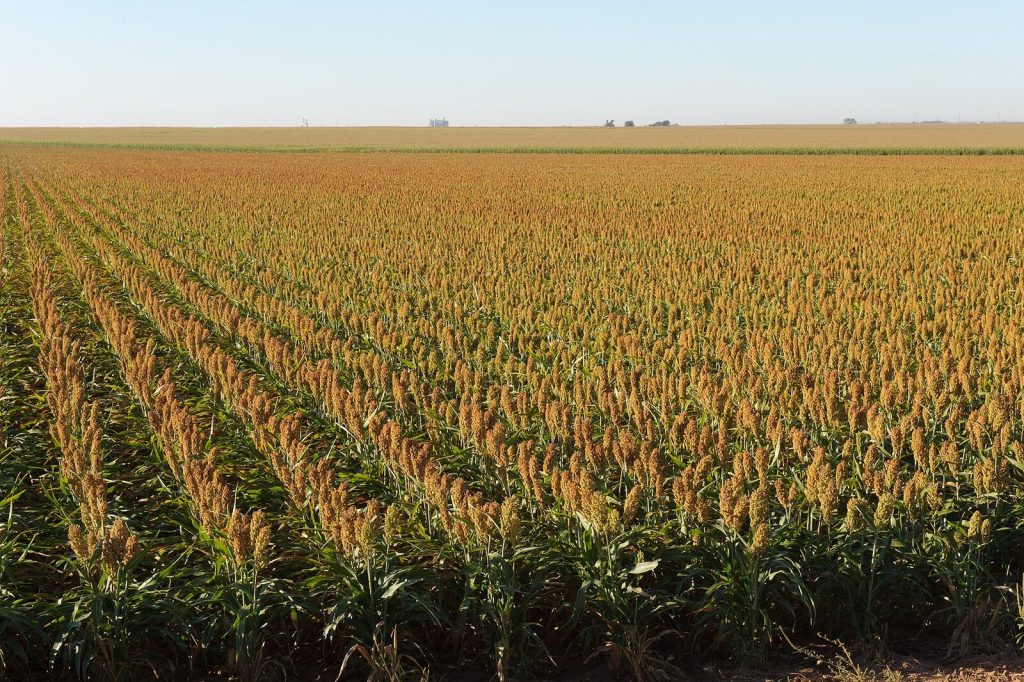
Sorghum farming in Uganda begins with a choice most growers make last: who is going to buy the grain. Seed of the released varieties comes from NaSARRI and registered stockists, and each one was bred for a named end use rather than for general growing. Sorghum is Sorghum bicolor, grown in the south western highlands and across the lowland east and north, and Uganda's yield on it has been falling.
The Sorghum Variety You Plant Is a Decision About Who Buys It
Read NARO's own descriptions of its released sorghums and something becomes obvious. NAROSORG 1 is "suitable for lager beer production". NAROSORG 3 is suitable for lager beer production and for blending food products. NAROSORG 2 is good for local brew, beverage drink and yeast, and for blending food products. NAROSORG 3 also has sweet stalks for forage.
None of those is a general purpose description. Each variety was bred toward a buyer, and the grain quality traits that satisfy that buyer are baked into the seed you plant. That is a genuine advance over a local cultivar of unknown quality, and it also means the variety decision is a market decision made months before there is anything to sell.
The Tannin Trade Off in Sorghum Grain
Every sorghum variety NARO has released is described as free of tannins or zero tannin. NAROSORG 1 is "free of tannins". NAROSORG 2 has "zero tannins". That is stated as a selling point, and for a brewer and a miller it is one, because tannin has an anti nutritional effect: it reduces the availability of protein, starch and minerals in the grain.
Here is what the same peer reviewed literature says in the same breath. Tannin prevents grain mould and bird predation. It is the grain's own defence, and the genetic route is now mapped: the tannin locus works through a regulator that lowers the volatile compounds the grain gives off, and that is what makes birds pass it by.
So breeding the tannin out improves the grain for the buyer and strips the crop of two protections in the field and the store. Note also that NAROSORG 2 is red seeded and still zero tannin, which tells you seed colour and tannin have been deliberately separated. A red sorghum is no longer a guarantee of a bird resistant one.
Sorghum Varieties Released in Uganda and What Each Was Bred For
Uganda's sorghum breeding programme began in 1980. Epuripur and Sekedo came out in 1995 and were in farmers' fields from 1996, and three more varieties followed in 2011. The current catalogue set from NaSARRI is below.
| Variety | Yield, t a hectare | Days | Bred toward |
|---|---|---|---|
| NAROSORG 1 | 2.7 to 3.0 | 110 to 120 | Lager brewing |
| NAROSORG 2 | 2.3 to 2.5 | 100 to 110 | Local brew, yeast |
| NAROSORG 3 | 2.8 to 3.0 | 100 | Lager, forage |
| NAROSORG 4 | Not stated | 85 to 95 | Moisture stress |
The differences behind that table are what decide a field. NAROSORG 1 is cream white seeded, resistant to smut, drought tolerant, tolerant to striga, and carries the stay green trait, which keeps the leaves photosynthesising later into a dry spell. NAROSORG 2 is red seeded and striga tolerant. NAROSORG 3 is chalky white seeded, resistant to sorghum midge, carries stay green, and has the sweet stalks. NAROSORG 4 is the earliest at 85 to 95 days and is described for stable yield under moisture stress, but its catalogue record carries no yield figure at all, so none is quoted here.
All three of the first group carry the same problem statement from NARO: low productivity caused by climate variability, prolonged droughts, pests, diseases and striga weeds, particularly in West Nile, the east, the north, the south west and central Uganda. That is the brief the breeders were working to, and it is a fair description of what a Ugandan sorghum field faces.
One absence is worth flagging. Epuripur and Sekedo, the two best known Ugandan sorghum names, have no records in NARO's current catalogue at all. Their release is documented in the research literature, but nothing in the catalogue describes what they do. So if a seller offers you either by name, ask for the release leaflet rather than accepting the name as a specification, and do not assume either is tannin free or bird resistant.
Where Sorghum Grows in Uganda and What It Needs
Two quite different sorghum systems sit inside one country. The south western highlands grow it at altitude in a cooler, wetter setting. The lowland east, taking in Teso, and the north grow it as a dryland staple where the rains are less reliable. Research benefit modelling puts about 90 percent of the gains from Ugandan sorghum breeding into Teso and the northern region, on about half the national production, which reflects how much more a drought tolerant improved variety is worth where drought is the binding constraint.
What sorghum brings to those places is tolerance rather than yield. It stands drought better than maize, holds on in poorer soils, and the stay green trait in two of the released lines extends how long the plant keeps working through a dry spell. What it does not do is outyield maize: Uganda's national maize yield sits around 2.2 tonnes a hectare while sorghum is well under half of that, which the yield section below sets out.
Land Preparation and Planting Sorghum
This page will not give you a seed rate or a row spacing for sorghum in Uganda, and the reason is worth saying out loud rather than hiding. No Ugandan extension document giving either could be reached for this page. NARO's catalogue records carry release data and no agronomy section, the available economic work is not agronomic, and the two Ugandan journal papers most likely to carry planting figures sit on a host that refuses automated access. Rather than borrow an Indian or American figure that was measured under different rainfall on different varieties, the honest answer is to get the rate and spacing from NaSARRI or your district extension officer, and to ask which variety it applies to, because a 100 day variety and a 120 day variety do not want the same population.
What is well supported is the general shape of the job. Sorghum seed is small, so a fine, firm, weed free seedbed decides the stand, and sowing into a rough tilth wastes seed. The soils this crop is grown on in Uganda are described in the research literature as infertile, which is a reason to test rather than to guess: a soil test is the cheapest way to find out whether nitrogen, phosphate or pH is the thing holding your field back. Poor agronomic practices are named alongside infertile soils in the published constraint list for Ugandan sorghum, so this is where the measured yield gap starts.
Plant with the rains rather than after them. A crop that reaches grain fill before the moisture runs out is the whole argument for the shorter released varieties, and in a bimodal district the choice of season is as consequential as the choice of variety. The plant population calculator will convert whatever spacing your extension officer gives you into a figure for your own plot.
Striga, the Parasite That Decides a Sorghum Field
Striga is a parasitic weed of cereals, and it does not merely compete with sorghum: it attaches to the roots and draws water and nutrients out of the crop, so a field can carry a full stand of plants that yields almost nothing. It is named in NARO's problem statement for its whole released sorghum set, which is a fair indication of how much weight the breeders give it.
Two of the released varieties, NAROSORG 1 and NAROSORG 2, are recorded as tolerant to striga. Read tolerance carefully: it means the crop yields better under infestation than a susceptible variety would, and it does not mean the parasite is gone or that the seed bank in your soil is reduced. A tolerant variety planted year after year into the same infested field is still feeding the problem.
Striga thrives where fertility is low, which is the practical handle. Building organic matter, rotating out of cereals into a legume, and hand pulling striga plants before they flower all reduce the seed going back into the soil. No herbicide and no rate is named here, since I could not confirm that any such product is registered in Uganda for this purpose. A container carries its own rate, that rate is binding, and your district extension officer is who confirms whether it applies to your field. No Ugandan striga yield loss figure could be verified for sorghum either, so none is quoted.
Birds on a White Grain Crop and What They Cost in Labour
Birds appear in the published list of constraints on Ugandan sorghum production alongside drought, infertile soils and the diseases. There is no Ugandan loss percentage for them that could be verified for this page, and inventing one would be easy and useless.
What can be said with confidence is where the exposure comes from. Tannin is the grain's bird deterrent, every NARO released variety is tannin free or zero tannin, and the deterrent effect works through the volatile compounds the grain gives off rather than through taste alone. A white tannin free head at the milk and dough stages is an attractive target and it cannot defend itself chemically.
Smut, Midge and the Field Problems NARO Bred Against
The released varieties tell you which problems the breeders judged worth building resistance against, which is useful information in itself.
Smut is a fungal disease that replaces the developing grain with a mass of spores, so an affected head produces no usable seed at all. NAROSORG 1 is recorded as resistant to it. Because the spores travel with the seed and survive in the soil, clean seed and rotation are the two practices that matter most alongside a resistant variety.
Sorghum midge is a small fly whose larvae feed inside the developing grain, and a heavily attacked head looks normal from a distance and threshes out almost empty. NAROSORG 3 is recorded as resistant. Midge pressure rises where flowering is staggered across a district, which is a second argument for planting a block together.
Grain mould is not listed as a resistance trait on any of the records, and that is the gap the tannin section flags. It develops on heads that stay wet, and on a tannin free grain the crop has less of its own resistance to it. Harvest timing and drying are the control, not chemistry.
No product, rate, dilution or spray interval appears anywhere on this page. Control on this crop is variety choice, clean seed, rotation and timing, which is what the Ugandan evidence supports. Where something does have to be bought, read the rate off the container, treat it as binding, and take the question to an extension officer or a plant clinic first.
Sorghum Yield Per Acre in Uganda Against What the Varieties Promise
The gap here is the largest of any Ugandan cereal on this site, and it is widening rather than closing.
| Measure | Per hectare | About, per acre |
|---|---|---|
| Released variety band | 2.3 to 3.0 tonnes | 930 to 1,215 kg |
| National yield, recent | 831 kg | 336 kg |
| National yield, earlier | 1,100 kg | 445 kg |
| Uganda maize, for comparison | 2.2 tonnes | 890 kg |
Two things stand out. The national sorghum yield is running at roughly a third of what the released varieties are documented to carry, and it is a third of that figure while going down rather than up. And Uganda's maize yield, at about 890 kilogrammes an acre, is close to double the sorghum yield on the same national statistics, which is why sorghum only makes sense on ground where maize cannot be relied on.
The right hand column is a conversion I did at 0.4047. No source prints it, and it is here because an acre is the unit Ugandan farmers actually plan in.
Why Ugandan Sorghum Yields Have Been Falling
Two independent sources agree on the direction. One records Ugandan sorghum yields stagnating around 1.5 tonnes a hectare through the 2000s and then dropping toward and below 1 tonne. The FAOSTAT series carries them from 1,100 down to 831 kilogrammes a hectare across nine recent years, with production swinging from 410,720 tonnes down to about 97,000 and back to around 266,000, and area moving between about 96,700 and 373,400 hectares.
Check the flags on those rows before planning against them. Only the production line is marked as officially reported. The area behind it is marked as modelled for most years and as taken from an international body for the latest one, and the yield line is marked as an FAO estimate right through the recent period. A yield that is really a quotient of an official numerator over a modelled denominator is a softer number than it looks. That does not make the decline false, because a second and independent source reports the same direction. It does mean the precise figure is softer than it looks, and it explains why the area series jumps around so violently from one year to the next while production moves less.
The published explanations for the decline are unglamorous and all of them are addressable. Low genetic potential in the local cultivars most farmers grow. Long maturity periods, which is precisely what the 85 to 120 day released set fixes. Poor grain quality. Poor agronomic practices. Infertile soils. Drought. Pests and diseases including birds. And on the economic side, the cost of better agronomy, poor marketing infrastructure, high post harvest losses, and a shortage of diversified uses and market outlets.
Notice how many of those are about selling rather than about growing. On this crop the market is not the last step, it is one of the causes.
Harvesting and Drying Sorghum Grain
Harvest when the grain is hard and the head has changed colour, cutting the heads rather than waiting for the whole plant to dry down if birds are working the field. On a tannin free variety every day the crop stands is a day of bird and mould exposure, which tilts the balance toward cutting slightly early and finishing the drying off the plant.
Storing Sorghum and Keeping Grain Mould Out
High post harvest loss is named as one of the economic constraints on Ugandan sorghum, which is another way of saying a share of every harvest never reaches a buyer. On a tannin free grain that risk is larger than it was on the local red sorghums, because the grain has less of its own defence against mould.
The controls are not sorghum specific and they are covered properly elsewhere on this site. The grain has to go into store dry, the store has to keep moisture out, and the bags have to be checked rather than stacked and forgotten. See the grain moisture guide and the guide to preventing weevils in stored grain.
One thing worth saying because it is easy to get backwards: storing sorghum is about not losing it, and whether it is also about catching a better price depends on a market you have to check locally. The next section explains why.
Selling Sorghum to Brewers, Millers and Local Buyers
The structure of this market is documented and it is not favourable. Ugandan grain markets are described as thin and volatile with little liquidity. Marketing is done individually by farmers, mostly at peak harvest. Oversupply in a season drops the price. The absence of collective marketing and of storage produces a glut immediately after harvest, every year, predictably. Price information reaches farmers mainly through friends, fellow farmers, local leaders and occasionally radio. The chain from grower to consumer is long with little value added along it, and small traders sell on to urban traders and millers and to large buyers in Kampala.
Two practical conclusions follow. The first is that the predictable harvest glut is the one feature of this market you can plan around, by storing if you can store properly or by arranging a buyer before harvest if you cannot. The second conclusion is about information rather than about price levels. Uganda publishes a monthly market price series for the main staples, and sorghum is not in it, which leaves a sorghum grower with no published reference to hold an offer up against. A maize grower can check a quote; you largely cannot. So ask several buyers and ask each what quality the quote covers.
On grading, this page deliberately makes no claim. Ugandan measurements exist for two other crops and they point in opposite directions: bean grade 3 fetched up to 40 percent less than grade 1 in the districts studied, while maize in the same districts carried no quality premium at all. No equivalent Ugandan evidence for sorghum could be found, so nothing is inferred either way. Ask your buyer whether they pay differently for clean, mould free, single colour grain, and treat the answer as specific to them.
Common Questions From Ugandan Sorghum Growers
Which sorghum variety should I plant in Uganda? Work backwards from the buyer. For lager brewing or flour blending, the white grained releases are NAROSORG 1 at 2.7 to 3.0 tonnes a hectare in 110 to 120 days and NAROSORG 3 at 2.8 to 3.0 tonnes in about 100 days. For local brew, beverages and yeast, NAROSORG 2 is the red grained release at 2.3 to 2.5 tonnes in 100 to 110 days. For the shortest season, NAROSORG 4 at 85 to 95 days, though its record carries no yield figure. NAROSORG 3 also has sweet stalks for forage, which is worth something if you keep livestock.
Why do birds attack some sorghum more than others? Tannin. It is the grain's own bird deterrent, working through the volatile compounds the grain gives off, and it also suppresses grain mould. Every sorghum variety NARO has released is tannin free or zero tannin, because tannin reduces the availability of protein, starch and minerals and brewers and millers do not want it. So the released varieties are better grain and more attractive to birds at the same time, and the red seeded one is no exception because its tannin has been bred out too.
Is sorghum more profitable than maize in Uganda? Not on yield, and no verified current price exists for sorghum to settle it on revenue. Uganda's maize yield runs about 2.2 tonnes a hectare, roughly 890 kilogrammes an acre, against a recent national sorghum yield near 831 kilogrammes a hectare, about 336 an acre. So maize carries nearly double the tonnage nationally. Sorghum earns its place where maize is unreliable, on drought prone or infertile ground, and where a brewer or processor is within reach. Compare the maize yield per acre guide before deciding.
How much seed do I need for an acre of sorghum? No Ugandan figure could be verified for this page and none is invented. NARO's catalogue records carry release data rather than agronomy, and the Ugandan journal papers that would carry planting rates sit behind a host that blocks automated access. Get the rate and the spacing from NaSARRI or your district extension officer, and ask which variety it applies to, because the 85 day and the 120 day releases will not want the same plant population. The guide to choosing quality seed covers what to check on the pack once you have the figure.
What is striga and can a variety fix it? Striga is a parasitic weed that attaches to cereal roots and pulls water and nutrients out of the crop, so an infested field can carry a full stand and yield almost nothing. NAROSORG 1 and NAROSORG 2 are recorded as tolerant, which means they yield better under infestation than a susceptible variety, not that the parasite is dealt with. The seed bank in your soil is reduced by rotating out of cereals, raising fertility and pulling striga plants before they flower.
What does sorghum sell for in Uganda? Nothing verifiable could be put on this page, and the gap is itself the useful answer. Uganda's published monthly price series leaves this crop out, so there is no reference figure to hold an offer up against. What is documented is the market's shape: thin, volatile, traded one farmer at a time, and prone to a glut straight after harvest every single year. Talk to several buyers, pin down which quality each quote covers, and see the price pages for the crops that do carry published series.
Why has the sorghum yield in my area not improved? The published reasons for Uganda's falling national yield are low genetic potential in the local cultivars most farmers still grow, long maturity varieties that run out of season, poor grain quality, poor agronomic practices, infertile soils, drought, and pests and diseases including birds. Alongside those sit poor marketing infrastructure, high post harvest losses and a shortage of market outlets. Several of those are about selling rather than growing, which is unusual for a yield problem and tells you where the leverage is.
Can I use Epuripur or Sekedo? They exist and they are documented as Uganda's first improved sorghum releases, in farmers' fields since 1996. What is not available is any record of what they do: neither has an entry in NARO's current technology catalogue, so there is no published yield band, maturity or resistance list to check a seller's claim against. Ask for the release leaflet, and do not assume either is tannin free or bird resistant.
Should I grade and clean my sorghum before selling? Clean it for storage, always, because mouldy heads spoil far more than their own weight in a bag. Whether cleaning raises the price is a question this page cannot answer for you, and it is better to say so than to guess: no Ugandan sorghum grading evidence exists, and for the two Ugandan crops that have been measured the answers went opposite ways, with a large bean premium and none at all on maize. Ask your buyer directly.
Finding Sorghum Seed and Checking Current Prices in Uganda
Settle the buyer and the grain colour before you settle anything else, then match the maturity to your season and to what your neighbours are planting, because a field that ripens alone is the field the birds find. If you are moving from a local red sorghum to a released tannin free line, add the scaring labour and a prompt harvest to your plan rather than assuming the yield band on the record.
Then ask NaSARRI or a district extension officer which released varieties are actually available this season and what seed rate and spacing go with the one you choose, and compare what stockists are holding. This guide sits under the crop growing guides hub, and the millet farming guide covers the other dryland cereal that usually shares these fields, including a fertilizer finding that is worth reading before you spend anything on either crop.