
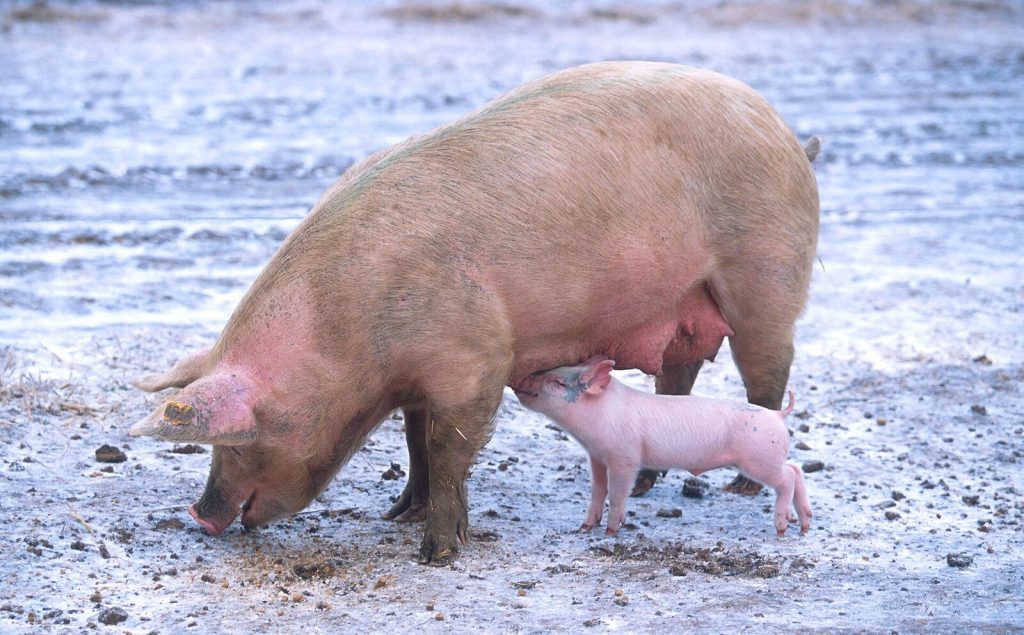
Piglet management on a Ugandan pig farm is decided in the first three days and settled at weaning, and the ministry's own guidance starts somewhere most farmers never think to look: the number of working teats on the sow. Litters are held at no more than 11 to 14 piglets for that reason. Everything after that, from navel care and warmth to iron and the weaning date, is about getting a live piglet onto a teat and keeping it there.
Sizing the Litter to the Sow Before Farrowing Day
A sow feeds piglets from a fixed number of functioning teats, and a piglet that cannot hold one does not grow. Uganda's ministry guidelines on pig farming put the rule plainly: maintain litter sizes at most 11 to 14 piglets, to match the number of working teats of the sow. That is a management instruction, not a biological limit, and it means a big litter is a problem to solve rather than a piece of luck.
Ugandan litter sizes make the arithmetic real. Crossbred sows in Ugandan herds produce 8 to 12 piglets a litter and local sows 5 to 8, with the value chain literature reporting 16 to 20 piglets per sow per year for a sow that is managed well. A local sow rarely troubles the teat count. A crossbred at the top of her range can, and a sow whose udder has been damaged by needle teeth in an earlier litter will fall short of her own number without anyone noticing.
Count the teats before she farrows, not after. Run a hand down each side and note the ones that are soft and full against the ones that are small or scarred, and write the number in the sow's record. That single figure tells you in advance whether this litter needs a nurse sow and which piglets will be moved.
Preparing the Farrowing Pen on a Ugandan Pig Farm
Ugandan extension guidance times the preparation from the mating date. Farrowing is expected at 114 days plus or minus 3 from the day the sow was served, so the pen work happens in the last week of pregnancy and the sow moves at about 110 days. Clean and disinfect the pen. Put dry grass bedding where she will lie so that she and the litter stay warm. Wash the sow with water and soap before she goes in, paying attention to feet, the area between the hooves, the underline and the teats, because dirt and dung on a sow carry the organisms and worm larvae that a newborn meets first. External parasites get sprayed at the same time, and internal and external parasite treatment sits about two weeks before farrowing.
The ministry adds three structural points. The sow is separated from other pigs before farrowing. She gets enough room that she does not lie on the litter. And the resting area for the piglets carries heat, from a lamp, because a newborn piglet is far more sensitive to cold than the sow lying beside it. The target the ministry names is 30 to 33 degrees for newborn piglets while the rest of the herd sits at normal room temperature, which is the single most useful number in newborn pig management and the reason a creep corner exists at all. Construction detail belongs in the pig housing guide, and the waste pit sits about 10 metres from the sty.
One number in the ministry guidance is not usable and is worth naming so nobody plans a building on it. It gives house space as "on average 3m by 3m per animal", applied to pigs of all ages and to the sow. Nine square metres per pig is not a space allowance for a grower, and an earlier costing page on this site was already unable to verify a Ugandan space figure per pig. Size the farrowing pen on what the sow needs to lie stretched out with a creep area beside her that she cannot roll into, and get the dimensions from a builder who has made one.
Watching a Sow Through Farrowing on a Pig Farm
Most sows farrow unaided and should be left alone, which is different from being left unwatched. Ugandan extension material lists the signs that give you a few hours of warning: the sow becomes restless about 24 hours beforehand, the vulva swells distinctly, the teats become turgid and release small amounts of milk under pressure, she builds a nest if bedding is there, she lies down with abdominal contractions, and a bloody fluid appears.
Farrowing then takes 4 to 5 hours on average, shorter or longer. Piglets arrive front feet first or hind legs first and either is normal, so presentation alone is not a reason to intervene. What does need a hand is narrower than most farmers fear.
Anyone assisting a sow or handling newborns should be wearing disposable gloves or have washed hands with soap and water first, which the ministry names as a high risk activity alongside castration. The same guidance says to keep the number of routine surgical procedures on a litter to a minimum, because every break in the skin is a way in for bacteria.
The First Day: Colostrum, Navel Care and Warmth for Newborn Piglets
Colostrum is the first job and it cannot be postponed. The first milk carries the antibodies a piglet has no other way of getting, and it is what the rest of this page quietly depends on: the reason tail docking, ear notching and castration are all timed to the first days is that the piglet is protected by colostrum at that point and not later. Get every piglet onto a teat, including the ones that need showing.
Navel care next. The point where the cord breaks is an open route into the body, so cut the cord leaving about an inch and wet the cut end with an iodine solution, applied with cotton wool. The ministry's pig guidelines name the same practice, a skin disinfectant such as iodine at the navel of the newborn and again when cutting a tail or castrating. No concentration is given here and none should be guessed; the strength is on the bottle and a veterinary practitioner will confirm it for a newborn.
Warmth is the third and the one that quietly kills. A piglet born wet into a cool pen loses heat fast, stops looking for the udder, gets weaker and then gets crushed because it lies against the sow for warmth. That sequence is why the causes of piglet loss named in the Ugandan pig value chain literature run together rather than separately: crushing, starvation, chilling, sows with no milk, and sows that eat their piglets. Heat, bedding and a creep corner break the first three at once.
There is no published Ugandan figure for how many piglets are lost before weaning. The causes are documented and the rate is not, which is why the pig farming profit calculation applies a whole herd loss rate rather than inventing a separate one for the litter. If you keep one record on your farm, keep this one: piglets born alive, piglets born dead, and piglets alive at weaning, litter by litter.
Needle Teeth, Tails and Keeping Skin Wounds Off the Litter
Piglets are born with four pairs of sharp teeth, and they use them. Fighting for teats, they cut each other's faces and they cut the sow's teats, and an irritated sow rolls onto her stomach and refuses to nurse, which takes the whole litter off feed. Ugandan extension guidance removes those teeth on the first day, holding the head, opening the mouth carefully from the back edges without choking the piglet, and clipping each tooth close to the gum with sharp pliers held as square to the tooth as possible. Clean the pliers with disinfectant after every litter.
Tail docking follows within the first three days, leaving about half an inch, with a sharp sterile knife and the wound disinfected afterwards. The reason for the timing is the same on both jobs: the piglet is small enough to hold still, the other piglets are less interested in a newly cut tail, and colostrum protection is at its peak. The reason for doing it at all is tail biting later, which opens infected wounds down the spine on a growing pig.
Weigh the trade off honestly, because the ministry's instruction to minimise routine surgery cuts against doing every procedure on every litter by habit. A farm that has never had tail biting, keeps pigs at low density and has good bedding has a weaker case for docking than a farm that fights it every batch. Needle teeth are different: the damage they do to the udder is immediate and it costs the litter now.
Piglet Anaemia and the Iron a Sow's Milk Does Not Carry
Piglets are born with low iron reserves and sow milk is low in iron. Iron carries oxygen in the blood, so a growing litter runs down what little it has and the result is piglet anaemia: pale, listless piglets that stop growing and pick up every other infection going. The ministry's own pig feed manual names iron as the mineral that matters to a piglet, which is unusual in a document otherwise written about rations.
Two details that go wrong. First, the soil route only works if the soil is clean, and soil scraped from the pig yard is the worst possible source because that is exactly where the worm eggs are. Second, needles get disposed of after each litter rather than reused down the row, which is in the same guidance and is how one infected piglet becomes six.
Fostering Piglets Between Sows in a Breeding Herd
Moving piglets to a second sow is the answer to the teat count problem, and there are four situations that call for it: a sow dies at or soon after farrowing, a sow falls sick and stops milking, a sow produces more piglets than she has teats, or a sow produces a very large litter and milks poorly.
The Ugandan method has firm limits on timing. Move piglets before they are three days old, and only after they have taken colostrum from their own mother. The receiving sow must have farrowed within about three days herself. Move the larger piglets rather than the small ones, because the big ones can compete on a strange udder and the small ones cannot. Then defeat the sow's nose, because she identifies her young by smell: smear every piglet in the pen including her own with something strongly scented, or soak them all in a salt solution, so that no piglet smells different from the rest. Stay and watch. A sow that starts battering the incomers has to be stopped, and that only happens if somebody is standing there.
Adjust to the working teats, not to a target. If the receiving sow has ten good teats and nine piglets of her own, she has room for one, and moving three into her creates the problem you were trying to fix.
Creep Feeding Piglets, and the Compulsory Feed Standard That Names No Creep Category
Piglets start eating solid feed long before they are weaned, and the transition is what decides whether weaning is a small event or a setback. Ugandan ministry guidance starts exposing piglets to small amounts of a high protein baby feed at 20 days of age. The specification for that feed is demanding: creep feed for piglets before weaning is set at 20 to 22 percent crude protein and has to be highly digestible, against 14 to 16 percent for a grower ration. The pig feed formulation work on this site audits the published Ugandan example creep mixes against that target and finds them short, which matters here because a piglet held on a weak creep ration weans lighter and then takes longer to reach sale weight.
There is a regulatory gap behind that, and it is worth knowing before you buy a bag. Uganda's Schedule of Compulsory Uganda Standards makes the compounded pig feed standard legally enforced rather than advisory, so a manufacturer has to meet it. Read the scope, though: it covers feeds used as a sole source of nutrients for pig starter feed, pig growers feed, pig finishing feed and lactating sow feed. Those are the four named categories. A bag sold for a gestating sow or labelled for weaners has no compulsory category of its own, and the word creep does not appear in the scope at all, although the pre weaning feed the ministry calls baby or starter feed may sit inside the starter category.
The useful move is to ask, not to assume. Ask a seller which standard category the bag is compounded to and ask to see the label that says so. That question is answerable, it costs nothing, and it is stronger than asking whether the feed is any good. Feeder and trough practice sits in the pig feeding guide, and a sow with a litter drinks a great deal of water, reported at about 40 litres a day including cleaning, which is a figure worth checking your supply against.
When to Wean Piglets, and Why Two Ugandan Manuals Disagree
This is the decision with the most money attached and Uganda's own guidance does not agree with itself.
The ministry's pig farming guidelines say do not wean piglets before they are 28 days of age, and preferably wean them at 35 days. Ugandan extension material published through the national advisory service describes weaning as early at 3 to 5 weeks and late at 6 to 8 weeks, and then says that under Ugandan production conditions weaning should not be done early, because early weaning needs an expensive diet for the weaners and high management standards. The ministry's preferred 35 days is inside what the second document calls early and advises against.
Two mechanics of the weaning itself. Remove the sow from the farrowing pen and leave the piglets in the pen they know, rather than moving the litter, because the stress of a new pen lands on top of the stress of losing milk. And taper rather than stop: the same guidance dries the sow off gradually over about four days by cutting her feed allowance back, which is also when she is culled or kept, judged on how this litter went, her temperament and her record.
Castration, Identification and Herd Records That Earn Their Keep
Male piglets not being kept for breeding are castrated, for handling and because the meat of an entire male carries a smell buyers reject. Ugandan guidance puts it before three weeks of age, for the same three reasons as tail docking: the piglet is easy to hold, it recovers faster with little effect on growth, and colostrum protection is still strong. The wound is treated with an antiseptic afterwards and the scrotal area cleaned with disinfectant first. Ugandan carcass buyers pay a premium for castrated males between 6 and 12 months in good health, so this is a marketing decision as much as a handling one.
Identification goes in within the first three days too, and Ugandan guidance names ear notching as the method best suited to local conditions: a V of tissue removed from the ear edge in coded positions, the wound disinfected, and the blade disinfected or replaced between litters. Numbers beat names. A piglet called Joseph cannot be sorted in a ledger.
Then the records, and this is where piglet management pays for itself. Ugandan guidance asks for the number born alive and born dead, the sexes, the weight of the litter at birth, and a second weighing at three weeks of age. That three week weight is the clever one: it is not really a measure of the piglets at all, it is a measure of how much milk the sow produced and how well she mothered, and it is the most reliable early signal of which sows to keep. The livestock record keeping template gives the sheet, and the pig production calendar carries the dates.
African Swine Fever, Worms and the Diseases That Reach a Litter
Nothing on sale will protect a litter from African swine fever. There is nothing to inject and nothing to dose, and an outbreak can end the herd. What Ugandan surveillance adds is that there is no calendar advantage either: over thirteen years of district veterinary officer reporting, confirmed cases turned up in every single month of the year and no pattern emerged. So farrowing dates cannot be planned around it. Where you farm does change your exposure, and the geography is set out on the cost of raising pigs page, which treats it as a cost of time on farm.
Which leaves hygiene, and the litter is the reason those rules exist at all. Work the piglet pens before the fattener pens and never the other way round, brooms, barrels and shovels are not shared between the piglet pens and the fatteners, boots are cleaned before the disinfectant footbath and the footbath is changed often because a dirty one does nothing. Visitors are refused. Kitchen waste from restaurants or homes is boiled before it is fed. A dead pig is removed at once, buried deep or burnt, and its pen cleaned and disinfected. Perimeter and visitor rules belong to the farm biosecurity guide, and the diseases themselves to common pig diseases.
Worms reach a litter through the sow and through the pen floor, and here there is a real evidence gap that nobody else names. The large Ugandan survey of gut parasites in smallholder pigs excluded pigs under three months old, and its own authors note that this is the age group worms affect most. Six pigs in ten over that age were carrying something. Nobody has measured the litters. What it did establish is that two habits, clearing manure and litter out routinely and using a disinfectant routinely, measurably lowered the odds of a pig being infected, while how often the farm dosed made no measurable difference at all. In a piglet pen that is an argument for the shovel. Timing, products and the label rules belong to the deworming pigs page and are not repeated here.
Sow problems in the days after farrowing hit the litter directly and are worth recognising rather than treating. A sow whose milk fails, an udder that is hot, hard and painful so that she will not let the piglets suckle, or a sow running a fever with a foul smelling discharge from the vulva two to five days after farrowing and an arched back when she walks: all three are calls to a veterinary practitioner, and all three mean the litter needs a milk source today. The guidance on when to call a veterinarian covers the judgement.
Growing Weaners On After the Sow Leaves
The first fortnight after weaning is where good piglet management gets thrown away. The piglet has lost its milk, it is eating a solid ration for the first time as its only food, and it is often moved and mixed with strangers in the same week. Keep the changes apart: pen first or feed first, not both.
Feed is the limiting factor and Ugandan growth data shows how much it matters. Measured at pen level over the same early weeks, Ugandan weaners and growers put on 294 grams a day where the ration was commercial and 36 grams a day where the diet was forage based. A weaner that stalls at weaning is not a week behind, it is months behind, and the arithmetic of what that costs runs on the cost of raising pigs page. Breeding the sow back sits in the pig breeding guide, and the finishing period in the pig fattening guide.
Questions Ugandan Pig Farmers Ask About Piglet Management
How many piglets should a sow rear at once? No more than her working teats, and Uganda's ministry guidance caps it at 11 to 14. Count her teats before she farrows and record the number. Anything above that number needs a nurse sow within three days or the extra piglets will starve slowly while appearing to be part of a healthy litter.
What is the best age to wean piglets in Uganda? Two Ugandan government documents answer differently and the difference is real. The ministry says not before 28 days and preferably 35. National extension material says under Ugandan conditions weaning should not be done early, meaning not at 3 to 5 weeks, because early weaning needs an expensive weaner diet and tight management. Decide it on your feed: if your weaner ration is good, wean earlier and get the sow back in production; if it is bran and hope, leave the piglets on milk and wean nearer 6 to 8 weeks, and never beyond 8.
Do I have to give piglets iron injections? Not necessarily, and the injection is only one of four routes Ugandan guidance lists. Clean red soil in the pen, iron tablets, iron solution on the sow's teats and injection all appear. What is not optional is the iron itself, because piglets are born with low reserves and sow milk does not make them up. Ask a veterinary practitioner which route suits your setup, and if a product is used, the dose comes off its label and nowhere else.
Why do my piglets die in the first week? The Ugandan value chain literature names five causes and they overlap: crushing, starvation, chilling, sows with no milk, and sows eating their piglets. Cold is the one that hides, because a chilled piglet stops suckling, weakens, then lies against the sow for warmth and gets crushed, and the death gets recorded as crushing. Heat in the creep area at 30 to 33 degrees, dry bedding, and a physical creep the sow cannot roll into address three of the five at once.
Can I move piglets to another sow? Yes, inside narrow limits. Before three days old, after they have had colostrum from their own mother, to a sow that farrowed within about three days, moving the bigger piglets and not the runts, and only after masking the smell of every piglet in the pen including her own. Then stand and watch her, because a sow that rejects a moved piglet will injure it quickly.
Is it worth castrating and docking every litter? Castration of males not kept for breeding, yes, and before three weeks: buyers pay a premium for castrated males and an entire male's meat carries a smell. Tail docking is a judgement, because the ministry also instructs farmers to keep routine surgical procedures to a minimum, since every skin wound is a way in for infection. A low density farm with good bedding and no history of tail biting has a weaker case than one that fights it every batch.
What does piglet management cost? Almost nothing in cash and a great deal in attention, which is the honest answer and an awkward one. The cash items on this page are bedding, a heat source, disinfectant, an iron product and a pair of clean pliers, and together they are a rounding error beside the feed bill that makes up 60 to 80 percent of the variable cost of a Ugandan pig. What piglet management actually costs is someone being present at farrowing and looking at the litter twice a day. The opening budget sits on the cost of starting a pig farm page and current weaner prices on the piglet price page.
Before the next sow farrows, do two things that cost nothing: write her teat count in her record, and find out today what a district veterinary officer charges to attend a difficult farrowing, so you are not deciding that at two in the morning. Prices for a heat source, disinfectant and an iron product vary by town and by season, so get current quotes from local agrovet and pig input suppliers listed under pig feed suppliers and the wider livestock guides rather than budgeting from a figure on a page.