
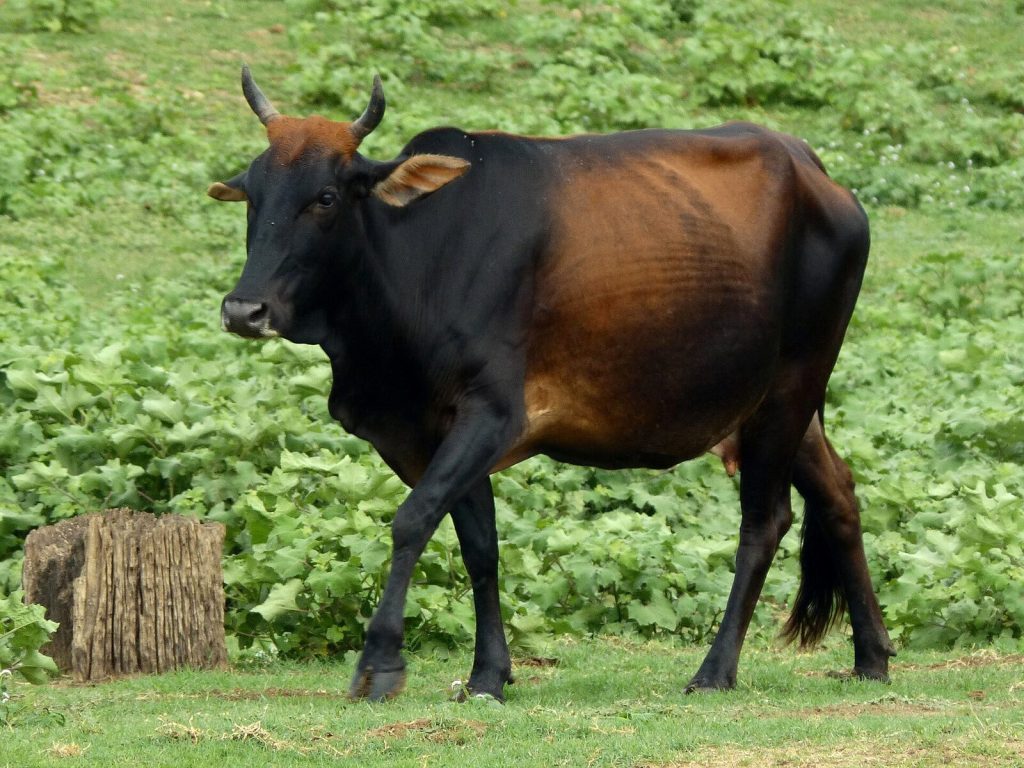
Roughly half the cattle passing through the Ugandan abattoirs that researchers have inspected carried liver fluke. Deworming cattle in Uganda starts, then, from a high burden rather than a low one, and the practical questions are which parasite you are treating, which animals need it, and whether the product still works. None of those has a single national answer, and the dose is on the label.
Why Deworming Cattle Matters More Than Ugandan Herd Owners Think
Internal parasites are the losses nobody sees. A tick is visible. East Coast fever announces itself. A worm burden just makes an animal grow slower, milk less and take longer to conceive, and it does that quietly enough that the herd owner attributes it to the feed, the breed or the season.
Ugandan slaughter data puts a number on part of it. In a study of 720 cattle at the main abattoirs in Lira and Gulu, liver fluke was found in 48 percent of carcasses by liver inspection, and every infected animal lost part of its liver to condemnation, on average about 1.9 kilogrammes of it. A separate study at abattoirs in western Uganda found 57 percent of cattle infected with Fasciola flukes, and that study found flukes in cattle but not in the sheep and goats it examined at the same sites.
Those figures are from cattle at the end of their lives, so they are not a prevalence estimate for a herd standing in a field. What they do establish is that fluke is common enough in Ugandan cattle to be a default assumption rather than an unusual finding, and that the losses land on the butcher and the herd owner together.
What Worms Actually Live in Ugandan Cattle
"Worms" is three different problems that need three different answers, and conflating them is the commonest reason a deworming programme fails.
Roundworms in the stomach and gut. These are the gastrointestinal nematodes, and the genera that matter in cattle are Haemonchus, Ostertagia, Trichostrongylus, Cooperia, Oesophagostomum, Bunostomum and Nematodirus. Haemonchus is the one that drives treatment in the tropics: an adult female lays thousands of eggs a day, which contaminates pasture fast and produces repeated outbreaks. Its damage is blood loss, so the signs are pale gums and weakness rather than diarrhoea.
Liver fluke. A flatworm that lives in the bile ducts, and a completely different life cycle from the roundworms because it needs a water snail as an intermediate host. That single fact is what makes it a Ugandan problem: no snail, no fluke. Both Fasciola gigantica and Fasciola hepatica occur in the region, and the Ugandan studies mostly report the genus rather than naming the species.
Lungworm. Dictyocaulus in cattle causes a verminous pneumonia and it is a recognised cause of poor health in young grazing stock. A coughing herd on pasture is not automatically a respiratory infection, and lungworm is the reason a product's label matters: some drug groups cover lungworm and others do not.
Two more parasites belong on the list and rarely make it. Tapeworms occur in cattle. And the western Uganda study found cattle schistosomes, Schistosoma bovis and Schistosoma mattheei, in cattle and goat dung near Lake Albert, which is another snail borne parasite from the same wet grazing that carries fluke. Common cattle diseases in Uganda covers the wider health picture, and cattle tick control covers the external parasites that a dewormer does nothing about.
Liver Fluke in Ugandan Cattle: What Two Abattoir Studies Found
Two Ugandan studies, from opposite ends of the country and using different methods, are the best evidence available on the scale of the problem. Their findings are worth setting out together, because the gap between the methods is as informative as the numbers.
| Cattle group | Infected | Method |
|---|---|---|
| Lira and Gulu | 48 pc | Liver check |
| Same districts, farms | 26 pc | Dung sample |
| Western Uganda | 57 pc | Liver check |
| Western Uganda, dung | 56 pc | Dung sample |
| Aged 1 to 3 years | 55 pc | Liver check |
| Aged over 5 years | 37 pc | Liver check |
The northern study also asked the farmers what they did with their animals, and the answers point straight at the snail. Communal grazing in swampy areas was reported by 82 percent of those farms and watering cattle in swamps by 71 percent, and farms whose drinking water source was swamp water had a statistically reliable higher chance of carrying infected cattle. The western study found the same shape: free range grazing and unsafe water sources shared with wild animals were the risky practices of between 66 and 100 percent of the farmers it interviewed.
One finding from the western study deserves separate attention because it is about people rather than parasites. Knowledge of fasciolosis was moderate overall at 62.7 percent of the key informants, highest among butchers at 89.7 percent and lowest among herders at 31.8 percent. The people handling the animals every day knew least about the parasite that was in half of them. Butchers knew, because butchers are the ones who see the condemned livers.
The Signs of a Worm Burden in a Herd
Worms rarely produce a dramatic sign. They produce a slow decline that gets blamed on something else.
The uncomfortable part of the body condition finding is that cause and effect run both ways. A parasitised animal loses condition, and a thin animal on poor feed is less able to withstand a burden it would otherwise carry. So condition scoring tells you which animals to look at, and it does not on its own tell you that worms are the reason.
Why a Clear Dung Sample Does Not Clear an Animal in Your Herd
This is the most practically useful thing on the page and almost nothing written for farmers says it.
The northern Uganda study examined the same parasite two ways. On the slaughter floor it inspected livers and found fluke in 48 percent of animals. On the farms it examined dung under a microscope for fluke eggs and found 26 percent. The dung test found roughly half of what the liver inspection found.
There is a reason, and it is built into the parasite. Egg counting only detects a fluke that is mature and laying. An animal carrying immature flukes migrating through the liver tissue, doing real damage, sheds no eggs and tests clean. The same limitation applies to roundworms in a milder form: egg counts are a blunt instrument at low burdens.
Two consequences follow, and they pull in opposite directions, which is why this needs a vet rather than a rule of thumb. A positive dung sample is strong evidence and worth acting on. A negative dung sample is not proof of a clean animal, so it is not on its own a reason to skip treating an animal that is losing condition on wet grazing. Equally, a negative result across a properly sampled group is genuine information about the herd, and it is a great deal better than treating blind.
Which Cattle in the Herd Carry the Heaviest Burden
Burden is not spread evenly, and knowing where it concentrates is what allows you to treat fewer animals rather than more.
Age is the clearest pattern in the Ugandan data, and it runs the way parasitologists would expect. Fluke prevalence at the Lira and Gulu abattoirs was 55 percent in cattle aged one to three years, 52 percent in those aged four to five, and 37 percent in those over five. On the farms, the same age ranking appeared. Older cattle that have been exposed for years acquire a degree of resistance; young stock meeting the parasite for the first time do not.
So young growing animals are the priority group in almost every herd, which matters twice over because they are also the animals whose growth you lose permanently. Calves and heifers on wet communal grazing are the highest risk combination there is, and separating young stock from adult grazing is one of the few control measures that costs nothing but management. Dairy calf management covers the young stock side.
Where grazing goes matters as much as age. An animal that drinks from a swamp is on the snail's ground. One kept in a zero grazing unit on cut forage is largely off it, which is a real and under appreciated advantage of zero grazing, although cut forage harvested from a wet valley bottom can still bring fluke home.
The Anthelmintic Groups Used on Ugandan Cattle
A dewormer is called an anthelmintic, and the groups are what you need to be able to name at a counter, because the same active ingredient appears under many product names.
Three groups do most of the work against roundworms. The benzimidazoles include albendazole and fenbendazole. The imidazothiazoles include levamisole and tetramisole. The macrocyclic lactones include ivermectin, moxidectin and eprinomectin. Beyond those three there are salicylanilides such as closantel, substituted phenols, and several newer groups, along with praziquantel for tapeworms.
Here is the part that gets missed and costs farmers most. The groups that work on roundworms are not the same as the groups that work on liver fluke. A product bought to deal with worms may leave a fluke burden entirely untouched, and the reverse is also possible. Worse, flukicidal activity often falls off sharply against immature flukes, which are the stage doing the damage in an acute case. So the question to ask at the counter is not "do you have a dewormer" but "does this cover liver fluke, and does it cover immature fluke", and the answer is on the label rather than in the seller's memory.
Which of these is registered for cattle in Uganda, and which is right for your animals, is a question for a veterinary officer. This page does not tell you that any product is safe or available, because it cannot verify it.
Why the Dose and the Interval Belong on the Label, Not on a Farming Page
You will find pages giving millilitres per hundred kilogrammes and a deworming every so many months for cattle. Several of them are published by companies that sell the product, one of the best known offers a dosage calculator, and none of them was written about Ugandan cattle.
Three reasons this page states no figure. Dose depends on the animal's actual weight, and the section below shows how badly that is usually estimated. Dose and interval differ between products containing the same active ingredient, because concentration differs. And the correct interval depends on how much larval challenge the pasture is carrying, which is a local and seasonal question that no article can answer for your farm.
What this page will say is that the numbers matter enormously, and that the two ways of getting them wrong have different consequences. Overdosing risks the animal and the residue in its milk or meat. Underdosing is the one that quietly ruins the drug for everybody, because a parasite exposed to a sub lethal dose is a parasite being selected for survival. The next section is about exactly that.
Anthelmintic Resistance on African Cattle and Goat Herds, Measured
The standard test of whether a dewormer still works is the faecal egg count reduction test: count eggs before treatment, count again about a fortnight later, and see how far the count fell. It is the method the World Association for the Advancement of Veterinary Parasitology recommends. The threshold is a 95 percent reduction for the parasite population to count as susceptible, and anything below 95 percent raises resistance.
Two recent reviews have pulled together every African study using that test, and the picture is not reassuring.
A systematic review and meta analysis of 60 African studies spanning thirty years found that about half of all egg count reduction tests returned values below 95 percent: 48 percent of benzimidazole tests in sheep and goats, and 57 percent for both the imidazothiazoles and the macrocyclic lactones. In cattle the level of treatment failure was similar, although it cautions that the cattle sample was very small. Its headline finding is that egg count reduction has declined over the past thirty years for all three major drug groups.
A second review, covering 28 studies from nine African countries, found failure concentrated in the benzimidazoles: nearly half of the albendazole studies it examined reported less than 50 percent of eggs removed. The worst results it lists include complete treatment failure in goats in Mozambique, and in Ugandan goats a reduction of roughly 11 to 29 percent. Read that against the 95 percent standard. A product expected to remove nineteen eggs in twenty was removing fewer than one in three.
Levamisole mostly performed better, with most studies above 80 percent, although about a third fell below 50 percent. Ivermectin results ranged widely, with Ugandan goat studies reporting 54 to 92 percent.
The honest reading is not that dewormers do not work. It is that you cannot assume a product works because it used to, and the only way to know on your own farm is to test. A vet can run an egg count before and after treatment on a sample of animals. That is a far better use of money than a third dose of something that failed twice.
Why Uganda Has No Published Data on Deworming Cattle
Everything in the section above about resistance in Uganda comes from goats. That is not a stylistic choice and it needs stating plainly.
Goats are not cattle and the figures should not be transferred. What does transfer is the direction: the same three drug groups, sold through the same shops, used the same way, are losing effect in the same region.
Eyeballing Weight, and the Ugandan Practices That Build Resistance
The reviews above also examined why resistance develops in African herds, and the drivers are mostly management rather than biology. They are worth knowing because every one of them is fixable without spending money.
Ugandan survey data suggests the self reported picture is much better than the measured one, which is worth knowing before you conclude that none of this applies to you. A survey of 246 livestock farmers in Gulu, Omoro and Amuru districts found 92.3 percent saying they followed the recommended dosage and 89.8 percent saying they observed proper withdrawal periods, with 74.8 percent getting both drug and dosage from a veterinary doctor. Set against that, only 32.9 percent had received any training on drug resistance, and 54.5 percent had heard of it while barely a third of those could state what it meant. Independent testing of Ugandan beef from eight slaughter slabs did find antibiotic residues in carcasses, and a separate survey of Ugandan commercial poultry farms measured about a quarter not keeping to withdrawal periods. Those are antibiotics rather than dewormers, so the point is about how veterinary drugs are handled in general: reported compliance runs well ahead of measured compliance.
When to Deworm Cattle in Uganda, and Why the Imported Calendar Is Wrong
Search in English for when to deworm cattle and you get a temperate calendar. Deworm after the first killing frost. Deworm again about six weeks after spring temperatures pass fifty degrees Fahrenheit. In cold climates the worms go dormant in the animal's gut over winter and emerge when conditions suit the larvae.
Uganda has no frost, no winter and no spring. Every trigger in that calendar is missing, and the underlying logic is not just inapplicable, it is partly reversed.
What does drive worm burden here is moisture. Free living larval stages on pasture need damp conditions to survive and develop, which is why hot humid regions are the ones where parasitologists find the heaviest challenge and the most resistance. In Uganda that means the rains, and Uganda's rain is bimodal rather than seasonal in the temperate sense. Liver fluke adds a second moisture dependency on top, because its snail host needs standing water, which is why the swamp grazing and swamp watering figures from the northern study matter so much.
So the temperate rule "treat when the larval challenge is lowest" translates, in Uganda, into "treat in the dry season", and that is precisely the timing the resistance reviews identify as selecting hardest for resistance. The imported calendar does not merely fail to transfer. Following it here would accelerate the problem it is meant to manage.
So this page publishes no deworming calendar for Uganda, and no interval. No Ugandan source I could reach publishes one either, and that absence is worth stating rather than filling. What is defensible is the method: the timing decision belongs to a veterinary officer who knows your rainfall pattern, where your animals graze and drink, and what egg counts on your own herd show. If you want a date, get it from someone who can see your pasture.
Treating the Herd Against Treating the Animals That Need It
The instinct is to dose everything on the same day. There is a well developed alternative, and in a region with this much resistance it is worth knowing about.
Targeted selective treatment means treating the animals that need it and deliberately leaving the rest untreated. The reasoning is counterintuitive but sound: the untreated animals keep a population of parasites that has never been exposed to the drug, and that unexposed population dilutes the resistant survivors instead of letting them take over. Parasitologists call that reserve population refugia, and preserving it is now considered a core part of any parasite control that is meant to last.
Researchers describe the method as practical in African smallholder and commercial systems alike, and Ugandan work is among the studies cited for it. Most of that work is in small ruminants, where a simple field check of eye membrane colour identifies the animals worth treating. That particular tool was developed and validated for small ruminants and should not be lifted onto cattle. In a cattle herd the selection is usually made on body condition, age, growth rate and egg counts, and which of those to use is a decision to make with a vet.
The practical upshot for a Ugandan herd owner is modest but real. Treating the young stock and the animals losing condition, rather than the whole herd on a fixed date, uses less product, costs less, and slows resistance. It also requires you to look at individual animals, which is the part that takes effort. A livestock record is what makes it possible, because you cannot select on growth rate you never measured.
Milk, Meat and Withdrawal Periods After Deworming a Dairy Herd
A milking cow is the hardest case in this whole subject, and it is the one where a mistake reaches a customer within hours.
Milk is collected twice a day and goes into a shared can, a cooler or a collection centre. So a product given to a lactating cow has a residue consequence starting at the next milking, and it does not stay on your farm: it contaminates whatever the milk is bulked with. Meat gives you more time and the same obligation.
This page states no withdrawal period for any dewormer, and you should treat any page that does with suspicion. Here is why that is not evasion. Whether a product may be used in a lactating cow at all, and how long milk must be discarded if it can, differs between products containing the same active ingredient, and differs between countries because approvals are national. A product marketed in Europe or North America as having no milk withholding requirement may be sold in Uganda under different terms or in a different formulation entirely. Reading a foreign label and applying it to a Ugandan pack is exactly the mistake that puts residues into a collection centre.
So there are three questions to settle before anything goes into a milking cow, and all three are answered by the pack and the prescriber rather than by an article. Is this product approved for use in a lactating animal. If it is, how long is milk withheld. And if it is not, what is the alternative, which sometimes means treating at drying off or treating heifers before they calve rather than treating cows in milk.
Write down what you gave, to which animal, and on what date. A withdrawal period is only worth anything if you can show which day it started, and a dairy group or processor asking the question will not accept a recollection. The when to call a veterinarian guide covers getting a prescriber involved, and dairy farming in Uganda covers the milk chain your residues would travel down.
Pasture, Water and Snail Control on a Ugandan Cattle Farm
Every source on this subject, including the Ugandan ones, ends in the same place: drugs alone will not hold the line. The northern Uganda study's own recommendation is an integrated one, combining routine deworming with better management and control of the snail intermediate host.
None of that removes the need for a dewormer. All of it reduces how often you reach for one, which is the same thing as making the one you have last longer.
Deworming Cattle Questions Ugandan Farmers Ask
How often should I deworm my cattle? There is no honest single answer for Uganda, and this page refuses to invent one. The interval depends on how much larval challenge your pasture carries, which depends on your rainfall and your grazing, and the foreign schedules you will find online are built on frost and seasons Uganda does not have. Worse, the temperate logic of treating when challenge is lowest translates here into dry season dosing, which is the timing most likely to build resistance. Get the interval from a veterinary officer who knows your area, and use egg counts on your own animals to check whether it is working.
What does deworming cattle cost in Uganda, and is it worth it? Product prices vary by group, pack size and supplier, so ask two registered suppliers rather than budget from an article. On the value side, the northern Uganda fluke study put the annual financial loss across two districts at about 89,000 US dollars, made up of condemned livers plus an estimate of carcass weight loss. Treat the second component carefully: the researchers estimated it by assuming a 10 percent carcass loss per infected animal, following a method from another country, rather than weighing it. The measured part is the liver, at about 1.9 kilogrammes condemned per infected animal. Against a dose of dewormer, that alone usually settles the question.
Can I deworm a pregnant cow? Ask the vet and read the pack. Some products are approved for use in pregnant animals and some are not, and the restriction can depend on the stage of pregnancy. This is not a question to resolve from a general page, and it is one of the two situations where the label restriction is about the animal rather than about the food.
Can I deworm a cow that is milking? Sometimes, with the right product, and it is a prescriber's decision. The real issue is the milk: whether a product may go into a lactating animal at all, and how long milk must be discarded afterwards, is printed on the pack sold to you and differs between products and between countries' approvals. Never apply a withdrawal period you read about a foreign product to a Ugandan pack. Some herds handle it by treating at drying off, or by treating heifers before they calve instead.
How do I know the dewormer I am using still works? Test it, because you cannot tell by looking at the animals. A vet takes dung samples before treatment and again about a fortnight after, counts the eggs, and compares. Below a 95 percent reduction, resistance is the likely explanation. Across Africa roughly half of these tests now come in below that line, and nearly half the albendazole studies in one review came in under 50 percent, so this is not a remote worry.
My cattle look fine. Do I still need to deworm them? Looking fine is weak evidence, and a clean dung sample is not much stronger. In the Ugandan study that checked both, dung examination found fluke in 26 percent of animals while liver inspection found it in 48 percent, because immature flukes lay no eggs and so cannot be detected in dung. That said, the answer is not to dose everything constantly. It is to work out which animals are at risk, which in most Ugandan herds means the young stock and anything grazing or drinking in wet ground, and to treat on evidence rather than on habit.
Should I rotate between different dewormers? Using one drug group year after year is named in both African reviews as a driver of resistance, so rotation between groups is part of the answer. But rotation done wrongly is worse than none, because switching between two products with the same active ingredient under different names achieves nothing. That is why knowing the group and the active ingredient, rather than the brand, is the useful knowledge, and why the rotation plan should come from a vet.
Is deworming cattle different from deworming goats or pigs? Yes, in dose, in which parasites dominate and in which products are approved, which is why deworming goats and deworming pigs are separate guides. Goats in particular metabolise some of these drugs faster than sheep and cattle, and a label figure written for another species is a route to underdosing. Never share a product across species on the assumption that a worm is a worm.
Does deworming replace vaccination and tick control? No, they are three different problems. A dewormer does nothing about ticks or the diseases ticks carry, and nothing about the viral and bacterial diseases vaccines cover. The cattle vaccination guide and the livestock vaccination calendar handle that side.
The two people worth finding before you need them are your district veterinary officer, who can weigh an animal properly, prescribe for a milking cow and run an egg count, and a drug seller who will show you the label rather than recommend from memory. Ask the vet what a before and after egg count on a sample of your herd would involve, because that one test tells you more about your own farm than every page on the internet put together. Veterinary and feed suppliers by area are listed in the suppliers directory, and the animal feeds and health hub carries the rest of this section.