
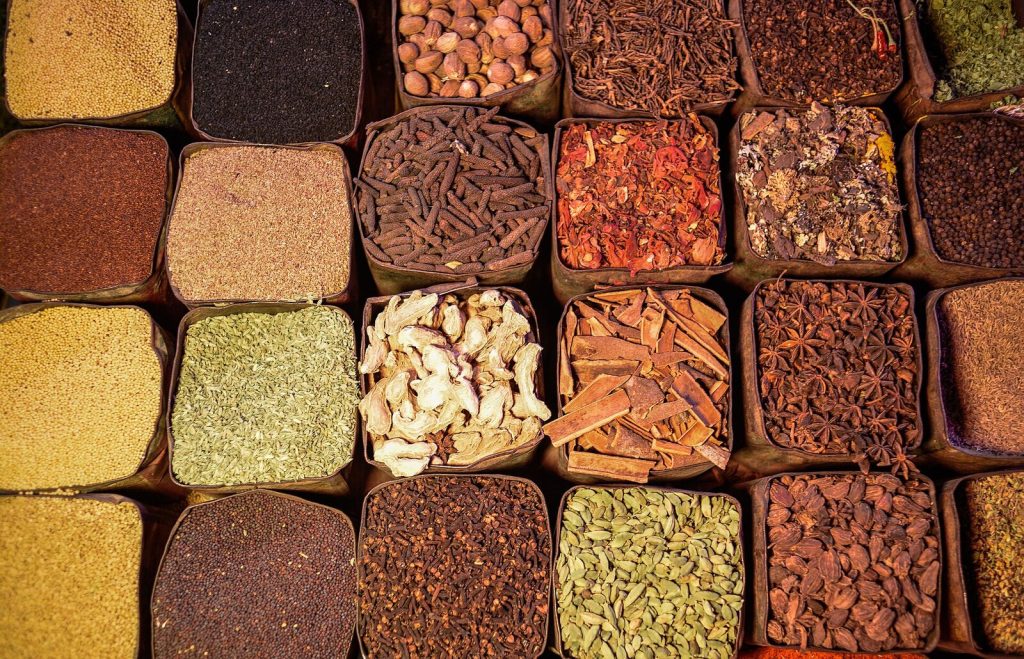
A spice trading business in Uganda is two businesses wearing one name. Ginger moves in tonnes at a low value a kilogramme and rewards haulage and turnover. Vanilla moves in kilogrammes at a value that attracts theft, and it rewards security and patience. Choosing which of those you are actually in comes before every other decision.
What Uganda Actually Has to Trade in Spices
Start with the size of the thing, because most writing on this subject implies a far larger trade than exists.
Across the six customs lines that carry the bulk of Uganda's spice exports, which are vanilla, ginger, turmeric, dried capsicum, ground capsicum and the pepper heading, the country's own declared export trade in a full year runs to under about five thousand tonnes in total. That is a modest number of truckloads. These are Uganda's own customs declarations to named trading partners rather than estimates made elsewhere, and the declared shipments add up exactly to the published totals for each line, so the figure is sound, small as it is.
The other half of the picture is what Uganda buys. Coriander, cumin and ground cinnamon all arrive as declared imports, and Uganda's declared turmeric imports outweigh its declared turmeric exports by roughly twelve to one. A domestic trader supplying grinders, packers and market stalls is competing against imported product on several of the best known spices in the kitchen, which is a different game from buying for export.
Two Spice Markets in One: Ginger by Volume, Vanilla by Value
Now split that trade by weight and by value, and the two businesses fall apart from each other.
| Line | Share of weight | Share of value |
|---|---|---|
| Ginger | About four fifths | About one seventh |
| Vanilla | About one twentieth | About four fifths |
| Chilli and pepper | About one sixth | About one twentieth |
| Turmeric | Very small | Very small |
Read those two columns against each other. Ginger carries most of the weight and little of the money. Vanilla carries almost none of the weight and most of the money. Everything about how you run the business follows from which column you are chasing.
Very few people do both well. The skills barely overlap, and the working capital behaves in opposite ways. Pick one, and get good at it before adding the other. The page on the most profitable spices to grow in Uganda covers the same crops from the grower's end, which is worth reading because it tells you what your suppliers' economics look like.
Why Spice Buyers Win on Cash Rather Than on Price
Here is the finding that should shape your whole offer, and it comes from measured Ugandan work rather than from folklore.
Farmers in cooperative and contract arrangements were found to sell outside those arrangements while the cooperative's own reported price was higher. They did it because the alternative buyer paid ready cash on the day, for school fees, for illness and for funerals. The society's committee knew, and enforced its own rules leniently, because it accepted that members needed money it could not supply. In a separate case the processor's own agents were offering non contracted farmers higher prices, faster payment and collection at the farm, and the contracted farmers got none of those three.
What competes with an organised buyer is liquidity, not price. The trader who pays cash for two sacks at the gate is solving a problem the group has not solved, and describing that trader as exploitative explains nothing and predicts nothing.
The discipline that goes with it is what separates a business from a problem. Cash on the day is the advantage; buying produce before it is ready is the abuse, and it is exactly what the authorities have moved against. Those two are easy to confuse because both look like getting there first.
Buying Inside the Declared Vanilla Harvest Season
Vanilla is the one Ugandan spice with a published trading calendar, and anyone buying it needs to know the rules before the season rather than during it.
Read that last line as a description of you, because that is how a district enforcement team will read it. The ministry also records that every time the price rises, cases of theft, loss of life and widespread premature harvesting follow. A buyer arriving in a village with cash before the declared date is not clever, they are the reason the ordinances exist.
On whether vanilla buyers must be licensed, the honest answer is that no licensing scheme or register of vanilla traders could be verified from the ministry's own published material, although press reporting has described officials warning farmers against selling to unlicensed buyers. Nothing is asserted here in either direction. Before a season opens, ask the district production office what registration applies to buying in that district, because this is exactly the kind of arrangement that changes and that an older article will get wrong. The vanilla farming guide covers the crop itself and the pollination to harvest interval the rule is built on.
Moisture, Drying and the Weight You Pay For
Every spice trade is partly a water trade, and a new buyer usually discovers this after paying for water.
Fresh ginger loses a large share of its weight on drying, and so does chilli. If you buy fresh by weight and sell dried by weight, the shrinkage is yours. If you buy from a farmer who has dried the crop badly, you are buying moisture you will lose in storage, plus a quality problem you have not seen yet. And if you buy well dried produce and then store it where it picks moisture back up, you have created a mould problem in your own store.
Three operating rules follow, and none of them needs a number to be useful. Decide at the point of purchase whether you are buying wet or dry, and price the two as different products rather than applying a discount in your head. Learn what properly dried produce of each crop feels and sounds like, because in most Ugandan buying situations that judgement is all you will have. And do not mix a wet lot into a dry consignment to make up weight, because it will heat, and you will lose the whole bag rather than the difference.
For the technical side of getting produce to a stable condition, the guide to spice drying and processing covers what each crop needs. It is worth reading even if you never dry anything yourself, because it tells you what to inspect.
Grading Spices, and Where a Market Premium Actually Exists
Do not assume that better produce gets paid more. Evidence from Ugandan markets on other crops is blunt about this: grading pays strongly on some commodities and not at all on others in the same districts. A blanket claim that quality is rewarded is one of the easiest ways to lose money in your first season.
So find out, crop by crop and buyer by buyer, whether a premium is actually paid. Ask your onward buyer for their grade specification in writing before you buy anything against it. If they will not give you one, they are not paying for grades, whatever they say. If they will, you have just been handed your purchasing standard and your argument with the farmer at the same time.
Vanilla is the clear case where condition is the whole value. An immature bean is a different product from a mature one and no amount of curing repairs it. At the other end, on a bulk line sold by the tonne into a processing chain, you may find that the market pays for weight and cleanliness and nothing else. Both situations are real and they need opposite buying behaviour.
Where the Market Price Comes From When No Ugandan Index Publishes It
No running Ugandan price series for these crops surfaced in the research behind this page, and that is worth stating as a limit on what anyone can tell you rather than as a proven absence. What is certain is that the published Ugandan figures which do exist are scattered and enormously wide.
What exists instead is scattered and wide. The ministry has reported Ugandan green vanilla reaching about UGX 250,000 a kilogramme at the farm gate at one peak and averaging about UGX 210,000 in a later period. More recent reporting from Kasese puts mature green beans at roughly UGX 14,000 to 20,000 a kilogramme. Both are Ugandan farm gate figures for the same crop, and the distance between them is more than a factor of ten. Earlier still, one documented collapse took the price from around UGX 150,000 a kilogramme to about UGX 1,000, and growers cut their vines.
Those are not competing estimates of one price, they are the same crop in different years and different conditions, and the span is the point. Your price discovery has to be a routine rather than a lookup. Call two onward buyers before you go out, agree what they will take and at what, buy against that rather than against a figure you read somewhere, and never commit to a farmer at a price you have not already placed. A trader holding stock bought at a price nobody will now pay is the commonest way this business ends.
Working Capital and Stock Turn: the Cost of Holding Spice
Your competitive advantage is paying cash on the day. Your constraint is that cash is finite and stock is not liquid.
Work the cycle out explicitly rather than in your head. Money leaves you at the farm. It comes back when the onward buyer pays, which may be on delivery, may be on a fixed day next month, or may be after an export consignment clears. Everything between those two points is your money sitting in a store, at risk of moisture, theft, pests and a price move. The number that matters is not your margin per kilogramme, it is how many times a season you can turn the same money over. A thin margin turned six times beats a fat one turned once.
Two practical consequences. Do not let a single buyer's payment terms set your whole cycle: a buyer who pays slowly is consuming your working capital even at a good price. And resist the temptation to speculate early on. Holding stock for a price rise is a separate business from trading, it needs capital you can afford to immobilise, and on a crop whose farm gate has moved by a factor of ten it is closer to gambling than to arbitrage.
Theft, Security and the Risks a High Value Harvest Carries
On the value side of this trade, security is a line in the budget rather than a precaution.
The ministry's own account is unambiguous that rising vanilla prices bring theft, premature picking and loss of life, and that the response has included district ordinances and stepped up police surveillance. A buyer holding cured or green beans is holding something a small group of people can carry away on foot and sell within a day.
Plan for it the way a business does, without publishing your arrangements to the village. Move value rather than store it, keeping the time between buying and delivering as short as the route allows. Vary your buying days and your routes. Do not carry large amounts of cash on a predictable schedule, and use mobile payment where the seller will take it. Keep your purchase records somewhere other than the store. And understand that on this crop your suppliers are exposed too, which is why a grower will often prefer a buyer who is discreet over one who offers a little more.
Storage, Packaging and What Ruins a Spice Consignment
Most losses in this trade happen in a store rather than in a negotiation.
The usual culprits are moisture picked up from a floor or a wall, mixing of lots so that one bad bag contaminates a consignment, insect damage in stored dried produce, and taint from whatever else the store holds. Spices carry aroma, which means they also absorb it. A store that has held fuel, agrochemicals, fish or soap will hand those notes to a consignment of dried chilli, and the buyer will reject it without being able to tell you exactly why.
The fixes are unglamorous. Keep produce off the floor and away from walls. Keep lots separate and labelled with where and when each was bought. Keep one clean store for spice and nothing else. Inspect stock rather than trusting it. And weigh everything in and everything out on the same scale, because a stock loss you cannot see is a stock loss you will blame on the wrong person. The guide to farm weighing scales covers what a working scale needs to do.
Selling On: Exporters, Processors and Domestic Market Buyers
There are three realistic exits, and new traders usually overestimate the third.
The first is selling to an established exporter. You are then a supplier inside somebody else's compliance system, which is usually the right place for a new business to be. The second is selling to domestic processors, grinders and packers, who buy dried product to a specification and pay on their own terms. The business of grinding and packing is itself a separate enterprise, covered on the page about the spice grinding and packaging business.
The third is exporting yourself, and it is a much larger step than it appears. Export turns on registration, on a pack house, on traceability back to the producer and on meeting the importing country's requirements rather than your own. Uganda's horticultural sector has lived through export restrictions over plant pests and pesticide residues, and chilli in particular has a history there. Read the basics of agricultural export before assuming this is a step you take in year one. For most people starting out, the honest route is to be an excellent traceable supplier to somebody already registered.
One line deserves a specific warning. The customs heading covering pepper of the Piper genus shows meaningful Ugandan export volumes, and it is not evidence that Uganda grows black pepper. That line moves inversely to the dried chilli heading with the two summing to a broadly stable total, and its unit value runs at roughly half the world price for pepper. Goods moving between neighbouring customs codes, or pepper grown elsewhere passing through, fit that pattern better than a Ugandan crop does. The page on black pepper farming in Uganda sets out the full audit. Do not build a buying programme on that heading.
Where Spice Trading Businesses Lose Money in Uganda
Registering the Business and Recording Every Farm Purchase by Weight
The usual obligations of any trading firm apply. Register the company, take out a tax identification number, and meet the trading requirements of each local authority you buy in. Buying agricultural produce also brings you into contact with district production and commercial offices, and for vanilla with the seasonal declarations and any district ordinance in force where you buy. Because arrangements of this kind have been reorganised more than once in recent years, confirm the current position with the district office rather than with an older source. The guide to registering an agribusiness in Uganda covers formation, and this page sits inside the wider agribusiness section.
The record that matters most is the simplest. Date, village, seller, crop, condition, weight, price per kilogramme, total paid. Then the same four fields again on the sale side. That single sheet gives you your real cost per kilogramme, your drying and handling loss, your turn, and which villages and which sellers are worth going back to. Without it you have a cash box and an opinion. The farm record keeping guide sets out the habit, and how to negotiate with produce buyers covers the other side of the table, which is useful reading when you become the buyer.
Frequently Asked Questions
Before buying anything, get one onward buyer to put their specification and their price basis in writing, then price a single realistic buying round against it including transport, loss and the days your money will be out. Directories such as where to buy ginger in bulk and where to sell vanilla are places to start mapping who is already trading in your crop. The related produce buying business guide covers the general grain and produce version of the same trade, which behaves differently from spice on almost every point.