
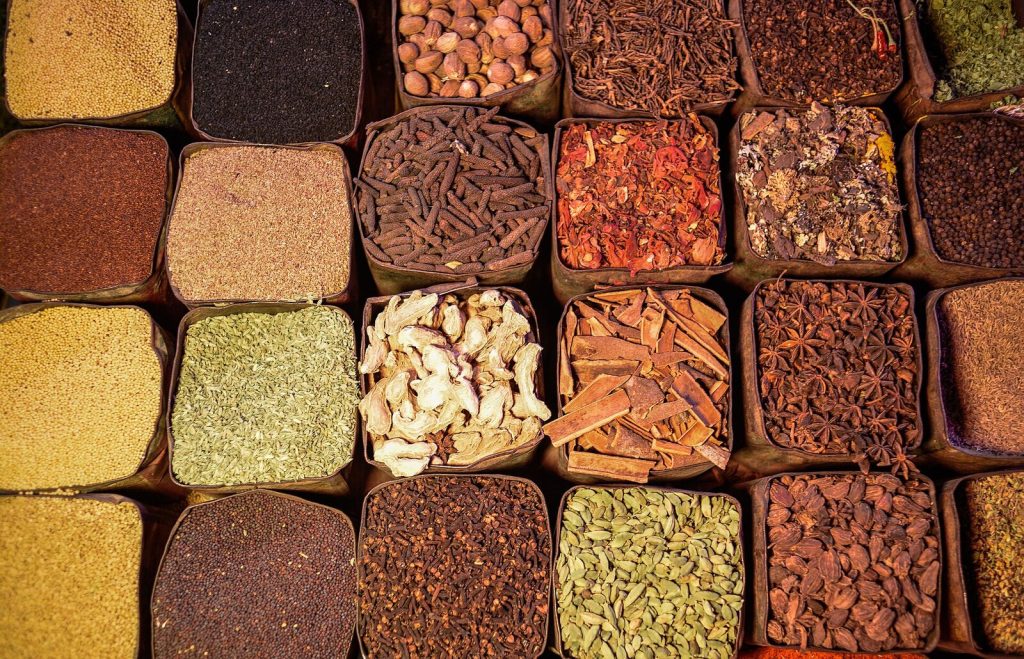
The most profitable spices to grow in Uganda are the ones the country can actually dry, grade and sell: vanilla, ginger and chilli. Ranking on world spice prices puts cloves and cardamom near the top, and both are wrong for Ugandan land. Spices are the storable crops grown for seed, bark, rhizome or fruit, and storability is what gives them a wider market than herbs.
Price Per Kilogramme Is the Wrong Way to Rank Spice Farming in Uganda
Almost every ranking of profitable spices in Uganda is really a ranking of world spice prices with a Ugandan headline on it. Saffron, cardamom, vanilla and cloves top those lists because they cost a lot in a supermarket in Europe. That tells a Ugandan farmer nothing useful.
A price per kilogramme is only money if three other things are true. You have to be able to grow the plant where you are. You have to be able to get the harvest to a sellable grade, which for most spices means drying it correctly. And somebody has to buy it from you. Fail any one of those and the world price is irrelevant.
Cloves make the point bluntly. Clove is one of the higher value spices in world trade and Uganda is absent from every clove production series this project could reach, while trade records show the country importing small quantities and exporting none. So a list that puts clove high for Uganda has ranked a price, not a crop. The detail sits on the clove farming page.
What follows ranks in bands rather than in an order of one to ten, and the reason is honesty. For most of these crops there is no Ugandan yield trial, no published tonnage and no reliable farm gate series, so a confident numbered ranking would be invented. Bands say what is known, what is plausible and what is unsupported, which is more useful than a false order.
What Uganda Exports and What It Imports Are Two Different Spice Baskets
Here is the fact that reframes the whole import substitution pitch, and no competitor page notices it.
Uganda imports roughly 98 percent of the spices used domestically, according to the founder of the Uganda Fruits and Spice Growers Association, who also puts the number of Ugandans in commercial spice cultivation at fewer than twenty, with fewer than eight on plots above five acres. The same source records Ugandan spice exports exceeding Ugandan spice imports in value.
Both statements can be true at once, and they are, because the two baskets contain different products. Uganda exports vanilla and chilli. It imports black pepper, cardamom, cinnamon, cloves, cumin and turmeric. The country is not short of spice production in general; it is short of production of the specific spices it buys from abroad, and those are mostly the ones its climate handles badly or its growers have never dried to grade.
Which means the standard argument, that Uganda imports spices so growing them must pay, quietly assumes you can grow the things Uganda imports. That assumption is exactly where the ranking has to do some work.
The Six Tests This Ranking Scores Each Spice Against
Profitability here means value per acre per year, net of whichever input dominates, adjusted for how long you wait and how likely you are to be paid. Score your own site against these and you may well move a crop up or down a band, which is the point of showing the method.
Band One: Vanilla Farming and the Highest Price Per Kilogramme of Any Ugandan Crop
Vanilla is the one spice where Uganda has everything the others lack: a large grower base, a licensed exporter trade, government involvement in the harvest calendar, and a buyer community that knows the country's product. MAAIF has stated plainly that vanilla is the single crop in Uganda with the highest price per kilogramme, and its own sector statements describe the crop as grown in 25 to 28 districts across Central, Western and Eastern Uganda, with one ministry statement putting the number of Ugandans involved in growing it above 150,000.
Set that against fewer than twenty commercial spice growers nationally and the contrast is the whole argument. Uganda does not have a spice sector with vanilla in it. It has a vanilla sector and a handful of other spice growers.
The production figures are real too. MAAIF reported Ugandan output of about 300,000 kg of vanilla in one year with about 23,000 kg of cured vanilla exported, and put Uganda at roughly 5 percent of global production against Madagascar's 1,500 to 1,800 tonnes a year, with world consumption running between 2,100 and 2,400 tonnes annually.
Now the reason vanilla is band one and still dangerous. Farm gate prices for green beans reached about 250,000 shillings a kilogramme at the top of the last boom. Current reported farm gate prices for mature green vanilla in Kasese, one of the country's main growing areas, run in the region of 14,000 to 20,000 shillings a kilogramme. That is the same crop, the same districts, and a fraction of the money. Earlier still, Ugandan reporting records a collapse from about 150,000 shillings a kilogramme to about 1,000, which drove farmers to cut their vines down.
Two more things a profitability page owes you. Vanilla flowers must be hand pollinated, each flower lasts one day, and pollination has to happen that morning; published practice puts the working window at about 6 am to 1 pm and reckons an efficient worker can pollinate 1,500 to 2,000 flowers in a day. And when the price rises, theft rises with it. MAAIF's own statements describe theft, loss of life and widespread premature harvesting following every price rise, and the government response has been district ordinances, declared harvest dates and police surveillance. Harvest windows are declared by the ministry each season and harvesting outside them gets produce impounded, so the calendar is not advisory.
Full agronomy is on the vanilla farming guide, the establishment budget on the vanilla farming costs page, and hand pollination on the vanilla pollination guide.
Band One: Ginger Farming, the Most Solidly Commercial Rhizome to Grow
If vanilla is the highest value and the most volatile, ginger is the most dependable spice enterprise in Uganda, and it is the one with the best verified numbers behind it.
Seed rate is 600 to 1,000 kg of rhizome per acre. Fresh yield runs 6 to 10 tonnes an acre under good management, with 5 tonnes an acre as the sensible Ugandan planning figure. Fresh ginger has traded at around 3,000 shillings a kilogramme in a bumper harvest and towards 6,000 in scarcity. Maturity comes at eight to ten months, and dry recovery is 15 to 25 percent of fresh weight. Every one of those figures is carried across the ginger pages on this site and none of them is invented.
The defining economic feature of ginger is that its largest cost is the crop itself. Seed rhizome is the dominant line in the budget, and it is priced off the market price of ginger. So the season when ginger is expensive is the season when planting is expensive, and the trap closes on anyone who buys seed at a scarcity price and harvests into a glut. Nothing else in this ranking behaves that way.
Ginger also has the shortest honest distance between harvest and sale of any spice here. It sells fresh. No curing, no fermentation, no peeling skill, no pollination. The ginger farming guide covers the crop, ginger yield per acre works through the yield claims, and ginger farming costs per acre builds the cost stack.
Band One: Chilli Farming and the Dried Spice Uganda Already Exports
Chilli earns its band one place for one reason: it is in the documented Ugandan export basket. Surveys of Uganda's horticultural export trade list hot pepper, chillies and okra among the main products going to Europe, alongside matooke, apple banana, pineapple, passion fruit, avocado, mango, sweet potato and ginger. Culinary herbs do not appear in that basket. Chillies do.
Bird's eye chilli in particular is a genuine Ugandan export product, dried rather than fresh, which puts it in the storable category where traders can hold stock and a small grower can sell in lots rather than in daily loads.
The risk attached to chilli is market access rather than agronomy. Uganda has previously imposed a ban on its own chilli and other horticultural exports over plant pests and high pesticide residues, and a remedial programme managed by CABI worked on integrated pest management, food safety and export compliance, with inspectors now working at Entebbe around the clock and interceptions recorded by the ministry. That history is worth knowing before you plant for an exporter: the crop's route to market has been closed once and it was closed by pest and residue problems at farm level. Detail sits on the chilli farming guide and the bird's eye chilli page.
Band Two: Turmeric Farming Where the Crop Works and the Market Does Not
Turmeric grows in Uganda. That much is settled: it is on retail sale as Ugandan produce, and NARO's coffee research institute names it among the spices inside its research mandate as an intercrop in coffee and cocoa systems. What does not exist is a Ugandan released variety, a Ugandan yield trial, or any published national tonnage.
The yield gap is where the money question lives. Indian research figures for fully irrigated turmeric put fresh yield at 25 to 30 tonnes a hectare, roughly 10 to 12 tonnes an acre, with cured yield at 5 to 6 tonnes a hectare and dry recovery around 20 percent of fresh weight. Ugandan farm press reports up to about 3 tonnes an acre fresh on a well managed plot. That is a threefold to fourfold gap, and it is a gap between fertigated research plots and rainfed smallholder ground, not a gap a Ugandan farmer can close by trying harder.
The market is the second problem. Most turmeric consumed in Uganda is imported, and a grower is competing with Indian bulk product on price at the point of sale. Turmeric also needs real processing before it is worth anything: boiling, drying, polishing and grading, with buyers paying on colour and curcumin. The turmeric farming guide covers the crop and turmeric processing and drying covers the part that decides the grade.
Band Two: Garlic Farming and an Arithmetic Problem in the Headline Figures
Garlic belongs in band two because there is genuinely a large Ugandan market for it, mostly served by imports from China, Egypt and South Africa, and because it grows well in the cooler higher ground. Ugandan reporting describes garlic being grown twice a year on the Rwenzori slopes.
It is also the crop with the most quoted profit headline in Ugandan farm media, and that headline does not survive its own numbers. Work through what the reporting actually says.
None of that makes garlic a bad crop. It makes the published Ugandan garlic economics unusable as a plan. Two things about garlic are solid and worth acting on: planting material is the dominant cost, and buying eating garlic by mistake instead of seed garlic is a documented way to lose the crop, because the two look identical and only seed garlic is lifted late enough to sprout reliably.
Band Two: Coriander Seed, Cheap to Plant and Hard to Dry Here
Coriander is the crop that straddles the herb and spice boundary, and it is worth knowing which half you are farming because the economics are not the same. Cut early for leaf it is dhania, a herb, and it is covered on the companion page about the herbs worth growing commercially in Uganda. Left to set seed and dried, it is coriander seed, a spice.
As a spice it has the cheapest establishment on this entire page. Indian cultivation guidance puts the seed rate at 12 to 15 kg a hectare under irrigation, 20 to 25 kg rainfed, which is about 5 to 10 kg an acre. Seed yields across released Indian varieties run 6 to 14 quintals a hectare, so roughly 240 to 570 kg an acre.
The problem is the drying end, and it is a climate problem rather than a skill problem. The same guidance is explicit that dry and moderately cool weather during seed formation raises both yield and quality. Uganda's rain seasons do not reliably deliver a dry spell at seed set, and coriander seed that dries slowly in humid air loses quality and risks mould. So a Ugandan grower can establish the crop for almost nothing and then lose the value at the last step. Which is why the leaf, not the seed, is the sensible Ugandan coriander business for most sites. The coriander farming guide works through both.
Band Three: Black Pepper Farming, the Best Climate Fit and the Longest Wait
Black pepper is the most interesting crop on this page, because it is the one Ugandan import the country's climate might genuinely be able to replace.
Published Indian requirements put black pepper between 20 degrees north and south of the equator, up to about 1,500 m altitude, at an ideal temperature near 28 degrees Celsius, with relative humidity of 75 to 80 percent and well distributed annual rainfall of 1,250 to 2,000 mm. Uganda's lake basin sits inside every one of those bands, which is more than can be said for cinnamon, cardamom or clove. Yields from Indian released varieties run 1,098 to 2,880 kg of dry pepper a hectare, with dry recovery of 28 to 39 percent of fresh weight, and that per hectare value is substantial by any measure.
What holds black pepper in band three is time and evidence. It is a perennial vine that must be trained up a living or dead standard, it takes years before a commercial picking, and there is no Ugandan yield figure, no Ugandan variety and no Ugandan trial anywhere this research could reach. The association founder cited earlier grows it on a small scale, which is the extent of the documented Ugandan production. A grower planting black pepper is running the trial. The black pepper farming guide covers the crop.
Band Three: Cardamom Farming and the Fifteen Million Shilling Claim
Cardamom in Uganda is green cardamom, one introduced Mukono estate and its out grower groups, with planting material originally brought from South India. It is not an industry, no national area or tonnage is published, and black cardamom is not grown here at all.
The figure that circulates is 15,000,000 shillings from one acre, and it fails twice on its own arithmetic. The arithmetic printed in the source is 500 seedlings an acre times 10 kg per plant times 3,000 shillings a fresh kilogramme. The first fault is that the same article calls 5 kg a season the average and 10 kg the record, so the multiplier is the best case. The second is bigger: 5,000 kg of fresh capsules an acre is about 1,000 kg dried an acre, roughly 2,470 kg a hectare, against the roughly 400 kg a hectare that Indian area and production figures actually imply. That is about six times the Indian benchmark, claimed for a crop with no local variety work.
Cardamom also carries a long wait, first bearing at about two to three years, and a picking regime of small repeated harvests every fifteen to twenty five days, which is a labour pattern rather than a harvest. The full audit is on the cardamom farming guide.
Band Four: Why Cinnamon, Clove and Cumin Farming Do Not Belong on This List
Three crops appear high on competitor rankings for Uganda and should not be on the list at all. Saying so is the most useful thing this page does.
Clove. Uganda is absent from the clove production series, which carries Indonesia at roughly 137,600 tonnes, Madagascar about 24,300, Tanzania about 8,600, Comoros about 7,100, Sri Lanka about 5,700, Kenya about 2,000 and China about 1,300. Trade records show Uganda importing cloves and exporting none. A clove tree also takes four to eight years to flower and reaches full bearing around its fifteenth year, yielding two to four kilogrammes of dried buds. What exists in Uganda is a brisk trade in clove seedlings, not a clove crop.
Cinnamon. Sri Lanka's cinnamon authority puts the commercial altitude ceiling at 700 m and Indian guidance at about 1,000 m. Uganda's lake basin, where cinnamon is actually planted, sits at roughly 1,100 to 1,200 m, above both. The largest documented Ugandan planting found anywhere is in the region of 2,000 trees on about 2.6 hectares. Reported Ugandan practice also waits about ten years for bark, where coppiced Sri Lankan practice takes the first cut at two to three years, and bark from a ten year old trunk is hard and will not peel into graded quills. The crop survives at Ugandan altitude; the graded product is what is missing.
Cumin. This is the one most likely to catch a reader, because a figure of up to four million shillings an acre from cumin circulates in Ugandan farm content, set against under 500,000 from maize. Indian government cultivation guidance is unambiguous that cumin is a seed crop of a moderately cool, dry season, that germination is harmed above 30 degrees Celsius and below 10, that the crop prefers low temperature during its vegetative phase, and that humidity during flowering and fruiting raises pest and disease incidence. It is grown mainly in Rajasthan and Gujarat. Released variety yields run 515 to 700 kg a hectare, which is only about 208 to 283 kg an acre. Uganda has no cool dry season, has humidity year round, and would be asking a blight prone crop to flower in the wet. The four million shilling figure rests on a yield Uganda has no basis to expect. The cumin farming guide goes into the detail.
Nutmeg and fenugreek sit in the same band for similar reasons: no Ugandan production record, and in nutmeg's case a wait measured in many years before a tree even reveals whether it is female and will fruit at all.
Spice Farming Costs Per Acre and What the Money Actually Buys
Spice establishment costs split into three shapes, and knowing which shape you are buying matters more than knowing a total. No single total in shillings appears here, because on several of these crops the dominant line moves by several multiples and any total would be false precision.
| Spice | Dominant cost | First harvest |
|---|---|---|
| Ginger | Seed rhizome | 8 to 10 months |
| Turmeric | Seed rhizome | 7 to 9 months |
| Garlic | Seed cloves | Under a season |
| Coriander seed | Very low | About 3 months |
| Chilli | Seed and spray | Within a year |
| Vanilla | Pollination labour | Third year |
| Cardamom | Seedlings, waiting | Two to three years |
| Black pepper | Standards, waiting | Several years |
The first shape is a rhizome or clove crop, where you buy the crop to plant the crop. Ginger, turmeric and garlic all work this way, and in all three the planting material is the largest single cost and is priced off the market price of the product. Budget for it to rise exactly when you least want it to.
The second shape is a cheap seed crop. Coriander at 5 to 10 kg an acre and chilli from seed cost almost nothing to establish, which makes them the right crops to learn on. The cost then sits in labour, in crop protection for chilli, and in drying.
The third shape is a perennial, where the real cost is years of land, weeding and care before any income. Vanilla, cardamom and black pepper all belong here. Occupying an acre for three years is a cost even when no cash leaves your hand, and it is the cost that spice profitability articles routinely leave out. The farm profit calculator and the break even calculator will let you put your own numbers against each shape.
Value Per Acre Per Year Set Against Years Until First Harvest
Here is the comparison that actually answers the title, done in the open so you can disagree with the assumptions rather than with the conclusion.
Two conclusions come out of that. Vanilla wins on value per acre and loses badly on volatility, theft and the three year wait. Ginger wins on certainty, speed and the existence of a buyer, and it is the right answer for most growers most of the time.
What to Verify Locally Before Committing Land to a Spice Crop
Because the Ugandan data is thin, the useful work is local verification, and it is work a farmer can do in a week.
Start with a buyer, and get a weight and a price out of them rather than an expression of interest. For vanilla that means finding out which licensed processors and exporters buy in your district and what they pay for green beans against cured. For ginger and turmeric it means the wholesale market and any processor within reach. For chilli it means an exporter, and it means asking about their pest and residue requirements before you spray anything.
Second, confirm your own altitude and rainfall against the requirement for the crop, not against a general claim that the climate suits spices. The altitude ceiling is what rules cinnamon out of the lake basin and what makes black pepper plausible there.
Third, price the dominant input where you live, this season. A ginger budget built on last season's seed price is not a budget. Fourth, ask who else nearby is planting the same thing, because a district that plants one crop together sells it together and gets a glut price.
Finally, find out what drying and grading facility you will use before harvest, not after. On turmeric, cardamom, coriander seed and chilli, the grade decides the price, and grade is made after the crop leaves the field. Guidance on both ends sits in spice drying and processing and selling produce to processors, with contract farming explained covering what an exporter agreement should say.
One safety note that belongs on a vanilla page and rarely appears. Vanillin poisoning from handling large quantities is a recognised occupational hazard, with headache, gastric upset and skin rashes reported, and the sap of the vanilla plant can cause severe allergic reactions including itching, rashes and inflammation. Anyone planning to pollinate and cure at scale should plan for gloves and for sensitive workers reacting.
Questions Growers Ask About Profitable Spice Farming in Uganda
Which spice gives the most money from one acre in Uganda? On value per acre per year, vanilla, and by a wide margin, because MAAIF itself describes it as the Ugandan crop with the highest price per kilogramme. That comes with a three year wait before the first harvest, hand pollination inside a one day flowering window, a farm gate price that has fallen from about 250,000 shillings a kilogramme of green beans to a small fraction of that, and a theft problem serious enough that harvest dates are declared by the ministry and enforced. Ginger returns less per acre and returns it in under a year with far less that can go wrong.
Is vanilla still worth planting after the price crash? It is still the highest priced crop in the country per kilogramme, and it is still the only spice here with a deep buyer network. What has changed is that nobody should plant it expecting boom prices. Plant it as a perennial that will see at least one more price cycle in its productive life, on land you can afford to have occupied for three years, and only if you can secure the vines against theft. Anyone who cannot do those three things should plant something annual.
How long before a spice crop pays anything? Coriander seed in about three months, garlic inside a season, turmeric at seven to nine months, ginger at eight to ten, chilli within the first year, cardamom at two to three years, vanilla from the third year, and black pepper after several. That range is the single most useful thing on this page, because a crop that pays in three years is not competing with one that pays in eight months even at ten times the price.
Can I grow cloves, cinnamon or cumin commercially in Uganda? On the evidence, no for all three, and anyone selling you seedlings for them is selling a seedling rather than a crop. Uganda appears in no clove production record and imports cloves. Cinnamon's commercial altitude ceiling sits below the Ugandan basin where it is planted, and Ugandan practice waits so long for bark that it cannot be peeled into graded quills. Cumin needs a cool dry season Uganda does not have and gets blight when it flowers in humidity.
Which spice is cheapest to start with? Coriander, at about 5 to 10 kg of seed an acre, followed by chilli from seed. Both are annuals, both give you a harvest inside a year, and neither asks you to buy several tonnes of your own crop to plant with. If the cash available is small, start on one of those and learn the drying and the selling before you put money into a rhizome crop or a perennial.
How do I find a buyer for a spice nobody grows here yet? Usually you do not, and that is the honest answer for most of the import substitution crops. A processor or exporter buys to a specification and a volume, and neither is served by one grower with a first harvest of an unfamiliar crop. The realistic route is a group: several growers aggregating to a volume a buyer can work with. Start with how farmers find produce buyers and farmer aggregation, and treat a crop with no buyer as an experiment funded from something else.
What is the most common mistake in Ugandan spice farming? Planting on a headline figure. Almost every large per acre number circulating for Ugandan spices turns out to be a top of range yield multiplied by a top of range price, sometimes with the seed cost left out entirely. The garlic figures audited above are gross revenue against a seed bill of roughly the same order. Take any figure you are shown, ask what yield and what price it assumes, and check whether those two things have ever happened in the same season.
Are spices better than herbs for a small plot? Spices dry and store, so you can hold stock and sell to traders, and the market is wider. Herbs pay faster and on less land, and their market fills up quickly. A small plot often does best with one of each: a quick leaf crop for cash flow and a storable spice building alongside it.
Checking Current Spice Prices and Buyers Before You Plant an Acre
Every price on this page is a band, and that is deliberate, because Ugandan spice prices move with the season, with how many growers harvested at once, and with whether you are selling green, fresh, dried or graded. Before any land is committed, get a current quote from the buyer you intend to sell to, in writing if they will give it, and ask what grade it applies to. Walk the nearest wholesale market and ask what is moving. Check what the same spice imported from India or China is selling for locally, because that is the price your product will be compared against. Current Ugandan produce prices are tracked in the prices section, buyer directories for the crops covered here sit at where to sell ginger, where to sell turmeric and where to sell vanilla, and the spices and herbs hub collects every crop guide referenced above. A confirmed price from a real buyer beats any ranking, this one included.