
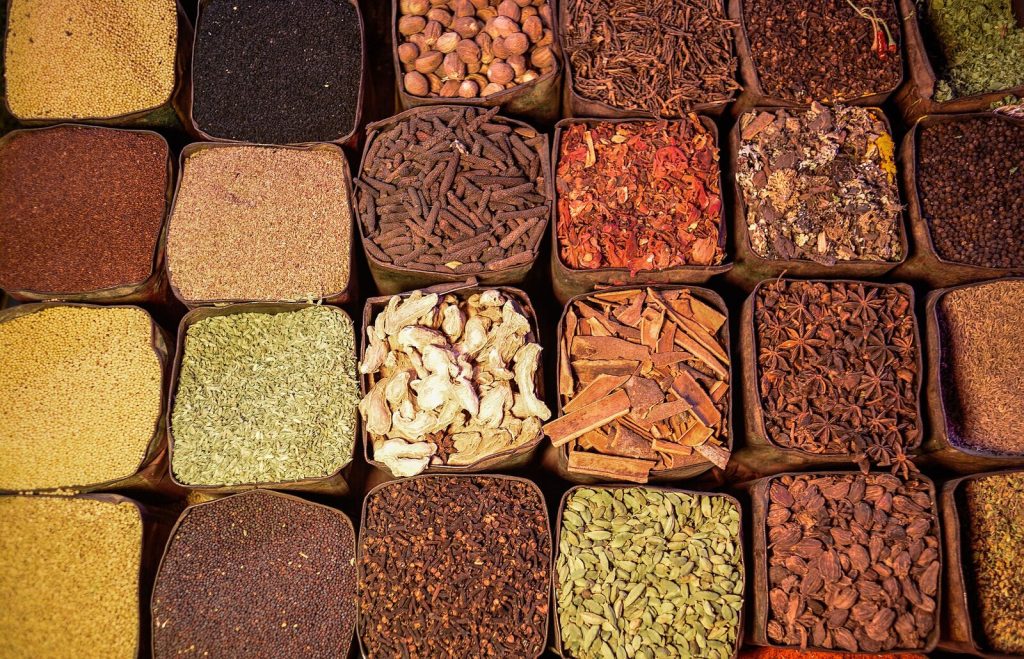
Coriander farming in Uganda splits into two enterprises that share a plant and almost nothing else. Leaf coriander, the dhania sold in bunches, is pulled at around two months and moves fresh into town markets. Seed coriander wants a dry ripening spell that most of Uganda does not get. Pick which one you are farming before you buy a gram of seed.
Leaf Coriander and Seed Coriander Are Two Different Farming Enterprises
Coriandrum sativum is one species with two completely separate uses, and the split is not a matter of preference. It is set by climate. Plant Resources of South East Asia, the standard reference work on the crop, puts it plainly: coriander grown for its fruit, meaning the dried seed, is found in tropical highlands, subtropics and temperate regions, while in the lowland tropics it is grown as a green herb. Uganda sits in the second group across most of its farmland.
That one sentence decides your harvest date, your buyer, your cash flow and your risk. A leaf crop is a vegetable. A seed crop is a dried commodity. They behave nothing alike.
Where Coriander Seed Production Runs Into Uganda's Rainfall
Coriander for seed asks for two things Uganda gives unevenly: enough accumulated warmth during vegetative growth, and dry weather at ripening. The first is easy here. The second is the problem. The literature is explicit that only high temperatures together with dry weather during ripening give fruit of acceptable quality, and that the accumulated temperature over the vegetative period needs to clear about 1,700 degrees. Warmth Uganda has in abundance. Dry ripening weather is scarce and short.
Uganda's national climate averages, taken from the World Bank climate portal using the CRU gridded dataset over a thirty year reference period, put mean annual rainfall at about 1,280 mm and mean annual temperature at about 23 degrees. The monthly pattern matters more than the total. Read these as country wide spatial averages, which smooth over a wet lake crescent and a much drier northeast, so treat them as a shape rather than a reading for your own plot.
| Month | Rain mm | Seed ripening |
|---|---|---|
| January | 51 | Driest, usable |
| February | 49 | Driest, usable |
| March | 109 | Rain returns |
| April | 156 | Wettest, avoid |
| May | 147 | Too wet |
| June | 93 | Marginal |
| July | 90 | Marginal |
| August | 119 | Too wet |
| September | 121 | Too wet |
| October | 154 | Wettest, avoid |
| November | 117 | Too wet |
| December | 74 | Drying out |
Two months of genuinely low rainfall, December leaning dry at the front. A crop sown in October or early November flowers around late December and ripens through late January and February, which is the one window that lines up. Sow at any other time and the umbels fill while it rains. Ripe coriander also shatters when touched, so a downpour on a ready crop takes the seed off the plant and onto the ground.
Growers in the drier north and northeast have a longer dry spell to work with and a better chance at a clean seed harvest. Growers in the wet crescent around Lake Victoria should read this section as a reason to farm the leaf and buy their seed spice, which is what the country already does.
Soil, Seed Rate and Plant Population for Coriander Farming Per Acre
Coriander wants at least a sandy loam, though it also does well on loam and on clay so long as the drainage is real. Phosphorus and potassium are the nutrients that most often run short on this crop, while nitrogen demand is modest, which is the opposite of what a lot of circulating advice says. A soil test beats any general recommendation on this crop, and there is a fuller explanation of what a soil test tells you.
Seed rate is where published Ugandan guidance goes badly wrong, so here is the arithmetic instead of a number to trust.
Your own bed width and row spacing will land on a different figure, and working a plant population out from spacing shows the steps.
Planting Coriander: Direct Sowing Instead of a Nursery
Coriander makes a taproot. Taproot crops resent being lifted and replanted, which is why the crop is sown where it will grow rather than raised in a nursery and transplanted. Any guide telling you to raise coriander seedlings for two months and then transplant them at 60 cm by 15 cm has confused this crop with something else.
Two small preparations lift germination noticeably. Coriander fruit carries a dormancy that a spell of sun or a gentle heat treatment after harvest or before sowing will break. And the fruit is a schizocarp holding two seeds, so splitting it into its two halves both raises the germination percentage and lets you space the plants more evenly. Germination runs best around 17 to 20 degrees for small fruited types and 22 to 27 degrees for larger fruited ones, and the seed will come up anywhere above about 4 degrees, so temperature is not a constraint anywhere in Uganda.
Keep the surface damp but not soaked until the seedlings show. After that, coriander is fairly tolerant of dry spells once the stem has begun to elongate, though it becomes sensitive to cold at that point. Weed twice, and treat the first weeding as the one that decides the crop, because a young coriander stand loses to grass easily.
Growing Dhania for the Fresh Leaf Market
This is the enterprise that actually works in most of Uganda. Whole young plants are uprooted at around 60 days from sowing, trimmed, and tied into bunches. Where a suitable type is grown, several cuts are possible rather than a single pull, which stretches the harvest across weeks and smooths the cash coming in.
Leaf coriander is a short cycle vegetable and should be planned like one. Stagger your sowings a fortnight apart so you have something to cut every week rather than one wall of produce that arrives when everyone else's does. Grow it in blocks small enough that you can cut, bunch and deliver the same morning, because coriander leaf wilts fast and a wilted bunch is worth nothing. The reference yield for fresh coriander herb reaches 24 tonnes per hectare under good conditions, which is roughly 9.7 tonnes per acre, and that figure comes from intensive production rather than a rainfed bed.
The leaf is eaten raw and usually unwashed, which puts a hard limit on what you may spray and when. Nothing goes onto a crop inside its stated pre harvest interval, and for a herb going onto a plate uncut and uncooked, that interval is not a guideline. If you cannot read the interval off the label, the crop does not get sprayed.
Growing Coriander for Seed and Drying It Properly
A seed crop is cut or uprooted when the fruits on the primary umbel are ripe and shatter at a touch. Because the umbels of different orders ripen in sequence rather than together, the plants are gathered into sheaves and left to finish ripening and drying in the field. Thresh gently. Split fruits are downgraded, and the world market for medicinal grade coriander will not take them at all.
Dried thoroughly and kept dry, coriander fruit holds its aroma for several years, because the oil sits in ducts inside the fruit wall. Crush it and that aroma leaves within weeks. Which is the whole argument for selling whole seed and grinding only to order, a point developed further on spice drying and processing. Watch stored seed for the biscuit beetle, which will work through a sack of dried umbelliferous fruit given the chance.
Coriander fruit runs between almost nothing and about 2 percent volatile oil, with linalool making up more than 60 percent of it in most types. Small fruited types carry the most oil. That is the difference between a cooking spice and a distillation feedstock, and it is worth asking a seed seller which type they are selling you.
Coriander Pests and Diseases in a Humid Climate
The diseases that matter on coriander travel on the seed. A seed borne bacterial blight, Pseudomonas syringae pv. coriandricola, can take a serious bite out of a crop, and Fusarium and Ramularia are the fungal problems named in the literature. All three are addressed at the same point in the cycle, which is before sowing: clean seed from a known source, and heat or chemical treatment of the fruit where that is available.
On the insect side, fruit damage from a chalcid fly is reported where coriander is grown for seed, and stored fruit is attacked by the biscuit beetle. Nothing here calls for a spray programme on a smallholding.
A note on chemicals, because this is a crop eaten raw. No rate, dilution or spray interval appears on this page, and you should distrust any page that gives you one without naming a label. Whatever you use has to be registered in Uganda for use on a leafy food crop, applied at the rate printed on the container, and kept clear of the pre harvest interval. A district extension officer will confirm what is currently registered. Reading the container properly is a skill in itself, covered on how to read agrochemical labels.
Coriander Yield Per Acre and the Figures That Do Not Hold
Coriander seed yields are modest and the range between rainfed and irrigated is enormous. Rainfed crops usually give 400 to 700 kg of fruit per hectare, irrigated crops usually about 2 tonnes per hectare, and the top of the recorded range exceeds 4 tonnes per hectare. Per acre that is roughly 160 to 280 kg rainfed, and around 810 kg with irrigation.
Set that beside world production and the scale of this crop becomes clear. The global coriander area is around 550,000 hectares producing roughly 600,000 tonnes of fruit, dominated by Ukraine, Russia, India, Morocco, Argentina, Mexico and Romania. The area grown as a fresh culinary herb is a fraction of that, around 20,000 hectares worldwide, and much of it never leaves a local market. Nobody publishes a Ugandan coriander area or production figure, and searches of the research literature turn up no Ugandan coriander trial at all. That absence is itself worth knowing before you plan around a per acre projection.
Selling Ugandan Coriander and the Ceiling Nobody Mentions
Here is the part promotional pages leave out, and on coriander it has a twist the other herbs do not have. Fresh dhania goes to restaurants, hotels, supermarket fresh counters and town produce stalls. That trade pays reasonably and it fills from a very low volume, which is how a grower ends up with excellent leaf and nowhere to put the third crate. The buyer is the binding constraint on this enterprise, not the agronomy.
What coriander offers that a perennial herb cannot is a way out of that corner. A block you cannot shift as leaf can be left standing and carried through to seed instead, turning a perishable you could not move into a dried commodity that keeps for years. That option is worth more than it looks, and it is the practical reason to know both enterprises even if you mean to farm only one. It runs one way, though. Once the leaf is cut, there is no umbel.
So sow in staggered blocks against orders you actually hold rather than against the acre you own, agree volumes and delivery days before the seed goes in, and keep one block uncut as the fallback. Getting onto a kitchen's weekly order list is its own skill, covered on how to supply hotels and restaurants, while how farmers can find produce buyers takes the wider question.
The dried seed market is a different animal and worth a hard look before you chase it. Uganda's own customs returns to the UN trade database show the country importing whole coriander seed year after year, rising from around 15 tonnes to a little over 50 tonnes in each of two recent years, with India as the main origin at roughly one and a half to two US dollars a kilogram. Exports are close to nil, one shipment of about a tonne of ground coriander aside. One of those import lines carries an implausible unit value of a few cents a kilogram, so read the tonnage as approximate, but the direction is not in doubt. The seed on a Ugandan kitchen shelf came in through a port. A grower entering that trade is competing with landed Indian seed on price, which is a different and harder proposition than selling a bunch of leaf to a hotel. Coriander sits inside the wider picture set out on the spices and herbs hub, where the same import dependence shows up across nearly every minor spice.
What the Circulating Ugandan Coriander Guides Got Wrong
A large share of the coriander growing advice written for Uganda descends from a single newspaper feature, and that feature is a celery guide with the crop name changed. This is checkable rather than a matter of opinion, and it matters because the numbers have been copied onward into other pages.
None of that means coriander cannot be farmed here. It means the published Ugandan figures for spacing, seed rate, nursery period and harvest date belong to another crop and should not be used to plan a field. The agronomy on this page comes from the reference literature on Coriandrum sativum and from Uganda's own climate and trade records, and where a Ugandan number does not exist, this page says so rather than filling the gap.
Questions Ugandan Farmers Ask About Coriander Farming
Is coriander the same thing as dhania? Yes. Dhania is the East African name in common use, and it usually refers to the fresh leaf rather than the dried seed. The plant is Coriandrum sativum either way.
How long does coriander take to harvest? For leaf, around 60 days from sowing, and earlier if you are cutting rather than uprooting. For seed, 90 to 140 days depending on the type, with flowering beginning 50 to 90 days after sowing.
Can I grow coriander for seed in central Uganda? You can grow the plant. Getting clean dry seed off it is the hard part, because ripening needs warm dry weather and the wet crescent gives you one short window in January and February. If you try it there, sow in October so ripening lands in that gap, and expect to lose seed to shattering in any downpour.
What does coriander seed cost to buy for planting, and what does the crop sell for? Planting seed is sold by weight at agro input shops and the price moves with the source and the pack size, so check current prices rather than budgeting from a figure on a page. On the selling side, fresh dhania trades by the bunch and the price swings with season and supply, sometimes week to week, which is why a written order from a buyer is worth more than a price estimate. For the dried seed, the benchmark to hold in your head is landed import parity: Uganda's own customs data puts imported Indian coriander seed at roughly one and a half to two US dollars a kilogram, and a local grower has to beat that before a trader has any reason to buy domestically.
Does coriander need irrigation? Not to survive, but it changes the economics completely. The published seed yield gap between a rainfed crop and an irrigated one is roughly threefold, and for a leaf crop, irrigation is what lets you supply a buyer through a dry spell instead of disappearing from their order book for a month.
Will coriander bolt in Ugandan heat? Coriander runs to flower on its own schedule, and long days speed generative development slightly. The practical consequence for a leaf grower is that you harvest on time rather than holding a crop in the field hoping for a better price. Once it flowers, the leaf quality is gone.
Is there a market for dried coriander leaf? A market for dried coriander leaf does exist in industrialised countries, but it is a processed product sold on consistency and food safety paperwork, not something a smallholder enters casually. Fresh leaf into local buyers is the realistic route.
Which other herbs are worth growing alongside dhania? The sensible companions are ones sharing your buyers and your delivery run. Mint and lemongrass both sell into the same urban and hospitality trade, and a comparison across the whole group sits on best herbs to grow commercially in Uganda.
Find out what the markets inside your delivery range are paying for a bunch of dhania this month, and get quantities and a price in writing before the first sowing rather than after the first harvest. Going rates sit on the prices pages. Seed sources start with the suppliers directory.