
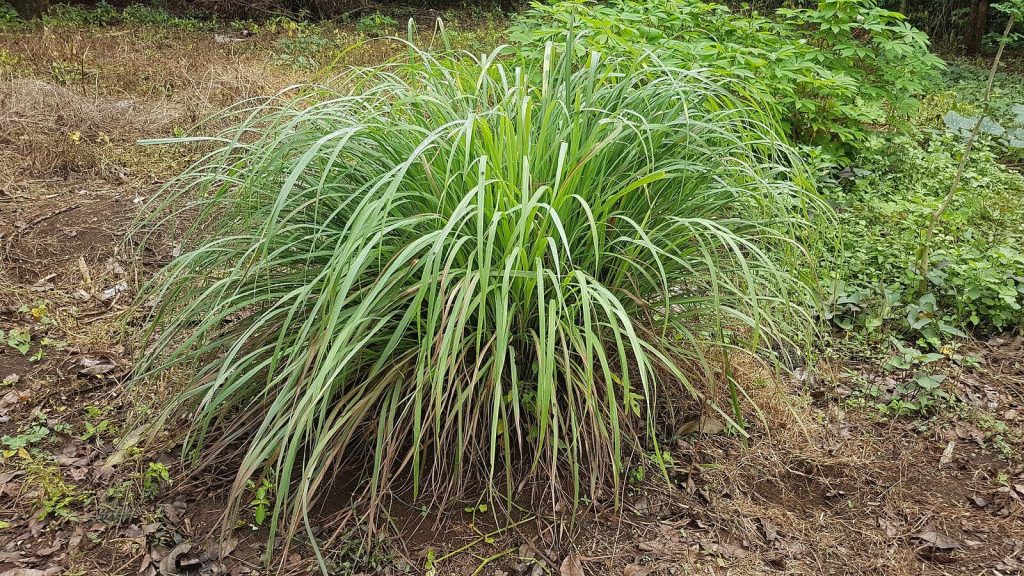
Lemongrass farming in Uganda works agronomically and fails commercially, and the gap between those two facts is the whole decision. The grass grows almost anywhere in the country, propagates free from a split clump, and cuts every three or four months for years. What it does not have is a buyer waiting with a weighing scale. Uganda reports no lemongrass tonnage to FAO at all.
That is an unusual shape for a farming page, so it is worth being blunt about it up front. Almost every article you will find on growing this crop opens with the demand and never returns to it. The demand is the problem. Fresh leaf sells in bundles at a market stall or into a small packing operation, and both of those are shallow. The oil, which is where the money supposedly is, needs a still and a steady tonnage of green leaf to feed it.
Where Lemongrass Is Grown in Uganda and at What Scale
Lemongrass is common in Uganda and almost entirely uncommercial. In Luganda it is ekisubi, which New Vision translates as grass for tea, and that name tells you exactly how the country uses it: a clump or two behind the kitchen, leaves picked for the flask. Growers in Wakiso have been reported interplanting it down banana rows and selling packed dried leaf into Kampala shops, which is the commercial edge of the crop rather than its centre.
The statistics are blank in a way that matters. FAO records a catch all category for aromatic and stimulant crops that is where lemongrass would be counted, and nineteen African countries file returns under it. Uganda files none. Uganda does report ginger, at roughly 1,600 tonnes, and vanilla at about 183 tonnes, so the absence is not a reporting failure across the board. It is specific.
NARO's own website search returns nothing for lemongrass, and that result is worth trusting because the same search returns real work on cassava, ginger and spices in general. There is no released variety, no package of practices document, no trial series. What Uganda does have is extension knowledge sitting with individual officers: the Ugandan farming press carries a full agronomy interview with an agronomist at Mbarara Zonal Agricultural Research and Development Institute, a NARO zonal institute, and most of the Uganda specific numbers below come from that interview.
The wider context comes from the founder of the Uganda Fruits and Spice Growers Association, who puts the number of Ugandans in commercial spice cultivation at fewer than twenty, with fewer than eight on plots above five acres. He says the growers who do have lemongrass keep it small and for home use, and that about 98 percent of the spices Ugandans consume are imported. If you plant an acre you are not joining a sector. You are starting one.
Two Lemongrass Species and Which One Your Market Decides
This is the decision that gets skipped, and it changes the planting material, the cutting interval and the price you can ask. Two grasses are sold as lemongrass and they are not interchangeable.
Cymbopogon citratus, West Indian lemongrass, is the culinary and tea grass. It seldom flowers, which is why it is propagated by splitting clumps and why you will almost never see seed offered. That is the cheap one, and it is what is already growing in Ugandan compounds.
Cymbopogon flexuosus, East Indian lemongrass, is the oil grass. It grows taller, up to about three metres, holds more citral, and does set seed. It also tolerates altitude far better, recorded between 100 and 2,200 metres against a 1,400 metre ceiling for the West Indian type. The catch is in the propagation: PROSEA records that the offshoots of this species often fail to establish, so you cannot casually split your way to an acre of it the way you can with the culinary grass.
Citronella is a third thing entirely, and the pages that blur it into lemongrass are wrong. Citronella grasses yield an oil built on citronellal and geraniol, sold into repellents and soaps, where lemongrass oil is built on citral, a mix of roughly 50 percent geranial and 30 percent neral, sold into flavour and fragrance. A buyer who wants citral will reject citronella oil and will test for it.
Climate, Altitude and Soil for Lemongrass Farming in Uganda
Uganda's mean annual rainfall depends a little on which dataset you ask. The ERA5 reanalysis gives 1,576.67 mm and the CRU TS4.07 series gives 1,282.74 mm, both for the same thirty year period. For lemongrass that disagreement does not matter, which is worth saying because it matters a great deal for some crops: the West Indian grass prefers 1,500 to 3,000 mm and tolerates 700 to 4,200, so Uganda is inside the tolerated range on either figure and inside the preferred band on the higher one. Mean annual temperature runs near 23 degrees Celsius. The Ugandan recommendation from MBAZARDI puts the workable band at 700 to 3,000 mm and stresses that the rain wants to be spread through the year rather than dumped in two bursts, which is the one thing Uganda's bimodal pattern does not do.
Temperature is where the country sits slightly below optimum rather than outside it. Lemongrass does best between 24 and 30 degrees and tolerates 18 to 34. Uganda's 23 degree mean is just under the ideal, which costs a little vigour and a little oil rather than the crop. The hard floor is cold: the West Indian grass can be killed at 10 degrees or below, and the East Indian at 5 degrees. Night minima in Kabale and the Elgon highlands get close enough to that floor to matter, which is why the Ugandan advice is plainly to avoid planting in cold areas.
Altitude is the constraint nobody states. Lemongrass is recorded to 1,400 metres but grows best below 500 metres. Uganda's lowest ground is 614 metres, at the Albert Nile on the South Sudan border. Kampala sits at 1,200 metres, Mbale at 1,156, Gulu at 1,116. So the ordinary Ugandan farm is inside the tolerated range and well above the band where this grass produces its best oil. You will get plenty of leaf. Whether you get top end citral out of it is a different question, and it is one reason the oil arithmetic further down keeps coming out below the promotional figures.
Soil is the easy part. Ecocrop gives a preferred pH of 5 to 5.8 and a tolerated range of 4.3 to 7.3, which lines up with Uganda's naturally acid soils better than most spice crops do. The Ugandan recommendation is clay loam at pH 5.0 to 8.4, well drained, with organic manure and nitrogen added on poor ground. Drainage is the thing to actually check, because a clump sitting in water rots at the base.
Splitting Clumps for Free Planting Material and Plants Per Acre
The cheapest thing about this crop is how you start it. Lift a mature clump, shake the soil off, and pull it apart into individual shoots with a piece of root and swollen base attached. Those are slips. Trim the leaf back to about a hand's length so the slip is not trying to feed a metre of foliage off a damaged root, and plant the same day if you can.
Because the culinary grass seldom flowers, division is not a shortcut, it is the method. One established clump yields a surprising number of slips, and a neighbour with a hedge of it can start you off for nothing. That single fact removes the biggest barrier most Ugandan spice crops have, which is that planting material either does not germinate or does not exist. The growers association names exactly that problem as the main obstacle across the sector.
On spacing, the Ugandan recommendation is tighter than the Indian textbooks. MBAZARDI gives 20 cm by 40 cm, which works out at 125,000 plants per hectare, or roughly 50,000 slips per acre, dropping to 50,000 per hectare, about 20,000 per acre, where rainfall is lower. Wider spacing on drier land is the right instinct, since each clump has to pull water from a larger volume of soil. If you are planting for oil rather than for bundles, err wider, because a crowded stand throws thinner leaf and thin leaf is where the oil is not.
Plant at the start of the rains. That is not a style preference; a slip has no root system worth the name for its first fortnight and a dry spell in that window kills a whole field's worth.
Planting Out, Weeding and Manure in the First Year
Prepare the ground properly once, because you will not get another chance for four to six years. Dig or plough out perennial weeds, work in well rotted manure or compost, and level the plot so water moves off rather than ponding between rows.
Weeding earns more here than it does in most crops, and for a reason specific to aromatic grasses: oil accumulates in young growing leaves, so anything that slows tillering directly cuts the oil fraction. The Ugandan advice is hand or hoe weeding and keeping the plot clean if you want oil content. In the first three months the crop is losing the competition. After that the clumps close over and smother most of what tries to come up, which is the same habit that makes lemongrass useful as a barrier planting.
On fertilizer, MBAZARDI's figure is 50 to 120 kg of NPK per hectare with attention to potassium and nitrogen. That is a wide band and it should be, because the right number depends on what your soil already holds. Get a soil test before you buy a bag. The same source suggests intercropping young lemongrass with beans or groundnuts while the clumps are still small, which puts a nitrogen fixing legume in the gaps and gives you something to harvest in the months before the grass is ready.
One caution on heavy feeding. PROSEA notes that foliage yield goes up on fertile heavy soils but the oil from that foliage usually carries less citral. If your market is bundles by weight, feed it. If your market is oil graded on citral, pushing bulk can work against you.
Harvesting Lemongrass Leaf and How Often You Cut
First cut comes somewhere between four and eight months depending on species, spacing and how well the slips took. Ecocrop puts the West Indian grass at 120 to 240 days to first harvest and then every 90 to 120 days after that. The East Indian oil grass is faster on the ratoon: about 90 to 120 days to the first cut, then every 40 to 55 days. Ugandan sources put maturity at six to nine months for the first cut, which sits inside the slower band and reflects the cooler plateau.
Cut with a sharp knife or sickle, and do not cut to the ground. Leave a stubble of roughly a hand's width so the clump has something to push from. Cutting flush is the commonest way growers kill a stand in its second year. Morning cutting is the Ugandan recommendation, when the leaf still holds moderate moisture.
Stand life is four to six years, and Ugandan growers report harvesting the same planting for six consecutive years with the clumps thickening over the early cuts. Nobody publishes a reliable multiplier for how much the second and third ratoons add, so treat "yield keeps increasing" as a direction rather than a number.
Two details that move the oil figure and almost never get printed. First, flowering cuts oil yield, so in commercial oil production only a few plants are left to flower for seed. Second, the top of the plant is worth four times the bottom: PROSEA records 0.6 percent oil from top parts against 0.15 percent from lower parts. A cut that takes a lot of old lower leaf and coarse stem weighs well and distils badly.
Lemongrass Pests and Diseases in a Wet Climate
Lemongrass is a hardy grass and its pest list is short, which is part of the appeal. The Ugandan source names nematodes attacking roots from the soil, and four fungal problems: long smut, red leaf spot, leaf blight and rust. All four show up more in prolonged wet weather and in stands that are crowded or poorly drained.
For nematodes the recommended control is soil solarisation before planting: cover the prepared bed with clear or white polythene and let trapped heat cook the top layer. That is the useful advice because it carries no chemical and no dose, and it is worth doing on ground that has just come out of a nematode susceptible crop.
For the fungal diseases, spacing, drainage and clean weeding do most of the work, and the rest is a matter of reading a label. This page will not give you a product, a rate or a spray interval for lemongrass, because no verified Ugandan recommendation exists for this crop and inventing one is how a grower ends up with residues in a leaf that somebody will brew and drink. If a disease gets ahead of you, take a leaf sample to your district agricultural officer, use only a product registered in Uganda for the purpose, follow the rate printed on the container, and treat the pre harvest interval on that label as binding. Lemongrass cut for tea is a food crop and needs handling as one.
Drying Lemongrass for the Tea Market Without Losing the Aroma
Almost all the Ugandan money in this crop is currently in dried leaf, so the drying step is where quality is won or thrown away. The aroma compounds are volatile, which is the whole point of them, and heat and sun drive them off.
Dry in shade with air moving through, not on a tarpaulin in full sun. The Ugandan guidance is to dry quickly enough to avoid rotting but under moderate sun rather than harsh, precisely to avoid leaching the aroma. Cut leaf into manageable lengths, spread it thin, and turn it so the middle of the pile does not sweat. Finished leaf should snap rather than bend, hold its green rather than going hay coloured, and smell sharply of lemon when you crush it in your palm.
Store it dry, sealed, and away from everything else. The RHS reference makes the point bluntly: lemongrass taints other foods if stored beside them, and the traffic runs both ways, so leaf kept near paraffin, soap or onions will carry that into the cup. Ugandan households commonly roast the cut grass before brewing it for tea, which is a flavour step rather than a preservation one, and it is worth knowing whichever way your buyer wants the product.
Growers also report that leaf cut in the dry season carries a stronger aroma than leaf cut in the rains, when the plant is full of water. That is consistent with how oil content behaves on heavily watered, heavily fed soil, and it is a sound reason to time your best quality batches to the drier months.
Lemongrass Oil Yield Per Acre and the Numbers That Do Not Add Up
Here is where the promotional pages come apart, so do the arithmetic before you believe any of them. Oil recovery from fresh lemongrass runs about 0.2 to 0.5 percent of fresh weight, rising to 0.4 to 0.6 percent with improved selections under efficient management. Multiply that out: a tonne of fresh leaf yields somewhere between two and five kilogrammes of oil. Not twenty. Two to five.
Fresh leaf yields are published at 30 to 50 tonnes per hectare a year, about 12 to 20 tonnes per acre, with 100 tonnes per hectare recorded only under what PROSEA calls optimum circumstances. Stack the two together and you get the spread below, which is wide because the sources genuinely disagree.
| Source | Species | Oil per hectare a year |
|---|---|---|
| Ecocrop | East Indian | 20 to 40 kg average |
| Ecocrop | West Indian | 50 to 120 kg average |
| PROSEA | West Indian | 75 to 250 kg |
| Selected cultivars | East Indian | up to 250 kg |
So the honest working figure is roughly 20 to 120 kg of oil per hectare a year for an ordinary stand, about 8 to 49 kg per acre, with 250 kg per hectare achievable only with selected planting material, tight cutting intervals and leaf that is mostly young top growth. What decides where you land is species, selection, cutting interval and how much old stem went into the still.
Why Distillation Is a Processing Business and Not a Farming Decision
The oil route is where most people planning an acre of lemongrass expect to make their money, and it is worth saying plainly that distilling is a separate business from growing. It needs a steam still, a boiler or firebox, a condenser, cooling water, a separator, fuel, and somebody who knows how long to run a charge. None of that is farm equipment.
Then there is the volume problem. If an acre gives you, say, 15 tonnes of fresh leaf across a year and recovery is 0.3 percent, that is about 45 kg of oil spread over three or four cuts. A still sized for that is small, inefficient per litre of fuel, and idle most of the year. A still big enough to be efficient needs leaf from many acres, which means either a much larger farm or a group of growers cutting to a shared schedule. Leaf also cannot wait: the Ugandan guidance allows a short wilt under shade of up to about three days before distilling, and after that you are losing the product you grew.
That points at the sensible structure. Grow leaf and sell it fresh or dried, or join with other growers around one still, or build the still and buy leaf from your neighbours. What does not work is one smallholder trying to be a grower and a distiller and a marketer of oil at the same time on one acre. Oil is graded on citral content, so a buyer will assay what you bring, and a badly run small still produces oil that fails that test as reliably as it produces oil at all.
Lemongrass as a Contour Hedge and Mulch Source on a Sloping Farm
The use that never appears on promotional pages is probably the most reliable return this plant offers a Ugandan smallholder, and it does not depend on a buyer at all.
Lemongrass forms dense clumps with fibrous roots, and PROSEA records it being used to control soil erosion. Planted as a continuous line along the contour of a slope it does the same job as a vetiver strip: slows runoff, traps soil moving downhill, and over several seasons builds a small terrace behind itself. On the steep cultivated slopes of the southwest and around Elgon, where topsoil loss is the quiet reason yields fall, that is a real benefit. The reference works also note a row of lemongrass working as a garden divider that holds back invasive creepers and blocks weeds crossing into a bed.
Every cut off that hedge is also mulch. Lemongrass produces bulk organic material fast and it rots down readily, and it is described as a good soil conditioner on worn out land. Aromatic mulch around a coffee or banana stool suppresses weeds while it breaks down. Cut leaf serves as thatch too, which is how plenty of it already gets used.
Run the logic properly and lemongrass on a Ugandan farm looks less like a cash crop and more like a boundary and contour plant that happens to be sellable. Put it where it is doing soil work anyway, harvest what the market will take, and you have not bet an acre on a buyer who may not exist. If you want crops that are already moving in volume, ginger farming in Uganda and turmeric both have real tonnage behind them.
Finding Buyers for Fresh and Dried Lemongrass in Uganda
Start with the market you can see. Fresh bundles move through urban markets, greengrocers and hotel kitchens in small quantities, and dried packed leaf sits on Ugandan supermarket shelves as tea, so a route to a retail product exists. It is a shallow route. These are kilogrammes and tens of kilogrammes, not tonnes, and a single grower with an acre in full cut can saturate a local outlet quickly.
The herbal products trade is the other domestic outlet, since lemongrass is a common ingredient in locally manufactured herbal preparations. Treat it the same way: ask what volume, what form, what moisture content and what price before you plant to fill it.
Export is where the caution belongs. Uganda's spice trade statistics fold lemongrass into a catch all aromatic crops group that cannot be separated, so there is no way to say from the data whether Ugandan lemongrass leaves the country at all. What the data does show is that Uganda imports between roughly 950 and 1,290 tonnes a year in that same group, which is consistent with the growers association's point that the country buys in almost all the spice it uses. Import substitution is a genuine opening. It is also not a signed contract.
Two practical rules before planting an acre. Get the buyer first, in writing if you can, with a volume and a form specified, because leaf cut with nowhere to go is worth nothing within a week. And be ready for counterfeiting: Ugandan growers who built a packed tea product report competitors copying the packaging, which is a problem of branding rather than of farming but it will eat your margin all the same. It is also worth reading how other crops in this group have handled the same problem, on the spices and herbs hub, and comparing the shortlist on herbs worth growing commercially in Uganda and which spices actually pay before you commit land. Mint farming faces a near identical fresh herb market if you want a comparison.
Lemongrass Farming in Uganda: Questions Growers Ask
Is lemongrass farming profitable in Uganda?
It can pay on a small scale and it is easy to lose money on a large one, and the difference is the buyer rather than the agronomy. Costs are unusually low: planting material is normally free from a split clump, the crop is perennial for four to six years, and fertilizer needs are modest. Prices for fresh bundles and dried leaf vary a great deal by season, bundle size and whether you are selling to a market trader or a packer, and no reliable current Ugandan figure exists for either, so ask three buyers before you budget. What you should not do is build a plan on an oil price, because the oil needs equipment most growers do not have.
How much does it cost to start an acre of lemongrass?
The honest answer is that land preparation and labour dominate, and planting material often costs nothing. Roughly 50,000 slips are needed per acre at the Ugandan recommended spacing, which sounds enormous until you realise they come from dividing clumps rather than buying seed. Beyond that you are paying for ploughing, manure, planting labour, weeding through the first three months and a knife. A steam still is the one line that changes the picture completely, and its cost depends on capacity, material and whether it is fabricated locally, so price it separately and do not assume you need one.
How long before the first harvest?
Between four and eight months, and Ugandan sources put it at six to nine months on the plateau. The East Indian oil type comes earlier, around three to four months, and then cuts every 40 to 55 days. The culinary type cuts every three to four months. Either way the stand keeps producing for four to six years from one planting, which is the real economic advantage of this crop.
Can lemongrass grow in Kabale or other cold highland districts?
Cautiously, and not the culinary type at altitude. The West Indian grass is recorded to 1,400 metres and can be killed at 10 degrees or below, which puts the coldest highland nights uncomfortably close to its floor. The East Indian type is recorded from 100 to 2,200 metres and tolerates down to 5 degrees, so it is the better choice above 1,400 metres. Ugandan extension advice is simply to avoid cold areas, and on a frost prone slope that is the right call.
Do I need to buy seed?
For the culinary type, no, and you mostly cannot. It seldom flowers, so division of clumps is the standard method and one mature clump yields many slips. The East Indian oil type does set seed and can be raised in a nursery seedbed, pricked out at the three to four leaf stage, which is worth knowing because its offshoots often fail to establish when split.
What is the difference between lemongrass and citronella?
Different species with different oils and different buyers. Lemongrass oil is a citral oil, roughly half geranial and a third neral, sold into flavour and fragrance. Citronella oil is built on citronellal and geraniol and goes into repellents, soaps and cleaning products. They look similar in the field and a laboratory will tell them apart immediately, so know which one you planted before you offer it to anyone.
Will lemongrass damage my banana or coffee if I interplant it?
Growers in central Uganda plant it down banana rows without apparent trouble, and the crop's habit of smothering weeds is a help rather than a cost. Keep it out of the immediate root zone of the stool, give it a defined line rather than letting it spread through the plot, and remember it is a vigorous perennial grass that will compete for water in a dry spell. Used as a boundary line or a contour strip it earns its space twice, once as leaf and once as erosion control.
Does drying in the sun ruin the leaf?
Hard direct sun drives off the aroma compounds you are selling. Dry in shade with air moving through, spread thin and turned, fast enough that it does not go mouldy. Leaf that has gone pale and smells of hay has lost most of its value while still being perfectly dry.
Before committing land, get a current read on what lemongrass and other herbs are actually fetching, since these are thin markets where the price moves with season and supplier. The price pages track what is moving, the buyers directory is the place to look for someone taking volume, and the suppliers listing helps if you need clean planting material of the oil type rather than whatever is growing behind the kitchen. Talk to a buyer and to your district agricultural officer before you plant, not after the first cut is lying in the sun.