
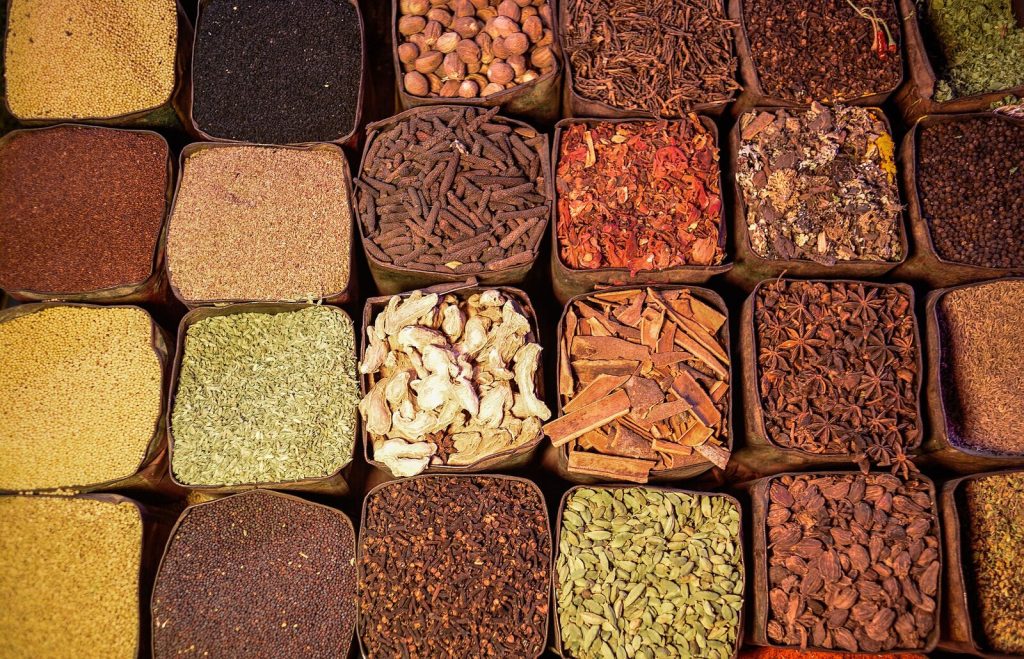
Rosemary farming in Uganda is real, unlike several of the minor spices marketed here, and the hard part is not the agronomy. It is the buyer. Rosemary is a Mediterranean woody shrub that takes two years to build itself, resents wet feet, and sells into a narrow urban herb trade. Most of the money at risk in this crop is spent before the first cut.
Rosemary Does Grow in Uganda, and the Real Question Is Who Buys It
Start with what is documented rather than what is promised. The founder of the Uganda Fruits and Spice Growers Association, writing under his own name, lists rosemary among the four crops he grows on a small scale alongside cardamom, cinnamon and black pepper. Separately, an organisation operating in the Lango and Acoli sub regions has signed up farmers across several districts to grow rosemary under contract, with more than 170 farmers in one district alone reported as having signed. Those two facts put rosemary in a different category from cumin or clove, neither of which anybody here has been shown to harvest.
What does not exist is a Ugandan rosemary area figure, a production figure, a published yield trial, a variety release, or an independent price series. A search of the indexed research literature turns up no Ugandan rosemary agronomy at all, and the national agricultural research organisation's own site returns nothing for the crop. So the crop is present and the evidence base is thin, and every number a grower is offered comes from somebody who has an interest in the answer.
How the Northern Uganda Rosemary Growing Contracts Are Built
The dominant way rosemary is being planted in Uganda is a single buyer contract, and its shape matters more than any agronomy on this page, because it is where a farmer's exposure sits.
That last point is the whole of it. Contract growing can work well and it is a normal way to enter a thin market, but the terms have to survive a bad season. Before signing anything on this crop, read contract farming explained, and go through the price and default clauses the way how to negotiate with produce buyers sets out. Ask for the name of one farmer who has completed a full five year cycle and for a copy of a weighbridge ticket from a delivered load.
Checking the Rosemary Yield and Income Figures Against the Plant
Two Ugandan outlets reported the same scheme, quoting the same organisation, within the same period. They disagree with each other on almost every number.
| Figure | First account | Second account |
|---|---|---|
| Seedlings per acre | 6,000 | 6,000 |
| Cost per acre | 6m shillings | 3m shillings |
| First cut yield | 1,500 kg | 2,500 to 3,000 kg |
| Buying price | 5,000 a kg | 5,000 a kg |
| Annual revenue | Implies 22.5m | 10m to 15m |
Take the internal contradiction first. The first account gives 7.5 million shillings per cut and cuts every four months, which multiplies out to 22.5 million shillings a year from one acre. The second account, quoting the founder of the same organisation, says 10 to 15 million a year. Those cannot both be right, and the gap is not a rounding difference. Input cost per acre also differs by a factor of two, and the first cut yield by a factor of about two.
Now check the yields against the reference literature on the crop. Published rosemary fresh leaf yield runs to about 3 tonnes per hectare, which is roughly 1.2 tonnes per acre. The first account's 1,500 kg per acre is a little above that, which is plausible for a well managed planting. The second account's 2,500 to 3,000 kg per acre is two to two and a half times the published figure, from plants six to seven months old.
The plant population figure, unusually, checks out. Reference spacing for rosemary is 45 cm between plants in rows 1.2 m apart, which works out at about 18,500 plants per hectare or roughly 7,500 per acre. Six thousand per acre is inside that, slightly wider spaced, and a sensible number.
The timetable is where the promise breaks. More on that below, because it is the single thing a prospective grower most needs to get right.
Drainage Is What Kills Rosemary in a Ugandan Wet Season
Rosemary comes off dry sunny Mediterranean slopes. Its botanical name refers to sea dew, and in its home range it grows on calcareous ground exposed to fog and salt spray rather than to standing water. The reference literature is blunt about the consequence for a grower: rosemary should be watered only moderately, to prevent root rot. Once established it roots deeply and handles drought well. What it does not handle is saturated soil.
Uganda's wet season months deliver 150 mm and more. That is not a watering decision a grower gets to make, so the decision has to be made in the siting instead.
Pick sloping ground over flat. Pick sand, gravel or a light loam over heavy clay. Never pick a valley bottom, a seasonal wetland edge, or the low corner of a plot where water collects after a storm, no matter how fertile that corner is for maize. Plant on ridges or raised beds rather than flat, so surplus water has somewhere to go. And walk the site during the wettest week of the year before you commit it, because a plot inspected in January tells you nothing about what it does in April.
This is why the drier, single season north and northeast are agronomically better rosemary country than the Lake Victoria crescent, and the scheme's geography is defensible on that basis even where its numbers are not.
Rosemary Soil and Site Selection on Acid Ugandan Ground
Here rosemary gets easier rather than harder, which is worth saying because the opposite is true of several other introduced spices. Its pH tolerance runs from 4.5 to 8.3, with a preference for 6 to 7.5. Two farmed soils sampled on the Lake Victoria crescent came in at pH 5.02 and 5.26, and close to a quarter of the national bean crop sits on ground under pH 5.0. Acid like that falls inside rosemary's tolerance and under its preference, so lime helps the plant without being the input that decides whether the crop is possible at all.
On nutrition, the finding worth acting on is that potassium carries the most weight where oil content is the objective. Balanced fertiliser suits the plant. Heavy nitrogen does not, because soft sappy growth on a woody shrub in a humid climate is an invitation to rot. Get a laboratory reading before you spend, and what to send to a laboratory and what to ask for is covered separately.
Propagating Rosemary From Cuttings Rather Than Seed
Rosemary is propagated from cuttings, by division, or by air layering. Seed is used sometimes and it is a poor route: rosemary sets seed only under very favourable conditions, germination is slow at three to four weeks, it wants temperatures below 18 degrees to germinate at all, and often only 10 to 20 percent of seed comes up.
Two consequences follow for a Ugandan grower, and both are commercial rather than horticultural.
First, seed is not a realistic way around the cost of planting material, and that is exactly why seedlings are the lever in every contract on offer. Second, since rosemary begins flowering only after the plant is two years old, and since a commercial planting is cut before it becomes woody, a Ugandan planting managed for herb is unlikely to produce its own seed at all. Your multiplication route is cuttings off your own plants.
Which is the single best piece of leverage available to a grower here. Buy a small number of plants, hold back a mother block that you do not cut commercially, and strike your own cuttings from it. A mother block costs you a corner of the plot and it turns planting material from a recurring debt into a one off purchase. Take cuttings from recent growth rather than old woody stems, and expect several weeks to root.
Rosemary Spacing and Plants Per Acre
Reference spacing is 45 cm between plants within the row and 1.2 m between rows. That wide row is not wasted ground. A mature rosemary plant reaches about 60 cm across and 90 cm tall by the end of its second season, and the row gap is what lets you walk in to cut, lets air move through a humid canopy, and lets you see root problems before they spread.
At that spacing you get roughly 18,500 plants per hectare, about 7,500 per acre. Plant closer and you buy more shoots in year one at the price of a wetter, stiller canopy from year two onward, which on this crop in this climate is a bad trade. Row widths other than 1.2 m change the sums, and counting plants per acre from row and plant spacing shows how.
How Long a Rosemary Planting Takes Before It Yields
This is the section that should decide whether you plant. Rosemary is slow, and every Ugandan promotional figure treats it as fast.
Rosemary seedlings develop slowly. The reference literature records that a plant becomes a dense shrub of about 60 cm diameter and 90 cm height only by the end of its second growing season. Flowering is initiated when plants are two or more years old. For oil production, the crop is cut two to three years after planting, at the onset of flowering, because that is when oil content peaks. Herb harvesting starts once the plant is established and before it turns woody, taking terminal shoots 25 to 30 cm from the tip, once or twice each season.
Against that, the contract schedule promises a 1,500 to 3,000 kg per acre cut at six to seven months, and repeat cuts every four months for five years. A plant that needs two seasons to reach knee height is being asked to yield a tonne and a half per acre in its first seven months and then to regrow three times a year indefinitely. Stripping terminal shoots off a young rosemary three times a year does not accelerate it. It checks it.
The honest planning figure is that a rosemary planting is a multi year investment with light cutting in year one at best, a real harvest from year two, and a productive life that can run far longer than the five years a contract covers. Under favourable conditions and good management, rosemary stays productive for up to 30 years. That long life is the genuine attraction of the crop, and it is a completely different business case from three harvests a year starting in month seven. Budget your cash flow on the slow version and treat anything faster as upside.
Harvesting and Drying Rosemary for the Herb Market
For the fresh trade, terminal shoots are cut and tied into bunches of eight to twelve. They go into rigid containers rather than sacks, because rosemary needles shatter off a crushed stem, and they move to the buyer as fast as you can get them there. Whole fresh leaf freezes well and holds its aroma better frozen than dried, which is worth knowing if a buyer has cold storage.
For the dried trade, shoots are dried straight after cutting, spread on screen trays in a dark, sheltered, well ventilated space. Dark and ventilated, not sunny. Sun bleaches the leaf and drives off the aroma you are being paid for, which is the opposite of what happens with a grain crop and is the mistake most often made by farmers moving into herbs from staples. Once crisp, the leaves are stripped off the stems by hand and go into closed containers. The general principles are covered further on spice drying and processing.
One arithmetic warning about drying, because it is being sold as an easy uplift. The contract material claims that drying lifts a harvest from 7.5 million to between 11 and 12 million shillings, a rise of roughly one and a half times. Drying removes most of the weight, and stripping leaf off stem removes more again, so the kilograms you sell fall by at least a factor of three. For revenue to rise by half while weight falls by two thirds, dried rosemary would have to fetch something like five times the fresh price per kilogram. No dried price is stated anywhere in that material. Until somebody shows you a dried price, treat the drying uplift as unproven rather than as a plan.
Rosemary Oil: What an Acre of Herb Actually Distils
The oil pitch is the most attractive part of this crop on paper and the weakest under arithmetic. Here is the whole calculation, with the inputs cited.
None of which means rosemary oil is a bad product. It is a real commodity, produced mainly in Spain, Tunisia and Morocco, and rosemary extract has a genuine industrial use as an antioxidant in cooked meat products and oils, where its main phenolic diterpene outperforms the common synthetic preservatives in controlled tests. That is a factory input made in a factory. It is not a reason for a smallholder to buy a still.
Rosemary Pests, Root Rot and Nematodes
Rosemary is often sold to Ugandan farmers as pest and disease resistant. It is genuinely less troublesome than a tomato crop, and the claim is still overstated in a way that matters.
Root rot from excess water is the main killer and it is a management problem rather than a spray problem, addressed entirely through siting, ridging and restraint with irrigation. Sclerotinia sclerotiorum has been recorded on rosemary in India, and the plant is susceptible to the root knot nematode Meloidogyne incognita, which is present across Ugandan soils and is one more reason not to plant rosemary straight after a heavily nematode infested vegetable crop. Sap feeding bugs have been recorded on it in Spain.
Deliberately, there is no spray rate, dilution or interval on this page. Should something attack a planting, two conditions have to hold before anything goes on it. The product carries a Ugandan registration covering a herb crop, and the dose comes off that product's own label rather than from advice. The label's own pre harvest interval then governs, and it governs tightly here, because rosemary reaches a plate without a cooking step in several of its uses. Current registrations are a question for a district extension officer. There is background on reading a container at how to read agrochemical labels.
One more caution, and it is about the sales material rather than the plant. A great deal of the Ugandan promotion of this crop rests on claims about what rosemary does for human health, including claims made to farmers during recruitment. Those claims are not the basis for a farming decision and none of them is repeated here. Rosemary is a culinary and aromatic herb with a real flavour market and a real industrial extract market. Plant it for those, or do not plant it.
Selling Rosemary in Uganda Without a Contract
Suppose you would rather not sign anything. The open market for rosemary in Uganda is restaurants, hotels, supermarket fresh counters and a handful of processors and herbal product makers in and around Kampala and Entebbe. That is a real market. It is also a small one, concentrated in a few buyers, and it fills up fast.
The failure mode is specific and common: a grower plants an acre on the strength of one enquiry, the crop comes in, and the buyer takes 20 kg a week. Rosemary is not a crop where surplus finds a home, because there is no village market for it and no bulk commodity floor underneath it. Nobody in a rural trading centre is going to buy your extra rosemary.
So work the other way round. Start with a tenth of an acre and a mother block. Find two or three buyers, learn what quantity and what cut they actually want and on which days, and expand only against orders in writing. What a hospitality buyer actually wants from a supplier, and how often, is covered on how to supply hotels and restaurants. The herbs that share those buyers, and so share the delivery run, are compared on best herbs to grow commercially in Uganda. Rosemary's place in the wider picture, including why Uganda imports almost all of its spice, is set out on the spices and herbs hub.
Questions Ugandan Farmers Ask About Rosemary Farming
How soon can I harvest rosemary after planting? Lightly in the first year at best, properly from the second. The plant only reaches about 60 cm across and 90 cm tall by the end of its second growing season, and crops cut for oil are taken two to three years after planting. A promise of a full harvest at six or seven months is asking a slow shrub to behave like a leaf vegetable.
How long does a rosemary planting last? Far longer than most contracts. Under favourable conditions and good management it stays productive for up to 30 years. That durability is the real argument for the crop, and it is why the planting decision deserves more care than a maize season does.
Which part of Uganda suits rosemary best? Drier ground with real drainage and full sun, which points at the north and northeast rather than the wet lake crescent, and at slopes rather than flats anywhere. Acidity is not the obstacle, since rosemary tolerates pH from 4.5 upward. Standing water is the obstacle.
What does it cost to plant an acre, and what can I expect back? The documented Ugandan figures are seedling costs of 3 to 6 million shillings an acre for about 6,000 plants, with individual seedlings quoted between 1,000 and 5,000 shillings depending on the seller, and a stated buying price of 5,000 shillings a kilogram of fresh material. Every one of those figures comes from a party selling seedlings or buying the crop, none of them is independently verified, and the two reported yield figures for the same scheme differ by a factor of two. Treat them as the seller's numbers, check current prices yourself, and note that striking your own cuttings from a mother block removes the largest of those costs from year two onward.
Can I grow rosemary from seed to save money? Not practically. Rosemary sets seed only in favourable conditions, germination takes three to four weeks and wants temperatures under 18 degrees, and often only 10 to 20 percent of seed germinates. Cuttings are the route, and your own mother block is the cheap version of it.
Is rosemary drought resistant? Once established, yes, and it roots deeply. That resistance is the reverse of waterlogging tolerance, not a sign of it. A rosemary plant will survive a dry month that would kill a cabbage and drown in a wet week that a cabbage would shrug off.
Should I buy a still and make rosemary oil? No, not at smallholding scale. An acre of rosemary distils on the order of one kilogram of oil per harvest, and rosemary oil trades around 12 to 15 US dollars a kilogram at the producing end. Selling the same herb fresh is worth roughly a hundred times more. Distillation only makes sense for an operator gathering hundreds of acres of herb.
How do I dry rosemary without ruining it? Straight after cutting, on screen trays, in the dark, with air moving through. Not in the sun. Strip the leaf off the stem only once it is crisp, and store it closed. Sun drying a herb you are paid for by aroma is the most expensive shortcut on the farm.
What else could I plant alongside it? Herbs sharing the same buyers and the same delivery day, so that one trip to town carries several lines. Mint and coriander both sell into the same hospitality trade, on much shorter cycles, which also gives you income while the rosemary is still building itself.
Sign nothing until you hold a price and a weekly quantity in writing, from a buyer you have met, on terms that would survive a bad year. What herbs are fetching at the moment is listed on the prices pages, and finding more than one source of planting material through the suppliers directory is worth doing before accepting any seedlings on credit.