
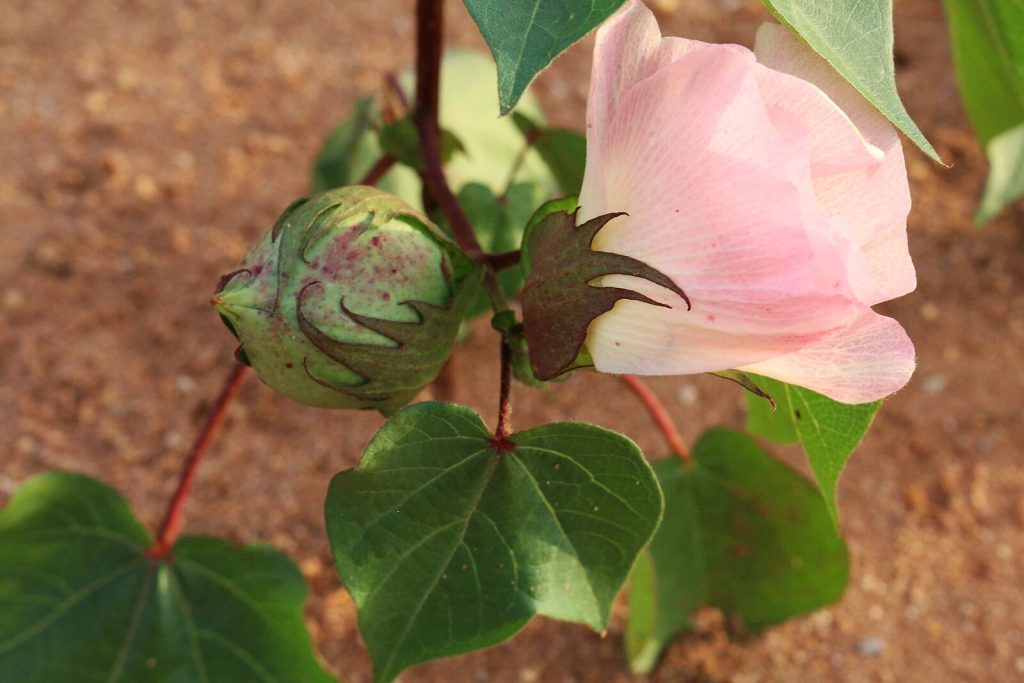
Cotton farming in Uganda works differently from every other crop on a smallholding, because the buyer is fixed by law before you plant. The country is divided into cotton zones, a ginner registered for your zone is the one legally tasked with getting you seed and inputs, and moving seed cotton out of the zone is an offence. Start there, not with yield.
The Cotton Zone Decides Who Buys Your Crop
Ugandan cotton is zoned by statutory instrument. The regulations that do it were made under the Cotton Development Act, which those instruments cite as Chapter 30, and they establish nine zones for growing, marketing and ginning cotton, each a named group of districts. Every dealer must apply for registration in a given zone, the certificate states the zone, and operating outside it is an offence. The body that does the registering is the Cotton Development Organisation, established under section 2 of that Act, and it is the name to use when you ask at a district office.
The zones as the instrument names them, using the district names of the day, are West Nile, Busoga, Kazinga Channel, Teso, Bukedi, Acholi, Lango, Mid West and central, and Bugisu. Many of those districts have since been split into several, so ask locally which zone you are in rather than matching your current district name to the list.
The stated purposes of the zoning are worth reading, because two of them are direct promises to the grower. The instrument says the zones exist to support cotton production by providing inputs and extension to small scale farmers, to make sure every ginner supports farmers to produce cotton economically and profitably in its catchment area, to spread ginning capacity, to make sure catchment areas generate enough cotton for the ginning capacity in their zone, to minimise the criss crossing of cotton across the country, which it says raises transport cost and reduces the farm gate price, and to avoid the mixing of seed varieties.
The regulator may seize, impound, confiscate or prohibit the movement of cotton plants, cotton seed, seed cotton or lint from one zone to another, and resisting that is an offence. So a trader offering you a better price for a load that has to cross a zone boundary is offering you something the framework does not permit. That is the single most important practical difference between cotton and every other crop in this section, where you may sell to whoever turns up.
Where Cotton Seed Comes From and Who Pays for It
The regulations place specific duties on the registered dealer in your zone, and they are not vague. A zonal dealer is required to register cotton farmers in its zone, establish demonstration gardens for farmer education and training, provide cotton agronomy education to the farmer, make approved cotton pesticides and spray pumps available on a cash or credit basis, and supply any other cotton production inputs needed.
That input supply is funded through the framework rather than out of goodwill. The amended cotton regulations set up a Planting Seed Fund, and evidence of a contribution to it, or a firm commitment to contribute, is a condition of being registered as a dealer at all. A dealer that fails to contribute can be refused a certificate. So the planting seed a Ugandan cotton grower receives is paid for by a levy on the trade, which is why cotton is the one crop where growers routinely get seed handed to them rather than buying it in a shop.
There is a levy on lint sales value at the ginnery too, set by ministerial instrument under the Act. It falls on lint sold at the ginnery rather than on your seed cotton, so it is not deducted from the price you are paid at the farm gate. The current percentage is not something I can confirm, and the reason is in the next paragraph.
The organisation's own website is not serving content. The domain returns a default web server installation page behind a certificate the browser will not accept, and the archived version of the site carries unreplaced placeholder Latin text in four of its service blocks and a news item that is a global commodity price forecast rather than anything about Uganda. So a Ugandan cotton grower has no working public source for the current levy, the current zone map, the register of dealers in their zone, or a reference price. Ask at the district production office. I name no fee, no board, no officer and no chapter as current, because none of them can be checked.
Cotton Spacing and Plant Population Per Acre
The national research organisation's semi arid resources institute at Serere runs the cotton programme, and its cotton officer gives spacing in three forms: 75 cm by 30 cm as the recommendation, with 90 cm by 30 cm or 90 cm by 45 cm named as alternatives used in some areas.
Those three spacings are not small variations. Work out the stand and the difference is most of a doubling.
| Spacing | Area per plant | Plants per acre |
|---|---|---|
| 75 cm by 30 cm | 0.225 sq m | About 18,000 |
| 90 cm by 30 cm | 0.27 sq m | About 15,000 |
| 90 cm by 45 cm | 0.405 sq m | About 10,000 |
For a spacing that is not in the table, the plant population guide does the same division for any row and hill width you give it. I give no seed rate for cotton, because I found no Ugandan published figure for one, and the seed usually comes to you from the zonal dealer in a quantity somebody else decided.
Cotton Yield Per Acre and What It Assumes
The research institute's cotton programme puts achievable seed cotton yield at 600 to 800 kilogrammes an acre where the spacing above is used, fertilizer is applied, and the weather is normal. That is 1,480 to 1,980 kilogrammes a hectare, and it is a good yield by regional standards rather than an average one.
Set it against what the databases say and the picture is messier. Dividing the international series for Uganda gives seed cotton yields of roughly 980 to 1,540 kilogrammes a hectare over the last decade, which is about 395 to 625 an acre. A regional review of East African cotton states in its own prose that seed cotton yield across the region grew from 0.32 to 0.78 tonnes a hectare over fifty years, which is 130 to 315 kilogrammes an acre.
So the honest answer is two numbers with different meanings: roughly 600 to 800 kilogrammes an acre as a managed target, and something in the region of 130 to 625 as what is actually being achieved, depending on which series you read. The gap between them is fertilizer, spacing, weeding and seed quality, in that order.
One warning about a figure in circulation. That same regional review prints a table giving Uganda 100,000 hectares, 20,000 tonnes of production and a yield of 1.5 to 2.0 tonnes a hectare. Divide its own two columns and you get 0.2 tonnes a hectare, not 1.5 to 2.0. Check the other rows and the reason appears: for four of its six rows the printed yield is exactly the reciprocal, hectares per tonne rather than tonnes per hectare. Ethiopia's 80,000 over 35,000 gives 2.2857 hectares per tonne against a printed 2.29; Kenya's gives 2.8612 against 2.86; Tanzania's 1.5126 against 1.51; the total 1.9798 against 1.98. A reader lifting "Uganda 1.5 to 2.0 tonnes per hectare" from that table has taken an inverted unit. That table's yield column is unusable, and its own prose figure of 0.32 to 0.78 tonnes a hectare is the one that makes sense.
Cotton Pests in Uganda and the Variety That Was Never Released
The pests recorded for Ugandan cotton in a peer reviewed regional review are American bollworm, spotted bollworm, pink bollworm, cotton stainers, two mite species, aphids, whitefly and jassid. Bacterial blight is named as the main disease by the national research institute's cotton officer. Across the region those bollworms, mealy bug and flea beetle are put at 36 to 60 percent yield loss in some countries, and pest control is put at 30 to 40 percent of total production cost on large farms.
That is why the insect resistant question matters so much in cotton, and it is where Uganda's position needs stating precisely. The same review tabulates confined field trials, biosafety approval and commercialisation for five countries. Sudan, Ethiopia and Kenya have all approved and commercialised insect resistant cotton. Tanzania has done none of the three. Uganda has run the confined field trials, has no biosafety approval for general release, and has not commercialised.
So the accurate sentence for a Ugandan grower is that the technology has been trialled here and never became something you can buy. Anyone offering you insect resistant cotton seed in Uganda is offering you something that has not been approved for general release, and the framework's own concern about avoiding the mixing of seed varieties is a reason to be careful about what goes in your field.
The variety the research institute names as most widely grown is BPA, chosen for how well the lint spins. The regional review's broader complaint is worth hearing alongside that: varieties introduced two or three decades ago still dominate production across East Africa and are described as genetically deteriorated and mixed, and growers complain of second rate seed from ginners, often mixed and untreated, giving poor germination and a thin stand. If your seed comes free from a ginner, its germination is still your problem, and the method for checking before you commit a field is in the note on testing seed germination.
On chemicals, the research institute's guidance is to use both organic and inorganic fertilizer for maximum yield while leaning on organic where the aim is margin, and to intercrop with high value crops such as onions, chilli and ginger, which it says repel cotton pests and which it credits with helping Indian growers lift output. I give no spray rate and no interval here. Cotton takes more pesticide than any other crop on the continent, the regional review records unprotected growers making five to ten sprays without result and building resistance as they go, and the only rate that is safe is the one on the label of the product registered for the job. Have the pest identified by someone who has looked at it, then work from the registered product's own label, which is what label reading covers, and protect yourself while doing it, which is safe application.
Segregated Areas and Why Cotton Seed Cannot Move
Inside the zones the instrument declares six isolated and segregated areas for seed multiplication, named down to sub county level in Lira, Soroti, Pallisa, Kamuli, Masindi, Arua and Kasese. Within one of those areas no cotton plant, cotton seed, seed cotton or lint may be moved in or out without written consent, the regulator prescribes the route and names the ginnery where the crop will be ginned, and nobody may multiply seed or buy seed cotton there without written authorisation backed by a written agreement.
If you farm inside one of those areas, your crop is part of the national seed system whether you think of it that way or not. That is the reason for the restrictions: a segregated area exists so that one variety can be kept genetically clean, and one grower planting something else undoes it for everyone. It is also why the zoning purposes include avoiding the mixing of seed varieties, and why free seed from a ginner arrives with conditions attached.
Where Ugandan Cotton Goes After the Farm Gate
Two lines from Uganda's own index of industrial production, read side by side, tell the story of the last few years better than any narrative.
Cotton ginning fell from an index of about 220 to about 70 across five years, including a fall of roughly 46 percent in the most recent year. Textile and garment manufacture rose from about 210 to about 532 over the same five years, up 13 percent in that last year. Ginning is what turns Ugandan seed cotton into lint. Garment manufacture is what turns lint into product. One collapsed while the other more than doubled, which means the mills that grew were not being fed by the gins that shrank.
The export side matches. Uganda's formal cotton exports across the five tabulated years went from about 27,190 tonnes worth 44.3 million US dollars down to about 10,711 tonnes worth 27.3 million, and cotton's share of total formal exports fell from 1.4 percent to 0.8. At the most detailed commodity code, for cotton neither carded nor combed, Uganda's own declarations show 4,670 to 7,620 tonnes of lint a year at unit values between roughly 1.77 and 2.60 dollars a kilogramme, with every partner row a Uganda declaration and the bilateral rows summing exactly to the world total.
Those two lint figures differ because the groupings differ: the statistics office's cotton line is broader than the single six digit code. That is worth knowing whenever somebody quotes you a cotton export tonnage without saying which basket it came from.
Cotton's Place in Ugandan Export Earnings, Checked
Cotton is often described in Uganda as the third foreign exchange earner after coffee and tea. The national research institute's own cotton programme says so. It does not survive a check against the statistics office's export table.
In every one of the five years that table covers, cotton ranks fourth of the four crops Uganda officially calls traditional exports, behind coffee, tea and tobacco. In the earliest of those years coffee earned about 436 million dollars, tea about 88.8 million, tobacco about 86.4 million and cotton about 44.3 million. In the most recent, coffee about 859.5 million, tea about 88.4 million, tobacco about 52.9 million and cotton about 27.3 million. Cotton also sits behind fish, beans and other legumes, maize, cocoa and, in the most recent year, sesame seed at about 30.3 million against cotton's 27.3.
This is not a criticism of the crop. It is a warning about planning from a slogan. Cotton's standing in Uganda's export earnings is a historical fact rather than a current one, and a decision about whether to plant an acre of it should rest on the price your zonal ginner is paying and the yield your ground gives, not on where the crop sat in the national accounts a generation ago.
What the Cotton Farming Statistics Do Not Tell You
This is the part that should change how you read any cotton figure.
So nobody currently publishes a checkable Ugandan cotton production figure. If a page gives you one to two decimal places, ask where it came from. Your own field records are better evidence about your own ground than any national number, and the crop production record template and a weighing scale are what turn a cotton plot into something you can make a decision about.
Cotton also has a second product most growers never see paid for separately. Ginning separates lint from seed, and the seed goes to oil and to cake, which is why cotton seed cake is a livestock feed ingredient in Uganda at all. For the crops that displaced cotton across much of the north, sesame and sunflower are the two to read, and the export crops hub collects the rest of the section.
Questions Ugandan Cotton Growers Ask
Can I sell my cotton to whoever pays most? No, and this is the most important thing on this page. The zoning regulations make it an offence for a dealer to operate outside the zone on its certificate, and the regulator may stop cotton moving between zones. A buyer offering to take your load across a zone boundary is proposing something the framework does not allow, and the certificate that lets them buy can be cancelled for it. Your negotiation is with the registered dealer in your zone, which is a weaker position than a maize grower has, and the framework's answer to that weakness is the duty it puts on that dealer to supply you inputs and training.
Is cotton profitable in Uganda? That depends on a price nobody publishes and a yield nobody counts, so here is the arithmetic rather than an answer. Take the research institute's managed band of 600 to 800 kilogrammes an acre of seed cotton, get the price per kilogramme your zonal ginner is quoting this season, and multiply. Then subtract what you actually spent, remembering that pest control runs at 30 to 40 percent of production cost on large farms in the region and that a grower making five to ten ineffective sprays has spent most of the margin on chemicals that did not work. Because seed and often spray come from the ginner, sometimes on credit, the honest cost question for a Ugandan cotton grower is what the credit costs and what it is repaid out of. Work it as a break even volume rather than a margin, using the break even calculation: how many kilogrammes the acre has to give before the credit is cleared.
Why is there no current cotton price on this site? Because the source that should carry it is offline and the statistics office's production column is blank for the latest years. Naming a figure would mean inventing one. Ask the registered dealer in your zone what it is paying this season, ask a neighbour who sold last season what they actually received, and check the price pages for the crops that do have a published series.
How much does ginning take out of what I deliver? Ginning turns seed cotton into lint plus seed, and the lint fraction is what is exported. Uganda's own reported lint and seed cotton figures imply a lint outturn somewhere in the high twenties to mid thirties as a percentage, but both series are estimates rather than counts, so treat that as a range of the right size rather than a figure. What it means for you is simple: a tonne delivered at the gin is not a tonne of lint, and the price you are quoted for seed cotton already reflects that.
Do I have to use fertilizer on cotton? The research institute's position is that both organic and inorganic fertilizer raise yield, and that growers chasing margin rather than maximum yield are better placed leaning on organic sources. Soil exhaustion is named as one of the reasons cotton has lost ground with Ugandan farmers. Test before you spend, which is what soil testing before fertilizer application covers, and be aware that free seed does not come with free soil fertility.
Can I intercrop cotton? The research institute recommends it, naming onions, chilli and ginger as high value crops that repel cotton pests, and crediting the practice with helping Indian growers raise output. Treat the repellent effect as its guidance rather than as a measured Ugandan result, because no Ugandan trial figure was given with it. What is not in doubt is that an intercrop spreads your risk across two markets, and on a crop where you cannot choose your buyer that is worth something on its own.
Where does Ugandan cotton research happen? The cotton programme sits at the national semi arid resources research institute at Serere in the east. The zonal institute at Ngetta, near Lira, began life as a cotton research centre under Serere in the nineteen thirties, which is a fair indication of how long the north has been a cotton region. Cotton was introduced to Uganda in 1903, first in the centre and then south, east and north.
Is it worth going into cotton now? Read the two industrial production lines again before deciding. Ginning capacity has been shrinking fast while garment manufacture has grown, which tells you the domestic demand for lint is not the constraint and the supply of Ugandan seed cotton is. That can be read as an opportunity or as a warning, and which of the two it is depends entirely on what the registered dealer in your zone is paying and whether it delivers on the input and training duties the regulations put on it. Find that out before you clear the land.
Two things to settle before planting: which zone you are in and which dealer is registered for it, and what that dealer is paying and supplying this season. The district production office is the place to ask, since the regulator's own site is down. Current levels for the crops with a published series are on the price pages, and the supplier directory is the place to start on everything you have to buy yourself.