
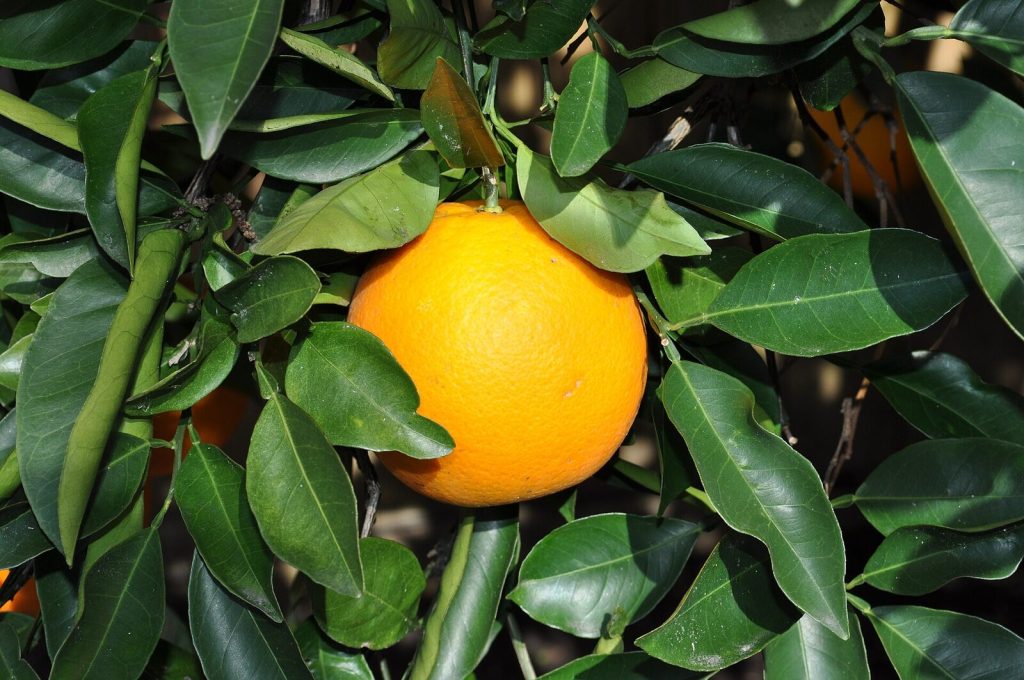
Uganda's oranges are ripe while they are still green, and that one fact runs through the whole enterprise. Sweet orange is a subtropical species that colours up on cold nights, and Uganda does not supply them, so the fruit reaches full maturity with its skin green. Growing the crop here is straightforward. Selling it at a price that reflects the work is the hard part, and that is where this guide spends its time.
Where Oranges Are Grown in Uganda, and the One Statistic Nobody Has
Citrus production in Uganda is dominated by sweet orange and it is concentrated in the Kyoga Plains agroecological zone in the east, mostly across the Teso subregion. Research work on the crop has been done in Kumi, Ngora, Soroti and Kalaki. A survey of 268 growers in two sub counties of Soroti district found most of them farming small blocks, with a considerable share holding under an acre of citrus, and relying on radio, training sessions, cooperatives and other experienced growers for information because extension officers are stretched thin.
Now the statistic problem, which matters if you are planning a planting. Ugandan literature reports orange output from the Teso subregion rising from around 200,000 tonnes in the 1990s, through about 360,000 tonnes, to 769,177 tonnes in a later assessment. FAO, meanwhile, carries no orange line for Uganda at all, while 38 other African countries have one, and the single residual line that would have to contain Ugandan citrus totals about 52,400 tonnes with almost no movement across six reported years.
Those two accounts cannot both be right, and the gap is enormous. The likeliest reading is that FAO does not record Ugandan citrus while the regional figures are estimates rather than measurements, but that is a reading, not a fact. What follows for you is practical: there is no reliable national orange statistic to plan against, so treat any market sizing built on one with suspicion, including sizing that flatters the crop.
Trade data is firmer, because it comes from Uganda's own customs declarations. In the most recent reported year Uganda exported about 12,700 tonnes of oranges worth roughly 4.5 million US dollars, and imported about 2,000 tonnes worth roughly 1.6 million. Read the unit values rather than the volumes. Exports to Kenya moved at about 0.22 dollars a kilogramme and to Rwanda at about 0.54, while the imported fruit came in at around 0.78 to 0.81 a kilogramme from countries whose measured orange yields run from about 24 tonnes per hectare to about 46. Uganda is a net exporter of oranges by volume and an importer at the top of its own market.
Orange Varieties Grown in Teso and What Each One Is For
Three named cultivars plus a local orange make up almost all of the Ugandan crop: Washington Navel, Valencia and Hamlin. Each does a different job, and a Ugandan measurement programme sampled all three across wet and dry seasons in Teso, which means the choice can be made on local numbers rather than on catalogue descriptions.
Valencia is the most widely planted sweet orange in the world and is grown in the tropics up to about 1,600 m. It is a late cultivar, taking eight to nine months from bloom to maturity and longer at altitude, with abundant juice and few or no seeds. In the Ugandan sampling it gave the highest juice content of any variety and season combination, and the highest acidity.
Washington Navel is seedless, easy to peel and matures early, at about six months, and in the tropics it is grown between roughly 1,000 and 2,000 m. It produced the largest fruit in the Ugandan work. Its juice turns bitter in storage, which is why it is a fresh fruit cultivar and not a processing one anywhere in the world.
Hamlin is early and high yielding and suited to warm humid conditions. It gave the smallest fruit in the Ugandan sampling.
| Variety and season | Fruit weight | Juice | Sugar |
|---|---|---|---|
| Navel, wet | 277.5 g | high | low |
| Navel, dry | smaller | 26.5 pc | 10.1 Brix |
| Valencia, wet | mid | 36.9 pc | 7.7 Brix |
| Valencia, dry | mid | lower | higher |
| Hamlin, wet | mid | mid | 7.7 Brix |
| Hamlin, dry | 149.3 g | mid | higher |
The Ugandan conclusion was that Washington Navel suits the fresh market on size, Hamlin suits processing, and Valencia sits between the two and serves both, which is why the researchers recommended Valencia for scaled up production. The season mattered as much as the variety. Dry season fruit across all three cultivars was smaller but carried more sugar and more acid; wet season fruit was larger and more dilute. If you have a choice about when to harvest, that is the trade you are making.
Why Ugandan Oranges Stay Green When They Are Ripe
Peel colour in citrus is a temperature response, not a ripeness signal. Chlorophyll in the skin only breaks down fully when nights are cold, and in the tropics that does not happen, so fruit at full internal maturity stays green or turns a pale yellow instead of going bright orange. Ugandan researchers harvest Teso fruit at what they call the mature green stage, using a colour chart rather than waiting for a colour that will never arrive. The same mechanism is why blood oranges do not develop their colour without nights below about 17 degrees.
This is not a cosmetic issue. Ugandan traders rank colour among the attributes they buy on, alongside maturity, size, taste and texture. So the crop is being judged on something the climate will not deliver, and a grower who waits for colour harvests overmature fruit with falling acidity and a shortening shelf life.
Large packing houses elsewhere run a degreening step, along with washing, waxing, grading and sizing. In practice across most tropical smallholder systems only hand grading and sizing happen. Until that changes, the practical response is to harvest on an internal maturity check rather than on skin colour, and to sell into channels that understand what a green ripe orange is. Tropical fruit also tends to be large and juicy with lower citric acid, which reads to a buyer used to imported fruit as flat rather than sweet.
Budwood and Rootstocks: The Diseases That Travel in Planting Material
Citrus is the crop where planting material provenance is not a quality question but an existential one. Around 60 citrus virus diseases have been described. Several are graft transmissible, which means they move in budwood and cannot be sprayed out. Symptoms can take years to appear or never appear at all in a symptomless carrier, so a nursery tree can look perfect and be carrying the thing that kills the orchard in year six.
The international answer to the budwood problem is a certification chain: clean material produced by shoot tip grafting onto rootstocks raised in a laboratory, indexed to confirm it is free of the diseases, multiplied through foundation blocks into multiplication blocks that supply nurseries with certified budwood, with the multiplication trees destroyed after about three years before they can be reinfected. That system is what revived citrus industries elsewhere.
Uganda has no such scheme that a grower can be pointed at. There is no indexing service, no foundation block, no certified budwood and no register. Saying otherwise, or implying it by talking about buying certified trees, would be dishonest. What is left to you is inspecting the source, buying a whole block from one place so failure is traceable, keeping tools clean between trees, and removing a declining tree instead of nursing it.
Rootstock choice is the other half of the decision and it is usually invisible. Rough lemon is popular with nurseries in the tropics because it germinates true and grows fast and upright, and it tolerates tristeza, but it is susceptible to foot rot and trees on it often carry coarse fruit low in both sugar and acid. Cleopatra mandarin, Rangpur lime and the citranges Troyer and Carrizo are the other common options, with Troyer rated among the more tolerant of root rot and Rangpur lime highly sensitive to exocortis. Note the loose end: Ugandan work records that acidity depends on variety, rootstock, harvest maturity, location and season, and rough lemon is recorded internationally as giving low acid fruit, but whether Teso's low acidity is partly a rootstock effect has not been established by anything I could read. It is a question worth asking your nursery.
Spacing, Planting Holes and Plant Population Per Acre
Citrus is planted at 200 to 400 trees per hectare, with 5 m by 6 m a common layout at 333 trees per hectare. Converted for yourself: 5 m by 6 m puts about 135 trees on an acre, the bottom of that range about 81 and the top about 162. Closer planting brings earlier volume and an earlier thinning problem, the same trade as in any orchard.
Hole preparation carries one detail that is worth more than anything else on this page for a wet site. Dig a hole roughly 30 cm in each direction where drainage is good, or 40 to 50 cm where it is not. Keep the topsoil separate and return it to the top. Put about a kilogramme of rock phosphate in the bottom. Then plant on a mound about 10 cm high, so that after the soil settles the union is still above field level. That mound is a foot rot precaution, and foot rot is one of the main killers of citrus trees in the tropics.
Water the young trees through any dry spell after planting, on the order of ten litres per tree per week. Do not shade them. Shade reduces citrus yield and very humid conditions make disease control harder, which is why citrus orchards are grown in the open and, where there is a choice, in the drier part of a district rather than the wettest.
Soil is less forgiving than the folklore suggests. Citrus will grow on almost anything, but it only yields on soil in good physical condition, and as rainfall rises drainage matters more and heavy soils become less suitable. Excessive rain during flowering or fruiting is destructive to the crop outright.
Irrigation and Flowering: Getting One Crop Instead of Twelve
Here is the difference between a backyard tree and an orchard. A garden citrus tree flushes and flowers whenever it feels like it, which gives the household some fruit for much of the year and gives the tree a low total yield, partly because twigs restart extension growth before flowering has finished. Teso oranges behave this way: fruit is available through the year with a peak from September to December.
An orchard wants the opposite. Orchards in drier areas get a synchronised bloom because a dry period is followed by simultaneous flowering, and irrigation applied after a dry spell of six weeks or more will bring on a flush carrying bloom. Once flowering is synchronised, every other operation can be timed properly: pruning, manuring, crop protection, fruit thinning and harvest each get a window instead of happening continuously. The fruit load itself then holds the tree in check and stops erratic flushing.
Citrus fruit does not ripen off the tree, and it takes seven to eight months from flowering to maturity. Fruit set is usually high, and the tree then sheds fruitlets in waves to regulate its load, so early drop is normal and not a sign of failure. Pruning is of doubtful value in citrus and no system of replacement pruning has emerged for it; shape the young tree, take out crossing and inward growing branches, and otherwise leave it alone.
Feeding an Orange Orchard Without Wrecking Fruit Quality
Nitrogen is the input that most obviously repays and most easily backfires. Citrus removes roughly 3.5 kg of nitrogen per tonne of fruit, which is a figure you can compute your own requirement from. High nitrogen levels are recorded as detrimental to fruit growth and quality, so feeding beyond what the crop removes buys you a worse product.
Micronutrients carry more weight in citrus than in most crops. Zinc above all, and also iron, manganese and copper, with boron and molybdenum sometimes needed, strongly affect both growth and yield. Potassium has to be balanced against calcium and magnesium rather than pushed on its own. Leaf analysis is the diagnostic that actually works on a tree crop, and a soil test before fertilizer application is the cheaper starting point where leaf analysis is out of reach. Work from the test, not from a bag recommendation, because on a twenty year planting a wrong nutrient decision compounds.
Citrus Pests and Diseases That Matter in Uganda
Pseudocercospora leaf and fruit spot is the disease with Ugandan evidence behind it. Caused by Pseudocercospora angolensis, it can take up to 100 percent of a citrus crop. Ugandan diagnostic work evaluated detection methods on 150 diseased and 50 healthy sweet orange leaf samples, which tells you the disease is present here in quantity rather than as a curiosity. That work also found that microscopy detected it reliably while one molecular method managed only about a third of true cases, so a negative laboratory result is not proof of a clean orchard.
Mango mealybug is now an official Ugandan record and citrus is one of its hosts. Uganda filed a pest report confirming Rastrococcus invadens present in the south west, at a border location in Ntungamo District, with the status present, not widely distributed, and not under official control. Where it establishes, reported yield loss on citrus and mango runs from 89 to 100 percent. Ants farm mealybugs and drive off their natural enemies, so controlling ant traffic up the trunk is a genuine control measure and not a side issue. A suspected case goes to the district agricultural officer, because this is a quarantine pest and a reporting matter.
Phytophthora foot rot and root rot do the most damage of the fungal diseases in tropical citrus, with Phytophthora palmivora the main species involved. Damage is done to the trunk and crown roots by spores splashing up in water, and gummosis on the trunk is the visible sign. The same organisms cause brown rot of fruit and seedling blight in nurseries. Prevention is soil management: drainage, because the organism only moves in free water, and heavy mulching, both to build soil biology and to stop spores splashing onto the trunk. Copper compounds painted onto wounds that have been cleaned properly protect against infection. Note the warning that comes with that: routinely adding copper to insecticide sprays year after year has pushed orchard soils towards toxic copper levels.
Scales and other sucking insects do more damage than anything with chewing mouthparts, and several of them are also vectors of the virus diseases above. Ants protect them from predators here too. Fruit flies matter for a different reason: the mere risk of maggots being present closes certain export markets to fresh fruit. Ugandan trapping work has been done in mango orchards rather than citrus, where one species accounted for over 95 percent of flies caught, and citrus sits in the same host range.
On greening, an honest statement. It is the most destructive citrus disease in the world, it is present across large parts of Africa, and I could not verify a published survey establishing its status in Ugandan orchards. Whether a declining tree in Teso has greening, tristeza, foot rot or a nutrient problem is a diagnosis, not a guess, and the district agricultural officer is the route to one. No product, rate or interval for any of these appears on this page. The rate is on the label of whatever you buy, the pre harvest interval on that label governs, and what is registered for citrus in Uganda has to be confirmed locally. If you have not read how to read agrochemical labels, read it before you buy anything.
Harvest Maturity and the Quality Numbers Buyers Use
Since colour will not tell you when to pick, maturity has to be judged on what is inside the fruit. Four measurements do it: juice content, total soluble solids in degrees Brix, titratable acidity, and the ratio between sugar and acid. As fruit matures it gets sweeter and less acid, the juice content rises and then falls again, and shelf life shortens, so a sweeter orange has to be moved faster.
The benchmarks are published, and the Ugandan measurements can be read straight against them. This is the most useful table on this page.
Read that as a whole and the picture is clear. Teso fruit is not failing on sweetness. It is failing on juice content against a processing benchmark, and it is too sweet relative to its acid, which is what makes tropical orange juice taste flat. Dry season fruit is the better raw material on almost every measure, which means harvest timing is a quality decision, not just a logistics one.
The Processing Market: Why Teso Fruit Has Struggled to Sell
A processing plant was built in Soroti to absorb the Teso crop. It came out of a cooperative union formed by growers in the subregion, it was launched in April 2019 with the aim of turning the subregion's citrus into juice, and it produced its first branded juice in October 2019. That is the good news, and the fact that growers organised it themselves is worth respecting.
The difficulties are on the record from the ministry's own account of a ministerial visit to the plant. Only the orange line was working, with the mango line under repair; the mangoes it used were being brought from Kasese while the oranges came from the Teso districts; and management said beverage companies were continuing to import concentrate rather than buy locally, and that what the plant produces in 48 hours a competitor produces in minutes. A small, intermittent line competing against imported concentrate is a thin market for a large crop.
Ugandan research adds the other half of the explanation, and it is the harder half: most fruit juice processors in Uganda were not using Teso oranges because the end product did not meet what consumers wanted on colour and taste. Put that beside the quality numbers above and the mechanism is visible. The fruit is green, its juice content falls short of the processing benchmark, and its sugar to acid ratio sits above the window that gives juice a recognisable bite.
None of that means the crop is a mistake. It means a grower should not plant on the assumption that a factory will absorb whatever the trees produce. The honest sequence is to plant Valencia if you want optionality, manage for dry season fruit where you can, treat the fresh and regional trade as the main market, and treat processing as an outlet that will take fruit meeting a specification you should ask to see in writing. Fruit juice processing sets out what that specification involves, and selling produce to processors covers the commercial side.
The Years Before the First Crop
A citrus planting is an investment with a long silent stretch at the front, and any budget that shows revenue in the first year is wrong by construction. Budding shortens the juvenile phase compared with a seedling tree, and commercial growers elsewhere aim to reach around 25 tonnes per hectare within four to six years of planting and then spend their energy holding that against tree decline. No Ugandan figure for years to first crop or to full bearing could be verified for this page, so plan on the international shape and check it against a grower near you who has done it.
Yield expectations should be set from measured figures rather than from potential. Citrus can reach about 50 tonnes per hectare where growing conditions are fully controlled. In tropical conditions the recorded numbers are far lower: around 14 tonnes per hectare on plantations in the humid tropics, about 7 among smallholders in the same countries, and around 5 in parts of Southeast Asia. Regionally, Kenya measures about 9.4 tonnes per hectare and Tanzania about 13.9. At 333 trees per hectare, 10 tonnes per hectare is about 30 kg a tree. That is the order of magnitude to build a plan on.
The ground between young trees is the answer to the holding period. Wide spacing leaves most of the land open for several years and annual crops fit there, provided they neither shade nor starve the trees and do not build up a pest you will later be fighting. The same logic applied to a longer wait is worked through in the note on mango orchard management.
For the rest of the citrus group see lemon farming in Uganda and lime farming in Uganda, both of which behave differently from sweet orange, and for the wider section start at the fruit farming guides. Growers planting a perennial for the first time should also read starting a seedling nursery, because raising your own rootstocks removes one layer of uncertainty, at the price of two extra years.
Questions Ugandan Orange Growers Ask
How long before an orange orchard earns anything? Several years of cost with no income, then a rising crop. Commercial growers elsewhere target full production within four to six years of planting, budded trees bear earlier than seedlings, and no Ugandan figure for either milestone could be verified. Budget the establishment years as a cost and use the land between the rows.
What is a fair price for Ugandan oranges? No verified current farm gate range could be sourced, and a single spot price would be misleading on a crop this seasonal. What can be stated is the shape: export fruit left the country at roughly 0.22 to 0.54 US dollars a kilogramme depending on the destination, while imported fruit arrived at roughly 0.78 to 0.81. Check current local prices at two or three points in your own market before agreeing anything, and price on weight rather than by the bag or the heap.
Which variety should I plant? Ugandan research recommends Valencia for scaled production because it meets more of the requirements of both the fresh market and processing across seasons. Washington Navel gives the biggest and most saleable fresh fruit but its juice is unsuitable for processing. Hamlin is early and high yielding with smaller fruit.
My oranges are green. Are they unripe? Probably not. In the tropics the skin stays green at full internal maturity because chlorophyll only breaks down completely on cold nights. Judge maturity on juice content, sugar, acid and the sugar to acid ratio, or on a maturity colour chart, and do not wait for orange skin.
Why is my tree declining when the neighbours are fine? Work through the possibilities rather than buying a product. Foot rot from a tree planted too deep or on a wet site. A graft transmissible virus that came in with the tree. Root rot. A nutrient deficiency, most often zinc. Scale insects being farmed by ants. Each has a different answer and only a diagnosis separates them.
Can I raise my own trees from seed? Citrus seed of most cultivars produces seedlings that come true to type, which is unusual and is why home garden trees are often seedlings. Two drawbacks. Guaranteeing that a given seed is of that type is difficult, and a seedling tree stays juvenile longer so it flowers later. Seedlings are mainly useful as uniform rootstocks for budding.
Should I sell to a processor or to the fresh market? Fresh and regional trade is the main market in practice. Processing will take fruit that meets a specification, and the Ugandan measurements show that specification is not automatically met, particularly in the wet season. Ask for the specification in writing, in numbers, before planting anything on the strength of a processing contract.
Do I need to spray for greening? There is nothing to spray for greening. It is bacterial, transmitted by budding and by an insect vector, no cultivar or rootstock resists it, and antibiotics mask symptoms without curing the tree. Management is clean planting material, removing infected trees, and controlling the vector, which is why the planting material section of this page is the longest one.
Prices for budded trees, rock phosphate, lime and sprays move with the season and the seller, so check current input prices and the supplier listings before committing to a tree count. Ask any nursery two questions before paying: what rootstock is this budded on, and where did the budwood come from.