
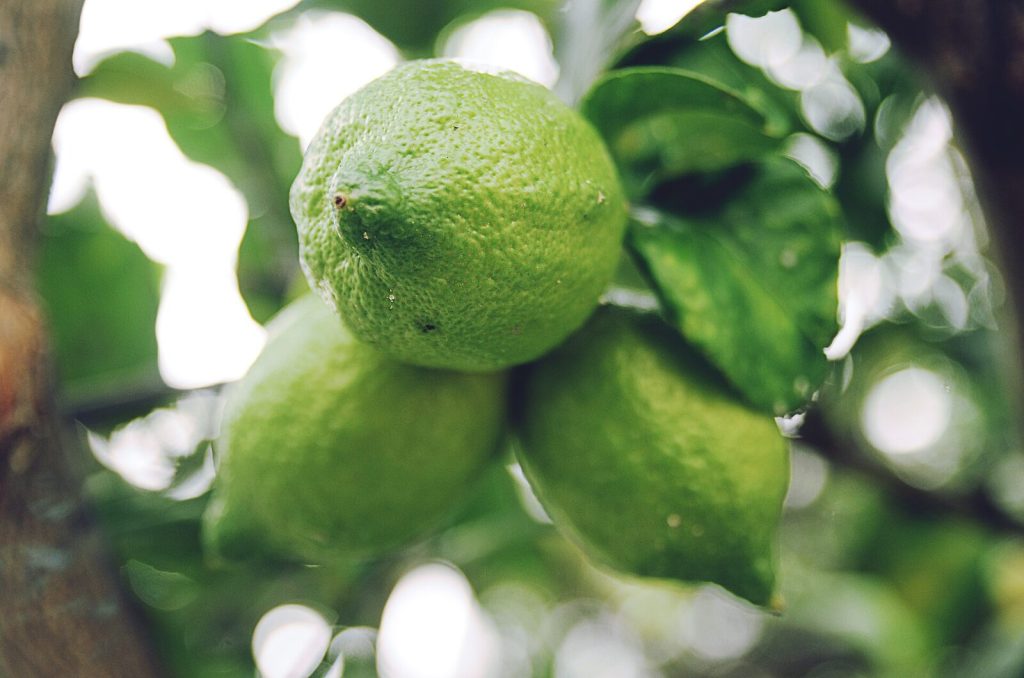
Lime farming in Uganda is real but almost entirely unrecorded. Uganda declares
genuine exports of limes and lemons to Rwanda and Kenya through its own customs returns, yet no national
statistic exists for how much land carries lime trees or what they yield. Lime is a small citrus tree of
the lowland tropics, grown here mostly as a few trees on a smallholding rather than as an orchard.
One thing to clear up first. If you arrived here looking for agricultural lime, the
powdered limestone used to raise the pH of an acid soil, that is a different product with the same name,
and our page on soil testing
before fertilizer application is the right starting point. This page is about the fruit.
What the National Record Actually Says About Lime Farming in Uganda
Almost nothing, and that is worth knowing before you plant. Uganda reports no production figure for
lemons and limes to FAO at all, while twenty nine other African countries and territories do. It reports
no separate figure for papaya, watermelon, orange, mango or avocado either. Every Ugandan fruit other than
banana and pineapple is folded into a residual line that sits on about 7,900 hectares and roughly 52,400
tonnes, and every cell in that line is flagged as imputed or estimated rather than measured. The area in
it moves by fifteen hectares across six years. A figure that flat is a figure somebody carried forward.
The national monthly consumer price series is the same story. It tracks apples, avocado, Bogoya,
Ndiizi, matooke by the cluster and by the bunch, oranges, passion fruit, pineapple and watermelon. There
is no lime line and no lemon line. The series clearly does follow fruit, so the gap is specific rather
than a general blind spot.
And there is no ministry or research organisation growing manual for citrus. I enumerated the whole
published document inventory for both, and found the maize, bean, rice, cocoa, coffee, aquaculture and
poultry manuals, plus a banana manual and a banana variety list. For citrus there is a pack house audit
checklist and a pesticide residue checklist. Nothing on how to grow the tree.
terms. Roughly 1,900 tonnes to Rwanda and 1,450 tonnes to Kenya in the latest year of customs data, all
of it declared by Uganda rather than estimated from partner countries.
production figure.
line that is itself an estimate.
crops, roots, tubers and banana. No citrus.
and limes" as one line. It cannot be split, so nobody can say how much of that tonnage was lime.
Altitude, Rainfall and Where Limes Actually Grow in Uganda
Lime is a lowland tree. The standard reference work on the species puts it at home in the lowland
tropics, growing up to about a thousand metres and beyond, sensitive to cold and reasonably tolerant of
drought. Now set that against Uganda. The ministry's own variety list bands Ugandan production for banana
between 1,000 and 1,600 metres, which is a fair statement of where the country's farming sits, and
Uganda's lowest point anywhere is 614 metres. Much of the cropland sits at or above the altitude
where lime is most comfortable.
That does not make lime impossible. It does mean the trees on a Ugandan hillside are working a little
outside their preference, which shows up as slower growth, later bearing, and a longer wait before the
tree earns anything. Warm, lower lying districts will carry lime more easily than the south western
highlands.
Altitude works against the crop from a second direction as well, and this one is the more serious of
the two. African citrus greening is recorded as worst in the mid to high altitude areas of Eastern Africa,
which is exactly the band most Ugandan farmland occupies. So the same elevation that slows the tree also
suits the disease.
On soil, lime is less fussy than orange and will take a heavier soil so long as drainage is genuinely
good. Waterlogging is what kills citrus roots. If your ground holds water after heavy rain, that is the
problem to solve before anything else, and it is not solved by fertilizer.
Lime Planting Material: Seed, Layering and the Absence of a Certified Nursery Scheme
Start here, because on a tree crop this is the decision that cannot be reversed. Five years after the
money is spent, an orchard raised from planting material of unknown parentage is the commonest way a fruit
enterprise fails, and by then nothing can be done about it.
There is no certified nursery scheme for Ugandan fruit planting material that anyone can point you at.
The ministry's certified seed programme covers maize, beans, sorghum, soybean, sunflower, groundnut and
rice, and no fruit. For banana, the research institution that runs the regional disease programme states
outright that planting material certification is basically non existent across Eastern and Central Africa
and that no regulated or practical framework reaches smallholders. A Ugandan study of fruit tree planting
in Budaka district recorded farmers naming the absence of planting material in local nurseries, and thin
information on how to propagate, among the reasons they had not planted. That is the honest position, and
a page that implied a certification scheme exists would be doing you real harm.
Lime, unusually, gives you a way round it. Most fruit trees do not come true from seed, which is why
grafted material matters so much and why unverified grafted material is so dangerous. Lime seed is
polyembryonic, and lime seedlings are largely true to type. A farmer who collects fruit from a tree they
have watched crop for several seasons, and raises seedlings from it, is on firmer ground than a farmer
buying grafted stock whose parent tree nobody can identify.
The price of that route is time. A seedling lime carries a juvenile phase of about five years before it
flowers. The alternative is air layering, which is the normal method for lime worldwide and is rarely
budding, because lime layers strike readily. A layered tree can carry a little fruit in its second year
after planting and a worthwhile crop in the third. Layers are potted and nursed for two to four weeks
before they go out.
Whichever you choose, the regional citrus disease survey ends on the same recommendation: strict
phytosanitary care, particularly over seedlings. Material moved from a plot you have not inspected is how
greening travels. Our guide to starting a seedling
nursery covers what raising your own involves.
Years to First Harvest and What the Establishment Period Costs
This is the part the competing pages leave out, and on a perennial it is the whole shape of the money.
A lime tree spends years taking inputs and returning nothing. Any first year budget that shows income from
lime is wrong, and the honest question is not what an acre earns but how long you can carry it.
watering through the first dry spell, weeding. No income from the trees at all.
tree will not. Costs continue: weeding, pruning, canker hygiene, water in the dry months.
is the earliest point at which a lime planting starts paying anything back.
phase and flowers. Layered trees are building toward full bearing.
in production it flowers and fruits across the year rather than in one season, and each fruit takes about
five and a half to six months from flower to harvest.
canopy closes, and a realistic view of how many trees your household can water and weed without income
from them.
There is a measured Ugandan finding that puts this into context better than any budget. A study of
fruit tree planting in eastern Uganda found that the households which had planted differed from those
which had not in age, labour available, farm size and income, but not in access to
credit. Fruit trees in Uganda are financed out of land and household earnings, not out of
borrowing. The establishment period is paid for by the family, and that is why it decides how many trees
go in.
Spacing, Soil and Tree Numbers on a Ugandan Lime Plot
Be honest with yourself about scale. The same eastern Uganda study found fruit trees standing on
holdings averaging half an acre and carrying between ten and forty trees. At any normal citrus spacing an
acre takes well over a hundred trees, so the real Ugandan fruit holding is a scattered stand, often along
a boundary or around a homestead, rather than a planted orchard. Planning for four hundred trees when your
neighbours are managing thirty is how people end up with a field of unwatered sticks.
Lime makes a small, densely and irregularly branched tree of about five metres, and the twigs carry
short stiff spines, which affects how you space and how you harvest. Unpruned, the canopy becomes a thicket
and inner branches die back from competition. So trees are thinned rather than trained: take out crowding
limbs, take out the root suckers and the spiny suckers on older branches, and take out anything the canker
has girdled.
Soil acidity is worth a test rather than a guess, particularly in the areas of Uganda where croplands
have been mapped as acid. This is the point where the two meanings of the word lime meet honestly: an
orchard on a genuinely acid soil may need agricultural lime, and the way to find out is a soil test rather
than a rule of thumb.
Citrus Greening and the Disease That Decides a Ugandan Orchard
African citrus greening is the reason Ugandan citrus yields sit far below what the trees are capable of.
A regional survey sampled 300 sites in Uganda and detected Liberibacter bacteria in 26 percent of
the plants tested, against 21 percent in Ethiopia and 66 percent in Kenya. The organism it found
most often in Uganda was a subspecies of Candidatus Liberibacter africanus, present in 22 percent
of sequenced samples. The insect that carries it is Trioza erytreae, the African citrus triozid.
On smallholdings across the region the same paper puts citrus yield at about 10 tonnes a hectare against a
potential of about 75.
Two corrections belong here, because both are circulating. The severe Asian form of the bacterium was
reported in Uganda some years ago, and those reports were later shown to be
misidentifications; the Asian form has been confirmed in coastal Kenya, not here. Anyone telling
you the Asian strain is established in Uganda is repeating a withdrawn identification. Second, that
Ugandan survey sampled sweet orange, lemon and tangerine. It did not sample lime. So 26 percent is a
Ugandan citrus figure and should be read as one.
Symptoms are leaf mottling, defoliation, twig and branch dieback and, in bad cases, lopsided fruit.
There is no cure for an infected tree. What you can do is refuse to bring the bacterium in on planting
material, watch for the psyllid on soft new flush, and take out trees that are clearly declining rather
than nursing them as a reservoir for the rest.
Bacterial Canker and Leaf Miner: Lime Pest and Disease Management
Bacterial canker is the disease that shortens a lime tree's life in a wet climate, and it is named
in the literature as a limiting factor for lime in the wet tropics. The bacterium enters through any wound,
including the punctures made by sucking insects, and it spreads in rain splash. Where it girdles the trunk
the tree goes. Orchard hygiene does most of the work: cut out infected branches, burn or bury the prunings
rather than leaving them in the row, and do your pruning in dry weather rather than in the middle of the
rains when every cut is an open door.
A copper based product applied early in the rainy season is the treatment the literature names.
The rate is on the product label and the label is the authority, not this page and not a
neighbour's habit. Confirm both the product and the rate with your district extension officer, because
registration status in Uganda changes and an unregistered product is money spent on a legal problem. Older
citrus literature also recommends an antibiotic spray for canker; whether any such product may lawfully be
used on a food crop in Uganda is a question for the current ministry register rather than for an old
textbook, so no product and no rate for it appears here.
The citrus leaf miner is the other constant. It tunnels inside the leaf, distorts the growth and causes
early leaf fall, and it reaches almost every tree. There is a lesson in how it behaves: control by
insecticide is difficult because the caterpillars sit inside tunnels where sprays do not reach, and
heavier spraying appears to have made the pest worse, most likely by killing the predators that were
holding it down. So a spray programme aimed at leaf miner can leave you with more leaf miner and a smaller
bank balance. Healthy flush, good water and patience do better.
Making Limes Flower Off Season: Irrigation as a Price Tool
Here is a lever that no page on this query mentions and it may be worth more than anything else on this
list. Because lime is everbearing, flowering can be pushed. Withhold irrigation for about three weeks
during the dry season, then water again, and the tree throws a flush which brings on flowering. Count
forward five and a half to six months from that flowering and you know roughly when the fruit arrives.
That is a way of arriving at market when supplies are thin instead of when everyone else does. It needs
water you control, which is the catch, and it needs a young tree to be established first, because
deliberately stressing a tree that is still building its frame costs you growth you cannot buy back. Our
explainer on drip irrigation
covers what delivering that water reliably involves.
Harvesting Limes and Why the Fruit Will Not Wait
Limes are picked by hand at mature green or as they begin to turn yellow, and graded and sorted by
hand afterwards. Fruit taken a little early is less juicy but travels better, which matters more here than
it does in the textbooks.
The hard fact about lime after harvest is that the rind is very thin and very densely glandular, so it
dries out and darkens quickly, and the fruit looks second rate long before it tastes it. Trials on
extending lime storage life, including moist sand, cool storage with polythene, waxing and growth
regulators, have not produced a satisfactory result. So there is no storage answer waiting to be bought.
Lime is a crop you move.
That shapes the whole plan. Two measured Ugandan figures give the scale of the risk: cumulative loss
from farm to market has been measured at 27.6 percent for mango and 34.1 percent for banana, with most of
it happening in transport between farm and market. Lime has not been measured, but nothing about a thin
skinned citrus in an open pick up suggests it does better. Sort before you load, pack so nothing rolls,
and know who is buying before you pick.
The Market for Ugandan Limes and What the Export Line Hides
The demand is there. Ugandan customs returns show close to 3,400 tonnes of limes and lemons leaving the
country in the latest recorded year, split between Rwanda and Kenya, and Uganda declared those movements
itself rather than having them estimated from what partner countries said, which is the difference between
a real trade line and a statistical artefact. Two much smaller consignments went to Europe at roughly
twenty times the regional unit value, which is an air freighted speciality trade rather than something a
smallholder can plan around.
Read the heading carefully though. Customs records lemons and limes together, and so does FAO. Nobody
can tell you what share of that tonnage was lime, and any page that presents a lemon and lime figure as a
lime figure is guessing. The same applies to the wider fruit export figures: Uganda's fruit exports go
overwhelmingly to its neighbours, with roughly two thirds to Kenya and a fifth to Rwanda, and less than a
tenth to the Middle East. So the honest market picture for lime is domestic and regional, moving in a
trader's vehicle within a day or two of picking.
Within Uganda, lime sells through the same channels as other citrus, and the absence of a national
price series means there is no published number to negotiate against. That is a real disadvantage and it
is worth naming: a buyer arriving at your gate knows today's price in town and you probably do not. Ask
two buyers rather than one, and weigh or count the fruit before agreeing anything. For a sense of how
citrus behaves in the national series, oranges run between roughly 1,469 and 1,908 shillings a kilogramme
at retail across the months, which is a narrow enough band to suggest citrus is not the volatile part of
the Ugandan fruit trade.
If water sits, citrus roots will not survive there and no input fixes it.
can carry it but will bear later and sit inside the greening vector's preferred band.
tree you have watched crop for several seasons, with no mottled leaves and no dieback.
a dry season, and you give up the off season flowering lever entirely.
half an acre and ten to forty trees. Match the plan to the labour in the household.
is no published price to fall back on.
Frequently Asked Questions About Growing Limes in Uganda
How long before a lime tree starts producing in Uganda? An air layered tree can carry
its first few fruits in the second year after planting and a crop worth harvesting in the third. A
seedling raised tree carries a juvenile phase of about five years before it flowers at all. Both figures
come from the standard reference work on the species; no Ugandan measurement of time to bearing exists,
and a plot at higher altitude should be expected to run at the slower end.
What does it cost to establish a lime planting in Uganda? There is no published
Ugandan costing for lime, so rather than invent one, here is the structure to price locally. The land
preparation lines are the same as for any perennial planting: Ugandan government crop establishment rates
put bush clearing at about 150,000 shillings an acre and land opening at a further 150,000, while private
tractor ploughing runs 70,000 to 150,000 shillings an acre per pass with subsidised hire quoted from about
40,000. After that the costs that matter are planting material, digging holes, and the water and weeding
of the years before any income. Nobody can quote you a planting material price honestly, because there is
no certified nursery trade to quote, so get two local quotations and treat a very cheap layer with
suspicion.
What price do limes fetch in Uganda? No national price series tracks lime, so any
single figure you see is one person's local sale. For comparison, the national series puts oranges between
roughly 1,469 and 1,908 shillings a kilogramme at retail through the year. Prices move with season,
district, whether you are selling at the farm gate or in a town market, and above all with how much fruit
is around that week. Check current prices in your own market before agreeing anything, and treat a
published per kilogramme figure from a seedling seller as advertising.
Can I grow lime from a pip out of a fruit I bought? More successfully than you can with
most fruit trees, yes, because lime seed is polyembryonic and the seedlings come largely true to the parent.
That is the one genuine advantage lime has over mango or avocado on this question. The trade off is the
five year juvenile period, and the risk that the fruit you bought came off a tree carrying greening, which
you cannot see in a pip. Choose the parent tree, not the fruit.
Is citrus greening a problem for lime in Uganda? African citrus greening is present and
widespread in Ugandan citrus, detected in 26 percent of plants tested across 300 Ugandan sites in a
regional survey, and it is worst in the mid to high altitude areas where most Ugandan farming happens.
That survey sampled orange, lemon and tangerine rather than lime, so the specific picture for lime is not
documented. There is no cure for an infected tree. Everything useful happens before planting, in the
choice of material, and afterwards in removing declining trees instead of keeping them.
How many lime trees should I plant on an acre? Fewer than the spacing tables suggest,
at least to begin with. Ugandan fruit holdings measured in eastern Uganda averaged half an acre carrying
ten to forty trees, and the households that planted were distinguished by land, labour and income rather
than by access to credit. Since the trees produce nothing for two to five years, the number you should
plant is the number you can water and weed out of your own pocket for that long.
Does Uganda export limes? Uganda declares roughly 3,400 tonnes a year of limes and
lemons together, almost all of it to Rwanda and Kenya, and it declares them itself rather than having them
estimated from partner records. The heading is combined, so no one can say how much of that is lime. Before
building a plan around export, note that Uganda's fruit exports are overwhelmingly regional, with about two
thirds going to Kenya.
Why do so many searches for lime farming return soil products? Because agricultural
lime, the powdered limestone used to correct an acid soil, shares the name. It is a real and separate
subject, and a citrus planting on an acid soil may well need it. The way to know is a soil test rather than
a guess.
Checking Lime Prices and Finding Planting Material
Because lime sits outside every national statistic, the useful next step is local rather than national.
Ask in two nearby markets what limes are fetching this week and in what unit, so you have a number of your
own before a buyer offers you one; our price pages track the crops that do have a
published series and show how much a fruit price can move between months. For planting material, work
through our supplier pages and treat the visit as an inspection: look at the
mother trees, look for mottled leaves and dieback, and walk away from anything sold without a parent tree
you can see. If you are weighing lime against the citrus Uganda actually records and prices, our guides to
orange farming and
lemon farming sit alongside this one, and
mango farming covers a tree crop with a longer
establishment period and a measured Ugandan loss figure. The fruit farming
hub has the rest of the section.