
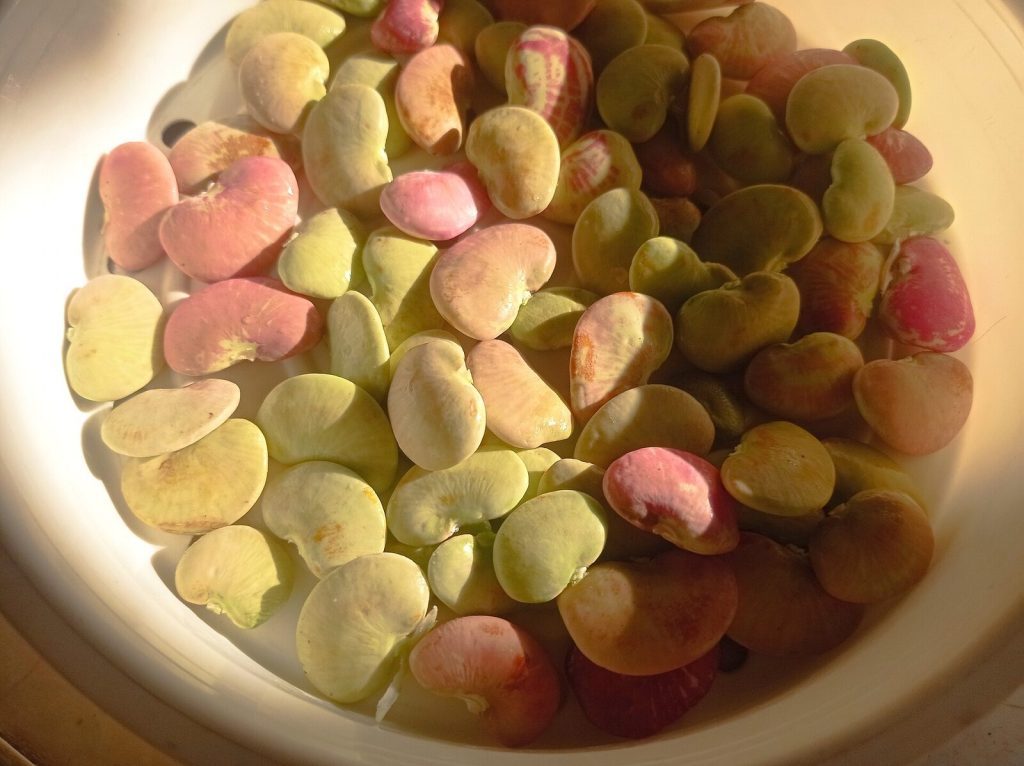
The best bean seeds in Uganda come from the released NABE and NAROBEAN lines, and which one fits your field turns on two questions: bush or climbing, and what grain type your buyer pays for. Certified seed of these varieties moves through registered seed companies, NARO institutes and community seed producers. NARO's bean programme at Namulonge has released both growth habits, each with documented maturity, yield and disease ratings.
Why Bean Seed Choice Decides the Yield Gap Per Acre
MAAIF's National Seed Policy puts current farm level bean yields in Uganda at 300 to 500 kg per acre per season, against a potential of up to 900 kg per acre per season. That gap is the whole argument for buying seed rather than planting what is left in the store.
NARO's own measurements are lower still. A baseline survey run under its biofortified bean project, across Arua, Hoima, Kamwenge, Oyam and Sironko, recorded on farm yields from 497 kg per hectare in Oyam to 804 kg per hectare in Hoima. That works out at roughly 200 to 325 kg per acre, below the range MAAIF quotes. Two Tier 1 Ugandan sources, two different pictures of the same crop. Read them together and the honest conclusion is that a Ugandan bean acre commonly returns somewhere between a fifth and a half of what a released variety is documented to carry.
Beans are not a marginal crop here. NARO reports that beans occupy over 12 percent of Uganda's total cultivated area and are grown by more than 85 percent of households, that Uganda is the second largest bean producer in East Africa after Tanzania, and that about 60 to 70 percent of what farmers produce is sold into domestic and regional markets. Bean exports earned USD 111.4 million in 2022. Seed choice on that many acres is not a small lever.
For the agronomy that sits underneath the seed decision, the bean farming guide covers the season from land preparation to threshing. This page is about what to buy.
Bush Beans or Climbing Beans: The Choice That Changes the Acre
This is the first fork and it changes more than yield. NARO's climbing bean leaflet states the yield advantage plainly: climbers carry roughly two to three times what bush beans carry on the same area under good management. The published figures back it. Bush releases sit between 1.5 and 2.5 tonnes per hectare. Climbing releases sit between 2.2 and 3.7.
Then there is the seed bill, which runs the other way from what people expect. NARO's bean training manual gives 32 kg per acre for bush beans and 16 kg per acre for climbing beans. A climber needs half the seed and returns more grain, because each plant occupies a vertical column rather than a patch of ground.
What you pay for that is labour and material. Climbers need stakes. NARO specifies stakes about two metres long, placed two to three weeks after planting at the first weeding, one strong stake between two plants, or in the centre of four where stakes are scarce. Eucalyptus and calliandra branches work, and so do mature elephant grass reeds, banana fibres, papyrus and sisal string. Stakes can be stored and reused across several seasons, which spreads the cost, but somebody has to cut, carry, plant and remove them. On a rented plot with no bush nearby, that is the constraint that decides it.
Climbers also go in earlier. NARO says to plant them ahead of bush beans, at the onset of rains, because they need more water over a longer cycle. And they are more exposed to birds, which strip the young forming pods, so a scattered half acre of climbers suffers more than a block of several acres planted at once.
Market Grain Type: Why Ugandan Buyers Pay for Colour and Size
Bean seed selection in Uganda is unusual in that the grain's appearance is part of the specification, not a cosmetic detail. NARO records market class against several of its releases as an attribute in its own right, and the classes are regional.
Kanyebwa is the class NARO names for NABE 20, NABE 21 and NABE 23, all large or medium seeded kidney types. Red mottled covers NABE 4, NABE 19 and NAROBEAN 4C. For northern Uganda, NARO states the market preference differently: dark seed colour, and it records NABE 18 as purple mottled and NABE 22 as purple with white mottles, both explicitly targeted at the northern market.
The clearest case of grain type driving variety choice is NABE 13 and NABE 14, the two red seeded bush lines released in 2006. NARO's leaflet says both grow and yield well in most regions of the country, and then adds the condition that matters: the deep attractive seed colours the market wants only develop when they are grown in the mid to high altitude areas. For that reason alone the two are recommended mainly to Kabale, Kisoro, Bushenyi and Sironko. Plant them low and you get the yield without the colour, which means you get the yield without the price. Traders and farmers in Kabale call NABE 13 Murwanisa and NABE 14 Muzahura, so those are the words you may hear at a highland store rather than the release codes.
NABE 13 carries a darker red seed and NABE 14 a brighter light red. That is the only way NARO offers to tell them apart by eye, which is worth knowing when a seller has them in adjacent tins.
NARO Released Bush Bean Varieties and What Each One Is For
The figures below come from NARO's technology records and its northern Uganda bean training manual. Where the two disagree, both readings are given in the prose rather than averaged.
| Bush variety | Days | Yield t/ha | Grain type |
|---|---|---|---|
| NABE 4 | 85 to 90 | 1.5 to 2.5 | Red mottled |
| NABE 13 | Not stated | 1.5 to 2.5 | Dark red |
| NABE 14 | Not stated | 1.5 to 2.5 | Light red |
| NABE 15 | 60 to 75 | 1.5 to 2.5 | Not recorded |
| NABE 16 | 65 to 75 | 2.0 to 2.5 | Not recorded |
| NABE 17 | 58 to 75 | 2.0 to 2.5 | Red, white mottle |
| NABE 18 | 63 to 78 | 2.0 to 2.5 | Purple mottled |
| NABE 19 | 60 to 70 | 2.0 to 2.5 | Red mottled |
| NABE 20 | 58 to 70 | 1.6 to 2.2 | Kanyebwa |
| NABE 21 | 58 to 70 | 1.5 to 2.0 | Yellow, mottled |
| NABE 22 | 58 to 70 | 1.5 to 2.0 | Purple speckled |
| NABE 23 | 64 to 75 | 2.0 to 2.5 | Kanyebwa |
Read down that table and the spread in yield is narrow while the spread in grain type is wide. That is the practical message. Among the bush releases you are not choosing a high yielder against a low one so much as choosing a colour and a size that your buyer will take, at a maturity that fits your rain.
NABE 4 is the oldest of them, released in 1999, and it still has a specific use. It matures in 85 to 90 days, sheds its leaves at maturity so there is less bulk to carry off the field, cooks fast and has a soft seed coat. One line in its leaflet decides where it can go: root rot susceptibility, stated plainly, alongside tolerance of angular leaf spot and anthracnose. Read in that order, the variety recommends itself for clean ground and rules itself out of any field that has already lost a bean crop below the soil line. The same leaflet names K20, which farmers know as Nambale, along with K132 and NABE 1 as closely related released red mottled varieties. If you grow the Nambale type, the Nambale bean guide takes that line, its two seed sizes and its disease record on its own.
NABE 16, released in 2010, is the one NARO describes as suitable for all regions, tolerant of bean anthracnose, at 65 to 75 days. NABE 15 is the one it records as tolerant of waterlogging along with disease, which is a narrow but real advantage on a heavy valley bottom.
The 2012 cohort, NABE 17 through NABE 23, was released together and separates mostly on grain class and region. NABE 17 and NABE 20 are indeterminate bush types, NABE 21 and NABE 22 determinate. That distinction matters less in beans than it does in tomato, but an indeterminate bush keeps flowering for longer, which helps when the rain is patchy and hurts when you want one clean harvest.
Two more recent entries appear in NARO's records that I could not confirm as on sale. NABE 14R is listed as a determinate bush released in 2024, at 2,700 kg per hectare and 76 to 94 days, with anthracnose and bean rot resistance, but the same record marks its readiness as research rather than released. NABE 12CR is listed as an indeterminate climber released in 2024 at 3,800 kg per hectare and 94 to 105 days, resistant to root rot and aimed at the fresh pod market. Ask for either by name and treat a blank look as the likely answer for now.
Climbing Bean Varieties for the Highlands and the Small Plot
| Climbing variety | Days | Yield t/ha | Grain colour |
|---|---|---|---|
| NABE 12C | 89 to 110 | 2.0 to 3.5 | Cream, purple |
| NABE 26C | 77 to 113 | 2.5 to 3.5 | Red mottled |
| NABE 29C | 78 to 120 | 2.2 to 3.5 | Red to maroon |
| NAROBEAN 4C | 82 to 88 | 2.5 to 3.7 | Red mottled |
| NAROBEAN 5C | 85 to 96 | 2.5 to 3.3 | Orange |
NABE 12C, released in 2003, is the most documented climber Uganda has. NARO's two leaflets on it do not quite agree on the top of its yield range, one giving 3,000 kg per hectare and the later one 3,500, so treat 2,000 to 3,500 as the honest band. It averages 33 pods per plant, has a medium cream seed with purple speckles, cooks very fast and swells on cooking, and its cooked grain does not split, which is why NARO calls it a good canning bean. It also suffers less bird damage on the young pods than other climbers, and it is heat tolerant enough for low altitude. Its resistance list is the longest of any bean on this page: angular leaf spot, anthracnose, common bacterial blight, rust, bean common mosaic virus and bean common mosaic necrotic virus. NARO adds, in the same leaflet, that it may still be attacked by bean root rot.
NABE 26C, released in 2012, is the heavy podder of the group at an average of 44 pods per plant, red mottled, 2.5 to 3.5 tonnes per hectare, and resistant to anthracnose, angular leaf spot and root rot. It is recorded as suitable across low, medium and high altitude, which makes it the most flexible climber on the list.
NABE 29C has the widest maturity window of anything here, 78 to 120 days, which is a way of saying its season length depends heavily on where you put it. Red to maroon, with a kidney seed form, resistant to anthracnose and root rots. NARO's technology record files it as NABE 29 while its leaflet calls it NABE 29C, so both names refer to the same climber.
Biofortified NAROBEAN Seed and the Iron and Zinc Claim
The NAROBEAN series is a separate breeding line with a separate purpose. NARO bred it for iron and zinc content, and it publishes the actual concentrations rather than a claim of being enriched.
A seventh, NAROBEAN 6, is named by NARO's own news service among the biofortified lines taken to farmers in Arua, Oyam, Sironko and Hoima alongside 1, 2, 3 and 7. Its entry in NARO's technology catalogue carries a placeholder code and no release year, so no maturity, yield or resistance figure is quoted for it here.
One number puts the series in context. NARO's own project baseline found that just 2.6 percent of Ugandan farmers surveyed were producing biofortified beans, against 58.5 percent in Rwanda. If you are buying NAROBEAN seed you are in a small minority, which is worth knowing before you plan to sell into a premium that may not exist at your local market yet.
Bean Seed Rate Per Acre and What It Buys You
Two Ugandan sources put a bush acre in different places, so what follows is the span rather than a pick. The Alliance and CIAT bean cultivation handbook works to 25 to 30 kg per acre. NARO's Ngetta bean training manual works to 32 kg per acre, at 50 cm between rows by 10 cm between plants with one seed per hole, and its own recommended band for a bush crop reaches 36 kg. Budget on 25 to 32 kg per acre, which is the span used across this site, and read a large seeded line as sitting at the top of it, because weight per planting site is most of what the two sources are differing about.
Climbing beans turn that line of the budget upside down. The same NARO manual gives them 16 kg per acre at 50 cm by 20 cm, again one seed per hole, which is roughly half a bush acre's seed for a crop documented at two to three times the yield. On a small plot that single contrast does more work than any resistance claim: the seed line in a climbing budget is the cheap line and the stakes are the expensive one. NARO's climbing bean leaflet works in hectares, gives 35 to 50 kg per hectare across two spacings, and contradicts itself on the within row spacing, so treat the per acre figure as the operative one and confirm the spacing with your extension officer before you buy.
Where seed quality is doubtful, NARO's instruction is to plant two seeds per hole and thin to one plant, which raises the seed requirement and is a reason to care about germination before you leave the counter rather than after. The bean spacing and seed rate page reconciles all the published Ugandan rates against seed size, and works the arithmetic for other plot sizes.
The weeding timetable is tied to the seed decision more tightly than people expect. NARO says to weed first at two to three weeks, stake climbers at the same time, and do the second weeding before flowering starts, because weeding through flowering causes flower drop and cuts yield. A variety at 58 days and a variety at 120 days give you completely different windows for that, so the maturity figure in the tables above is a labour calendar, not just a harvest date.
Reading a Disease Resistance Claim on Bean Seed
Almost every NARO bean release carries a resistance or tolerance list, and the abbreviations are not obvious. They are also not equivalent to each other, and one of them hides a genuine trap.
Root rot is where a packet claim can mislead you without anybody lying. A NARO led survey published in Experimental Agriculture, with authors from NaCRRI and CIAT, found root rots present in all seven Ugandan bean agroecologies surveyed. It also found that the most common one is no longer what the older literature assumed. Southern blight, caused by Sclerotium rolfsii, came out most rampant, ahead of the Fusarium, Pythium and Rhizoctonia solani rots.
The split is by climate. Fusarium and Pythium root rots are favoured by low air temperature and high humidity, which is highland ground. Southern blight is favoured by the warm moist conditions of the lowlands, and the survey notes that severe root rots are now being seen in low and medium altitude areas that used to escape them. So a variety recorded as tolerant of root rots may have been rated against the pathogen that dominates somewhere other than your field. That does not make the claim false. It makes it incomplete, and it is the reason NARO's own advice on every one of these leaflets pairs the variety with crop rotation, soil fertility improvement, roguing out diseased plants and clean seed. The bean disease control page deals with each pathogen properly.
On chemical control there is a warning that belongs on a seed page. Several of NARO's older bean leaflets name specific seed dressings, fungicides and storage dusts, and two of those documents give the same seed dressing at rates that differ by a factor of ten. Nothing on this page repeats a product name or a rate. Use the rate printed on the label of a product currently registered for beans in Uganda, and have an extension officer confirm both the product and the pre harvest interval before you spray a food crop.
Where Certified Bean Seed and Quality Declared Seed Come From
Uganda recognises basic and certified seed classes under the OECD system, with a pre basic stage produced by the breeding unit above them, and it has added a fourth class called Quality Declared Seed. MAAIF defines Quality Declared Seed as seed produced by a registered seed producer, an individual or a group of farmers, from basic seed, conforming to minimum standards for variety purity and germination. It was introduced to pull farmers off home saved seed for major food and cash crops, and beans are squarely in that category.
That class is not a second best for climbing beans. NARO's own climbing bean leaflet lists, as places to get seed, breeder and foundation seed from NaCRRI at Namulonge, the zonal institutes at Kachwekano, Mbarara and Bulindi, and community based seed producers supplying Quality Declared Seed in Kabale and Kisoro. For NABE 12C it adds farmer groups producing seed in Kabale, Sironko, Bushenyi, Masindi, Apac, Mubende and Kisoro. For the bush lines NABE 13 and NABE 14 it names farmer groups in Kabale, Bushenyi and Sironko.
The scale of the informal channel is the reason to care. MAAIF states that about 85 percent of seed planted in Uganda comes from informal sources, mainly farm saved seed, local markets and social networks, and that the formal system supplies only 10 to 15 percent of the estimated national certified seed requirement. Over 35 registered seed companies produce around 18,000 tonnes of seed a year, and about 70 percent of that volume is maize. Bean seed is a thin slice of a small formal sector.
MAAIF also publishes the figure that should govern how you buy: it estimates that 30 to 40 percent of seed traded on the Ugandan market is counterfeit, and attributes that partly to seed companies being unable to supply the quantities needed and partly to limited capacity in the regulatory system.
Beans make that risk specific in a way maize does not. Bean seed is bean grain. There is no dressing colour to look for on most of it and no processing step that changes its appearance, so a tin of eating beans poured into a bag is a complete counterfeit with no manufacturing involved. What you can actually check is the packaging and the paperwork: an intact tamperproof label rather than a resealed one, a legible lot number, a germination declaration, and a variety name that matches a NARO release rather than a colour description. Loose beans scooped from an open sack carry none of that, whatever the seller says the variety is. The quality seed guide goes through the inspection in detail, and where to buy bean seed covers the channels.
Local Bean Varieties Held in Uganda's Community Seed Banks
Released varieties are not the whole of the Ugandan bean picture, and a page about buying seed would be dishonest to pretend they are. NARO runs a community seed bank programme, and its bean records document the landraces those banks hold in Nakaseke, Kiziba and Rubaya, under the names farmers actually use for them.
The two classes that show up as market names elsewhere in this article appear there as landraces. Both Nambale Short and Nambale Long are in the bank as red and white spotted bush types separated mainly by seed size and cooking time, each carrying a farmer assessed moderate resistance list, and the Nambale bean guide sets out what each of those lists actually names and what a moderate rating is worth. What belongs here is the buying consequence: neither is a release, so neither has a certified class or a lot number to check, and the two names are traded interchangeably at a counter. Kanyobwa Short and Kanyobwa Long are recorded as early maturing red beans, quick to cook, moderately resistant to aphids, root rot and bean common mosaic virus, and resistant to wilting. Note the spelling: the seed bank records write Kanyobwa where NARO's variety records write Kanyebwa, for what is the same market class.
The banks also hold local climbers. Bukanja is described as an early maturing climbing bean with white flowers and a white seed spotted black at maturity, with high resistance to aphids and angular leaf spot, at Rubaya. Bwiseri is a small red seeded early climber, easy to cook, resistant to aphids. Others in the record include Akeru Short and Akeru Long, Yellow Short and Yellow Long, Kachwekano, Kahura, Kasirira, Katosire, Kabwejagure and Gantagasize, each with its own district and its own farmer assessed strengths.
Two cautions on how to read that. First, the resistance descriptions in the seed bank records are farmers' own assessments of material they have grown for years, not ratings from an inoculated trial, so they are not equivalent to the resistance figures in the release records earlier on this page. Second, the same records list NABE 13 and NABE 14 in the bank at Rubaya and describe both as having low resistance to aphids, birds and yellowing. The release leaflet for those two claims tolerance to bean root rot and says nothing about aphids. Both statements can be true, because they are about different problems assessed by different people, and the useful lesson is that an improved variety is improved against specific things rather than against everything.
The practical value of the landraces is that they are adapted, locally named, locally traded and already in your neighbours' stores. What they lack is the documented resistance package and the yield ceiling of a release, and the seed policy figure that frames the whole question is MAAIF's: informal seed, which is what these are, accounts for about 85 percent of what gets planted in Uganda.
Saving Bean Seed From Your Own Harvest
Beans are self pollinating, so unlike a hybrid they can be saved and replanted without the genetics falling apart in one generation. Every variety on this page is an open pollinated line. That is the case for saving, and it is real.
The case against is disease, not genetics. Anthracnose is seed borne. So is bean common mosaic virus, through infected seed and through aphids. NARO's own instruction on every bean leaflet begins the disease section with planting clean or disease free seed, and its sorting instruction is to winnow and then hand sort to remove disease stained and off type seeds before storage. A saved lot that skips that step carries last season's infection into this season's field, and the resistance attributes you bought the variety for were rated against field infection, not against a seed load.
The other risk is losing the market attribute rather than the yield. Grain colour and seed size are what the Kanyebwa and red mottled trades pay for, and off types creep into a saved lot season by season. NARO's baseline also recorded 14 percent post harvest losses on Ugandan beans, attributed to insect infestation, excessive rainfall, poor storage and lack of finance. Seed kept through that is seed with a germination problem you will not see until it fails to emerge. The bean storage guide handles the storage side, and the hybrid and open pollinated comparison covers the general trade off.
A workable middle course is to buy certified or Quality Declared seed of one variety, keep it as a clean block away from your eating crop, and renew it rather than recycling indefinitely. That is close to what the community seed producers in Kabale and Kisoro do at a larger scale.
Common Questions About Buying Bean Seed in Uganda
What does bean seed cost per acre in Uganda? Bean seed is sold by the kilogram, so the acre cost is the rate times the price. NARO's bean training manual works its own budget example at UGX 3,000 per kilogram and labels that as an example because costs of production vary. Against a bush acre's 25 to 32 kg and a climbing acre's 16 kg, the habit decision roughly halves or doubles the line before any variety is named. Actual prices move with variety, seed class, pack size, season and stockist, and certified seed of a recently released line costs more than a bulk bush line. Grain fetches its own price, which our bean price page tracks, and that is the other half of whether the seed bill was worth paying.
Is climbing bean seed worth the staking cost? On NARO's figures a climber uses half the seed and is documented at two to three times the yield, so the seed saving and the extra grain both point one way. The question is whether you can get stakes. Two metre stakes, one for every two plants, for a full acre is a material and labour commitment, and stakes must be in the ground two to three weeks after planting. Where stake material grows nearby and can be reused over several seasons, the arithmetic is comfortable. Where you would be buying and carrying stakes in, it stops being obvious.
Which bean variety matures fastest? Among NARO's bush releases, NABE 20, NABE 21 and NABE 22 are recorded at 58 to 70 days, and NAROBEAN 2 and NAROBEAN 3 at 58 to 68. The fastest climber is NABE 26C at 77 days at the bottom of its range. Be careful with the bottom of any of these ranges: the same variety takes longer at altitude and in a cool season, which is why NARO writes maturity as a band rather than a figure.
Can I plant NABE 13 or NABE 14 in a lowland district? They will grow and yield, according to NARO's leaflet. What they will not do is develop the deep red seed colour, and the colour is why the market pays for them. If your buyer specifies red beans, plant them at mid to high altitude or plant something else.
What does tolerant to root rots actually promise? Less than it sounds, and the resistance section above explains why: the claim was rated against whichever of the four Ugandan root rot organisms dominated wherever the rating was done, and altitude and moisture decide which one that is. So the question to put to the claim is not whether it is true but which pathogen it was earned against. If nobody can tell you, the rating buys you nothing on ground with a root rot history, and what does buy you something there is rotation, soil fertility work and seed you can trace.
How do I know the beans in the bag are the variety on the label? You largely cannot by eye, which is the honest answer, because bean seed looks like bean grain. What you can do is buy a sealed, labelled pack with a readable lot number and a germination declaration, from a stockist willing to be found again, and refuse loose seed scooped from an open sack. MAAIF puts counterfeit seed at 30 to 40 percent of the traded market, so this is not an unusual precaution.
Are the biofortified NAROBEAN lines worth choosing over a standard NABE line? If the iron and zinc content is the point, the published concentrations are real and NARO prints them. If your reason is price, be careful: NARO's own survey found only 2.6 percent of Ugandan farmers growing biofortified beans, which suggests the buyer side of that market is still thin in most places. NAROBEAN 7 is the strongest case on agronomy alone, at 1,900 to 3,500 kg per hectare with a four disease tolerance list.
Should I abandon my local bean variety for a released one? Not automatically. NARO's own community seed bank records describe several Ugandan landraces, the Nambale and Kanyobwa types among them, as moderately resistant to a broad list of problems including root rot and bean common mosaic virus, and farmers have grown them long enough to know how they behave locally. What a released line offers over them is a documented resistance package, a documented yield ceiling and a known grain class. A reasonable move is to put a released variety on part of the field beside what you already grow and judge it on your own ground for a season before switching the lot.
Where can I get seed of a NARO bean variety? NARO names NaCRRI at Namulonge for breeder and foundation seed, the zonal institutes at Kachwekano, Mbarara and Bulindi, and registered community seed producers in the southwest for Quality Declared Seed. Certified seed of the widely grown lines moves through registered seed companies. Licences and stock lists change between seasons, so ask NARO or the National Seed Certification Services what is current rather than relying on a name you remember.
Before you buy, settle the two decisions on this page in order: bush or climbing, then the grain class your buyer actually pays for. Everything else, maturity and disease rating included, follows from those. Compare what several input suppliers are stocking this season, ask each one which NARO variety the seed is and what class it is sold as, and check the current rate against the seed you need per acre from your farm inputs guide before you commit the money.