
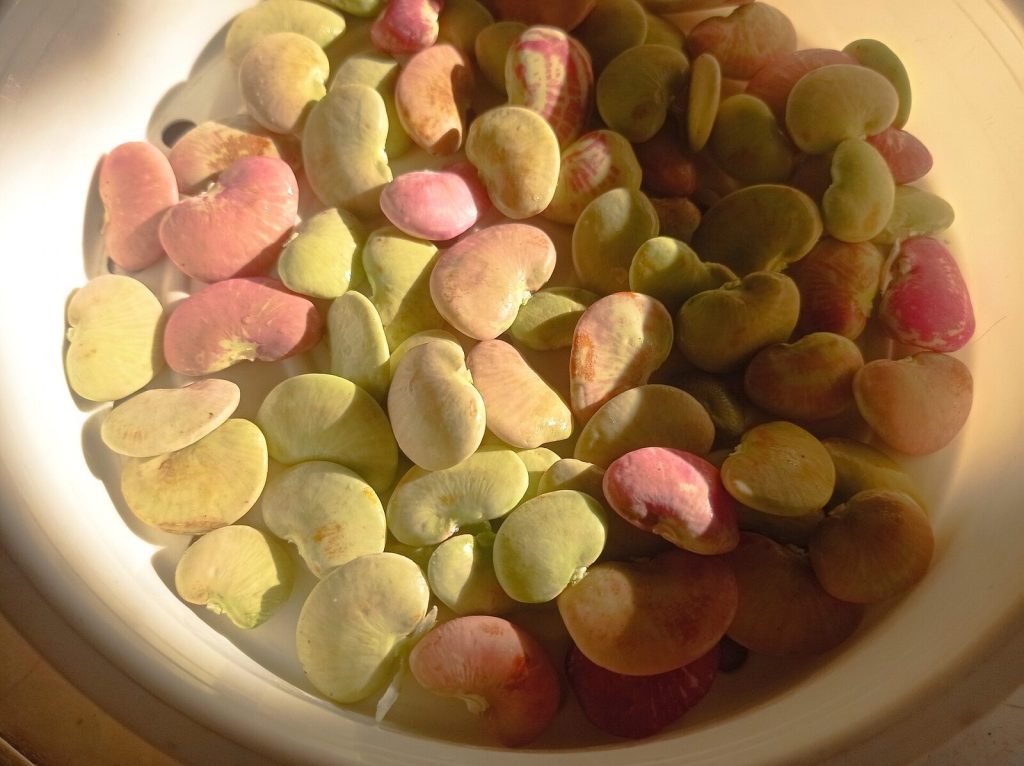
Bean storage in Uganda is mostly decided before the crop reaches the store, because the insect that destroys stored beans is already inside the pods at harvest. Get the grain down to 13 percent moisture, clean it properly, and seal it away from air, and it will hold for a season or longer. The bean figures are not the maize figures, and carrying one crop's numbers onto the other costs a grade.
The Bruchid in Stored Beans Starts in the Bean Crop
Two beetle species do almost all the damage to stored beans in this region, and the ministry's own bean manual states where the problem begins in one sentence: infestation starts from the field. The larvae bore into the seed and leave it perforated, and they contaminate the grain with their droppings on the way through. By the time you see a hole, the insect that made it grew up inside a bean you harvested weeks earlier.
The two species are Zabrotes subfasciatus and Acanthoscelides obtectus. Published work on bean bruchids reports that in the warmer parts of east and central Africa Z. subfasciatus is the more common of the two, and that between them they cause up to 13 percent loss in stored bean grain in developing countries. Damage costs more than weight. It cuts marketability and it cuts germination, so a seed lot and a food lot both lose value.
The ministry says it more sharply in a second document. Its aflatoxin handbook for extension workers lists the bean weevil, Acanthoscelides obtectus, as a primary insect pest of stored grains, and explains the route: the bean weevil lays its eggs on relatively dry bean pods while the crop is still standing, and an infestation that begins in the field intensifies and becomes a liability in store, above all where the grain was not properly dried. Two of the ministry's own publications, then, put the origin in the field.
The same handbook separates primary pests from secondary ones, and the distinction is worth carrying into a bean store. Secondary pests attack only produce that is already damaged, plus dust and milled material. So every split bean and every broken grain you leave in the lot is an invitation to a second set of insects that could not have started on sound grain.
It also names where infestations come from besides the field: harvesting equipment that insects travel in, residues of last season's crop where they hide, and the vehicles that move the bags. None of those is a chemical problem.
That mechanism changes the whole logic of a bean store. You are not defending clean grain from an invader outside the door. You are trying to stop a population that came in with the harvest from completing another generation. Everything below follows from that.
Harvesting and Drying Beans in the Pod
For dry beans the ministry's signal is the pod turning brown, against the pod starting to yellow for a crop being sold fresh. Climbing beans are picked as they mature rather than in one pass. Where the weather will not allow the crop to dry evenly in the garden, selective harvesting is the answer rather than waiting for the whole field.
Four practices to avoid come straight from the same manual, and each has a named consequence. Harvesting early gives shrivelled and rotten beans. Harvesting late brings pests and animals, shattering pods and rotting grain. Carrying soil on the roots of the harvested plants raises contamination, aflatoxin included. And leaving the crop lying in the field to dry after cutting invites pests, animals, shattering and rot at once.
Put the pulled plants onto a tarpaulin or a mat. Sort out weeds and immature pods first, spread the material loosely rather than heaping it, and dry until the pods open easily under pressure. That is the endpoint for this stage: not a day count, which nobody can give you honestly, but a pod that releases its grain.
Why the Bean Moisture Numbers Are Not the Maize Numbers
This is where readers get caught, because the two crops are handled in the same yard with the same tarpaulin and their numbers look interchangeable. They are not.
The dry bean grade table in the ministry's bean manual, drawn from the East African dry bean specification, sets moisture at 14 percent for all three grades, tested by its own reference method. The maize grain table in the ministry's maize manual sets 13.5 percent, tested by a different reference method, and the edition of the maize table reproduced in a joint food loss study gives 13.0. Three documents, three figures, two crops.
Against that, the ministry's bean manual repeatedly instructs growers in its own prose to dry beans to 13 percent before storage, which is tighter than the grade table it prints elsewhere in the same book. Its seed quality annex also puts both improved and certified bean seed at 13 percent. So the working instruction for beans is straightforward: dry to 13 percent or below, which clears the 14 percent the grade allows and matches what the ministry tells growers to do. Our grain moisture management guide handles the measuring side, including why a meter set for the wrong crop gives you the wrong answer.
One figure in the bean manual deserves a caution. It states that grain leaves the harvest at 18 to 24 percent moisture and should be brought to 14 percent for safe handling. The identical 18 to 24 percent range appears in the ministry's maize manual, in the same numbered section of what is plainly a shared template, so treat it as a planning band for a dry pulse or cereal rather than as a bean measurement. What is bean specific and repeated is the 13 percent storage instruction.
Threshing Beans Without Splitting the Harvested Grain
Split beans cost you twice. The broken and split line in the grade table allows only 1 percent at grade one, 2 at grade two and 3 at grade three, so splitting pushes a lot down the grades. And a split bean is an open bean, which moulds and insects reach without effort.
A threshing rack is the ministry's recommended tool and it is buildable locally: wooden strips on a platform over a wire mesh that sieves grain from chaff, with high sides so nothing scatters, and the grain collecting on a tray or tarpaulin underneath. It protects the seed from both damage and dirt, which a bare ground threshing floor does not.
Hand threshing works by beating the pods gently with a stick, and the word doing the work in that sentence is gently. Manual and motorised bean threshers both exist, with the motorised type carrying a fan that blows chaff off as it goes. Whichever you use, clean the grain afterwards and dry it again, because threshed grain sits above the storage figure and needs finishing on a clean tarpaulin, plastic sheet, mat or drying yard.
A mechanical dryer needs a temperature setting, and this page does not give you one. The figure in the ministry's own bean manual is broken where it is printed, coming out as a four digit string in place of two digits and a degree symbol, and the identical fault sits in its maize manual. Rebuilding a number out of a typesetting fault is not research, and a bean cooked in a dryer is not recoverable. What holds on any reading of that instruction is that the ceiling is low. Ask the machine's manual, or ask whoever you hire it from what setting they run.
Cleaning and Sorting Bean Grain Before Storage
Cleaning is not cosmetic on beans, because four separate lines in the grade table are things a cleaner removes: foreign matter, other edible grains, contrasting varieties, and shrivelled, diseased or discoloured beans. Sorting before storage is grading work done early, and it also removes the damaged beans that a bruchid population would otherwise use as a starter.
Three cleaning methods with the ministry's own throughput figures: a traditional winnower handles about 100 kilogrammes per person per hour, a screen or sieve mounted on a wooden frame about 500, and a mechanical cleaner more than a tonne an hour with sorting on colour, size and shape. Those same three figures appear word for word in the ministry's maize manual, so read them as generic grain cleaning rates rather than as bean measurements. The ranking between the three is the useful part, and it is a strong argument for a group buying one screen.
Pull out contrasting varieties while you are there. Mixed colour beans and single colour beans sell as different products in Ugandan markets, and the grade table treats a contrasting variety as a defect at 1.5, 3 and 5 percent by grade. A mixed lot prices at the worst part of itself.
Hermetic Storage and What It Does to a Bean Bruchid
An airtight container is the single most effective thing a smallholder can do to stored beans, and the reason is the insect rather than the moisture. A hermetic container cuts the grain off from the room, so neither oxygen nor water vapour passes either way. Bruchids that came in with the harvest use up the oxygen and suffocate, which the ministry's manual states plainly for weevils in hermetic storage.
The ministry's claims for hermetic storage of beans, attributed to it rather than asserted here, are that it removes the need for chemicals, that beans keep safely for more than twelve months, that seed holds its viability, that it is simple to use and that it is affordable to smallholders. The forms it lists are triple layer and PICS type bags, PVC and metallic tanks or silos, and cocoons for larger volumes. Whichever form, stand it on pallets, dunnage poles or a wooden platform rather than on the floor.
Two conditions attach. An airtight bag only works while it is airtight, so a puncture or a bag left open overnight undoes it. And the grain must be dry going in, because sealing damp beans traps the moisture with them. Our hermetic grain storage bag guide covers the bag itself in detail.
Choosing a Bean Store: Bags, Silos and the Farm Granary
The ministry splits bean storage into traditional and modern. Traditional means mud and wattle granaries, baskets and pots. Modern means jute bags, the hermetic options above, a flatbed warehouse or silo, and a farm level grain store. Which one suits you is set by volume, by whether the beans are food, seed or stock for sale, and by what you can afford, and the honest note the manual adds is worth repeating: good storage does not improve grain quality, it maintains it. Nothing in a store fixes a badly dried crop.
If the store is a building, four things about it matter more than what it is made of. The roof must not leak. The floor must be impermeable and easy to clean. The walls must be easy to clean. And air must be able to move through it well enough to cool the grain, with one caution from the manual that catches people out: it rules out fans, cyclones and transparent sheeting on a grain store.
Bagged beans go onto pallets, never straight onto the floor. Three clearances come from the manual and each has a job: a metre between a stack and the wall, so you can walk behind it and inspect; one and a half metres of corridor down the middle once the produce fills the store; and one and a half metres of headroom under the roof. Layers get crossed so the stack holds itself up, and one stack takes bags of one weight and one shape.
Store Hygiene and What to Inspect on the Farm
Store hygiene is where a bruchid population either dies out between seasons or carries over. Clean the store thoroughly before the crop goes in and again after it comes out. Clean floor, walls and roof regularly for dust and cobwebs, and cover the stacks with tarpaulins while you do it so the sweeping does not land on the grain.
Outside the door matters too. Clear the surrounding bush, because it houses rodents. Do not heap rubbish near the store. Put rat guards on any store standing on poles, screen the ventilators against rodents, birds and insects, and keep the door shut except when you are working.
Never store beans with chemicals, fumigants, fuel or anything else hazardous, and keep non food materials in a separate store entirely. No smoking, no flammable material nearby. Where other produce shares the store, stack each type separately so nothing cross contaminates.
Pest Control in Stored Beans, and What the Law Requires
Physical, chemical and biological control all exist, and the improved storage route is the one the ministry leads with: hermetic technology, where insects die of suffocation rather than of a chemical.
On chemical control this page states the rule and no number. The ministry's bean manual does name a storage dust and a fumigant in its bruchid control advice, and no rate, dose, dilution or interval is reproduced here, because a rate that is wrong by a factor of anything at all is a poisoning or a residue violation. The rate is on the product label and the label is the authority. Confirm both the product and the rate with a local extension officer or a licensed agrochemical dealer, and check that what you are sold is registered for use on stored beans rather than on a field crop.
Fumigation is not a job for the farmer. The ministry's own manual states it as a legal requirement that the operator carrying out a fumigation holds official certification, because the chemicals used are toxic to most forms of life including people. Phosphine is the commonly used fumigant and the manual notes that misusing it breeds resistance in storage insects, so careless use today makes control harder for everybody later. Hire a licensed operator or do not fumigate.
One audit worth knowing if you read the bean manual yourself. Its storage pest gallery is a general grain pest list, covering weevils, grain borers, grain moths, flour beetles and mites, and it does include Callosobruchus maculatus, a bruchid of stored pulses. What the storage chapter never does is connect that gallery to the manual's own bean bruchid entry, which sits in the field pest table several chapters earlier. Read only the storage chapter and you would not learn that this crop's principal storage insect is described elsewhere in the same book as a field problem. The gap is in that one chapter rather than in the ministry's position, since its aflatoxin handbook names the bean weevil as a primary storage pest outright. Our guide to preventing weevils in stored grain deals with the wider storage insect picture.
Moulds and Mycotoxins in Stored Bean Crops
Beans can grow mould in storage and a mouldy lot is a rejected lot, so the hazard is real. What is worth being precise about is how little anybody publishes for this crop.
The ministry's bean manual carries a mycotoxin section, and it names aflatoxins and fumonisins as poisons released by moulds, says they come from soil and air and grow when grain is handled badly, notes that they are invisible and that laboratory testing is expensive. It gives no limit figure for beans anywhere. Nor does the dry bean grade table: its rows cover foreign matter, other edible grains, pest damage, contrasting varieties, broken and split beans, shrivelled and discoloured beans, total defectives, filth and moisture, and there is no aflatoxin row in it at all. The maize grade table in the ministry's current maize manual does not carry one either.
Two lists in the ministry's aflatoxin handbook are worth reading for what they leave out. Its account of the produce these moulds invade when it is not well dried names maize, groundnuts, sorghum, soybean, millet, cassava, sweet potatoes, spices and feeds. Its statement of where high aflatoxin levels have actually been found in Uganda names maize, groundnuts, sorghum, cassava, sunflower, simsim and soya. Dry beans appear in neither list, in a document that discusses beans elsewhere as the country's most consumed legume. That is a statement about that handbook rather than proof of anything about the crop, and it is the best available guide to where the ministry places the risk.
So if somebody quotes you a parts per billion figure for beans, ask which document it came from. A blanket national figure has been reported for Uganda, at total aflatoxins of 10 micrograms per kilogramme across all foods, and the numbers that circulate at 5 and 10 in this region are limits written for maize and cereals, and separately for named dried spices. None of them is a dry bean limit. What the bean documents do give you is the mechanism, and it is actionable: keep soil off the crop at harvest, dry it properly, keep the store dry, and do not seal a damp lot.
The standard behind the grade table also defers heavy metal limits to the international food standards, at 0.2 milligrammes per kilogramme for lead and 0.1 for arsenic, cadmium, mercury and tin, and those are laboratory determinations rather than anything you can judge in a store.
What Buyers Measure on Stored Bean Grain
The dry bean grade table is what a formal buyer works to, and it is worth knowing line by line because several of the lines are set by how you stored the crop rather than how you grew it.
| Line measured | Grade 1 | Grade 2 | Grade 3 |
|---|---|---|---|
| Foreign matter | 0.5 | 0.75 | 1 |
| Pest damaged grains | 1 | 2 | 3 |
| Broken or split | 1 | 2 | 3 |
| Contrasting varieties | 1.5 | 3 | 5 |
| Shrivelled or discoloured | 3 | 5 | 7 |
| Total defective grains | 3.5 | 6.3 | 9.1 |
| Moisture, all grades | 14 | 14 | 14 |
All figures are percent by mass, with filth capped at 0.1 percent across every grade. Two notes printed with the table change how it reads. Total defective grains is not the sum of the individual defects: it is capped at 70 percent of that sum, which is why 3.5 sits below the individual limits added together. And a bean counts as discoloured only where the colour has changed by at least a quarter on both sides, so a faint mark is not a defect.
Grading is worth doing on beans in a way it is not on every crop. Work on Ugandan post harvest losses found grade three beans selling for up to 40 percent less than grade one in the same districts where maize carried no quality premium at all. So do not generalise a premium from one crop to another in either direction, and for beans, ask for the buyer's own grading sheet. Our bean yield guide gives the quantities an acre actually produces, which is what tells you how much store you need.
Weighing Beans In and Out of Storage
An unweighed sale is a price you did not set. Beans move by tin, basin and unmarked bag at village level, and every one of those units belongs to the person buying. It also makes your own arithmetic impossible: a record kept in basins cannot become a cost per kilogramme, and a cost per kilogramme is the only number that tells you whether holding the crop paid for itself.
The ministry's storage record list is short and it is the right list: a stack card fixed to each stack tallying the number and weight of bags in and out, an incoming stock ledger, an outgoing ledger, quality control records, cleaning records and fumigation records. Weigh in, weigh out, and the difference is your own storage loss, measured on your own store rather than taken from a table. Our weighing scales guide and the record keeping guide cover the equipment and the format.
Holding Beans for a Better Market Price, and Why It Is Not the Maize Bet
Storing grain to sell later is a bet on price, and the bet is much weaker on beans than on maize. Measured monthly price variability in the ministry's own statistics puts dry beans at 7.9 percent against maize grain at 29.2. Maize swings hard enough that timing the sale is a real strategy. Beans do not.
That flips the purpose of a bean store. You are not storing beans to catch a peak, you are storing them to avoid a loss: to keep your own food and seed, to avoid selling everything into the glut at harvest, and to hold a graded lot until a buyer who pays for grade turns up. Since grade three beans can sell 40 percent below grade one, the grade is worth more than the timing on this crop, which is the opposite of the maize position our maize storage guide sets out.
Practical consequence: spend your effort on drying, cleaning and sealing rather than on watching the market. A clean, graded, sealed lot of beans is sellable at any point in the season. A damp, mixed, unweighed lot is not sellable well at any point in it. The rest of our value addition guides cover the neighbouring operations, and where to sell beans covers the buyer side.
Frequently Asked Questions
How long can I store beans? The ministry states more than twelve months in hermetic storage, with seed keeping its viability over that period. In woven bags in an ordinary store the answer depends entirely on intake moisture, the roof and how often you inspect, and nobody publishes a defensible figure for it. Plan a few months and check monthly rather than trusting a number.
What moisture should beans be at for storage? Dry to 13 percent or below. That is what the ministry's bean manual instructs growers in its prose, it is the same figure its seed annex uses, and it clears the 14 percent the dry bean grade table allows across all three grades. Do not use a maize figure, and do not use a maize setting on a shared moisture meter.
How do I know if my beans are dry enough without a meter? The ministry lists four field checks: shaking grain in a tin and listening for a sharp rather than a dull sound, pushing a hand into the bulk and feeling for resistance and a warm centre, biting a bean to see whether it cracks or gives, and shaking a sample with dry salt in a clean dry jar, where salt sticking to the glass means moisture above roughly 15 percent. All four are reject tests. They tell you a lot is still wet and cannot confirm it has reached 13 percent.
Do I need to treat beans with chemicals to store them? Not if you seal them. Hermetic storage works by removing oxygen and the ministry presents it as removing the need for chemicals. Where a treatment is used, take the rate from the product label, check the product is registered for stored beans, and confirm it with an extension officer. Fumigation is a certified operator's job by law and not a farm task.
What does a hermetic bag or a small silo cost in Uganda? No reliable published price exists, and it moves with the exchange rate, the size and the supplier. Write down the volume you need to store, get three written quotations against that same volume, and compare the cost against one bag of beans you would otherwise lose. On a crop where grade three sells well below grade one, the container often pays for itself on the grade rather than on the weight.
Can I store beans in the same room as maize? Only with each crop stacked separately, which is the ministry's own instruction where a store holds more than one produce type. Separate stacks keep cross contamination down and make stock taking possible. Never mix old and new beans in the same container, whatever the crop.
Are there bean varieties that resist bruchids? Resistance has been bred into research lines, using a seed protein based resistance that breeding programmes have worked with for decades, and a laboratory screen of more than two hundred bean genotypes in Ethiopia recorded seed weight loss ranging from nothing to about a third depending on the genotype. Whether any bean variety released and sold in Uganda carries that resistance could not be established for this guide, so ask a seed supplier and do not assume. Our bean variety guide covers what is actually available.
Before the next harvest, measure the volume of beans you need to hold and ask local equipment and packaging suppliers what a hermetic container of that size, a cleaning screen and a shared moisture meter would cost. Then ask one buyer for their grading sheet in writing. Prices for storage equipment and for beans themselves vary by season, supplier and grade, so collect more than one quotation before committing.