
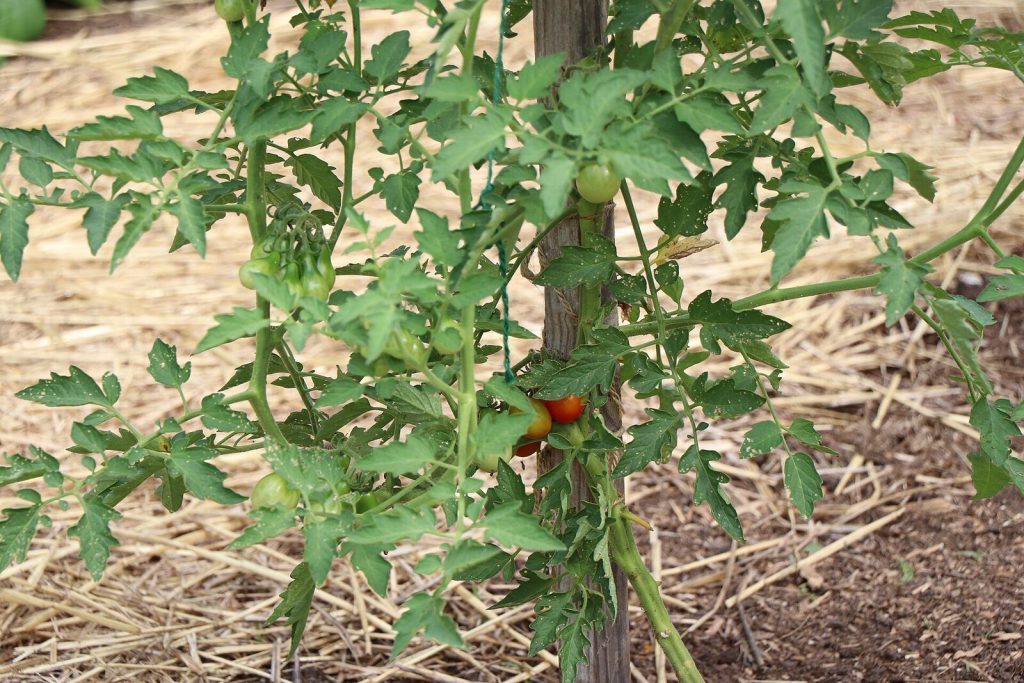
The best tomato seeds in Uganda are almost all imported F1 hybrids, because until recently Uganda had no locally bred tomato variety at all. NARO has now released one, Tenten, and the rest of the market runs on hybrids like Assila F1 and Rambo plus older open pollinated varieties such as Tengeru 97 and Rio Grande that growers can save. Growth habit decides the first choice.
Why Tomato Seed Sold in Uganda Is Almost All Imported
Start here, because it explains everything else about buying tomato seed in this country. Uganda breeds its own maize, beans, cassava, rice, sorghum, groundnuts and sweet potato. It has barely bred its own tomato.
NARO's own account is blunt about it: Ugandan farmers have been heavily dependent on imported seed for tomato, onion and cabbage, and the bill for horticultural seed coming in from Europe and Asia runs at around 7 million United States dollars. NARO is now building the capacity to change that, with breeding greenhouses handed over at Namulonge and Mukono and a seed testing and certification facility at Kawanda, aimed at five vegetable crops including tomato. That work is under way rather than finished.
The gap shows in the paperwork. MAAIF publishes an extract of the national variety list for roots, tubers and bananas, and nothing for vegetables. The COMESA regional variety catalogue that covers this part of Africa lists 14 crop species, and tomato is not one of them. NARO's own catalogue of released technologies runs to 121 entries across bean, cassava, coffee, finger millet, maize, rice, sorghum, soybean, sunflower and sweet potato, and contains exactly one tomato variety.
Three consequences follow, and every one of them costs you money. Imported hybrid seed is priced in foreign currency and lands with import and distribution costs on top, which is why Ugandan tomato growers rank seed among their heaviest input costs. The varieties were bred for somewhere else, so a hybrid selected under different conditions can sit badly with our altitude and rainfall and yield below its billing. And because the varieties were not released through a Ugandan process, there is no national record you can check a claim against. That last point is why so much of this page is about reading the packet rather than trusting the label.
Determinate or Indeterminate Tomato Varieties: The First Decision
Before variety names, growth habit. It decides your staking, your labour, your harvest pattern and whether the tomato variety suits a field or a greenhouse, and most guides skip it entirely.
The trap is buying an indeterminate variety for an unstaked field. The plant sprawls, fruit sits on wet soil, and blight and rot work through the crop from the ground up. That is a growth habit mistake rather than a disease problem, and no spray fixes it.
The Tomato Varieties Ugandan Growers Actually Plant
This is not a guess about what is popular. NARO researchers surveyed 240 tomato growers plus 16 key informants across eight districts in five agroecological zones, covering Wakiso, Mukono, Nakaseke, Mbarara, Kasese, Rukiga, Mbale and Bulambuli, and counted what was in the ground.
| Variety | Seed type | Growers | Save seed |
|---|---|---|---|
| Assila F1 | Hybrid | 35.3% | No |
| Tengeru 97 | Open poll. | 21.1% | Yes |
| Rambo | Hybrid | 18.1% | No |
| Novela F1 | Hybrid | 17.7% | No |
| Rio Grande | Open poll. | 10.3% | Yes |
Assila F1 leads by a wide margin. Watch the spelling: the NARO survey writes it Asilla F1 while the seed trade writes it Assila F1, and both refer to the same variety, so recognise either at the counter. Growers gave their reasons for the hybrids plainly, and none of them was yield alone: high yielding potential plus long shelf life, which matters because traders want fruit that survives the road. Traders in the survey wanted large oval hard skinned fruit that does not bruise in transit; consumers wanted shelf life and would take any size that kept.
Below the top five sits a longer tail that the survey also recorded. Eden F1, Ranger F1 and Commando are grown as hybrids at smaller scale. Victoria, VFN Roma, MT 56, Marglobe, Vikima, Omega, Opello, Sifa and a variety growers call Musununu are the open pollinated options on the market.
The One Tomato Variety NARO Has Released
Tenten is the exception to everything in the first section, and it is worth knowing about because it is the only tomato variety on this page with attributes published by a Ugandan institution rather than by a seller.
NARO's record for it, from its National Crops Resources Research Institute, is specific. It is a cherry type with fruit weighing about 20 grams. Yield is put at 23.2 tonnes per hectare. It matures early, at 92 days. Shelf life is recorded at 36 days, which is unusually long and is exactly the trait Ugandan traders were asking for in the survey above. NARO lists high resistance to tomato mosaic virus, fusarium wilt and root knot nematodes, and names those three as the problems the variety was bred to solve.
Two honest caveats. A cherry tomato is a different product from a slicing or paste tomato, so check your buyer wants small fruit before you plant an acre of it; cherry types sell into different channels and sometimes at better prices per kilogram. And its resistance list covers three named problems, which does not include bacterial wilt, early blight or late blight, the three diseases Ugandan growers reported most.
Open Pollinated Tomato Seed You Can Save for the Next Planting
Here the tomato decision splits from the maize one. With maize, Uganda has improved open pollinated varieties bred so farmers can recycle the seed for two seasons. With tomato there is no equivalent Ugandan bred recycling variety, so saving tomato seed means saving from older introduced open pollinated lines.
The mechanism is worth stating plainly, because a lot of money is lost to not knowing it. An open pollinated variety breeds true, so seed you save grows into the same plant next season. An F1 hybrid does not. The F1 is the first generation cross of two parent lines, and its uniformity is a one time event; seed saved from F1 fruit segregates into a mixture of plants, some tall, some short, some setting well and many setting badly. You cannot recover the hybrid by saving from it, and the loss shows up as an uneven field rather than as an obvious failure, which is why people repeat the mistake.
Among the open pollinated varieties on the Ugandan market, Tengeru 97 is the one most growers use, a determinate bush type developed by the World Vegetable Center and released in Tanzania through HORTI-Tengeru before it reached Uganda. Rio Grande is a determinate paste type. Marglobe is a determinate slicing type. Moneymaker is indeterminate. VFN Roma, Victoria, Vikima, Omega, Opello and Sifa fill out the choice.
Saving costs you something real, and the Ugandan evidence says so. The same NARO survey found that Tengeru 97 and Moneymaker were more disease susceptible than Rio Grande, Novela F1 and Rambo, and that growers stay with Tengeru 97 anyway because the seed is cheap. So the choice is not simply hybrid yield against saved seed savings. It is also disease pressure against seed cost, and in a crop where bacterial wilt and blight are the main losses, a cheap susceptible variety can end up as the expensive option. More on how to weigh that sits on our page comparing hybrid seed against seed you can keep.
Choosing Tomato Seed for Greenhouse Growing in Uganda
A greenhouse changes the tomato seed decision rather than just the structure over it. Buying the same packet you would plant outside wastes most of what the greenhouse was built for.
Three things shift. Growth habit goes indeterminate, because a protected crop earns its return by harvesting for months from a small area and a determinate variety stops. Fruit weight and uniformity matter more, because greenhouse tomato usually sells into a higher grade channel that pays for consistency. And the disease picture changes: soil borne bacterial wilt and root knot nematodes get worse under continuous cropping in the same beds, while some foliar diseases ease off under cover and others get worse in still humid air.
That last point drives the seed choice hardest. A grower rotating a field can outrun a soil borne problem for a while; a grower with one greenhouse cannot. So resistance to soil borne problems is worth paying for under cover in a way it may not be outside, and it is the reason the resistance codes in the next section deserve a careful read before you buy for a greenhouse. Moneymaker is the indeterminate open pollinated variety verifiably on the Ugandan market, and indeterminate hybrid lines are sold here as a separate catalogue segment from the open field varieties, so ask for the under cover list rather than assuming the popular field hybrid will do. The structure, ventilation and irrigation side of the decision runs through our guide to growing tomatoes under a greenhouse in Uganda.
Bacterial Wilt and What Tomato Variety Choice Can and Cannot Do
Bacterial wilt is the disease that decides Ugandan tomato seasons, and it is the one where variety marketing is least reliable. The NARO survey found it reported in all eight surveyed districts, at varying severity, with the heaviest concentration in the central region.
The cause is Ralstonia solanacearum, and the reason it dominates is structural rather than agronomic. Ugandan tomato is grown as a mono crop on small plots, 78.4 percent of growers in the survey, and land scarcity means little rotation. The pathogen is soil borne, so continuous cropping on the same ground builds the population in the soil season after season. A wilted plant does not recover and there is no spray that reaches into the soil to save it.
The survey's own conclusion on varieties is the part sellers do not repeat: the researchers attributed the high occurrence of bacterial wilt and of early and late blight partly to the absence of tomato varieties resistant to those diseases. That is a Ugandan research finding about the Ugandan market, and it should set your expectations for any packet claiming to solve wilt.
What variety choice can do is narrower and still useful. MT 56 is an open pollinated variety with moderate resistance to bacterial wilt, and it has been used in Ugandan integrated pest management work as part of a package rather than on its own. Moderate resistance is not immunity: planted into a heavily infested field it will still lose plants. The survey also found Rio Grande, Novela F1 and Rambo held up better against the general disease load than Tengeru 97 and Moneymaker, which is a relative ranking rather than a resistance claim.
Beyond wilt, growers in the survey ranked early blight caused by Alternaria, late blight caused by Phytophthora infestans, bacterial leaf spots caused by Xanthomonas and viral diseases as the main problems, with tomato yellow leaf curl virus reported by 8.2 percent and anthracnose by 2.2 percent. Caterpillars, thrips, worms and whitefly led the pests. Treatment for all of it sits on our page on identifying and managing tomato diseases in Uganda.
One warning belongs here rather than at the end. Almost all Ugandan tomato growers, 95.7 percent in the survey, rely on chemical sprays, and pesticide residue in the crop is a documented problem. Tomato is eaten raw. Whatever goes in the knapsack, both the rate and the preharvest interval come off that product's own label, neither figure is a suggestion, and an extension officer should confirm what they mean for fruit heading to a market. A resistant variety reduces how much you have to spray, which is the quietest financial argument for paying more for seed.
Reading the Disease Resistance Codes on a Tomato Seed Packet
Tomato seed packets carry more resistance shorthand than any other vegetable, and the codes are the only part of the label that means something checkable. Learn five of them and you can read most packets on the shelf.
What the codes never cover is the disease list Ugandan growers actually rank first. Early blight, late blight and bacterial leaf spot rarely appear as resistance codes on packets sold here, and none of the codes touches the pests. A packet dense with abbreviations is still a packet you will have to scout and manage.
Fake and Repackaged Tomato Seed: Buying Safely in Uganda
Counterfeit tomato seed carries a particular risk that maize seed does not, and it comes down to packet size. Tomato seed is sold in grams, in small sachets, at a high price per gram, and you cannot tell anything by looking at it. That combination is close to ideal for a counterfeiter.
The scale is documented. The Uganda National Bureau of Standards has estimated that roughly 30 percent of seed on the Ugandan market may be counterfeit, a figure carried in the Access to Seeds Index for Eastern and Southern Africa and in a recent 50 country comparison of African government action on counterfeit seed. Wider analysis of Uganda's counterfeit input trade puts the range at 30 to 50 percent of seed, and finds that around 46 percent of agricultural input businesses in the country operate without national registration. Counterfeits typically sell at 10 to 20 percent below the genuine price, so a cheap sachet of a premium hybrid is a warning rather than a bargain.
Two methods are used. Seed is repackaged into genuine looking sachets with copied labels, or genuine seed is cut with something cheaper and sold as pure. With maize you can sometimes spot adulteration by looking at the grain. With tomato you cannot, which means the label and the lot number are the whole of your protection.
Enforcement is real but thin. MAAIF's National Seed Certification Services Division inspects the market, a MAAIF police unit works with local police on seed market regulations, and a seed tracking and traceability system runs with the Uganda Seed Trade Association. MAAIF's own seed strategy sets a target of holding fake seed prevalence under 5 percent, which tells you where things currently stand. Formal seed companies supply under a fifth of the seed area planted in Uganda, with roughly two thirds still coming from the informal sector, so the checking falls to you. The general version of this checklist, across every crop, sits on how to judge seed quality before you buy, and the channels themselves are covered on where tomato seed is sold in Uganda.
Nursery Seed Quantity and Plant Population Per Acre
How much tomato seed an acre needs is a question with no single answer, and anyone who gives you one number is guessing. It depends on the spacing, the germination percentage and how many seedlings you lose in the nursery. Work it from the plant population instead.
Ugandan growers in the NARO survey used spacings from 30 by 45 centimetres up to 100 by 100 centimetres, and the researchers found that 60 by 60 centimetres was the one that gave optimum yield under field conditions. An acre is 4,000 square metres. At 60 by 60 centimetres each plant holds 0.36 square metres, so an acre carries roughly 11,100 plants.
Line planting is what 90.5 percent of surveyed growers already do, and it is worth keeping, because it makes spacing, weeding, staking and spraying all measurable. Nursery method and transplanting sit on our pages on raising tomato seedlings in a nursery and spacing tomatoes for the yield you want, and the germination test method is covered on what a germination percentage actually tells you.
Tomato Seed in Uganda: Questions Growers Ask
Can I save seed from my own tomato crop? Only if the variety is open pollinated. Tengeru 97, Rio Grande, Marglobe, Moneymaker, VFN Roma, MT 56 and the other open pollinated varieties breed true, so saved seed grows the same plant. Anything with F1 in the name does not. Seed saved from an F1 fruit splits into a mixture of plant types next season and the crop comes up uneven, which is a slower and more expensive way to discover the rule.
How much does tomato seed cost in Uganda? More than most growers expect, and it is one of the main constraints Ugandan tomato farmers report. Three things move it. Hybrid seed costs far more than open pollinated seed, because it has to be produced fresh each cycle from parent lines. Nearly all of it is imported, so the price carries currency movement, freight and distribution on top of the seed. And pack size changes the price per gram sharply, since small sachets cost more per seed than larger packs. Compare on cost per plant rather than on the sachet price, and check current tomato seed prices in Uganda before budgeting rather than planning against a figure that will be stale by your next nursery.
Why did my plants still wilt when the packet claimed resistance? Most likely because the claim covered a different wilt. Fusarium and Verticillium wilt are fungal and they are what most resistance codes address. Bacterial wilt from Ralstonia solanacearum is a different organism, it is the dominant one in Uganda, and resistance to it is scarce and partial where it exists. Check which wilt the code named. Then check whether that field has grown tomato, pepper, eggplant or Irish potato recently, because all four host the same bacterium and short rotations keep it alive in the soil.
Is a cherry tomato variety worth growing here? It can be, and Tenten makes it a live option because NARO records it at 92 days to maturity with a 36 day shelf life. The catch is the market rather than the crop. Cherry tomatoes sell into different channels from slicing tomatoes, often supermarkets, hotels and restaurants rather than open market traders, and those buyers want consistency and continuity of supply. Find the buyer before you plant the acre. Our pages on supplying hotels and restaurants and where tomatoes are bought in Uganda cover that side.
Do I need different seed for a greenhouse than for open field? Yes, and this is the mistake that wastes a greenhouse. Under cover you want an indeterminate variety that keeps setting fruit over months, because a long harvest from a small protected area is the whole return. A determinate field variety will set once and stop, leaving the structure idle. Resistance to soil borne problems also matters more under cover, since you cannot rotate a greenhouse the way you rotate a field.
My seedlings came up thin and weak. Was it the seed? Sometimes, and a germination test on the remaining seed from the same lot will tell you. Often it is not: thin leggy seedlings usually mean too little light, sowing too thickly or too much water, and all three are nursery problems rather than seed problems. Rule the nursery out first. If the seed does turn out to be at fault, go back to the stockist with the sachet, the label and the lot number, report it to the seed company and tell your extension officer, and do it quickly rather than at the end of the season. Keep the empty sachet; without the lot number there is nothing to trace.
Which matters more, the variety or the management? The Ugandan numbers answer this. Growers in the NARO survey averaged roughly 4,846 kilograms per acre against a potential the same researchers put at 6,000, with variety choice sitting behind disease pressure and agronomy as an explanation for the gap. A well managed open pollinated crop beats a badly managed hybrid. The variety sets your ceiling; everything else decides how close you get to it.
The rest of the tomato decisions sit together in our farm inputs guides, with the agronomy on growing tomatoes in Uganda and the returns on what an acre of tomatoes actually yields.
One habit is worth building before the next nursery. Ask two or three registered input suppliers what they have in stock and what the seed count is on each sachet, then work out the cost per plant rather than comparing sachet prices. It is the comparison that tells you whether the expensive packet is actually the expensive one, and it takes a few minutes.