
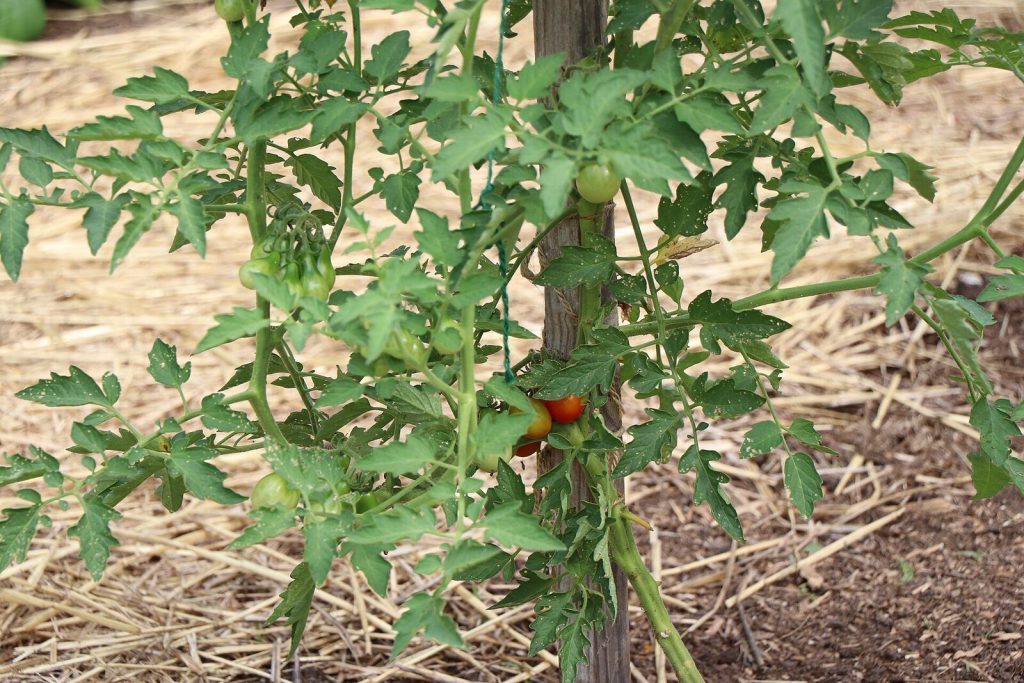
Tomato nursery management is the four to six weeks that decides what the field crop can become. Raise seedlings on ground that carried tomato, potato or eggplant recently and you plant bacterial wilt along with the crop. Survey work by NARO found 8.2 percent of Ugandan tomato growers skipping the nursery altogether, taking seedlings from a neighbour or letting last season's volunteers stand.
That small percentage is the most expensive shortcut in Ugandan tomato growing. Bacterial wilt, caused by Ralstonia solanacearum, was the disease Ugandan farmers ranked first in the same survey, and it turned up in all eight districts covered. It lives in soil. It moves in soil stuck to roots. A tray of free seedlings from the farm down the road is a delivery service for it, and no variety on the Ugandan market has been confirmed to resist it.
Choosing the Soil and Ground for a Tomato Nursery Bed
Site selection does more for seedling health than anything you spray. The rule from horticultural research is blunt: build the seedbed where no eggplant, potato or tomato has been grown for at least three years. Those three share the same soil borne pathogens, so a bed on last year's Irish potato patch is not a fresh start.
Three years is a long memory for a smallholding averaging 0.68 of an acre, which is what the NARO survey measured. Where the rotation genuinely is not available, the honest answer is to stop using field soil at all and raise seedlings in a container medium instead, which is covered further down. What you should not do is pick the most convenient corner and hope.
Beyond rotation history, the bed wants three things: water within carrying distance, because a nursery needs watering every day in the dry weeks; drainage, because standing water on a seedbed is how damping off starts; and enough open sky that seedlings do not stretch towards light. A nursery under a mango tree grows tall thin seedlings that fall over at transplanting.
Keep the nursery physically away from the standing crop too. Whitefly ranked among the four pests Ugandan tomato farmers named most often, and whitefly carries tomato yellow leaf curl virus, which the survey recorded on 8.2 percent of farms. A seedling infected in the nursery arrives in the field already carrying the virus, and there is no treatment for it afterwards.
Building the Seedbed and Mixing the Growing Medium
Raised beds a metre wide are the standard, and the width is not arbitrary. A metre is the reach of two arms, so you can weed, thin and water the middle of the bed without standing on it. Compaction in a seedbed shows up as patchy emergence.
Raise the bed roughly 15 cm above the path and leave paths of 30 cm or more between beds, with 70 cm being comfortable if you have the room. Work the soil fine enough that a tomato seedling, which is small and weak at emergence, can push through it.
On what goes into the bed, two Ugandan and international sources agree on the direction and differ on the recipe, so use both. Horticultural research recommends working in about 5 kg of good compost for every square metre of bed. NARO's own cherry tomato trial at Namulonge raised its seedlings in a mixture of forest soil, sand and manure at three parts to one part to one part, so manure at a fifth of the mix.
Both are clear on the same prohibition. Do not put fresh manure on a seedbed, because it burns seedlings. Manure going into a nursery has to be fully broken down, and if you are unsure whether yours is ready, our compost making guide covers how to tell.
Where sun and a dry stretch allow it, covering the moistened bed with clear plastic before sowing heats the top layer and kills a share of the pathogens and weed seeds in it. Research recommends the practice. The practical limit in most Ugandan growing seasons is cloud cover, since the heating is what does the work and a week of overcast weather does nothing. Treat it as a bonus when the weather gives it to you rather than as a step you can count on.
How Much Tomato Seed a Nursery Needs to Plant One Acre
Published rates put one hectare of tomato at 150 to 200 g of good seed. Converted, that is roughly 60 to 80 g an acre. Regional extension material gives 60 to 100 g an acre for open field production and less for growing under cover, and the Ugandan farm budgets we have seen assume 50 to 70 g an acre. Three independent routes land in the same place, so plan on 50 to 100 g an acre and treat the top of that band as cover for a variety with weak germination or a nursery you have not run before.
That rate is stated per acre of field, not per acre of nursery, and the distinction trips people up. What sizes your nursery is the number of seedlings you need, and that comes from spacing. At 60 by 60 cm, the spacing the NARO survey identifies as giving optimum yield under Ugandan field conditions, an acre holds about 11,240 planting positions on the arithmetic, and published Ugandan budgets plan on 10,000 to 11,200 once paths and gaps take their share. At 45 by 60 cm the arithmetic gives about 14,990. So decide the field spacing before you sow the nursery, because the same seed rate has to fill a third more holes at the closer spacing. Our tomato spacing guide sets out the population at every spacing Ugandan farmers actually use, and there is a plant population calculator if you want to check your own layout.
Raise more seedlings than positions. Some seed will not germinate, some seedlings will damp off, some will break at lifting and some you will reject for being weak. Running a germination test on a small sample before you commit the whole packet is cheap insurance, and how to test seed germination explains the method. Seed quality is the variable here: almost all tomato seed sold in Uganda is imported, and seed cost was among the four constraints growers named most often in the NARO survey, so a packet that fails is a real loss. Choosing tomato seed covers what the codes on the packet mean.
Sowing Depth, Row Spacing and Mulching the Seed Rows
Draw shallow furrows across the bed with a stick, about 15 cm apart, or closer if you intend to prick out and transplant into a second bed. Tomato seed is small. Cover it lightly and no more. Burying tomato seed deep is one of the commonest reasons a nursery comes up thin, and the seed has no reserves to push through a thick layer.
Firm the surface gently with the back of a rake, then mulch and water. The mulch here is doing a specific job, which is holding moisture in the top centimetre where the seed sits, and it comes off the moment the job is done. Once seedlings emerge, push the mulch off the seed lines so sunlight reaches them. Mulch left in place over emerging seedlings gives you pale, drawn plants.
Sow thinly enough that you can see individual seedlings after emergence. Crowded rows compete, stretch and hold humidity around the stem bases, which is exactly the condition damping off wants. It is easier to sow thinly than to thin later without disturbing the neighbours.
Emergence and the First Fortnight of Seedling Growth
Expect emergence in about seven to ten days. NARO's Namulonge trial recorded seedlings up seven days after sowing at around 1,150 m. Ugandan press guidance gives eight to ten days. Cool highland nurseries in the south west run slower than warm central ones, so the spread is real rather than sloppy.
If nothing is up by about day twelve, stop watering hopefully and work out which of three things happened: the seed was buried too deep, the seed was dead, or the bed dried out during the critical two days when the seed had taken up water and had not yet emerged. Those three have different fixes and only one of them is the seed's fault.
Water the nursery every day while seedlings are small, in the morning rather than the evening, and water the bed rather than the leaves where you can. Wet foliage overnight is what fungal problems feed on. Keep the bed weeded by hand from the start, because a weed pulled at three centimetres takes nothing with it and a weed pulled at fifteen takes a seedling.
Damping Off and the Insect Pests That Take Seedlings
Damping off is the characteristic nursery failure: seedlings collapse at soil level and the patch spreads outward from where it started. It is a soil and water problem before it is a chemical one, so the controls that matter most are the ones already described. Do not overwater. Do not sow thick. Do not use fresh manure. Keep the bed draining. Build the bed on ground that has not grown a solanaceous crop recently, or use a clean container medium.
Cutworms and other soil insects take seedlings at the base too, and this is documented in Ugandan work rather than assumed: NARO's own tomato trial protected its nursery with a synthetic pyrethroid insecticide spray against cutworms and other seedling pests. We are not reproducing the rate it used. Dilution and interval belong on the product label, the label is written for that formulation and that crop, and an extension officer or a registered agro dealer should confirm the product is cleared for tomato in Uganda before you buy it.
The same caution applies with more force to the fungicide advice that circulates for nurseries, which is often a weekly spray with no rate attached. The NARO survey found Ugandan tomato growers mixing fungicide at wildly inconsistent strengths, with the strongest reported mix more than two hundred times the weakest, and not one grower saying their rate came from the manufacturer. A nursery is a small area and a small volume, which makes over concentration easy. Read the container. Full pest and disease detail sits in tomato diseases and their treatment.
Watering and Hardening Tomato Seedlings Before Transplanting
Young seedlings need steady water. A seedling about to be transplanted needs less, and the reduction is deliberate. Cutting back watering for about a week before lifting, or up to two weeks in Ugandan practice, thickens the stem, slows soft growth and gets the plant ready for a field where nobody waters it twice a day.
A hardened seedling looks poorer than a pampered one. It is shorter, the stem is stiffer and the leaves are a darker green. It also survives transplanting, which the pampered one frequently does not. If you are raising seedlings to sell, this is the point where the temptation to deliver something soft and leafy works against the buyer.
Deciding a Tomato Seedling Is Ready: Leaves, Not Days
Published guidance on when a tomato seedling is ready does not agree, and reading the disagreement properly is more useful than picking one number. NARO transplanted its Namulonge trial seedlings after 21 days in the nursery. Ugandan press guidance says about one month, then separately says transplant at about 30 cm high, 30 to 45 days after sowing. Horticultural extension guidance says a tomato seedling is ready with three to five true leaves, at 15 to 25 cm high.
Those cannot all be right at once, and one common version circulating on Ugandan pages is internally impossible: three to four weeks in the nursery and 30 cm tall. A seedling that reaches 30 cm in three weeks has stretched for light. It is leggy, not advanced.
The resolution is to count leaves and look at the stem rather than count days. Three to five true leaves, meaning the leaves that come after the first pair of seed leaves, with a stem thick enough to stand on its own, is a seedling ready to go. The number of days it takes to get there depends on temperature, so a nursery in the cool south western highlands runs slower than one in the central region and both are normal. Height is the least reliable signal of the three, because a shaded nursery produces height without substance.
Lifting and Transplanting Without Setting the Crop Back
Water the seedbed well before you pull anything. Soft wet soil releases roots; dry soil tears them, and a seedling that arrives in the field with half its root system sits still for two weeks while the rest of the block grows away from it.
Lift into shade and keep the seedlings there. Work in the late afternoon or on an overcast day, which is what extension guidance recommends and what any grower who has transplanted at midday learns once. Dig planting holes about 15 cm deep, firm the soil around the roots, and water immediately.
Move seedlings the short distance from nursery to field, not the long distance from someone else's farm to yours. Every kilometre of transport costs root hairs and every borrowed tray is a disease risk. That is the whole argument for running your own nursery even at a small scale, and it is why the 8.2 percent figure from the survey matters more than its size suggests. The wider picture of how the crop follows on from here is in tomato farming in Uganda.
Seedling Trays, Shade Houses and Raising Seedlings to Sell
Raising seedlings in trays of clean container medium rather than in field soil solves the rotation problem outright, because the medium has no history. It also lets you transplant with the root ball intact, which removes most of the transplant shock the previous section is about. The cost is that you buy or mix the medium and you water more often, since a small volume of medium dries fast.
A simple shade structure over the nursery does three jobs at once: it softens midday sun on young seedlings, it takes the force out of heavy rain that would otherwise flatten a seedbed, and if the sides are screened with fine mesh it keeps whitefly off the seedlings during the weeks they are most worth protecting. Whitefly carries tomato yellow leaf curl virus and that virus has no field cure, so exclusion in the nursery is the cheapest control available. Nursery shade house construction covers the build.
There is also a business here. Most Ugandan tomato is grown on plots under an acre, hand watered, by growers who would rather buy good seedlings than run a nursery, and the 6.9 percent currently taking seedlings from neighbours are evidence of unmet demand rather than of thrift. Selling clean, hardened, correctly aged seedlings from known seed is a real enterprise, and it stands or falls on whether buyers keep coming back. Starting a seedling nursery works through it.
Questions Ugandan Tomato Growers Ask About the Nursery
How long do tomato seedlings stay in the nursery in Uganda? Between about three and six weeks, and the spread is genuine rather than vague. NARO's own trial at Namulonge transplanted at 21 days; Ugandan press guidance gives 30 to 45 days from sowing. Warm central nurseries run at the fast end and cool highland ones at the slow end. Judge readiness by three to five true leaves and a stiff stem rather than by the calendar.
How much seed do I need for one acre of tomato? Plan on 50 to 100 g. The published figure of 150 to 200 g a hectare converts to about 60 to 80 g an acre, regional extension guidance gives 60 to 100 g, and Ugandan farm budgets have used 50 and 70 g. Raise more seedlings than you have planting positions, because germination, damping off and breakage at lifting all take their cut.
Can I raise a tomato nursery on the same bed every season? Not without inviting the problem the nursery exists to avoid. Guidance is to build the seedbed where no tomato, potato or eggplant has grown for at least three years, because all three carry the same soil borne pathogens and bacterial wilt is the disease Ugandan farmers rank first. On a small holding where three years of rotation is not available, switch to trays of clean container medium instead of reusing the bed.
Why do my seedlings collapse at the base? That pattern, spreading outward from a patch, is damping off. Check the four things that cause it before buying anything: too much water, seed sown too thickly, a bed that does not drain, and manure that had not finished breaking down. If you do use a fungicide, the rate is on the label and a nursery's small volume makes over concentration easy.
Is it cheaper to buy seedlings than to raise them? On cash out today, often yes. On risk, rarely. A bought tray brings whatever was in the soil and on the leaves where it was raised, and both bacterial wilt and tomato yellow leaf curl virus travel that way with no cure once they are in your field. If you do buy, buy from someone who can tell you the variety, the seed source and the sowing date, and look at the stems rather than the height.
Do tomato seedlings need shade in the nursery? Light shade over young seedlings helps through midday and through heavy rain, but too much shade produces tall pale seedlings that break at transplanting. The more valuable reason to build a structure is the mesh: screening the sides keeps whitefly off seedlings during the weeks the crop is most vulnerable to the virus they carry.
Should I put fertilizer in the nursery bed? Compost worked into the bed before sowing, at about 5 kg a square metre, is the standard recommendation, and NARO's trial medium included manure at a fifth of the mix. Fresh manure is the thing to avoid outright, because it burns seedlings. Heavy nitrogen in a nursery gives you soft growth that does not transplant well, and the field fertilizer programme starts at transplanting rather than before it.
What does tomato seed cost in Uganda? It depends on variety and on whether you are paying for a hybrid, and it moves with the exchange rate because nearly all of it is imported. Seed cost was among the four constraints Ugandan tomato growers named most often in the NARO survey, which is why open pollinated varieties keep market share even where they are more disease prone. Check the current figure on our tomato seed price page rather than working from any number in an article.
Before you sow, settle your field spacing so you know how many seedlings to raise, then compare seed offers through where to buy tomato seeds and check current input prices locally. Seed availability and price both change by season and by supplier, so confirm with a registered agro dealer near you rather than relying on a figure printed anywhere, including here.