
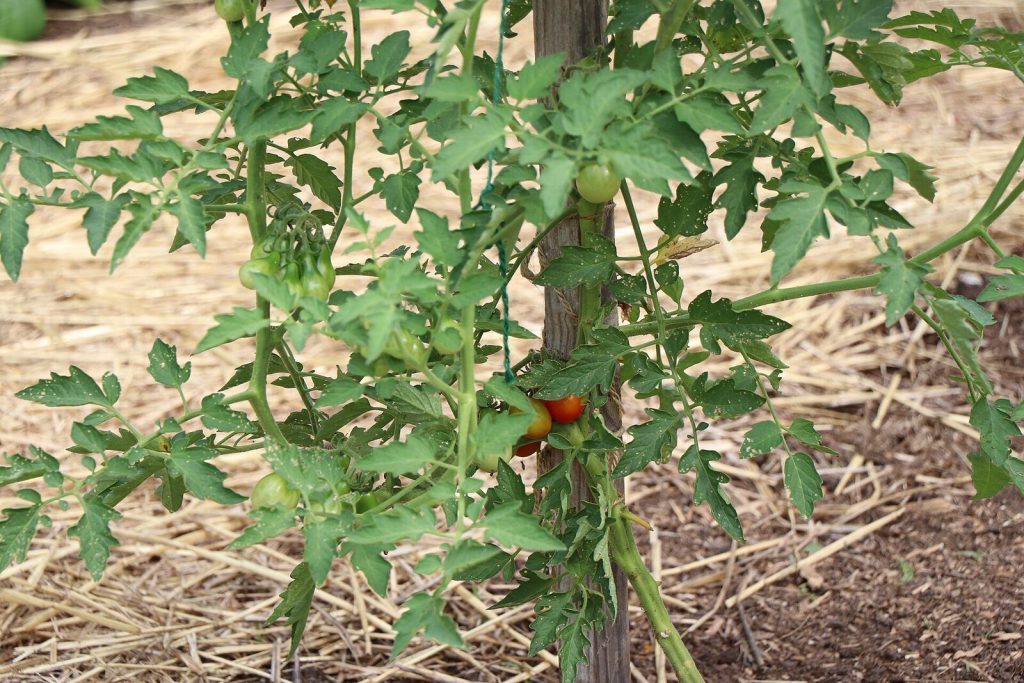
Five diseases account for most of what goes wrong with Ugandan tomato: bacterial wilt, early blight, late blight, bacterial leaf spots and viral disease. Treatment differs completely between them, because one is a soil bacterium, two are caused by organisms a fungicide can reach, and one cannot be treated in an infected plant at all. Getting the group right before buying anything is the decision that saves the crop.
Two Ugandan surveys disagree about something basic, and the disagreement is where this page starts. In a study of 50 tomato growers in Wakiso, 26 of them, 52 percent, listed the use of resistant varieties among their disease controls. In the national survey of 240 growers across eight districts, the absence of tomato varieties resistant to disease is named as one of the reasons bacterial wilt is so common. Both cannot be describing the same thing. Working out which is right changes what a grower should buy.
Ranking Tomato Diseases by What They Cost a Ugandan Farm
The national survey asked growers in all eight districts which diseases hurt them, and the order was bacterial wilt first, then early blight, then late blight, then leaf spots, then viral disease. Below those, tomato yellow leaf curl virus was named by 8.2 percent and anthracnose by 2.2 percent. Growers also described a problem they could not name, causing burning symptoms and leaf yellowing during heavy rain, whose description the authors matched to Fusarium wilt without confirming it.
Loss figures exist for the top two and they are severe. Ugandan work puts late blight losses above 75 percent where Phytophthora goes unchecked, affecting stems, leaves and fruit together. Bacterial wilt can kill the whole crop, and the wider review literature puts bacterial wilt losses across host crops at 20 to 100 percent.
Geography changes the ranking. Blights ran highest in central Uganda, where hot humid conditions suit them, and late blight was low in the west and south west because the cold does not favour it. Pest pressure followed the same map. So a grower in Kabale and a grower in Mukono are not fighting the same crop problem, and neither should copy the other's programme.
The Resistant Variety Contradiction in Ugandan Tomato Growing
Here is the resolution, and it is more interesting than either survey on its own. A bacterial wilt resistant tomato genotype does exist for Uganda, it was tested here, and it never reached the market.
Under a Makerere University and NARO research programme, on farm trials screened a set of tomato lines from the Asian Vegetable Research and Development Center against two older varieties. Five lines, including a local Ugandan selection called MT56, showed resistance to bacterial wilt in the range 98.6 to 100 percent and were only severely infected by late blight in a few cases. Farmers preferred three of them for fruit size, took the seed, and sold the fruit in Kampala markets.
The programme then ran the step that a release requires: multi location trials across six agro ecological areas of Uganda, comparing MT56 against four commercial varieties grown in the country, replicated three times, analysed with stability models. The result is the single most useful number on this page. Bacterial wilt incidence was highest in Marglobe at 66.30 percent and Roma at 66.13 percent, and lowest in MT56 at 13.13 percent. MT56 was the best adapted and most stable genotype and gave the highest yield across sites.
Now check NARO's current technology catalogue. It holds one released tomato variety, Tenten, released in 2021. Searching it for tomato returns that single technology plus one publication, and a control search on maize returns forty results with several released varieties, so the catalogue does surface releases where they exist. MT56 is not among them. In the 240 farm survey it appears only in the list of varieties grown on a small scale, well below the five that dominate.
So the honest answer to the contradiction: resistance was demonstrated in Ugandan trials and has not become a variety a farmer can reliably buy. When 52 percent of growers in one sub county said they use resistant varieties, most of them were almost certainly naming varieties whose resistance nobody has demonstrated here. Which brings us to the varieties they named.
Bacterial Wilt: the Soil Disease No Tomato Spray Reaches
Bacterial wilt is caused by Ralstonia solanacearum, a soil bacterium described in the review literature as the second most damaging bacterial plant pathogen in the world, infecting over 310 plant species across 42 plant families. It was reported in all eight districts of the Ugandan national survey.
What it does inside the plant explains why treatment is the wrong word. The bacterium enters roots through small wounds, moves quickly into stem tissue, colonises the xylem, and produces a sticky polysaccharide that blocks the vessels carrying water up the plant. The plant wilts because its plumbing is plugged. When it wilts and collapses, the bacteria return to the soil, so every lost plant raises the load for the next crop. The organism stays viable in soil and water for years.
The sentence a Ugandan tomato grower most needs is short. The Makerere and NARO tomato programme stated it directly: bacterial wilt is soil borne and has no chemical control available in Uganda. The review literature agrees that commercial chemical products have had limited field performance against it. A grower whose plants are wilting and who responds by increasing the spray round is paying for a mechanism that does not apply.
Managing Bacterial Wilt on a Tomato Farm Without a Chemical
Every measure that works on bacterial wilt is about the soil, the planting material and your own hands and tools. The national survey traced the high Ugandan incidence to mono cropping with little rotation, driven by land scarcity, which builds pathogen pressure in the same fields season after season.
Rotation is the first lever and its effect is worth knowing precisely, because it is smaller than people expect. Trial work summarised in the review literature found that a susceptible tomato planted after maize, okra, cowpea or a resistant tomato delayed the onset of bacterial wilt by 15 to 20 days and cut overall disease severity by 30 to 40 percent. That is a real gain and it is not control. Rotation on potato against the same pathogen, using millet, beans, sorghum and maize, produced two to four times the yield of monoculture with 50 to 80 percent lower severity, which suggests longer breaks and non host crops matter more than the act of rotating.
The rest of the list is unglamorous and cheap. Take out wilting plants with the soil around the roots and put them somewhere the runoff does not return to the field, rather than leaving them to collapse in place. Work the healthy rows before the affected ones. Keep knives and hoes clean between plants where you are cutting or wounding stems. Watch where water goes, since flowing water carries the bacterium downhill through a field. Raise your own seedlings or buy from a nursery whose soil you know, because a wound made at transplanting is a doorway.
Soil solarization, meaning covering moist soil with clear plastic through a hot dry spell, is recommended in the literature for roughly a month before planting to lower inoculum. Heat treating infested soil under controlled conditions has cut bacterial populations by 50 to 86 percent, but that was done at a set temperature for three days in a trial, not on a smallholding, so treat it as evidence that heat works rather than as a field method.
Grafting Tomato Plants onto a Resistant Rootstock
Grafting puts a variety you want to sell on top of a root system that resists the disease. In the Ugandan trials, a bacterial wilt susceptible commercial variety was grafted onto wild Solanum rootstocks and onto MT56, and grafting reduced Ralstonia incidence and raised fruit yield, with grafted plants also growing faster than ungrafted ones. In a parallel trial in the region, grafted plants were the least wilt affected in both open field and tunnel production.
The honest caveat is availability. Grafting needs a shed, seedlings of two types raised to matching stem thickness, a clean cut, and humidity control while the union heals. It is a nursery skill rather than a field one. If grafted tomato seedlings are sold near you, the wilt history of your field decides whether they are worth the premium. If they are not, the measures above are what you have.
Late Blight: the Wet Season Disease That Moves Fastest
Phytophthora infestans is the fastest moving tomato disease in Uganda and the most likely to take a crop inside a fortnight during heavy rain. It attacks leaves, stems and fruit. Lesions start as dark water soaked patches that spread outward, often with a pale fuzzy growth on the underside of the leaf in humid weather, and stems turn brown and collapse.
One point of biology changes what works: Phytophthora is an oomycete, a water mould, and not a true fungus. That is why a product that handles early blight can fail on late blight, and why the group codes on a fungicide label matter more here than the word fungicide on the front. A grower who has been getting good results against leaf spotting and then loses a crop to a collapsing, foul smelling field has usually met this difference.
Late blight is a weather disease. It runs in the rains and in cool humid nights, which is why Ugandan growers raise spray frequency in the wet season, and why the national survey found it low in the cold south west. Anything that dries the canopy faster helps: wider spacing, staking so plants are off the ground, and removing the lowest leaves that stay wet longest.
Early Blight on Tomato Plants and Where It Starts
Early blight is caused by an Alternaria species, and the name is currently unsettled in a way worth a single sentence. Recent literature applies Alternaria linariae to the tomato pathogen and reserves Alternaria solani for the potato one, while Ugandan sources use both names for the same tomato disease. Nothing a grower does changes with the name, and it matters only if you are reading two documents and wondering whether they describe one disease.
It behaves differently from late blight. Early blight starts on the older, lower leaves as brown spots with concentric rings inside them, often ringed by yellowing, and works upward as the season goes on. It also attacks stems and the stem end of fruit. Because it begins low and old, it is a disease of a crowded, unstaked, poorly fed crop more than a disease of a particular week in the calendar.
Both blights are the diseases where a preventive fungicide programme genuinely earns its place, which is exactly where the timing question gets hard. Protectant products sit on the leaf surface and stop new infections, so they have to be there before the spores arrive and are reduced when rain washes them off. Products that move into leaf tissue can reach an infection that has already started, and still work best applied early. Our page on how protectant and systemic fungicides differ in what they can reach sets that out, and the programme side is on the tomato spraying schedule.
Telling the Two Blights Apart in a Tomato Planting
Bacterial Leaf Spots and What Ugandan Growers Call Leaf Spots
The national survey records leaf spots as the fourth ranked disease group and attributes them to Xanthomonas species, which are bacteria. That attribution matters because bacterial leaf spot and a fungal leaf spot look similar enough at a glance to send a grower to the wrong shelf. A fungicide does not act on a bacterium.
Bacterial leaf spot spreads in splashing water and on hands and tools, comes in on seed and seedlings, and runs hardest in warm wet weather. Management is the same family of measures as bacterial wilt: clean planting material, avoid working the crop while it is wet, do not overhead irrigate into a disease outbreak if you can avoid it, and take badly affected plants out. Copper is the material most often used against bacterial leaf spotting in vegetables, it is a protectant that must be present before infection, and any rate or interval for it belongs on the label of the pack you bought, checked with district extension staff.
Tomato Yellow Leaf Curl Virus and the Whitefly Pest That Carries It
Tomato yellow leaf curl virus was named by 8.2 percent of growers in the national survey. It shows as upward curling and cupping of leaves, yellowing at the margins, shortened growth and heavy flower drop, and a plant infected young may set almost nothing.
There is no treatment for an infected plant. This is the hardest sentence on the page and the most useful one, because it means every shilling spent on a virus is spent before infection rather than after. The virus is carried by whiteflies, which the recent 584 farm survey found among the most commonly met tomato pests, reported by 37 percent of growers. Killing whiteflies after a plant is infected does not restore it, so an insecticide decision here is about slowing spread through the rest of the field.
What is left is prevention and removal: raise seedlings under net or away from an infected crop, pull and remove plants showing the symptoms early rather than nursing them, control weeds that host whiteflies at field edges, and avoid planting a new tomato crop next to an old infected one. Where a variety with documented tolerance to the virus is genuinely available and the resistance claim traces to the breeder, that is worth paying for. On Ugandan retail listings those claims often trace no further than the shop, which is why our tomato seed page refuses to repeat several of them.
Fusarium Wilt, Anthracnose and the Diseases Farmers Could Not Name
Anthracnose was reported by 2.2 percent of growers and shows mainly on ripening fruit as sunken circular spots that enlarge and darken, worst in wet weather and on fruit touching the soil. It is a reason mulching and staking pay, and a reason to pick ripe fruit as it colours rather than leaving it on the plant through rain.
Fusarium wilt is a soil fungus and it is the disease most often confused with bacterial wilt, because both end with a wilting plant. It tends to yellow one side of a plant or one branch first, moves more slowly, and leaves a brown discolouration in the vascular tissue when a stem is cut lengthways. Bacterial wilt is faster, affects the whole plant, and a freshly cut infected stem held in clean water produces a milky thread of bacteria streaming from the cut surface. That water test costs nothing and separates the two.
The survey's unidentified disease, causing burning symptoms and yellowing during heavy rain, was matched to Fusarium wilt by description alone and the authors said further tests were needed. It is recorded here as an open question rather than a diagnosis, because a disease list that pretends to be complete is a disease list that will mislead somebody.
What Treatment Means for Each Tomato Disease Group
The word treatment does four different jobs on a tomato crop, and the ranking pages for this query mostly blur them. For the two blights, treatment means a fungicide programme timed to arrive before or very early in infection, chosen on its group code, rotated between groups. For bacterial disease, treatment means removal, sanitation and water management, with copper as a protectant at best. For a soil borne wilt, treatment means the crop you plant next and the planting material you start with. For a virus, there is no treatment of an infected plant at all.
| Disease | Caused by | What a spray can do |
|---|---|---|
| Bacterial wilt | Soil bacterium | Nothing reliable in Uganda |
| Late blight | Water mould | Prevent, if timed early |
| Early blight | Fungus | Prevent and slow |
| Bacterial leaf spot | Bacterium | Protectant only |
| Leaf curl virus | Virus, whitefly borne | Slow spread only |
| Fusarium wilt | Soil fungus | Nothing once wilting |
| Anthracnose | Fungus, on fruit | Prevent before ripening |
No rate, dilution, water volume, spray interval or preharvest interval appears anywhere on this page, for any disease or any product. Those figures belong to the label of the pack in your hand, and your district agricultural extension staff are who confirm them against the disease you have. Ugandan tomato is eaten raw and straight off the market, so the interval between the last application and picking is not a formality.
Cultural Practice: the Disease Control That Also Raised Yield
The Ugandan research record contains a result that reframes the whole question, and almost nothing written for Ugandan growers mentions it. In on farm trials on late blight, mulched, staked and trellised plots carried lower infection than clean weeded plots, with the highest total yields coming from the mulched plots, and the three practices raising yield by 100 percent for mulching, 87 percent for staking and 83 percent for trellising. Separate trials found mulching and staking moving bacterial wilt incidence, bollworm incidence and yield together.
Those are figures from one programme's on farm trials rather than a national average, so read them as scale and direction. The direction is not in doubt, and it explains something the national survey found: 73.3 percent of Ugandan tomato growers already mulch, many of them using it as a substitute for staking so fruit has something clean to lie on. They are doing a disease control measure and calling it housekeeping.
Spacing belongs in the same paragraph. The survey observed growers using everything from 30 by 45 cm up to 100 by 100 cm and reported that only 60 by 60 cm gave optimum yield under field conditions. Spacing sets how fast the canopy dries after rain, which sets how long spores stay wet on a leaf. A crowded field is a disease decision made months before the first lesion.
Buying Clean Planting Material and Healthy Seedlings
Several of these diseases arrive with the plant rather than finding it. Bacterial leaf spot and viral disease travel on seed and seedlings, and bacterial wilt is waiting in nursery soil that grew tomato, pepper, potato or eggplant before. In the national survey, 91.8 percent of growers planted seed, 6.9 percent used seedlings from a neighbour and 1.3 percent used volunteer plants from the previous crop. The last two categories are how a disease moves between farms for free.
Practical rules with no cost attached: use a nursery bed that has not carried a solanaceous crop, raise seedlings away from a standing tomato crop, discard weak or spotted seedlings at transplanting rather than planting them at the end of a row, and do not save seed from a field that had a disease problem. Where seed choice itself is the question, our guides to choosing tomato seed in Uganda and to testing germination yourself cover it, and nursery method sits on the tomato nursery page.
Disease pressure is one of the things that decides what an acre of tomato actually produces. Under cover, the same pathogens behave differently and a new set arrives, which sits on tomato greenhouse farming. For the crop end to end, start at the tomato farming guide inside our vegetable growing hub.
Questions About Tomato Disease Treatment in Uganda
My tomatoes wilted and died within days. What was it? Most likely bacterial wilt, which is the disease Ugandan growers rank first and which was found in all eight districts of the national survey. Cut a stem across near the base. If the vascular ring is brown and a freshly cut piece held in clean water streams a milky thread, that is bacterial. A slower yellowing that starts on one side or one branch, with brown streaking up the stem, points at Fusarium wilt instead. Neither can be sprayed away once the plant is wilting.
Is there any tomato variety in Uganda that resists bacterial wilt? Resistance was demonstrated here. Ugandan multi location trials across six agro ecological areas found a local genotype at 13.13 percent wilt incidence against 66.30 and 66.13 percent for two commercial varieties. It never appeared in NARO's released technology catalogue, which currently lists one released tomato variety, and the 240 farm survey found it grown only on a small scale. So the answer is that the resistance exists in the research record and is not something you can count on buying. Ask, and do not pay a premium on an unsupported claim.
Are Roma, Marglobe and Moneymaker resistant to tomato diseases? Ugandan evidence points the other way. Marglobe and Roma carried the highest bacterial wilt incidence of the five genotypes in that multi location trial, both around two thirds of plants affected, and the national survey separately found Moneymaker among the more disease susceptible varieties in Ugandan fields. Pages that recommend these three as resistant are making a claim no Ugandan trial supports.
Can I keep growing tomato in the same field if I add manure and lime? Manure and soil improvement help a crop stand up to stress and do not clear Ralstonia from soil, which can stay viable for years. The evidence supports a break with non host crops, and even that delayed wilt onset by 15 to 20 days and cut severity by 30 to 40 percent in trial work rather than eliminating the disease. If a field has lost a tomato crop to wilt, plan the next tomato crop somewhere else.
Why did my fungicide work last season and fail this season? Four candidates. The disease is different from the one you treated, most often late blight where you were handling early blight, and a water mould is not a true fungus. The product went on after infection had established. The same group code has been used repeatedly and the pathogen population has moved. Or rain removed a protectant deposit before it could act. Checking the group code on the pack answers the third one in a minute.
Do leaves curling upward mean my plants need more water? Not usually. Upward curling with marginal yellowing, stunting and flower drop is the pattern for tomato yellow leaf curl virus, which whiteflies carry and which cannot be treated in an infected plant. Water stress more often shows as whole plant droop that recovers in the evening. Pull and remove suspected virus plants early rather than watering them harder.
Does mulching really make a difference to disease, or is it just for moisture? Both. Ugandan on farm trials found mulched plots carrying less late blight than clean weeded plots and producing the highest total yields, with mulching roughly doubling yield in that work. It keeps fruit off wet soil, which matters for anthracnose, and it slows rain splash from soil onto lower leaves. Three quarters of Ugandan tomato growers already do it.
What does a disease programme cost on a tomato acre? Of the five cost lines growers named in the national survey, managing pests and diseases came top, with seed, land preparation, fertilizer and staking behind it and input costs outweighing labour overall. That is a ranking rather than a figure, and Ugandan agrochemical prices move with the exchange rate. Our cost of tomato farming per acre page carries the money side.
The cheapest diagnosis available to a Ugandan tomato grower is a knife, a cup of clean water and ten minutes among the plants, and it decides which of these four kinds of problem you have before any money leaves your pocket. When you do buy, ask the dealer for the active ingredient and the group code, refuse product decanted into an unmarked bottle, and check current input prices and stock locally through our pesticide supplier directory, since both change through the season.