
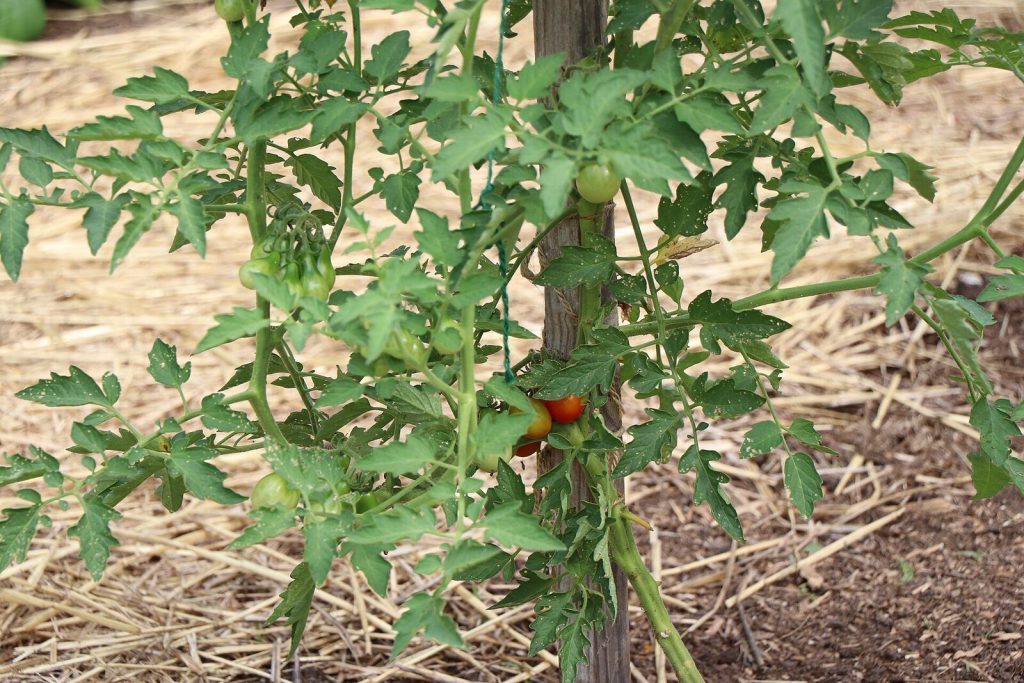
Tomato greenhouse farming in Uganda works by keeping rain off the crop so wet season disease cannot destroy it, then harvesting for months while open field supply has collapsed. Growers buy an indeterminate hybrid, train a single stem up a string, and pick from the same plants for half a year. The trade is labour: the crop needs work several times every week.
Start with the number that frames the whole decision. Uganda produces roughly 6 tonnes of tomato per hectare nationally, against a regional potential of about 16 tonnes, and surveyed growers in the main producing districts averaged around 12 tonnes per hectare on plots of well under an acre. The gap is not mostly about fertilizer. It is about a crop that keeps getting wiped out by rain.
Why Tomato Greenhouse Farming Pays in Uganda's Wet Season
Research from the National Crops Resources Research Institute, which surveyed 240 tomato farmers across eight districts, found growers themselves linking high disease incidence to peak rainfall. The diseases they named are the wet weather set: bacterial wilt, early blight, late blight, leaf spots and viral infection. Many Ugandan growers plant deliberately towards the end of the rains, accepting a smaller window rather than fight blight through the wet months. Some spray three times a week trying to hold the line, well above anything a product label recommends, and still lose fruit.
A greenhouse changes that by excluding the rain that spreads the spores, not by adding warmth. Uganda has warmth. What it does not have, for a tomato grower, is a dry canopy from April to June and again from September to November.
The second half of the case is price. In that same survey, farm gate prices reported by growers spanned more than twentyfold between the deepest glut and the tightest scarcity. Supply thins twice a year: once when rain destroys the field crop, once in the dry season when growers without irrigation cannot plant at all. A house with irrigation inside it covers both gaps, and that timing is where the money sits. Growing tomato under cover to sell into a glut makes no sense whatsoever.
Before going further, the structure itself is worth reading up on separately, because the cover specification, the height and the ventilation all affect the crop. The irrigation and greenhouse hub holds that material, and the guide to greenhouse crop selection explains why tomato beats almost everything else under plastic.
Choosing a Tomato Variety for Greenhouse Growing
This is where most first crops are lost, before anything is planted. A greenhouse wants an indeterminate variety, meaning one that never stops extending its main stem and keeps setting new flower clusters as it climbs. Determinate types stop at a set height, set most of their fruit at once, and finish. Determinate tomato in a greenhouse produces a short concentrated harvest from a structure you paid for by the year, which is the most expensive way to grow a cheap crop.
The varieties that dominate Ugandan open fields were selected for field conditions. The NaCRRI survey found Assila F1, Tengeru 97, Rambo, Novela F1 and Rio Grande accounting for most of what farmers grow, chosen for yield potential, disease tolerance and shelf life in a field context. Greenhouse hybrids are a different product line, usually sold in small counted seed packs at a much higher price per seed, and bred for a long harvest under cover with resistance to the soil borne wilts that build up when the same house grows tomato repeatedly.
Rather than repeat variety detail here, the best tomato seeds guide covers what is actually available and what the resistance codes on a seed packet mean, and the tomato varieties page compares the field types. Two things to insist on at the agrodealer: an indeterminate habit, and a written resistance list that includes bacterial wilt or a rootstock recommendation if your house has grown tomato before. The difference between hybrid and open pollinated seed matters here too, because saving seed from a greenhouse hybrid wastes a season.
Tomato Nursery Management Before the Seedlings Go In
Raise seedlings in trays with clean bought media, not in a bed of field soil. A greenhouse tomato crop occupies one house for months, and carrying bacterial wilt or nematodes in on a seedling root contaminates the whole cycle. Kenyan national research guidance puts the seed requirement for raising greenhouse seedlings at roughly 30 to 50 grams per acre equivalent, against 60 to 100 grams for outdoor planting, the difference being that tray raised seedlings are not thinned and wasted.
Transplant at about four weeks, when the seedling carries four to six true leaves. Younger than that and it stalls; older and the root system is already spiralling in the cell. Plant deep enough that the first true leaves sit somewhere around 5 to 10 cm above the surface, which encourages rooting along the buried stem.
Harden the seedlings before they move. A tray raised in a shaded nursery and transplanted straight into full greenhouse light in the middle of the day will check badly. Move them in the late afternoon, water in immediately, and expect a few days of no visible growth while roots establish. The tomato nursery management guide goes through media, watering and damping off, and nursery shade house construction covers where to raise them.
Tomato Spacing and Plant Population Under Plastic
Greenhouse spacing is decided by production area per plant, not by the field convention of rows across a plot. Florida greenhouse vegetable guidance allows roughly 0.28 to 0.33 square metres of production area per plant, which works out at around three plants per square metre of growing bed, commonly set as twin rows on a raised bed with plants about 40 cm apart in the row and a working path between beds.
Compare that with the open field recommendation, where Kenyan national research gives 60 cm to 90 cm between rows and 45 cm to 60 cm between plants, so a field spacing of 60 cm by 45 cm is normal. The greenhouse figure is far tighter because every plant is trained to a single stem and grows upward rather than outward.
Resist the temptation to squeeze in more. Crowding a house cuts air movement, raises humidity around the leaves, and hands back the disease advantage you paid the structure for. It also makes pruning and picking physically awkward, which means the work gets skipped. Leave a path you can carry a crate down.
Work out your own numbers rather than copying a plant count from a vendor brochure, because the usable growing area of a house is always less than its footprint once paths and the door area are removed. The plant population calculator and the greenhouse size guide handle this, and the tomato spacing guide covers the field version.
Trellising and Training Tomato Plants Up the String
The standard method is a string dropped from an overhead wire to each plant, with the stem wound around the string as it grows or clipped to it. The wire sits somewhere around 2.4 m to 3 m above the bed. One string, one stem, no exceptions.
An indeterminate plant will outgrow that wire long before the crop finishes, which is what the lean and lower system solves. Extra string is stored on a hook or reel above each plant. Every ten to fourteen days you release roughly 45 cm to 60 cm of string across the whole row, so the whole row of plants leans and settles lower, keeping the growing tip and the flowering clusters at a comfortable working height while the bare lower stem lies along the bed. Keep about 20 to 25 cm of air space between the lowest leaves and the floor. A plant ten months into its cycle can carry nine to twelve metres of stem this way.
Lower the whole row in the same direction on the same day. Lowering plants individually, or in different directions, twists stems and snaps them. Do it in the afternoon when the stems are slightly wilted and flexible rather than first thing in the morning when they are full of water and brittle.
Pruning and Sucker Removal, the Skill That Decides Your Yield
Every leaf axil on a tomato plant will try to produce a side shoot. Left alone, one plant becomes a thicket that shades itself, traps humid air, sets small fruit and cannot be sprayed or picked properly. Removing those shoots is the single job that separates a working greenhouse from a failed one, and it is the job that gets neglected first.
Prune on a fixed rota of every three to four days. At that frequency you are pinching out shoots while they are still a few centimetres long and the wound is tiny. Wait a fortnight and you are cutting out branches, leaving large wounds, losing the plant's invested growth and handing a disease entry point to whatever is in the house.
Work with clean hands and clean tools, and move through the house from the youngest healthiest block towards anything showing symptoms, never the other way. Tomato viruses spread on fingers.
Pollination in a Greenhouse Where There Is No Wind
A tomato flower is self fertile, carrying both parts, so it does not need a second variety or an insect to bring foreign pollen. What it does need is a shake. Pollen has to be dislodged from inside the anther cone to reach the stigma, and outdoors the wind does that job constantly. Close the crop inside a house and the wind stops.
Skip pollination and you do not lose the crop, you degrade it. Clusters set two or three fruit instead of five or six, the fruit that does set comes out small, lopsided or partly hollow, and the yield figure at the end is quietly half what it should have been. Plenty of growers never work out why.
The fix is mechanical and cheap. Go through the house at least every second day during flowering, between roughly ten in the morning and three in the afternoon when humidity has dropped and pollen is loose. A battery vibrator held briefly against each cluster or against the supporting string works. An electric leaf blower or backpack blower directed along the rows works too, and is much faster in a full house. Tapping each string sharply with a stick is the low cost version and is better than nothing. Bumblebee hives are what large commercial glasshouses use and are not a realistic option here.
Poor set is also caused by heat, so if flowers are dropping before they open rather than setting badly, the problem is temperature and the answer is in the ventilation guide, not in more vibrating.
Watering and Fertilizer Through the Tomato Crop Cycle
Water tomato under plastic little and often through drip lines, and aim for steadiness above all. A greenhouse crop has no rain arriving and no deep field soil moisture to buffer it, so whatever the drip delivers is what the plant gets. Swings between dry and soaked are the direct cause of the two worst fruit disorders, covered in the next section.
Demand rises steeply as fruit loads up. A plant carrying five or six fruiting clusters uses far more water than the same plant at flowering, and the usual mistake is to keep the irrigation schedule that worked in the first month. Check the soil at root depth by hand rather than trusting a timer, and mulch the bed surface to slow evaporation and stabilise moisture.
On fertilizer, the honest position is that a greenhouse tomato crop is fed through the drip in small frequent doses across the whole cycle, and that the right programme depends on your soil test, your water and your variety. Kenyan national research gives the field baseline as roughly 20 tonnes of manure per hectare worked in before planting, phosphate at planting, and nitrogen top dressings split during growth. A greenhouse programme spreads the same nutrients across many more applications and adds calcium and potassium attention during fruiting. Do not copy a fertigation recipe off a website. Get a soil test, then follow the tomato fertilizer schedule and adjust, and read soil testing before fertilizer application first. The greenhouse irrigation systems guide covers the hardware and drip irrigation the principle.
Blossom End Rot, Fruit Cracking and Other Problems That Are Not Disease
A large share of the fruit a greenhouse grower throws away was never diseased. These are physiological disorders, they are caused by how the crop was managed, and no spray fixes any of them.
Reading this section before the crop flowers is worth more than reading it afterwards. All five disorders are cheaper to prevent than to diagnose.
Greenhouse Tomato Pests and Disease in Uganda
Rain exclusion sharply reduces fungal and bacterial leaf disease. It does nothing for insects, and a warm sheltered house with a single crop in it for months is close to ideal for several of them.
Whitefly is the main concern, partly for its own feeding damage and mostly because it transmits viruses that cannot be cured once a plant has them. Thrips and red spider mite build up in dry sheltered conditions. Tomato leafminer, the moth first recorded in Uganda within the last decade, mines leaves and bores into stems and fruit, and crop losses reported where it takes hold run extremely high. Soil borne bacterial wilt is the disease that most often ends a house's usefulness for tomato, because it persists in the soil and forces either rotation, grafted seedlings or fresh media.
Insect screening on the vents, a closed door, removing crop residue between cycles and inspecting weekly do more than any spray programme. Control belongs in its own guide rather than here, and the greenhouse pest management guide covers monitoring, screening, biological options and what to do when a threshold is crossed. For the diseases themselves, see tomato diseases and their treatment and the tomato spraying schedule.
One safety point belongs here and nowhere else. Greenhouse tomato is eaten raw, so residue is a real risk rather than a theoretical one. Ugandan research found nearly half of surveyed tomato farmers spraying within a week of harvest and close to a third spraying on the day they picked, and an earlier study found growers using many times the label dose then harvesting two to three days later against label intervals of several days. Use the rate printed on the label and nothing more, wait out the pre harvest interval the label states, and get an extension officer to confirm the product is registered in Uganda for tomato before money changes hands. Nobody online, this page included, can give you a dose, which is the point that how to read agrochemical labels makes at length. The mixing and protective equipment side is in safe pesticide application.
Harvesting Greenhouse Tomato at the Right Stage
Most varieties reach first maturity around 70 to 75 days after transplanting, and an indeterminate crop then produces continuously. Pick two or three times a week rather than waiting for a batch.
Which stage you pick at is a commercial decision about how far the fruit has to travel and how long it has to sit.
| Stage | What you see | Best for |
|---|---|---|
| Breaker | First colour break | Long transport |
| Turning | Part coloured | Distant markets |
| Pink | Mostly coloured | Supermarkets |
| Light red | Nearly full colour | Local sale |
Fruit picked at breaker will colour up off the plant and survive a rough trip; fruit picked light red tastes better and sells faster locally but bruises and will not wait. Handle by cutting or snapping cleanly at the knuckle rather than pulling, keep crates shallow, and get the fruit out of the sun immediately. The cleanliness advantage that greenhouse fruit has over field fruit is easy to throw away in the hour after picking.
Line up the buyer before the first picking, not after. See where to sell tomatoes, how to sell produce to supermarkets and how to supply hotels and restaurants.
Greenhouse Tomato Yield Per Square Metre and What Decides It
Yield figures for greenhouse tomato are the most exaggerated numbers in agricultural publishing, so this section is deliberately conservative and shows its working.
What actually moves the number is dull: whether suckers came off on time, whether clusters were vibrated, whether irrigation ran without interruption, whether whitefly was caught early, and whether the variety was indeterminate in the first place. Compare against the open field position on the tomato yield per acre page, and keep your own records using the crop production record template.
The Labour a Tomato Greenhouse Actually Demands
Add up the work rota above and a tomato greenhouse needs somebody in it most days of the week for the whole cycle. Not a visit. Work: pruning, tying, lowering, pollinating, checking drip lines, scouting for whitefly, picking, grading.
This is the part of tomato greenhouse farming that sinks the most projects, and it sinks them quietly. A house left for two weeks does not die. It fills with suckers, humidity rises, whitefly multiplies behind the dense canopy, pollination is missed for a fortnight of flowering, and the yield arrives at a third of what it should have been with no single dramatic failure to point at. Tomato under plastic is unforgiving of neglect precisely because it does not look neglected until the fruit is counted.
So before buying a structure, answer the labour question honestly. If nobody can be in the house several times a week for six months, a smaller house run properly beats a larger one run occasionally.
Frequently Asked Questions About Tomato Greenhouse Farming
How long does one greenhouse tomato crop last before replanting? An indeterminate crop under cover is commonly run for six to nine months from transplanting, with picking starting around the third month and continuing until yields drop or disease pressure makes it sensible to clear. Some growers pull earlier to fit two cycles into a year and get a clean break for the house. Plan the clearing date deliberately rather than letting the crop trail off.
What does it cost to plant a greenhouse with tomato? The crop cost sits mostly in seed, seedling raising, growing media or bed preparation, trellis string and clips, fertilizer, crop protection products and labour for the whole cycle, on top of whatever the structure and its irrigation cost. Greenhouse hybrid seed is sold by seed count and is far dearer per plant than field seed, and labour across six months is usually larger than growers expect. Any single figure quoted online is close to useless because span, cover, irrigation and screening all vary. Price the items separately using the greenhouse cost page, the cost of greenhouse farming page and the current tomato seed price page.
Can I use ordinary field tomato seed in a greenhouse? You can plant it and it will grow, and you will regret it. Field varieties are usually determinate, so they finish in one short concentrated crop and leave the house idle. You also lose the disease resistance package that greenhouse hybrids carry against the soil borne wilts that build up under repeated tomato cropping.
Why are my greenhouse tomato flowers falling off without setting fruit? Heat, most likely. Shut a house up during the hottest part of a Ugandan afternoon and temperatures inside climb past the point where pollen stays viable, so flowers abort. Open vents earlier and wider, and consider shade during the hottest months. If flowers are setting but the fruit is small and lopsided, that is a pollination problem instead, and the answer is vibrating the clusters every second day.
How long before harvest should I stop spraying? Whatever the pre harvest interval on the product label says, and not a day less. That interval is specific to the product and the crop, it is printed on the label, and nobody should give you a number for it online. Tomato is eaten raw, which makes this a food safety matter rather than a formality. Ask a local extension officer to confirm the product is registered in Uganda for tomato and to confirm the interval with you.
Do I need to hire someone to run a tomato greenhouse? If you have another job, yes. The work is not hard but it is relentless and it is skilled in one specific way: whoever prunes has to recognise a side shoot from a flower cluster reliably, every time, or they will remove the fruit. Train one person properly and keep them on the crop rather than rotating casual labour through it.
Are grafted tomato seedlings worth it? Where bacterial wilt has already appeared in a house, grafting a productive variety onto a resistant rootstock is one of the few workable answers, and it is a recognised practice in East African tomato production. It costs more per seedling and needs a nursery that can do it properly. On clean ground it is usually unnecessary, so deal with it if and when wilt shows up.
Getting Quotes Before You Commit to a Tomato Greenhouse
Settle the crop plan first, then the structure, because tomato dictates the height you need for trellising, the ventilation you need to keep flowers setting, and the drip capacity you need at peak fruit load. Ask more than one supplier to quote the frame, the cover, the insect screening and the irrigation as separate line items, so you can see what each part costs and what has been left out. Produce and equipment prices both move with season and supplier, so check them close to when you intend to buy. Start with the greenhouse supplier listings, the tomato seed suppliers and the current tomato price page.