
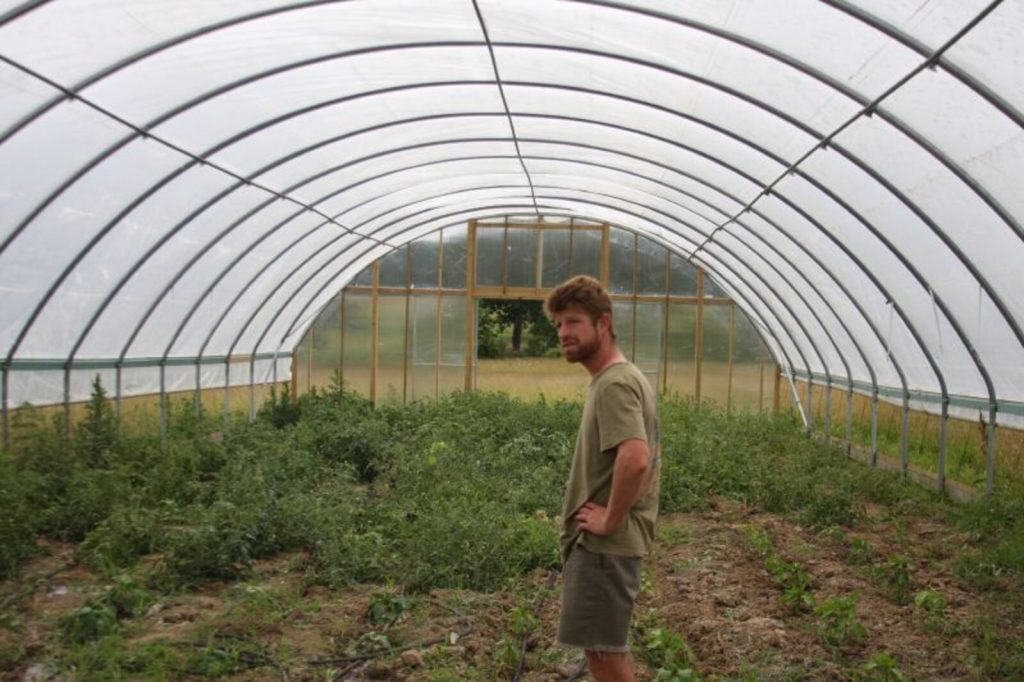
Hydroponic farming in Uganda is real but small. A peer reviewed survey of urban and peri urban vegetable farms across Central Uganda and Northern Tanzania could identify only 51 growers actually producing vegetables without soil. The more defensible use of the technique here is hydroponic fodder for dairy cattle and poultry rather than vegetables, and neither version is a way to farm without land or capital.
That opening will read as cold water, and it is meant to. The promotional material circulating about soilless farming in Uganda promises yields and water savings that the measured Ugandan work does not support, and a grower who spends on the strength of those numbers loses the money.
What Hydroponic Farming Actually Looks Like in Uganda Now
Three independent sources place the same picture, and it is a modest one.
The Ministry of Agriculture, Animal Industry and Fisheries calls hydroponics "fairly new" as a way of producing horticultural products, and points growers towards a demonstration of the technology hosted at the Makerere University Agricultural Research Institute at Kabanyolo, where training is run alongside an agribusiness incubator based at the institute. That is the official Ugandan position: a demonstration and a training route, not an established production sector.
The survey mentioned above is the closest thing to a headcount. Researchers used snowball sampling through urban farmers' groups and recommendations from agricultural organisations in Uganda and Tanzania to reach 150 vegetable farms, and of those, 51 individuals were actually engaged in hydroponic vegetable production and responded. Asked what they valued, respondents named high yields within limited space (24 growers, 48 percent), a climate smart system (13 growers, 26 percent), freedom from soil borne pests and diseases (10 growers, 20 percent) and control over growing conditions (2 growers, 4 percent). Asked what held them back, more than half named high investment costs (16 growers, 31 percent) and inadequate knowledge of hydroponics (11 growers, 22 percent).
A CGIAR assessment of controlled environment agriculture across low and lower middle income countries in Africa and Asia catalogued case studies by country. Its entries from Kenya, Nigeria, Rwanda and Cameroon are hydroponic or aquaponic operations. Its single Ugandan entry is a supplier of vertical microgardening using soil and vermicompost, which is not hydroponics at all. And a continent wide feasibility study of indoor vertical farming in Africa ranked South Africa, Seychelles, Egypt, Mauritius, Morocco, Tunisia, Algeria, Cape Verde and Nigeria as the territories with the best prospects. Uganda was not on that list.
None of that means the technique does not work here. It means the honest scale is tens of urban and peri urban ventures plus a research and training presence, and anybody claiming a national movement of thousands of hydroponic farmers is describing something nobody has been able to find.
Hydroponic Growing Systems That Work Without a Reliable Electricity Supply
Just over half of Uganda's population has access to electricity, according to World Bank figures, and access is not the same thing as a supply steady enough to run a pump continuously. That single fact should drive the system choice, and it is where most imported designs fail.
The CGIAR assessment is direct about it: gravity driven nutrient delivery methods such as the Kratky system and ebb and flow are most suitable where electricity is expensive and irregular. It also recommends vertical, pyramid or A frame structures over single layer beds, because they give more growing area while still using natural sunlight rather than lamps.
The Kratky method deserves explaining, because it removes the failure mode rather than managing it. Plants sit in net pots suspended above a container of nutrient solution, which is filled once before transplanting and never topped up. As the crop drinks, the level falls and an air gap opens above the solution, so the upper part of the root system sits in moist air and the lower part stays in liquid. No pump, no timer, no aerator, no monitoring equipment. It suits fast growing small crops, which in practice means lettuce and herbs. It does not suit anything that will still be in the container after the solution runs out.
What the One Published Ugandan Hydroponic Vegetable Trial Measured
One low technology hydroponic unit has been built, run and costed in Uganda and published in a peer reviewed journal, with the experiment carried out at an urban farm in Wakiso district in Central Uganda. It is worth walking through, because its measured numbers are very different from the numbers promotional pages quote.
The build was a three level wooden rack with a footprint of 6 metres by 1 metre and a total height of 3 metres, with 60 cm between levels and a ultraviolet stabilised polythene roof fitted 120 cm above the top level to give shade from direct sun and to keep rain off. Each level carried a 6 metre PVC pipe drilled with 20 holes at 30 cm spacing, so the unit grew 60 lettuce heads. Seedlings went into cups packed with sawdust and small gravel mixed one to one, with a 2 to 3 cm air gap left between the bottom of the cup and the solution and small holes drilled at the pipe ends for air. Blue and yellow sticky trap cards hung from the roof for leaf miner and whitefly. The solution was measured at an average pH of 5.9 and about 675 parts per million.
Now the results. The authors ran the same number of lettuce heads conventionally in soil filled potting bags alongside it, and reported these comparisons for one cropping cycle.
| Measure | Hydroponic unit | Soil in potting bags |
|---|---|---|
| Lettuce heads | 60 | 60 |
| Water used | 90 litres | 103 litres |
| Space taken | 6 m by 1 m | 8 m by 2 m |
| Annual cost | Higher | Lower |
The water saving is about 13 percent. Not 90 percent, not 80 to 90 percent, and not 95 percent. The space saving is real and large, roughly a third of the ground area, which is the genuine argument for soilless growing in a city. And the hydroponic unit cost more to run for the year than the soil version, because it needed more bought materials.
On profitability the authors reported a net present value of about 16 US dollars, an internal rate of return of 12.57 percent, a profitability index of 1.1 and a non discounted payback of roughly 8 months, which they counted as 4 cropping seasons. A profitability index of 1.1 means the unit returns about a tenth more than it costs. It works. It is not a business, it is a household or school food unit that pays for itself.
The authors also recorded a limitation that promotional pages never mention: growth and maturity of the vegetables was inconsistent and slow, and they could not isolate the cause, listing nutrient uptake, disease and temperature as candidates for further work. That is the single most useful sentence in the paper for anyone about to spend money.
Nutrient Solution Management and What You Can Actually Source in Uganda
This is the skill that separates a working system from a rack of dead lettuce, and it cannot be done by eye. Two measurements govern everything. Electrical conductivity, read as a conductivity value or as parts per million on a cheap meter, tells you how much dissolved nutrient is in the water. The pH tells you whether the crop can take that nutrient up, because at the wrong pH the elements are present in solution and unavailable to the root. The Ugandan trial above measured and reported both, at pH 5.9 and around 675 parts per million, which is the only Ugandan measured pair this article can point to.
This page does not publish a nutrient formulation, and that is deliberate. A recipe you cannot buy the salts for is worse than no recipe, because it sends a grower to an agro shop, gets them a substitution, and the substitution changes the chemistry. No survey of Ugandan retail availability of hydroponic nutrient salts could be found for this article, and that absence is itself informative: the published Ugandan trial used a general purpose water soluble compound fertilizer of equal nitrogen, phosphorus and potassium rather than a hydroponic formulation built to deliver calcium, magnesium and trace elements in soilless ratios. Whether that contributed to the slow and uneven growth the authors reported is not established, and they did not test it.
So the sequence is the reverse of what people do. Find out what your dealers actually stock, in writing, and only then design a solution around it. Two handling points are worth carrying regardless of what you end up with. Calcium salts and sulphate or phosphate salts must not be dissolved together in a concentrated stock, because they combine and drop out of solution as a solid, which strips the calcium from the mix while leaving the meter reading unchanged. And the source water is part of the recipe: borehole water carries its own dissolved salts that add to the conductivity reading before you have added anything, so measure the raw water first.
Buy the meters before the system. A conductivity meter and a pH meter with calibration solution are the cheapest items on the list and the ones without which none of the rest can be run.
Hydroponic Fodder for Dairy Cattle and Poultry Feeding
Here the case is stronger, and it is a different proposition from vegetable hydroponics. Hydroponic fodder is not really hydroponics in the horticultural sense. Grain is soaked, spread in trays, watered, and harvested as a mat of sprouted shoots and roots about 20 to 30 cm tall after roughly seven days, with published cycles running from 5 to 10 days. Reviews report that plain tap water can be used, without a nutrient solution, because the seed carries its own reserves through the short cycle.
What it solves is dry season green feed. A zero grazing dairy unit that runs out of napier grass in a long dry spell has a real problem, and a tray system on a covered bench produces green material on a seven day cycle regardless of rainfall. Reviews report conversion of 5 to 10 kg of fresh fodder per kilogram of seed, and one controlled trial on barley reported 7.5 kg of fresh green fodder per kilogram of grain over an eight day germination cycle. Water use is modest, at roughly 1.5 to 3.0 litres per kilogram of fresh fodder produced over seven days, because water is recycled.
Barley is the grain the international literature uses most, which is a problem in Uganda, where barley is a minor crop. Maize is the grain a Ugandan producer would realistically use, and it has been studied: an Ethiopian trial comparing maize varieties and seed rates found that medium seed rates gave better dry matter conversion efficiency and a lower cost per kilogram of dry matter than the highest seed rate, and measured water use efficiency around 90 to 95 kg of dry fodder per cubic metre of water for most varieties tested. Sorghum has also been trialled, with biomass still rising at 17 days after planting rather than peaking at 7.
One warning that matters more than any yield figure: use clean untreated grain. Planting seed sold for field use is routinely dressed with fungicide and insecticide, and that dressing is not permitted in animal feed. Buy grain as grain, check it is undressed, and reject discoloured or damaged seed, which germinates poorly and moulds in a warm tray.
Feeding rate in the reviews is 5 to 10 kg of fresh hydroponic maize fodder per cow per day, fed as a supplement rather than as the ration. It does not replace forage, and the reason is in the next section. How the rest of the ration is built sits in the dairy cow feeding guide, and the conventional dry season answers are in silage making for dairy cattle and napier grass farming.
What Hydroponic Fodder Yields in Dry Matter, Not Fresh Weight
Every inflated claim about hydroponic fodder rests on the same trick: quoting fresh weight. Five to ten kilograms of green material from one kilogram of grain sounds like multiplication. It is mostly water.
Dry matter content of hydroponic maize fodder commonly runs at 11 to 14 percent, so nine tenths of that green weight is water the cow could have drunk from a trough. Worse, the sprouting process destroys dry matter rather than creating it. A review of dairy cow responses puts the loss at 10 to 25 percent of dry matter depending on grain type and the length of the cycle. The seed respires to fuel germination, and the carbon it burns leaves as carbon dioxide. A trial harvesting barley fodder at 4, 7, 10 and 13 days after sowing measured dry matter content falling as the sprouts matured, crude protein not changing measurably, and fibre and ash fractions rising, and concluded that day 7 was the best harvest date for nutritional value.
Put plainly: you put in a kilogram of grain and get back less feed energy than you started with, delivered in a wetter, more palatable, more digestible form. That can still be worth doing when green feed is otherwise unavailable, when the grain would have been fed dry anyway, or when the digestibility gain earns its keep. It is not free feed, and any budget built on fresh weight multiplication is wrong.
The economics have been tested and the answer is uncomfortable. An evaluation of hydroponic against conventional barley fodder in a water scarce country found the hydroponic yield exceeded field yield and its water use efficiency was far better, while returns and net profits favoured the conventional field crop, because the lower dry matter content combined with higher fixed and variable costs to produce an economic loss. Its conclusion was that hydroponic fodder was not economically suitable for small scale farming, while remaining superior for water conservation. Seed is the reason: one review puts seed at about 90 percent of the total production cost of hydroponic maize fodder.
The animal response is also unsettled, and honest reporting means giving both sides. Review articles report milk production rising by roughly 8 to 13 percent on hydroponic fodder through better ration digestibility. A controlled trial on 48 lactating ewes, which fully replaced wheat hay with hydroponic barley for 120 days, found no effect on feed intake, body weight change, milk yield or milk composition, while cutting feed cost by 42 percent. Those two findings are not reconciled in the literature. A grower should plan on the cost saving and the dry season availability being the benefit, and treat a milk response as a possibility rather than a projection.
Electricity, Water and Pump Failure: What Kills a Hydroponic Crop
Soil is a buffer. It holds water, it holds nutrients, and it forgives a week of inattention. A soilless system holds almost nothing, and every risk follows from that.
In a nutrient film system the root mat sits in a shallow channel with a film of solution running over it. Stop the flow and there is no reservoir at all, so in a warm tropical structure the failure window is hours rather than days. That is not a scare story, it is arithmetic on a root mat with no water storage. The CGIAR assessment lists crops lost to energy outages among the exposures of systems that depend on machinery, and its recommendation of gravity fed methods where electricity is irregular is a direct response to it. The cheapest insurance against pump failure in Uganda is not a standby generator, it is a system design that has no pump.
Water supply carries the same shape of risk. A recirculating system needs makeup water on a schedule, and a hydroponic crop with no water has no water at all, not merely dry soil. Anybody building beyond a single Kratky rack needs tank storage sized for several days of demand. Farm water storage tanks covers the sizing, and the delivery side inside a structure is in greenhouse irrigation systems.
Root disease is the risk growers underestimate, and it is the flip side of the benefit they name most. Taking soil away does remove soil as a source of infection, which is why the Ministry's own material and a fifth of the surveyed growers list freedom from soil borne pests and diseases as an advantage. What removing soil does not do is remove pathogens. A root rot organism arriving on a seedling, in source water, or on an unwashed hand enters a volume of solution shared by every plant in the system, and it reaches all of them. In soil, infection spreads plant to plant slowly. In shared solution it is already everywhere. So the claim to make is narrow and true: hydroponics removes the soil route, at the cost of concentrating whatever does get in. Clean planting material, clean water, clean hands, and separate reservoirs for separate batches are the controls.
Crops Worth Growing Hydroponically in Uganda, and Crops That Are Not
The economics sort crops by cycle length and value per kilogram, and the sorting is fairly brutal.
There is one use that does not fit the table and is quietly the most valuable in Uganda: soilless culture for clean planting material. The technique is already used regionally for producing early generation seed potato minitubers and for raising seedlings for transplanting, where the product is a plant rather than food, and the price per unit is high enough to carry the system. That is a specialist route, and it belongs to seed producers rather than to vegetable growers.
Hydroponic Farming Claims That Do Not Hold Up in Uganda
The same handful of numbers circulate on Ugandan hydroponics pages, and they need dealing with directly, because a grower who believes them will build the wrong thing.
"Hydroponics uses 80 to 95 percent less water." The one measured Ugandan comparison found 90 litres against 103 litres for the same 60 lettuce heads. About 13 percent. The very large savings quoted elsewhere compare recirculating systems against furrow or flood irrigated field crops, which is not the comparison a Ugandan urban grower is making.
Yield figures per square foot or per plant. Claims of tens of pounds of tomatoes per square foot, or over a hundred fruits per plant, imply productivity at or above the records of fully climate controlled glasshouses in temperate countries with carbon dioxide enrichment and supplementary lighting. A naturally lit structure in Uganda is not in that league, and a first crop in a simple structure lands in single digit kilograms per square metre.
"Hydroponic produce is more nutritious, tastes better and keeps longer." Produce composition responds to growing conditions, and a review of protected cultivation confirms light intensity has the largest effect on vegetable nutritional quality when other conditions are right, ahead of carbon dioxide, light spectrum, temperature and humidity. That is a statement about environmental control, not about whether the roots sat in soil or water. Specific percentage claims about vitamin content or shelf life in Ugandan hydroponic produce have no measurement behind them.
"Hydroponics eliminates disease, so you spray less." It removes the soil route. It concentrates everything else, as set out above.
"You can farm without land and without capital." These two are usually claimed together and they contradict each other. More than half of the surveyed East African hydroponic growers named high investment costs as their main constraint, and a fifth named lack of knowledge. Removing the land requirement does not remove the capital and skill requirements; it moves the cost from rent to equipment and from experience to measurement.
Household and equipment distribution figures. Counts of tens of thousands of Ugandan households running hydroponic units circulate online. The only systematic attempt to find Ugandan hydroponic vegetable growers, working through farmer groups and agricultural organisations, reached 51 respondents across two countries. Treat any large number with no published survey behind it as unsourced.
Hydroponic Farming in Uganda: Costs and Common Questions
What does a small hydroponic system cost to set up in Uganda? The only Ugandan costing in the literature is for the 60 head lettuce unit described above, and its annual production cost came to roughly 170 US dollars against about 129 US dollars for the same crop in soil filled potting bags, with the biggest single items being the rack and its polythene roof, the pipes, and the fertilizer. In Ugandan shillings that converts at whatever the rate is on the day you buy, and most of the components are imported, so treat the split between items as the useful part rather than the total. Larger systems with pumps, greenhouses and controllers move into an entirely different bracket, and figures in the hundreds of thousands of dollars quoted for commercial installations describe purpose built facilities, not a farm project. Price the component list against local quotes before believing any total, and see where to buy irrigation equipment for the pumps, tanks and fittings side.
Is hydroponic fodder cheaper than buying feed? It depends entirely on the grain price, because seed is around 90 percent of the production cost. Work it as a comparison of the cost per kilogram of dry matter delivered, not per kilogram of green weight, and count the 10 to 25 percent of dry matter the tray destroys on the way. A trial that replaced hay with hydroponic barley for lactating ewes cut feed cost by 42 percent, while a separate economic evaluation found hydroponic barley fodder made a loss against field production. Both results are real, and which one you get depends on your grain price and your alternative.
Can I run a hydroponic system on solar electricity? Yes, and an off grid low cost automatic forage barley unit developed by international researchers produces 150 to 200 kg of fresh barley forage every seven days without a grid connection. The cheaper route is to design out the pump instead, which is what CGIAR recommends where electricity is irregular.
How much space do I need to start? The published Ugandan unit grew 60 lettuce heads on a footprint of 6 metres by 1 metre standing 3 metres tall, on a veranda or in a backyard. That is a realistic first project. Anything that needs its own structure is a second project.
Do I need a greenhouse for hydroponics in Uganda? No, and the Ugandan trial deliberately worked without one, using an ultraviolet stabilised polythene roof over the rack to give shade and keep rain off the solution. Rain diluting an open channel is a genuine problem, so some form of roof is worth having even where a full structure is not. The shading side of that choice is in shade nets in agriculture.
Where do I get training? The Ministry of Agriculture, Animal Industry and Fisheries points growers to the demonstration of hydroponic systems at the Makerere University Agricultural Research Institute at Kabanyolo, with training run in collaboration with an agribusiness incubator based at the institute. Confirm current arrangements directly with the institute, since programmes change.
Is it worth it for a rural farm with land? For vegetables, rarely. Soilless growing earns its place where land is the binding constraint, which means urban and peri urban plots, rooftops and verandas. For fodder on a zero grazing dairy unit, the calculation is different, because the constraint there is green feed in the dry season rather than land.
If you are weighing this up, start by pricing the component list from local suppliers and by finding out which nutrient salts your dealers actually keep in stock, because the system you can maintain matters more than the system you can build. Ask for written quotations covering the structure, the plumbing, the meters and the nutrient supply separately, so you can see where the money goes. The rest of the water and structures guides sit under irrigation, greenhouses and water.