
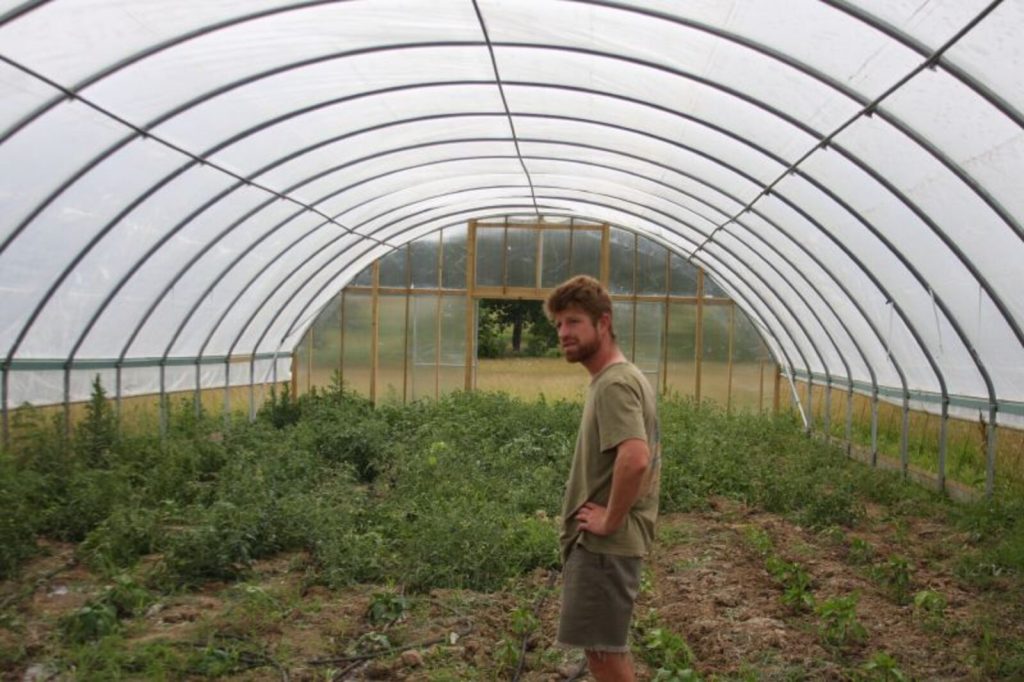
Pepper greenhouse farming means growing sweet pepper, what most Ugandan buyers call green pepper or capsicum, under cover so the fruit comes out clean and unmarked for hotel and supermarket buyers. A measured tropical trial found greenhouse pepper yielding 50 to 150 percent more than the same varieties outside. The crop is slower and fussier than tomato, and its buyers are fewer.
That last point deserves saying first, because it is the one that catches growers out. Sweet pepper is not a market day crop. A house of ripe pepper with no buyer lined up is worth considerably less than the same house of tomato, because there is no crowd of traders waiting for capsicum at a rural market.
Pepper Greenhouse Farming and How It Differs From Tomato
Tomato and sweet pepper belong to the same family, look superficially similar as seedlings, and are grown in the same kind of house. Treat the second like the first and the crop underperforms in half a dozen specific ways. Anyone arriving here from a tomato background should read this section before anything else.
| Factor | Tomato | Sweet pepper |
|---|---|---|
| Stems trained | One | Two |
| Lowered on string | Yes | No |
| Establishment | Fast | Slow |
| First harvest | Earlier | Later |
| Heat tolerance | Higher | Lower |
| Buyer base | Wide | Narrow |
| Colour premium | None | Large |
Two of those rows carry most of the difference. Pepper is trained on two stems straight up, never leaned and lowered, which changes your whole trellis plan. And pepper fruit can be sold green or left on the plant to colour, which is a pricing decision tomato growers never have to make.
The Sweet Pepper Market in Uganda Is Narrow and Concentrated
Ugandan sweet pepper moves through hotels, restaurants, supermarket chains, urban vegetable markets and roadside stalls, and the first three of those take the volume that pays. Green pepper turns up in salads and cooking in urban households, hotels and restaurants across the country, which sounds like broad demand until you count the buyers who will take twenty kilograms a week on a schedule.
Concentration is the real risk, and it is a different risk from the ones that threaten a tomato crop. Pepper does not fail in the house; it fails at the gate. Fruit ripens over a window of weeks, it does not hold indefinitely on the plant, and a grower with no committed outlet ends up selling at whatever the nearest market will give on the day. Several thousand shillings of difference per crate hangs on whether a phone call was made two months earlier.
So the sequence runs backwards from how most people plan it. Find the buyer, agree roughly what quantity and what colour they want and how often, then plant to that. Talk to hotel kitchens and supermarket buyers before the seed goes in the tray, because both want consistency more than they want a bargain, and both will test you on a small order first. The guides on supplying hotels and restaurants, selling produce to supermarkets and negotiating with produce buyers are worth reading before the agronomy.
Presentation carries more weight for pepper than for almost any other vegetable. The Ghanaian trial that compared cover with open field found consumer acceptance scored almost entirely on appearance: colour, size, shape, freedom from blemishes and glossiness. Those five things are exactly what a greenhouse delivers and rain splashed field pepper does not, which is the honest core of the commercial case. Packing matters too, and the produce packaging guide covers it.
Harvesting Green or Waiting for Colour: The Pepper Grower's Big Decision
Every sweet pepper starts green. Left on the plant, it ripens to red, yellow or orange depending on which variety you planted, and the colour is not a separate crop but the same fruit at a later stage. Deciding when to pick is a genuine commercial trade with money on both sides.
How big is the coloured premium? Work published from Florida found year round wholesale prices for greenhouse grown coloured fruit at around three times those of coloured field fruit and five times those of green field fruit, and a Mexican comparison put greenhouse coloured pepper at about a 60 percent premium over field pepper. Those are not Ugandan numbers and should not be treated as such, but they establish that the coloured premium is large and real wherever growers have measured it, and Ugandan hotel buyers price the same way.
Decide before you buy seed, because the variety commits you.
Choosing Sweet Pepper Varieties for Greenhouse Production
Three things matter in the choice, in this order: what colour the buyer wants, whether the fruit is blocky or long, and whether the variety holds up under the heat a Ugandan house reaches in the afternoon.
Colour comes first because it cannot be changed later. Blocky, thick walled fruit is what supermarket and hotel buyers usually prefer, and fruit shape varies enormously across varieties even within sweet pepper. Wall thickness, called pericarp thickness, differs by variety too, and the Ghanaian trial measured thicker walls under cover than in the field on the same varieties, which is part of why greenhouse fruit presents better.
Variety availability in Uganda is a separate matter from what appears in research papers, and it changes with what agrodealers are stocking. The green pepper varieties page and the green pepper seed guide cover what to look for and what the packet should tell you. Buy from a dealer who can show you the pack, and ask outright whether the variety is intended for protected production.
One clarification, because the word pepper does double duty in Uganda. This page is about sweet pepper. Hot pepper, meaning habanero, Scotch bonnet and African bird's eye chilli, is a different crop with a different market that runs largely to export, and it is covered in the chilli farming guide.
Pepper Seedling Nursery and Slow Establishment After Transplanting
Pepper is slow, and the slowness starts in the nursery. Seed is usually started around eight weeks before it goes into the house, which is noticeably longer than tomato, and pepper seedlings are typically transplanted about a fortnight later than tomato would be under the same conditions. Germination is slower and less even, and cold or wet media will stall it completely.
After transplanting, expect a longer period of apparently nothing happening. A pepper transplant spends weeks building roots and frame before it commits to flowering, and first harvest normally comes somewhere around 70 to 85 days after transplanting, against roughly 70 to 75 for tomato from a crop that is already picking heavily by then. Plan cash flow around that gap rather than being surprised by it.
The temptation during the slow phase is to push the crop with nitrogen. Resist it. A pepper plant overfed early builds soft leafy growth, sets poorly and shades its own fruit, which then sunscalds when the leaves are eventually lost. Feed steadily, test the soil first, and follow the green pepper fertilizer schedule rather than a recipe from a vendor page. Soil testing before fertilizer application is the step that makes the schedule mean something.
Sweet Pepper Spacing and Plant Population in a Greenhouse
Pepper sits closer than tomato because it does not produce the same volume of stem. The Ghanaian greenhouse trial used 30 cm between plants within the row and 40 cm between rows on the bed, which is a useful published reference point for a tropical protected crop.
Practical layouts in a tunnel usually run double rows on a raised bed with a path between beds, so the spacing that matters is the in row distance and the bed width, not a notional field grid. Because pepper is trained on two stems rather than one, each plant occupies more horizontal space at head height than a tomato plant does, and crowding shows up as poor colour development on shaded fruit rather than as obvious disease.
Work out the population for your own house rather than borrowing a number, since usable bed area is always less than the footprint once paths and the doorway are taken out. The plant population calculator does the arithmetic and the greenhouse size guide covers what a given span holds.
Training Pepper Plants on Two Stems and Removing Early Flowers
Here is the clearest technical break from tomato, and getting it wrong costs real yield.
A pepper plant grows a single stem for several leaves and then splits naturally into two. Both of those stems are kept and trained upward, each supported by its own string or stake, so one plant carries two leaders. Unlike tomato, the stems are not leaned and not lowered: they go straight up and stay there. Any shoots below the split are removed so the plant does not turn into a bush.
The early flowers are managed rather than left alone. The flower that forms right at the split is removed, and so are the flowers at the first leaf axil on each of the two stems. The flower at the second node is kept and allowed to set. After that, flowers are taken off at alternate nodes, so fruit forms on every other node up each stem. This looks wasteful and it is not: a young pepper plant allowed to set its first flowers stops building frame, stunts itself around two or three early fruit, and produces far less over the season than a plant that was made to grow first.
The other reason for spacing fruit up the stem is weight. Two stems carrying fruit at every node bend, and a bent pepper stem snaps at the split. Supporting both leaders properly from the start matters more than it does with a single tomato stem on a string.
Greenhouse Temperature, Blossom Drop and Why Pepper Is Less Forgiving
Sweet pepper has a narrower comfortable band than tomato and punishes departures from it by dropping flowers. Research consistently puts good growth in the low to middle twenties Celsius, with daytime conditions around 21 to 27 degrees and nights around 16 to 21 degrees suiting fruit set best. Night temperatures below about 15.6 degrees or above about 32.2 degrees prevent fruit set outright.
The failure that Ugandan growers will actually meet is heat, not cold. A closed tunnel under equatorial afternoon sun climbs well past the upper limit, and the mechanism is well described: low humidity combined with high temperature causes the plant to abscise flower buds, open flowers and small fruit through excessive transpiration. The grower sees flowers on the floor and no fruit forming, and often blames pollination or fertilizer.
The answers are structural rather than chemical. Open the vents earlier and wider than feels necessary, keep side netting clear so air moves along the crop rather than stalling in it, and consider shading during the hottest months. Boron supply is associated with flower retention, so a soil test that flags a boron shortfall is worth acting on through the fertilizer programme rather than by guesswork. The greenhouse ventilation guide is the place to solve this properly, and shade nets covers the shading option.
Pepper flowers are self fertile and do benefit from the same cluster vibration a tomato crop gets in a windless house, though the gain is smaller because pepper flowers hang downward and shed pollen more readily. Fix the temperature before worrying about vibration.
Irrigation for Sweet Pepper and Why Water Stress Shows in the Fruit
Pepper is more sensitive to water stress than tomato and it shows the damage in the part you sell. A tomato plant checked briefly by dry soil recovers and carries on; a pepper plant drops flowers, aborts small fruit, and puts blossom end rot on the fruit that survives.
Run drip lines and irrigate little and often, aiming for a moisture level that barely moves rather than a cycle of soaking and drying. Demand climbs steeply once fruit is sizing up, and the common mistake is holding the early schedule into the fruiting period. Mulch the beds. Check by hand at root depth rather than trusting a timer, and never let the crop dry out and then flood it, which is how cracked and rotted fruit is made in a single afternoon.
The hardware side is covered in the greenhouse irrigation systems guide. The principle of steady delivery matters more than the brand of emitter.
Sunscald, Blossom End Rot and Other Pepper Disorders in the Greenhouse
Most of the pepper a grower throws away was never infected by anything. These are management faults expressed in fruit, and they are specific enough to diagnose on sight.
Read this list before flowering rather than after, because four of the five are prevented by decisions made in the first month.
Sweet Pepper Pests and Disease Under Plastic
Excluding rain removes a large part of the fungal and bacterial leaf disease that ruins field pepper. It does nothing about insects, and a warm sheltered house suits several of them well.
Aphids, thrips, whitefly and red spider mite are the ones to watch, and thrips matter most in pepper because their feeding scars the fruit surface, which destroys the appearance that the whole commercial case rests on. Aphids and whitefly transmit viruses that cannot be cured once present. Bacterial wilt and other soil borne problems build up when the same house grows pepper or tomato repeatedly, and both crops share them, which is why rotating a house between pepper and tomato does not count as rotation.
Screening on the vents, a closed door, weekly scouting, and clearing crop residue between cycles do more than a spray programme. Control is handled properly in the greenhouse pest management guide, and the disease side of the field crop is in green pepper diseases.
Chemicals need a paragraph of their own here, because pepper's commercial logic pulls in a risky direction. You are selling appearance to institutional buyers, thrips scar the fruit surface, and the temptation is to spray harder and later than you ought to. Sweet pepper goes into salads uncooked, which turns residue into a food safety question rather than a paperwork one. On rate and on the interval between the last spray and picking, the label is the only authority, no number on this page or any other can stand in for it, and an extension officer should confirm that whatever you buy is registered in Uganda for use on sweet pepper. For a sense of how badly this goes in practice, Ugandan survey work on tomato, the closest comparable crop, recorded close to a third of farmers spraying on the very day they picked, and nearly half spraying inside the final week. The buyers paying you a premium are also the ones most likely to ask. Guidance on reading agrochemical labels sits alongside the handling side in safe pesticide application.
Sweet Pepper Yield Per Plant and Per Square Metre
Pepper yield claims are inflated online almost as badly as tomato claims, so this section uses measured research rather than vendor figures. The best tropical evidence available is a trial at the University of Ghana's horticultural research centre, which grew nine sweet pepper varieties side by side in a greenhouse and in the open field during the dry season and weighed the results.
| Variety | Under cover | Open field |
|---|---|---|
| Kukulkan | 21.3 | 9.2 |
| California W. | 21.0 | 12.6 |
| Crusader | 17.3 | 10.6 |
| Caribbean Red | 14.8 | 5.8 |
Those are tonnes per hectare of fresh fruit. Across the whole trial, greenhouse yields ran 8.2 to 21.3 tonnes per hectare against 5.0 to 12.6 tonnes outside, and the authors put the uplift at 50 to 150 percent depending on variety. Converted to a working figure, the greenhouse range is roughly 0.8 to 2.1 kg per square metre for that crop cycle.
Fruit counts from the same trial are worth knowing because they set expectations plant by plant. Under cover, blocky types including California Wonder carried around 13 fruit per plant, while longer thinner types reached 33 to 40. In the open field the same varieties carried 7 to 30. More fruit per plant does not mean more weight, since a blocky thick walled fruit weighs several times what a thin one does, and it is the blocky fruit that hotel buyers want.
Two figures circulating widely should be rejected. Claims of 60 tonnes per acre of greenhouse capsicum work out at about 148 tonnes per hectare, roughly seven times what a peer reviewed tropical trial measured under the same kind of cover. Claims of 25 to 30 tonnes per acre from open field pepper are similarly far above anything measured in tropical Africa. Neither figure carries a trial behind it.
Bear in mind what the Ghanaian numbers do and do not tell you. They come from a research station in a bimodal rainfall zone in a single dry season, with trained staff and nine varieties under test, so treat them as a defensible benchmark rather than a prediction for your house. Yields also depend on how long you keep the crop, since pepper will go on producing for months if it stays healthy. Plan your first cycle at the lower end and keep records. The crop production record template makes the second cycle a decision based on evidence rather than hope.
Frequently Asked Questions About Pepper Greenhouse Farming
Is sweet pepper a better greenhouse crop than tomato for a beginner? No. Tomato is the better first crop because the market absorbs it anywhere, the information is easier to come by, and mistakes can be sold at a lower price rather than not at all. Pepper suits a grower who already has a buyer relationship or who has run one crop under cover before. The greenhouse crop selection guide works through the comparison, and the tomato greenhouse guide covers the alternative.
How long does a greenhouse sweet pepper crop keep producing? Pepper is a perennial in habit and will keep flowering and setting for many months if it stays healthy, is fed steadily and is not wrecked by thrips or virus. Practically, growers run a cycle for several months and then clear the house for a break, partly to get on top of soil borne problems. Later fruit tends to be smaller, so the economics of holding a crop on get worse over time.
What will a greenhouse pepper crop cost me to plant and run? The main items are the structure and its irrigation, then seed, seedling raising, bed preparation, string or stakes for two stems per plant, fertilizer, crop protection and labour across the whole cycle. Pepper seed is sold by count and costs more per plant than field vegetable seed. No honest single figure exists, because span, cover specification, screening and irrigation vary so widely, and Ugandan prices move with season and supplier. Price each item separately and get several written quotes. The cost of green pepper farming page and the greenhouse cost page break the components down.
Why are my pepper flowers falling off? Heat, in most Ugandan houses. Fruit set stops when night temperatures run above roughly 32 degrees, and high temperature combined with low humidity makes the plant shed buds, flowers and small fruit. Ventilate earlier and more aggressively, and shade the house in the hottest months. Water stress does the same thing, so check the irrigation before you change anything else.
Should I pick green or wait for the fruit to colour? Split it if the house is big enough. Green gives earlier cash and more fruit per plant; coloured fruit sells for a good deal more but ties up the plant for weeks and carries more risk of sunscald and rot. Yellow and orange fruit command the highest prices in Uganda and are reported in short supply, which only helps if you planted a yellow variety in the first place.
Can I grow pepper and tomato together in one greenhouse? Better not to. They share whitefly, thrips, aphids and several soil borne diseases, they want different watering and feeding, and pepper needs a gentler hand with leaf removal than tomato does. Rotating a house between the two is not rotation either, because the shared soil problems carry over. Partition a large house or run one crop at a time.
Does greenhouse pepper really look that much better than field pepper? Yes, and that is most of the commercial argument. Rain splash puts soil on field fruit, wind scars it, and pests mark it. The Ghanaian trial found consumer preference tracking colour, size, shape, freedom from blemishes and glossiness, all of which improve under cover, and measured thicker fruit walls on greenhouse plants. Whether that translates into a price depends on selling to a buyer who pays for appearance, which is the whole point of the market section above.
Pricing the Structure Before You Plant Pepper
Decide the crop and the buyer first, then buy the structure, because sweet pepper sets the requirements: enough height for two stems trained straight up, ventilation good enough to keep flowers from dropping in the afternoon heat, insect screening tight enough to keep thrips off fruit you are selling on appearance, and drip capacity for a crop that will not tolerate a dry spell. Ask two or three suppliers to quote the frame, cover, screening and irrigation as separate items so you can compare like with like and see what has been left out. Equipment and produce prices both move about, so time your enquiries to the season you actually intend to build in, starting with the greenhouse supplier listings, the irrigation equipment suppliers and the green pepper farming guide for the field comparison. The irrigation and greenhouse hub collects the rest.