
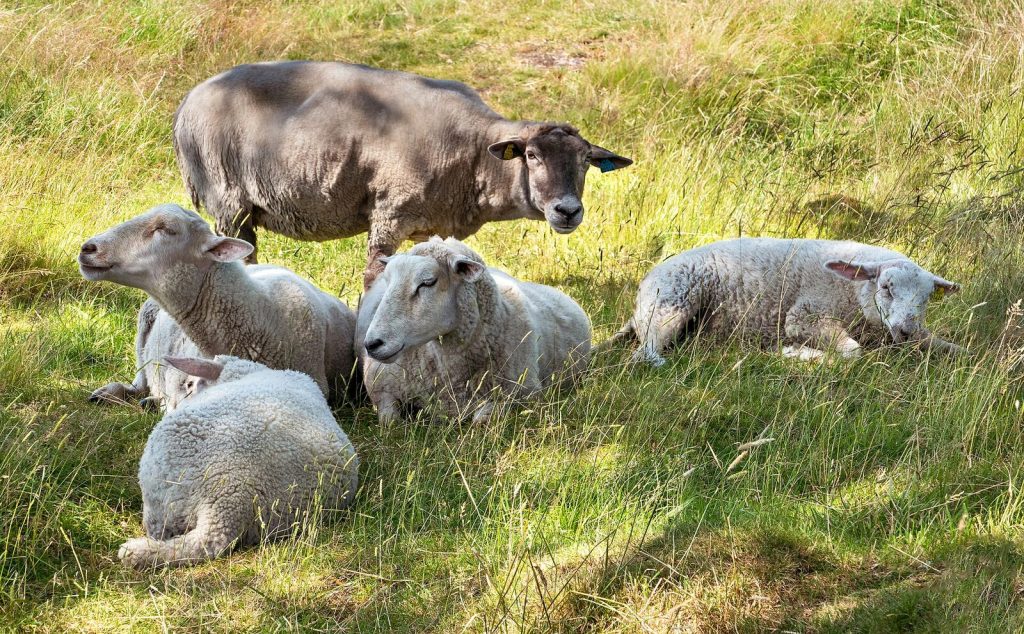
Uganda keeps about four goats for every sheep, on official national returns of roughly 4.4 million sheep against 17.4 million goats. Both species are kept by the same households, in the same districts, under the same grazing systems, so the gap is a demand gap rather than a husbandry one. Sheep farming in Uganda is concentrated in Karamoja and the cattle corridor, and the national flock is almost entirely indigenous.
That last point does more work than it looks. At 99.2 percent indigenous, Ugandan sheep farming is not a version of the sheep industry described in most material a reader will find, which assumes wool, dairy or imported meat breeds. Uganda produces none of the first two and almost none of the third.
How Many Sheep Uganda Actually Farms
The population figures are worth being careful with, because circulating Ugandan guidance puts the national flock at about a million and that is wrong by a wide margin. FAO's production series carries Uganda's sheep stock as an official national return of roughly 4.36 to 4.37 million across the most recent reported years, flagged as an official figure rather than an estimate in every one of them. A Makerere and ministry authored paper citing national statistics gives 4.4 million. Two sources, arrived at independently, agree.
Goats in the same series run about 17.36 to 17.44 million, also flagged official. So the four to one ratio is solid ground. What is not solid ground is everything downstream of it.
| National figure | Sheep | Goats |
|---|---|---|
| Stock, official | about 4.4 million | about 17.4 million |
| Slaughtered a year, estimated | about 445,000 | about 3.26 million |
| Share of stock turned over | about 10 percent | about 19 percent |
| Meat output, estimated | about 4,700 tonnes | about 31,000 tonnes |
Read the bottom three rows as direction and scale, not measurement. Every Ugandan sheep and goat meat figure in that series, in every year checked, is flagged as estimated or imputed rather than reported by Uganda. Nothing about slaughter numbers, carcass weights or meat tonnage in Uganda's small ruminant sector is an official national return. The population counts are; the production counts are not.
Even as estimates, the offtake gap says something. Uganda turns its goats over at roughly twice the rate it turns its sheep over. Sheep sit in flocks longer before they are sold, and that is a market fact rather than a biological one.
The Sheep Breeds Uganda Keeps Are Hair Sheep, Not Wool Sheep
Ugandan sheep are hair sheep and they are fat tailed. A continental review of African sheep history and genetics, published in a peer reviewed journal, puts Uganda inside two of the region's fat tailed ecotypes: the hairy short fat tail found along the Great Rift Valley through Kenya, Uganda and Tanzania, and the hairy long fat tail of mid to high altitude country, which also runs into eastern DR Congo, Rwanda and Burundi. Sheep sampled in a Karamoja disease study were recorded as the Blackhead Persian type, which is a fat rumped animal of Horn of Africa origin.
The same review is blunt about what African sheep have been for: primarily meat, and much less important for milk and wool than they are in Eurasia and Australasia. It also notes that flock size has often carried social meaning, which selected for animals that survive rather than animals that produce.
So a sheep kept in Uganda is a meat animal and nothing else, whatever the breed categories in circulating guidance suggest. Half of that guidance offers a wool or a dairy option, and neither has any Ugandan output behind it. Which breeds are worth anything here, and why the answer turns on the ram rather than the breed, is on best sheep breeds.
Sheep Farming Systems and Where the Flocks Are
Uganda's sheep sit in the cattle corridor, the belt of extensive savannah grassland, scattered shrub and acacia woodland that runs from the south west to the north east and receives 300 to 800 mm of rainfall. Karamoja in the north east is the densest sheep country. A serosurvey of 63 sheep and goat farms and clusters in Sembabule and Nakapiripirit found the enterprises split 54 percent semi intensive and 46 percent pastoral or communal grazing, with a median flock or herd of 49 animals, and 68.3 percent of them sharing grazing grounds and watering points with other farmers.
Further south west the picture changes. A Makerere study around Lake Mburo describes sheep, alongside pigs and chicken, as non traditional livestock in Kiruhura and Isingiro, kept to spread household income and to give less advantaged household members something of their own. Sheep sales made up 1.9 percent of household income in one of those districts and 6.6 percent in the other, against goat sales at 5.1 and 5.0 percent. So in the poorer district sheep out earned goats.
There is no Ugandan stocking rate for sheep that I could source. Two nearby figures bracket it. A government sheep station in Kenya's semi arid Rift Valley, on ground receiving 680 mm a year, stocked nine sheep to the hectare, which is about 3.6 to the acre, with paddock grazing by day and enclosure overnight. Uganda's own national genetics agency budgets 0.25 acre per goat per year in its enterprise calculator, which is about four to the acre. Two different countries, two different species, and the same order of magnitude. Any guidance offering twenty or thirty small ruminants to the acre is out by a factor of five or more.
Grazing and the Dry Season Feed Gap on a Sheep Farm
The single biggest husbandry difference between the two species is that goats browse and sheep graze. Goats take leaves, twigs and shrubs from above ground level; sheep work the herb and grass layer. In good rains that difference is invisible. In a drought it decides which animals live.
A Ugandan study of drought around Lake Mburo found goat mortality falling rather than rising when the rains failed, and prices roughly doubling, because the acacia browse outlasted the pasture. Sheep sit on the wrong side of that mechanism: a grazer has nothing to move up to once the herb layer burns off, which is the opposite of the reputation they carry.
Water compounds it. In Karenga district in Karamoja, one water source served five to eight villages, all of the sources were seasonal, and when they dried keepers walked flocks as far as 72 km into neighbouring districts. Boreholes broke and stayed broken for months. That movement is also how disease travels, which is the next section.
What a sheep flock needs, why a bag labelled for goats and sheep is not automatically safe for sheep, and how the dry season gap is bridged are all on the sheep feeding guide. This page publishes no ration and no intake figure.
Sheep Are Not the Hardier Small Ruminant: What Ugandan Disease Data Shows
Almost every sheep overview aimed at Ugandan readers says sheep are resistant to disease and to harsh conditions. Ugandan measurements point the other way, in two separate studies, on the two viruses that do the most damage to small ruminants in this region.
A serosurvey of 1,515 sheep and goats across 63 farms and clusters in Sembabule and Nakapiripirit tested for sheep pox and goat pox antibodies. Overall 9 percent were positive, about 10 percent once the test's own performance is allowed for. Sheep were seropositive at 11 percent against goats at 9.4 percent, and sheep were higher in both districts. Exposure rose with age, from 6.7 percent in animals of six to eighteen months to 12.2 percent in those over two years, and females carried higher odds than males.
A second study, in Karenga district in Karamoja, tested 684 goats and sheep for ruminant plague and found 48.8 percent positive, about 51 percent true prevalence. Sheep came in at 73.9 percent against goats at 43.8 percent. The raw species difference was not statistically reliable in that study, at p equal to 0.08, so treat the size of the gap with caution; what is harder to dismiss is that the study's full model retained species as a predictor with higher odds for sheep, and that the pox survey pointed the same way on a different virus. Nearly a quarter of the animals sampled in Karenga showed at least one clinical sign.
Two practical facts sit under that ranking and both are about access rather than knowledge. In Karenga, 72 percent of keepers treated sick animals themselves by trial and error, 24 percent used community animal health workers and 4 percent could reach a qualified veterinarian. There were no veterinary drug shops in the district and no small ruminant vaccination of any kind had taken place there for three years. Guidance that says to immunise at intervals is describing a service most Ugandan sheep keepers cannot get to.
Where vaccination is reachable, it has takers: in the pox survey 79 percent of keepers said they were willing to vaccinate and about two thirds said they could afford it if the unit price stayed low, while 73 percent said vaccines were not free to them. This page states no schedule, no product and no dose. The livestock vaccination calendar covers what is reachable, and when to call a veterinarian sets out when the problem has gone past what a keeper can handle.
What the flock owner can control is introduction. In the pox survey 73.8 percent of farms did not separate newly introduced animals and fewer than a fifth had any isolation facility, while 87.3 percent had lost a sheep or goat in the preceding year. Receiving animals as gifts between households was the introduction route the study found reliably linked to exposure, because small ruminants are cheap to give and rarely inspected. Buying from open markets pointed the same way without reaching statistical reliability. The farm biosecurity guide covers the gate, and the purchase side is worked through on goat fattening, where buying in happens every cycle.
Worms in Ugandan Sheep Flocks and Why the Drench May Fail
Helminthosis is the one disease on the farmer ranking that a keeper treats directly, and it is the one where the treatment is quietly failing. A systematic review of 60 African studies from 12 countries, 68 percent of them East African, pooled 230 egg count reduction tests in sheep and 271 in goats and measured how well the drugs still work.
| Dewormer group | Median reduction | Tests failing |
|---|---|---|
| Benzimidazoles | 94 percent | 48 percent |
| Imidazothiazoles | 95 percent | 57 percent |
| Macrocyclic lactones | 96 percent | 57 percent |
| Two groups combined | 94 percent | 20 percent |
A test counts as failing when egg output falls by less than 95 percent, which is the international threshold the review uses. Read the middle column beside the right hand one and the shape becomes clear: median performance looks acceptable while roughly half of individual tests are not. The combination row looks much better and rests on only 30 tests, which is too few to change what you buy on. Measured reduction also fell against year for all three main groups, so this is getting worse rather than holding.
Sheep come out ahead of goats here, and it is the one measured advantage they have: mean reduction was 88.4 percent in sheep against 84.8 in goats, a difference the review reports as statistically reliable. Regionally, East Africa averaged 87.8 percent, with southern Africa worst at 70.4 and West Africa best at 95.8.
One parasite explains most of the damage. Haemonchus was still present after benzimidazole treatment in 76 percent of the sheep and goat groups that had carried it beforehand, against 55 percent for Trichostrongylus and 20 percent for Oesophagostomum. Haemonchus is a blood feeder, so what it produces is anaemia and loss of condition rather than the diarrhoea people watch for. Ugandan district by district test results, and why rotating products is not the answer people think it is, are on deworming goats. The species differ in how fast they clear these drugs, so a sheep programme is not a goat programme, and setting either is a job for a veterinary officer.
Breeding and Lambing in a Ugandan Sheep Flock
This section is shorter than it should be, and the reason is a finding. I could find no published Ugandan sheep lambing interval and no published Ugandan litter size. That is not a search failure covered over: the same literature bodies carry a Ugandan goat kidding interval of 297 days for village Mubende goats, an eleven country review of goat reproduction in East and the Horn of Africa, and a sub Saharan review of reproductive losses in small ruminants. Ugandan goat reproduction is documented. Ugandan sheep reproduction is not.
So plan on what can be bounded. The best documented naturally prolific sheep breed in sub Saharan Africa, an Ethiopian breed selected inside a community breeding programme, averages 1.54 lambs a birth with flock averages running from 1.25 to 2.12. That is the prolific end of the continent, in a selected population, in another country. An unselected Ugandan indigenous flock should be planned nearer one lamb than three, and circulating guidance offering one to three lambs a pregnancy as though the top of that range were normal will overstate a flock projection badly.
Twins are not a free gain either. Weaning weights at that Kenyan station favoured the single lamb over each of a pair, so a ewe carrying two delivers more animals and lighter ones, on more feed.
What the Kenyan station's records do give a Ugandan keeper is three management levers that need no lambing figure at all. Ewes below 25 kg were not put to the ram, because a small ewe carries a poor lamb and struggles. First joining happened at twelve to eighteen months. And season mattered: lambs dropped as the long rains opened were measurably heavier at a year than lambs weaned into the dry season, a difference the station's records show as reliable. Time the mating so lambing lands as the grass comes, and the lamb gets its growth for free. The sheep feeding guide carries the weights.
Who Buys Mutton: The Ugandan Sheep Market
Demand for mutton in Uganda is thin and it is regionally uneven, which is different from absent. The national figures put estimated sheep meat output at roughly a seventh of goat meat output, and sheep leaving the flock at about half the rate of goats. That is the thin part.
The uneven part is more useful to a farmer. In Karenga district the study that recorded farm gate prices quoted a single band for goats and sheep together, which means that in that market the two species fetched comparable money. In Isingiro, sheep sales brought in more household income than goat sales did. So the question is not whether Ugandan buyers want mutton in general; it is whether the buyers within reach of your farm do.
What that market looks like at ground level is worth knowing before you scale into it. Among 50 Karenga keepers, 82 percent sold sheep and goats to meet an immediate household need and 18 percent traded as a business. There was no dedicated livestock market in the district, so 38 percent sold at their sub county trading centre, 56 percent travelled 45 to 62 km to a market in a neighbouring district, and a few went as far as South Sudan. A market where most sellers are raising school fees this week is a market where price is set by the seller's urgency, and a patient seller has an advantage in it.
One thing exists on paper that almost nobody uses. Uganda's Schedule of Compulsory Uganda Standards carries US EAS 84 Part 2, Ovine, in its 2022 edition, one part of a standard on meat grades and meat cuts, which specifies grading for lamb and mutton carcasses and cuts intended for human consumption and which replaced an earlier ovine carcass standard. Goat meat sits under a separate compulsory standard, US 1698 in its 2017 edition, covering caprine meat carcasses and cuts, which specifies requirements and test methods but is not part of the current grading series. So sheep meat is the one with a grading standard behind it, which is a strange result for the minority species and a real one.
Two cautions about that. A compulsory standard binds product placed on the market, which means abattoirs, butchers and processors, not a farmer selling a live animal at a trading centre. And I have read the standard's scope, not its grade criteria, so no tier or threshold appears on this page. Its value is that when a formal buyer does want graded mutton, the framework they will grade against already exists and is enforceable.
Housing, Water and Daily Sheep Flock Management
Housing a Ugandan sheep flock does two jobs: it keeps animals from predators and theft overnight, and it separates classes of animal that should not mix. Ugandan keepers already do the second part well. In Karenga, 94 percent kept lambs separately from adults and herded animals under a year apart from the rest of the flock. That is good practice arrived at without a manual, and it cuts both parasite transfer and bullying at the feeder.
No Ugandan space allowance per sheep could be sourced, so none is published here. Uganda's government goat manual gives floor space by goat class and the goat pages carry it; applying goat figures to sheep is not something I can stand behind. What the shelter has to do is keep the floor dry, keep rain off, let air move, and let you handle and inspect animals individually. A pen you cannot get into is a pen where you will not notice a thin animal.
Which brings up the daily job. The signs worth watching in a Ugandan sheep flock are pale gums and eyelids, which point at blood feeding worms; loss of condition without loss of appetite; nasal and eye discharge with mouth lesions and scouring together, which is the picture farmers described for ruminant plague; and coughing with laboured breathing. Mineral licks go in and stay in, with the copper caution from the mineral supplements page taken seriously, because sheep tolerate copper poorly where goats and cattle do not.
Records make the difference between a flock you manage and a flock you own. Ugandan researchers working in the cattle corridor have reported having to rely on questionnaires because farm records simply were not there to read. Date of birth, dam, sex, weight or girth at a fixed age, health events and sale price is enough, and the livestock record keeping template is a place to start.
What Older Ugandan Sheep Farming Guidance Gets Wrong
Ugandan sheep pages repeat each other, which means the same handful of errors travel together. Five are worth naming because each one changes a decision.
Frequently Asked Questions
How much does a sheep cost in Uganda? The only Ugandan farm level figures I could verify come from 50 keepers in Karenga district in Karamoja, and that study quotes one band for sheep and goats together: 20,000 to 45,000 UGX for a healthy animal under six months and 80,000 to 130,000 for a healthy adult, with a visibly sick adult falling to 35,000 to 50,000. Those are one district, one study, and not current. Price depends on age, sex, condition, distance to the buyer and whether the household needs cash. Widely repeated bands of 150,000 to 250,000 with no age or sex attached sit above everything I could source. Check the small ruminant price page for current levels and ask in your own market.
Is sheep farming profitable in Uganda? It can be, on a narrower basis than goats. The national picture is a slower selling animal into a thinner market: about 10 percent of the flock turns over a year against about 19 percent for goats. Against that, in some districts sheep fetch goat comparable prices and contribute more household income than goats do. The honest answer is that this is a local question, and the two things that decide it are whether buyers near you take mutton and whether you can hold cash costs near zero. There is no Ugandan cost series for a sheep flock, so anyone quoting a sheep profit figure for Uganda has built it from assumptions.
Are sheep easier to keep than goats in Uganda? On the evidence, no. Sheep were more exposed than goats to both major small ruminant viruses in Ugandan surveys, they graze rather than browse so the dry season bites harder, and they turn over more slowly. The one measured advantage is that dewormers still work better in sheep than in goats. Many households keep both, which spreads the risk across two different failure modes.
Which sheep breeds should I keep in Uganda? Almost certainly the ones already around you, because 99.2 percent of the national flock is indigenous and Uganda has no national sheep breeding programme producing anything else. The two types present are hair sheep with fat tails or fat rumps. Where an improved ram is worth using, and why the ram matters more than the breed label, is on best sheep breeds.
How many lambs will a ewe give me a year? Plan on about one. No Ugandan lambing interval or litter size has been published that I could find, which is itself worth knowing, and the prolific end of the continent is an Ethiopian breed averaging 1.54 lambs a birth inside a selected breeding programme. Guidance offering one to three lambs a pregnancy is quoting a physiological range, not an average, and twins arrive lighter than singles.
How much land do I need for a flock of sheep? No Ugandan sheep stocking rate exists that I could source. That Kenyan station stocked nine sheep to the hectare, and Uganda's national genetics agency budgets a quarter acre per goat a year. Both land near four small ruminants to the acre. If you read a figure of twenty or thirty to the acre anywhere, it is out by a factor of five or more, and a farmer who buys land on that basis will overgraze it and then have to buy feed.
Do sheep need vaccinating in Uganda? The two diseases Ugandan surveys found sheep most exposed to are viral, and vaccination exists for them. Whether it reaches you is another matter: in one Karamoja district no small ruminant vaccination of any kind had happened for three years and there were no veterinary drug shops in the district. This page states no product, no dose and no interval. Your district veterinary office is the authority on what is available and when, and the livestock vaccination calendar sets out the framework.
Can I keep sheep and goats together? Households across the cattle corridor do, and the sheep pox and goat pox viruses cross between them, as do most of the worms. Two things follow. Separating new arrivals matters more, not less, when both species share a pen. And feed and minerals bought for goats need checking before they go to sheep, for the copper reason on the sheep feeding guide. If you are weighing the two enterprises against each other, goat farming in Uganda covers the other side.
The two things worth doing before buying a flock are both free. Spend a market day asking what sheep of different ages and sexes actually fetch near you, and ask your district veterinary office which small ruminant diseases they are currently seeing and what vaccination is reachable. Current prices for breeding stock and for the inputs a flock needs move with the rains, so they are worth rechecking with local suppliers each season rather than carried over from last year.