
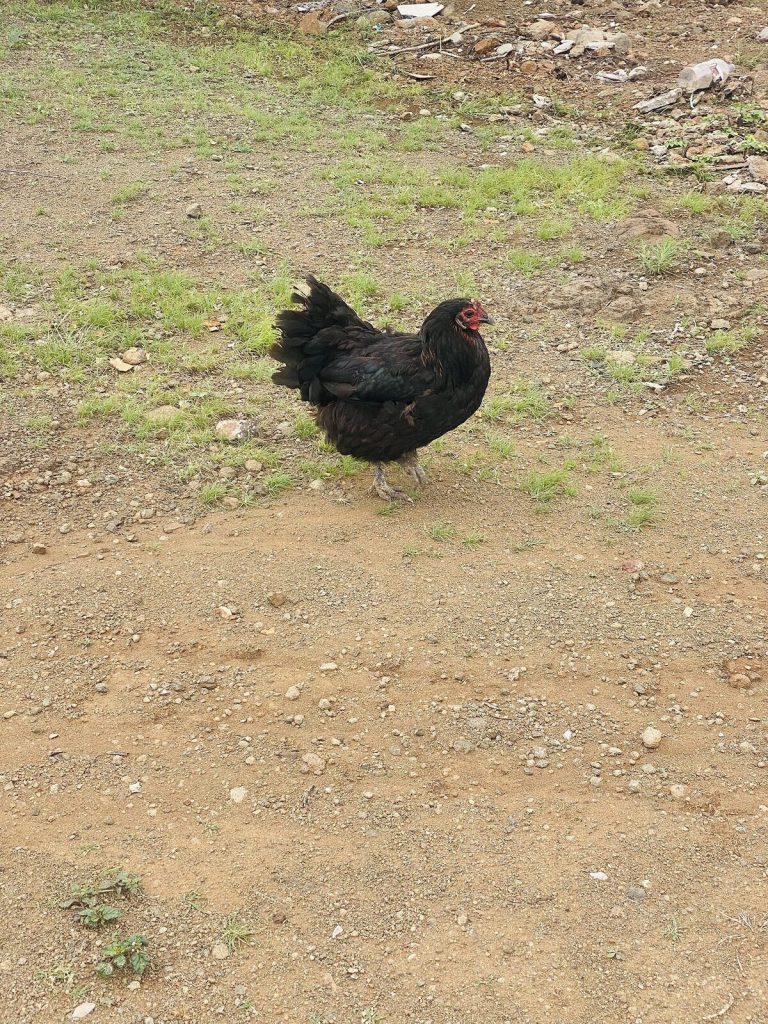
Raising 500 Kuroilers is a four to six month commitment, and the cost of raising 500 Kuroilers turns far more on how you feed them than on what you pay for the chicks. This page follows one batch of 500 day old birds from arrival through to sale, with every assumption listed and the arithmetic shown, so you can swap your own prices in and get a figure you trust.
The Assumptions Behind This 500 Kuroiler Costing
A total without its assumptions is worthless, so here are mine before any shilling appears. Argue with any of them and rerun the sums; that is the point of writing them down.
One assumption deserves a warning of its own. It is repeated across Ugandan poultry articles and in some hatchery marketing that a Kuroiler passes 3.5 kilograms in about ten weeks. Trial work does not support it. Under full commercial supplementation, Kuroiler and Sasso birds reached a 2 kilogram market weight at 16 weeks, stretching to 18, 20 and beyond 20 weeks as supplementation dropped to 75, 50 and 25 percent. A separate Ugandan field trial run with the national animal genetic resources centre recorded male Kuroilers at 2.6 kilograms at 25 weeks and 3.0 kilograms at 43 weeks under village scavenging, after 11 weeks of confinement.
Budget on ten weeks and you will underbuy feed by something close to 60 percent, then discover it in week twelve with birds that are half the weight you promised a buyer. The Kuroiler weight by age figures are the place to check growth expectations before you cost anything.
Chick Cost for a 500 Bird Kuroiler Batch
Day old Kuroiler chicks in Uganda run roughly 2,500 to 6,500 UGX each, and that spread is not sloppiness. Ugandan sources genuinely disagree. A news agency reported the chick at 6,500, roughly double what it had been about a year earlier, with the rise traced to a shortage of breeding stock and hatching eggs at the national animal genetic resources centre. Farm blogs have quoted the same chick at half that. Both were probably accurate where and when they were collected.
For 500 chicks that is 1,750,000 to 2,750,000 UGX using a working band of 3,500 to 5,500. A million shillings of uncertainty on one line, before a bird has eaten anything. Order early, ask what the hatchery is charging this month rather than last season, and check the current Kuroiler chick price and where Kuroiler chicks are supplied before you fix the number.
Chick quality is worth paying for here in a way it is not with broilers. A Kuroiler is going to eat for four months, so a weak chick carries four months of feed before it disappoints you. Ask about the parent stock age and the hatch date, and refuse chicks that have been held over.
Kuroiler Feed by Growth Phase: Kilograms Before Shillings
Every costing you will read states feed in money. That hides the one thing you control. State it in kilograms first, because kilograms are what you can reduce, and money is only kilograms multiplied by a price you do not set.
Feed per bird across a 16 to 18 week cycle works out at roughly 7 to 9 kilograms. That figure is derived rather than measured, and it is worth showing both routes because they agree. Route one: a dual purpose bird converting at 3.0 to 4.0 kilograms of feed per kilogram of live weight, reaching 2.0 to 2.3 kilograms, needs 6 to 9 kilograms. Route two: daily intake climbing from around 50 grams in the chick phase to around 95 grams at finishing, across 112 to 126 days, totals 7 to 9 kilograms. Two independent routes landing in the same bracket is about as much confidence as a derived figure earns.
| Phase | Weeks | Kg per bird | Bags for batch |
|---|---|---|---|
| Chick mash | 0 to 4 | 0.9 to 1.1 | 9 to 11 |
| Grower | 5 to 10 | 2.6 to 3.2 | 25 to 31 |
| Finisher | 11 to 18 | 3.5 to 4.7 | 34 to 46 |
| Whole cycle | 0 to 18 | 7.0 to 9.0 | 68 to 88 |
Bags are 50 kilograms. Batch totals are trimmed slightly below 500 times the per bird figure, because birds lost in the first weeks never eat the grower and finisher rations. In kilograms the batch needs roughly 3,400 to 4,400.
Feeding detail, ration choice and phase changeover belong in the Kuroiler feeding guide, and the nutrient targets sit in Kuroiler feed requirements.
Total Feed Cost for 500 Kuroilers
Now the multiplication. Roughly 3,400 to 4,400 kilograms at 2,200 to 2,800 UGX per kilogram gives a feed bill of roughly 7,500,000 to 12,300,000 UGX for the batch.
Sit with that for a moment. It is four to seven times what the chicks cost. Measured against the batch total further down, it works out at close to two thirds of every shilling the flock will spend, which is exactly where published estimates of feed's share of Ugandan poultry production cost put it. So any scheme for improving Kuroiler margins that does not begin with feed is not a scheme. It is a hope.
It is also the line most likely to move under you mid batch. Compound rations track the grain markets rather than the chicken market, and sixteen weeks is long enough to cross at least one miller's revision. The grain side of that is unpacked in the startup cost page. What it means here is narrower and more useful: buy in bulk where cash and dry storage allow, watch the current poultry feed price, and cost the batch at a price above today's instead of at today's.
Vaccination, Health and Biosecurity Costs for the Flock
Allow roughly 500 to 1,000 UGX per bird across a sixteen week cycle, which is 250,000 to 500,000 UGX for the batch. Treat that as illustrative. Vaccine and drug prices could not be confirmed across Ugandan suppliers and they move with pack size, cold chain and how many birds you dose at once. It covers vaccines, vitamins and electrolytes, a coccidiostat where the schedule calls for one, disinfectant and footbath materials.
The schedule itself is not something an article should give you. It has to match the disease picture in your district and the vaccines the chicks already received at the hatchery, so ask the hatchery what was given and ask a local vet what your area needs. The standard framework is set out in the Kuroiler vaccination schedule, with the caveat that a vet confirms it locally.
Where any product touches meat, the withdrawal period printed on the label applies without exception. A bird sold inside its withdrawal period carries residues into food. That is a legal problem, a buyer problem and a public health problem, and no margin justifies it.
Litter, Water, Power and Labour Across a Sixteen Week Flock
Four lines that budgets skip and reality does not.
Litter. Sixteen weeks on deep litter needs more topping up than a six week broiler batch does. Allow 200,000 to 450,000 UGX for the batch as an illustrative figure. What decides it is distance to a sawmill, a coffee huller or a rice mill. Near one you pay transport. Far from one you pay a real price per bag.
Water and power. Allow 250,000 to 600,000 UGX illustrative, covering brooder fuel in the first three weeks, lighting, and either a water bill, a pumping cost or the hours somebody spends carrying jerrycans. Brooding is the expensive part and it lands early, when nothing has come in.
Labour. Four months of twice daily feeding, watering, litter management, record keeping and watching for sick birds. Allow 700,000 to 1,800,000 UGX illustrative across the cycle. Count family labour at a real rate even if nobody is paid, because a batch that looks profitable only because the family worked free is paying you less than casual work would.
Transport and sundries. Feed collection, agrovet trips, crates, taking birds to market. Allow 200,000 to 450,000 UGX illustrative.
Poultry House Cost Charged Per Batch Rather Than Once
The house is not a cost of raising this batch. It is a cost of being in the business, spread over every batch it will hold. Charging the whole build to one flock makes the first batch look ruinous and every later batch look free, and both readings are wrong.
Divide instead. If a deep litter house for 500 birds costs somewhere near 2,500,000 to 6,000,000 UGX to put up, and it holds fifteen to twenty batches before serious repair, the per batch charge is roughly 150,000 to 400,000 UGX. Add a little for repairs and the roof.
The build cost band is illustrative: Ugandan structural costs for a semi permanent deep litter house run somewhere around 55,000 to 95,000 UGX per square metre depending on walls, floor and the current iron sheet price, and floor area follows the space allowance per number of birds. Substitute what you actually spent. The method matters more than my bracket does, and if you have not built yet, the full capital picture is in what starting a poultry farm costs.
Mortality Allowance and Its Effect on Cost Per Kuroiler
Every bird that dies took its chick price, its feed, its share of the brooder heat and its vaccine with it. None of that comes back. The surviving birds have to carry it, which means mortality is not a line item so much as a multiplier on every other line.
This costing allows 10 to 18 percent across the cycle. Be clear about what that is: a judgement, not a measurement, because no Ugandan dataset for confined smallholder flocks exists to measure it against. What does exist sits on either side of the bracket. Researchers following 240 Ugandan smallholder flocks for a year recorded 6,226 mature birds dead of disease, an incidence of 0.230 deaths per bird month at risk. A second Ugandan survey, this one of 114 households running free range birds, found average chick losses of 28.6 percent in its montane zone and 39.6 percent in its agro pastoral one. Against that, commercial units target under 5 percent.
Those free range figures are not your number if you are confining and vaccinating 500 birds, and quoting them as such would be as dishonest as quoting 3 percent. They do tell you which direction the risk runs, and that the gap between a good batch and a bad one is far wider than most budgets admit.
The same year long study turned up one finding that deserves more attention than any saving on this page. Vaccinated birds survived at 3.7 times the rate of unvaccinated ones. Newcastle disease caused 46 percent of the deaths they could diagnose and mixed infections close to another third. Deaths also ran with the rains, worst between March and May and again from October into late November. Read that back against the health line above. A few hundred shillings a bird is buying the largest single change to this budget that money can buy, and shifting the hatch date so the finishing weeks dodge a wet peak buys more of it for nothing.
Most of the loss happens in the brooding weeks, which is where the cheapest prevention also lives. The causes and the countermeasures are in poultry mortality causes and prevention.
Total Cost of Raising 500 Kuroilers
Adding every line above for one batch of 500 birds to 16 to 18 weeks on full purchased feed.
| Cost line | Low UGX | High UGX |
|---|---|---|
| Chicks | 1,750,000 | 2,750,000 |
| Feed | 7,500,000 | 12,300,000 |
| Health | 250,000 | 500,000 |
| Litter | 200,000 | 450,000 |
| Water, power | 250,000 | 600,000 |
| Labour | 700,000 | 1,800,000 |
| House per batch | 150,000 | 400,000 |
| Transport | 200,000 | 450,000 |
| Batch total | 11,000,000 | 19,250,000 |
With 410 to 450 birds surviving, that is a cost per bird sold of roughly 24,400 to 47,000 UGX. Expressed per kilogram, on 820 to 1,035 kilograms of live weight, it is roughly 10,600 to 23,500 UGX per kilogram.
Hold that per kilogram figure against the market. Live chicken retails in Kampala and Jinja at roughly 7,500 to 11,300 UGX per kilogram. Your cost per kilogram starts at the top of that retail band and goes up from there. That is the whole story of this page, and it is why the next two sections matter more than the table.
Revenue From 500 Kuroilers in the Ugandan Chicken Market
Kuroilers do not sell by weight in most Ugandan markets. They sell as birds, at a premium over exotic broiler meat, because buyers want something closer to local chicken. Ugandan reporting puts a three month old Kuroiler at 20,000 to 25,000 UGX. A cock fetches 25,000 to 60,000 depending on age and what it is being bought for. An off layer hen goes for 25,000 to 35,000.
| Sale outcome | Birds sold | Revenue UGX |
|---|---|---|
| Poor | 410 at 20,000 | 8,200,000 |
| Middle | 430 at 23,500 | 10,105,000 |
| Good | 450 at 27,000 | 12,150,000 |
Selling well is a skill, not luck. Birds sold one at a time at the farm gate fetch more per bird than a whole flock sold to a trader in one lot, and the trader saves you weeks of feeding a flock you meant to be rid of. Festive periods pay a premium and everybody knows it, so plan the hatch date backwards from the date you want to sell. Current going rates sit on the Kuroiler chicken price page.
The Margin on Full Commercial Feed, and Why It Is Thin
Put the two sides together honestly. Costs of 11,000,000 to 19,250,000 against revenue of 8,200,000 to 12,150,000. Only the best cost case paired with the best sale outcome clears a profit, and it is a slim one of roughly 1,150,000 UGX on four months and eleven million shillings of exposure. The middle of the range loses money. The bad end loses a great deal of it.
That conclusion will not match most of what you read about Kuroilers, and it is worth being clear about why. Kuroilers were bred to do well on scavenging with modest supplementation, in a village system where the bird finds a good part of its own food. Feed them like broilers, on purchased compound rations for sixteen weeks, and you are paying broiler feed costs for a bird that converts feed at roughly twice the broiler ratio. The arithmetic was always going to be unkind. If straight meat margins on commercial feed are the goal, the Kuroiler against broiler comparison is the honest read.
Three things change the answer, and only three.
The Semi Intensive Kuroiler Feeding Budget: Fewer Bags, Longer Cycle
The first and largest lever is to stop buying every kilogram of gain. Brood in confinement to about eight weeks, vaccinate properly, then move the flock onto a run or a fenced scavenging area with supplementary feeding morning and evening. Purchased feed drops to roughly 3 to 4.5 kilograms per bird instead of 7 to 9. Trial work says the birds then take 18 to 22 weeks or more to reach weight rather than 16, which is the trade you are accepting.
The second lever is milling your own ration from bought ingredients rather than buying compound feed. It lowers cost per kilogram, sometimes sharply. It also adds a mixing job, a quality risk and a storage problem, and a badly balanced home ration costs more in lost growth than it ever saves in shillings. Do it with a proper formulation, not by eye, starting from how to formulate poultry feed.
The third lever is keeping the hens instead of selling them. Kuroiler hens begin laying around 25 weeks and the eggs sell as local eggs, which turns a one off meat sale into a running income and changes the shape of the whole calculation.
Be careful what you assume about the laying rate. The figures of 150 to 200 eggs a year that circulate for this bird trace back to the Indian breeding company that owns the cross, not to any Ugandan trial, and the Ugandan field work on Kuroilers did not measure egg numbers at all. Ugandan reality for local hens sits well below those claims: one survey of free range rural flocks recorded 8.8 and 11.5 eggs per hen per year across two zones, while a commonly cited national figure for indigenous stock is around 50. A confined and properly fed Kuroiler hen should beat all of those comfortably, but nobody has published how much by in Uganda. Build the egg case on your own first flock records rather than on a breeder brochure, and check the going rate on the egg price page.
What Would Change This Kuroiler Costing on Your Farm
Five numbers do almost all the work, and four of them are yours rather than the market's.
Your feed price per kilogram. A 400 shilling per kilogram difference across 4,000 kilograms is 1,600,000 shillings on one batch. Bulk buying, collecting your own feed and milling all move this.
Your feed conversion. Whether your birds convert at 3.0 or at 4.0 changes the batch feed bill by roughly a quarter. Spilled feed, wrong feeder height, worms and heat stress all push it the wrong way.
Your survival rate. Cost per bird sold is cost per bird placed divided by survival. There is no other route.
Your selling price per bird. The verified Ugandan spread runs from 20,000 to 60,000 depending on age, sex and purpose. Finding the buyer at the top of that spread is worth more than any saving on litter.
Your cycle length. Every extra week past target weight is feed with almost no weight to show for it. Weigh a sample of birds weekly and sell when growth flattens, not when you happen to be free.
Recording those five for one batch converts this article from a bracket into your own number. A simple weekly sheet with feed bags in, deaths, and a sample weight is enough, and the poultry record keeping template already has the columns. The general method for turning those records into a margin sits in the poultry profit calculation guide, and the wider enterprise comparison is on the farming business ideas hub.
Kuroiler Costing Questions Farmers Ask
Is raising 500 Kuroilers profitable in Uganda? On purchased compound feed for the whole sixteen week cycle, mostly not. The batch cost lands around 11,000,000 to 19,250,000 shillings against revenue of roughly 8,200,000 to 12,150,000, so only the cheapest cost case with the best selling prices clears a profit. Semi intensive feeding with supplementation, home milled rations, or keeping the hens for eggs can each move it into positive territory, though the semi intensive route pays for its cheaper feed with a much higher loss rate.
Why do other articles show much bigger Kuroiler profits? Almost all of them assume the bird reaches 3.5 kilograms in about ten weeks. Trial work puts market weight nearer 2 kilograms at 16 weeks on full feed. A ten week assumption cuts the feed bill by around 60 percent on paper and produces a profit that does not exist in a shed.
What mortality should I budget for? For a confined, vaccinated batch, 10 to 18 percent is a fair planning bracket, and no published Ugandan figure for confined smallholder flocks exists to sharpen it. Do not use 3 percent. Ugandan free range measurements sit at 28.6 to 39.6 percent for chicks, so if any part of your system is free range, budget toward that end and get the vaccinations done on schedule.
How long do 500 Kuroilers take to reach market weight? Sixteen to eighteen weeks on full commercial feed, stretching to 18, 20 or more than 20 weeks as supplementation drops. Under village scavenging, Ugandan field data recorded males at 2.6 kilograms only by 25 weeks.
Can I raise 500 Kuroilers without a permanent house? Yes, and many farmers do, using a semi permanent shelter for brooding and night housing with a fenced run by day. The shelter still has to be dry, ventilated, cleanable and predator proof. Failing on predator proofing is expensive, because losses at four months carry four months of feed with them.
How many square metres do 500 Kuroilers need? Fewer birds per square metre than broilers, because they are kept much longer and grow into the space. Work it from the stated allowance for the breed rather than from a broiler figure, and give more room than the minimum if the flock will be inside for four months.
Should I buy day old chicks or older brooded stock? Brooded chicks at three or four weeks cost several times the day old price and remove the weeks where most deaths happen. If you have no reliable heat source, that trade usually favours the older bird once losses are counted. With good brooding, day old is cheaper.
Do I need to keep records to make this work? Yes, and it is the cheapest thing on the list. Without feed bags in, deaths and a weekly sample weight, you cannot tell whether a thin batch was the market, the feed or the management, so you repeat the same mistake next time.
What is the single biggest mistake on a 500 bird Kuroiler batch? Buying the chicks before the feed money exists. Four months of feeding is the commitment, and a flock that gets rationed in the finishing weeks sells light and late, which costs more than the feed you were trying to save.
Do not place the chick order on the strength of this page. Ring round for what chicks and a tonne of feed cost you this month, drop those two numbers into the lines above, and see whether the batch total still leaves room between your cost per bird and what birds fetch at your market. If it does not, the answer is fewer birds or a different feeding system, and you have found that out for the price of two phone calls. Keep the quotes. Next batch, they are your baseline, and a baseline of your own beats every published bracket here.