
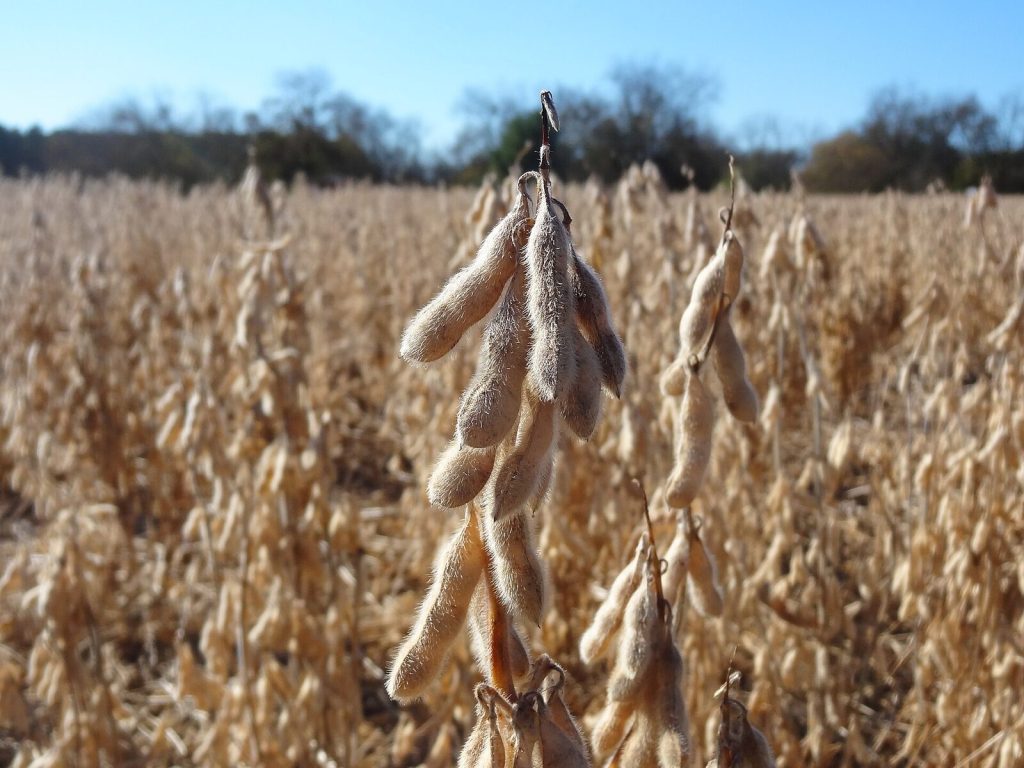
Soybean processing in Uganda runs along three routes: roasting and milling whole beans into full fat flour, pressing oil and selling the cake, or making soya milk and protein products. Which route a plant takes is settled less by the machinery than by which compulsory Uganda standard the finished product falls under. Eight of them cover soya, and each names a different product.
Eight Compulsory Standards Decide What a Soybean Processor in Uganda May Sell
Most pages about soybean processing open with equipment. Start instead with the schedule of compulsory Uganda standards, in the edition dated 30 June 2025, because a compulsory standard is enforced rather than advisory, and it is the thing a buyer can hold a miller to. Read through it for soya and a whole product family appears.
Two things follow, and the second is more useful than the first. A processor who presses oil and bags the cake is working under two separate compulsory standards at once, one food and one feed, not one. And the two bean standards overlap: US 615:2006 covers soya beans for human consumption or further processing into food, US EAS 762:2017 covers dry soybeans for human consumption, both are listed as compulsory in the same schedule, and neither is recorded there as cancelling the other. Which one an inspector applies to a bag of beans is a question for the bureau rather than something to assume from a page.
The limit of this section is worth stating plainly. The schedule prints scopes, not specifications. No moisture figure, protein figure or contaminant limit from any of those eight standards appears on this page, because the specification tables sit inside documents sold separately and none of them was read here. Naming the standard and its scope is the part that can be published honestly.
Moisture: What Soybean Harvest and Storage Actually Require
Soya has its own moisture numbers and they are not the maize numbers. This matters because the figures nearly collide. The ministry's soybean extension manual puts safe storage at 13 percent, and the maize grain specification puts its grading ceiling at 13.0 in one edition and 13.5 in another. Those are unrelated documents about unrelated crops, and the near coincidence of the digits is the reason so much wrong advice travels between the two. If maize is what you are storing, the reconciled figures and the reason the editions differ are on the maize storage guide. For soya, use the soya figures.
Notice the shape of that ladder. Soya is one of the few crops where drying too far in the field costs you real weight before harvest, so the crop wants to come off wetter than it goes into store and the drying happens deliberately rather than by leaving it standing. That is the opposite instinct to the one most grain handling teaches.
Drying Soya Beans Without Cracking the Seed Coat
Heated air dries soya faster and damages it at a temperature far lower than most operators expect. The manual is specific: air above 35 to 37 degrees Celsius starts the seed coats cracking and splitting, and too high a temperature causes complete cracking in five minutes. It adds a second caution about stirring or recirculating a load once the beans are down at 12 percent or lower, which is exactly when a dryer operator is most tempted to give the batch one more turn.
Sun drying is what almost every Ugandan smallholder uses, and the manual is honest about it: weather dependent, slow, heavy on labour, and a cause of large losses when unseasonal rain interrupts it. Mats or plastic sheets under the grain cut dust contamination and make collection easier. Where a group or cooperative can fund a dryer, the manual's argument for it is not speed but uniformity, since evenly dried beans with less contamination fetch a better price than hand dried ones. Drying technique across crops, and how a moisture reading is taken in the first place, is general ground rather than soya specific.
Cleaning Soya Beans Before Processing, and What Winnowing Costs
Threshing detaches the bean from the pod and cleaning separates whole beans from broken ones, straw, stones, sand, chaff and weed seed. Winnowing is the usual Ugandan method, and the manual carries a figure worth holding onto: grain lost as spillage during winnowing can reach 4 percent of total production. That is a loss with a named stage and a named operation behind it, which is more than can be said for most loss percentages in circulation.
Poorly cleaned beans do three things to a processing line. They raise insect infestation and mould growth in store, they put unwanted taste and colour into the product, and stones damage the machine. A press or a mill fed uncleaned beans is a repair bill on a delay.
Roasting Soya Before the Press, and What the Feed Trade Pays For
Raw soya cannot go into food or feed. The ministry's manual states it in one line: soya bean must be roasted to destroy trypsin inhibitor before processing into consumable products. Trypsin is the enzyme that breaks protein down, so an unroasted product hands the eater protein they cannot reach.
Where the heat sits in the sequence is the decision that separates a good processing line from a poor one, and it is a sequencing question rather than a temperature question. Heat the whole beans first, then press, and both outputs come out of the process already treated. Press first and the cake leaves the machine untreated, which caps what the feed trade will pay for it. The same logic in reverse is why a large solvent plant gets the heat step free: its flakes are dried and toasted to drive off solvent, and that toasting does the work. The feeding side of this, including why too much heat is as damaging as too little and why neither error is visible in the sack, is worked through on soybean meal in animal feeding.
For a processor the practical instruction is short. Decide whether you are selling a food grade product or a feed grade one before you switch the roaster on, because the two have different compulsory standards and the roasting step is common to both.
Pressing Soya Bean Oil and What the Cake Yield Leaves You
Soya carries about 20 percent oil on a dry matter basis, which the manual gives, and that figure sets a hard ceiling nothing in the plant can lift. Take a 100 kilogramme bag of beans at 13 percent moisture. About 87 kilogrammes of that is dry matter, so roughly 17 kilogrammes of the bag is oil, and the other 83 will leave the press as cake whatever happens. A press recovers a share of the 17 and leaves the rest behind in the cake.
That arithmetic is why the honest description of a small soybean plant is a cake business with an oil line attached, rather than the other way round. It also tells you what to measure. Nobody can give you your own press's extraction rate from a page, because it depends on the machine, its settings, the bean and the heat it got. What you can do is weigh the beans in, weigh the oil and the cake out, and calculate it yourself, once, and then again after any change to the roaster. Get that wrong and you will be selling cake as though you had extracted oil you never got.
Reading the Ugandan Edible Soya Bean Oil Specification
The edible soya bean oil standard is the one soya document reachable in full here, in its draft East African Standard form, second edition, which cancelled and replaced the 2000 first edition after a technical revision. The Uganda schedule lists the same designation with a 2020 corrigendum, so confirm the edition with the bureau before you print a certificate of analysis against it. Its own definitions carry the distinction a village press depends on. A virgin oil is one obtained by mechanical means such as expelling or pressing plus heat only, purified by washing, settling, filtering and centrifuging and nothing else. A non virgin or refined oil is one obtained mechanically or by solvent, then refined.
| Parameter | Limit | Oil form |
|---|---|---|
| Acid value, mg KOH per g | 4.0 max | Virgin |
| Acid value, mg KOH per g | 0.6 max | Refined |
| Moisture and volatiles | 0.2 pc max | Both |
| Insoluble impurities | 0.05 pc max | Both |
| Soap content | 0.005 pc max | Both |
| Peroxide value, meq per kg | 10 max | Both |
| Iodine value | 120 to 143 | Both |
| Relative density | 0.919 to 0.925 | Both |
The acid value rows are the ones that reframe a small pressing operation. A virgin oil is allowed six to seven times the free acidity of a refined one, so a well made expeller oil is not a second rate version of refined oil by the standard's own reckoning. It is a separate category with its own limit. What the same standard takes away is cosmetics: food additives shall not be used in virgin or cold pressed oils at all, so a village press cannot legally colour its product to look like something off a supermarket shelf. Colour additives are permitted only in blended oils, within stated maximum levels, and only to restore colour lost in processing or to standardise it, never to hide damage or inferiority.
Moisture at 0.2 percent and insoluble impurities at 0.05 percent are the two a small plant fails most often, and both are filtering and settling problems rather than pressing problems. Peroxide value at 10 is a freshness and storage limit: it climbs while the oil sits, particularly warm and in the light, so a drum held too long can fail a test it would have passed on the day it was filled.
Soya Flour, Soya Milk and the Standards That Govern Each Product in Uganda
Full fat soya flour is the shortest route into soybean processing, because it needs a roaster, a mill and a sieve rather than a press. It has its own compulsory standard in a second edition that withdrew the first. The manual names the food products Ugandan processors make beyond flour and oil: soya tofu, yoghurt and soya milk, with soybean meal and feed cake on the livestock side. Soya milk and both protein product categories, plain and textured, each carry a compulsory standard of their own.
Two cautions about these products, neither of which is a figure. The roasting rule applies to every one of them, so an unroasted soya milk is not a weaker product, it is a defective one. And a full fat flour keeps the oil, so it keeps the oil's problems: ground full fat material goes rancid, and rancidity is a storage life limit rather than a safety one. Nothing on this page gives a shelf life for any of these, because the numbers that would justify one sit inside standards not read here.
Uganda's Soybean Yield Sets the Size of Any Processing Plant
A processing plant is only as large as the beans it can buy within a sensible haul, so the national yield figures are a sizing input rather than background. Here the sources disagree and the disagreement is instructive.
Uganda's own returns to the international statistical series put soya bean yield at about 798 and 800 kilogrammes per hectare in consecutive years, both flagged official, on an area of 173,000 and then 215,000 hectares, with production of 138,000 and 172,000 tonnes. A later year is flagged as an estimate at 970 kilogrammes per hectare. Roughly 320 kilogrammes per acre, then, on the officially flagged years.
The ministry's manual reports the same crop differently. It gives production of 107,600 tonnes from an estimated area of 189,700 hectares and then calls that an average of 1.2 tonnes per hectare. Divide its own two figures and you get about 570 kilogrammes per hectare, not 1,200. The manual's own regional table, from Ugandan survey work, spans 100.4 kilogrammes per acre in West Nile to 728.7 in the Northern region, with an overall average of 400.7 and about one acre per household. Nothing in that table supports 1.2 tonnes per hectare either.
So the defensible planning band is roughly 570 to 800 kilogrammes per hectare nationally, about 230 to 325 per acre, against a research figure the manual puts near 2.5 tonnes per hectare that no survey has met. The printed 1.2 does not reconcile with the numbers beside it and should not be used. For the varieties behind the better end of that range, the manual names Maksoy 1N through to Maksoy 6N, released by Makerere University in collaboration with the national research organisation.
Buying Soya Beans From Farmers: Weighing, Moisture and the Market Price
An unweighed purchase is a price you did not set. Beans bought by tin, basin or unmarked sack cannot be turned into a cost per kilogramme of oil later, and a processor who cannot state a cost per kilogramme cannot tell a good month from a bad one. A scale at the intake point is the cheapest instrument in the building, and the farm weighing scales page covers what kind to get.
Moisture at intake is the second half of the same problem, and this one has arithmetic behind it. Water is not oil and it is not protein, so a bag taken in wet is partly water you paid bean money for. Beans received at 18 percent moisture carry about 82 percent dry matter against about 87 percent at 13 percent moisture, so that load is worth at most about 94 percent of the price of a dry one before drying costs, shrinkage or handling are counted. Pay the same price for both and the wet load is a loss you cannot see. Current farm gate movement for the crop belongs on the soybean price page rather than in an article, because it moves with the season and the district.
Where the beans come from matters too. The manual describes the oilseed market as a web of informal and formal actors rather than a line from farmer to processor, and notes that growers move different volumes through different channels depending on whether they want the best price or the fastest payment. A processor competing for beans is competing on payment terms at least as much as on price. That negotiation is worked through from the farmer's side on how to sell produce to processors.
Frequently Asked Questions About Soybean Processing in Uganda
Do I need a press to start processing soya? No. Full fat soya flour needs a roaster, a mill and a sieve, and it has its own compulsory standard. Pressing oil adds a second product, a second standard and a much larger machine. Many processors start on flour and add a press when the bean supply is steady enough to keep one busy.
What moisture should soya beans be at before storage? The ministry's soybean manual gives 13 percent for six to twelve months and 10 to 11 percent for longer holding. Do not carry a maize figure across: the crops have separate specifications and the digits happening to sit close together is a coincidence, not a shared rule.
Can I roast soya in a drum over a fire? The ministry's own poultry manual carries a photograph of a fabricated roaster in Ugandan use, so small scale roasting is expected rather than discouraged. What a drum cannot do is tell you whether a batch got enough heat or too much, since both errors cut the product's value and neither shows in the grain. Keep the routine identical between batches and treat a change in results as a reason to check the roaster.
How much oil should I get from a bag of beans? Soya holds about 20 percent oil on a dry matter basis, so a 100 kilogramme bag at 13 percent moisture contains roughly 17 kilogrammes of oil in total. How much of that a given press recovers depends on the machine, its settings and whether the beans were heated first, and the only reliable figure is the one you measure by weighing in and weighing out on your own equipment.
Is a cold pressed soya oil a lower grade product? Not under the standard. The edible soya bean oil specification sets a separate acid value limit for virgin oil, several times looser than the refined limit, which recognises expeller oil as its own category. The same standard forbids food additives in virgin and cold pressed oils, so the product has to stand on how well it was pressed and filtered.
What does processing add to the price of soya? That depends on the product and on two prices that both move, beans in and oil or cake out, so no single figure holds. The ministry's own worked budget for growing an acre with fertiliser and improved seed totals 867,500 shillings of variable costs against 1,400,000 shillings of revenue from 700 kilogrammes at 2,000 per kilogramme, leaving 532,500 shillings, and it reconciles by subtraction. Treat it as a structure to redo with today's figures rather than a result, which is what the manual itself says to do.
Which standard applies if I sell cake to a feed mill? Oilseed cakes and meal used as animal feedstuffs have their own compulsory Ugandan standard, separate from every food standard on this page. A processor selling both oil and cake is meeting food rules and feed rules on the same production run.
Equipment, drums, filters, sealed containers and printed labels all come from suppliers whose prices and availability change through the year. Check what is currently stocked locally, and ask the bureau for the current edition of whichever soya standard your product falls under before you commit to a label. The wider set of processing topics, from drying to packaging, sits on the value addition hub, and packaging choices in particular are covered on the agricultural product packaging guide.