
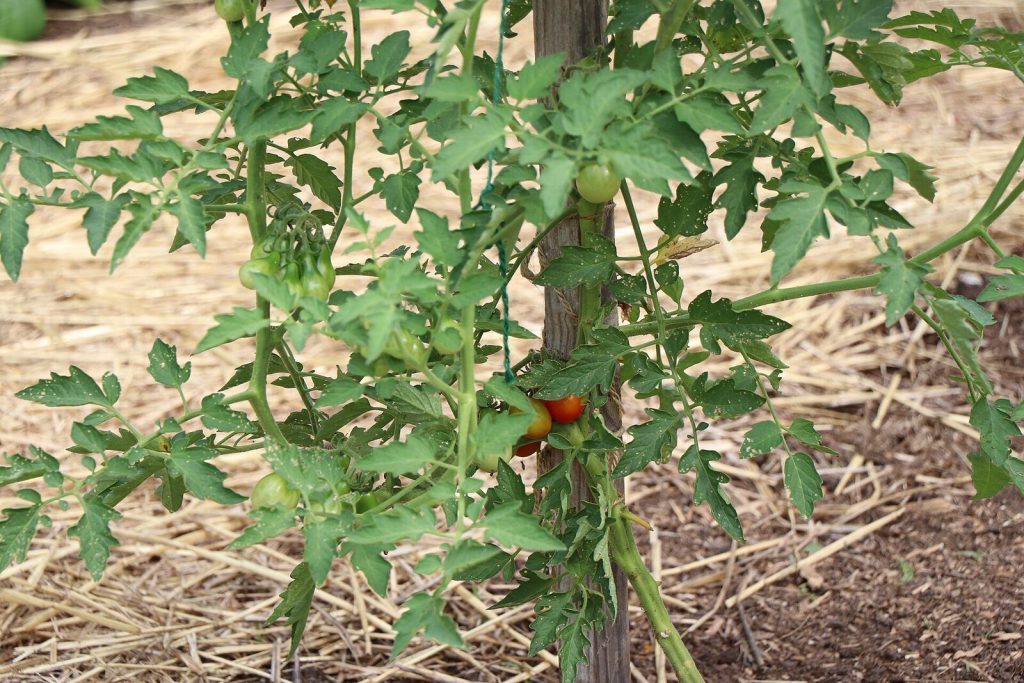
A tomato processing business exists because a tomato cannot be stored. Grain growers can hold a crop and sell into a better month. Tomato growers have days, not months, so the only way to move a tomato price is to change what the fruit is. That single constraint decides the product, the buying arrangement and the equipment, in that order.
Why Processing Is the Only Way to Move a Ugandan Tomato Price
Three monthly price swings are measured for Ugandan commodities and they tell the whole story when you put them beside storability. Dry beans move 7.9 percent from month to month. Maize grain moves 29.2 percent. Tomato moves 33.0 percent, on a monthly market range of 2,143 to 2,851 shillings a kilogramme.
| Crop | Monthly price swing | Can it be stored? | So the lever is |
|---|---|---|---|
| Dry beans | 7.9 percent | Yes, dried | Timing the sale |
| Maize grain | 29.2 percent | Yes, dried | Drying and a store |
| Tomato | 33.0 percent | No | Processing, or nothing |
For beans and maize, volatility of that kind is an opportunity or at least a loss to avoid. Dry them properly, store them, sell later, and the decision is about a store and a moisture meter. The maize storage guide works that arithmetic through, and it applies to nothing on this page.
Tomato has no version of that decision. The fruit is moving toward spoilage from the day it is picked, so a grower facing a glut cannot wait it out. The price is taken, not negotiated. Processing is the only mechanism that converts a perishable into something with a shelf life, and that is a different claim from the usual one about adding value. It is not that processing pays better. It is that for tomato there is nothing else to do with a surplus.
That framing matters because it sets the test for a processing enterprise. The question is not whether paste sells for more than fruit. It is whether your line can absorb fruit fast enough, during the weeks when the price collapses, to be worth building at all.
Where Ugandan Tomato Losses Happen, Stage by Stage
Uganda has stage by stage tomato loss data, which is better than the national percentage that gets quoted at growers. Key informant interviews with sixty participants across Sheema, Nakasongola, Kabale and Luwero recorded losses of 6 percent at harvest, 17 percent in transportation and 16 percent at market. The named causes were packing in wooden boxes, poor road access and handling at ambient temperature.
Resist the temptation to add those up. The study that tabulates them does not, the three stages are not stated to be fractions of one base, and a total arrived at by addition would be arithmetic dressed as a finding. What the three figures do say clearly is that the biggest single loss is not in the garden. It happens in a wooden box on a bad road, which is a container and logistics problem rather than an agronomy one.
The national figure is a different matter, and here the honest answer is that Uganda does not have one. A study that filtered the global food loss database down to least developed countries and then to fruit and vegetables found records for twelve countries including Uganda, then narrowed to tomato specific records under the database's own reporting method categories. Uganda was dropped for lacking any. Nine countries had them, reporting losses from 20 to 50 percent, and the study's conclusion about that spread is the part worth carrying: the variation tracks how each country defined its stages and gathered its data, rather than what was happening in the fields.
So when someone quotes you a tomato loss percentage for Uganda, ask which stage and whose method. Two of the nine reported figures differ by more than a factor of three, and both were collected honestly.
The Raw Material Problem: Fresh Market Varieties in a Processing Line
This is where most tomato processing plans in Uganda quietly fail, and it happens before any machine is bought.
A processing tomato and a fresh market tomato are bred for opposite things. Fresh market fruit is bred to travel and sit on a stall, so the traits that sell are firmness, thick walls and a long shelf life. A processing tomato is bred for solids: the more dissolved solids in the fruit, the less water you pay to evaporate. Nothing else about it matters much, including whether it looks good.
What do Ugandan growers plant? When tomato farmers in Wakiso and Luwero were studied by NARO researchers, the predominant variety was a hybrid chosen for firmness, extended shelf life and resistance to pests and diseases. Those are fresh market reasons and they are perfectly rational reasons, because the fresh market is where the fruit goes. They are also the wrong basis for a processing line, and no Ugandan release record offers an alternative: Uganda carries almost no vegetable variety release record, and growers depend on imported seed. Which tomato seed is actually available in Uganda covers where the names on the packets come from.
The consequence is concrete. If you buy whatever fruit the market offers, you are buying an unknown solids content, which means an unknown yield of finished product from every tonne you process, which means you cannot quote a price to a grower or to a buyer with any confidence. The single most valuable thing a Ugandan tomato processor could do is measure the soluble solids of the fruit it buys, by variety and by season, and pay on that basis. Nobody in the chain does it, which is also why nobody has the data.
The model that has worked in the region is the one where a processor contracts growers, names the variety, supplies the seed and provides technical support, then prices against measured content rather than weight. That turns the variety problem into a contract clause. How contract farming arrangements are structured is worth reading from both sides before you draft one.
Solids Rather Than Weight: the Arithmetic Behind Tomato Production
Every tomato product is defined by dissolved solids, not by weight, and the international standard for processed tomato concentrates puts numbers on it. A product qualifies as a concentrate at 7 percent or more natural total soluble solids. It is tomato puree from 7 percent up to but not including 24. It is tomato paste at 24 percent or more. Those concentrations are measured on the product with any added salt excluded.
Read that threshold structure backwards and it tells you something useful without needing a single measurement of Ugandan fruit. Since a product only becomes a concentrate at 7 percent, fresh tomato pulp sits below 7 percent by definition. So paste at 24 percent represents at minimum a threefold concentration of the strongest pulp that is still not a concentrate, and considerably more than that in practice, because real fresh fruit is nowhere near 7 percent.
That gives you a floor you can trust. A tonne of paste at the 24 percent minimum contains at least 240 kg of tomato solids. Those solids came from fruit, and the weaker the fruit, the more of it was needed. Work the ladder for your own material.
A refractometer is the cheapest instrument in the whole plan and the one that makes every other number real. Commercial paste lines elsewhere test soluble solids, viscosity, consistency, pH, acidity and colour hourly from each production line, which is the standard your buyer will eventually hold you to.
What Uganda Already Buys and Sells in Processed Tomato
The market question is answerable from Uganda's own customs declarations rather than from anyone's estimate, and the answer is more interesting than either optimists or pessimists expect.
Across three recent years Uganda declared imports of processed tomato concentrate of roughly 3,300 to 5,400 tonnes a year. Over the same years it declared exports of the same commodity of roughly 3,500 to 4,400 tonnes. Uganda is not a straightforward net importer of tomato concentrate at all: it moves comparable quantities in both directions, and it exports at a higher declared unit value than it imports. That pattern is what repacking and regional distribution look like in trade data, and it says there is an existing business in handling concentrate that is not the same business as making it.
On sauces the balance is clearer. Declared imports of tomato ketchup and other tomato sauces ran about 1,700 to 2,200 tonnes a year against exports of roughly 800 to 1,200 tonnes, so Uganda buys in rather more finished sauce than it sends out. Whole or piece preserved tomato, the tinned tomato line, is trivial by comparison at tens of tonnes.
Now put the concentrate import volume beside the fruit. Using the standard's own 24 percent minimum, roughly 4,400 tonnes of concentrate carries at least about 1,060 tonnes of tomato solids, which at any realistic fruit concentration means well over fifteen thousand tonnes of fresh fruit equivalent, and probably north of twenty thousand. Uganda's recorded national tomato production is around 40,000 tonnes from about 6,700 hectares. Imported concentrate carries fruit equivalent on the order of half the recorded national crop.
Two cautions on that comparison, both of which matter. The production figure is a modelled estimate and not a count: Uganda has filed no official observation in the tomato series, so every yield, area and production value in it is estimated or imputed. And trade data cannot show displacement, only quantity. What the comparison establishes is scale, which is enough to say the demand is not hypothetical. The yield page sets out where that national figure comes from and why it should be treated carefully.
Buying Fruit at the Farm Gate: Crates, Scales and the Unweighed Basin
The Ugandan loss data names the container directly: packing in wooden boxes is one of the three causes recorded alongside poor roads and ambient handling. Plastic crates are the documented alternative, and the case for them is mechanical rather than aesthetic. They can be washed and disinfected, they let air move through a stack, their surfaces are smooth so fruit is not abraded, and they last. Wooden boxes fail on all four.
Harvest container size matters too. Work reported in the same review found that harvesting in the morning into containers of around 20 kg, cooling within two hours and holding fruit cold extended shelf life substantially. A processor cannot control a grower's harvest, but it can specify the container it will collect in and refuse a lot that arrives in anything else.
Then there is the measurement problem, which the Ugandan evidence puts more bluntly than any advice page would. The NARO study of Wakiso and Luwero tomato growers records that individual sales by farmers without standardised measurements contributed to exploitation by middlemen, and separately that the absence of a mandatory produce inspection body hurt quality across the board.
That is the same finding this site keeps running into across commodities. A sale by basin, tin or unmarked box is a price the seller did not set. And it cuts against the processor too, because a purchase recorded in basins can never become a cost per kilogramme of finished paste. If you are buying fruit, buy it on a scale you own and issue a written weight. What kind of scale a buying point needs is a short read and it changes every other figure in the business.
Washing, Sorting and What Spraying Leaves Behind on the Fruit
Washing looks like housekeeping. On Ugandan tomatoes it is measurably more than that.
A study in Wakiso District sampled tomatoes from twenty farmers and twenty five market vendors and tested for dithiocarbamate residues. Mancozeb was the only one found. 47.4 percent of farm samples and 14 percent of unwashed market samples carried residues above the international maximum residue limit for that compound in tomatoes. Half the market samples were then washed by dipping and stirring in tap water for about three minutes, copying what a Ugandan household does. Washing cut residues by a factor of 0.3, and not one washed sample exceeded the limit.
The reason the residues were there is worth knowing before you buy anyone's fruit. 75 percent of the farms were mixing above the concentration on the label, and the average exceedance was around 91 percent, which means the typical overdosing farm was applying roughly twice the labelled strength. The label rate itself is not printed here, and should not be: the point a grower needs is that the label rate is the rate and that a local extension officer or agrodealer should confirm it against the specific product in hand, along with the pre harvest interval, which exists on every label and must be observed before picking. Earlier Ugandan work found 70 percent and 50 percent of farmers applying this fungicide to extend shelf life and to make fruit look attractive, rather than to control any disease they had identified.
The study's own risk assessment put long term exposure below the reference intake for washed and unwashed fruit alike, and it rested that on an assumed national consumption of a single gramme of tomato per person per day, a figure the authors themselves flagged as needing research. So treat the residue result as a quality control finding rather than as an all clear. For a processor the practical conclusion is simple: wash every lot properly, because it demonstrably changes the number, and specify spray practice in any grower agreement. What a tomato spraying programme should and should not contain is the grower side of this.
Sorting is the other intake gate. Mixed harvesting of ripe and green fruit in one container is worse than it looks, because ripe tomatoes give off ethylene that pushes the green fruit around them into ripening and then into decay. For a paste line you want fully ripe red fruit, which inverts the fresh market advice to pick at mature green, so say which you want and reject the other.
Choosing a Product: Paste, Puree, Sauce, Drying or Juice
Product choice follows from solids, equipment and shelf life, and the four realistic routes differ sharply in what they demand.
Puree is the gentlest entry, needing 7 percent solids or more and less evaporation than paste. Paste at 24 percent or more is the product with the widest market and the highest energy bill, because most of what you are removing is water. Sauce and ketchup sit outside the concentrate standard entirely, which means the recipe is yours and so is the whole burden of proving it keeps: that is a different enough business to have its own page. Drying avoids the evaporation plant altogether and sells into a smaller, higher value market, with the same sun and weather constraints every Ugandan drying operation faces. Juice is the shortest process and the shortest shelf life.
One warning on drying performance figures. Much of the published work on solar dried tomato was run in genuinely dry climates, and at least one paper that surfaces on Ugandan searches has a Ugandan co author but ran its trials in Egypt. Drying times and temperatures from a desert do not transfer to a Ugandan wet season. The dried produce page covers what drying actually demands here.
Heat, Acid and the Storage Life You Are Actually Selling
What a customer pays for in a sealed tomato product is time. The fruit could not last a week; the tin can last a year. That time is bought with acidity and heat, and the concentrate standard fixes the acidity end of it at a pH below 4.6. Tomatoes do not sit comfortably below that line by nature, so the number has to be measured on every batch and adjusted rather than assumed.
Two more limits in the same standard are worth knowing because they are audit trails rather than recipe rules. One caps mineral impurity as a fraction of the product's own solids, and that cap is really a soil reading, telling a laboratory how dirty the intake was. The other caps lactic acid on the same basis, and that one is a clock, showing how long fruit was left standing before heat reached it. Both are read off a finished sample in a laboratory, and both will tell a buyer how your intake and your yard were run on the day. Mould count is left to whichever country the product is finally sold in, so ask before you plan an export.
The detail of acidity, permitted ingredients, filling and the reason no time and temperature schedule appears on this site belongs to the sauce page, which works through the process controls in full.
Standards, Registration and Labelling for Ugandan Processed Tomato
The concentrate standard is short about composition and strict about it. A puree or a paste is tomato, and beyond tomato only a small permitted list. It also requires the product to be practically free of peel, of seed and seed fragments, of dark specks and scale like particles, and of any plant material a naked eye can find. Miss the solids threshold or any one of those, and the container counts as a defective under a sampling plan, which means a delivery is judged on how little it varies rather than on how good its best unit is.
On the Ugandan institutional side, the finding that there is no mandatory produce inspection body in the fresh chain cuts both ways for a processor. Fruit arriving at your gate has passed no external check, so your intake inspection is the only one operating. Equally, a processor able to show its own testing regime has something an institutional buyer can see and a market trader cannot offer. Certification routes and premises requirements change often enough that they should be confirmed directly rather than read off a page, and the sauce page names who to ask.
Outlets for a finished product run from wholesalers and institutional caterers through the hospitality trade to supermarket shelves and regional export, each asking for a different pack size and a different amount of paperwork. Two next reads are useful here, what a supermarket asks of a small supplier and where Ugandan tomatoes actually get bought, and the rest of this cluster of processing guides covers the neighbouring enterprises.
Frequently Asked Questions
How many kilogrammes of fresh tomato does a kilogramme of paste need? No measured Ugandan answer exists, because nobody publishes the soluble solids content of Ugandan tomato fruit. What can be said rigorously is a floor. Paste is 24 percent solids or more by definition, and fresh pulp is under 7 percent by the same standard's definition, so a kilogramme of paste needs at least about 3.4 kg of fruit and in practice a good deal more. At fruit of 5 percent solids the figure is about 4.8 kg, and at 4 percent about 6 kg, before any loss to peel, seed, sorting and spillage. Measure your own fruit with a refractometer and the question answers itself for your variety.
What is the difference between tomato puree and tomato paste? Solids, and only solids. A concentrate becomes puree at 7 percent natural total soluble solids and stays puree up to just under 24. At 24 percent or more it is paste. Both are measured with any added salt excluded. Below 7 percent it is not a concentrate at all, and ketchup and tomato sauce are excluded from that standard entirely, no matter how thick they are.
Do I need a special tomato variety for processing? You need one with high solids, which is not what Ugandan tomato growers are currently buying. When NARO researchers studied Wakiso and Luwero growers, the predominant variety had been chosen for firmness, shelf life and disease resistance, all fresh market traits. Uganda carries almost no vegetable variety release record of its own and growers depend on imported seed, so a processor wanting a processing variety has to specify it in a contract, supply the seed and check the solids itself. Nothing on the shelf will do that work for you.
What do Ugandan tomatoes sell for, and what does imported paste cost? Ugandan tomato monthly market prices have been recorded at 2,143 to 2,851 shillings a kilogramme, a swing of 33.0 percent between the cheapest and dearest month, against 29.2 percent for maize grain and 7.9 for dry beans. Check the living tomato price page for what fruit is doing now, because that band moves. On the import side, Uganda's declared customs unit value for processed tomato concentrate ran at roughly 1.31 to 1.42 US dollars a kilogramme across three recent years, while declared exports of the same commodity left at about 1.43 to 1.62. Declared ketchup and sauce imports came in at roughly 1.05 to 1.22 dollars a kilogramme. Duty, clearing and margin all sit on top of those figures, so read them as the starting cost of a landed rival rather than as anything you would see on a shelf.
Does washing tomatoes actually remove pesticide residue? On the Ugandan evidence, yes, and by more than you would expect. In a Wakiso District study, 14 percent of unwashed market samples carried mancozeb residues above the international limit, and after a three minute dip and stir in tap water, none did. The reduction factor was 0.3. It does not fix overdosing at the farm, where 75 percent of sampled farms were mixing above the label concentration by an average of about 91 percent, and it does not replace observing the pre harvest interval printed on the product label. It does mean washing is a real processing step with a measurable effect and not a formality.
How much tomato is lost between the garden and the market in Uganda? Stage by stage, Ugandan interviews across four districts recorded about 6 percent at harvest, 17 percent in transportation and 16 percent at market. Do not add those together: the source does not, and the stages are not stated to share one base. Uganda files no tomato specific national loss figure in the global food loss database, which a published study confirmed while retaining nine other least developed countries that do file one. Those nine reported 20 to 50 percent, and the same study concluded the spread reflects differences in reporting method and stage definition rather than differences in the field.
Do I have to register a tomato processing business, and with whom? Two different offices are involved, one for the product and one for the enterprise, and their requirements and fees move often enough that an article will date badly on the detail. Ask the national standards body about certifying a packaged food and about premises, and ask your district commercial office about registering and trading locally. The point worth knowing before you ask is that nothing inspects the fresh fruit before it reaches you, so whatever you test at intake is the only quality gate in the whole line.
Is a small tomato processing unit worth it if I only have a seasonal glut? That is the honest question and the answer depends on how many weeks a year the line would run. A processing plant costs the same whether it runs for six weeks or thirty, so a unit sized to absorb only a glut carries its capital across very few tonnes. Growers facing that arithmetic often do better organising collective sale and cold handling first, and moving to processing once there is enough year round volume to keep a line busy. How aggregation works covers the step before processing.
Work out your product and your fruit supply before you price any equipment, then get the specification written down and quoted properly. Evaporators, pulpers, filling and sealing gear, bottles, sachets and labels all vary widely between imported and locally fabricated options, so collect several written quotations against the same written specification and ask each supplier what spares and service they actually hold in the country. The supplier directories are where to start looking for equipment and packaging, and the packaging guide covers what your label has to carry.