
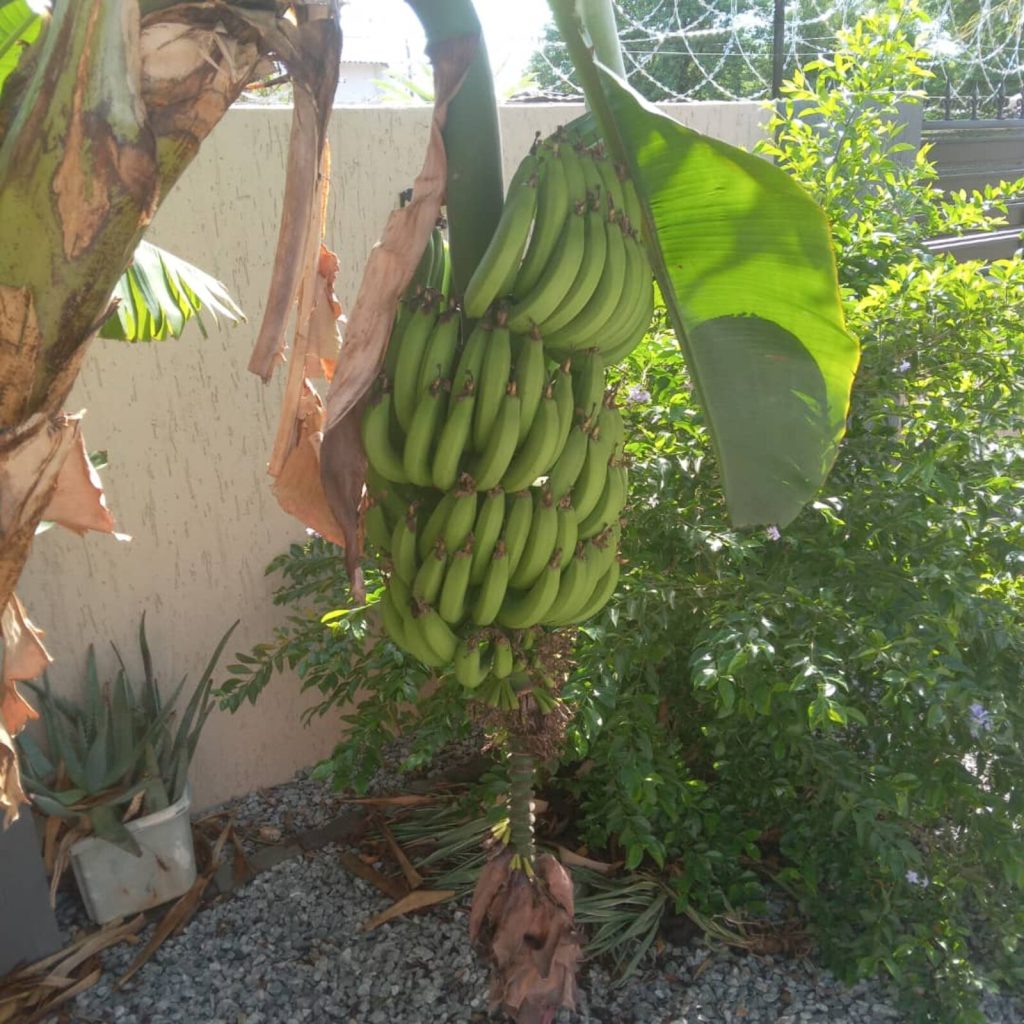
Banana chips production starts with a choice most producers never make consciously: which banana. Uganda writes a separate compulsory standard for cooking banana, for plantain and for sweet banana, and the three are different crops in everything that matters to a chip. Pick the wrong one and no amount of frying will give you a slice that snaps.
Three Ugandan Standards, Three Different Bananas
Uganda's compulsory standards do not treat banana as one commodity. The bureau's schedule, in the edition read for this page, splits the crop by genome group and by use, and every split carries its own specification.
Read those scopes together and something useful falls out. Both raw material standards for the starchy bananas describe fruit going to a consumer raw, and the sweet banana standard explicitly pushes industrial processing out of its own scope. So the banana a chip maker buys is not squarely inside any of them. That is a gap rather than a loophole, and the next two sections are about what sits in it.
One limit on everything above. The schedule prints scopes, not specifications, and the bureau's site refuses automated access, so no size grade, defect tolerance, moisture figure or contaminant limit from any of these standards appears on this page. A scope tells you which document governs you, which is worth knowing. A limit nobody has read is worth nothing.
Uganda Grows More Cooking Banana Than Anywhere and Counts No Bananas
Raw material abundance is the one thing a Ugandan chip maker does not have to worry about, and the statistics on it are stronger than almost anything else on this site. Read observation by observation from the international crop production bulk file, with the flags, Uganda's cooking banana production runs at about 11.2 to 11.6 million tonnes and it carries an official flag for several consecutive years. That puts Uganda first in the world among the 53 countries reporting that item, and the margin is not close: the next country reports about 4.9 million tonnes, then about 4.6 and about 4.4.
The same file also settles a claim that circulates widely and is wrong. There is a second banana entry for Uganda and it is empty: both its area and its production rows carry a missing flag, year after year, so the cooking banana line is the only place the crop gets counted at all. So Uganda is not the world's second largest producer of bananas behind India; it files no banana series at all, second place in that series belongs to China, and what Uganda genuinely leads is the cooking banana item. The correct sentence is also the stronger one.
Yield per hectare is where the sources part company, and a processor should know why before using either figure. Divide the file's own production by its own area and you get about 4.4 tonnes per hectare across 2.5 to 2.7 million hectares, which reconciles internally. Ugandan survey work reports matooke yield several times higher than that, and the standing finding on this site is that when two Ugandan yield figures disagree the argument is almost always about area rather than output, since production estimates agree far more closely than area estimates do. For a chip business none of that matters much, because a processor buys bunches within a haul distance rather than hectares. Size the plant on tonnage you can collect, not on yield per hectare. Plantation management and what drives bunch weight sit on matooke plantation management and banana farming in Uganda.
There Is No Ugandan Standard for a Banana Chip
This is the finding that ought to change how a producer plans, and it took a full enumeration of the schedule rather than a search to establish.
That absence is a real reading of the document rather than a failed search. The control is built in: searching the same extracted text for potato, cassava and sweet potato chips returns all seven entries above, and searching for banana returns the four raw material and flour standards plus the alcoholic beverage. The search works; the banana chip entry is not there.
So which standard governs a Ugandan banana chip? On the face of the scopes, the fruit chips and crisps standard is the candidate, since a banana is botanically a fruit and that standard is defined by process rather than by species. Against that, the same schedule treats cooking banana and plantain as starchy staples in their own documents, and gives cassava and sweet potato their own chip standards rather than folding them into a fruit one. That is a question to put to the bureau in writing before printing a label, and it is a better question than any page can answer. What a producer should not do is assume the gap means nothing applies: the labelling rules for prepackaged foods, the general standard for food additives and the general standard for contaminants and toxins are compulsory across foods regardless.
Buying Matooke and Gonja When the Market Price Swings Every Month
Raw material price is the largest risk in this business, and matooke carries the widest price movement of any commodity in the ministry's own price series. Monthly volatility for matooke by the bunch runs at about 56.5 percent, against roughly 29.2 percent for maize grain, 7.9 for dry beans and 5.9 for groundnuts. Those figures are published elsewhere on this site from the ministry's statistical abstract and the reading here is theirs unchanged rather than a second derivation.
Two consequences follow, and they pull in opposite directions. A processor buying at the bottom of that swing has a raw material cost a fresh trader cannot match, which is the whole commercial argument for chipping. A processor who signs a fixed price supply contract without allowing for the swing has taken on a risk they cannot price. Current movement belongs on the matooke price page rather than in an article.
The unit is the other half of the problem, and the ministry's own table proves it. Measured by the bunch the swing is 56.5 percent; measured by the cluster it is 31.5. The unit of sale moved the exposure more than the crop did. Both are market prices rather than farm gate prices, so read them as the shape of the movement rather than as an offer. Matooke is traded by the bunch, and a bunch is not a weight. Two bunches at the same price can differ by half in the fingers they carry, and a chip line is paid for kilogrammes of finished product. A buyer who weighs bunches at intake, records the weight against the price and works out a cost per kilogramme of peeled fruit has set a price. A buyer who pays per bunch by eye has accepted whatever the seller's judgement was that morning. Weighing is the cheapest control in the building and the one most often skipped.
Ripeness at Harvest, and Why a Sweet Banana Will Not Crisp
A chip that snaps is made of starch. As a banana ripens its starch turns to sugar, and sugar behaves completely differently in hot oil: it browns and then burns long before the slice has given up its water, so a ripe slice comes out dark, soft and greasy while an unripe one of the same thickness comes out pale and crisp. This is why cooking banana and gonja, both starchy and both eaten after cooking rather than raw, are the raw materials for this product, and why a dessert banana is not.
The window is narrow at both ends. Too green and the slice is hard to peel, tastes flat and can be astringent. Past the mature green stage and the sugars are already rising. The practical test is the one the fresh trade uses: fingers still angular rather than rounded, skin firm and deep green, no yellowing at the tips. A delivery that has started to turn on the lorry has to be diverted to something else on the day rather than chipped and hoped for.
Gonja is the deliberate exception, and it is a different product rather than a mistake. Plantain carries more sugar as it matures and fries to a sweeter, darker, softer chip that has its own market. What cannot be done is to make both from one delivery and sell them as one grade.
Peeling and Slicing: the Production Step That Sets Chip Thickness
Peeling green cooking banana is hard hand work and it is where most of the labour in this business sits. Green peel is tight and the latex stains hands, boards and blades. Work in small batches, keep a bowl of clean water at the bench, and keep peeled fruit covered and out of the air.
Cut flesh browns within minutes, and on a starchy green banana that browning is the single most visible quality defect in a finished chip. Slices sitting in the open air for a quarter of an hour before frying will carry that colour all the way to the packet. Getting slices from the knife into oil or onto a tray quickly is not a throughput preference, it is the colour of the product.
Thickness decides everything downstream. Thick slices hold water in the middle, so they need longer in the oil, absorb more of it, and come out chewy rather than crisp. Thin slices dry through fast and break easily in handling. What matters more than the exact figure is that every slice in a batch is the same, because a mixed batch cannot be finished at one time: the thin slices burn while the thick ones are still wet. A hand slicer with a fixed gate beats a knife for this reason alone, and no figure on a page can replace testing two or three settings on your own fruit and tasting the result.
Frying Banana Chips, and the Oil You Are Buying
Frying oil is a regulated ingredient in Uganda, not a consumable. Edible soya bean oil, edible sunflower oil, crude and semi refined palm oil and blended edible oils each carry their own compulsory specification, and those specifications control freshness directly. The soya bean oil standard, which is readable in full, sets a maximum peroxide value of 10 milliequivalents of peroxide oxygen per kilogramme, a maximum acid value of 0.6 milligrammes of potassium hydroxide per gramme for a refined oil and 4.0 for a virgin one, moisture and volatile matter at 0.2 percent and insoluble impurities at 0.05 percent.
The sourcing of that oil is its own decision, and locally pressed oil is a live option in Uganda. What the pressing route does to an oil's specification, including why a virgin oil is allowed several times the free acidity of a refined one, is worked through on sunflower oil processing.
Baking and Drying as the Other Route to a Chip
Deep frying is not the only way to a chip and the Ugandan standard says so: the fruit chips and crisps specification covers chips and crisps prepared by either deep frying or baking. A baked chip has no oil bill and a longer storage life for the same reason, since most of what goes wrong in a stored chip is the oil in it turning. It is also a harder product to make well, because baking removes water more slowly and a slice that dries rather than crisps comes out leathery.
Pure drying is a different product again, and a different rulebook. Uganda's dried fruits standard explicitly excludes anything processed by frying or roasting, and the fruit chips and crisps standard excludes anything produced by a drying process covered elsewhere. So the two scopes fence each other off, and a producer moving from frying to drying changes the document they are working under. The drying side, including measured comparisons of five drying methods and the moisture a dried slice has to reach, sits on dried fruit production.
Cultivar Choice and the Crunch, Measured in a Ugandan Laboratory
Here is something no competitor page carries, and it comes out of Ugandan work rather than a general food science text. Researchers at the national agricultural research laboratories in Kampala and at Makerere University assessed twenty cooking banana cultivars, eleven landraces and nine NARITA hybrids bred by the national research organisation with the international institute, all grown in central Uganda and processed the same way: fruit from the second and third hands of the bunch, peeled, sliced, oven dried and milled.
Among the properties they measured is water absorption index, and the study's own interpretation is the part that matters to a chip maker: a high index suits products that need to stay moist, such as cakes and bread, while a low index suits products that need crunchiness. The range across those twenty Ugandan cultivars is wide.
| Cultivar | Type | Water absorption |
|---|---|---|
| NARITA 2 | Hybrid | 7.16 g/g, lowest |
| NARITA 11 | Hybrid | 11.16 g/g, highest |
| Musakala | Landrace | High paste viscosity |
| Nfuuka | Landrace | High paste viscosity |
The gap between the two extremes is more than half again, and both sit among the improved hybrids rather than dividing neatly along landrace lines. Read plainly, that means cultivar choice is a texture decision a Ugandan chip maker can actually make, and the hybrids most often promoted for disease resistance are not interchangeable in a fryer. Landraces in that set took in more water during processing than the hybrids on average, which the authors read as more open starch structures.
Three honest limits on using that table. The twenty cultivars were harvested across six separate years, so a cultivar difference is partly confounded with the season it was grown in, and the authors say the harvest dates span that period. The paper also reports a closely related water absorption capacity figure with a percent sign where the same class of quantity is elsewhere given per gramme, which is a unit inconsistency, so only the index is used here. And these are properties of a milled flour, measured to guide breeding and industrial use, not of a fried slice. Treat the ranking as a lead for your own trials rather than a substitute for them.
Salt, Additives and What the Ugandan Rules Control
Salt is the only addition most banana chips need, and the case for keeping it at that is commercial rather than moral. Anything else you put in falls under a single legally enforced document, the one governing food additives, which decides what may go into which food and how much of it. That document was not read for this page, so no permitted level for any additive appears here. The figure comes off the standard itself and off the packet the additive arrives in.
Two things a producer can settle without any number. An ingredient that goes into a product has to be declared on the label, by its actual name rather than as a general category. And an unweighed addition is an uncontrolled batch: a salt or flavour dose applied by hand cannot be repeated, cannot be investigated when a customer complains and cannot be explained to an inspector. A cheap calibrated scale and a written batch record close both problems at once.
Packaging and Storage for a Product That Softens in Damp Air
A crisp chip is a dry product living in a humid country, and it spends the rest of its life taking water back out of the air. Two failure modes follow, and they arrive at different speeds. Softening happens within days in a poorly sealed pack and is the one customers notice. Rancidity happens over weeks, in the oil the chip absorbed during frying, and it is the one that kills repeat sales because the packet is still crisp and tastes wrong.
Sealing a warm packet undoes the frying. Vapour still leaving the chips has nowhere to go, settles on the inside of the film, and runs back down onto the product. A cooling rack costs nothing and buys the whole storage life. After that, three rules: pack sizes small enough that a customer finishes one, a seal that actually closes, and storage off the floor, out of direct light and away from any heat source, since light and warmth are what turn the oil. Film choice, seal quality and pack size are worked through across farm products on the agricultural product packaging guide.
Frequently Asked Questions About Banana Chips Production in Uganda
Which banana makes the best chips? A starchy one, so cooking banana at the mature green stage or gonja. A dessert banana will not crisp, because its starch has already turned to sugar and sugar browns and burns before the slice dries. Uganda's own standards keep these apart: cooking banana and plantain each have a separate specification from sweet banana, whose scope excludes bananas for cooking or industrial processing.
Is there a Ugandan standard for banana chips? No banana chip or crisp entry appears in the compulsory schedule, although potato, cassava and sweet potato each have chip or crisp standards and banana has four standards covering the raw fruit and the flour. The general fruit chips and crisps standard covers chips prepared by deep frying or baking, and whether the bureau reads a banana chip into it is a question to put to the bureau in writing rather than to assume.
Do I have to fry them? No. The fruit chips and crisps standard covers baking as well, and a baked chip has no oil bill and a longer storage life because there is less oil in it to turn. It is harder to get crisp. Drying instead of frying moves you under a different standard again, since the dried fruits specification excludes anything fried or roasted.
How often should frying oil be changed? No interval is published here because none was verified for Ugandan conditions, and it depends on the oil, the load and the temperature. What can be said is why it matters: the specifications that govern edible oil control peroxide value and acid value, both of which climb as oil is reheated, so the oil in a pan after prolonged reuse is no longer the product that met the standard. Strain between batches and change it before it darkens, foams or smells.
Why do my chips come out dark or greasy? Dark usually means sugar, so the fruit was too ripe, or the oil is old and carrying burnt crumbs. Greasy usually means slices too thick or oil not hot enough, both of which keep the slice in the pan longer and let it take up oil. Uneven slicing produces both faults in the same batch.
Does the cultivar really change the chip? Ugandan laboratory work on twenty cooking banana cultivars measured water absorption across a range from about 7.16 to 11.16 grammes per gramme, and reads a low figure as suiting products that need crunchiness. Both extremes were improved hybrids. It was measured on milled flour rather than on fried slices and the cultivars were harvested across six different years, so treat it as a reason to trial two or three cultivars rather than as a ranking to buy from.
What does the matooke price do to the business? More than any other input. Matooke by the bunch shows monthly price movement of about 56.5 percent in the ministry's own series, against roughly 29.2 percent for maize grain and 7.9 for dry beans, so raw material cost per kilogramme of chips can swing further in a month than most businesses move in a year. Buying by weight rather than by the bunch, and recording it, is what turns that swing from a risk into an advantage.
How much matooke does Uganda produce? About 11.2 to 11.6 million tonnes of cooking banana and plantain, officially flagged in the international production series, which is first in the world among the 53 countries reporting that item and more than twice the next country. Uganda files no separate bananas series at all, so the widely repeated claim that it is the second largest banana producer after India is not what its own returns say.
A slicer, a fryer, a strainer and a sealing machine are all bought locally at prices that follow the importer, so take two current quotes rather than a figure off a page. Before any label is printed, put the question of which standard applies to a banana chip to the bureau in writing, because the schedule is revised and the scopes do not answer it on their own. The rest of the cluster sits on the value addition hub.