
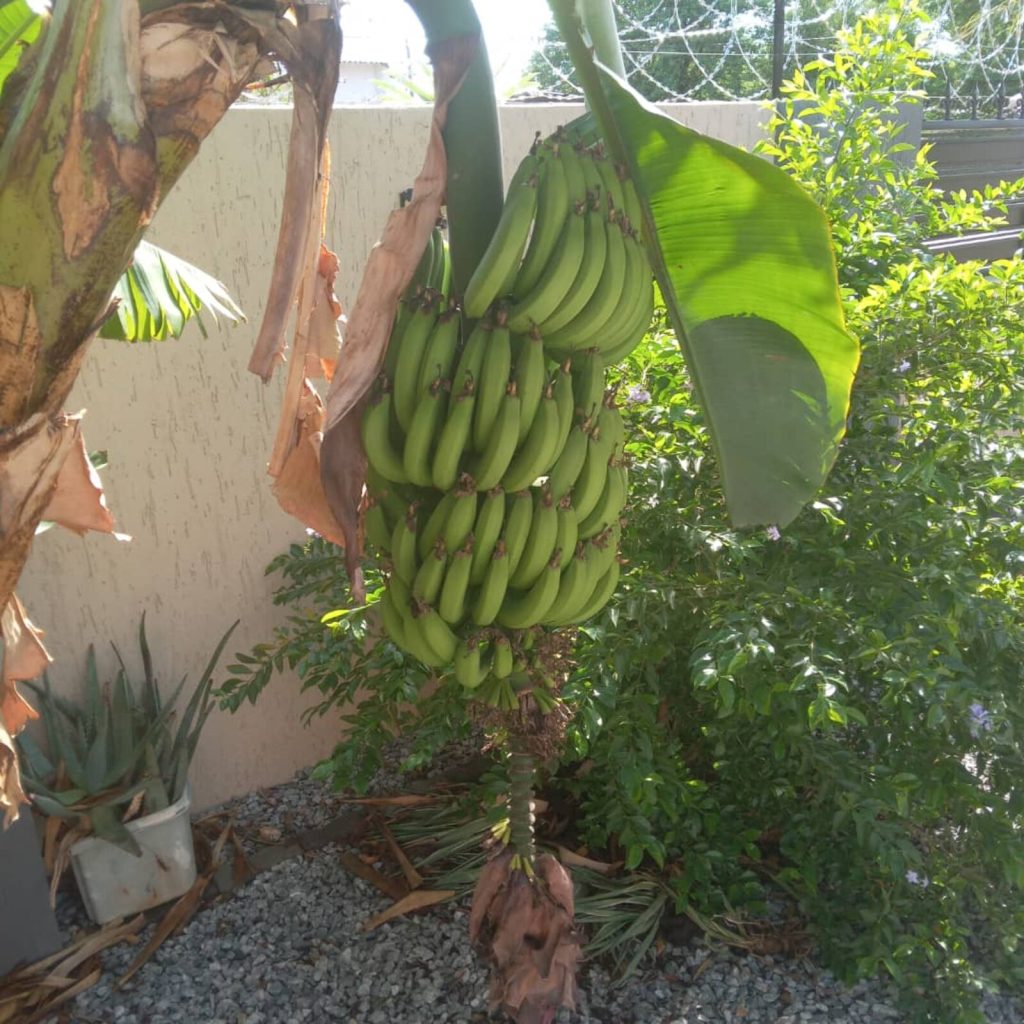
Banana farming in Uganda carries more households than any other crop and produces close
to 11.8 million tonnes a year, the largest plantain and cooking banana harvest in Africa by a margin of more
than two to one. What decides whether a plantation lasts twenty years or dies in five is not yield. It is
bacterial wilt, the weevil, the nematode, and the suckers you started with.
Banana Production in Uganda: Three Official Areas for One Crop
Start with a puzzle, because it protects you from a lot of nonsense later. Three Tier 1 sources agree
almost exactly on how much banana Uganda produces and disagree wildly on how much land produces it.
The ministry's Statistical Abstract puts national production at 11,230,000 tonnes, then 11,616,000, then
11,797,000 across three consecutive years. FAO's own database carries the identical figure for the middle
year, 11,616,000 tonnes, flagged as an official figure supplied by Uganda. So the tonnage is settled.
It is also worth knowing exactly what that tonnage ranks. Uganda files it under plantains and cooking
bananas, and on that item it is comfortably first in Africa: 11,616,000 tonnes against 4,897,902 for DR
Congo, 4,616,262 for Cameroon and 4,414,561 for Ghana. Under the separate item for other bananas, Uganda
files nothing at all, which is why Nigeria heads that African table. Any ranking that puts
Uganda second or third in the world for bananas has quietly added the two items together for some countries
and not for Uganda, so treat a global banana placing with suspicion and use the plantain and cooking banana
figure, which is the one Uganda actually reports.
| Source | Area under banana | Yield it implies |
|---|---|---|
| National agricultural survey | 668,000 to 972,000 ha | 12.3 to 15.4 t/ha |
| Research organisation manual | 1.3 million ha | About 8.9 t/ha |
| FAO database | 2.53 to 2.64 million ha | About 4.4 t/ha |
Same crop, same country, same tonnage, and the yield per hectare moves by a factor of three and a half
depending only on which denominator you use. So the deciding condition is the area basis, and it is worth
knowing which one is measured.
FAO's Ugandan banana production figure is flagged as an official figure. Its
area figure is flagged as estimated or imputed, and so is its yield, in every year. Watch
what those numbers do: production almost doubles across two years while the yield per hectare barely
budges, drifting from about 4,510 to about 4,454 kilogrammes. A yield that holds still through a doubling of
output is a yield somebody assumed, and the area was then worked backwards out of it. The national
agricultural survey's 12.33, 12.46 and 15.4 tonnes a hectare, by contrast, are survey measurements.
So plan with 12 to 15 tonnes a hectare, and treat the 4.4 tonne figure as an artefact of an
estimated area rather than as a Ugandan yield. One caution on the survey side too: its area series
drops from 972,000 hectares to 668,000 in a single year, a fall of nearly a third, in the same year its
maize area doubles. That looks like a change of survey basis rather than a third of the country's banana
disappearing.
Banana Yield Per Hectare and Which Figure to Plan With
Set the measured national yield of 12 to 15 tonnes a hectare against what the released varieties are
recorded as capable of, because the gap is the whole argument for the rest of this page.
The national variety list gives bunch yields for the twelve released banana varieties ranging from 20 to
67 tonnes a hectare a year. Those are research figures for material grown properly. National average yield
is a third to a quarter of the lower end of that range, and roughly a fifth of the top. Nothing about the
plant explains the gap. Bacterial wilt, the weevil, the nematode, no mulch and no manure explain it.
There is one thing to be careful of on that variety list, and it is the sort of column error the
ministry's own documents have produced before. The list has a "duration to maturity" column giving 122 to
160 days for the banana varieties, sitting in the same column that gives 365 days for cassava and 118 for
potato. That is not planting to first harvest. The research organisation's banana manual
states that bunches take three to four months to mature from flowering, which is 90 to 120 days, so the 122
to 160 day figure is a flowering to harvest period. Planting to first harvest is considerably longer,
because the plant has to reach flowering first, and the same manual says a new planting needs to grow
without stress for four to six months after planting before it is even established. Read that column as
"days from flower to bunch" and it makes sense. Read it as time to first crop and you will plan a harvest
that does not come.
The Released Banana Varieties and the Matooke Nobody Registered
Uganda has exactly twelve banana varieties on its national variety list, and every one of them is a
hybrid or an introduction bred for disease resistance.
| Variety | Released | Bunch yield | Recorded strengths |
|---|---|---|---|
| KABANA 1H and 2H | 1999 | 33 to 39 t/ha | Black sigatoka, weevil, drought |
| KABANA 3H | 2000 | 44 t/ha | Sigatoka, weevil, nematode tolerant |
| KABANA 4H | 2000 | 40 t/ha | Sigatoka, fusarium wilt, weevil |
| KABANA 5 | 2000 | 20 t/ha | Sigatoka, fusarium wilt, weevil |
| KABANA 6H | 2010 | 40 t/ha | Mat lasts over five years |
| KABANA 7H | 2013 | 35 t/ha | Weevil, sigatoka, nematode |
| NAROBAN 1 to 4 | 2017 | 55 to 67 t/ha | Sigatoka, nematode and weevil tolerant |
| NAROBAN 5 | 2019 | 54.5 t/ha | Large fruit, highly weevil resistant |
Two things about that list matter more than the numbers in it.
First, not one traditional East African highland cooking banana is on it. The matooke
cultivars Ugandan households actually grow and eat are landraces. They have no release date, no registered
owner and no official yield figure, because they were never bred and never registered. So when a page tells
you a named matooke cultivar yields a particular tonnage, ask where that came from, because it did not come
from the national variety list.
Second, look at the owner and the maintainer columns. For all twelve entries the owner is the national
research organisation and the maintainer and seed source is the national research organisation. There is no
licensed private multiplier, no commercial maintainer and no third party in that table at all. Compare the
potato section of the same document, where several named European breeding companies appear as owners and
maintainers. Banana has none.
Every released variety carries the same optimal production altitude band of 1,000 to 1,600 metres, which
is a fair statement of where Ugandan banana country sits. And note the yields again: the four NAROBAN
releases are recorded at 55 to 67 tonnes a hectare a year against a national average of 12 to 15. A variety
alone will not close that.
Choosing and Preparing Banana Planting Material
This is the decision that ends plantations, and it is made before a hole is dug.
Most Ugandan growers plant suckers dug from their own field or a neighbour's. The regional disease
programme is blunt about what that does: it moves the pathogen into clean ground, and a symptomless mat can
still carry a latent infection. The honest position on where to get better material has to be stated
plainly, because it is not comfortable. Banana planting material certification programmes are
basically non existent across Eastern and Central Africa, and there is no regulated or practical framework
that reaches a smallholder. That is the assessment of the institution that runs the regional
banana disease programme, not mine. Uganda's certified seed programme covers maize, beans, sorghum,
soybean, sunflower, groundnut and rice, and no planting material for any fruit.
So no page can honestly point you at a certified banana nursery, and any page that does is inventing
one. What you can do is control the material yourself, and the research organisation's own manual sets out
how.
because they carry fewer weevils and nematodes. Take them at 1.8 to 2.1 metres high and about 45
centimetres in girth. Small sword suckers also work.
pests and free of disease, and one you can walk through yourself rather than one described to you.
including the tunnels of weevil larvae and the reddish necrosis left by nematodes. Remove the last leaf
sheaths, which house weevil eggs and adults.
spots are gone. If the infestation is heavy and the spots are many, destroy the sucker rather than
planting it.
55 degrees. The manual gives 53 to 55 degrees in its planting material section and 52 in its weevil
section, so both are published here. Use a thermometer, not a guess.
be very effective against the weevil, particularly where larvae are already inside the material. It is a
nematode measure. Paring is what deals with weevils.
manual's instruction on chemical treatment in the hole is the manufacturer's recommended rate. No figure
for that appears here, since only the container the farmer buys can carry it.
Tissue cultured plantlets and macropropagated plantlets are the clean alternatives, and the research
organisation's manual points readers at its own tissue culture laboratory for in vitro plants rather than
at any commercial nursery. Confirm what is actually available now with your district production office,
because a manual records what existed when it was written.
Banana Xanthomonas Wilt: The Disease That Decides the Plantation
Banana Xanthomonas wilt, caused by the bacterium Xanthomonas vasicola pv. musacearum,
is the most consequential thing on a Ugandan banana farm and the live pages ranking for this query do not
mention it at all.
It reached banana in Uganda and eastern DR Congo in 2001, having been recorded earlier
in Ethiopia on enset, a distant relative, with official reports there going back to 1968 and symptoms
observed from the 1930s. It is now widespread in Uganda, Rwanda, eastern DR Congo, western Kenya beside
Lake Victoria and the Kagera region of north western Tanzania, and it occurs nowhere outside East and
Central Africa. It mostly affects smallholder subsistence farms, which are around 90 percent of the
region's banana production.
Every cultivated banana variety is susceptible. The only known source of complete
resistance is a wild progenitor species, and work to move that resistance into cultivated material is
ongoing rather than available. So there is no resistant variety to buy, and anything sold to you on that
basis is not what it claims.
The timings matter because they explain why the disease is so easy to miss. Bacteria entering through an
aerial part reach the corm in about five to six weeks. Symptoms can appear as early as two to four weeks
after infection but on average show at six to seven weeks. And incubation periods of up to 24
months have been recorded in the field. A plantation that looks clean is not proof of anything for
up to two years.
Insects carry it between plants, and the male bud is the primary infection site, which gives you the
single cheapest control measure available.
cluster forms on the bunch. A delay of even two weeks has been shown to raise transmission risk
substantially.
other metal tool, because a blade moving between plants carries the bacterium. Avoid touching the rachis so
the stick does not pick up ooze. A forked stick also reaches buds you cannot.
household bleach works well. So does putting the blade into a fire, and so does a minute in boiling
water.
repeatedly into the soil, washing in cold water, and botanical preparations have all been tested and do not
reliably sterilise a blade. Nor does leaving a tool unused for a while.
Cutting several diseased plants in a row needs no disinfection between them. Moving to an apparently
healthy plant does, because apparently healthy plants may be latently infected.
outside are a documented route between farms, and traders who harvest with their own pangas move between
plantations all day.
matches the average interval between infection and symptom.
Some cultivars escape insect transmission because of their flower structure, either having no male
inflorescence or having bracts and flowers that persist and leave dry wounds. Those are called disease
escaping cultivars and removing the male bud is unnecessary on them. Tool sterilisation and clean planting material
still are.
Controlling Banana Wilt Without Losing the Whole Planting
Once the disease is on the farm there are two recognised control packages, and the difference between
them is worth real money.
The older one is complete diseased mat uprooting: dig out the entire mat including the rhizome, leave
the ground bare for two months, then replant with clean material. It works, and it is brutal. One person
can remove at most two large mats in a day. Healthy bunch bearing stems on an infected mat come out along
with the sick one. And restoring a plot to its former production can take up to twenty months at the mid to
high altitudes most Ugandan banana grows at. Take up among smallholders has been low, for reasons anyone
who has dug out a banana mat will understand.
The newer one is single diseased stem removal. It rests on a finding about how the bacterium actually
behaves: it does not systematically infect every interconnected stem on a mat. So you cut only the visibly
diseased stems, at soil level, at the first symptom, and leave every symptomless sucker standing to carry
its bunch. Destroy the growing point of any vegetative plant you cut so it does not sprout, cover the
exposed base with soil, and heap the removed material at the field edge to rot rather than chopping it up
in the rows. The bacterium does not survive long in decaying plant material, usually under 35 days.
A direct comparison across farms at four sites in Rwanda measured both packages over a year. Starting
incidence ran between 3.5 and 9.4 percent of plants. A month after the first removal, incidence had fallen
from an average 6.2 percent to 0.3 under mat uprooting and from 7.0 to 0.7 under single stem removal, and
then stayed under 1 percent for both. The difference showed up everywhere else.
| What was measured | Whole mat uprooting | Single stem removal |
|---|---|---|
| Productive stems lost | 35 percent | 15 percent |
| Time per intervention | 36.5 minutes a mat | 4.2 minutes a stem |
| Cost per intervention | About 24 times higher | The baseline |
| Clear of new symptoms | 6 to 8 months | 7 to 10 months |
| Replanting needed | Yes, clean material | No |
Those figures come from Rwandan conditions, not Ugandan ones, and the cost comparison was measured in
Rwandan francs, which is why it is published here as a ratio rather than converted. The direction is what
transfers: single stem removal keeps more than twice as much production standing, takes about a ninth of
the time, and needs no replanting material at all, which matters enormously where no certified material
exists to buy.
The catch is psychological and it is the commonest reason the method gets abandoned. Because latent
infections keep surfacing, diseased plants reappear sporadically for a long time, and a grower who expected
the problem to be over reads that as failure. Monitoring across ninety farms in eastern DR Congo tracked it
week by week: on the worst affected farms, where 45.5 percent of mats had symptoms at the start, between 1
and 2 percent of mats developed new symptoms every week for nine months before dropping to about 0.5
percent. On lightly affected farms it was about a tenth of a percent a week with one small flare up after
eight months. Expect small reappearances through the first two years, keep cutting, and the numbers fall.
Monitor at least weekly for the first three to four months.
Injecting herbicide into infected mats is a method that exists and is not recommended, for the
environment and because of browsing animals.
Banana Weevil and Nematodes: The Two Pests That Topple a Mat
The banana weevil and plant parasitic nematodes are named in the national manual as the most destructive
pests of banana in Uganda, and they are connected, because both arrive in planting material and both end in
the same symptom: a fruiting plant lying on the ground.
Weevil larvae tunnel through the corm and up into the pseudostem, and the tunnels can run sixty to a
hundred centimetres up. The damage weakens the plant and interferes with nutrient and water uptake, so
infested young plants are stunted and fruit late, heavily infested plants carry small bunches, and both
snap or topple in wind or drought. Cooking bananas are damaged more than the beer cultivars. Damage falls
away as altitude rises, and the manual records little or none in the high districts of Kabale and
Kapchorwa, which suggests the weevil has a lower temperature limit for larval development.
Control is mostly cultural and the manual is clear that this is the first line because it is cheap and
needs no inputs. Plant clean, pared material. Weed, desucker, prune, manure and mulch, because a vigorous
plant tolerates weevil damage that a weak one does not. After harvest, split the stem into strips and
spread them to dry quickly, which removes the weevil's hiding and breeding sites and exposes its eggs and
larvae. Trap with split pseudostem halves laid cut side down against a plant, or with a disc on stump made
by cutting a harvested stump 15 to 25 centimetres above ground and covering it with a sheath or leaves.
Traps stay effective for about one to two weeks and then need renewing, and you collect and destroy what
they catch.
Traps also give you a threshold, which is the most practical number on this page:
more than two weevils per trap may justify chemical control, and fewer does not. That is
the manual's own guidance, and it puts a monitoring step between you and a purchase.
On the chemicals themselves there is something worth saying carefully. The manual names four products by
trade name. Checking those against the ministry's own register of agricultural chemicals, two of the trade
names do not appear in the register at all, and every registration covering one of the active ingredients
it names carried an expiry date no later than 2023. Registration status changes, so the current
register and the product label are the authority, not a manual, and a district extension officer
or a licensed agro dealer should confirm both before anything is bought. No product and no rate appears
here. Our guide to reading agrochemical
labels covers what to check.
Nematodes feed inside the root cortex and the lesions join into large reddish purple necrotic patches.
Roots die early or fracture where the necrosis girdles them, and the visible result is stunted growth,
early leaf drop, delayed ratooning, small poorly filled bunches, more drought damage and, most often, the
whole fruiting plant toppling over. Clean or micropropagated material is the main control, along with corm
paring followed by hot water treatment or drying the pared corms in the sun for some days. Cassava and
sweet potato have proved usable rotation crops where a plantation is being replanted, and flooding and
fallowing work where bananas are replanted often. Well mulched, weeded and manured plantations, and
backyard plants that get household waste, have long productive lives, which is the nematode answer on a
smallholding. The manual states plainly that nematicides make economic sense only in commercial export
plantations and are not justified in subsistence systems.
Banana Spacing, Plant Population and Desuckering Per Acre
The recommended spacing is three metres between rows and three metres within the row, or wider where
soil fertility is lower. That gives 1,111 plants a hectare, or about 450 plants an acre.
On flat ground rows run straight for maximum sunlight; on slopes they follow the contour to slow
erosion.
Planting holes are dug at a minimum of 30 centimetres each way, most commonly 45, and as large as 60.
Bigger and deeper holes let the roots work more soil and make the plant harder to topple, which given what
the weevil and the nematode do to root anchorage is not a small point. Farmyard manure goes into the hole
several days before planting. The sucker is set in, the corm covered with topsoil first and then subsoil,
and it is tilted towards the edge of the hole; on a slope, orient it so future ratoons come up against the
slope, which keeps the corm from working its way out of the ground.
Then the operation most Ugandan plantations get wrong, and the live pages get backwards.
Desucker the mat down to three plants: a mother, a daughter and a granddaughter. That is a
maximum, not a minimum. The point is to stop suckers competing for the same nutrients so the bunches come
out big, and a mat carrying six or eight followers produces six or eight small bunches instead of three
good ones. A page telling you to leave "at least three" pseudostems per mat has inverted the
recommendation. Use a desuckering spade, knife or panga, and remember from the wilt section that the blade
needs sterilising between mats.
Leave the plant enough leaf to fill the bunch: at least nine to twelve leaves at flowering and four at
harvest. Complete deleafing before harvesting is not recommended. Prop plants carrying heavy bunches,
placing a forked branch under the bunch or along the pseudostem, because a bent bearing plant with a
nematode damaged root plate is a lost bunch.
Mulch, Manure and the Rainfall Banana Actually Wants
Here is a number that reframes Ugandan banana farming. The national manual gives a well distributed
annual rainfall of 2,000 to 2,500 millimetres as satisfactory for banana, with 25
millimetres a week as the minimum for satisfactory growth. Uganda's national mean annual rainfall is about
1,577 millimetres on one reanalysis dataset, and a second reputable dataset has been reported at about
1,283. The two disagree by a wide margin, and it does not matter here, because both sit well below
the manual's band. The verdict does not depend on which dataset you believe.
That is not a reason not to grow banana. The banana growing districts are wetter than the national mean,
and the crop clearly works. It is the explanation for why a Ugandan banana plantation lives on mulch and
manure rather than on rain, and why a dry season without mulch shows up in the next year's bunches.
Mulching is the first practice the manual reaches for. It smothers weeds, holds moisture and feeds the
soil as it breaks down, and it can come from cleaning the plantation, from harvested stems, or from a grass
grown next to the plot for the purpose. Two details are easy to get wrong.
Mulch off the mat, not on it, because mulch piled on the mat increases pest attack and
toppling. And a thick mulch introduced early in the life of a plant encourages shallow rooting, which is
the opposite of what you want on a plant that topples.
On nutrition, the manual's position is worth respecting: farmyard or compost manure placed in the
planting hole and ploughed in to 30 to 40 centimetres, with mineral fertilizer minimised because of cost
and because farmers cannot apply the recommended quantities anyway. Banana has a heavy demand for nitrogen
and potash and responds well to both, with much less need for phosphorus. It declines to print a
blanket fertilizer rate, saying instead that requirements vary and advice should be sought before applying
any fertilizer. That is the honest position, and against national fertilizer use of 7 to 10 kilogrammes a
hectare of cropland against a stated 50 kilogramme minimum, manure and mulch are what is actually
available. Our pages on cow manure and
compost making cover the sources.
Plant through the rainy season but not in its last months, because the young plant needs four to six
months of unstressed growth after planting. Intercrop the alleys before the canopy closes, with short cycle
crops or legumes, and keep them away from the mat itself.
Harvesting Matooke and the Third of the Crop That Never Arrives
Bunches take three to four months from flowering to harvest, varying with cultivar, weather and
management. After cutting, the manual's instruction is to chop the pseudostem and foliage and spread it
over the soil as mulch for the ratoon crop, which does two jobs at once: it feeds the next cycle and it
removes the weevil's breeding site. An intact stem left standing or lying whole is an ideal refuge for
adult weevils, so the difference between chopping and not chopping is a pest control decision as much as a
soil one.
Then the loss. Ugandan researchers measured cumulative loss from farm to market by sorting a set
quantity at every stage of the chain, and for banana the answer was 34.1 percent, the
second worst of the four crops they measured after tomato at 39.3, with most of the loss happening in
transport between farm and market. A third of the crop.
Read that against everything above. A grower who lifts national yield from 12 to 15 tonnes a hectare has
done something hard. A grower who cuts transport loss from a third to a fifth has done something easier and
gained about as much. Bunches carried loose in a pick up, dropped from a shoulder height, and reloaded at a
trading centre are where a Ugandan banana crop is actually lost.
Banana Prices in Uganda and Why Ndiizi Beats Matooke
Uganda's national monthly price series tracks four banana lines separately, and the differences between
them are large enough to be a planting decision rather than a curiosity.
| Banana type | Average a kilogramme | Movement across the year |
|---|---|---|
| Ndiizi, short finger | 2,790 UGX | About 10 percent |
| Bogoya, standard | 1,890 UGX | About 12 percent |
| Matooke, by cluster | 1,240 UGX | About 31 percent |
| Matooke, by bunch | 1,000 UGX | About 56 percent |
Ndiizi averages nearly two and eight tenths times what matooke by the bunch does, and it moves a fifth
as much across the year. Matooke sold by the bunch is both the cheapest line and by a wide margin the most
volatile of the four, swinging from a low of 773 shillings a kilogramme to a high of 1,210. Those are
consumer prices rather than farm gate prices, so treat them as a guide to relative value and seasonality
rather than as what a trader will hand you.
Two things follow. The first is that the same field can be worth very different money depending on what
is planted in it, and the dessert types command the premium. The second is about how you sell rather than
what you grow: matooke by the cluster averages 240 shillings a kilogramme more than matooke by the bunch,
and swings half as much. Selling a bunch as a bunch hands the sorting, the grading and the price setting to
somebody else. Our page on packaging produce for
sale and the guide to
farm gate against retail price both bear
on that, and current matooke prices track the head line.
The Banana Export Market and Why Almost None of the Crop Leaves
Export appears on nearly every Ugandan banana page as the obvious route to better money. Here is the
arithmetic nobody does.
Uganda exported 16,648,147 kilogrammes of bananas in the latest recorded year, up from 6,310,677 five
years earlier, so the line is growing quickly. National production in that same year was 11,797,000 tonnes.
Exports come to about 0.14 percent of the crop, and 99.86 percent of Uganda's bananas are
eaten in Uganda. A growing export line of that size is a specialist trade, not a market a
smallholder redirects a plantation towards.
Where it goes is also worth knowing. About half of banana exports go to COMESA countries with Kenya
alone taking 39.6 percent, then Europe at 23.4 percent with the United Kingdom at 15.9, and North America
and the Caribbean at 15.1. Those long haul shares are large because the volume is small.
The customs detail carries one finding that echoes the domestic price table exactly. Queried at the six
digit level, Uganda's declared exports split into about 10,972 tonnes of plantains earning 6,651,133 United
States dollars, and about 4,036 tonnes of other bananas earning 4,972,530. That is roughly 0.61 dollars a
kilogramme for plantain against 1.23 for the rest. The dessert banana earns about twice as much per
kilogramme on export, and about twice as much per kilogramme at home. Two entirely independent
datasets, the same conclusion.
Value addition is the other route commonly suggested, and it has more in it than raw export does,
because it removes the transport loss problem rather than adding to it. Our pages on
banana chips production and
dried fruit production cover what that
involves.
Frequently Asked Questions About Banana Farming in Uganda
How long does a banana plantation take to produce? Longer than the variety list
suggests. The national variety list's duration column gives 122 to 160 days, but the production manual
puts bunch filling at three to four months from flowering, so that column is a flowering to harvest figure.
A new planting also needs four to six months of unstressed growth after planting before it is established.
Plan on the first bunches arriving well over a year after planting, and on the plantation reaching its
stride through the ratoon cycles after that.
How many banana plants fit on an acre in Uganda? About 450 at the recommended three
metre by three metre spacing, which is 1,111 a hectare. Wider spacing is recommended on less fertile soil.
Each of those mats is then desuckered down to three plants, a mother, a daughter and a granddaughter, so
the standing stem count is higher than the mat count.
What does it cost to start an acre of bananas in Uganda? No verified Ugandan costing
for a banana acre exists that I could source, so here is the structure rather than a total. Land
preparation follows the same verified rates as any planting: Ugandan government crop establishment figures
put bush clearing at about 150,000 shillings an acre with land opening a further 150,000, and private
tractor ploughing runs 70,000 to 150,000 shillings an acre per pass with subsidised hire quoted from about
40,000. Then 450 planting holes dug at 45 centimetres each way, manure into every hole, and planting
material, which has no honest published price because there is no certified trade to quote one from. For
context on the irrigation question, a supplied and installed one acre drip system for coffee or matooke has
been quoted in Uganda around 3,000,000 shillings. The costs that really decide the outcome are the
recurring ones: mulch, manure, weeding, desuckering and the weekly disease round.
Which banana variety is most profitable in Uganda? On price alone, the dessert types.
Ndiizi averages 2,790 shillings a kilogramme in the national consumer series against 1,000 for matooke by
the bunch, and Uganda's declared banana exports earn about twice as much per kilogramme on the non plantain
line as on plantain. Against that, matooke is what the domestic market eats in volume, and the dessert
types have their own disease exposures, with one widely grown sweet banana badly susceptible to fusarium
wilt. Match the type to the buyer you actually have.
What is banana bacterial wilt and can I cure it? It is banana Xanthomonas wilt, caused
by a bacterium, recorded on banana in Uganda since 2001 and now widespread. There is no cure for an
infected plant and every cultivated variety is susceptible. What works is removing diseased stems at the
first symptom, removing the male bud early with a forked wooden stick, sterilising every cutting tool
between healthy plants, and planting only material you have inspected and pared. Expect to keep doing it
for two years before new symptoms stop appearing.
Should I uproot the whole mat or just the diseased stem? For most smallholdings, just
the diseased stem, cut at soil level at the first symptom, leaving symptomless suckers to carry their
bunches. The measured comparison lost 15 percent of productive stems that way against 35 percent under
whole mat uprooting, took about four minutes a stem against about thirty seven a mat, and needed no
replanting material, which matters where clean material cannot be bought. Whole mat uprooting is the better
choice on a larger, well managed, market oriented plantation, or where the infection is brand new and
confined to a few mats and full eradication is within reach.
Do I need to hot water treat suckers? It is worth doing for nematodes, at 52 to 55
degrees for twenty minutes, and the national manual gives both 53 to 55 and 52 in different sections so
both are quoted here. Use a thermometer. Understand its limit though: the same manual says hot water
treatment may not be very effective against the weevil, especially where larvae are already inside the
corm. Paring the corm back to white tissue is what deals with weevils, and destroying badly infested
suckers is what deals with the rest.
How much of a banana crop is lost after harvest in Uganda? Measured cumulative loss
from farm to market on Ugandan bananas is 34.1 percent, with most of it happening in transport between farm
and market. That is the second worst of the four crops in that study, after tomato. Reducing it is usually
cheaper than raising yield by the same amount.
Is banana farming in Uganda worth it as an export business? Almost certainly not as
your reason for planting. Uganda's banana exports are about 0.14 percent of national production, so
99.86 percent of the crop is consumed domestically, and while the export line has more than doubled over
five years it remains a specialist trade. The domestic market is the market. Processing into chips or dried
fruit deals with the perishability problem, which raw export makes worse.
Checking Banana Prices and Finding Clean Planting Material
Two practical next steps, and the second one is the harder of the two. Check what the banana types are
fetching where you would actually sell, because the gap between the lines is wide enough to change what you
plant: our price pages track the head lines and
matooke prices show how far a bunch price travels between months. Then
find planting material you can trust, which means visiting the plantation it comes from rather than buying
suckers off a vehicle, and walking it yourself looking for wilting plants, yellowing leaves and anything
oozing. There is no certified banana nursery scheme in this region to fall back on, which is why the
inspection is yours to do; our supplier pages are a starting point and
starting a seedling nursery covers raising clean
material yourself. If you are placing banana against the other crops in this section, our guide to
matooke plantation management goes deeper
on the established plantation, apple banana
farming covers the dessert type that commands the premium, and the
fruit farming hub holds the rest of the section.