
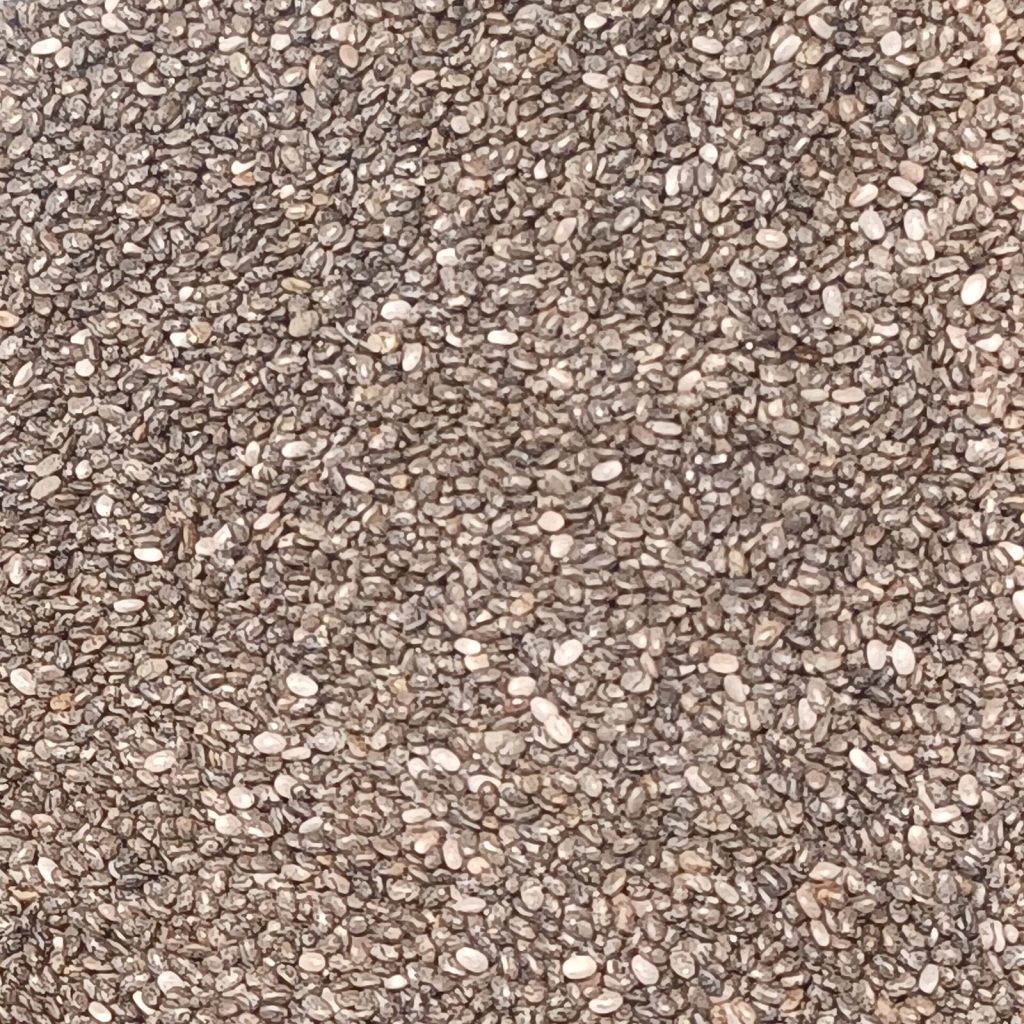
Chia seed farming in Uganda is possible on the biology and unproven on the record. The plant flowers under short days, which Uganda has all year, and it germinates best in warm soil, which Uganda also has. What does not exist is a Ugandan yield figure, a released variety, a published fertilizer rate or a trade code that can tell you how much leaves the country.
What Chia Seed Farming in Uganda Actually Rests On
Chia is Salvia hispanica, an annual in the mint family from central and southern Mexico and Guatemala. It self pollinates, it grows toward strong sun and tolerates partial shade, it copes with poor ground and moderate drought, and a botanical review lists the countries where it is grown commercially: the United States, Argentina, Bolivia, Ecuador, Peru, Brazil, Colombia, Guatemala, Mexico, Nicaragua, Chile, Italy, Australia, Germany and Kenya. Uganda is not on that list. Kenya is.
That single sentence should shape how you read everything else about this crop. A neighbouring country with similar latitude, similar seasons and a bigger horticultural export machine has an established chia industry that gets cited in the scientific literature, and Uganda does not yet. It does not mean Ugandan chia is impossible. It means nobody has written down what happens when you try it here, so the first grower in any district is running the trial themselves.
Chia composition is well established and is not in dispute: the seed is among the richest plant sources of the omega 3 fatty acid alpha linolenic acid, and carries dietary fibre, protein and antioxidants. A European food safety assessment has cleared chia seed and defatted chia powder for use as a food ingredient in named product categories such as multigrain bread, cereals, biscuits, pasta and bars, which matters to anyone thinking about a European buyer. Composition and regulatory clearance are facts. Anything you read attaching a disease outcome to a seed is not, and this site does not publish those.
Day Length Is Why the Chia Plant Can Flower in Uganda
This is the most useful single fact about the crop and it almost never appears on pages selling the idea.
Chia is a short day plant. It needs day lengths below a threshold to switch out of leaf growth and into flowering. A botanical review states the position plainly: chia remains mainly cultivated in Central America because it lacks the photoperiod range needed for flower induction elsewhere, which makes it awkward to grow in much of the world. In North America flowering is induced so late that seed cannot ripen before winter. Breeding work using chemical mutagenesis created lines that flower where days run up to about fifteen hours, and that work is what opened higher latitudes to the crop at all.
Uganda sits between roughly one degree south and four degrees north. Day length here is close to twelve hours every month of the year, and it never approaches the fifteen hour ceiling that had to be bred around. So the constraint that stops chia flowering in Europe and North America is not Uganda's constraint. Equatorial day length is the one thing in this crop's favour here.
It is worth naming the contrast with the crop this site has written most carefully about on day length. An onion grower in Uganda can plant a long day variety, feed it all season and never get a bulb, because the days never get long enough to trigger bulbing. Chia runs the other way: the short days that cheat an onion are what a chia plant needs. Two crops, one latitude, opposite verdicts, and in both cases the mechanism is day length rather than soil or rain.
Soil Temperature at Sowing, and Two Published Answers
Germination has been measured properly, and the measurement disagrees with the figure in wider circulation, so both belong on the page.
| Reading | Range for germination | Fastest at |
|---|---|---|
| Earlier reported figures | Minimum 11C, maximum 36C | 16C to 26C |
| Measured germination trial | 10C to 35C | 25C to 35C, peak 30C |
The trial that produced the second row tested a wide temperature gradient and reached above 95 percent germination at 10C, which tells you the base temperature for the species is below that. Its measured optimum, the band where germination is both high and fast, came out at 25C to 35C with the quickest at 30C, which the authors note is almost ten degrees above the range previously reported. Above 35C germination fell away sharply. Modelled cardinal temperatures from the same work put the base near 2.5C to 9.7C depending on the model, the optimum near 28C to 33C, and the ceiling in the forties.
For a Ugandan seedbed that is practical guidance. A shallow bed in the sun sits comfortably inside the measured optimum, so germination is unlikely to be your problem. The risk is at the top end: a bare, dark seedbed in full sun during a hot dry spell can push surface temperature past the point where germination drops, and chia seed is tiny and sown shallow, so it lives exactly where the soil is hottest. Sow into moisture, keep the surface covered or shaded until emergence, and do not sow a hot dry bed and hope for rain.
Water Use on a Chia Crop, Measured Against Maize and Soya
The water claim about chia has now been measured at scale rather than asserted. A satellite study covering multiple years and several countries compared chia against alfalfa, maize and soybean and found chia used 13 to 38 percent less water and fixed 14 to 20 percent more carbon per unit of water consumed.
Read what that does and does not say. The comparison crops are a fodder legume, maize and soya. Two of those three are major Ugandan crops, so the comparison is relevant here. What the study does not contain is a single Ugandan observation, and it does not compare chia against the crops it would actually displace on a northern Ugandan plot, which are sesame, sunflower and groundnut. All three of those are themselves drought tolerant short cycle crops. So the honest reading is that chia is water efficient relative to maize and soya, and its standing against Uganda's existing oilseeds is unmeasured.
If you are choosing between chia and an oilseed you already know how to grow and already have a buyer for, water use is not the deciding factor. The buyer is.
Fertilizer on Chia: the Trials Disagree
Three published trials, two verdicts. A first commercial European planting found no measurable effect on growth or yield from applying nitrogen to a short day Peruvian cultivar. A Greek study found neither sheep manure nor commercial fertilizer changed growth, biomass or vegetative tissue content, though the organic treatment raised protein and fibre in the leaf and stem. A Brazilian study on a Brazilian cultivar found that nitrogen, potassium and phosphorus applied individually each improved plant height, leaf number, inflorescence number and dry weight.
The review that gathers all three says the discrepancy is unresolved and that the concentrations suited to commercial chia production have not been determined. A nutrient ratio has been suggested from glasshouse work, which is not a field recommendation.
So there is no chia fertilizer rate to give you, and any page that prints one has made it up. What did work consistently across those studies was plant population: the European trial got higher grain yield per hectare from raising planting density while yield per plant fell, and the Greek work got more biomass the same way. That is a spacing decision rather than a purchase, and it is the one lever the evidence supports. The general method for working a stand out from a spacing is in the note on calculating plant population, and the soil question comes before the fertilizer question in any case, which is what soil testing before fertilizer application is for.
What Uganda's Own Records Contain on Chia Production
Nothing, and the absence is specific rather than a general reporting gap.
The international crop production database that carries Uganda's sesame, sunflower, cotton, ginger, vanilla and pepper lines carries no chia item at all, for Uganda or for anyone. The ministry's crop variety lists page offers exactly one download, an extract covering roots, tubers and bananas, so no variety of anything else can be checked there. Uganda's Statistical Abstract lists its sixteen major food crops and chia is not among them, and its oil crops block in both the area table and the production table carries only groundnuts and soya beans. A search of the main European biomedical and life sciences index returns no study of chia grown in Uganda, while the same index returns Ugandan work when the query is sesame, which tells you the search itself was working.
Two things follow, and they need keeping apart. First, no Ugandan chia production figure exists on any public record I could reach, so any tonnage you are quoted for national chia output is unsourced until somebody shows you where it came from. Second, and separately, I did not enumerate a Ugandan oilseed variety catalogue for chia and so I make no claim about whether a chia variety has ever been released or trialled here. Those are different statements and pages routinely collapse them.
Be sceptical in the direction that costs you least. A crop with no Ugandan record can still be a good crop. What it cannot be is a crop where somebody else has already done the arithmetic for you.
Why Chia Seed Has No Trade Code of Its Own
This is the mechanical reason chia export numbers cannot be checked, and it is worth knowing before you accept one.
World trade is recorded against harmonised commodity codes. Sesame has its own six digit code. Sunflower seed has one. Cotton lint has one. Chia does not. It falls inside the residual subheading for other oil seeds and oleaginous fruits, and six digits is the deepest level served in the public trade data, so a query for that subheading returns chia mixed in with everything else that has no code of its own.
For the record, Uganda does declare trade under that residual subheading, and the declarations are genuine Uganda returns rather than partner estimates: exports of roughly 1,340 to 2,420 tonnes a year at unit values between about 1.77 and 2.49 US dollars a kilogramme, against imports of a few hundred tonnes, much of it from Rwanda. Those bilateral rows sum exactly to the world aggregate, so the total is sound. What none of it can tell you is how much of it is chia, because the code does not separate it.
Use that as a ceiling rather than a figure. Whatever Uganda exports as chia, it is a subset of a line that has never exceeded about 2,400 tonnes in the years checked. Any claim of national chia production well above that, combined with a claim that almost all of it is exported, is arithmetically at odds with Uganda's own customs declarations. That is the test to apply to any number you are shown.
How to Grow a First Chia Plot Without Betting the Farm
Because the Ugandan agronomy does not exist, the only defensible way into this crop is a measured trial on a small area, with a buyer identified before you sow. Not after.
Keeping that record is the whole exercise, and it is cheap. The templates for it are already on this site: a crop production record and a farm expense record between them cover everything in the list above. A weighing scale is the one piece of equipment the trial genuinely needs.
Harvesting and Drying Chia, and the Cleanliness Problem
Chia is harvested by cutting the seed heads, which is why growers who know millet find it familiar. The seed then has to come off the head, be separated from chaff and dust, and be dried before it goes into a bag.
Two risks are worth planning around, both borrowed from what is known about Uganda's existing small seeded oilseeds rather than from chia work, and said here as a transferable caution rather than a chia measurement. The first is that threshing on bare ground puts soil into the seed, and soil in a small seeded crop is close to impossible to clean out afterwards. Ugandan sesame growers lose access to traceable premium markets for exactly that reason. A tarpaulin under the threshing costs a fraction of one bag and protects the whole lot. The second is moisture. An oilseed bagged damp grows mould, mould in an oilseed leads to toxin, and a buyer selling into a food ingredient market will test for it. The general method sits in the moisture management guide.
Because no Ugandan moisture ceiling for chia is published, the number has to come from your buyer. Ask for it in writing and dry to it or below, which is the same convention this site uses on every grain where published editions disagree.
If you want to see what a Ugandan oilseed looks like once it has a real record behind it, the export crops hub collects them, and sesame is the closest comparison: same growing districts, same small seed, same hand threshing, same export buyer, and about a decade of measured Ugandan work to plan from. Sunflower is the other oilseed competing for the same land and the same weeks.
Questions Ugandan Growers Ask Before Planting Chia
Will chia flower in Uganda? The botany says yes. Chia needs short days to initiate flowering and Uganda's day length sits near twelve hours year round, well inside the requirement, unlike the temperate countries where late flowering stopped the crop ripening until breeders worked around it. What the botany cannot tell you is when it will flower in your district or how much seed it will set, because no Ugandan trial has been published.
How much can an acre of chia yield in Uganda? Unknown, and treat any figure with suspicion until it names a plot, an area and a scale. Yields quoted for the crop elsewhere come from trials at other latitudes, at other densities, on cultivars bred for other day lengths. The one variable the published trials agree raises yield per hectare is higher plant population, so if you are testing anything, test that.
What does chia sell for? Ask a buyer, get it in writing, and do not build an acre around a retail shelf price. The one anchor available is that Uganda's declared exports under the residual oil seed code that would contain chia ran at unit values of roughly 1.77 to 2.49 US dollars a kilogramme leaving the country, and a farm gate price sits well below an export price because cleaning, bagging, transport, financing and an exporter's margin all come out in between. Current Ugandan levels for crops that are traded sit on the price pages.
Is chia cheap to grow? Its cost structure will look like the other hand grown small seeded oilseeds, which means labour rather than inputs. On a Ugandan sesame budget that reconciles line by line, weeding plus harvesting and carrying to the drying rack comes to about 42 percent of variable cost while everything purchased comes to under 5 percent. Any chia budget that leans on cheap inputs and quietly prices family labour at zero is describing a different business from the one you will be running.
How much fertilizer does chia need? Nobody can tell you. Two trials found no response to nitrogen and one found a response to each of nitrogen, phosphorus and potassium, and the review collecting them states the concentrations for commercial production are undetermined. That is not a gap this page will fill with a plausible sounding rate. Test your soil, treat the first plot as a trial, and spend the money on getting the stand and the weeding right.
Does chia really use less water than other crops? Measured against alfalfa, maize and soybean, yes: 13 to 38 percent less water, with 14 to 20 percent more carbon fixed per unit of water, from a multi year satellite study. Measured against sesame, sunflower or groundnut, which is the comparison a northern Ugandan grower actually faces, nobody has looked. Those three are drought tolerant short cycle crops in their own right.
Where would I sell it? That is the question to settle first. The ministry publishes a register of licensed exporters for sesame and for horticultural products and there is no equivalent register for chia, so there is no public list to check a chia buyer against. Nothing on this site names a buyer, for chia or anything else, and a page that hands you a company name and a market share has told you something it cannot verify. Start with the general method in how farmers can find produce buyers, and treat an unwritten promise to buy your crop as worth nothing.
Should I grow chia at all? On a trial plot, with a buyer's written specification in hand and records kept properly, it is a reasonable thing to test. As a replacement for an oilseed you already grow well and already sell, on any acreage that matters to your household income, the evidence is not there yet. The crop has the biology for Uganda. It does not yet have the record.
The two things to do before committing land are the same two for any new crop: find out what a buyer near you will actually pay and specify, and find out where clean planting seed comes from. Current market levels sit on the price pages and the supplier directory is the place to start on seed. Neither will give you a chia figure yet, and that itself is the answer to how established this crop is in Uganda.