
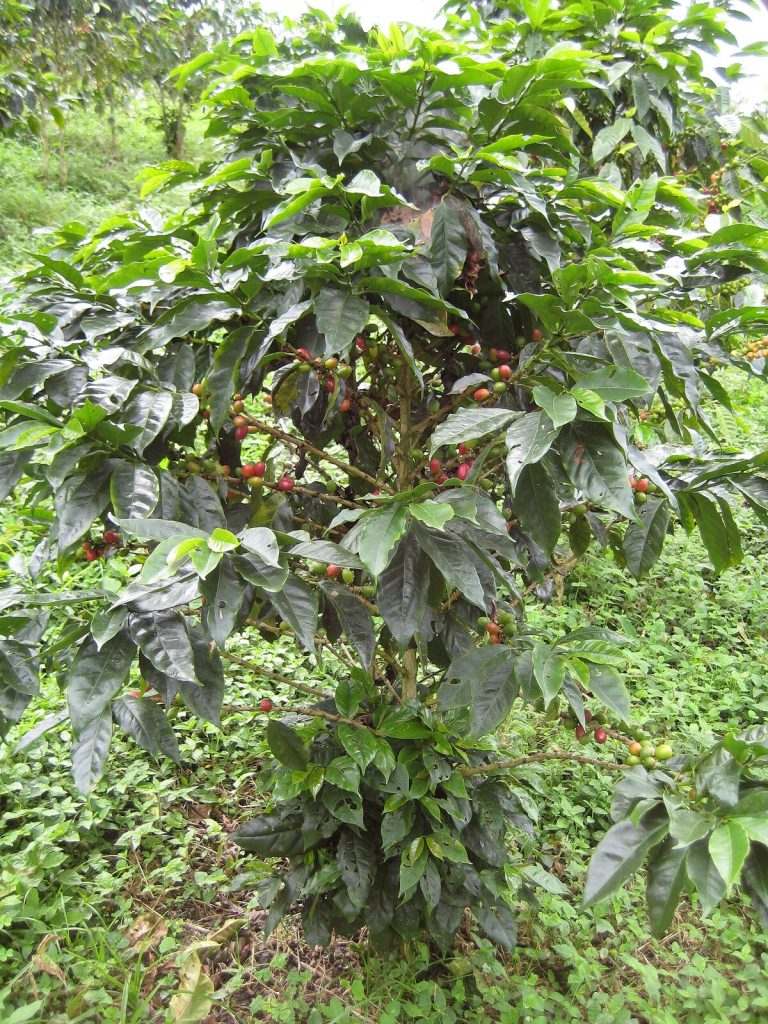
Coffee drying methods in Uganda come down to hitting a moisture target on a surface that is not the ground. Dry cherry goes to 13 to 14 percent, wet processed parchment to 12 to 13 percent, and the same coffee has to reach 11 to 12.5 percent by the time it is exported. The method you choose changes how long that takes and what the cup tastes like.
Three targets, not one, and they are not interchangeable. A farmer who dries kiboko down to an export figure has over dried it and will lose weight and grade at the huller. A farmer who stops a parchment lot at a kiboko figure has left it wet enough to grow mould in the bag. Knowing which number applies to the product in front of you is most of the skill.
The Moisture Targets Coffee Drying Has to Hit
| Product and stage | Moisture target | Where it comes from |
|---|---|---|
| Kiboko, before sale or milling | 13 to 14 percent | Both handbooks |
| Parchment, end of drying | 12 to 13 percent | Both handbooks |
| Any grade, primary level | 13 to 14 percent | Grading safeguards |
| Any grade, export level | 11 to 12.5 percent | Grading safeguards |
Drying Surfaces Compared, From Bare Ground to Raised Mesh
The surface decision is made once, it costs money once, and it affects every lot afterwards. Both handbooks rule out one option outright and list four acceptable ones.
| Surface | Verdict | What decides it |
|---|---|---|
| Bare ground or soil | Ruled out | Earthy taint, dirt, mould |
| Tarpaulin or clean mat | Acceptable | Cheapest clean option |
| Concrete or cemented floor | Acceptable | Easy to sweep and turn on |
| Raised tables | Acceptable | Keeps the lot off the ground |
| Raised wire mesh or mesh trays | Preferred for parchment | Air moves underneath too |
Bare ground is not merely untidy. Drying on soil or a dirty surface produces earthy flavours in the finished coffee and brings mould contamination with it, and mould on coffee is the route to Ochratoxin A. That is the same toxin that rules out cherries picked up off the ground, covered under coffee harvesting and post harvest handling, and drying on the ground reintroduces the risk a grower avoided at picking.
Between the acceptable options the differences are practical. A tarpaulin is the cheapest way to get a clean surface and it can be folded up when rain starts, which matters more than it sounds during a wet main crop. A cemented floor is permanent and easy to rake on. Raised tables and mesh trays cost more and earn it back on parchment, because air moves under the bed and over it together, so the lot dries from both sides and needs less turning to dry evenly.
Sun Drying Kiboko: Layer Depth, Turning and the Night Cover
Kiboko is the simplest product in Ugandan coffee and it is unforgiving in exactly two places: depth and rewetting.
Once the layer is thin, turned and covered at night, the rest is weather. Kiboko takes 14 to 30 days depending on conditions, and that spread is the difference between a dry spell and a broken one. There is no method for making the sun stronger, which is the argument for the solar and mechanical options further down this page.
Why Drying Parchment Needs Shade and Kiboko Does Not
Parchment behaves differently because the protective layer around the bean is thin and dries faster than the bean inside it. Push it too hard in full sun and the parchment skin cracks, which opens the bean to damage and to the air.
The two handbooks give the same reason and phrase the remedy differently, which is worth knowing if you read both. The Robusta handbook says to dry parchment on raised wire mesh platforms under moderate sun. The Arabica handbook says parchment should be dried under shade during the full sun. Both are pointing at the same thing: reduce the intensity at the hottest part of the day rather than drying parchment flat out. A grower who shades the beds through the middle of the day and lets them work in the morning and late afternoon satisfies either instruction.
What both handbooks agree on without qualification is the bed. Parchment goes on raised mesh or trays with a mesh base, off the ground, turned regularly, and it is dried continuously until the bean inside reaches 12 to 13 percent. Stopping and restarting, or storing a lot partly dry for any length of time, produces mould.
How Long Coffee Drying Takes, and Why Two Ministry Handbooks Disagree
Two things follow from the spread being that wide. First, a drying plan built on an average will be wrong about half the time, so the space you build has to hold a slow lot, not just a fast one. Second, anyone who dries to the clock rather than to a measurement will systematically under dry in a wet season and over dry in a dry one, and both of those cost money in different ways.
Solar Drying Cabinets on Small Coffee Farms
Both handbooks record that farmers are moving to solar dryers, large scale and small scale, to shorten the drying time, and both show them as an option rather than a requirement. Neither publishes a temperature, a capacity or a drying duration for one, so none is given here.
What can be said from the rest of the drying material is where a solar dryer earns its cost. It is not about speed for its own sake. The whole risk in sun drying is the time a lot spends between wet and dry, because that window is when mould grows, and every day of rain extends it. A dryer that keeps working through an overcast afternoon shortens the window, and it also solves the night cover problem by keeping the lot enclosed.
The trap with any faster method is the one the next section covers. Heat that is too high or too uneven produces its own defects, so a solar cabinet run hot is not a better sun. Watch the moisture, and treat any enclosed dryer as something that needs turning and checking rather than loading and leaving. Equipment options are covered under coffee processing machines and grain dryers.
Mechanical Drying, and the Cup Defects It Leaves
Mechanical drying gets a single line in the handbooks' quality tables and it is a precise one. Machine drying that is too fast, too hot or uneven produces poor, mottled or faded bean colour and a dull or bland flavour.
Unpack that and there are three separate faults with one cause. Too fast drives moisture off the outside of the bean while the middle is still wet, so the lot reads dry on a meter and is not. Too hot damages the bean and shows up as faded colour, which a grader sees before anyone tastes anything. Uneven means part of the batch is finished and part is not, which is the same problem a thick sun dried layer creates, arriving by a different route.
The honest position on mechanical drying for a Ugandan smallholder is that it removes weather risk and adds operator risk. It is worth having where a wet main crop regularly costs lots to mould, and it is worth nothing at all if nobody is watching the temperature. The defect it produces is not reversible and it is not visible while the machine is running.
Over Drying Coffee Wastes Weight Before It Reaches Storage
Over drying is the failure nobody warns growers about, because drying harder feels like the safe direction. It is not. The handbooks list over dried coffee as a defect in its own right, producing poor faded bean colour and beans that damage easily during hulling.
The loss arrives twice. Coffee is sold by weight, and water inside the permitted range is weight you are entitled to be paid for, so every point of moisture driven off below the target is weight given away. Then the brittle over dried bean breaks up at the huller, which raises the defect count and drops the grade. A lot dried to 10 percent when 13 to 14 was the target has lost money on the scale and on the grade sheet, and no buyer will explain why.
The right way to think about the band is as a gate with two sides. Under the range, mould and musty flavours. Over the range, lost weight and broken beans. The target is a range rather than a point precisely because hitting a single number by eye is not possible, and the range is where a lot is both safe and fully paid. What the finished coffee is then worth per kilogramme depends on the product and the grade, and current indicative bands sit on the coffee price page.
Cooling belongs at the end of drying rather than the start of storage. Coffee bagged while still warm condenses inside the bag and rewets itself, which undoes the drying entirely, and the storage rules that follow are on the post harvest handling page.
Judging a Finished Dry Before Coffee Goes to Market
A moisture meter is the answer and it is not always available, so the handbooks also publish the physical signs for kiboko, which are usable and worth knowing even when a meter is in the house.
If you do use a meter, use it on the bean rather than the fruit where the product is parchment, because the 12 to 13 percent figure refers to the bean inside the hull. And take the reading more than once as a lot sits, since moisture keeps moving with the air around it.
Drying sits between the field and the sale, so it inherits problems from one side and creates them for the other. Picking and the route decision are on the harvesting and post harvest handling page, the equipment on coffee processing methods, out turn as a yield conversion on coffee yield per acre, and general establishment on coffee farming in Uganda. This page sits under the export crops hub, and buyers are listed under where to sell coffee.
Common Questions About Coffee Drying Methods
What moisture content should dried coffee reach? Kiboko goes to 13 to 14 percent before sale or milling, and parchment to 12 to 13 percent measured on the bean inside the hull. The 11 to 12.5 percent figure that also circulates is the export level and is met after the farm, so drying to it on a farm loses weight for nothing.
How many days does coffee take to dry? Dry cherry takes 14 to 30 days depending on the weather. Parchment takes 10 to 15 days in the Robusta handbook and 7 to 10 in the Arabica one, so plan on 7 to 15 and treat the figure for your species as the closer guide. Either way the moisture reading decides when you stop, not the count of days.
Can I dry coffee on a tarpaulin instead of building a drying table? Yes. Tarpaulins, clean mats, cemented floors, raised tables and mesh trays are all acceptable in both handbooks. Only bare ground is ruled out. Raised mesh is preferred for parchment because air moves under the bed and over it together.
Why does my parchment crack while it dries? Too much sun. The hull dries faster than the bean and splits. Shade the beds through the hottest part of the day, which is what the Arabica handbook asks for directly and what the Robusta handbook means by moderate sun.
Is it safer to dry coffee a bit extra? No, and this is the most expensive misconception in the section. Over dried coffee is a listed defect: the colour fades and the beans break up at hulling, which raises the defect count and cuts the grade. You also give away the weight of the water you were entitled to sell. Aim inside the range, not below it.
Do solar dryers pay for themselves? They shorten the window in which a lot can grow mould, which is the real risk in a wet season, and they solve the night cover problem by keeping the coffee enclosed. Neither handbook publishes a capacity or a cost for one, so the sensible move is to price a locally built cabinet against what a mould damaged lot costs you in a bad season rather than against a figure from a page.
How do I tell dry cherry is finished without a meter? It should be black, it should rattle in the shell, it should have no smell, and it should be free of mould and of stones and dust. All four together, and a hand hulled kilogramme sample giving 50 percent or better out turn confirms it commercially.
Does wet processing actually get a better price than drying kiboko? Usually, and the comparison is easy to get wrong because parchment and clean coffee are different products. To compare them properly, convert a parchment price to a clean coffee equivalent first by allowing for the hulling loss, which is 20 percent on type 1 parchment, then set that against the clean coffee band. Doing that arithmetic on today's published indicative prices, rather than on a ratio somebody quoted last season, is the only way to know whether the water and the equipment are worth it on your farm.
Before the next main crop, price a moisture meter and a hand huller, work out what surface you will be drying on and whether it will hold a slow lot in a wet spell, and check current indicative prices for the product you intend to sell so the drying decision is made against real numbers.