
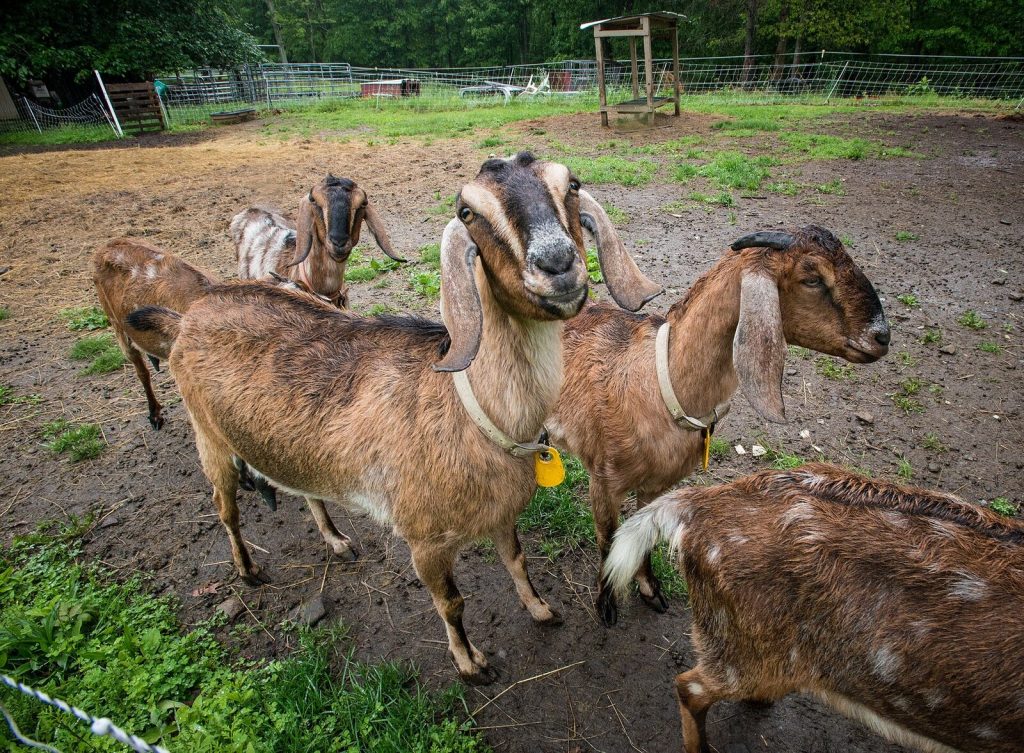
The best goat breeds in Uganda for most smallholders are the three indigenous ones, Mubende, Kigezi and Small East African, with an improved meat breed worth buying only as a buck over local does. Ugandan measurement puts mature does at roughly 24 to 38 kg by breed and zone. Breed choice matters less than where the animal was raised and what your buyers pay for.
That last sentence is not modesty about genetics. It is what the two largest studies of Ugandan goats found when they went and weighed and genotyped the animals, and it changes what a buyer should be asking at the point of sale. This page works through each breed on measured figures, then explains why the label on a Ugandan goat carries less information than the district it came from.
The Goat Breeds Uganda Actually Farms
Goat breeds in Uganda divide into indigenous stock, exotic meat breeds and exotic dairy breeds, and the national herd is overwhelmingly the first group. The indigenous share is put at 93.4 per cent in a recent characterisation study and at about 95 per cent in a government backed training report citing the statistics office. Those two agree closely on the share while disagreeing on the total: the characterisation study gives Uganda 10.4 million goats and the training report about 17 million. Take the share, not the total, as the reliable part.
Within that indigenous herd the classification used by the national body count and by both Ugandan genetics studies names three breeds. Small East African goats make up 53.2 per cent of the population, Mubende 35.6 and Kigezi 11.2. So the commonest goat in Uganda is also the smallest one.
Be aware that the list is not settled. A recent review of East African indigenous goats names five Ugandan breeds rather than three, adding Karamoja, Sebei and Teso, and Ugandan genetics work carries a Sebei label with its own diversity figure. Nobody has retired the three breed classification and nobody has confirmed the five breed one either. If a seller uses a name outside the three, ask which district the animal came from and judge it on what you can see and weigh.
Mubende Goats: The Heaviest Local Breed on Measured Farm Weights
The Mubende goat is the heaviest of Uganda's three indigenous breeds and the one a commercial meat plan should look at first. Its FAO breed description gives a female at 31 kg and a male at 35, with a coat that is mainly black, or black and white, short and fine and shiny. The breed takes its name from Mubende district in the western savannah grasslands and also runs south and around Lake Victoria.
Measured mean body weight for mature Mubende does now sits above that reference record, at 34.73 kg across ten agroecological zones. More useful than the average is the spread. Mubende does in the pastoral rangelands averaged 38.11 kg, ahead of the breed's own home zone at 36.69, while Mubende does in the northwestern savannah grasslands averaged 29.92. That is a gap of more than eight kilogrammes inside one breed, wider than the gap between two of the breeds.
The survey's reading of why the breed has gained on its own description is a change in management rather than in genetics. The description was written when Ugandan goats were mainly tethered and released only outside the cropping season. Most of the farms surveyed now graze extensively, and a goat that walks further eats more.
Kigezi Goats and Highland Goat Farming
The Kigezi goat comes from the former Kigezi district in Uganda's southwestern highland ranges, a cool moist zone of montane forest, savannah mosaic and high moorland. It is the breed with long curly hair, heaviest on the hindquarters, and its FAO reference weight is 30 kg.
Mature Kigezi does measured 34.0 kg on average, also above the reference. What stands out is how little the zone moved it. Kigezi does averaged 34.20 kg in the highland ranges, 34.23 in the pastoral rangelands and 33.38 in the western savannah grasslands, with no zone difference large enough to matter statistically on body weight and only one on height at the withers. For a farmer, a breed that carries its weight across three climates is a breed that travels.
Two cautions. Only 65 Kigezi goats were found in the whole ten zone survey against 525 Mubende and 430 Small East African, so the Kigezi figures rest on a much smaller sample. And the breed did worst of the three under an experimental worm burden, covered below.
Small East African Goats Carry Most of the National Herd
The Small East African goat is the default Ugandan goat. It is small bodied with a fine short coat in many colours, found in every region and concentrated in the northwestern savannah grasslands and the northeastern drylands. Its reference weight is 25 to 30 kg and Ugandan work cited in the regional review gives mature weights of 26.1 kg for females and 27.4 for males.
The national survey measured mature Small East African does at 26.62 kg, which corroborates that. Here the direction of travel runs the other way from the other two breeds. In the northwestern savannah grasslands, one of its own home zones, the breed averaged 23.90 kg, below the bottom of its reference range. It did better in the northeastern drylands at 28.34. So the hot dry zone suited it and the hot humid one did not, which is the opposite of what most breed descriptions imply about a lowland goat.
Recorded birth weights place Mubende at 1.98 kg against 1.54 for a Teso goat, so part of the adult weight gap is present on day one. Nothing about a small frame makes a goat a poor investment. It makes it a cheaper animal to feed and a smaller one to sell, and on a browsing herd the second of those is what the arithmetic on our goat farming profit calculation turns on.
What a Ugandan Goat Breed Name Hides
This is the part that should change how you buy. A study genotyped 1,021 Ugandan goats from all ten agroecological zones on a 60,000 marker caprine chip, aligning 49,337 markers, and asked whether the three breed labels describe three genetic populations. They do not. The analysis found three genetically distinct populations that did not conform to the labels and that tracked climate instead.
One population was 90 per cent Mubende with 8.1 per cent Kigezi, sitting in the warm humid southwest and centre. Another was 78.4 per cent Small East African with 21.1 per cent Mubende, in the hot dry northeast. The relatedness figures make the point sharply: a goat carrying one breed label was less closely related to a goat carrying the same label in a different population than to a goat carrying a different label in its own.
Two further numbers from that work matter to a buyer. The average inbreeding coefficient across the whole sample was 0.014, about 1.4 per cent homozygosity, and the fixation index was 0.016, meaning 98.4 per cent of the genetic variation sits within populations rather than between them. On the authors' own reading, values that low leave no room for deliberate inbreeding across the population.
That last finding is worth separating from a claim you will meet often. Uganda's national genetics agency and the regional literature both warn about uncontrolled crossbreeding and uncontrolled mating, and a regional review describes year round mixing of the sexes in which the parentage of a kid simply goes unrecorded. Those are real problems at the level of a single flock and at the level of breed identity. They are not showing up as a measured inbreeding problem in the national gene pool. Keep the two separate, because the fix for the first one is a mating plan rather than fresh blood, and that is worked through on our goat breeding guide.
Goat Breeds and Worm Resistance: The One Ugandan Trial
Almost every page that ranks for this query calls one breed or another disease resistant. One Ugandan trial has actually tested the three indigenous breeds against the parasite that matters, and its results are uncomfortable for all three.
Researchers at NARO's Kachwekano institute in Kabale bought twelve male kids of each breed at about seven months from smallholders in Kabale, Mubende and Arua, cleared them to zero worm egg status, then gave every animal 18,000 infective larvae of Haemonchus contortus, the blood feeding stomach worm that dominates Ugandan goat infections. The goats were kept indoors on cut and carry feed for twelve weeks.
| Breed | Body weight | Carcass weight | Daily gain |
|---|---|---|---|
| Mubende | 18.58 kg | 7.65 kg | minus 7 g |
| Kigezi | 14.61 kg | 5.82 kg | minus 30 g |
| Small East African | 11.17 kg | 4.39 kg | minus 16 g |
Read the third column first. Daily gain was negative in all three breeds. Under that worm burden no Ugandan indigenous breed grew. Mubende lost the least, at about seven grams a day against thirty for Kigezi, and that difference was large enough to matter statistically. Packed cell volume, which measures how much blood the worm has taken, came out at 30.35 for Mubende, 29.68 for Kigezi and 25.75 for Small East African, with the last reliably the lowest and all three still inside the 22 to 38 per cent range the paper cites as normal for goats. Total worm counts did not differ reliably between breeds.
The authors conclude that Mubende is probably the most resistant of the three and call for a longer study with more animals before anyone builds a breeding programme on it. The practical reading for a buyer is narrower and firmer: breed choice buys you a slower rate of loss, not immunity. Worm control is a management job, and Ugandan resistance testing has found anthelmintic resistance on most farms surveyed, which is covered on our guide to deworming goats.
Boer, Savanna and Kalahari Red: Exotic Meat Breeds in Uganda
Uganda's national genetics agency groups Boer, Savanna and Kalahari Red together as exotic meat goats and publishes one merit list and one demerit list for the whole group. The merits are fast growth, good meat and good body conformation, with very little milk. The demerits, from the same agency that supplies improved genetics, are susceptibility to worms, suffering in wet conditions, poor disease resistance and milk that dries quickly.
Set that demerit list beside the trial above. A breed sold on growth rate, going into a country where the local breeds lose weight under an experimental worm challenge and where anthelmintic resistance is widespread, is a breed whose advantage depends on a level of worm control the farm has to supply first. Wet ground makes it worse. That is why the agency's own sheet reads the way it does, and it is a stronger reason to buy carefully than any list of merits.
The version that most often works on a Ugandan smallholding is one improved buck over local does rather than a pure exotic herd. Our Boer goat farming guide covers that enterprise properly, and the purchase cost sits on our page on the cost of starting goat farming.
Exotic Dairy Goat Breeds and the Milk Market That Is Not There
The exotic dairy breeds present in Uganda are Toggenburg, German Alpine, Anglo Nubian and Saanen. The national genetics agency puts their yield at 2 to 4 litres a day with milk lasting many months, and a NARO and Makerere handbook gives a Toggenburg female at 40 to 50 kg producing 2 to 3 litres. Their demerits are the same worm susceptibility and poor disease resistance as the meat breeds, plus suffering from heat and a thin frame.
The problem with dairy goats in Uganda is not the goat. Ugandan reporting states plainly that goat milk is not yet marketable in the country, and that the absence of a market is why so few farmers keep dairy breeds. A doe giving four litres a day into a market with no buyer is a doe you are feeding for nothing, and you are feeding her more because she is milking. So the breed that produces the most can earn the least.
If you have a confirmed buyer, a school, a hospital, a processor or a standing household order, a dairy cross becomes arguable. Establish the buyer before you buy the goat, in that order.
Crossbreeding Local Goats With an Improved Breed
Uganda's national genetics agency calls crossbreeding the fastest route to a trait you want, and attaches a hard condition to it. Controlled, it improves the herd. Uncontrolled, it can destroy both the improvement programme and the good traits already sitting in the local population. Both halves of that come from the same government document.
What control means in practice is a rule about which animals mate, generation by generation, and there is a specific trap at the first crossbred generation that catches a lot of farmers who are pleased with their first results. The rule and the generation sequence are set out on our goat breeding guide rather than here, because it is a mating decision rather than a buying one.
One buying point does belong here. The agency notes the strong genetic relationship between a buck and the daughters it produces, and advises a veterinary breeding soundness evaluation before you pay for any buck. It also advises against taking initial stock from open markets at all. A buck is the one animal on a goat unit where paying more can be right, and it is also the one where paying more for nothing is easiest.
Breeder Weight Claims a Goat Carcass Cannot Support
A Ugandan newspaper has reported, on the word of a commercial breeder who sells the animals, that a pure Savanna goat reaches market maturity at five months at 45 kg liveweight or 35 kg of carcass. Our profit page rejected that on three grounds. The Ugandan trial above supplies a fourth, and this one is arithmetic.
Divide the trial's carcass weights by its live body weights and you get a dressing percentage for each breed: about 41 per cent for Mubende, 40 for Kigezi and 39 for Small East African. That is a derivation from two columns of one table, and it is a floor rather than a ceiling because those animals were carrying an experimental worm burden. It lands just below the 40.7 to 45.1 per cent measured for local African goats that our other pages publish, so two independent routes agree.
Put 35 kg of carcass against 45 kg of liveweight and the dressing percentage comes out at 78. No goat of any breed dresses that high, so the two weights in that claim cannot both be true. The same trial weighed seven month old kids of the three Ugandan breeds at 11.17 to 18.58 kg, so the 45 kg figure at five months is also out of reach on growth alone.
Older Ugandan guidance carries its own weight problems, which is worth knowing before you trust a number in print. A draft NARO and Makerere fodder handbook, undated on its cover and used on this site for its fodder chapters, describes Mubende goats as black or grey and long haired at 20 to 90 kg, and indigenous adult females at roughly 10 to 25 kg. Long hair is the Kigezi descriptor, not the Mubende one; 90 kg is more than two and a half times the measured Mubende mean; and 10 kg is under half the lowest zone mean the national survey recorded. A weight without a measurement behind it is a guess wearing a document.
Choosing a Goat Breed for Your Zone and Your Buyers
Put the evidence together and the selection order for goat breeds in Uganda comes out differently from the usual list. Start with your zone, because one breed varied by more than eight kilogrammes across zones while another barely varied at all. Buy the local population that is already doing well within a day's travel of your farm, and look at the animals rather than the name.
| Breed | Reference weight | Measured mean |
|---|---|---|
| Mubende | 31 kg female | 34.73 kg |
| Kigezi | 30 kg | 34.0 kg |
| Small East African | 25 to 30 kg | 26.62 kg |
Then look at your buyers, because the premium has to be recoverable. Ugandan work on community based breeding records that informal markets undervalue genetic improvement, which means the trader at the roadside may pay you nothing extra for the genetics you paid extra for. Abattoirs, butcheries wanting consistent volume and restocking programmes buying breeding stock are the channels that do pay for weight and quality.
One more thing the survey found that nobody sells you. Mature does kept getting heavier from the two to three year band into the over three to four band, and then stopped rising reliably after four years. A doe you buy at two years is not finished growing, and the animal you judge her by at purchase is not the animal she becomes.
Best Goat Breeds in Uganda: Questions Farmers Ask
Which goat breed should a beginner start with? The indigenous population already doing well near you, bought from a farmer who keeps records rather than from a market. Local goats carry the national genetics agency's own merit list of worm tolerance, good disease resistance, suitability to the local climate, fair meat conformation and high prolificacy, and their demerits are little milk and slow growth. For a first flock that trade is the right way round, because a dead fast growing goat grows nothing.
What does a breeding doe or an improved buck cost in Uganda? Prices vary by district, by whether the doe is proven, by whether the buck is pure or a cross, and by season, and a current national figure is not something to take off a web page. Our goat price page tracks the live bands and the startup cost guide sets out what the whole opening purchase looks like at three herd sizes. A buck is the one line where spending more is sometimes right.
Will a Boer cross fetch more money at the market? Not reliably from an informal buyer. Ugandan breeding programme work found that informal markets undervalue genetic improvement, so the extra weight is real and the extra payment is not automatic. Find the abattoir, butchery or restocking buyer first and ask what they pay for weight and consistency. Sellers of improved stock are also the source of most of the performance figures in circulation, and those figures have repeatedly come in below what the animals do on farm.
Can I keep dairy goats in Uganda? Physically yes, and the exotic dairy breeds are here. Commercially it depends entirely on having a named buyer, because Ugandan reporting states goat milk is not yet marketable and that this is why few farmers keep dairy breeds. A dairy doe eats more than a meat doe, so an unsold litre is a loss twice over.
How do I tell the three Ugandan breeds apart? Coat first. Kigezi carries long curly hair, heaviest on the hindquarters. Mubende is mainly black, or black and white, with a short fine shiny coat. Small East African is small framed with a fine short coat in many colours. Size helps, since Mubende and Kigezi does average close to 34 kg against under 27 for Small East African, but a well fed Small East African doe in a good zone will outweigh a poorly fed Mubende in a bad one.
Which Ugandan goat breed resists worms best? On the only trial that compared them under the same challenge, Mubende held its weight and its blood values best and the authors called it probably the most resistant of the three. Treat that as a ranking between three animals that all lost weight, not as a reason to skip worm control. Ask a veterinary officer to check your own herd rather than relying on a breed name.
Should I buy goats at the livestock market? The national genetics agency's guidance on initial breeding stock is to avoid open markets. You cannot see a kidding record, a parent or a health history there, and animals gathered from many farms have been mixed before you get them. Buying from a farm lets you see the dam, the flock and whatever records exist, and lets you quarantine a known group instead of an unknown one.
Walk two or three flocks in your own zone before you pay for anything. Weigh whatever the seller will let you weigh, and ask which does kidded and when. What goats and improved breeding stock actually fetch moves with season and district, so confirm it against the live price page and against local suppliers of improved breeding goats instead of a figure you read once. From the livestock guides hub you can pick up whichever question comes next: where the animal will live, what it will eat, or goat farming in Uganda as a whole.