
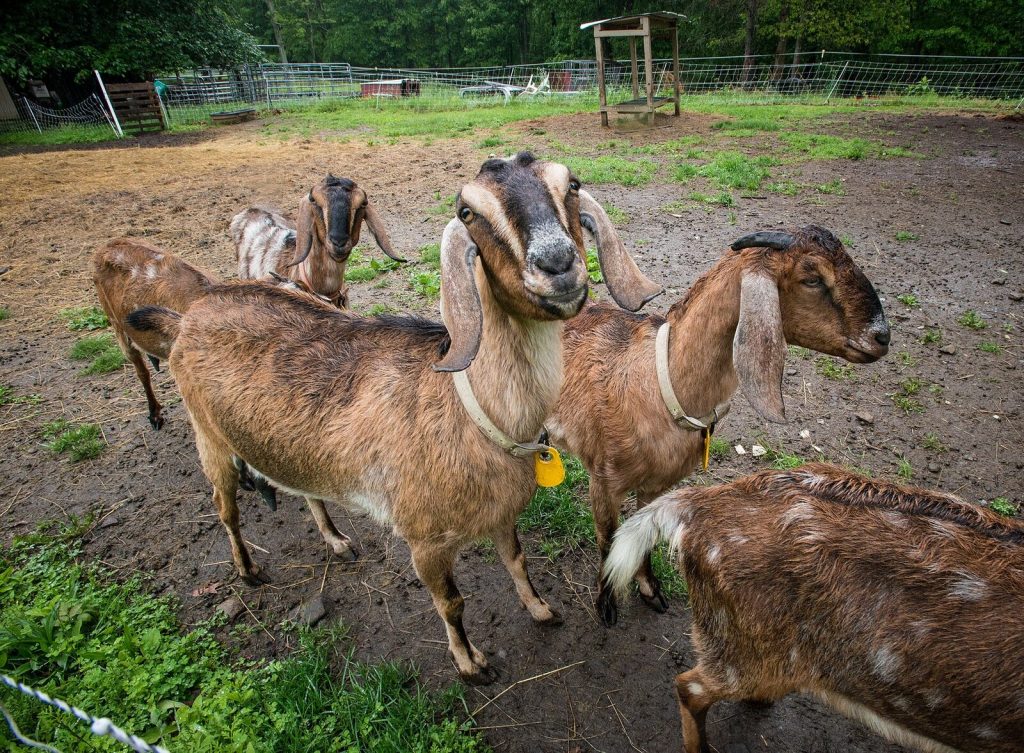
The common goat diseases that will cost you money depend on where in Uganda your herd grazes, and the ranking is not the same in Karamoja as it is in a mixed farming district near Kampala. Ugandan surveys have measured respiratory disease, peste des petits ruminants, stomach worms, tick borne infection and brucellosis in goat flocks, each at very different rates by production system. Which of them you plan against is a local question with a local answer.
Why the Goat Disease List Changes From One Ugandan District to the Next
Most pages about common goat diseases print one list and imply it applies everywhere. Ugandan measurement says otherwise, and the difference is large enough to change what a farmer buys.
Take peste des petits ruminants. A study along the cattle corridor sampled 2,520 goat and sheep sera from 252 households with no recent vaccination history and found exposure at 27.3 percent overall. Split by production system, that same figure was 44.1 percent in pastoral herds, 31.7 percent in agropastoral herds and 6.1 percent where goats sit inside a mixed crop and livestock farm. Seven times the exposure, same country, same disease.
So the honest structure for a disease page is not a list. It is a question: which system are you running, and which diseases have actually been measured in herds like yours? A tethered doe on half an acre behind a house in a banana growing district faces a different set of problems from a flock walking to shared water in a dry rangeland, and the second flock faces the diseases that kill fastest.
How Ugandan Goat Keepers Rank the Diseases in Their Own Herds
Researchers working in Karenga district in the Karamoja region did something unusual and useful. Rather than listing diseases from a textbook, they sat with 22 focus groups of pastoralists and 15 key informants and had them name, describe and then rank the diseases of their own goats and sheep, using local names that were afterwards matched to clinical descriptions. Agreement between groups was strong.
The table below is that ranking. It is a farming community's own judgement in one pastoral district, which is exactly its value and exactly its limit.
| Disease | Groups naming it | Median score | Rank |
|---|---|---|---|
| Respiratory disease of goats | 22 | 4 | 1 |
| Anaplasmosis | 20 | 3.5 | 2 |
| Peste des petits ruminants | 19 | 3 | 3 |
| Trypanosomiasis | 12 | 3 | 3 |
| Worm burden | 16 | 2.5 | 5 |
| Mange | 20 | 1 | 6 |
| Orf | 1 | 1 | 6 |
| Pink eye | 1 | 1 | 6 |
| Heartwater | 2 | 0.5 | 9 |
| Foot rot | 15 | 0 | 10 |
| Goat pox | 4 | 0 | 10 |
Two things in that table repay a second look. Foot rot was named by 15 of 22 groups and still scored zero on importance, which is a community saying it sees the problem constantly and does not think it matters much. And the same exercise put the annual proportion of animals falling ill from all causes at a median of 69.5 percent of the flock, with a range across groups of 58 to 81 percent. Whatever else is true of goat farming in a Ugandan rangeland, sickness is the normal state of a majority of the animals in any given year.
The same study also asked groups to estimate case fatality, and here the numbers stop being usable. Median case fatality came out at 78 percent for peste des petits ruminants, 77 for respiratory disease and anaplasmosis, and 64 and 67 percent for worms and mange. A 67 percent case fatality for mange is not a credible measurement of anything. What those columns record is how frightening each disease feels to people who lose animals, which is worth knowing and is not a death rate. This page publishes the ranking and the morbidity share, and leaves the fatality column where it belongs.
Contagious Caprine Pleuropneumonia in Ugandan Goat Flocks
The respiratory disease at the top of that ranking is contagious caprine pleuropneumonia, and for a long time there was no Ugandan prevalence figure for it at all. There is now one, from Karamoja, and it should be read with its status attached: it is a preprint that had not completed peer review, so treat it as the best available reading rather than a settled fact.
The work screened 2,296 goat and sheep sera from 38 randomly chosen village herds across three of Karamoja's nine districts, in flocks with no vaccination history. Overall 42.7 percent were seropositive. Goats came out at 34.0 percent against 8.7 percent in sheep, making a goat roughly three and a half times more likely to have been exposed. The authors read that as increasing endemicity, and they flagged villages along regional borders as the places to work on first.
Practically, this is the disease a Ugandan goat farmer should ask their veterinary officer about before any other, if they farm in a dry rangeland or buy stock that comes from one. It is a herd disease that spreads by close contact and by respiratory droplets, it does its damage in the chest, and animals that recover can stay a source of infection. The one control lever with evidence behind it is vaccination, and the Ugandan planning calendar covered further down puts it at a long interval rather than an annual one.
Peste des Petits Ruminants and What Two Ugandan Herd Surveys Found
Peste des petits ruminants arrived in Uganda in 2007 and has been measured repeatedly since. The wider literature puts morbidity at 80 to 90 percent and mortality at 50 to 80 percent in an affected flock, which is why it dominates any conversation about goat disease losses even where exposure is not the highest.
Two Ugandan studies frame the range. In Karenga district, 684 small ruminants across 22 kraals gave a true seroprevalence of 51.4 percent, with village level figures running from 26.8 to 87.8 percent. In Lyantonde district in the south west, a district already known as an outbreak hotspot, 351 animals from unvaccinated farms gave an overall true prevalence of 44.27 percent. Both sit comfortably above the 27.3 percent recorded across the cattle corridor and consistent with that study's 44.1 percent figure for pastoral herds.
Then the two studies disagree about something a farmer would want settled. Karenga found sheep more exposed than goats, 73.9 against 43.8 percent. Lyantonde found the reverse, goats at 46.27 percent against sheep at 33.62. The Karenga authors offer the resolution themselves, and it is a point worth carrying into every serology figure on this page: an antibody test only finds animals that survived long enough to make antibodies. If goats die faster than sheep, serology will understate goat exposure while overstating goat safety. Exposure surveys measure survivors.
Risk factors from Lyantonde are more directly actionable than the prevalence figure. Farms reporting wildlife on the land carried a 43 percent higher prevalence ratio. Bringing in new animals from other farmers carried a 32 percent higher one. Older animals were far more likely to be positive than kids, which is simply accumulated exposure. Nothing on that list is a drug.
Worms, Anaemia and the Disease Most Ugandan Goats Are Carrying
Ranked fifth by Karamoja pastoralists and first by prevalence almost everywhere it has been measured, gastrointestinal worm burden is the disease your herd almost certainly has right now. In Apac district in northern Uganda, 768 goats and sheep from 220 households were examined and 73.3 percent were shedding Haemonchus contortus eggs. The goats alone came out at 67.7 percent. Just over four animals in ten carried a heavy burden, and the mean egg count across the whole sample was about 2,046 eggs per gram.
District figures for the same worm in Uganda run from 12.8 percent in Nakasongola through 36.6 percent in Sironko goats and 56 percent in central Uganda to that 67.7 percent in Apac. There is no national figure and it would not mean much if there were. Two grazing findings from Apac do travel, though. Farms that did not graze goats, sheep and cattle together carried a 59 percent lower risk of infection, which matches the ministry's own written instruction not to graze goats with other ruminants. And tethered animals carried roughly twice the odds of infection, and a heavier worm burden, than animals on free range.
That last finding needs care, because it is not the opposite of what the deworming guide for goats reports. That page carries a national survey showing large paddock flocks about five times more likely to harbour drug resistant worms than tethered ones. Infection and drug resistance are different outcomes with different drivers: a tether keeps an animal circling its own contamination, while a big organised farm doses more often and selects for survivors. Both can be true on the same farm. Everything about treatment, testing and resistance sits on that page, and the worm section here stops at recognising the problem.
Coccidiosis in Kids and Why a Dewormer Does Not Touch It
The Apac study found something that rarely reaches a goat disease page. Of the animals carrying Haemonchus, 57 percent were also shedding Eimeria, the protozoan parasite behind coccidiosis. That is not a worm, it is a different organism entirely, and an anthelmintic does nothing to it.
Coccidiosis is a disease of young goats in dirty, wet, crowded conditions, and it presents as scour, poor growth and kids that fall behind their age mates and never catch up. Because the sign that farmers watch for in worms is anaemia rather than diarrhoea, a scouring kid on a Ugandan farm is more likely to be coccidiosis than the worm that gets the blame, and the bottle bought for one will not fix the other. Hygiene in the kid pen, dry bedding and keeping feed and water off the floor do more here than any product, and the goat housing guide covers the raised floor arrangement that breaks the cycle.
Tick Borne Disease, Trypanosomiasis and Mange on a Grazing Herd
Anaplasmosis ranked second in Karamoja and trypanosomiasis joint third, and both are vector diseases rather than contagious ones, which changes the whole control question. Anaplasmosis is carried by ticks and shows as fever, weakness and pale membranes, with the same anaemia picture a heavy worm burden produces, so the two get confused constantly. Trypanosomiasis follows tsetse fly distribution and the pastoralists' own local name for it translates as the fly itself, which tells you they already understand the mechanism.
Because both diseases arrive on an insect, the control is the insect. Uganda's national genetics agency puts tick control at weekly dipping in its own goat management guidance, and adds a point most farms skip: have the dip wash analysed from time to time so that the acaricide in use is one the local ticks have not already learned to survive. That is the same logic as testing worms before dosing, applied to the outside of the animal.
Mange was named by 20 of 22 groups and scored low on importance, which describes a condition farmers see everywhere and tolerate. It is a mite, it spreads by contact and shared rubbing posts, and it costs growth and skin value rather than lives. Orf, pink eye, heartwater, foot rot and goat pox all appear on the pastoralists' list further down, and here an honest gap has to be recorded: searching the biomedical literature for Ugandan studies of orf, goat mange or goat coccidiosis returns nothing, while the same searches return Ugandan work on peste des petits ruminants, respiratory disease, haemonchosis and brucellosis without difficulty. The search is working. Those three conditions simply have no published Ugandan prevalence behind them, so nobody should be quoting one.
Brucellosis and the Diseases a Sick Goat Can Give a Farming Family
Brucellosis belongs on this page for a reason that has nothing to do with goat productivity. It infects people, it arrives in raw milk and in the fluids of an aborting animal, and in a household where children drink unboiled goat milk the farmer is the second patient.
Nine Ugandan studies of small ruminants, pooled, put seroprevalence at 6.97 percent, from 489 positives out of 7,013 animals tested. That is a far lower share than the herd diseases above, and it is the one on this page most likely to reach a person. In a goat it shows mainly as abortion, retained placenta and infertility, which is also how it shows up in a farm's records long before anyone runs a test: does that repeatedly fail to carry a pregnancy.
The Ugandan Goat Vaccination Calendar, and Where It Conflicts With Ministry Advice
Uganda's national genetics agency publishes an annual health calendar for goats in its own goat rearing manual. It is the only Ugandan goat vaccination schedule this research could find in a government document, and it is reproduced below as frequencies only. No product, no dose and no route appears anywhere on this page, and the agency's own manual says to consult a veterinary practitioner for vaccination, which is the operative instruction.
| Disease | Frequency in the published Ugandan calendar |
|---|---|
| Clostridial disease | Twice a year |
| Pasteurellosis and others | Given as a combined preparation |
| Peste des petits ruminants | Once a year |
| Foot and mouth disease | Once a year |
| Contagious caprine pleuropneumonia | Once every three years |
| Brucellosis | Nannies and bucks before mating |
The manual adds one more line for kids that matters here. It puts a short course of coccidiostat into every goat between one and six months of age, as routine.
Now read that against the other Ugandan government document on this subject. The ministry's guidelines on infection prevention and appropriate antimicrobial use in goat and sheep farming instruct farmers not to give antimicrobials to a whole flock but to individual animals, and not to use them to prevent disease at all unless a veterinary practitioner advises it. A routine coccidiostat course for every kid on the farm is whole flock preventive medication. Two Ugandan government publications are giving opposite instructions, and a farmer following either one in good faith can be told they are wrong by someone holding the other.
This site does not resolve it, because resolving it is a veterinary decision about a specific farm. What it does is name both documents so a reader can raise it with their district veterinary office rather than discovering the disagreement at a shop counter. The wider livestock vaccination calendar covers the same ground across species.
There is a second conflict inside the vaccination lines, and it is about peste des petits ruminants. The calendar above says once a year. Ugandan research on vaccine delivery states plainly that this vaccine confers lifelong immunity and needs one dose, and states something more awkward still: the vaccine is not readily available or accessible in the Ugandan market, least of all in the areas where the disease has been identified as a problem. Farmers in that study were willing to pay most for a certificate proving the animal had been done, so they could move stock through a quarantine. Any advice that treats goat vaccination as a solved purchase is describing a market that does not yet reliably exist.
Reading a Sick Goat Before You Reach for a Bottle
Most losses on a Ugandan goat farm come from the same sequence: an animal goes off, nobody notices for four days, then something is bought at a shop on the strength of a guess. The morning check in the block above is the fix, and the second half of the fix is what you do with what you see.
Isolate first. The ministry's guidance is to identify and isolate a sick goat, give it separate care, and return it to the flock only once feeding is normal and the signs have gone. An isolation pen separated from the main house is treated as part of the building, not an optional extra. Then describe rather than diagnose: give the attending practitioner accurate information about what you saw and when, because the ministry names farmer information as the input a correct diagnosis depends on, and it asks farmers to allow samples to be taken from sick, dead or even apparently healthy animals when a practitioner asks.
That last point is the one farmers resist most and it is where the evidence on this page came from. Every prevalence figure quoted above exists because someone let a researcher bleed their goats. Deciding whether a call is warranted is covered in the guide on when to call a veterinarian.
Quarantine, Culling and Herd Records That Keep Disease Off a Goat Farm
Buying goats is how most disease arrives, and Uganda's ministry guidance on this is detailed enough to follow. Buy from a farmer who keeps health records. Inspect for ticks and parasites before paying. Separate the animals you intend to buy, treat them for worms and external parasites, trim hooves and treat them as though they have foot rot whether or not you can see it. Hold them at the seller's farm for at least 24 hours, then keep them on arrival in an isolation paddock at least 3 metres from your existing stock for at least 21 days, sited as near the farm gate as possible. Call a practitioner if any of them sickens during those three weeks. And the last line of that guidance is the cheapest: only buy new animals if you have to, and otherwise raise your replacements at home.
Moving animals carries its own rules. Animals should be inspected and certified by the district veterinary officer and travel on a valid movement permit, the vehicle cleaned and disinfected before loading, and no animal transported within two weeks either side of kidding or of an abortion. Dead animals get burnt or buried deep without delay. People and equipment work the youngest animals first and the oldest last, never in reverse.
Culling is disease control too, and the same guidance sets a rule this site has not published before: cull does older than eight years or past six kidding seasons, along with infertile does, udder problems and visible physical defects. At the 297 day kidding interval measured in Ugandan village goats, six kidding seasons works out at close to five years of breeding life, which is the same productive lifetime the goat farming profit calculation assumes. Two independent routes to the same number is a reason to trust it.
None of this works without written records. A herd health register turns "that doe is always sick" into a decision, and it is what the livestock record keeping template exists for. The broader hygiene and visitor rules sit in the farm biosecurity guide.
What This Goat Disease Page Will Not Tell You
What the page does name is drug classes and diseases, because a farmer who can say "I think this is coccidiosis in the kids, not worms" gets better advice for the same consultation fee.
Questions Ugandan Farmers Ask About Goat Diseases
Which goat disease kills the most animals in Uganda? There is no national answer, and any page that gives you one is guessing. In pastoral Karamoja, farming communities rank contagious caprine pleuropneumonia first and peste des petits ruminants close behind, and the second of those has measured exposure above 40 percent in three separate Ugandan districts. In a mixed crop and livestock district the same disease sat at 6.1 percent, and worms and kid coccidiosis dominate instead.
Are free ranging goats healthier than tethered ones? No, and not the reverse either. It depends entirely on the disease. Free ranging and pastoral herds carried seven times the peste des petits ruminants exposure of goats on mixed farms, because movement and shared water spread it. Tethered goats in Apac carried about twice the odds of stomach worm infection, because a rope keeps an animal eating over its own droppings. Grazing system does not make a goat resistant. It changes which problem you get.
Can I tell contagious caprine pleuropneumonia from ordinary pneumonia by looking? Not reliably, and this is where a farmer's honest description earns its keep. Both show as laboured breathing, coughing, fever and animals standing apart from the flock. What separates them is how many animals are affected and how fast, plus a laboratory test. A single coughing goat is a sick goat. Several in a week is a herd event and needs reporting.
Is goat milk from a sick goat safe to drink? Treat the answer as no until someone qualified says otherwise. Brucellosis reaches people through raw milk, and pooled Ugandan studies found about 7 percent of small ruminants seropositive. Separately, any goat that has been treated with a veterinary medicine carries a withdrawal period during which her milk must not be consumed, and that period is on the product label. Boiling handles the bacteria. It does not handle a drug residue.
What does goat disease control cost in Uganda? Less than most farmers expect and less than the loss it prevents, which is why the enterprise arithmetic on the cost of starting goat farming page treats health as a small line rather than a large one. What moves that line is your grazing system, your district, whether you are buying in stock, and whether a practitioner is within reach. Uganda's official enterprise template lists the health activities a goat herd needs and publishes no unit prices at all, which is a fair warning that current prices have to come from your own agrovet and district office rather than from a web page. Current live animal prices sit on the goat price page.
My goats keep dying and the medicine does not work. What now? Stop buying. A herd that does not improve after treatment is telling you the diagnosis or the product is wrong, and in Ugandan goats both happen: a national survey found drug resistant worms on about six farms in ten. Get a diagnosis instead, which for worms means an egg count before and after dosing and for the herd diseases means blood samples, both of which district veterinary services and university laboratories run.
Where do goat diseases fit against feeding and breeding? Underneath both. Nutrition changes how much damage a given parasite load does, which is one of the threads running through the goat feed requirements work, and breed matters too: Uganda's own agency lists worm tolerance and disease resistance as merits of local goats and as drawbacks of imported meat breeds, a trade off examined on the Boer goat farming page. The disease picture is downstream of decisions made in the livestock guides long before an animal gets sick.
Before you spend anything on goat health, get two prices and one opinion: what a district veterinary officer charges to visit and sample, and what a faecal egg count costs at the nearest laboratory. Both are usually smaller than the value of one adult doe, and both are obtainable in a morning of phone calls to your district production office and the agrovet suppliers listed under farm input suppliers. Ask for the product label and the withdrawal period in writing every time, and keep them with your herd records.