
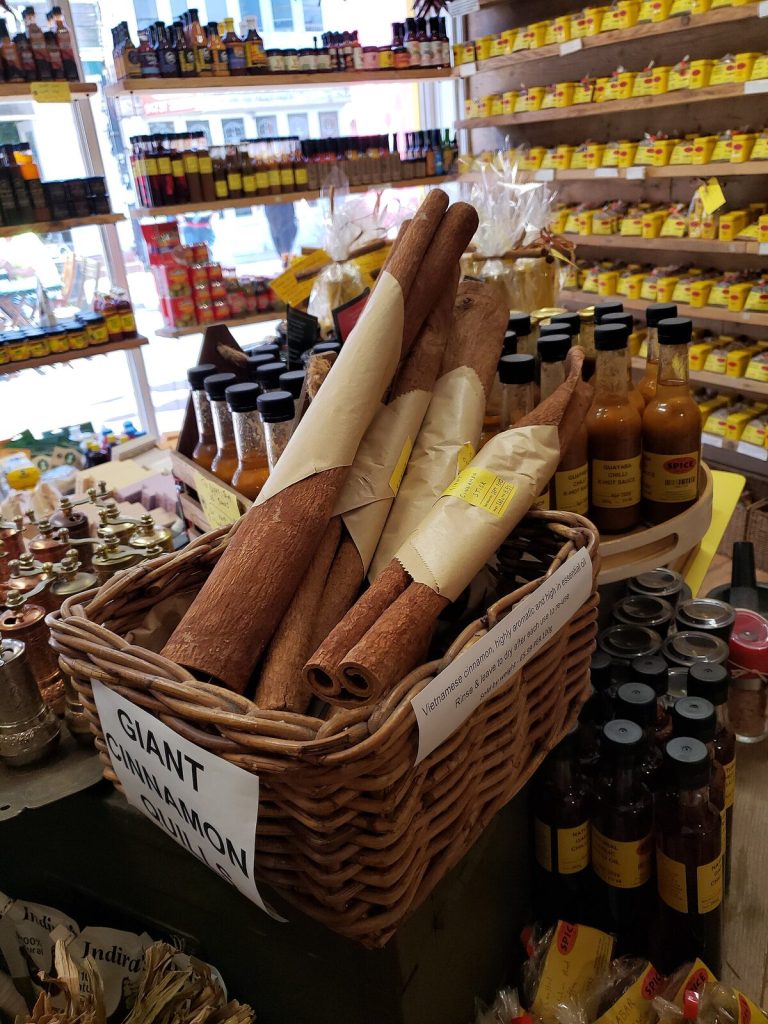
Cinnamon farming in Uganda exists, but on a very small scale and without any official package of practices behind it. Smallholders in the Lake Victoria basin keep trees in Mukono, Kayunga, Wakiso, Buikwe, Mpigi and Masaka, mostly selling leaves and branches rather than graded bark. Cinnamon is the dried inner bark of a tropical evergreen, and Uganda grows it at the cool upper edge of where the crop is normally recommended.
Where Cinnamon Is Grown in Uganda and How Much of It
Start with the honest picture, because almost everything written about growing cinnamon in Uganda skips it. There is no national acreage figure. MAAIF publishes no cinnamon package of practices, NARO has released no cinnamon variety, UBOS reports no cinnamon tonnage, and UNBS carries no Ugandan cinnamon standard. Ugandan growers are working from Sri Lankan and Indian recommendations, adapted by trial.
What can be pinned down is geography. Cinnamon in Uganda sits in the warm, humid districts around the lake. Mukono and Kayunga come up most often, along with Wakiso, Buikwe, Mpigi, Masaka, Jinja, Iganga and Mayuge. Plantings are small. The largest documented Ugandan planting found in any source is roughly 2,000 trees on about 2.6 hectares, raised inside a community forest project in Wakiso run with Kasuku Organics and the GLS Future Foundation, where growers were trained to move from selling leaves and branches to selling bark powder. Another documented grower in Kayunga keeps about 400 trees. Ugandan farming journalism describes the crop as one that has not yet reached commercial scale, and that is a fair description.
You also see claims that cinnamon suits the volcanic highlands: Kabale, Kisoro, Rukungiri, Bududa, Bundibugyo. Those claims circulate widely in Ugandan spice writing and nothing supports them. Both national spice authorities that publish altitude guidance put cinnamon far below where those districts sit. More on that in a moment, because altitude is the single most useful thing to understand before you buy a seedling.
Ceylon Cinnamon or Cassia: The Species Decision That Sets Your Market
Two different plants are sold to the world as cinnamon and the difference decides what a grower can earn. Cinnamomum verum, also written Cinnamomum zeylanicum and sold as Ceylon cinnamon or true cinnamon, gives a thin, pale, brittle bark that rolls into layered quills. Cinnamomum cassia and its relatives give a thick, hard, dark bark sold in single curls, and that is what most of the world actually buys in a jar labelled cinnamon.
The species relevant to Uganda is Cinnamomum verum. Every Ugandan source that names a species names it, Kew's plant records list the species for the flora of tropical East Africa, and no Ugandan source found names cassia as a planted crop here. So a Ugandan grower is in the true cinnamon business whether they realise it or not, and that matters because of one compound.
Coumarin. It occurs naturally in cassia bark at high levels and in true cinnamon bark at trace levels. German and European food safety assessments set a tolerable daily intake of 0.1 mg of coumarin per kilogram of body weight. Published measurements put cassia powder somewhere between roughly 1,700 and 7,700 mg per kilogram depending on the sample, with one Austrian testing programme reporting 1,880 to 3,260 mg per kilogram. True cinnamon in the same kind of testing runs from below the detection limit up to a few hundred mg per kilogram, with that Austrian programme's highest reading at 185. That gap is the whole reason true cinnamon commands a premium in European and North American markets, and it is the one structural advantage a Ugandan grower starts with.
Altitude, Rainfall and Soil Requirements for Cinnamon Farming
Here is the part that decides whether cinnamon farming makes sense on your land. Sri Lanka's Department of Cinnamon Development, which oversees the country that produces most of the world's true cinnamon, puts the commercial ceiling at 700 m above sea level and says the plant weakens above it. Indian state spice guidance is more generous and puts it around 1,000 m. Uganda's lake basin sits at roughly 1,100 to 1,200 m. So the districts that actually grow cinnamon in Uganda sit above both ceilings.
That is not the same as saying the crop fails. Species datasheets record the tree growing to about 2,000 m in India, so the plant itself tolerates Ugandan altitude comfortably and Ugandan trees clearly flower and set seed. The undocumented part is bark. Nobody has published bark yield per acre, bark thickness or grade composition from a coppiced cinnamon stand at 1,150 m, in Uganda or anywhere else. Cooler nights slow shoot growth, and shoot growth is what bark weight is made of. Treat that as the open question it is.
Rainfall is the second gap. Sri Lanka recommends more than 1,875 mm a year for a rainfed crop; Indian guidance gives 1,250 to 2,500 mm. Much of Uganda's lake basin sits at the low end of that band or just under it, and it arrives in two seasons rather than steadily, so the crop passes through two dry spells a year. On soil, both authorities want the same thing: deep, freely draining sandy loam with organic matter, at least a metre deep, no waterlogging, no salinity and no stoniness. Cinnamon is grown on acidic red soils in Sri Lanka, but no pH window is published as a recommendation, so ignore the pH numbers you will see quoted from houseplant guides.
| Site factor | Published recommendation | Uganda lake basin |
|---|---|---|
| Altitude | Below 700 m to 1,000 m | 1,100 to 1,200 m |
| Temperature | 20 C to 35 C | Within range |
| Rainfall | 1,250 to 2,500 mm | At the low end |
| Humidity | 75 to 85 per cent | Within range |
| Soil depth | Over 1 m, free draining | Site by site |
| Waterlogging | Not tolerated | Avoid lake flats |
Read the table as a siting checklist rather than a verdict. Temperature and humidity are fine. Altitude is the one you cannot change, and rainfall is the one you can partly fix with mulch and dry season watering in the first year or two.
Raising Cinnamon Seedlings in a Nursery
Almost all cinnamon planting stock is raised from seed, and the seed is awkward. Trees fruit once a year, the fruit ripens to purple then black, and seed stays viable for only about two weeks after the pulp is washed off and the seed is shade dried. Buy or collect seed and sow it, in that order, with no storage in between. Seedlings in Uganda usually come from growers who already have mature trees, which is why nursery stock is a real side business in Mukono and Kayunga.
Sri Lankan nursery practice puts 8 to 10 seeds into a single black polythene pot of about 20 cm by 12.5 cm, covered with roughly half a centimetre of potting mix, with drainage holes punched a little above the base so the tap root does not reach the ground. Germination takes about two weeks. Shade sits about two feet above the beds for the first two months, then comes off gradually so the seedlings harden to full sun before they leave the nursery. A pot is ready for the field at four to six months, when it holds five to eight healthy plants, each standing about 15 cm above the pot rim with three or four well formed leaf whorls.
Cuttings are the other route and they are worth knowing about, because seed grown cinnamon is variable. The plant is bisexual, so seedlings from one mother tree differ in growth habit, bark quality and oil content. Semi hardwood cuttings taken from the lower part of a selected bush, kept in water from the moment they are cut, planted two or three to a pot under polythene inside a shaded net house, treated against fungal rot and opened up gradually from about week four, give you plants that match the mother. They take around six months in the nursery. Nobody in Uganda appears to be doing this at scale, and it is probably the single biggest improvement available to a serious grower here.
Spacing and Plant Population Per Acre
Cinnamon is not grown as a plantation of trees. It is grown as a dense stand of coppiced bushes, and the spacing reflects that. On flat land Sri Lankan practice is 120 cm between rows and 90 cm between plants, which works out to roughly 3,600 planting pits per acre. On slopes above 40 per cent the rows follow the contour at 120 cm by 60 cm, giving about 5,600 pits per acre, both to hold the soil and to keep light on the bushes.
Pits are small, about 30 cm each way. Each pit takes one nursery pot, so five to eight seed raised plants, or three plants if they came from cuttings. Three months after planting you thin back to five per hole at the wider spacing and three per hole at the closer spacing, keeping the strongest and pulling anything dead or diseased. A basal dressing of rock phosphate goes into each pit at planting in Sri Lanka; in Uganda, well rotted manure or compost worked into the pit is the practical equivalent, and a soil test tells you whether phosphorus is actually short before you spend on fertilizer.
Those population figures are far higher than what Ugandan growers report. A stand of 400 trees or 2,000 trees spread across two or three hectares is a tree crop planted at tree spacing. That is a different system with different economics, which is the next thing to sort out.
Planting Out and the First Two Years in the Field
Plant at the start of the rains so the young stand gets six to eight weeks of reliable moisture. Water in, mulch heavily, and tie the main stem to keep it upright as side branches spread. Then inspect every three months for the first two years and fill gaps as you find them, because an empty pit is both lost yield and a weed patch. Replacement plants for a mature stand need to be bigger, around 18 months old and a foot and a half to two feet tall, planted into a larger pit, with the neighbouring bushes trimmed back so the newcomer gets light.
Coppicing: Turning a Cinnamon Tree Into a Harvest Bush
This is where Ugandan practice and world practice part company, and it explains most of what has gone wrong with cinnamon here. Left alone, Cinnamomum verum becomes a forest tree of 10 to 20 m. Managed for bark, it is cut back hard two to three years after planting, roughly two inches above the ground at a slanted angle, and from then on it is a bush of 2.5 to 3 m carrying several stems from the base. Every cut stimulates new shoots, and those young shoots are the crop, because only young bark peels cleanly into quills.
Ugandan growers, by and large, are not doing this. Reported practice here is a shade grown tree intercropped with coffee, mango and banana, with leaves sold from about year three and bark said to wait until year ten. That advice appears in Ugandan farming coverage and in the spice pages that copy it, and it comes from treating cinnamon as a timber style tree rather than a coppiced bush. A ten year old trunk gives thick, hard, unpeelable bark that can only be scraped off as chips, which is the lowest value form the crop takes.
If the goal is graded bark, the stand needs to be coppiced on a two to three year cycle from the start. If the goal is leaves for tea and oil, the tree model is fine and the leaf yield is real. What does not work is planting for the tree model and expecting the bark income of the bush model.
Weeding, Manure and the Shade Question
Weed management, not weed eradication, is the recommendation from the country that grows the most of this crop. Weeds hold soil on slopes, feed soil organic matter and shelter beneficial insects, and after a harvest cut they screen tender new shoots from browsing animals. What they must not do is compete with young bushes for light and moisture. The standard method is periodic cutting of the tops with a slasher or grass cutter, hardest in the first two years, easing off as the canopy closes and shades the ground itself.
Shade is the other contested point. Ugandan advice says cinnamon suffers in direct sun and should sit under coffee or fruit trees. Sri Lankan guidance says the opposite: clear shade from the field, because yield tracks light exposure closely. Both can be partly right. Nursery seedlings genuinely need shade for their first couple of months, and a newly planted stand in a dry spell benefits from some cover. A mature stand carried permanently under a coffee canopy will grow slowly and give you thin shoots and little bark. If bark is the product, the bushes need the light.
On nutrition, keep it simple and local. Manure or compost in the planting pit, mulch on the surface, and a soil test before buying anything in a bag. No Ugandan fertilizer schedule exists for cinnamon, so do not follow a rate you found written for another country's soils.
Cinnamon Pests and Diseases in a Humid Climate
Cinnamon is a hardy plant and the disease list is short, but the two problems that matter both love the conditions Uganda's lake basin provides. Leaf spot shows up in prolonged wet weather and knocks back the leaf area a young bush needs. Root rot follows poor drainage and kills plants outright, which is why soil depth and drainage sit so high on the siting checklist. Neither is treated by guesswork.
Birds are the pest Ugandan growers name most often, taking seed from nursery beds before it germinates, which is a covering and netting problem rather than a spraying problem. Elsewhere, leaf eating caterpillars and shoot borers are recorded on the crop.
On chemicals, one rule. No pesticide or fungicide rate appears here because there is no verified Ugandan registration for any product on cinnamon, and a rate written for a different crop in a different country can cost you a residue rejection or a dead stand. If you need to spray, take a sample to your district agricultural officer, use only a product registered in Uganda, follow the label rate exactly, and observe the pre harvest interval on the label before you cut bark that is going into food. Cultural control carries most of the load anyway: good drainage, wider light, removal of infected branches at each harvest cut, and destruction of the material you remove.
Cinnamon Yield Per Acre and What Moves It
The only credible published yields come from Sri Lanka, and they are worth knowing as a ceiling rather than a forecast. The national average sits at about 300 kg of dried quills per acre per year. Well managed stands reach around 450 kg. With improved varieties released by the Sri Lankan cinnamon research centre and good agricultural practices throughout, about 600 kg per acre is reported. Separately, an acre yields roughly 4,000 kg of leaves a year, which is the raw material for leaf oil distillation.
Those figures come from a coppiced stand at 3,600 or more plants per acre, below 700 m, in a wetter climate, cut two or three times a year by trained peelers. Every one of those conditions differs in Uganda. Plant population is usually a fraction of it, altitude is higher, rainfall is lower, cuts are less frequent and skilled peelers are scarce. A Ugandan grower should assume less until their own records say otherwise, and the way to find out is to keep those records from the first harvest.
Four things move bark yield more than anything else: the number of productive bushes per acre, the light reaching them, how often you cut, and how much of what you cut ends up as quill rather than as chips. The last one is a processing question rather than a growing one, and it is covered in the companion guide on how cinnamon bark is peeled, dried and formed into quills.
Finding Buyers for Ugandan Cinnamon Bark and Leaf
Market access is the constraint Ugandan cinnamon growers name most consistently, and the pattern is clear from what they actually sell. Leaves move in bundles to spice traders in Kampala and across to Kenya. Seedlings move to other farmers wanting to start. Bark moves in small quantities, often as powder, to local spice sellers and occasionally to an exporter. There is no auction, no cooperative structure specific to the crop, and no reference price a grower can quote back to a trader.
That has two practical consequences. First, sell into more than one channel from the start: leaf, seedlings, bark, and powder if you can process cleanly. Second, aggregate. A single grower with a few hundred kilograms of bark has no negotiating position with an exporter who needs container volumes and consistent grade. Groups of growers in one sub county, pooling and grading together, are the only structure that has produced a decent price for any Ugandan spice, which is the same lesson the vanilla and ginger chains learned. The general playbook in our guide on how farmers can find produce buyers applies here with one extra step, which is that you will usually have to explain what true cinnamon is before anyone will pay for it.
Value addition is where the Wakiso project found its margin: grinding clean bark into powder, packaging it properly and selling it as a finished product rather than as raw material. That route is open to any grower with a clean drying space, a mill and a scale, and it is covered more fully in our guide to spice drying and processing.
Should You Try Cinnamon Farming in Uganda
A fair answer has three parts. Cinnamon will grow on your land if you are in the lake basin, below the highlands, on deep free draining soil with no waterlogging. The species you would be growing, true cinnamon, is the more valuable of the two and Uganda has no cassia problem to compete with. And the crop has a long productive life once established, with several saleable products from the same stand.
Against that, five real risks. Altitude puts Uganda above both published commercial ceilings and nobody knows what that does to bark yield. There is no Ugandan extension support, no released variety and no agronomy manual to follow. Peeling is a craft skill that barely exists in the country. The domestic market for graded quill is thin and the export market wants volume and consistency that no Ugandan grower can currently supply alone. And the payback is slow: three years to a first cut, longer to a saleable grade.
So the sensible version is a trial block rather than a plantation. Half an acre, properly spaced and coppiced, with records kept on shoot growth, bark weight and grade, planted alongside a crop that pays the bills. If the bark comes out well at your altitude, expand from evidence. If it comes out thin and chippy, you have lost half an acre rather than a farm, and you will have learned something nobody has published. Growers weighing this against other options should also look at the rest of the spices and herbs guides, particularly clove farming and cardamom farming, both of which face similar market questions, and the comparison in most profitable spices to grow in Uganda.
Cinnamon Farming in Uganda: Common Questions
How long does cinnamon take before the first harvest? A coppiced stand gives its first cut two to three years after planting, when the stems have turned fully brown apart from the tips. The ten year figure that circulates in Ugandan spice writing describes an uncoppiced shade tree, which gives thick unpeelable bark rather than quill. Leaves can be taken from pruning well before the first bark harvest.
What does it cost to start a cinnamon plot in Uganda, and what can you earn? No reliable Ugandan cost or income figures exist for this crop, and anyone quoting you a per acre profit is guessing. What can be said about the shape of it: your main outlays are seedlings, land preparation, planting labour, mulch and the labour of two to three weedings a year, plus a drying and peeling shed before your first harvest. Seedling prices vary a lot by nursery and by quantity, and you are usually buying from another farmer rather than a commercial nursery. Bark prices depend entirely on form and grade, since clean graded quill, rough chips and ground powder are three different products at three very different prices. Check current levels on our Uganda farm produce prices pages and get quotes from more than one trader before you plant, because a single trader's offer tells you nothing about the market.
Is cinnamon worth more than the leaves? Per kilogram, clean graded bark is worth far more. Per acre in Uganda right now, leaves often bring in more money, because leaf has a ready buyer and bark does not. That is a market failure rather than an agronomic fact, and it will shift if grading and aggregation improve.
Can cinnamon be intercropped? Yes, and most Ugandan growers do it, usually with coffee, banana or fruit trees. Be clear about the trade off. Intercropping under a canopy spreads your risk and gives the stand some drought cover, and it costs you bark yield, because bark weight follows light. A dedicated block in full sun is the higher yielding arrangement.
Does cinnamon need irrigation in Uganda? Not usually as a permanent system, but the first year needs help. Uganda's two dry spells fall inside a rainfall band that already sits at the low end of what the crop wants. Heavy mulch plus hand watering through the first two dry seasons is normally enough to carry a young stand. Established bushes cope on their own on deep soil.
Where can a Ugandan farmer get cinnamon seedlings? From growers who already keep mature fruiting trees, mostly in Mukono and Kayunga, since seed is only available once a year and stays viable for about two weeks. Ask to see the mother trees, check the plants are free of leaf spot, and look for a pot at least four months old holding five to eight sturdy plants. If you can find someone propagating from cuttings off a selected mother bush, that stock is worth more because it will not vary the way seedlings do.
Is Ugandan cinnamon Ceylon cinnamon or cassia? Ceylon, that is Cinnamomum verum, on the evidence available. Every Ugandan source that names a species names that one, and cassia does not appear as a planted crop here. It matters because true cinnamon carries only trace coumarin while cassia carries it in the low thousands of mg per kilogram, and that difference is what buyers in Europe and North America are paying for. If you are selling bark, say which species it is and be able to back it up.
Before you commit land, do two things. Check what spice bark and leaf are actually fetching in your nearest market and from at least two Kampala traders, so you are working from real numbers rather than the earnings claims that follow this crop around. Then find out who buys graded bark in volume, and ask them what grade and what quantity they need, because that answer should shape your planting plan rather than the other way round.