
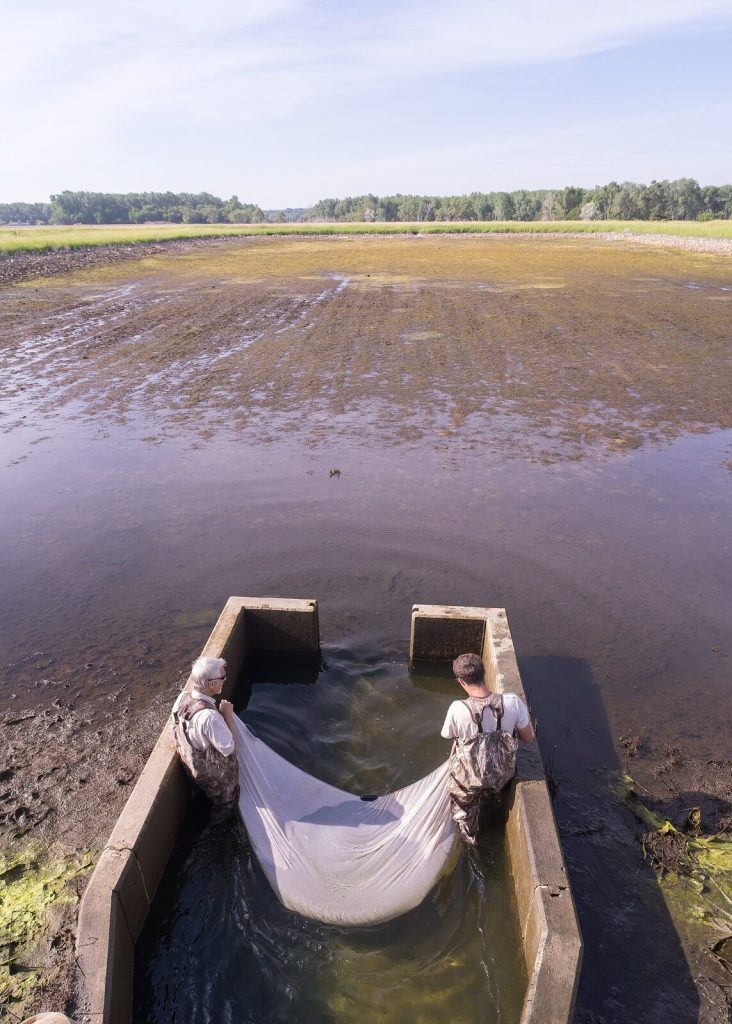
Ugandan fish farmers have already published the number that matters. Growers of farmed tilapia told a government commissioned market study that they need at least 9,000 shillings a kilogram to cover what production costs them, while the price actually paid at the farm gate sat at 8,000 to 8,200. That gap, not the digging or the fingerlings, is the real subject of any honest fish farming budget.
What Fish Farming Costs in Uganda: Capital, One Cycle and the Survival Rate
A fish enterprise has a shape completely unlike a dairy or a poultry unit. You build a water body once, stock it once, feed it for months while nothing comes back, then harvest it in a single event. Almost the entire cost is committed before you know whether it worked.
That gives three cost questions rather than one. What does the water body cost to build. What does one cycle cost to run, from fingerling to harvest. And how many of the fish you stocked are still alive at the end, because that last number divides into everything else.
A Ugandan government market assessment of farmed fish named the failure mode directly, describing new entrants drawn in by a simple business model of pond, fish, feed, sell, make money. Everything below is an attempt to replace that model with actual lines. For the divisions that convert these lines into shillings per kilogram, see the companion page on working out cost per kilogram at harvest, and both sit under the farm business section.
Pond Construction Cost: Digging, Compacting and the Outlet
Excavation is the first real bill and it varies more than any other line, because it depends on soil, on whether you hire people or a machine, and on how far you are from a water source.
Ugandan figures reported by practitioners put excavating and compacting a pond of roughly 400 square metres at about 1,000,000 shillings or less, with a figure of about 1,600,000 shillings quoted for pond construction across the board and larger ponds put as high as 8,500,000. Read those as a band from roughly 1,000,000 to 8,500,000 shillings depending on size and soil, and get a local quote rather than adopting any of them.
What the excavation quote often leaves out is the part that makes the pond work. A harvest basin so you can actually collect the fish. Screens on the inlet and the outlet so wild fish do not enter and your stock does not leave. An outlet you can drain through, which a Ugandan extension manual treats as basic rather than optional. Liming where the water is acidic or low in alkalinity. Ugandan guidance sets a liming rate at two different levels, and both come from the same manual under the same two triggers of alkalinity under 20 mg per litre or a pond below pH 6. Its pond preparation table gives 350 kg of agricultural lime per hectare of water surface; an earlier section gives 150 to 200 kg and phrases it as what may be adequate once you have measured the lime requirement. That phrasing is the deciding condition: measure first, and the lower figure is a starting point rather than a ceiling. Budget the higher one if you cannot test, because underliming leaves the pond fertiliser doing nothing.
One structural point that shapes the whole budget. Ugandan guidance puts the carrying capacity of a tilapia pond averaging one metre deep and fed commercial pellets at 8 to 10 tonnes per hectare, which is 0.8 to 1.0 kg per square metre. Your pond area caps your harvest before you have bought a single fingerling, and paying to dig a pond bigger than you can afford to feed is the most expensive mistake available at this stage. The pond construction guide and the pond sizing guide cover the build itself.
Earth Ponds, Tanks and Cages: Three Different Fish Farming Businesses
These are not three price points for the same thing. They are different enterprises with different capital, different feed bills and different ways of failing.
Compare the systems properly before committing, using the cage farming guide and the tank farming guide.
Fingerling Cost and the Fish Seed Supply Problem in Uganda
Fingerlings look like a small line and behave like a large risk. Ugandan district fisheries officers have put the cost of a tilapia fingerling at 150 to 200 shillings and a catfish fingerling at 200 to 250 shillings.
There is a contradiction inside the same Ugandan reporting worth knowing about, because it will show up in your own quotes. A farmer in the same account priced 5,000 catfish fingerlings at 2,000,000 shillings and 5,000 tilapia fingerlings at 1,500,000, which works out at 400 and 300 shillings each. Both figures are probably true: the officer quoted the price at the hatchery and the farmer quoted what the fingerlings cost him by the time they reached his pond. So budget roughly 150 to 300 shillings for a tilapia fingerling and 200 to 400 for a catfish fingerling, and understand that the difference is transport.
Current prices move, so check the fingerling price page and the guide to sourcing fingerlings before you plan a stocking. Handling them properly after purchase is covered in the fingerling management guide.
Fish Feed Cost Per Kilogram: The Line That Decides the Budget
Feed is where a fish budget is won or lost, and the spread in Ugandan prices is enormous.
Ugandan district fisheries officers have put the average cost of a kilogram of fish feed at about 3,800 shillings, with a figure of about 3,500 also reported. Floating feed for cage farming, which is imported, was put at about 5,000 shillings a kilogram by a principal fisheries officer, who noted that the quality required is not made in the country. So the working band is roughly 3,500 to 5,000 shillings a kilogram, and which end you sit on depends on whether your system can use sinking feed.
| Input | Ugandan band | What moves it |
|---|---|---|
| Tilapia fingerling | 150 to 300 UGX | Distance to hatchery |
| Catfish fingerling | 200 to 400 UGX | Distance, demand |
| Sinking pellet feed | 3,500 to 3,800 per kg | Brand, bag size |
| Floating feed | About 5,000 per kg | Imported, cages |
Two warnings about the cheap end, both from Ugandan officials. A senior fisheries officer described feed companies misstating protein content, claiming 30 percent when the actual figure was nearer 10 percent, which means a farmer can pay for feed and get bran. And Ugandan extension guidance notes that vitamin C deficiency signs are common on Ugandan farms using on farm made feeds and feeds used more than two or three months past manufacture, producing poor growth and deformities. Old or fake feed is not a saving, it is a slower loss.
How much feed does a cycle need? Ugandan reporting put feed consumption at 650 to 750 grams per fish by the eight month mark, at which point tilapia weighed 400 to 600 grams and catfish 600 to 800 grams. There is also a hard ceiling: Ugandan guidance caps feed input in a fertilised pond with no aeration at 100 kg per hectare per day, or 10 grams per square metre per day, because beyond that the water cannot process the waste. The fish feeding guide and the feed requirement figures set out the rations.
Feed Conversion in Fish Farming: The One Real Advantage Over Livestock
Something in this budget genuinely works in the farmer's favour, and it deserves stating plainly because most fish farming content buries it under exaggeration.
Fish convert feed into flesh better than land animals do. Ugandan extension guidance uses a feed conversion ratio of 1.7 in its own worked pond budget, and a Ugandan study of cage tilapia worked on 1.5 with high quality feed. A ratio of 1.5 means roughly one and a half kilograms of feed for each kilogram of fish. Poultry sits higher and cattle far higher again, and the reason is simple biology: a fish does not spend energy keeping itself warm or holding itself up against gravity.
That advantage is real and it is also fragile. Ugandan guidance lists what wrecks a conversion ratio: poor quality feed, the wrong pellet size for the fish, stressful water conditions, overfeeding, low survival at harvest, and continuing to feed for growth once the pond is already at carrying capacity. Every one of those is a management failure rather than a price, which means the ratio is something you control.
The cash value is easy to see. At 3,800 shillings a kilogram of feed, a ratio of 1.5 puts 5,700 shillings of feed into every kilogram of fish, while a ratio of 1.9 puts in 7,220. That difference of over 1,500 shillings a kilogram is larger than the entire margin available in most Ugandan pond budgets. A cheap weighing scale and a feeding record are the two purchases that pay for themselves fastest on a fish farm.
Stocking Density and Carrying Capacity: How Many Fish a Pond Can Feed
Stocking is the one decision a farmer makes for free, and Ugandan survey evidence says most get it wrong in both directions.
In a survey of 200 small scale fish farms in three central districts, stocking ranged from 100 to 9,000 fish per pond, with most farms stocking between 351 and 550, on an average pond of about 500 square metres. Follow up discussions found that most farmers were not aware of the recommended density, so some ponds were overstocked and others understocked.
The method Ugandan extension guidance uses removes the guesswork. Work from carrying capacity, not from a fish per square metre rule. Carrying capacity for a tilapia pond of one metre average depth on commercial pellets is 0.8 to 1.0 kg per square metre. Divide that by the size you intend to harvest and you get the number to stock, then add back for expected losses. A 1,000 square metre pond carrying 800 kg and targeting 350 gram fish needs to end with about 2,285 fish, so you stock a little over that.
Two Ugandan practices belong in the budget here. Tilapia mature in ponds at five to six months, so a mixed sex stocking breeds inside the pond and fills it with stunted fish you cannot sell. Ugandan guidance recommends stocking monosex males and adding catfish at about 10 percent of the stocking number to control any recruitment, rising to 20 to 30 percent if mixed sex tilapia are used, with the catfish going in about two months after the tilapia. Those catfish are a cost line and a population control tool at the same time. Details are in the stocking density guide.
Survival Rate: The Number Fish Farming Budgets Quietly Assume Away
Every fish budget contains a survival assumption, and most of them do not say so. Ugandan extension guidance uses 90 percent survival at harvest in its worked pond budget, and a Ugandan cage study assumed 93 percent. Those are targets from well run systems, not observations from a typical Ugandan pond.
What is measured is more sobering. Ugandan nursery guidance for catfish expects 60 to 80 percent survival through the fry to fingerling stage alone, before growout even starts. Ugandan reporting has described disease outbreaks in catfish hatcheries producing survival as low as almost nothing. And in that survey of 200 central Ugandan farms, only 45 percent of farms reported making a profit from their previous completed harvest, with an average net return on investment of 0.05 across a cycle of six to nine months.
Read that last figure twice. Fewer than half the farms made money, and the average across all of them returned five percent over most of a year. That is the honest baseline a new entrant is joining, and no budget that assumes 90 percent survival has accounted for it.
Survival matters more in fish than in almost any other enterprise for a structural reason. A fish that dies in month six has eaten six months of feed and returns nothing. You do not get the feed back. That is why survival is handled as a multiplier on the whole budget rather than a deduction at the end, and the arithmetic for doing that is on the profit calculation page.
Water Quality, Fish Disease and the Risk of Losing a Whole Pond
Dairy loses a cow at a time. A pond can be lost in a night, and that risk is a cost even in the years it does not happen.
Ugandan extension guidance is blunt about the sequence: fish become stressed when water quality, nutrition, handling, stocking or sanitation slip, stress lowers immunity, and disease follows because most pathogens already live in the water. It also notes that once a full outbreak takes hold it is very difficult to control and often not economical to treat, and that fish cannot be sold while under treatment. That last point is the cost most budgets miss, since treatment means a delayed harvest and more feeding days.
Where the money goes in practice is prevention. Screening the inlet and outlet. Liming and fertilising so the pond produces natural food. Keeping the pond at or below carrying capacity. Watching water clarity, which Ugandan guidance manages against a secchi reading of 30 to 45 centimetres in green water tilapia ponds. None of that is expensive and all of it is work.
One correction to advice that circulates widely in Uganda. Frequently changing or cleaning the water in an earth tilapia pond is not good management. A static green water pond depends on the plankton bloom you paid to create with lime and fertiliser, and flushing it out throws away the natural food and the fertiliser together. Ugandan guidance describes static water management as topping up for evaporation and exchanging water only when quality deteriorates. See the pond water management guide and the fish disease guide.
Nets, Valves and Predator Control: The Small Capital Costs
The lines nobody budgets are individually small and collectively decide whether your first cycle has enough cash to finish.
Ugandan reporting puts a gate valve for a pond outlet at up to 60,000 shillings per pond, and a predator net to cover a pond at up to 300,000 shillings per pond. Plumbing from the water source is on top and depends entirely on distance. Harvesting nets are a further cost, and in the survey of 200 central Ugandan farms, net purchase accounted for 6.9 percent of average cost while a further share went on renting nets, because 64 percent of farms owned only one or two ponds and rented their harvesting gear.
Predators earn their own line. They were the leading constraint named in that Ugandan survey. Extension guidance lists wading birds, fish eating birds, frogs, snakes, monitor lizards, otters and people, and notes that a wounded fish left in the pond grows slowly and often dies, so predation costs more than the fish actually taken. Most of the controls are cheap: average water depth beyond what a wading bird can stand in, string tied across the pond, clearing bush around the banks, keeping the site active. The expensive control is the net.
Labour on a Ugandan Fish Farm and Why It Looks So Large
Ugandan extension guidance enters labour as zero in its own worked pond budget. Ugandan survey data says that is wrong by a wide margin.
In the survey of 200 central Ugandan farms, production labour accounted for 29.8 percent of average cost and harvesting labour a further 0.8 percent. Seed came to 29.8 percent and feed to 24.8 percent. Add them and roughly 85 percent of variable cost sat in those three lines. Day to day management was family labour on 67 percent of farms, and 61 percent hired between one and five people at harvest.
Look at what that cost structure is telling you, because it is the most useful diagnostic in this whole article. In a properly fed pond, feed should dominate. Ugandan extension guidance puts feed at 91 percent of variable cost in its own worked budget, and a Ugandan cage study put it above 75 percent of total costs. In the survey, feed was only a quarter of cost, and in the same survey 47 percent of farmers were feeding maize bran and only 24 percent were using manufactured feed. Those two facts are the same fact. A cost structure where feed is a small share is not an efficient farm, it is an underfed pond, and underfed ponds produce the small fish and thin margins the survey measured.
Tilapia and Catfish Markets: Why the Buyer Base Changes the Budget
Two species, two different businesses on the selling side, and the difference belongs in the budget before you stock.
Tilapia is the species Ugandan aquaculture runs on. It is named as the most widely farmed species in the country, 82 percent of farms in the central survey reported it for their previous harvest, and it sells through ordinary markets everywhere.
Catfish is a narrower proposition, and the Ugandan evidence on this is specific. A government commissioned market assessment found that catfish fingerlings are mainly used as bait in the Nile perch fishery, and that bait rather than growout has driven the Ugandan catfish hatchery business for years. It described the market for catfish as food as less well understood, with northern and eastern Uganda offering the better potential, and noted that catfish is usually larger than a kilogram and sells at a lower price than tilapia. Reported catfish production has fallen markedly over recent years while tilapia has grown, which the same assessment linked to easier market access for tilapia. Catfish is also usually grown in polyculture with tilapia rather than alone.
The budget consequences are concrete. A catfish crop needs a buyer identified before stocking, because the outlets are fewer and more regional. It carries a lower price per kilogram against a higher fingerling cost. And it reaches a larger size, which changes the feed bill and the harvest handling. The species comparison goes further, and marketing farmed fish covers finding the buyer.
Fish Price Seasonality: Wild Landings Set the Farm Gate Price
A pond farmer does not compete against other pond farmers. He competes against the lake, and the lake decides his price.
Interviewees in a Ugandan market assessment described large seasonal swings in fish prices driven by wild landings. During the months of strong rainfall from September to December, landings from the lake fishery are high and fish prices are low. June and July bring the lowest landings and the highest market prices. A ten year analysis of Ugandan farm gate catfish prices found the same pattern.
The prices themselves are documented. Farmed tilapia sold at farm gate prices of 8,000 to 8,200 shillings a kilogram during seasons of heavy wild landings, and the same fish could fetch 9,000 shillings in months of poor supply. Growers, believing they needed at least 9,000 shillings to cover production, tried through their association to agree a minimum farm gate price of 9,000, and the agreement was undermined by members selling at 8,000. A large producer reported prices trending down, with 8,000 described as already a little high. Separate Ugandan reporting from the western region put the farm gate price for a kilogram of fish at 8,000 to 12,000 shillings, which includes sales across the border.
| Condition | Farm gate, UGX per kg | Effect on budget |
|---|---|---|
| Heavy wild landings | 8,000 to 8,200 | At or below cost |
| Poor wild supply | About 9,000 | Grower stated minimum |
| Western, cross border | 8,000 to 12,000 | Best reported band |
| Kampala wet market | 12,000 to 15,000 | Retail, not yours |
Two further pricing facts that change a plan. Farm gate prices are set by weight rather than by piece, so a claim that a fish sells for a fixed sum each should be converted to shillings per kilogram before you believe it. And bigger fish earn more per kilogram: in one Ugandan market, shops charged 6,000 shillings a kilogram for fish up to 800 grams, 7,000 for 800 grams to 1.1 kg and 8,000 above that. Harvest weight is a price decision as much as a yield decision. The farm gate against retail explainer is worth reading before you accept any figure from a market visit.
A Worked Cost Budget for a 1,000 Square Metre Tilapia Pond
This budget takes the structure of a Ugandan extension worked example and recosts it at current Ugandan input prices, which is the exercise nobody does and everybody needs. The physical assumptions are the government template's own: a 1,000 square metre static water pond, carrying capacity 800 kg, target harvest weight 350 grams, survival at harvest 90 percent, stocking of 2,286 monosex tilapia plus 227 catfish for population control, feed use of 1,360 kg, and a harvest of 2,085 fish weighing 748 kg.
The government template prices fingerlings at 40 shillings, feed at 1,000 shillings a kilogram and fish at 3,000 shillings a kilogram, and arrives at income above variable costs of 751,211 shillings. Those input prices are a fraction of what Ugandan farmers now report paying. The template's method is sound. Its prices are not, and anyone copying its totals will understate the cost of a cycle by several million shillings.
| Line | Quantity | UGX, recosted |
|---|---|---|
| Tilapia fingerlings | 2,286 | 342,900 to 685,800 |
| Catfish fingerlings | 227 | 45,400 to 90,800 |
| Sinking pellet feed | 1,360 kg | 4.76m to 5.17m |
| Floating feed instead | 1,360 kg | About 6.80m |
On sinking pellets the variable cost of the cycle comes to roughly 5,148,000 to 5,945,000 shillings before labour, before any share of the pond, and before harvesting and transport. On imported floating feed it reaches roughly 7,577,000. Divide by 748 kg of fish and the break even price is about 6,880 to 7,950 shillings a kilogram on sinking feed, and about 10,130 on floating feed.
Do not treat any of those three as your answer. Treat them as proof that the outcome turns on four numbers you can influence: feed price per kilogram, feed conversion, survival, and which month you harvest into.
Cage Fish Farming Costs on Lake Victoria: A Different Order of Money
Cages come up in every conversation about Ugandan fish farming and they belong in a separate paragraph of the budget, because the figures are not comparable to a pond.
A Ugandan study of commercial tilapia cage production on Lake Victoria modelled three scales and published investment requirements of about 47,236 United States dollars for a small operation, 94,393 for a medium one and 163,373 for a large one, with production costs across the modelled period of about 636,264, 1,706,955 and 3,750,284 dollars. Feed made up 76 percent of costs at the small scale and 81 percent at the medium scale, above 75 percent throughout.
The result that matters is the break even price. On assumptions of 93 percent survival, a feed conversion ratio of 1.5 and high quality feed, the study put break even prices at about 2.12, 1.93 and 1.90 dollars a kilogram for small, medium and large, with the cost to produce a kilogram highest at the small scale near 2.29 dollars. Convert those at any recent rate and they land inside the same band as the Ugandan farm gate price for farmed tilapia, which leaves very little room, and the study reached that on optimistic biological assumptions.
Two conclusions follow, and both are uncomfortable. Cage farming in Uganda shows real economies of scale, so the smallest operator has the highest cost per kilogram and the least protection against a price dip. And the feed bill on a cage is enormous in absolute terms: a smallholder cage of 2.5 metres cubed at 150 to 200 kg per cubic metre holds a great deal of fish, and at a feed conversion of 1.7 on imported floating feed near 5,000 shillings a kilogram, the feed alone for one cycle can come close to the whole revenue from it. Ugandan reporting also notes that the floating feed quality needed is imported rather than made locally, so that line is exposed to an exchange rate you do not control.
What Ugandan Fish Farming Budgets Get Wrong
Six repeat errors, each one large enough to turn a projected profit into a real loss.
Using the government template's input prices. The method is right and the prices belong to an earlier era of feed and fingerling costs. Recost every line at what a supplier quotes you today.
Assuming 90 percent survival because the template does. Ugandan nursery survival alone runs 60 to 80 percent for catfish fingerlings, and fewer than half of surveyed farms made a profit at all.
Entering labour as zero. Ugandan survey data puts production labour at about 30 percent of cost, which is larger than the feed line on most real farms.
Pricing fish at retail. Kampala wet market tilapia at 12,000 to 15,000 shillings a kilogram is not your price. Your price is 8,000 to 9,000 at the farm gate, and it is lower in the months the lake is producing.
Digging first and costing feed later. Pond area sets carrying capacity, carrying capacity sets the feed bill, and the feed bill is 75 to 91 percent of a properly run cycle. Size the pond to the feed you can afford.
Believing a price per piece. Ugandan farm gate prices are set by weight. One widely circulated Ugandan account values 2,500 tilapia at 15,000 shillings each, which for a 400 to 600 gram fish implies 25,000 to 37,500 shillings a kilogram, three to four times any verified Ugandan farm gate price. Convert every per piece claim to shillings per kilogram and most of them collapse. The fish farming section holds the husbandry behind each of these lines.
Cost of Fish Farming in Uganda: Questions Farmers Ask
What is the minimum I can start fish farming with? There is no floor that makes sense on its own, because the pond and the feed have to match. Ugandan extension guidance itself lists "what is the minimum amount of money to invest so that I can make profit" among the questions farmers keep asking, and it does not answer it. The usable version is this: work out the feed bill for one cycle first, since it is 75 to 91 percent of a properly fed cycle, and only build a pond you can afford to feed to harvest. A pond you cannot feed is a hole.
Is fish farming profitable in Uganda? Sometimes, and less often than the promotional material suggests. In a survey of 200 small scale farms in three central districts, 45 percent reported a profit on their last completed harvest and the average net return on investment was 0.05 across a six to nine month cycle. Growers of farmed tilapia have said they need at least 9,000 shillings a kilogram to cover costs while receiving 8,000 to 8,200. Profitable outcomes exist, and they come from feed price, feed conversion, survival and harvest timing rather than from scale.
How long before I can harvest? Most farms in the central Ugandan survey ran a cycle of six to nine months, while western Uganda reporting described eight to ten months to harvest. Tilapia reach 400 to 600 grams and catfish 600 to 800 grams by around eight months on adequate feed. Feeding for longer to reach a bigger fish can be worth it, because bigger fish earn more per kilogram, but every extra month is more feed.
Can I feed maize bran instead of pellets? You can, and the Ugandan survey data shows you what happens: 47 percent of surveyed farmers fed maize bran, the feed line fell to a quarter of their costs, and their fish and margins were both small. Ugandan guidance also rules out farm made supplementary feeds entirely for tanks and cages. Bran lowers your cash cost and raises your cost per kilogram of fish, which is the opposite of what you want.
Do I need to stock catfish with my tilapia? If you stock monosex male tilapia, Ugandan guidance suggests catfish at around 10 percent of numbers to control any breeding, rising to 20 to 30 percent with mixed sex tilapia, added about two months later. The reason is economic rather than biological: tilapia mature in ponds at five to six months, and a pond full of stunted young fish is unsellable.
Where can I sell farmed fish? Plan this before stocking rather than after. Ugandan market work found that where growers had no alternative outlet and buyers coordinated, the eventual sale price was near or below cost, and it advised against relying on auction style markets for farmed fish. Tilapia has the wider buyer base. Catfish is more regional, with northern and eastern Uganda the better markets.
How many farmers is this competing against? Ugandan figures put roughly 20,000 aquaculture farmers working about 25,000 ponds and over 3,000 cages, with Uganda among Africa's larger aquaculture producers. The gap between the small and the serious is wide: small scale production has been put at around 1,500 kg per hectare against 15,000 kg per hectare for commercial ponds, which is ten times the output from the same water.
Should I build one big pond or several small ones? Several, if the site allows. Ugandan extension guidance on cash flow makes the point directly: a single large pond means one harvest and one payment, while several smaller ponds sized to what your market absorbs each week let you harvest and sell continuously. That is a cash flow decision rather than a production one, and it is the reason many Ugandan farms end up with two or three ponds rather than one.
Every figure on this page is a range because Ugandan feed prices, fingerling prices and fish prices all move with the season, the supplier and the state of the lake fishery. Before you dig anything, do three things: get a written feed quote per kilogram from a supplier you can reach, ask a fingerling producer what they charge and how far ahead you must book, and ask a buyer near you what they paid for farmed fish per kilogram last month and this month. Then put those three quotes through the fish farming profit calculation instead of trusting a total from anywhere else, this page included. Only a cycle costed from your own quotes tells you whether to dig.